

Super Electromagnetic Legend Reborn: TAMASHII NATIONS GX-90 Combattler V
The Call of Super Electromagnetic Glory
In the golden age of giant robots, when combining machines roared across television screens and childhood imaginations, one name stood tall as a pioneer: Combattler V. Decades later, TAMASHII NATIONS brings that legend back to life in stunning detail with the GX-90 Super Electromagnetic COM-Battler V F.A. from the Soul of Chogokin Full Action line. This isn’t just another collectible—it’s a love letter to the origins of the super robot genre, packed with die-cast heft, intricate articulation, and enough accessories to recreate those epic Saturday morning battles. Whether you’re a longtime fan who grew up cheering for the Battle Team or a newcomer drawn to the shine of chrome weapons and glowing electromagnetic power, this figure delivers a hefty dose of nostalgia-fueled excitement.
Table of Contents
- 1. The Call of Super Electromagnetic Glory
- 2. Unboxing the GX-90: First Impressions and Build Quality
- 3. Articulation and Posability: Full Action Indeed
- 4. Weapons and Effects: Recreating the Arsenal
- 5. The Five Vehicles in Detail: Honoring the Combination
- 6. Comparison: GX-90 Super Electromagnetic COM-Battler V F.A. vs. the DX Soul of Chogokin Combattler V
- 7. Conclusion - Potential Drawbacks and Considerations
As we dive into this review, we’ll explore the rich history that made Combattler V a cornerstone of anime mecha, break down every aspect of the GX-90’s design and playability, and ponder its place in the modern collector’s landscape. The mecha marketplace has evolved significantly since the 1970s, transitioning from simple die-cast zinc alloys and brittle plastics to sophisticated collector-grade engineering marvels. By dissecting both the nostalgic pedigree and the modern mechanical achievements of this release, we can better understand how Bandai Spirits continues to honor historical broadcast designs while simultaneously pushing the boundaries of physical action figure engineering, articulation tolerances, and overall display potential for enthusiasts worldwide.
The Birth of a Legend: A History of Combattler V
To truly appreciate the GX-90, one must journey back to 1976, when Japanese television introduced the world to Chōdenji Robo Combattler V (Super Electromagnetic Robot Combattler V). Created by the collective pseudonym Saburo Yatsude and directed by Tadao Nagahama, this 54-episode series marked the first entry in what became known as the Robot Romance Trilogy, followed by Voltes V and Tōshō Daimos. It wasn’t the first combining robot anime, but it perfected the formula that would define an era.
The production was a monumental collaboration between Toei Animation, Sunrise (then known as Nippon Sunrise), and toy sponsor Popy, establishing a historical precedent for structural cross-media toy marketing that successfully prioritized complex mechanical concepts designed deliberately to be physically engineered into real-world commercial retail toys.
The story unfolds in the early 21st century (a futuristic setting from the perspective of 1976 viewers). An ancient alien race from the planet Campbell, led initially by the scientist Oreana, awakens after millennia to conquer Earth. Their weapons are grotesque bio-mechanical Slave Beasts—monsters of the week that blended organic horror with mechanical menace. Humanity’s sole hope rests with the Nanbara Connection, a UN-backed organization founded by Professor Nanbara. His masterpiece: Combattler V, a colossal super robot powered by super electromagnetic energy, formed from five individual vehicles piloted by a team of young heroes. This baseline narrative framework cleverly justified the modular nature of the physical vehicle combinations, transforming corporate structural requirements into high-stakes narrative elements that resonated deeply with the television audience.
The five pilots, known as the Battle Team, embodied teamwork, personal growth, and the “romance” of human drama amid robot action—a hallmark of Nagahama’s direction. Hyoma Aoi, the hot-blooded leader in red, pilots the Battle Jet (head). Juzo Naniwa, the cool marksman in blue, handles the Battle Crusher (arms). Daisaku Nishikawa, the sturdy judoka in brown, commands the Battle Tank (torso). Chizuru Nanbara, Professor Nanbara’s granddaughter in pink and the sole female member, pilots the Battle Marine (legs). Young genius Kosuke Kita in green controls the Battle Craft (feet). Their personalities clashed and meshed, much like their machines, creating compelling character arcs alongside the weekly battles. These diverse background archetypes established the quintessential five-member character template that would permanently define decades of super robot anime, anime-adjacent media properties, and eventual live-action localized global superhero franchises.
Ropet, a quirky little robot, monitors the team’s emotional sync and authorizes the iconic combination sequence with its famous “Combine OK!” cry. The transformation and merging scenes were groundbreaking, establishing a template for countless successors, including elements that influenced later Super Sentai series with their giant robot finales. The requirement for psychic synchronization among five distinct individuals elevated the narrative tension from a simple mechanical deployment sequence to an emotional and physiological crucible. If a single team member experienced doubt, fear, or interpersonal friction, the electromagnetic grid would fail to lock, rendering the separate vehicles highly vulnerable to incoming alien aggression and structurally emphasizing harmony as a literal tactical weapon.
The series split into two distinct arcs. The first pitted the team against Oreana and her subordinate, the tragic Garuda—a complex antagonist who discovers his origins as an android “son” created by Oreana. Their relationship added layers of betrayal, loyalty, and pathos rare for the time. Garuda’s arc culminates in a dramatic confrontation that shifts the tone. The second arc introduces Empress Janera and her generals, Dungele and Warchimedes, with even more powerful Magma Beasts. Themes of tyranny, sacrifice, and environmental undertones (echoing the era’s concerns) weave through explosive action. Professor Nanbara’s death early on passes leadership to the curmudgeonly Professor Yotsuya, adding humor and depth. This shifting leadership dynamic forced the young team to mature without a gentle maternal or paternal safety net.
Combattler V’s weapons became legendary in their own right. The Super Electromagnetic Yo-Yo slices through foes with spinning energy blades. Twin Lancers combine for piercing strikes. The Atomic Burner unleashes fiery blasts from the hands. The Big Blast delivers devastating finishing power. These attacks weren’t just flashy—they required the team’s unified spirit, reinforcing the central message of harmony and perseverance. Every single offensive maneuver required precise cooperative execution from all five cockpits, reinforcing the core sociological theme that humanity’s ultimate defense against overwhelming external threat rests not within isolated mechanical supremacy, but within the absolute rejection of internal division in favor of unified collective action.
Though it didn’t achieve massive mainstream success upon initial airing in Japan, Combattler V found devoted fans and later surged in popularity through reruns, manga adaptations, and especially its inclusion in the Super Robot Wars video game series. Its influence ripples through mecha history: it helped codify the combining robot trope, emphasized pilot teamwork over lone heroes, and blended high-stakes battles with emotional storytelling.
In places like the Philippines, the broader trilogy (particularly Voltes V) became a cultural phenomenon, symbolizing resistance and unity during turbulent times. The emotional attachment to these particular mechanical forms transcends simple industrial design appreciation, anchoring deeply into historical generational identities that view these super robots as profound visual symbols of societal resilience.
The show’s legacy lives on because it captured something primal: the thrill of five individuals becoming greater than the sum of their parts, both literally in the robot and figuratively in their bonds. Combattler V didn’t just fight aliens—it fought for the idea that unity triumphs over division. This profound message ensures that decades after the original television cells have faded, the architectural silhouette of the machine continues to evoke a powerful sense of historical reverence among collectors who understand that the mechanical form represents an enduring monument to human cooperation, artistic innovation, and localized cultural narrative transformations.
📊 Battle Team Configuration Table
| Pilot | Team Color | Battle Machine | Combined Robot Section |
| Hyoma Aoi | 🔴 Red | Battle Jet | Head / Brains |
| Juzo Naniwa | 🔵 Blue | Battle Crusher | Chest / Arms |
| Daisaku Nishikawa | 🟤 Brown | Battle Tank | Torso / Midsection |
| Chizuru Nanbara | 💗 Pink | Battle Marine | Thighs / Legs |
| Kosuke Kita | 🟢 Green | Battle Craft | Feet / Propulsion |
Unboxing the GX-90: First Impressions and Build Quality
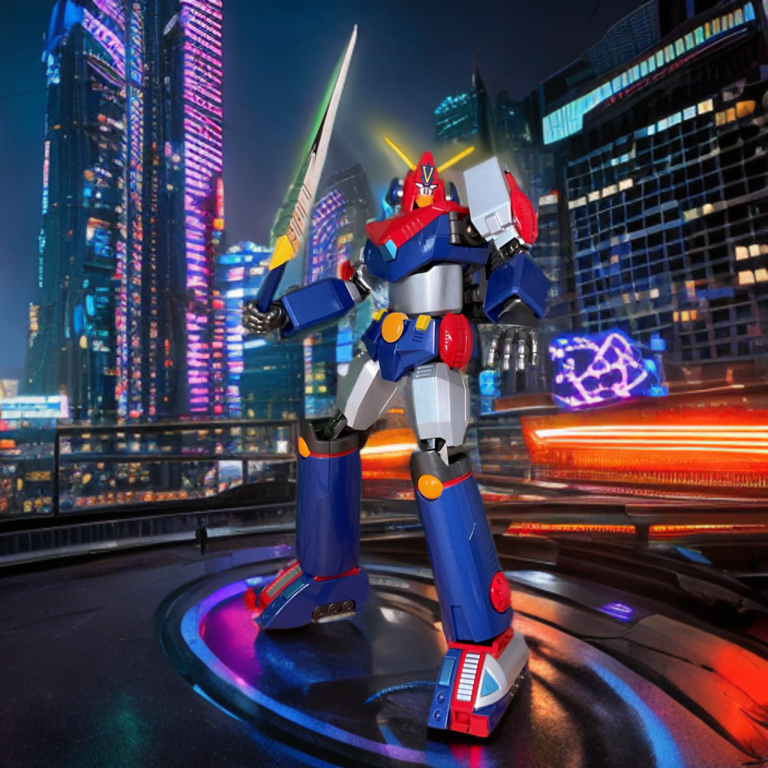
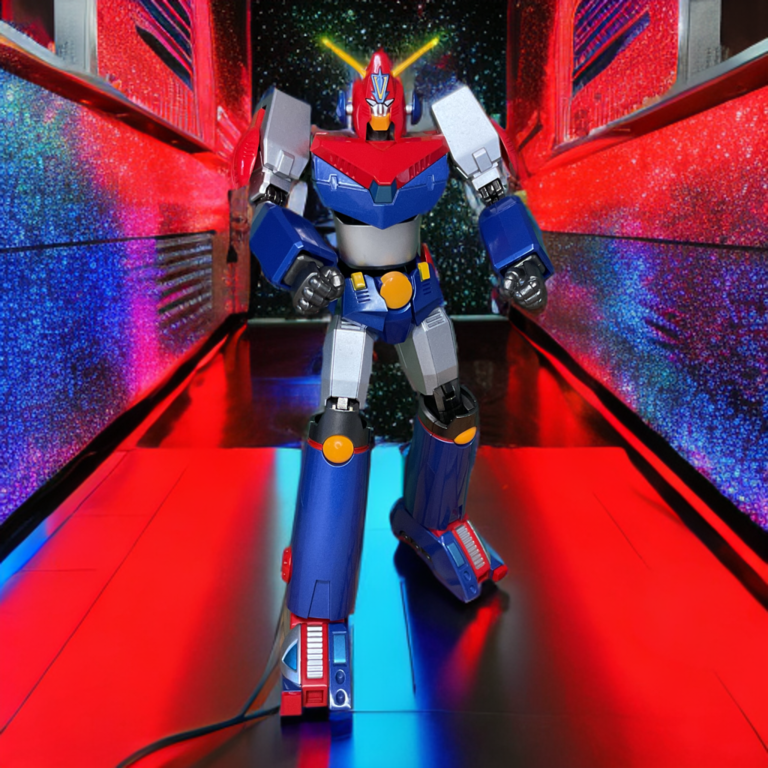
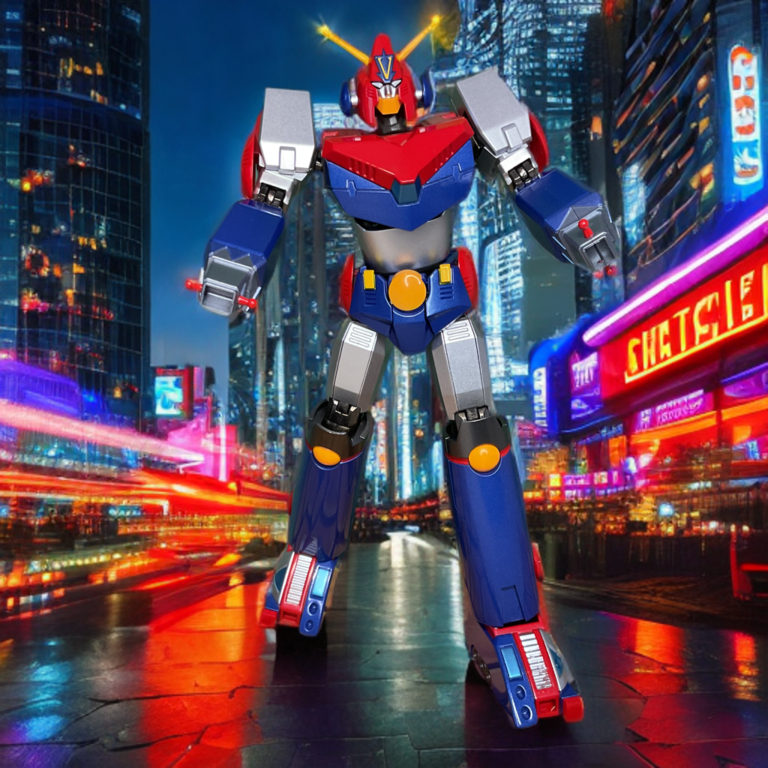
Fast-forward to the present, and TAMASHII NATIONS’ Soul of Chogokin F.A. (Full Action) line delivers a Combattler V that feels worthy of that legacy. Standing approximately 180mm (about 7 inches) tall, the GX-90 packs surprising weight thanks to generous die-cast metal components in the torso, limbs, and key structural points. This isn’t a lightweight shelf-sitter; it has presence, evoking the 550-ton behemoth from the anime. The package mass sits at a solid 1.3 kilograms, meaning that the moment you lift the shipping box, the density immediately communicates a premium experience that sets the tone for the industrial precision contained within the retail display layout.
The packaging screams premium. Expect a sturdy window box with dynamic artwork of Combattler in heroic poses, complete with effect-laden battle scenes. Inside, the figure and its myriad accessories are securely nestled, accompanied by a dedicated display stand. The color scheme perfectly captures the anime’s vibrant aesthetic: bold reds, blues, silvers, and that signature electromagnetic yellow-gold accents. Paint applications are crisp, with metallic finishes that catch the light just right, especially on the chrome-plated Twin Lancers and Yo-Yo components.
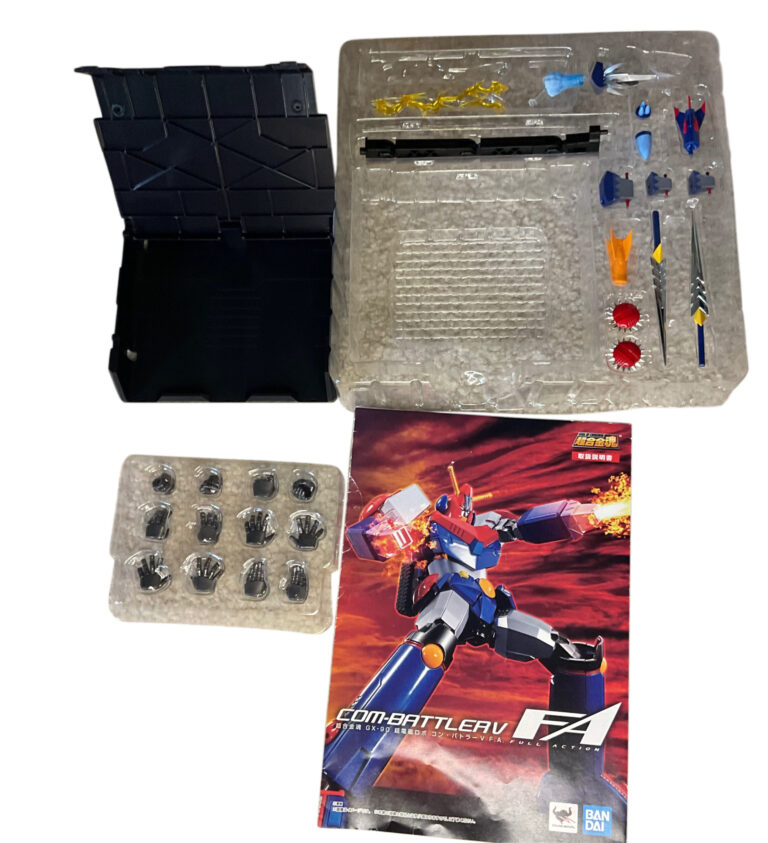
The unboxing workflow feels like a celebration of manufacturing heritage, separating the main collector figure from the massive array of modular impact options to create an immediate sense of vast dynamic possibilities.
This release focuses entirely on the fully combined form of Combattler V, delivering a highly detailed and poseable rendition of the iconic super robot without transformation features. The engineering emphasizes stability and detail in the completed heroic silhouette that fans remember dominating the screen. By choosing to completely bypass the physical requirements of functional vehicular separation, the manufacturing team at Bandai Spirits successfully eliminated the structural compromises, ugly hinges, visible pins, and hollow interior voids that historically plague transforming collectibles. This focused structural architecture allows the physical form to remain completely uncompromised, presenting an idealized, unbroken mechanical anatomy that mirrors the dynamic, stylized illustrations rendered by traditional anime key animators rather than the blocky constraints of vintage physical merchandise.
Articulation and Posability: Full Action Indeed
The “F.A.” in GX-90 stands for Full Action, and it lives up to the name. This release benefits from the line’s advanced joint engineering, offering a remarkable range of motion for a combining die-cast figure. Shoulders, elbows, hips, and knees provide the deep bends needed for dynamic stances—crucial for replicating mid-battle leaps or weapon-wielding poses. The waist and ankle articulations allow for stable, expressive footing even in aggressive combat leans. The shoulder assemblies are engineered on multi-axis extension tracks that slide outward from the central chest block, granting the mechanical arms the clearance necessary to reach completely across the torso without colliding with the prominent red collar architecture or chest armor plates.
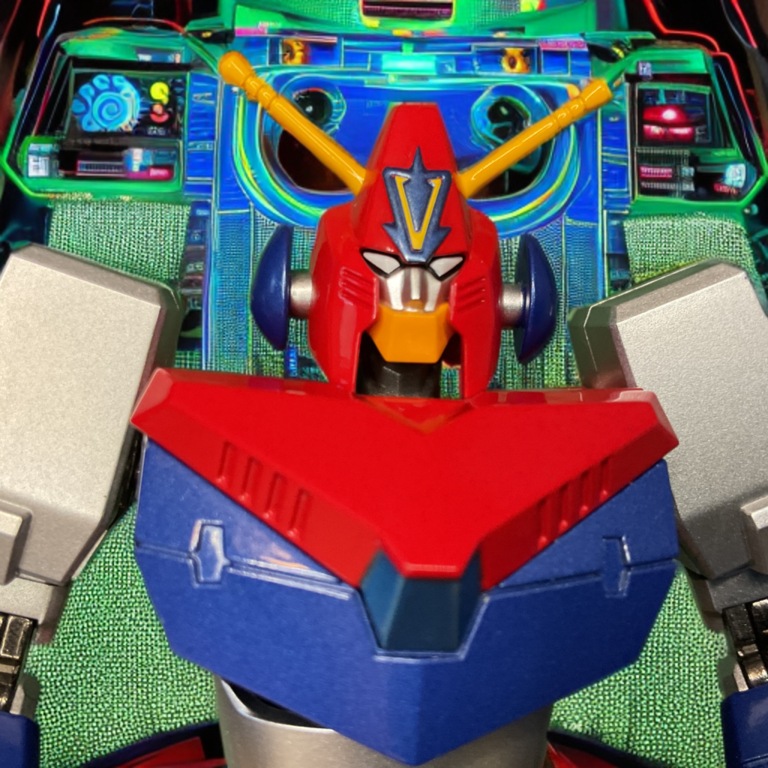
Die-cast joints ensure durability without sacrificing smoothness, though some areas use reinforced plastic where flexibility is key. The head sculpt captures Combattler’s stoic yet powerful visage, with clear visor details and subtle panel lining
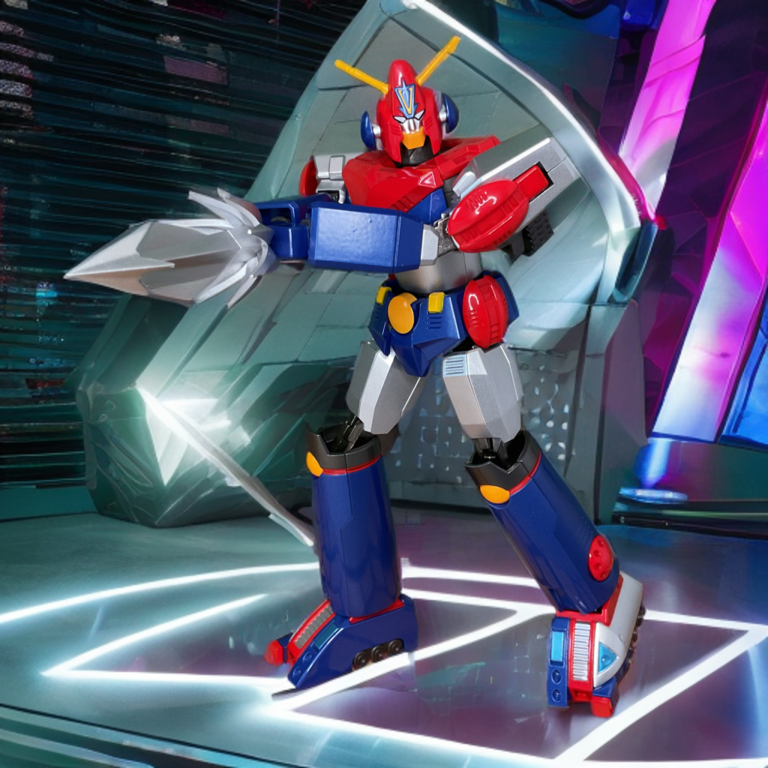
Swappable hands—six pairs included—let you cycle through open palms, fists, and specialized grips for weapons. This versatility turns posing sessions into miniature storytelling opportunities. The hip joints use an innovative dropdown mechanism that lowers the thigh rotation axes away from the pelvic floor, which allows for extreme, deep crouches and athletic martial arts stances that would be fundamentally impossible on a traditional transformable figure due to the geometric obstructions of the internal vehicle cockpits.
Weight distribution is well-managed; the figure holds poses without toppling, thanks to the sturdy stand and thoughtful engineering. Compared to earlier Soul of Chogokin entries, the GX-90 feels refined, with tighter tolerances and fewer floppy joints. It’s a joy to handle, rewarding patience with endless dramatic configurations. The clicky detents and smooth friction hinges work in perfect harmony to maintain structural integrity even when holding heavy die-cast weaponry at full horizontal arm extension, transforming the interaction from a delicate, frustrating balancing act into an exceptionally satisfying tactical engineering experience that actively invites regular manual reconfiguration and display experimentation.
Weapons and Effects: Recreating the Arsenal
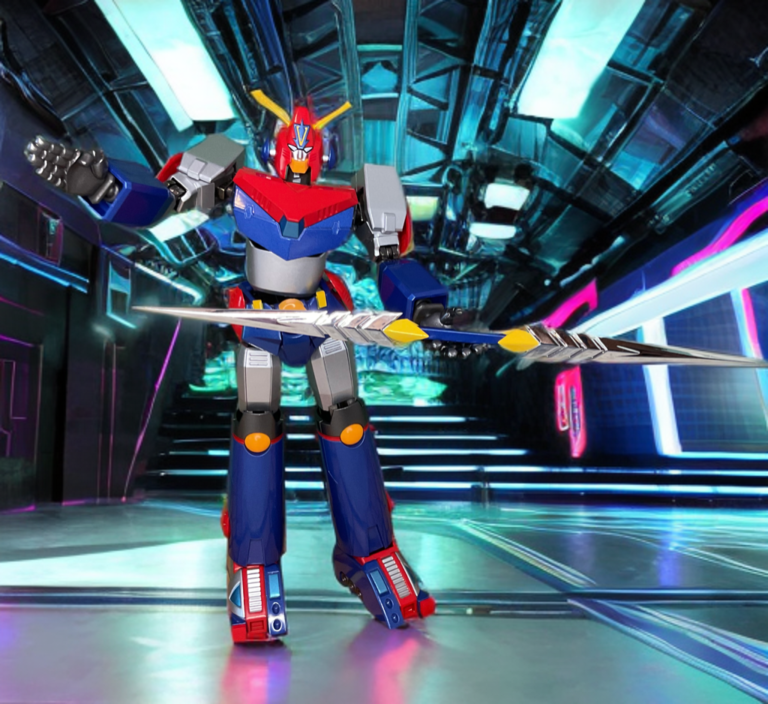
No Combattler review would be complete without the armaments, and the GX-90 delivers an impressive arsenal that sparks imagination. The chrome-finished Twin Lancers connect seamlessly, perfect for thrusting attacks that pierce enemy armor. The Super Electromagnetic Yo-Yo comes with two units and translucent effect parts that evoke the spinning, energy-trailing cutters slicing through Slave Beasts. Additional spin parts enhance the display. The inclusion of genuine electroplated chrome parts on the cutting edges provides a stark, brilliant contrast against the painted primary surfaces of the main robot frame, catching ambient display lighting in a way that perfectly evokes the high-energy visuals of the classic animation frames.
Atomic Burner effects for the arms glow with fiery potential. The Big Blast weapon, complete with divider and expansive effect parts, captures that ultimate finishing move energy.
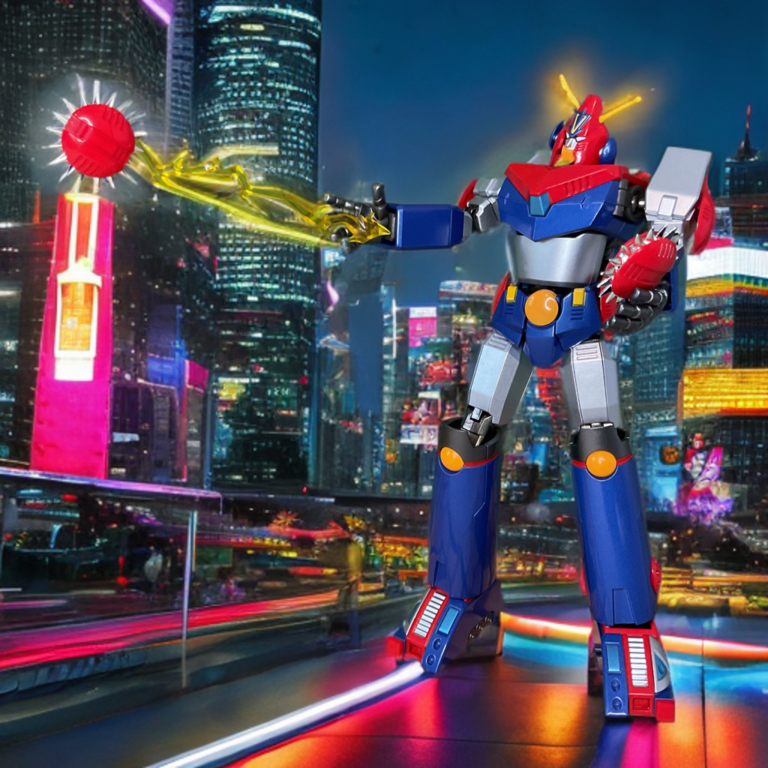
These translucent pieces add scale and drama, making the figure pop on a shelf under proper lighting. Whether recreating a Yo-Yo barrage or a decisive Big Blast, the accessories elevate the GX-90 beyond a static model into an interactive tribute. The meticulous casting of these translucent accessories utilizes varied densities of pigmentation, allowing the bases of the energy blasts to appear dense and powerful while the trailing edges fade into soft semi-transparency, beautifully mimicking the hand-drawn optical lighting tricks utilized by vintage Japanese animation houses.
The attention to detail extends to smaller flourishes, like accurate panel lines and subtle weathering or metallic sheen that suggests battle-worn resilience without overdoing it. It’s clear the designers studied the source material meticulously. Every single weapon accessory features specialized dedicated mounting tabs or custom-molded grip handles designed to interface perfectly with the specific geometry of the matching swappable hands, drastically reducing the risk of paint scraping or plastic stress fractures during configuration changes while establishing an incredibly cohesive visual aesthetic across the entirety of the expansive dynamic arsenal array.
📊 Included Weaponry Material Index
| Accessory Name | Quantity | Material Finish / Gimmick | Display Use Case |
| Twin Lancers | 2 | Electroplated Chrome Edge | Dual-wielding or combined spear thrusts |
| Electromagnetic Yo-Yo | 2 | Translucent Energy Rings | Mid-velocity slicing action poses |
| Atomic Burner | 2 | Fire Effect Attachments | Wrist-mounted flamethrower effects |
| Big Blast | 1 | Oversized Missile + Smoke Stand | Ultimate finishing move diorama setup |
| Interchangeable Hands | 6 Pairs | Matte PVC Form-molded | Weapon-gripping, open palm, and solid fists |
The Five Vehicles in Detail: Honoring the Combination
While the GX-90 itself is presented strictly in its fully combined mode and does not separate into individual vehicles, it honors the spirit and design language of the five legendary Battle Machines through meticulous sculpting and detailing on the completed form. The sleek lines of the Battle Jet are evident in the head and shoulder assembly, paying homage to Hyoma’s piloting prowess. The robust power of the Battle Crusher resonates in the arm structures and gripping capabilities. The sturdy, grounded presence of the Battle Tank anchors the torso, while the nautical flow of the Battle Marine and the agile precision of the Battle Craft are beautifully integrated into the leg and foot designs.
This faithful translation of the combined silhouette creates a cohesive and imposing robot that captures the essence of the “Combine OK!” moment without the modularity of full transformation.
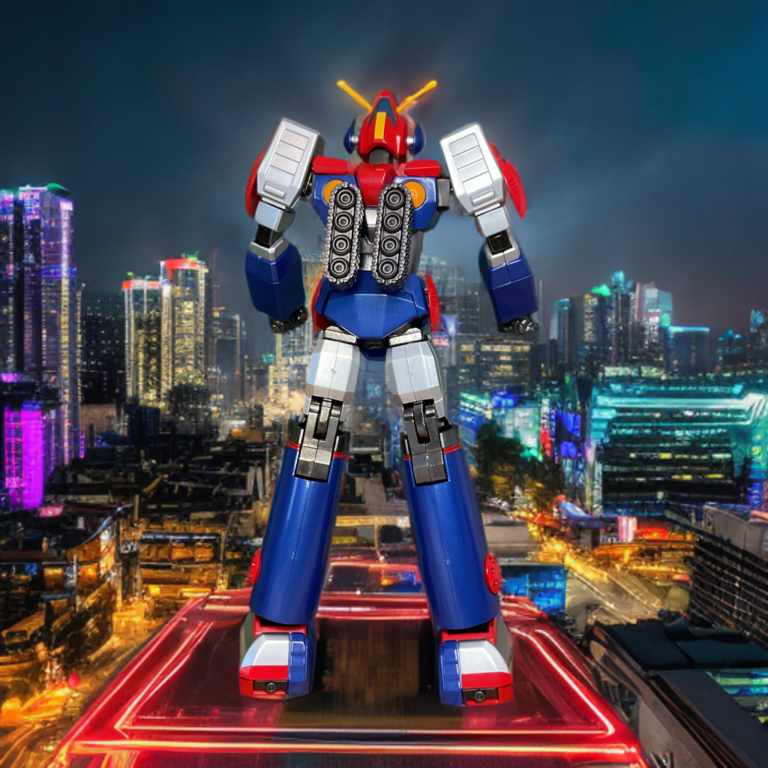
The result is a figure optimized for stability, superior articulation, and dramatic posing rather than vehicle disassembly, allowing collectors to focus on dynamic battle displays that echo the anime’s most memorable combined action sequences. The mechanical details—such as modeled tread patterns along the flanks of the midsection and simulated landing gear panel lines along the outer calves—serve as subtle, deliberate nods to the mechanical reality of the component vehicles, successfully preserving the crucial narrative context of a five-part engineering marvel within a unified, high-performance action silhouette.
To fully appreciate the unique design choices behind the GX-90’s non-transforming, high-articulation framework, it helps to contextualize it within the broader evolution of premium die-cast mecha. If you want to see the absolute pinnacle of complex, multi-vehicle combination engineering, dive into our Soul of Chogokin GX-88 Vehicle Voltron Review to see how Bandai handles a massive fifteen-piece build. Alternatively, if you are fascinated by how the line celebrates historical toy milestones with updated premium finishes, explore our detailed God Mars Soul of Chogokin 50th Review and Complete History. Finally, to understand the 1970s structural roots that birthed this entire generation of die-cast legends, trace the lineage back to the very dawn of transforming super robots in From Golden Statue to God Bird: The Complete History of Brave Raideen.
Comparison: GX-90 Super Electromagnetic COM-Battler V F.A. vs. the DX Soul of Chogokin Combattler V
For collectors weighing options in the Soul of Chogokin lineup, the GX-90 F.A. and the distinct DX Combattler V (often cataloged as the DX-03 or the large-scale deluxe edition) represent two distinct philosophies in premium mecha figures. Understanding their differences helps clarify which better suits individual collecting priorities—whether that’s dynamic posing and shelf versatility or massive scale with immersive electronics.
Size and Presence
The most immediate distinction is scale. The deluxe variant towers at approximately 355mm (about 14 inches) tall, delivering commanding shelf presence that evokes the 550-ton weight of the anime robot. Its substantial heft—around 1.6kg with generous die-cast throughout—makes it feel like a true centerpiece display piece. In contrast, the GX-90 F.A. stands roughly 180mm (about 7 inches), aligning with the more compact Full Action subline. This smaller footprint makes the GX-90 far more practical for collectors with limited space or those building multi-figure dioramas alongside other F.A. releases like Voltes V or Daimos.
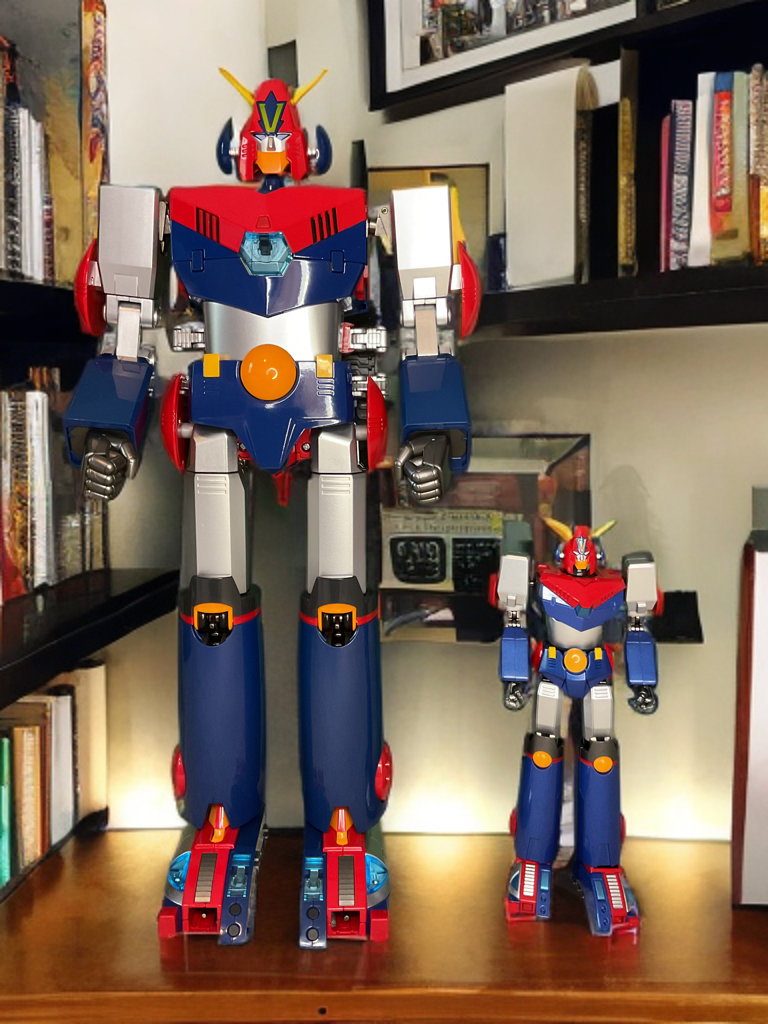
While the DX dominates a display with raw size and weight, the GX-90 offers agility in arrangement without sacrificing perceived power thanks to its refined proportions and metallic finishes. The compact engineering of the GX-90 allows it to sit comfortably on standard shallow bookshelves or computer desks, whereas the massive DX-03 demands dedicated, deep detolf shelving or reinforced glass cabinets to safely accommodate its extreme height and footprint, completely altering the structural requirements of a collector’s domestic display layout.
Build Quality and Materials Comparison
Both figures emphasize premium construction with die-cast metal in key structural areas. The DX leverages its larger size for even more metal content, resulting in an exceptionally dense, tank-like feel that many reviewers describe as “mind-boggling.” The GX-90, while lighter overall, distributes die-cast effectively in the torso, limbs, and connection points, maintaining a satisfying premium weight for its class without becoming unwieldy.
Paint and detailing are excellent on both, but the GX-90 benefits from more recent manufacturing refinements, offering crisper panel lining and metallic sheen that pop under modern lighting. The chemical composition of the modern paint formulas applied to the GX-90 provides superior resistance to UV degradation and handling oils, ensuring that frequent physical adjustment does not result in the surface tarnishing or microscopic paint flaking that can occasionally threaten older, large-scale die-cast releases over extended multi-year display cycles.
Articulation and Posability Compared
This is where the GX-90 shines brightest. As part of the Full Action (F.A.) series, it delivers a wide range of motion with smooth, durable joints that allow for dynamic combat stances, weapon-wielding poses, and expressive mid-action configurations. The engineering supports deep bends at the shoulders, elbows, hips, and knees—ideal for recreating flying kicks, lance thrusts, or yo-yo attacks.
The DX, focused more on transformation fidelity and electronics at its grand scale, has more restricted articulation once fully combined, particularly in the lower body.
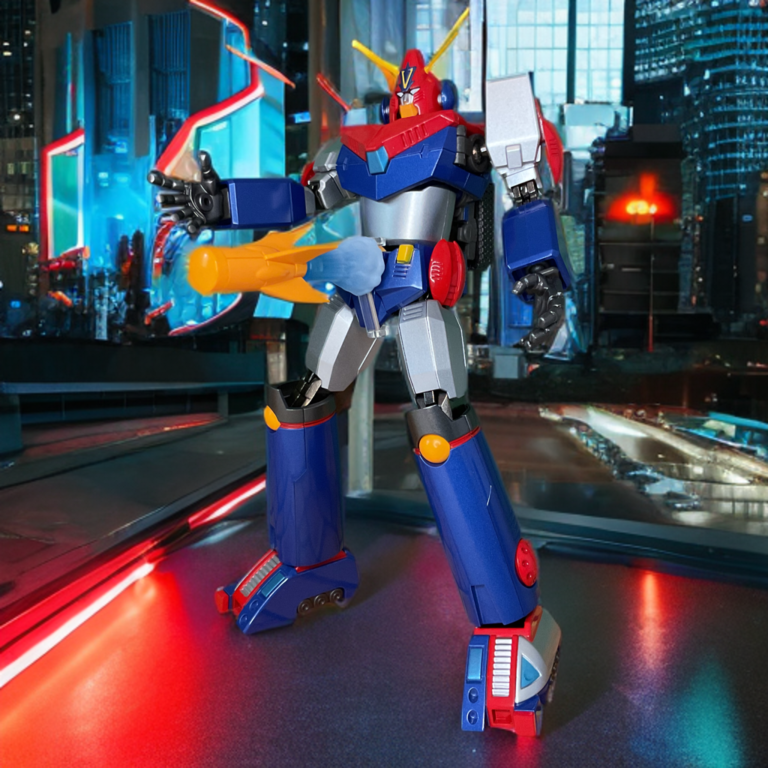
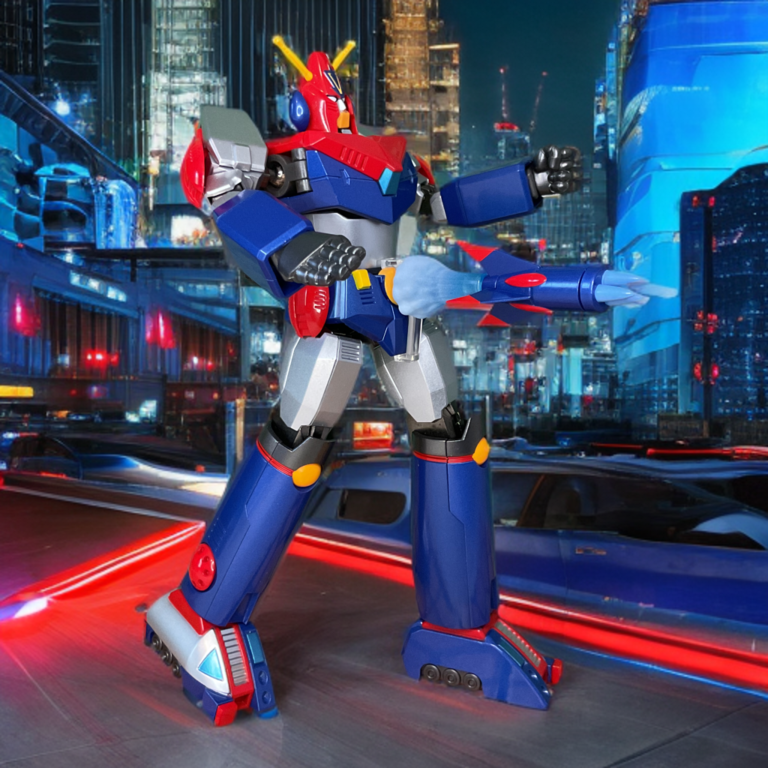
Many owners note it excels as a display statue but offers fewer dramatic posing opportunities compared to the F.A. line. For collectors who love repeatedly adjusting and photographing figures in battle scenes, the GX-90 provides significantly more play value and longevity in interactive enjoyment. The lack of restrictive internal wiring for LEDs or speakers means the GX-90 can rotate its torso past ninety degrees and execute natural, organic body tilts that would literally snap the delicate interior components of the massive DX counterpart.
Combination and Vehicle Modes
Here the two releases diverge significantly in approach. The DX excels with full separation into the five iconic Battle Machines (Battle Jet, Battle Crusher, Battle Tank, Battle Marine, and Battle Craft). Its larger scale makes each vehicle more imposing on its own, with satisfying clicks during assembly that mirror the anime’s dramatic sequences.
In contrast, the GX-90 is engineered as a non-transformable, combined-mode-only figure. This design choice allows for optimized joint placement, greater overall stability, and enhanced posability throughout the body. While it does not break apart into separate vehicles, the sculpting and detailing thoughtfully evoke the individual components’ contributions to the final form, delivering a rock-solid unified robot optimized for action display rather than repeated transformation play. This makes the GX-90 more approachable for frequent posing sessions without the complexity or potential wear of full modular assembly. Collectors can handle the GX-90 with a sense of casual freedom, entirely devoid of the anxiety regarding scratching delicate matching transformation tracks or misaligning tiny structural locking pins.
Weapons, Accessories, and Effects
The arsenal overlaps heavily—chrome Twin Lancers, Super Electromagnetic Yo-Yos with spin effects, Atomic Burner flames, and Big Blast pieces appear in both. The GX-90 includes abundant translucent effect parts and swappable hands that enhance posing versatility. The DX counters with integrated light-up features in weapons and the body, plus more expansive electronic effects. The smaller scale of the GX-90 allows its included effect parts to feel grander and more proportional to the core body, effectively transforming the surrounding negative shelf space into a dynamic snapshot of high-velocity combat, whereas the DX weapons focus heavily on mass and structural weight over explicit action display dynamism.
Electronics and Immersion
The DX stands apart with its impressive suite of sound and light features. An interactive display base, paired with a small Ropet figure, triggers “Let’s Combine!” voice clips, theme music, and dialogue from the original series. Individual machines and the combined form light up, creating an audiovisual spectacle that bridges nostalgia and modern toy tech. The GX-90 forgoes built-in electronics in favor of pure mechanical excellence and poseability, relying on collector-added lighting to highlight its translucent effects. If you crave the “living” robot experience with audio cues, the DX delivers; for silent, tactile focus on form and function, the GX-90 wins. The DX acts as an operational multimedia museum archive of the 1976 production, complete with an array of internal batteries powering auditory and visual memories, while the GX-90 relies entirely on its physical posture and sculpt to project its artistic power.
Price, Availability, and Value
The DX, as a larger deluxe release from several years earlier, often commands a higher secondary market premium (especially sealed or mint-in-box) due to its size and features. The GX-90, being more recent and compact, typically offers a more accessible entry into high-end Combattler collecting while still feeling complete and premium. Value depends on priorities: the DX rewards those seeking spectacle and rarity, while the GX-90 provides excellent bang-for-buck through superior articulation and practicality. The entry cost for a clean DX-03 can easily double or triple the financial investment required to secure a brand-new GX-90, making the Full Action release an incredibly logical financial choice for enthusiasts who want premium Chogokin metal content without overextending their hobby budgets.
Who Should Choose Which?
Choose the DX if you want a massive, electronics-packed showpiece that captures the grandeur of Combattler V with lights, sounds, and overwhelming presence. It’s ideal for dedicated display enthusiasts with ample space who value immersion and scale above all.
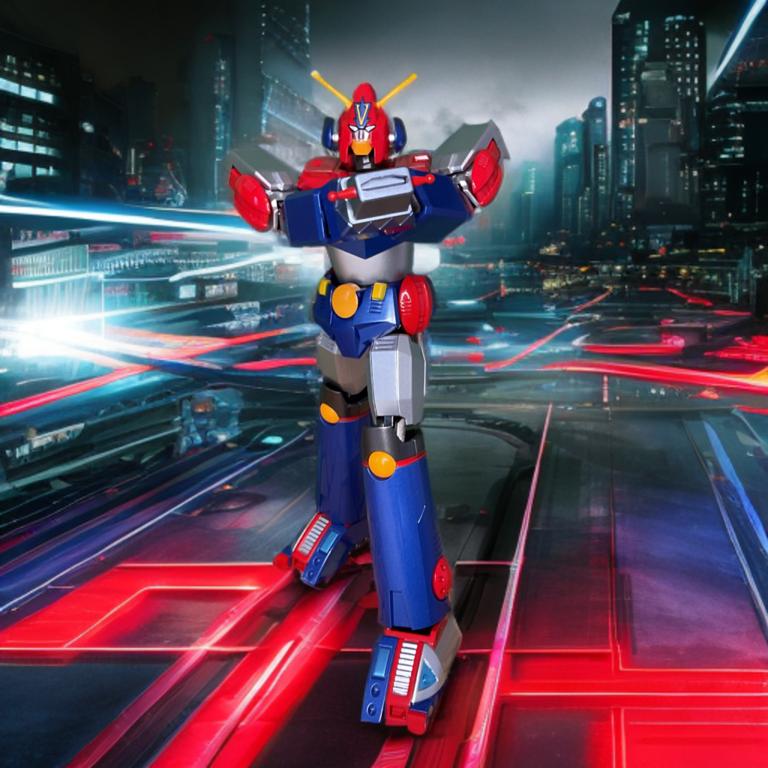
Choose the GX-90 F.A. if you prioritize poseability, easier handling, modern joint engineering, and the ability to create dynamic action scenes. It integrates seamlessly with the broader F.A. Robot Romance Trilogy collection and suits collectors who enjoy interacting with their figures regularly.
Many fans ultimately own both, using the DX as the heroic centerpiece and the GX-90 for action-oriented or space-efficient displays. The two complement rather than compete, each excelling in the areas the other de-emphasizes. Whether your collection leans toward theatrical deluxe editions or agile full-action performers, Combattler V’s legacy is well-served by TAMASHII NATIONS’ dual approaches to this pioneering super robot. The choice isn’t a matter of superior quality, but rather an alignment with personal space, financial allocation, and the specific physical style of interaction a collector wishes to maintain with their display curation over an extended timeline.
Comparisons and Context in the Soul of Chogokin Line
Within the F.A. series, the GX-90 ranks among the stronger releases. Its combination of solid articulation, abundant effects, and thematic fidelity sets a high bar. Fans of the line will note improvements in joint stability and accessory integration compared to some predecessors. It stands proudly alongside other Robot Romance Trilogy entries, offering a cohesive display opportunity for those collecting the full set. The internal scaling across the Full Action subline ensures that Combattler V matches perfectly in height, visual proportion, and paint finish with sister releases like the GX-79 Voltes V and the GX-82 Daitarn 3, creating an incredibly satisfying uniform aesthetic when arranged sequentially on a single dedicated display shelf.
For newcomers to Soul of Chogokin, this serves as an excellent entry point: substantial enough to impress, accessible enough to enjoy without frustration. Purists might compare it to larger DX versions with lights and sounds, but the F.A.’s focus on poseability and compactness makes it more practical for most collections. The entry barrier for historical lines can be incredibly intimidating due to complex engineering transformations and skyrocketing aftermarket values, but the GX-90 breaks down these systemic hurdles by offering a straightforward, satisfyingly premium experience that prioritizes the pure tactile joy of handling heavy metal and high-end plastics without requiring advanced mechanical transformation expertise.
📊 Product Specification Battle
| Feature / Metric | Soul of Chogokin GX-90 F.A. | DX Soul of Chogokin (DX-03) |
| Design Focus | Dynamic Articulation & Posability | Anime-Accurate Separation & Gimmicks |
| Approx. Height | 180 mm (~7 inches) | 355 mm (~14 inches) |
| Transformation | ❌ None (Combined Mode Only) | 5-Vehicle Separation |
| Articulation Range | Extreme (Dropdown hip axes, sliding shoulders) | Standard (Restricted by internal connections) |
| Electronics | ❌ None | 🔊 Music/Dialogue Tracks, 💡 Light-up HUD |
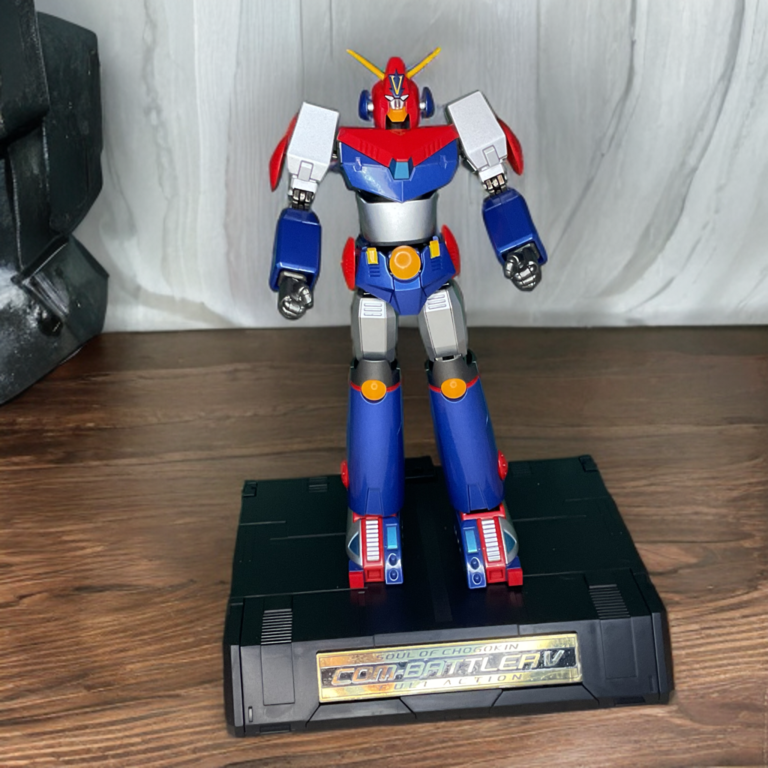
| Stand Included | Full Action display base with arm | Dedicated mechanical hangar base |
| Primary Value | High playability, space-saving display | Massive, immersive museum centerpiece |
Conclusion – Potential Drawbacks and Considerations
No figure is perfect. Some might wish for more built-in lighting effects, though the included translucent effect parts compensate visually when paired with external lighting. The sheer number of small accessories requires careful storage to avoid loss. Tighter tolerances in some joints may need minor breaking in, but overall durability is excellent. At its price point, it targets dedicated collectors, delivering value through quality and completeness rather than gimmicks. The decision to focus exclusively on the combined mode means enthusiasts seeking full vehicle separation will look toward the DX edition instead. Additionally, the sharp points on the Twin Lancers and the angular plastic fins of the Battle Jet head require delicate, mindful handling during deep adjustments to completely prevent accidental finger pokes or structural component stress.
Display and Collecting Appeal
On the shelf, the GX-90 commands attention. Pair it with LED lighting to make the effect parts sing, or pose it dynamically with other mecha for epic crossovers. Its size makes it versatile for mixed displays without dominating space. For fans of the anime, it’s a centerpiece that bridges decades of fandom. The history, the drama, the battles—all encapsulated in alloy and plastic. The targeted physical engineering invites creative photography, allowing amateur and professional toy historians alike to perfectly recreate dramatic low-angle promotional shots and dynamic mid-air combat keyframes that look astonishingly close to the original cels produced by the animation staff half a century ago.
A Victorious Combination
The TAMASHII NATIONS GX-90 Super Electromagnetic COM-Battler V F.A. succeeds not merely as a toy or collectible, but as a celebration of everything that made the original series special. It honors the pioneering spirit of combining robots, the heartfelt bonds of its pilots, and the thrilling spectacle of super electromagnetic warfare against impossible odds. From the meticulously engineered form to the arsenal of chrome weapons and dramatic effects, this figure invites you to relive—or discover—the excitement of 1976’s groundbreaking anime. It stands as a physical manifestation of a historical milestone, linking vintage creative concepts directly with the absolute cutting edge of modern production capabilities.
In an era of endless reboots and remakes, there’s something profoundly satisfying about a faithful rendition of a classic that prioritizes fun, fidelity, and flair. Combattler V taught us that five parts, working in harmony, can overcome any threat. The GX-90 embodies that same principle in toy form: a superbly crafted whole greater than its impressive parts. For enthusiasts of super robots, it’s a must-have addition that roars with victory. Combine OK—your collection deserves this triumph. The preservation of this design language confirms that great industrial art never truly goes out of style, it merely awaits the next evolutionary leap in toy manufacturing to showcase its timeless structural glory once again to a brand-new generation of appreciative eyes.

 English
  Deutsch
  Français
  Português do Brasil
  日本語
日本語  Español
  English (Australia)