

Darkseid and Kalibak: Eternal Strife
In the vast, cosmic tapestry of the DC Universe, few relationships embody the essence of tragedy and unfulfilled longing quite like that between Darkseid, the god-like ruler of Apokolips, and his eldest son, Kalibak. Created by the legendary Jack Kirby as part of the Fourth World saga, this father-son dynamic is a cornerstone of the New Gods mythology. It is a bond steeped in the fires of Apokolips—forged in loyalty, tempered by disdain, and ultimately bittersweet in its portrayal of a son’s desperate quest for paternal approval amid a backdrop of eternal war and tyranny. While Darkseid represents the pinnacle of absolute power and the relentless pursuit of the Anti-Life Equation, Kalibak stands as a brutish enforcer, forever in his father’s shadow, yearning for a validation that remains perpetually out of reach. This article explores their relationship through the lens of official DC Universe canon, drawing from decades of comic book narratives to uncover the layers of complexity that make it so poignantly human, despite its divine scale.
To understand the nature of their connection, one must first delve into the origins of both characters and the familial foundations that shaped them. Darkseid, originally born as Uxas on the hellish world of Apokolips, ascended to power through ruthless ambition and fratricide. He overthrew his brother and claimed the throne, becoming the embodiment of evil and domination. His early life was marked by a rare glimmer of vulnerability: his secret marriage to Suli, a gentle sorceress who briefly softened the edges of his tyrannical soul. Suli, with her pacifist ideals, represented a fleeting counterpoint to the ceaseless brutality of Apokolips. Their union, however, was doomed from the start. Darkseid’s mother, Queen Heggra, viewed Suli as a weakening influence and orchestrated her assassination through the treacherous Desaad, who poisoned her under Heggra’s orders.
From this ill-fated romance came Kalibak, Darkseid’s first-born son. Kalibak’s birth is thus intrinsically tied to loss—his mother’s death not only robbed him of her nurturing presence but also planted the seeds of resentment and inadequacy that would define his existence. In the canon established in titles like “New Gods” (1971), Kalibak emerges as a hulking, savage warrior, inheriting his father’s immense strength but lacking the cunning intellect that elevates Darkseid to godhood. Physically, Kalibak is a monster: fur-covered, with superhuman durability, speed, and power that allows him to trade blows with icons like Superman. Yet, his personality is that of a perpetual underachiever in his father’s eyes—brutal and loyal, but impulsive and often ineffective. This contrast is central to the bittersweet tone; Kalibak’s devotion to Darkseid is absolute, a filial piety born from the void left by Suli’s absence, but it is met with indifference or outright contempt.
The early depictions in Kirby’s “New Gods” series set the stage for their strained interactions. Kalibak first appears in “New Gods #1” (1971), where he is introduced as Darkseid’s enforcer, leading Parademon forces in incursions against Earth and New Genesis. These missions are not mere assignments; they are tests, opportunities for Kalibak to prove his worth. Darkseid, ever the strategist, dispatches his son to the front lines, exploiting Kalibak’s raw power while keeping him at arm’s length from true authority. In one poignant moment from “New Gods #6,” Kalibak’s eagerness to please is evident as he boasts of his conquests, only to be dismissed by Darkseid’s cold gaze. This pattern recurs throughout canon: Kalibak’s victories are acknowledged minimally, his failures punished severely. The bittersweet element lies in Kalibak’s unwavering persistence; despite the rebuffs, he returns time and again, like a loyal hound seeking a pat on the head that never comes

A pivotal aspect of their relationship is the shadow cast by Orion, Darkseid’s second son and Kalibak’s half-brother. Born from Darkseid’s subsequent marriage to Tigra—arranged after Suli’s death—Orion was exchanged in a peace pact with Highfather of New Genesis, as detailed in “New Gods #7” (1972). Raised on the idyllic world of New Genesis, Orion embodies the heroic ideals that Apokolips despises, yet Darkseid sees in him a potential heir worthy of respect. This favoritism fuels Kalibak’s jealousy, transforming sibling rivalry into cosmic warfare. In “New Gods #11” (1972), Kalibak clashes with Orion in a brutal duel, driven not just by orders but by a deep-seated need to eclipse the brother who unwittingly stole his father’s regard. Darkseid watches these confrontations with detached interest, often intervening only when it suits his larger schemes. The tragedy here is multifaceted: Kalibak’s hatred for Orion stems from love for Darkseid, a love that is unreciprocated, while Darkseid manipulates this division to maintain control.
One of the most telling episodes in their canon history occurs in “Orion #3-5” (2000), written by Walter Simonson. Here, Kalibak, desperate for power and approval, defies Darkseid’s explicit commands and launches an unauthorized assault on Orion. To cover his tracks, he murders Desaad, the very architect of his mother’s death—a act of poetic irony that underscores the cycles of betrayal on Apokolips. When Darkseid discovers this insubordination, his response is swift and merciless: he reduces Kalibak to ashes with his Omega Beams. Yet, in a twist that adds layers to the bittersweet narrative, Darkseid later resurrects his son, not out of paternal affection, but with the hope that the experience has instilled discipline. This resurrection, while saving Kalibak’s life, reinforces his subjugation; he emerges more devoted than ever, interpreting the act as a sign of value, even as it highlights Darkseid’s utilitarian view of him as a tool rather than kin.
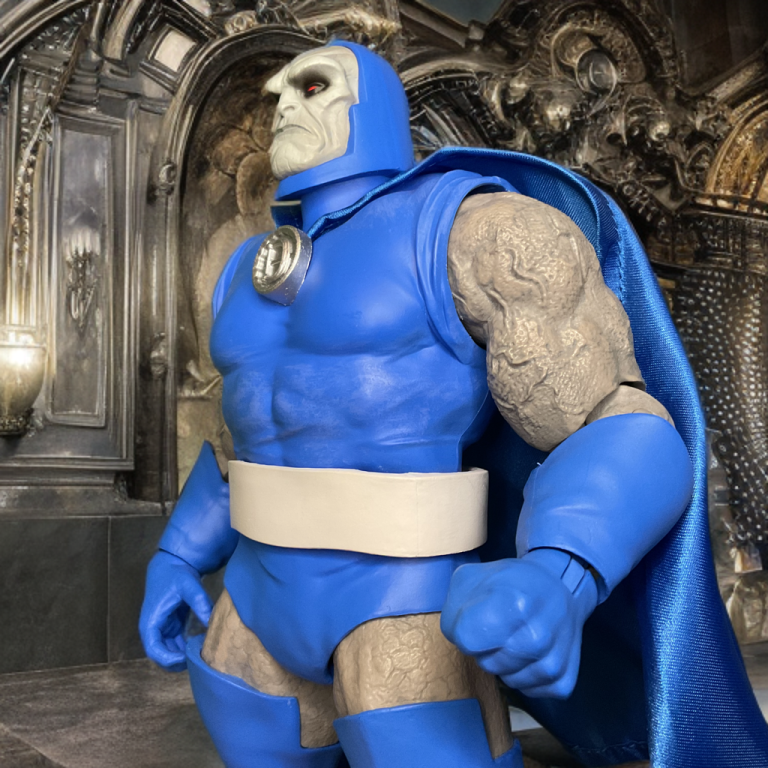
Throughout the Post-Crisis era, their dynamic evolves but retains its core tragedy. In “Legends” (1986-1987), Kalibak aids Darkseid in manipulating Earth’s heroes through Glorious Godfrey, showcasing his role as a blunt instrument in his father’s intricate plots. Failures in these endeavors often lead to imprisonment or demotion, as seen when Darkseid confines Kalibak on Apokolips during Orion’s invasions in “Orion #15” (2001). Released only to serve as cannon fodder against his brother, Kalibak is swiftly defeated, his humiliation broadcast before Darkseid’s court. These moments are bittersweet because they reveal glimmers of potential tenderness—Darkseid’s endowments of power to Kalibak, as noted in various issues, suggest a reluctant investment in his son’s growth. Yet, this is overshadowed by exploitation; Kalibak’s enhancements make him a better warrior for Darkseid’s wars, not a beloved heir.
The “Genesis” event (1997) further illuminates their bond. Kalibak leads Apokoliptian forces in an invasion of Earth, clashing with the Young Heroes and ultimately falling to Hard Drive. His defeat prompts a rare display of Darkseid’s frustration, not with the loss itself, but with Kalibak’s inability to secure victory. This pattern of expectation and disappointment echoes through “Death of the New Gods” (2007-2008), where Kalibak meets his end at the hands of Infinity-Man, an agent of the Source. His death is inglorious, a footnote in the larger slaughter of the New Gods, and Darkseid’s reaction is characteristically stoic—mourning, if any, is buried under layers of ambition.
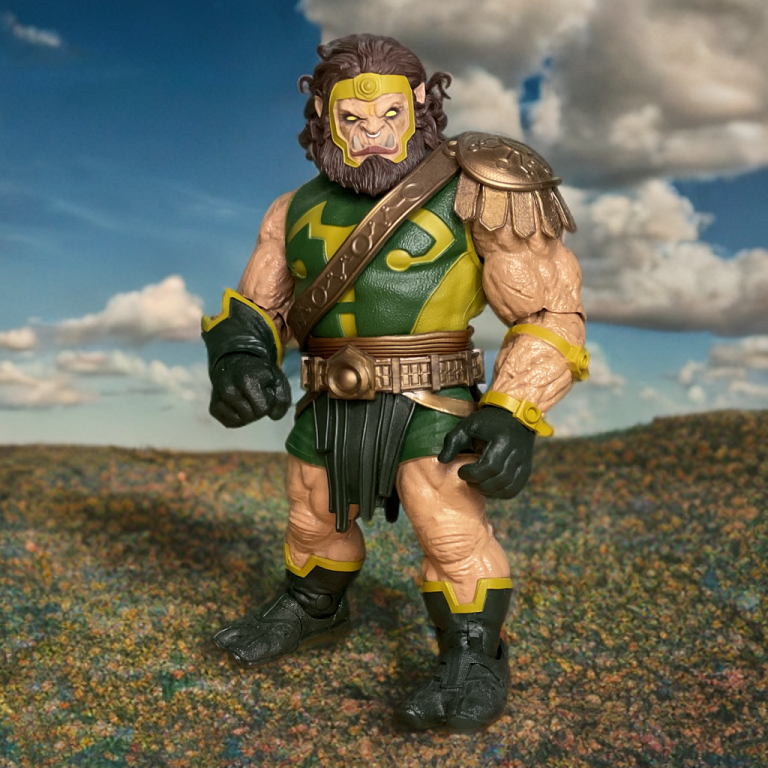
The resurrection cycle continues in “Final Crisis” (2008), where Kalibak is reborn in a human vessel, later transformed into a tiger-man hybrid to lead Darkseid’s forces in Blüdhaven. Here, he battles Tawky Tawny of the Marvel Family, only to be mortally wounded and abandoned by his own troops, who deem him unworthy due to his weakness. This abandonment mirrors Darkseid’s lifelong attitude: only the strong deserve loyalty, a lesson Kalibak internalizes but never fully embodies.
In more recent canon, such as the New 52 and Rebirth eras, the bittersweet elements intensify. “Justice League: The Darkseid War” (2015-2016) sees Kalibak as part of Darkseid’s elite, but his role is peripheral, overshadowed by Grail, Darkseid’s daughter with an Amazon assassin. Grail’s emergence highlights Kalibak’s obsolescence; she represents a new generation of heirs, further marginalizing him. Yet, Kalibak’s loyalty persists, fighting alongside his father against the Anti-Monitor. The tragedy peaks in moments where Darkseid’s death and rebirth cycles—such as in “Justice League Odyssey” (2018-2020)—leave Kalibak adrift, searching for purpose in his absence.
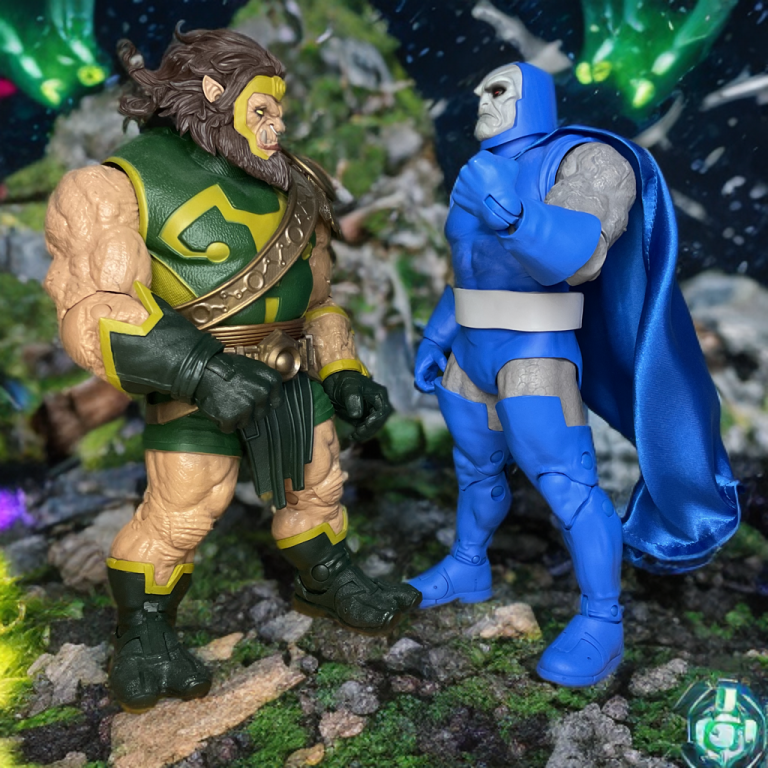
The most recent and perhaps most heart-wrenching development comes in “DC All In Special #1” (2024), where Darkseid, in a bid to summon greater power, sacrifices Kalibak outright. After 53 years of comic history, this act cements the relationship’s tragic arc: Kalibak, ever the faithful son, meets his end not in glorious battle, but as a pawn in his father’s endless quest for domination. Darkseid’s willingness to kill his own blood underscores the absence of true familial love, yet the bittersweet irony is that Kalibak likely went to his death believing it served a higher purpose—his father’s will.
Thematically, this relationship explores profound ideas within DC canon. It critiques the toxicity of authoritarian parenting, where affection is conditional on utility. Kalibak’s story is one of unrequited love, a son’s devotion clashing against a father’s emotional void. Bittersweetness arises from rare instances of pseudo-approval—Darkseid has, in fleeting panels, expressed pride in Kalibak’s destructiveness, as in “Superman/Doomsday: Hunter/Prey” (1994), where Kalibak’s savagery aligns with Apokolips’ ethos. Yet, these are eclipsed by abuse, resurrection not as mercy but as correction. Compared to Orion, who breaks free from Darkseid’s influence, Kalibak remains trapped, his loyalty a chain.
In analyzing crossovers like “Superman vs. Darkseid” arcs, Kalibak often serves as the initial antagonist, clashing with the Man of Steel in titles such as “Superman #24” (2022), where Superman dispatches him brutally. These encounters highlight Kalibak’s role as Darkseid’s extension, but also his isolation—defeated, he returns to Apokolips not as a hero, but as a failure awaiting judgment.
Ultimately, the relationship between Darkseid and Kalibak is a microcosm of the New Gods’ eternal struggle: the pull between destruction and redemption, tyranny and freedom. It is bittersweet because, in the grand scheme of DC’s multiverse, Kalibak’s tragedy humanizes the gods. He is not a villain by choice but by circumstance, molded by a father’s indifference into a beast of burden. Darkseid, for all his power, reveals a flaw in his inability to nurture, perpetuating a cycle of pain. As the DC Universe evolves, with reboots and retcons, this bond endures as a testament to Kirby’s vision—a reminder that even gods are bound by the heart’s fragile threads.
Also see: The Rogues DC Multiverse Collector Edition Captain Cold

 English
  Deutsch
  Français
  Português do Brasil
  日本語
日本語  Español
  English (Australia)