

Conan the Barbarian Bio and Action Figure Review
Deep Dive Bio on Conan the Barbarian
Conan the Barbarian is one of the most iconic characters in fantasy literature, comics, and film, embodying the archetype of the rugged, sword-wielding hero. Created by Robert E. Howard in 1932, Conan has transcended his pulp fiction origins to become a cultural phenomenon, with a rich history across multiple media, including Marvel Comics, films, and collectible action figures. Below is a comprehensive exploration of Conan’s origins, his Marvel Comics run, his cinematic adaptations, and the latest Super7 action figure release
Origins and Creation
Conan the Barbarian was created by Robert E. Howard, an American writer known for his contributions to the sword-and-sorcery genre. Conan first appeared in the short story “The Phoenix on the Sword”, published in December 1932 in Weird Tales magazine. Howard wrote 21 Conan stories (17 published during his lifetime, with others completed or published posthumously), crafting a vivid world set in the fictional Hyborian Age, a mythical era roughly 12,000 years ago, blending elements of prehistory, ancient civilizations, and fantasy.
Conan is a Cimmerian, a member of a barbarian tribe from a harsh, northern land. Born on a battlefield, he grows into a formidable warrior—physically powerful, cunning, and fiercely independent. His adventures take him across the Hyborian Age’s diverse kingdoms, from the decadent cities of Aquilonia to the exotic jungles of the Black Kingdoms. Conan is not just a brute; he’s a complex character who combines raw strength with intelligence, adaptability, and a personal code of honor. He battles sorcerers, monsters, and tyrants, often driven by a quest for freedom, wealth, or revenge. Over time, he becomes a thief, mercenary, pirate, and eventually a king, most notably of Aquilonia.
Howard’s Conan stories were groundbreaking for their gritty realism, vivid prose, and rejection of civilized decadence in favor of barbaric vitality. After Howard’s death in 1936, the character was expanded upon by other writers, such as L. Sprague de Camp and Lin Carter, who compiled and continued Conan’s adventures, solidifying his place in fantasy literature.
Conan’s Marvel Comics Run
Conan’s transition to comics began with Marvel Comics in 1970, marking a significant chapter in his legacy. Marvel’s adaptation introduced the character to a broader audience and shaped his modern image. Below is a detailed look at his Marvel Comics run, which spans multiple series and eras.
First Marvel Run (1970–1993)
Marvel Comics secured the rights to adapt Conan, debuting him in Conan the Barbarian #1(cover-dated October 1970), written by Roy Thomas and illustrated by Barry Windsor-Smith. This series ran for 275 issues until 1993, becoming one of Marvel’s longest-running titles at the time.
• Creative Team and Impact: Roy Thomas, a key figure in Marvel’s Bronze Age, adapted Howard’s stories while crafting original tales that stayed true to the character’s spirit. Barry Windsor-Smith’s art in the early issues defined Conan’s visual aesthetic, blending muscularity with dynamic, detailed environments. Later artists like John Buscema (often considered the definitive Conan artist) and writers like Stan Lee (in early issues) and Michael Fleisher contributed to the series’ success. Buscema’s work, in particular, emphasized Conan’s hulking presence and the Hyborian Age’s epic scope.
• Content and Themes: The series followed Conan’s adventures as a young warrior, thief, and mercenary, drawing heavily from Howard’s stories like “The Tower of the Elephant” and “Queen of the Black Coast”. It introduced iconic characters like Belit, the pirate queen, and expanded the Hyborian Age with new locations and villains. The comics balanced action, sorcery, and moral ambiguity, appealing to readers with tales of heroism and savagery. Conan’s encounters with supernatural threats, such as the sorcerer Thoth-Amon, and his defiance of corrupt rulers resonated with the countercultural ethos of the 1970s.
• Companion Series: In 1974, Marvel launched The Savage Sword of Conan, a black-and-white magazine aimed at mature readers. This series, which ran for 235 issues until 1995, allowed for more graphic violence and complex storytelling, unbound by the Comics Code Authority. It featured longer stories, often adaptations of Howard’s works, and included contributions from artists like Neal Adams and writers like Don Glut. The magazine also included essays and maps of the Hyborian Age, enriching the lore.
• Other Titles: Marvel published additional Conan titles, such as King Conan (1980–1989, 55 issues), which focused on Conan’s later years as king of Aquilonia, and shorter-lived series like Conan the Adventurer and Conan the Savage. The character also appeared in crossovers, notably in What If? stories, and briefly joined the Avengers in modern Marvel continuity.
• Cultural Impact: Marvel’s Conan comics were a commercial and critical success, selling millions and earning awards, including the Shazam Award for Best Continuing Feature in 1974. They introduced Conan to a generation, shaping his image as a leather-clad, sword-wielding barbarian. The comics also inspired other sword-and-sorcery titles, like Red Sonja, a character created by Roy Thomas based on Howard’s Red Sonya of Rogatino.
• End of the First Run: By the early 1990s, declining sales and disputes over licensing led Marvel to relinquish the Conan rights. The character’s comic rights moved to Dark Horse Comics in 2003, which published its own acclaimed run until 2018.
Second Marvel Run (2019–2022)
Marvel regained the Conan license in 2018, relaunching the character in 2019 with new series. This second run aimed to honor Howard’s legacy while integrating Conan into the broader Marvel Universe.
• Conan the Barbarian (2019–2022): Written by Jason Aaron and illustrated by Mahmud Asrar, this series returned to Conan’s roots, adapting Howard’s stories and introducing new adventures. It ran for 25 issues.
• Savage Sword of Conan (2019–2022): A companion series with grittier, anthology-style stories, written by creators like Gerry Duggan.
• Age of Conan: Spin-offs like Belit and Valeria explore
• Savage Avengers: Conan joined a team of Marvel heroes, including Wolverineand The Punisher, in a violent, time-displaced narrative.
• Reception and Challenges: The second run received praise for its art and fidelity to Howard’s vision but faced criticism for uneven storytelling and attempts to fit Conan into the superhero-heavy Marvel Universe. Legal disputes between Conan Properties International and Marvel, combined with the high cost of litigation, led Marvel to let the license lapse in 2022. The rights moved to Titan Comics, which began publishing new Conan comics in 2023.
• Legacy: Marvel’s Conan comics, across both runs, remain a cornerstone of the character’s history, with over 600 issues published. They introduced iconic visuals (e.g., Buscema’s loincloth-clad Conan) and expanded the Hyborian Age’s mythology, influencing subsequent adaptations.
Recommended reading: Conan The Barbarian Action Figure Checklist (1982-2025)
Conan in Film: The 1982 Movie and Beyond
Conan’s cinematic debut came with Conan the Barbarian (1982), a film that cemented his pop culture status. Directed by John Milius and starring Arnold Schwarzenegger, the movie is a landmark in fantasy cinema. A sequel and later reboot followed, each contributing to Conan’s legacy.
Conan the Barbarian (1982)
• Plot and Themes: The film follows a young Conan whose village is destroyed by the snake cult leader Thulsa Doom (played by James Earl Jones). Enslaved and forced to fight as a gladiator, Conan grows into a warrior seeking revenge. He allies with the thief Subotai(Gerry Lopez), the warrior Valeria (Sandahl Bergman), and the wizard Akiro (Mako) to confront Doom. The story emphasizes revenge, resilience, and the triumph of barbarism over sorcery, with a mythic tone inspired by Howard’s stories.
• Production and Cast: Written by Milius and Oliver Stone, the film drew from Howard’s stories like “The Thing in the Crypt” and “A Witch Shall Be Born”, while creating an original narrative. Schwarzenegger, then a bodybuilder with limited acting experience, was cast for his imposing physique, perfectly embodying Conan’s physicality. Bergman’s Valeria, a fierce and charismatic thief, won a Golden Globe for Best New Actress and a Saturn Award for Best Actress. Jones’ chilling performance as Thulsa Doom added gravitas to the villain.
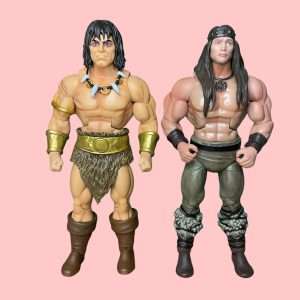
• Reception and Impact: Released on May 14, 1982, the film was a commercial success, grossing over $68 million worldwide on a $20 million budget. Its R-rated violence, epic scope, and Basil Poledouris’ iconic score made it a cult classic. Critics praised its visuals and Schwarzenegger’s star-making performance, though some noted its loose adaptation of Howard’s work. The film popularized the sword-and-sorcery genre, influencing later fantasy epics.
• Cultural Significance: The 1982 film defined Conan’s image for a generation, with Schwarzenegger’s portrayal becoming synonymous with the character. Lines like “What is best in life?” and the image of Conan wielding the Atlantean Sword became iconic. The film also introduced characters like Valeria, who were adapted into comics and toys.
A sequel, directed by Richard Fleischer, followed in 1984. It reunited Schwarzenegger, Mako, and others, with new characters like Zula (Grace Jones) and Princess Jehnna (Olivia d’Abo). The film adopted a lighter, PG-rated tone to appeal to a broader audience, focusing on a quest to retrieve a magical gem. While commercially successful, it received mixed reviews for its toned-down violence and weaker narrative compared to the original. It remains a beloved, if less revered, part of Conan’s cinematic history.
Conan the Barbarian (2011)
A reboot, directed by Marcus Nispel and starring Jason Momoa, aimed to return to Howard’s stories but failed to capture the original’s magic. Despite a strong cast (including Rose McGowan and Ron Perlman), the film suffered from poor scripting and excessive CGI, earning negative reviews and under performing at the box office ($48 million worldwide on a $90 million budget). It has since gained a minor cult following but is considered inferior to the 1982 film.
Latest Super7 Action Figure Release
Super7, a company known for high-quality, collectible action figures, has been a major player in Conan merchandise, releasing figures inspired by both the 1982 film and the Marvel Comics run. Their latest release, announced in July 2024, is a wave of Conan the Barbarian ULTIMATES!figures inspired by the 1970s Marvel Comics era, specifically drawing from the character’s appearances in Conan the Barbarian and The Savage Sword of Conan. This wave includes Conan and Kull the Conqueror, another Robert E. Howard creation. Below are the details.
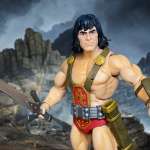
Conan the Barbarian ULTIMATES! Figure (Comic-Inspired)
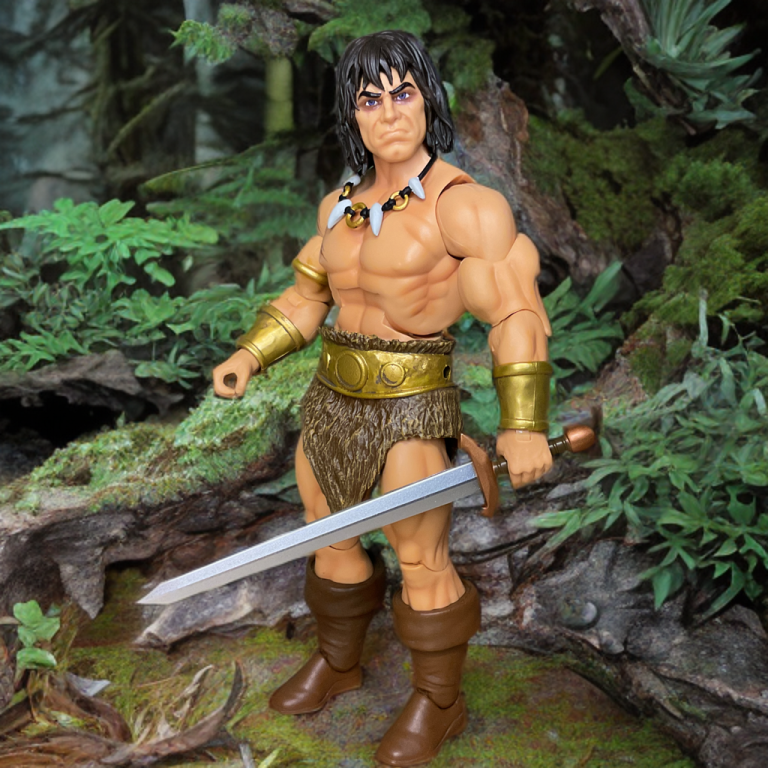
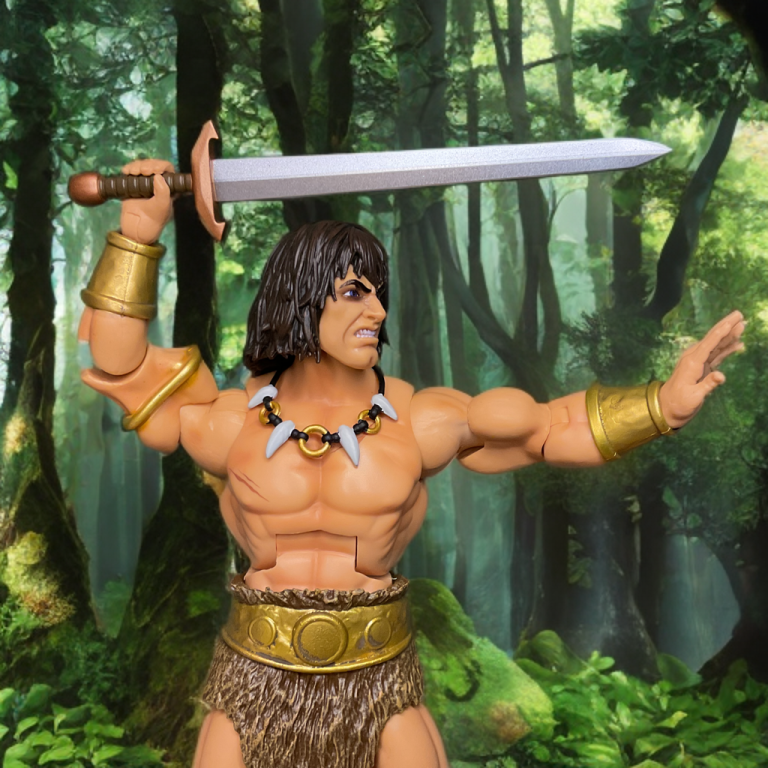
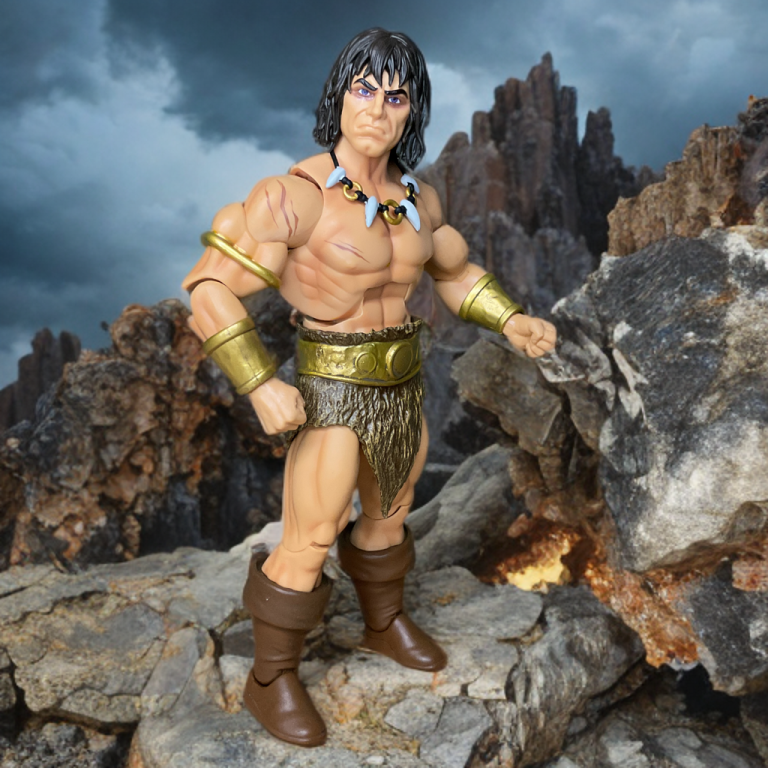
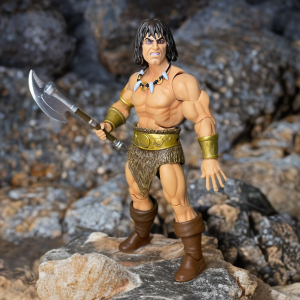
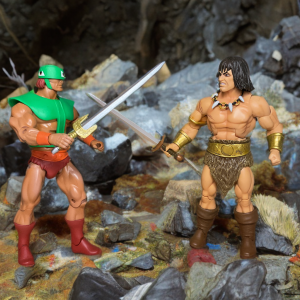
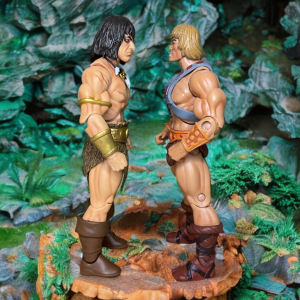
• Design and Inspiration: The Conan figure is based on his look in the 1970s Marvel Comics, particularly the art of Barry Windsor-Smith and John Buscema. It captures the classic comic aesthetic—muscular build, loincloth, and rugged features—reflecting the Cimmerian warrior from his early adventures. The figure is designed to evoke the style of Conan the Barbarian #1 (1970) and The Savage Sword of Conan.
Specifications:
• Scale: 7-inch, highly articulated figure with multiple points of articulation for dynamic posing.
• Accessories: Includes interchangeable heads (likely different facial expressions), multiple interchangeable hands, a soft goods loincloth, an axe, a sword with a removable sheath, a belt, and a necklace. Pre-ordering the entire wave directly from Super7 includes a bonus bloody weapon set.
• Detailing: Features premium sculpting and paintwork, emphasizing Conan’s battle-worn appearance and comic-accurate details, such as his Hyperborean weapons.
• Price and Availability: Priced at $55, the figure is a made-to-order release, available for pre-order from Super7’s website with an expected delivery in April 2025.
• Reception: Collectors have praised the figure’s fidelity to the Marvel Comics design, though some on platforms like Reddit have noted concerns about Super7’s final product quality compared to their 3D renders. Fans appreciate the inclusion of Kull the Conqueror, a related Howard character, but some expressed disappointment over the figure’s stylized proportions (e.g., “stumpy arms” or an oversized head). Others compare it favorably to earlier figures, like Mezco’s ONE:12 Conan releases, but note Super7’s 7-inch scale makes it less compatible with 6-inch lines like Hasbro’s Marvel Legends.
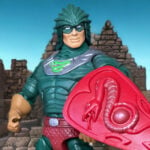
Kull the Conqueror ULTIMATES! Figure
• Context: Kull, created by Howard in 1929, is a precursor to Conan, a former slave and gladiator who becomes king of Valusia. He appeared in Marvel’s Kull the Conqueror #1(1971). This figure complements the Conan release, drawing from his 1970s comic appearances.
• Specifications: Similar to the Conan figure, it’s a 7-inch, articulated figure with interchangeable heads, hands, an axe, a sword with a sheath, and a crown. Priced at $55, it’s also set for release in April 2025.
• Significance: Kull’s inclusion expands Super7’s Conan line to cover Howard’s broader mythos, appealing to collectors interested in the Hyborian Age’s extended universe.
Other Super7 Conan Figures
Super7 has a robust history of Conan figures, including:
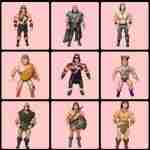
• Movie-Inspired ULTIMATES!: Previous waves focused on the 1982 film, featuring characters like Conan (Iconic Pose), Thulsa Doom, Subotai, and Valeria (including a “Blood-Soaked Pit Fighter Conan” and “Valeria Spirit” from the Battle of the Mounds). These 7-inch figures, priced between $44.99–$54.99, include accessories like the Atlantean Sword and premium packaging.
• ReAction Figures: Super7’s retro 3.75-inch line, inspired by 1980s Kenner toys, includes Conan (War Paint, Pit Fighter, Resurrected), Subotai, Valeria, and Thulsa Doom. These are less articulated but nostalgic, priced at $20 each.
• Deluxe Figures: Earlier releases, like the 2019 Conan Deluxe Figure, featured comic-inspired designs with accessories like spears and daggers, also at 7 inches.
Collector Context
Super7’s Conan figures are part of a broader resurgence of Conan collectibles, competing with brands like Mezco (ONE:12 line, including Frazetta-inspired and movie-based figures) and McFarlane Toys (2004 statues with minimal articulation). The 2024 comic-inspired wave stands out for its focus on the 1970s Marvel aesthetic, appealing to fans of the original comics. However, some collectors on Reddit note that Super7’s figures, while detailed, sometimes fall short in final production quality compared to competitors like Mezco, and their 7-inch scale doesn’t align with standard 6-inch lines.
Synthesis and Legacy
Conan the Barbarian is a multifaceted character whose enduring appeal lies in his primal strength, moral complexity, and adaptability across media. His Marvel Comics run (1970–1993, 2019–2022) established him as a comic book legend, with over 600 issues that expanded Howard’s Hyborian Age and influenced the sword-and-sorcery genre. The 1982 film, starring Arnold Schwarzenegger, remains the definitive adaptation, blending gritty action with mythic storytelling, while its sequels and reboot showed the challenges of recapturing that magic. Super7’s latest ULTIMATES! figures, released in 2024 and inspired by the 1970s Marvel Comics, continue Conan’s collectible legacy, offering fans detailed, articulated figures that honor his comic roots.
Conan’s journey from pulp fiction to global icon reflects his universal appeal as a symbol of raw power and unyielding spirit. Whether battling sorcerers in comics, seeking revenge on screen, or standing tall on a collector’s shelf, Conan remains a towering figure in fantasy, with a legacy that continues to evolve through new comics (now at Titan) and collectibles.

 English
  Deutsch
  Français
  Português do Brasil
  日本語
日本語  Español
  English (Australia)