

D&D Ogre Guide: Stats, Lore, and Action Figures
In the Dungeons & Dragons (D&D) role-playing game, the ogre is a classic monster, a brutish and towering creature known for its raw strength, limited intelligence, and voracious appetite for destruction and plunder. Below is a comprehensive biography of the ogre, covering its origins, characteristics, cultural role, variants, and history across the game’s editions, as well as its depiction in the broader lore of the Forgotten Realms and other settings.
Overview
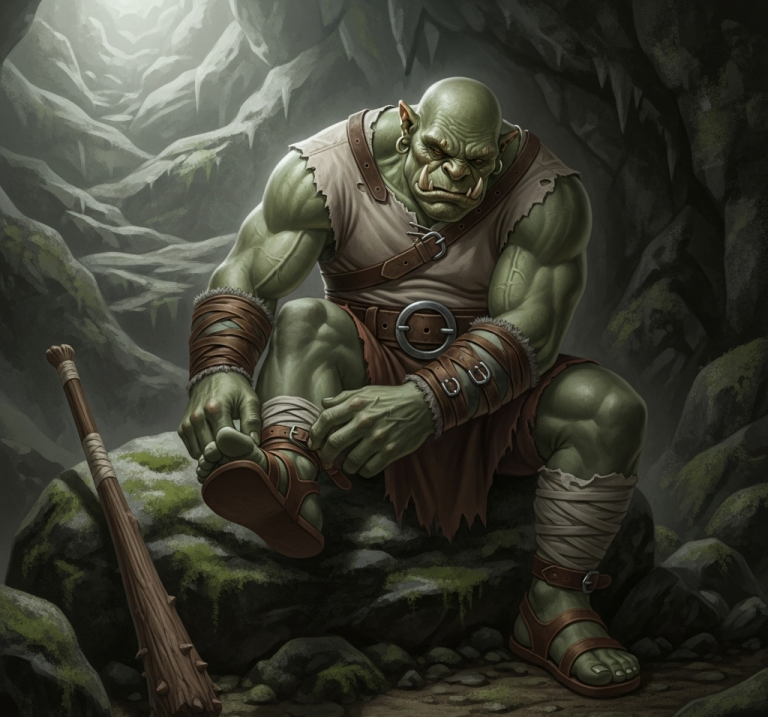
Ogres are a race of giant-kin, hulking humanoids standing 9 to 10 feet tall and weighing between 300 to 650 pounds, depending on the source. They are characterized by their muscular builds, disproportionately large heads, and quick tempers. Ogres are often depicted as chaotic, greedy, and destructive, thriving on ambushes, raids, and brute force rather than strategy or finesse. In D&D, they serve as iconic low- to mid-level adversaries, embodying the archetype of a “big, dumb brute” that challenges players with sheer physical power.

Physical Characteristics
• Appearance: Ogres are large, muscular creatures with thick, warty skin ranging in color from dull yellow to blackish-brown, with rare instances of sickly violet hues. Their eyes are often purple with white pupils, and their teeth and talons are orange or black. Their hair is long, greasy, and varies from blackish-blue to dark green, contributing to their repellent odor, often likened to curdled milk. They typically wear poorly cured furs and hides, which add to their unkempt and savage appearance.
• Size and Strength: As Large creatures, ogres have a natural reach of 5 to 10 feet, depending on the edition and weapon used. They possess immense physical strength (Strength scores typically around 19 in 5e) and can carry up to 570 pounds comfortably or drag up to 1,140 pounds. Their brute force allows them to hurl medium-sized humanoids as improvised weapons, dealing significant damage.
• Ogres favor overwhelming force, often using ambushes or ranged javelins to soften foes before closing in with their greatclubs. Their low Dexterity and mental stats make them vulnerable to agile or cunning opponents.
Origins and Lore
Ogres in D&D trace their origins to wrathful deities and supernatural forces. According to the D&D 2024 Monster Manual, ogres are spawned from lands corrupted by evil gods (such as Erythnul, Takhisis, or Vaprak), sinister magic, or ancient curses. Some ogres bear physical marks of their origins, such as rocky calluses, mossy growths, or frozen scars, reflecting the corrupted environments from which they emerge.
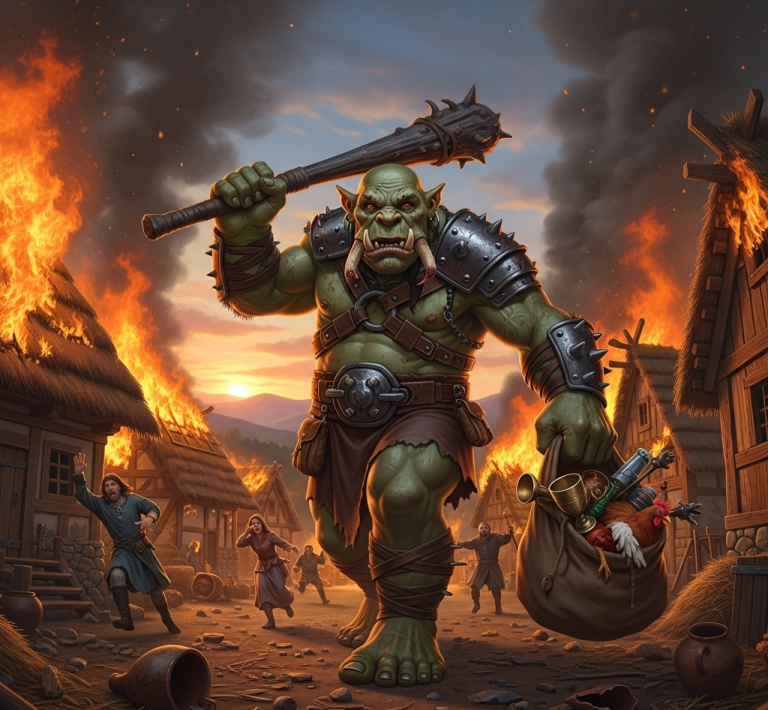
In the broader context of D&D lore, particularly in the Forgotten Realms setting, ogres are considered the “runts” of the giant-kin family, closely related to trolls and distantly to true giants. Their chaotic nature and limited intelligence make them prone to serving as mercenaries or muscle for more cunning creatures, such as orcs, gnolls, evil clerics, or even demons. They are often found in dismal ruins, bleak hinterlands, or mountainous regions, raiding vulnerable communities for food and treasure.
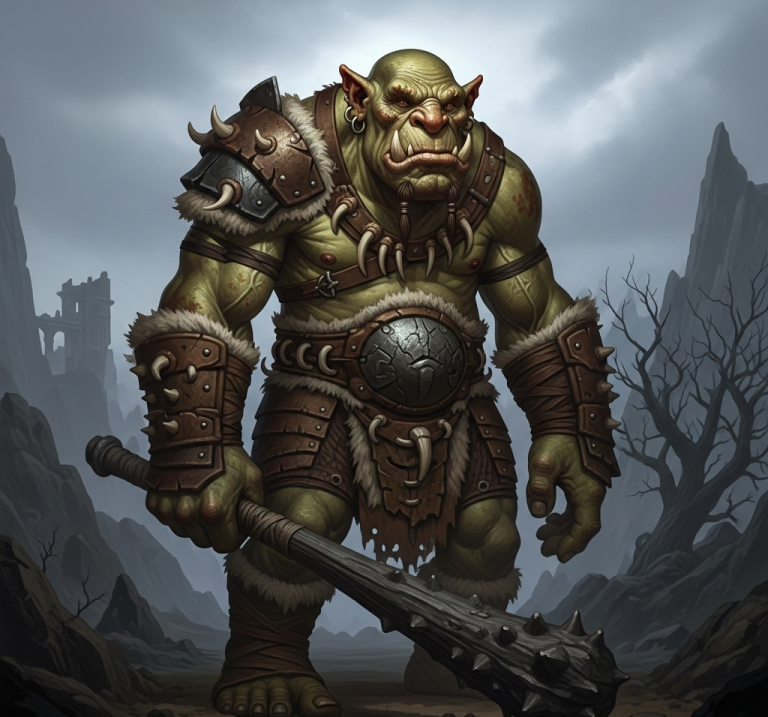
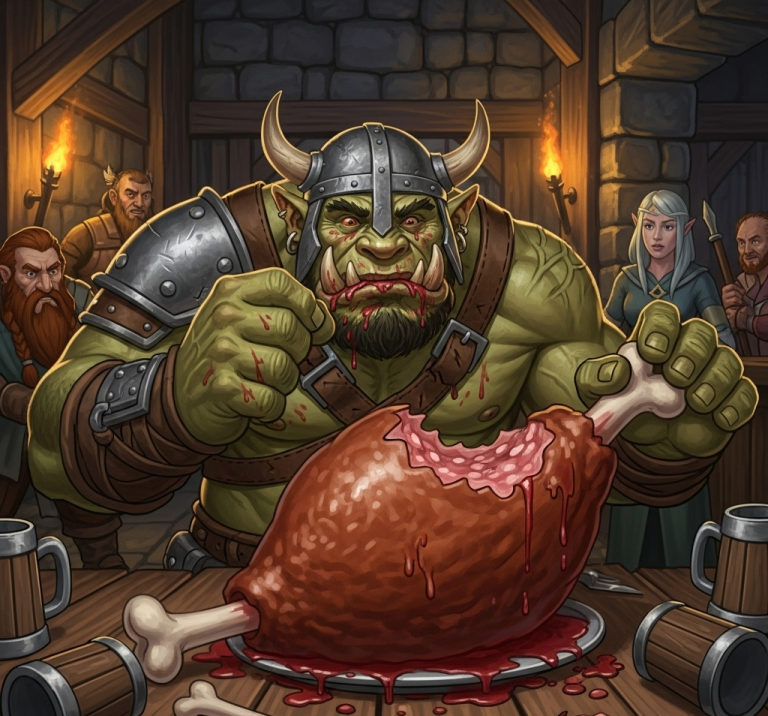
Ogres are materialistic, coveting gold, gems, and shiny objects, which often leads to squabbles among themselves over loot. Their diet is infamously gruesome, with a particular fondness for the flesh of halflings, elves, and dwarves, though they will eat nearly any humanoid. They are known to kidnap victims for later consumption or, in rare cases, to keep as performers for their crude amusement.
Behavior and Society
• Temperament: Ogres are lazy, brutish, and avaricious, with notoriously quick tempers. When enraged, they lash out in destructive tantrums, smashing objects and creatures until their anger subsides. Their low intelligence (Intelligence 5 in 5e) and wisdom (Wisdom 7) make them difficult to train and prone to acting against common sense, though they can be motivated by pain, fear, or hunger.
• Social Structure: Ogre tribes are typically small and led by powerful chiefs or sub-chiefs, who are the strongest and marginally smarter members of the group. Chiefs may have higher hit dice (e.g., 7 HD, 30–37 hit points, and better armor) and deal more damage. Lairs are simple camps or fortified dwellings, often containing slaves, food stores, and hoarded treasure. Ogre magi or other intelligent leaders may organize them into more formidable forces.
• Alliances: Ogres frequently ally with other evil creatures, including orcs, trolls, gnolls, and giants. They serve as shock troopers or mercenaries, often in exchange for food, riches, or the promise of battle.
Cultural Impact and Notable Ogres in D&D Lore
Ogres have left a significant mark on D&D campaigns and stories, often serving as memorable early challenges for adventuring parties.
Below are some notable examples of ogres in D&D lore, particularly in the Forgotten Realms setting:
• Bonegnasher: A prominent ogre leader who took over the Tomb of Damara in search of the Orb of Dragonkind in the mid-14th century DR. Bonegnasher’s ambition and brutality made him a significant threat in this campaign.
• Guruk Bonesnap: A fierce ogre chieftain who led a tribe in the Wild Hills near Daggerdale around 1370 DR. After killing the previous leader, Kolgok Skullcrush, Guruk’s tribe engaged in a bloody feud with a gnoll pack led by Rattlefang, showcasing the chaotic and violent nature of ogre society.
• Ogres in Video Games: Ogres have appeared in numerous D&D-based video games, such as the Baldur’s Gate series (Baldur’s Gate, Baldur’s Gate: Dark Alliance, and Baldur’s Gate: Dark Alliance 2), Neverwinter Nights, and Icewind Dale. These games often depict ogres as hulking brutes or skirmishers, reinforcing their role as iconic foes.
Ogres are celebrated as one of the “ten best low-level monsters” by the authors of Dungeons & Dragons for Dummies, who note that they “teach players about fighting big, powerful, stupid monsters, which is an iconic D&D experience.” Their simplicity and brute strength make them ideal for introducing new players to combat dynamics.
History in D&D Editions
Ogres have been a staple of D&D since its earliest days, evolving with each edition:
• D&D “White Box” Set (1974): Ogres debuted as “large and fearsome monsters,” simple but dangerous adversaries.
• 1st Edition (1977): The Monster Manual described ogres as “ugly-tempered and voracious,” often serving as mercenaries. Their stats included 4+1 Hit Dice and a damage output of 1d10+2 with a club.
• 2nd Edition (1989): The Monstrous Manual expanded on their lore, emphasizing their greed, chaotic nature, and alliances with other monsters. Ogre leaders were detailed with higher hit points and better armor.
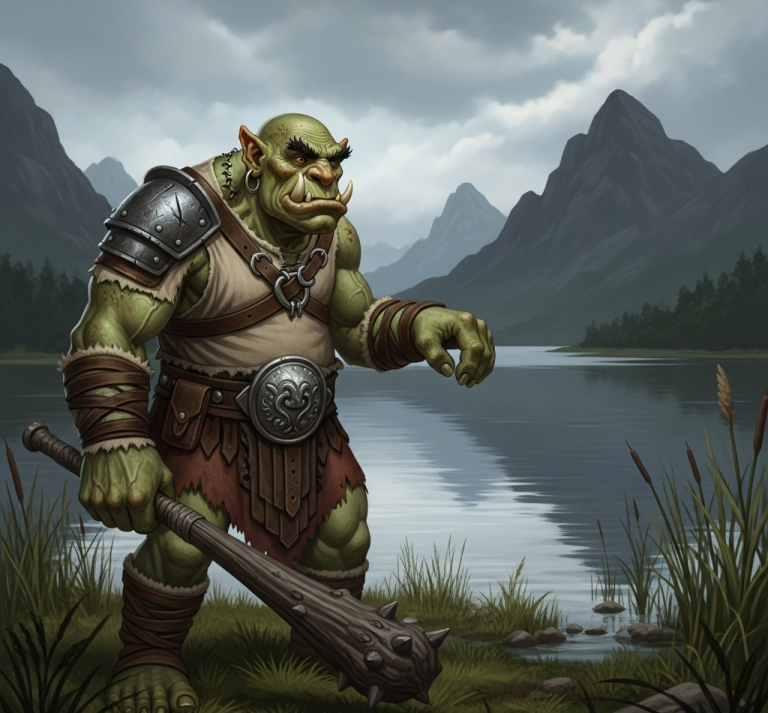
• 3rd/3.5 Edition (2000–2008): Ogres retained their role as chaotic evil giants with detailed racial traits (+10 Strength, -4 Intelligence, -4 Charisma) and a focus on their barbarian tendencies. The Monster Manual included merrow stats, and additional variants appeared in supplements like Monster Manual III and IV.
• 4th Edition (2008): Ogres were given more tactical variety, with variants like battering ram ogres and bolt launchers, though some criticized their simplicity compared to other monsters.
• 5th Edition (2014–Present): The Monster Manual streamlined ogres into CR 2 creatures with straightforward mechanics, emphasizing their brute strength and low mental stats. The D&D 2024 Monster Manual added lore about their supernatural origins and environmental adaptations.
Ogres as Playable Characters
While ogres are primarily adversaries, D&D has occasionally allowed them as playable races:
• AD&D (1983): The half-ogre appeared as a player character race in Dragon #73 and later in The Complete Book of Humanoids (1993) and Player’s Option: Skills & Powers (1995).
• 3rd Edition (1989): The Time of the Dragon set and Taladas: The Minotaurs presented ogres as a playable race in specific settings, with racial traits reflecting their size and strength.
• 5th Edition Homebrew: Some players have experimented with ogre player characters, though their Large size and low mental stats pose balance challenges. Homebrew rules often grant +3 Strength and extra weapon damage but impose penalties to Dexterity, Intelligence, or Charisma.
Tactics and Role in Campaigns
Ogres are often used as “bags of hit points” in encounters, relying on their high Strength and Constitution to overwhelm foes. However, their low Armor Class (11–12), poor Dexterity, and abysmal Intelligence and Wisdom make them vulnerable to tactics like kiting, illusions, or charm spells. Dungeon Masters are advised to pair ogres with smarter allies (e.g., goblin brute tamers or ettins) to compensate for their weaknesses and create balanced encounters. Suggested abilities to enhance ogres include:
• Sweep: If an ogre misses an attack, it can deal Strength modifier damage to adjacent targets.
• Slam the Ground: A legendary action causing nearby creatures to make an Acrobatics check or be knocked prone.
Ogres shine in campaigns as early threats for low-level parties (levels 1–5), teaching players to handle physically imposing foes. They are often placed in ambushes, guarding treasure, or serving as muscle for more cunning villains, such as in Hoard of the Dragon Queen or Storm King’s Thunder.
Cultural and Mythological Context
The ogre in D&D draws heavily from folklore, where ogres are depicted as man-eating giants with origins in 12th-century Arthurian myths, derived from the Etruscan god Orcus. They appear in tales like Puss in Boots, Hop-o’-My-Thumb, and as figures like Grendel in Beowulf. D&D ogres retain the mythological traits of size, hunger, and savagery but adapt them to fit a fantasy world where they serve as both threats and occasional allies.
Ogres in Action Figure Form
A complete history of ogre action figures and miniatures covers over 40 years of gaming and toy history. From the early “dollar store” inspirations of the 1970s to the high-end boutique figures of today, ogres have remained a staple of fantasy collections.
1. The Early Years (1970s – 1980s)
The origins of ogres in the toy world are famously tied to Gary Gygax and the birth of Dungeons & Dragons.
• The Pre-D&D “Plastic Dinosaurs”: In the early 70s, Gygax famously purchased bags of cheap plastic “prehistoric monsters” from Hong Kong. While these primarily inspired the Rust Monster and Bulette, they established the “ugly brute” aesthetic that defined the Ogre in early D&D.
• LJN’s Advanced D&D Line (1983–1984): This was the first major commercial release of ogre action figures.
• Ogre King (1983): Part of Series 1, this 4-inch figure featured a removable helmet and morning star.
• **Ogre King (Shield Shooter) (1984): A Series 2 variant featuring “Battle-Matic” action (a lever moved his arm) and a shield that could fire a projectile.
• Odious Ogre (1984): Part of the “Packs” line, this was a smaller, less articulated figure sold with a “Book of Magic” accessory.
2. The Miniature Revolution (1980s – 2000s)
While action figures were rare, the 28mm-32mm miniature market exploded.
• **Citadel & Ral Partha (1980s): Under license from TSR, Citadel (UK) and Ral Partha (US) produced dozens of ogre variants. Notably, Citadel’s Ogre Mage (1985) introduced the iconic “Oriental” style ogre with a topknot and flowing robes.
• Warhammer Ogre Kingdoms (2000s): Games Workshop fundamentally shifted ogre design in 2005 with the “Ogre Kingdoms” launch. Figures like Greasus Goldtooth and the Ogre Bulls moved away from lanky giants toward massive, pot-bellied “gut-plate” wearing brawlers. These plastic kits remain some of the most customizable ogre figures ever made.
3. Modern Action Figures (1990s – Present)
As the adult collector market grew, ogres became more detailed and “ultra-scale.”
• McFarlane Toys – Spawn: Dark Ages (1998): McFarlane released “The Ogre” in Series 11. It was a massive, highly detailed figure for its time, featuring a small demon rider on its back and a spiked club. A “Version 2” with different paint applications (brown body) was also released.
• D&D Icons of the Realms (2014–Present): WizKids has released numerous pre-painted “action miniatures.” Their Ogre Howdah (from the Storm King’s Thunder set) is essentially a small action figure, standing significantly taller than standard minis and featuring a platform for goblins to ride in.
• Mythic Legions (Four Horsemen Studios): This line represents the pinnacle of modern ogre action figures.
• The Ogre Scale: Unlike standard 6-inch figures, Mythic Legions features a dedicated “Ogre Scale” (approx. 9 inches tall).
• Notable Figures: The Frost Ogre, Kkurzog, Argemedes (Cyclops/Ogre), and the Ogre Legion Builder (a blank slate for customizers).
• Recent Releases: The Poxxus Wave introduced more specialized ogres like Aracagorr and Ucczajk, while the upcoming Dawns of Discovery (2025/2026) includes the walrus-inspired ogre-scale Odobenn.
4. Niche and Crossover Figures
• Steve Jackson Games (Ogre): While these are “cybertanks” rather than fantasy monsters, they are technically the most produced “Ogre” figures in history, ranging from 1/285 scale to the “Deluxe” plastic miniatures.
• NECA (2023): As part of their modern D&D line (reviving LJN designs), NECA has teased/released updated versions of classic monsters, though they have focused more on characters like Warduke and Elkhorn thus far.
Conclusion
The ogre in Dungeons & Dragons is a quintessential monster, embodying raw power and chaotic evil. From its origins in corrupted lands to its role as a low-level terror, the ogre remains a beloved challenge for adventurers. Its simplicity allows Dungeon Masters to craft memorable encounters, while its variants and lore provide depth for richer storytelling. Whether smashing through a village or serving as a mercenary for a darker power, the ogre is a timeless fixture in the D&D multiverse, teaching players the thrill of facing a hulking, brutish foe. Also see Ettin.

 English
  Deutsch
  Français
  Português do Brasil
  日本語
日本語  Español
  English (Australia)