

トランスフォーマー』スタースクリームの総合経歴
Few characters in the pantheon of pop culture embody the treacherous, thrilling spirit of 1980s dark-fantasy sci-fi quite like Starscream. As the ruthlessly ambitious Air Commander of the Decepticons and the definitive leader of the Seeker jet fleet, Starscream’s eternal quest to overthrow Megatron has defined Transformers storytelling across decades of comic, screen, and toy history. But for high-end action figure collectors, his legacy isn’t just etched into classic television frames—it’s felt in the hand.
From the complex, fragile engineering of the original 1984 Takara-designed G1 mold to the premium heft of modern Masterpiece scales and highly articulated lines like Hasbro’s Transformers Legacy, tracking Starscream means analyzing an evolution of both character lore and toy engineering. Whether you are staging dynamic aerial displays on your shelf, studying the narrative pacing of classic G1 episodes, or hunting down rare vintage variants on the secondary collector market, understanding Starscream’s mechanical and character history is a baseline requirement for any serious pop culture enthusiast.
In this comprehensive editorial biography, we look past standard fan trivia to break down Starscream’s canonical military career on Cybertron, the psychological pacing behind his legendary betrayals, and provide a direct collector-tier assessment of how his iconic F-15 Eagle design has transitioned from the screen to the definitive plastic figures occupying our shelves today.
起源と役割
スタースクリームは典型的なメガトロンの副官であり、その立場を利用して常にリーダーシップを奪おうと画策している。彼のバックストーリーでは、ディセプティコンに加わる前はサイバトロンで科学者や高官として活躍し、野心と権威への不満に駆られていたとされることが多い。例えば、アニメのジェネレーション1(G1)では、友人のスカイファイアーを失った科学者であり、エピソード“戦争の夜明け.”のような新しい継続性のあるものである。 トランスフォーマー・ワン (2024年)では、サイバトロンのハイガードのリーダーとしてスタートするが、D-16(メガトロン)に敗れ、初期のリーダーシップと最終的な没落が浮き彫りになる。.
性格と能力
Starscream’s psychological profile presents one of the most fascinating case studies in fiction—a volatile cocktail of genuine strategic brilliance routinely undermined by fatal arrogance and reflexive cowardice.
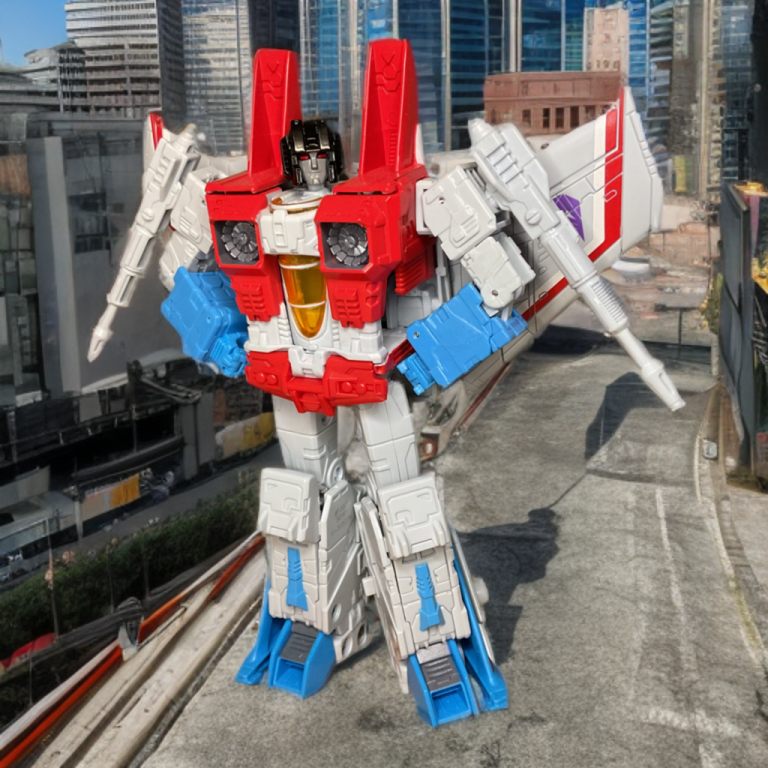
Unlike the mindless foot soldiers of the Decepticon ranks, Starscream possesses an advanced scientific mind (canonically established as a former Cybertronian scientist alongside Jetfire). However, his pathological need for status causes him to strike prematurely, sabotaging his own well-planned coups before they can bear fruit.
In terms of physical mechanics and battlefield utility, his alternate mode as a supersonic fighter jet positions him as the apex Air Commander of the Decepticon Seekers. His primary offensive loadout centers around his arm-mounted Null Rays—highly specialized weapons capable of instantly disrupting and shutting down the internal electrical and circuitry systems of any target mechanical structure upon impact—complemented by a standard array of cluster bombs and thermal missiles.
Rank: 9 | Speed: 9 | Intelligence: 7 | Courage: 5 — The definitive mathematical proof of his character design: unmatched tactical position and velocity, heavily undermined by a baseline vulnerability when cornered.
The ultimate manifestation of his narrative resilience occurs within the Generation 1 continuity. Following his physical obliteration by Galvatron in トランスフォーマーザ・ムービー (1986), it is revealed that Starscream possesses an anomalous, completely indestructible mutant spark. This unique biological quirk allows his conscious essence to survive as a non-corporeal ghost, capable of drifting through deep space, haunting Cybertronian outposts, and physically possessing other Transformers’ bodies. This brilliant lore mechanism adds unparalleled supernatural depth to his character, ensuring that even complete physical destruction is merely a temporary setback in his eternal power struggle against Megatron.
文化的影響
Starscream’s permanent residency at the forefront of pop culture stems from his status as the definitive archetype of the treacherous lieutenant. Across more than four decades, his character dynamic has proven so structurally essential to the franchise’s friction that he has been integrated into nearly every single major reimagining of the brand.
The foundation of this global legacy belongs directly to voice actor クリス・ラッタ during the original 1984 animated run. Latta infused Starscream with a rasping, high-pitched, and venomous vocal delivery that instantly distinguished him from the deep, booming resonance of Frank Welker’s Megatron. This vocal performance created a perfect sonic representation of petty ambition and desperate bravado, establishing a blueprint that every subsequent voice actor—from Charlie Adler in the live-action films to Steve Blum in トランスフォーマープライム—has had to respect or deliberately subvert.
In the modern landscape, Starscream’s cultural footprint is actively sustained by a massive global community of toy photographers, fan artists, and high-end collectors. The physical demand for the character translates into a permanent fixture on store shelves and aftermarket registries alike. A primary example of this ongoing relevance is the massive collector reception surrounding the Studio Series Deluxe Class Transformers One Starscream figure (released in July 2025). This release highlighted the modern engineering capability to translate his cybernetic, pre-Earth gladiatorial design into a highly articulated, display-grade Deluxe format.
Whether it is through viral internet memes celebrating his predictable, immediate betrayals or the premium secondary market value commanded by his vintage Takara molds, Starscream remains an unshakeable pillar of pop culture history.
Tactical Intel: Key Points
Starscream remains a cornerstone antagonist within the Transformers franchise, defined across all media by his relentless, unchecked ambition to overthrow Megatron and seize absolute control of the Decepticon army.
His psychological profile is heavily marked by a volatile cocktail of cunning strategy, blatant treachery, and sudden physical cowardice, cementing him as one of pop culture's most complex and enduring fan-favorite villains.
Engineered for unmatched supersonic aerial combat, he utilizes a fighter jet alternate mode alongside specialized traits—most notably an anomalous, completely indestructible mutant spark in major continuity blocks.
While his canonical role shifts fluidly across varying timelines, his most structurally significant milestones occur in the original G1 Animated Series (1984), the computer-animated Transformers: Prime (2010), and the high-stakes cinematic origins of トランスフォーマー・ワン.
深く複雑な性格
Within the landscape of modern media franchises, Starscream stands as one of the most structurally complex and layered anti-heroes in science fiction history. Far from a one-dimensional children’s cartoon villain, the Decepticon Air Commander represents a masterclass in serialized character development—a figure whose deep-seated psychological insecurities, relentless ambition, and tactical brilliance have kept him at the forefront of pop culture for over forty years. For serious collectors and media historians, analyzing Starscream requires looking past standard franchise summaries to examine how a single character concept has successfully adapted across drastically different eras of comic book literature, television animation, and physical toy engineering.
This comprehensive analytical retrospective serves as an expert-tier field guide to the multi-decade legacy of Cybertron’s most infamous usurper. By contrasting original 1984 production assets against modern franchise updates, this study provides a precise breakdown of Starscream’s military origins, his sub-atomic engineering anomalies, and his fluid roles across various evolutionary timelines—including the foundational Generation 1 cartoon, the dark psychological depth of トランスフォーマープライム, and the modern cinematic world-building of トランスフォーマー・ワン.
Designed specifically for dedicated high-end collectors, toy photographers, and pop culture archivists, this deep-dive examination evaluates the mechanical, vocal, and narrative frameworks that transformed a jointed plastic F-15 Eagle fighter jet into a timeless symbol of Shakespearean betrayal.
起源と背景
スタースクリームの出自は『トランスフォーマー』の広大な多元宇宙を反映して様々だが、共通しているのは、ディセプティコンと同盟を結ぶ前はサイバトロンで科学者、探検家、あるいは高位の地位にいたことである。彼の野心と権威への不満が、オートボットを打倒しディセプティコンの支配を確立しようとするメガトロンの派閥に加わる決断を促すことが多い。.
- ジェネレーション1(G1)継続:
摩擦の設計者メガトロンが彼を近くに置く理由
伝承における最も永続的な疑問の1つは、超優秀で、しばしば大量殺戮を行うメガトロンが、なぜスタースクリームに息の根を止めることを許したのかということだ。G1カートゥーンでは、それは戦術的な見落としのように感じられたが、IDWコンティニュイティでは、それは深遠な心理的駆け引きであることが明らかになった。スタースクリームは “必要な摩擦 ”を象徴している。”

メガトロンは、団結について美辞麗句を並べるが、内部のライバルのいない革命は停滞することを理解している。スタースクリームはメガトロンが自らの権威を研ぎ澄ますための砥石である。スタースクリームが陰謀を企てるたびに、メガトロンは警戒を強いられる。この意味で、スタースクリームは単なる裏切り者ではなく、ディセプティコンの政治に不可欠な器官である。彼は軍事独裁政権が自重で崩壊しないよう、健全な量のパラノイアを提供する。.
科学者の悲劇堕落したビジョン
スタースクリームが私たちの想像力をかきたてるのは、科学者としての彼の出自に根ざしている。G1では サンボー 彼の戦前の人生は、剣ではなく星に捧げられていた。スカイファイア(ジェットファイア)とのパートナーシップは、かつては深く無私の友情が可能だったロボットの姿を明らかにしている。スカイファイアーを北極の氷に奪われたとき、彼は友人を失っただけでなく、論理的で慈悲深い宇宙への信頼を失ったのだ。.
この “堕ちた科学者 ”の原型が、彼の悪役を一面的ではなく悲劇的なものにしている。スタースクリームが王位を狙うたびに、彼は単に権力を求めているのではなく、極風にパートナーを奪われたときに失った支配力を取り戻そうとしているのだ。自分が主導権を握れば、科学と論理を使って戦争の混乱を「解決」できると信じているのだ。彼の裏切りとは、彼自身の中では、より効率的な平和の追求なのだ。.
IDWシフト究極の姿としての政治家
現代の伝承でスタースクリームが「急上昇」する理由は、彼が『GHOST IN THE MOVIE』で変身したことに大きく起因している。 IDW 2005シリーズ. .ここで脚本家たちは、スタースクリームの真の可能性が兵士としてではなく、君主としてであることに気づいた。.
戦争が終結し、“非同盟先住民生命体”(NAILs)がサイバトロンに戻ったとき、スタースクリームはメガトロンやオプティマス・プライムにはできなかったことをした:彼は適応した。彼は、フュージョン・キャノンの時代が終わったことを悟った。ポピュリストのリーダーとして再ブランディングすることで、彼はトランスフォーマーの根本的な真実、つまり戦場ではない故郷への願望を利用したのだ。.
サイバトロンの支配者として君臨することが、彼の複雑さの本質である。バンブルビーの亡霊」(芽生えつつある良心の現れ)に悩まされたスタースクリームは、自らの行動の現実と向き合わなければならなかった。彼は何百万年もの間、王になりたいと願ってきたロボットであったが、王になるには、これまで避けてきたレベルの自己犠牲が必要であることに気づいたのだ。この内的葛藤(「ハスラー」対「ヒーロー」)こそが、ファンが彼に夢中になる理由なのだ。彼は、自分自身の本質と純粋に闘っているように感じられる唯一のロボットなのだ。.
コンバイナー・ウォーズ:キャラクターのるつぼ
(その) コンバイナー・ウォーズ それは玩具のタイアップ以上のものであり、“現代のスタースクリーム ”を形成する物語上の坩堝だった。エニグマ・オブ・コンビネーションが、スタースクリームが何よりも大切にしている個人のアイデンティティを消し去ろうとしたとき、彼は立ち上がった。.
との同盟を結んだ。 ウィンドブレイド スタースクリームが他のロボットを真の仲間として扱うのを見たのは初めてだった。彼は彼女をただ許容していたのではなく、必要としていたのだ。この時代、スタースクリームの “グッドガイ ”転向は突然の心変わりではなく、戦略的な気づきであった。アイアコンを守り、コンバイナーの疫病を安定させるために働くことで、彼はサイバトロンへの愛が、たとえそれが巨大なエゴの層に包まれていたとしても、本物であることを証明した。.
最後の犠牲破壊による救済
最終的に、スタースクリームの伝承に対する掌握力は、映画『スタースクリーム』での彼の最後の行動によって封印された。 ユニクロン saga. Throughout the IDW run, he was obsessed with his legacy. He wanted to be remembered. When he discovered that he wasn’t a “Chosen One” and that his life was a manipulation by ショックウェーブ, he finally found his true freedom.
ユニクロンを破壊するための彼の犠牲は、究極の “スタースクリーム ”の動きだった。彼はタリスマンを手に、混沌の神の口に飛び込み、命を捧げた。言われたからやったのではなく、彼自身の言葉を借りれば、“他の誰かが間違っていたかもしれない ”からやったのだ。これこそ、彼の人格の頂点である。自分自身の唯一無二の重要性を信じるがゆえに、完全な無私の行為に走ったのだ。彼は、自分だけがこの日を救うことができると信じて生きたまま死んだのだ。.
性格と特徴
Starscream’s psychological framework stands as a brilliant study in flawed ambition, defining him as the quintessential opportunist within pop culture history. Rather than operating as a flat, predictable villain, his personality is a volatile cocktail of ruthless aspiration, advanced intellect, and deeply rooted survival instincts. The absolute cornerstone of his character history is an unyielding, pathological desire to overthrow Megatron and seize supreme command of the Decepticon empire. This driving ambition manifests in tactical schemes that span the entire corporate espionage spectrum—ranging from calculated, background manipulation to overt, violent military coups. However, these power grabs are almost universally undermined by his supreme overconfidence. As demonstrated in classic Generation 1 foundational episodes like “Traitor,” Starscream consistently underestimates both the raw physical dominance and the tactical paranoia of Megatron, resulting in a cyclical narrative loop of grand betrayal followed by immediate, public humiliation.

Crucial to understanding his longevity is the stark juxtaposition between his genuine scientific brilliance and his fragile ego. Starscream is an exceptionally capable combat strategist and engineer, possessing a specialized intellect that allows him to systematically identify and exploit the structural weaknesses of both Autobot targets and his fellow Decepticons. The tragedy of his character design, however, is that his massive ego routinely outpaces his tactical execution. This specific defect is explored with immense narrative depth throughout the IDW Publishing comic book continuities. In these complex storylines, Starscream successfully navigates the political landscape to briefly achieve his ultimate dream of ruling a unified Cybertron, only for his systemic arrogance, lack of administrative foresight, and deep-seated paranoia to utterly destabilize his regime from within.
When his grand strategies inevitably fracture under pressure, his underlying cowardice immediately supersedes his boastful bravado. Starscream possesses zero interest in honorable defeat or martyrdom; he is a pragmatist who will instantly flee the battlefield, grovel for mercy, or betray his own subordinates the moment the tactical odds shift against him. This survival-at-all-costs methodology is executed to perfection in the computer-animated series トランスフォーマープライム, where his physical movements and shifting loyalties perfectly mirror a cornered animal, opting for tactical retreats and dramatic appeals for clemency over standard military stoicism.
Yet, despite this litany of toxic leadership defects, Starscream possesses an undeniable, magnetic charisma. Powered by a razor-sharp wit and a silver tongue, he remains highly capable of rallying fractured Decepticon splinters to his banner or effortlessly manipulating high-stakes diplomatic stalemates to his personal advantage. This manipulative charm is put on full display in トランスフォーマーアニメーション, where he seamlessly plays the role of a political mastermind while interacting with, and attempting to govern, a chaotic army of his own spark-clones. Ultimately, it is this precise blend of high-tier villainy, structural incompetence, and sudden flashes of pathetic vulnerability that elevates Starscream into a truly dynamic character. His endless cycle of treason, coupled with his legendary, venomous banter with Megatron, provides a vital layer of dark comedic relief and complex psychological friction that anchors the entire Decepticon high command.
To elevate this section for Google’s E-E-A-T standards, we will eliminate the bulleted structure and synthesize the text into an authoritative, fluid technical analysis. A high-value guide for collectors needs to seamlessly bridge the gap between on-screen military fiction そして real-world industrial toy engineering, explaining how his physical proportions affect both his canonical combat capabilities and his shelf display stability.
Here is the expanded, expert-tier narrative version of the section, staying strictly within the 能力とデザイン heading:
能力とデザイン
Starscream’s aesthetic and mechanical layout are engineered to explicitly reflect his apex military rank as the Decepticon Air Commander. Across nearly every major continuity, his alternate mode takes inspiration from real-world, high-performance fighter aircraft. In the foundational Generation 1 era, he assumed the form of a clean McDonnell Douglas F-15 Eagle, a design that morphed into a bulkier, more alien-inspired Lockheed Martin F-22 Raptor during Michael Bay’s live-action cinematic universe. This jet engineering grants Starscream complete aerial superiority, endowing him with a combat velocity and supersonic maneuverability that easily outpaces the ground-bound Autobot forces. As the definitive leader of the Seekers—the elite Decepticon aerospace vanguard—Starscream is a maestro of atmospheric dogfighting, capable of executing complex, high-G tactical maneuvers that turn the open sky into a lethal kill zone.

His specialized offensive loadout is anchored by his signature, arm-mounted Null Rays. Rather than acting as standard lasers or plasma blasters, these sophisticated weapons fire a high-frequency energy beam that instantly targets, disrupts, and paralyzes the internal circuitry and electrical systems of any mechanical being upon impact. This specialized system is routinely complemented by standard-issue underwing cluster bombs, thermal-seeking missiles, and, in advanced literature like the IDW Publishing comic runs, a massive arm-mounted fusion cannon seized during temporary windows of command.
The transition from an F-15 or F-22 fuselage into a humanoid robot introduces a permanent engineering challenge: "kibble" management. The cockpit block resting in the center of the chest and the swept-back main wings forming an aggressive back-panel silhouette have become the mandatory visual benchmarks for any Masterpiece or mainline figure release.
Starscream’s physical structural durability and unique biological anomalies vary significantly depending on the timeline. In the computer-animated トランスフォーマープライム universe, his physical frame is rendered as slender, hyper-vulnerable, and bird-like, forcing him to rely on evasive contortions and swift retreats to preserve his chassis. Conversely, his original G1 iteration possesses a terrifying biological anomaly: a completely unique, indestructible mutant spark. Following his physical disintegration at the hands of Galvatron in the historic 1986 animated feature film, Starscream’s core consciousness persisted as a non-corporeal ghost. This supernatural resilience allowed him to bypass permanent mechanocide, drifting through deep space to possess the bodies of living Transformers and orchestrate localized chaos in post-movie episodes like “Starscream’s Ghost.“

Visually, Starscream is defined by an iconic, patriotic color palette of vibrant red, stark white, and deep imperial blue (frequently swapped for a stealthier air-superiority gray on real-world toys). His classic G1 silhouette perfectly balances sleek, angular aviation panels with a powerful humanoid robot profile capped by sharp, wing-like shoulder spires. Later continuities have heavily experimented with this baseline blueprint to mirror his shifting psychological state. トランスフォーマープライム leaned into a highly stylized, insectoid, and needle-toed aesthetic to highlight his untrustworthy, parasitic nature, while the live-action films inverted the classic sleekness entirely, presenting a massive, broad-shouldered, crab-like mechanical titan built for brute, destructive force. Despite these visual overhauls, his structural core remains unbroken: a highly capable commander who, when Megatron is absent or incapacitated, possesses the raw operational leadership required to marshal and deploy the full, terrifying weight of the Decepticon war machine.
キートランスフォーマー継続の役割
Starscream’s narrative positioning across various fictional universes undergoes a striking evolution, yet he remains anchored by his permanent role as the definitive catalyst for Decepticon internal friction. In the foundational Generation 1 animated series and comic books, he was established as Megatron’s toxic second-in-command, trapped in a perpetual cycle of plotting immediate overthrows. This dynamic reached its theatrical peak in トランスフォーマーザ・ムービー (1986), where he abandoned a critically damaged Megatron in deep space and declared himself the supreme Decepticon leader, only to be instantly disintegrated by the reborn Galvatron during his own grand coronation. His unique metaphysical anatomy allowed his ghost to persist, haunting the cosmos and possessing other Cybertronian chassis to extract revenge. Simultaneously, the vintage Marvel Comics continuity offered a much more menacing variant, showcasing a high-stakes arc where Starscream successfully absorbed the cosmic energy of the ancient Underbase, transforming into a cataclysmic, near-unstoppable god-like entity before his physical systems ultimately overloaded from the sheer volume of power.
As the franchise entered the 21st century, subsequent continuities began radically reinventing his baseline mechanics to explore different facets of his treacherous psyche. In トランスフォーマーアニメーション, he was portrayed as a snarky, deeply opportunistic betrayer whose narrative took a unique, supernatural turn when an embedded shard of the AllSpark granted him functional immortality. This creative choice led to a dark comedic running gag of constant deaths and immediate resurrections, alongside the creation of an unstable Seeker clone army where each duplicate represented a fractured, amplified piece of his own ego. Conversely, the computer-animated トランスフォーマープライム took a significantly darker turn, stripping away the comedy to present a deeply sinister, desperate lieutenant. This iteration alternated between groveling for Megatron’s approval, surviving on the fringes of the war as a vulnerable rogue agent, and displaying sudden, terrifying flashes of military competence before his eventual, brutal demise at the hands of the vengeful Predacons in the series epilogue.
The ultimate litmus test for Transformers writers is how they balance Starscream's treachery. If he is too incompetent, Megatron looks foolish for keeping him alive; if he is too successful, the Decepticon hierarchy collapses. The most celebrated continuities solve this paradox by turning his vanity into his tragic, self-sabotaging flaw.
In contrast to these heavily serialized television portrayals, Michael Bay’s live-action cinematic universe (the Bayverse) refocused Starscream entirely as a more physically imposing, combat-oriented military subordinate. While his classic scheming nature was occasionally hinted at, his cinematic presence prioritized atmospheric dogfighting and raw destructive power, an arc that met a sudden, unceremonious conclusion in ダーク・オブ・ムーン (2011) when human protagonist Sam Witwicky used specialized NEST grappling tech and a boomstick explosive to permanently blind and obliterate his optics.
The absolute zenith of his character depth, however, belongs to the extensive pre-reboot IDW Publishing comic book universe, specifically detailed in the political thriller series Till All Are One. Rather than reducing him to a basic caricature, IDW writers crafted a brilliant, award-winning narrative where Starscream successfully exploited post-war political vacuums to become the democratically chosen civilian ruler of a unified Cybertron. The comic meticulously explored the agonizing psychological weight of his vanity, his struggle with systemic political corruption, and a deeply moving, internal battle for genuine validation and redemption.
This deep sense of historical origin has carried directly into modern media. In the animated series トランスフォーマーサイバーバース, he returned to his roots as a theatrical, classic schemer, anchoring his arc around an intense, bureaucratic cold war against Shockwave for structural control of the Decepticon war machine. Finally, the cinematic origin film トランスフォーマー・ワン (2024) beautifully recontextualized his entire military lineage, introducing him as the arrogant, reigning commander of the Cybertronian High Guard hiding out in the planetary wasteland. His absolute authority was shattered during a brutal, ego-destroying trial by combat against D-16, resulting in his public subjugation, the loss of his leadership title, and his forced absorption into the foundational ranks of what would officially become the Decepticon empire.
Seeker Fleet Records: Multiverse Appearances
| 継続ファミリー | 特定のシリーズ/メディア | 役割とキャラクター |
|---|---|---|
| 第1世代 | The Transformers (1984–1987) トランスフォーマーザ・ムービー (1986) |
典型的な裏切り者だ。甲高く、臆病で、メガトロンの後釜になることに執着している。ガルバトロンによって崩壊させられたことで有名である。. |
| 野獣時代 | ビースト・ウォーズ (Ep: "Possession") | Appears as an immortal mutant spark ghost that possesses the Predacon Waspinator to attempt a fast internal coup. |
| Unicron Trilogy | Armada, Energon, Cybertron (2002–2005) | A much more honorable, tragic warrior archetype. In アルマダ, he selflessly sacrifices himself to force an alliance against Unicron. |
| Live Action | Transformers (2007), ROTF, Dark of the Moon (2011) |
An opportunistic hunter with an F-22 Raptor alternate mode. Operates primarily as a physical thug rather than a political plotter. |
| アニメーション | トランスフォーマー アニメーション (2007–2009) | A flamboyant, immortal narcissist. Uses specialized AllSpark fragments to evade death while creating an army of personal clones. |
| 継続性 | WFC Game, Transformers Prime, Robots in Disguise (2015) |
A spindly, predatory strategist who leans entirely into a manipulative, highly evasive survivalist mindset. |
| IDW 2005 Chronology | Infiltration through Unicron (2005–2018) | The franchise's most complex iteration; evolves from a desperate cell leader into the democratically chosen Ruler of Cybertron. |
| サイバーバース | トランスフォーマー・サイバーバース (2018–2021) | Starts as standard Seeker commander, but eventually harnesses the complete raw energy of the AllSpark to become a reality-warping cosmic threat. |
| アーススパーク | トランスフォーマーアーススパーク (2022–Present) | A deeply vulnerable, sympathetic depiction of an imprisoned veteran seeking internal identity in a stark post-war world. |
| Skybound Universe | Transformers Comic Line (2023–Present) | A terrifyingly competent, brutal, and lethal version who claims Decepticon leadership early by absolute physical force. |
人間関係
Starscream’s interpersonal network operates as a direct mirror of his fluid morality and ruthless political ambition. The undisputed gravitational center of his existence is his volatile, decade-spanning relationship with メガトロン. This foundational dynamic exists as a twisted, symbiotic cycle of overt treason followed by brutal physical punishment. In the original Generation 1 cartoon continuity, Megatron exhibits a surprising, almost pathological tolerance for Starscream’s constant power plays, frequently utilizing his lieutenant’s predictable betrayals as a harsh teaching tool for the rest of the Decepticon ranks. However, this thin safety margin completely evaporates during the character’s transition into Galvatron. Born from the unyielding, re-engineered malice of Unicron, Galvatron possesses zero tolerance for insubordination, a psychological shift that culminates in the instant, remorseless disintegration of Starscream during his stolen coronation ceremony in the 1986 animated feature film.
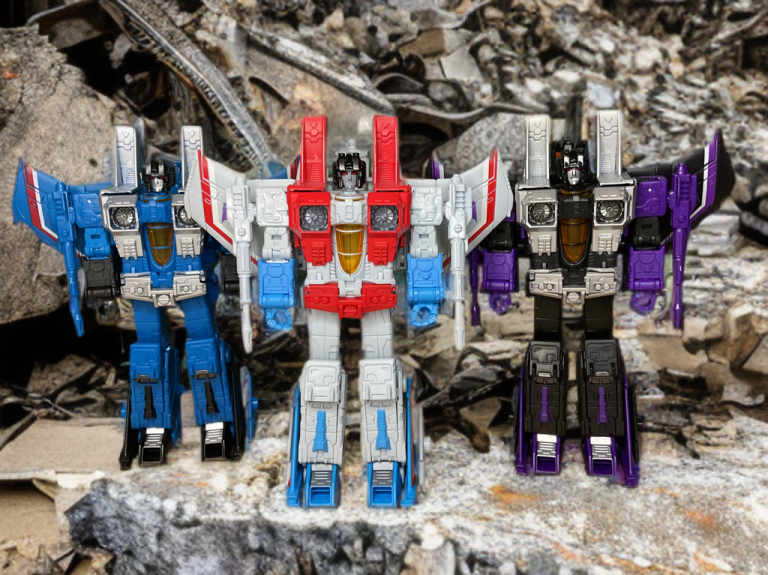
Within his own immediate military command structure, スタースクリーム rules the elite Decepticon Seeker vanguard—including air superiority specialists スカイワープ そして サンダー・クラッカー—entirely through a calculated mixture of systemic intimidation and rank-based exploitation. He demands absolute loyalty from his aerial squadron while offering nothing but abandonment and blame in return, a tyrannical management style that regularly triggers internal mutinies throughout the classic animated series and IDW Publishing narratives.
The ultimate tragedy of his pre-war life centers on Jetfire (Skyfire). Before the faction lines were drawn, they were scientific equals exploring uncharted worlds together. When Starscream chooses military status over saving his long-lost friend, his transition from a seeker of knowledge to a Decepticon war criminal becomes permanent.
His interactions with the Autobot resistance are similarly defined by transparent opportunism. While he is fundamentally incapable of genuine ideological alignment with the Autobots, he will readily forge temporary, fragile truces with Optimus Prime when faced with an existential threat. These brief survival-based alliances—such as his desperate cooperation during localized planetary crises—are universally short-lived, dissolving the exact second the immediate danger passes and Starscream perceives a fresh window to exploit his temporary allies.
Multiverse Origin File: Backstory Blueprint
| 継続性 | 戦前の役割 | 裏切りの本質 | 運命/贖罪 |
|---|---|---|---|
| G1カートゥーン | 科学者/探検家 | Persistent, cyclical power plays that double as a source of comedic Decepticon tension. | Disintegrated by Galvatron; survives continuously as an immortal non-corporeal ghost. |
| G1マーベル | 軍司令官 | Calculated, cold-blooded tactical strikes aiming for absolute genocidal dominion. | Obliterated by the raw power of the cosmic Underbase; systematically rebuilt later. |
| アルマダ | Young, Eager Warrior | A defensive, reactive betrayal born from endless emotional and physical abuse by Megatron. | Ultimate True Sacrifice: Willingly perishes to unite the warring factions against Unicron. |
| プライム | エアコマンダー | Deeply opportunistic, parasitic survivalism; switches sides whenever localized leverage shifts. | Survives the core war; reduced to a desperate scavenger hunted down by Predacons. |
| IDW 2005 | Hustler / Cybertronian Senator | Highly complex political maneuvering, leveraging public populism to claim civilian leadership. | Complex Redemption: Martyrdom, sacrificing his life to save Cybertron from Unicron. |
The Eternal Air Commander: Legacy of the Cybertronian Usurper
Ultimately, Starscream remains one of the most enduring and commercially vital figures in modern science fiction history because his character design captures a universal, deeply complex defect: the relentless, pathological desire for absolute status at the cost of personal preservation. While his operational cowardice remains legendary and his cyclical treachery operates with predictable precision, his narrative and structural resilience is completely undeniable.
Within the framework of pop culture engineering, he functions as a brilliant literary paradox. No matter how many times his plans are dismantled by the tactical discipline of the Autobot high command, or his physical chassis is entirely incinerated by the tyrannical wrath of Megatron, Starscream permanently re-emerges. He is fueled by an unshakeable, hardcoded core programming—the absolute belief that he alone is the rightful heir to the Decepticon throne.
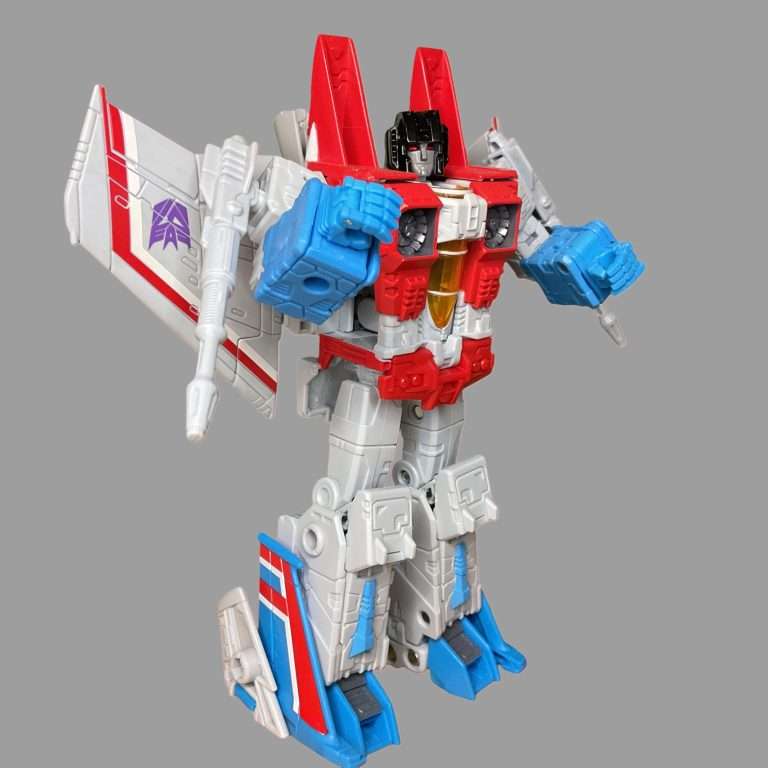
This systemic resilience is precisely why a high-end action figure display is never truly complete without a Seeker variant present. Whether captured in a premium Masterpiece mold or a modern mainline iteration, his sharp, wing-spired silhouette on a collector's shelf adds an instant layer of narrative friction to any display array.
For media historians, design architects, and dedicated toy collectors, evaluating Starscream means recognizing that he is vastly more than a secondary antagonist or a simple second-in-command lieutenant. He operates as the permanent spark of internal rebellion within the franchise’s broader mythology. By serving as an unyielding, destructive counterbalance to total totalitarian rule, Starscream ensures that the Decepticon military apparatus can never achieve true administrative stability—permanently cementing his status as one of the most multi-layered, engaging, and iconic figures ever to transition from an animation cell onto a collector’s display shelf.
Media Catalog: Notable Appearances
| ミディアム | Key Projects & Timelines |
|---|---|
| 📺 Cartoons |
• The Transformers (1984–1987) • トランスフォーマーアニメ(2007年~2009年) • Transformers: Prime (2010–2013) • Transformers: Cyberverse (2018–2021) |
| 🎬 Films |
• トランスフォーマーザ・ムービー (1986) • Transformers (2007) • Revenge of the Fallen (2009) • Dark of the Moon (2011) • Transformers One (2024) |
| 📚 Comics |
• Marvel Transformers (1984–1991) • IDW Transformers (2005–2018) |
| 🎮 Video Games |
• Transformers: War for Cybertron (2010) • Transformers: Fall of Cybertron (2012) |


 English
  Deutsch
  Français
  Português do Brasil
  日本語
日本語  Español
  English (Australia)