

Mastering Modern Transformers: Why Today’s Figures Feel Like Puzzles – And Two YouTube Channels to Help You Transform with Confidence
If you’ve been collecting action figures for a while—like many of us who grew up flipping through the pages of old catalogs or watching Saturday morning cartoons—you know the magic of Transformers. Back in the G1 era (Generation 1, roughly 1984–1990), transforming a robot was straightforward and intuitive. You could grab an Optimus Prime, Jazz, or Soundwave off the shelf, flip a few panels, tuck in the legs, and boom—you had a vehicle mode ready for “battle” in minutes. No manuals needed. During a single play session as a kid, I’d transform the same figure back and forth dozens of times without a second thought. It was fluid, forgiving, and part of the fun.
Fast-forward to today, and the landscape has changed dramatically. Modern Transformers—especially from lines like Studio Series, Legacy, Combiner Wars-era combiners, third-party offerings, and high-end Masterpiece figures—are engineered with far greater complexity. These aren’t simple toys anymore; they’re intricate mechanical puzzles designed to achieve screen-accurate alt modes, better articulation, tighter tolerances, and more realistic proportions. What used to take 5–10 steps now often requires 20, 30, or even 40+ precise maneuvers involving tabs, locks, hinges, ball joints, and sometimes ratcheting mechanisms that demand patience and a steady hand.
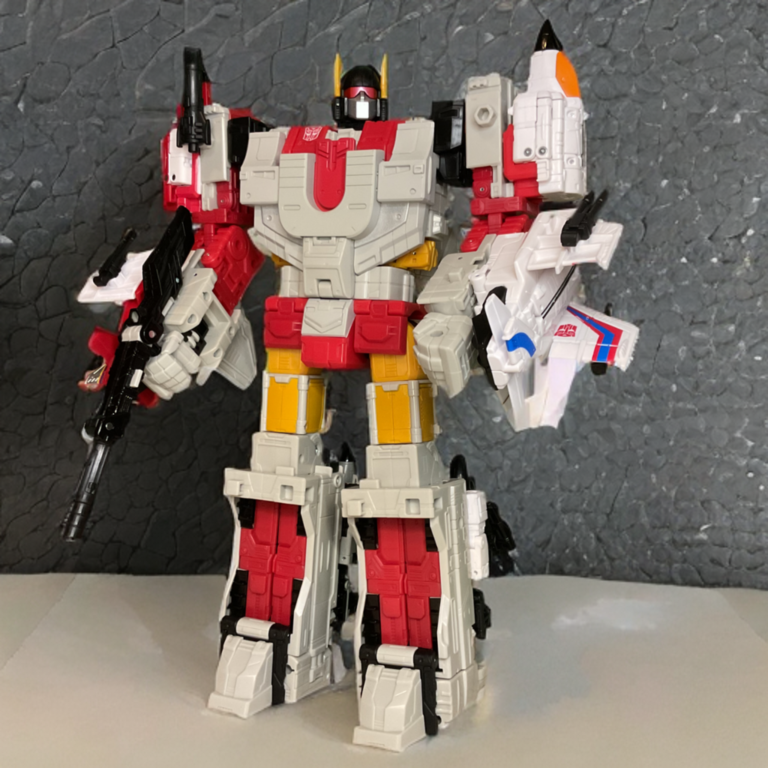
This shift didn’t happen overnight. As the franchise evolved through the Michael Bay films, Prime animated series, and into the current Legacy/Studio Series waves, designers prioritized engineering feats: seamless vehicle modes that look like real cars/trucks/jets, combined modes for gestalts like Bruticus or Devastator, and poseability that rivals high-end collectibles. The trade-off? Those old-school, breezy transformations gave way to sequences that can feel intimidating, especially for returning collectors or newcomers dipping back into the hobby.
Take combiners as a prime example. Third-party sets like the Jinbao (or Monolith) Devastator or upgraded versions of Menasor (with figures like Tigerwing) pack incredible detail and scale, but their transformation processes are layered masterpieces of engineering. Panels that fold in multiple directions, limbs that ratchet into place with audible clicks, and torsos that lock together with hidden mechanisms—it’s rewarding once mastered, but the first few attempts can leave you staring at the figure wondering if you broke something. The official manuals included with these figures often fall short: tiny diagrams, unclear angles, or steps that assume you already know the “feel” of the toy.

I’ve experienced this firsthand. After wrestling with complex figures like a modern Menasor or a third-party Devastator knockoff, something clicked. My intuition sharpened—I started anticipating how parts would align, recognizing patterns in tabbing sequences, and understanding the “psychology” behind the design. Why does this panel need to rotate 180 degrees before folding? Because it clears space for the next joint. Why is there resistance here? It’s a safety lock to prevent accidental disassembly. Once you internalize those principles, most figures become much easier. Practice builds muscle memory, and suddenly the puzzle aspect turns into a satisfying challenge rather than a frustration.
Still, even with growing confidence, I don’t go it alone every time—especially with new releases or tricky third-party stuff. That’s where high-quality video guides become invaluable. Not all YouTube transformation videos are created equal. Some rush through steps at lightning speed, skip key angles, or assume viewers are experts. Others are noisy, cluttered, or poorly lit. The best ones take their time, show clear close-ups, highlight tabs and locks, and make you feel like you’re transforming alongside them.
Here are two channels I consistently turn to when I need reliable help with modern Transformers. They’re perfect for collectors feeling lost, intimidated, or just wanting to enjoy the process without headaches. Note: I am not receiving any type of monetary compensation for recommending these two channels.
1. emgo316 – Laid-Back, Detailed, and Thorough Reviews with Excellent “Just Transform It” Segments
Emgo316 (often stylized as EmGo) is a longtime Transformers reviewer whose channel has built a loyal following for its relaxed, humorous vibe and in-depth coverage. He reviews everything from mainline Hasbro releases to third-party gems, but what sets him apart for transformation help is his “JUST TRANSFORM IT!” playlist. These dedicated videos focus purely on the transformation process—no chit-chat, no tangents—just calm, step-by-step guidance.
Emgo takes his time. He narrates in a mellow, easygoing style, pointing out tabs, locks, and tricky joints with clear verbal cues and multiple camera angles. He shows common pitfalls (like forgetting to flip a hidden panel or misaligning a ratchet) and how to avoid them. Whether it’s a Studio Series Voyager, a Legacy combiner limb, or something more obscure, he explains the “why” behind each step, which helps build that intuition I mentioned earlier. His videos are great for both beginners re-entering the hobby and veterans tackling a new combiner.
If you’re dealing with something intricate—like a recent Studio Series figure or a third-party upgrade kit—start here. Emgo’s approach feels like having a chill friend walk you through it, making the complexity enjoyable rather than overwhelming.
Sometimes, just one little flap can screw up an entire transformation that makes you have to start all over again. I know, it happened to me!
2. [토이팩토리] ToyFactory (장난감TV) – Silent, Slow, and Crystal-Clear Visual Demonstrations
(Note: The channel is often listed under [토이팩토리] ToyFactory(장난감TV))
This Korean channel takes a completely different but equally effective approach: no narration at all. Just pure, silent transformation footage shot in close-up with excellent lighting and deliberate pacing. The creator slows everything down, lingering on tricky sections, zooming in on tabs, hinges, and connection points, and using arrows or highlights to emphasize problem areas without saying a word.
It’s oddly meditative and highly effective—especially if English narration distracts you or if you’re a visual learner. You see the figure transform in real time, with pauses at key moments so you can mimic the movements exactly. They cover a wide range of Transformers, from official Hasbro lines to movie-era figures and even some third-party or KO sets. No rush, no filler—just the transformation, often from multiple angles, and sometimes with robot-to-vehicle and back sequences.
For combiners or figures with lots of small parts, this silent style shines because there’s nothing to drown out the visual cues. You can play it at half-speed if needed, follow along, and pause whenever you want. It’s like having a perfect, patient demonstration video on loop.
Both channels complement each other beautifully: Emgo for verbal explanations and personality, ToyFactory for silent precision. Together, they cover most modern Transformers scenarios without the frustration of poor guides.

Final Thoughts
If you’re getting back into Transformers after years away, or diving into the world of combiners and third-party figures for the first time, don’t let transformation complexity hold you back. These toys are incredible—detailed, poseable, and packed with nostalgia—but they reward patience and good resources.
Check out emgo316 and ToyFactory next time you’re staring down a new figure. They’ll help you rediscover that childhood joy of flipping modes, but with the added satisfaction of mastering something more sophisticated.




 English
  Deutsch
  Français
  Português do Brasil
  日本語
日本語  Español
  English (Australia)