

Scented Rubber and Fuzzy Plastic: How Mattel Sold Us the Same 4 Toys Over and Over
The Eternal Quest for Originality (or Why We Owned Four Identical Muscles)
Back in the golden age of childhood commerce—also known as the 1980s—Mattel didn’t just sell us toys. They sold us the illusion of variety while quietly recycling the same torso mold like it was the family silver. We were too busy staging epic battles between heroes who wore underwear and villains who wore even less to notice the conspiracy. But now, as adults with mortgages and suspiciously large collections, the truth emerges: a shocking number of Masters of the Universe figures were basically the same guy in a new outfit, a fresh coat of paint, and occasionally a personality-altering chemical treatment. This is the story of how one heroic body became four distinct characters, none of whom ever suspected they were sharing DNA.
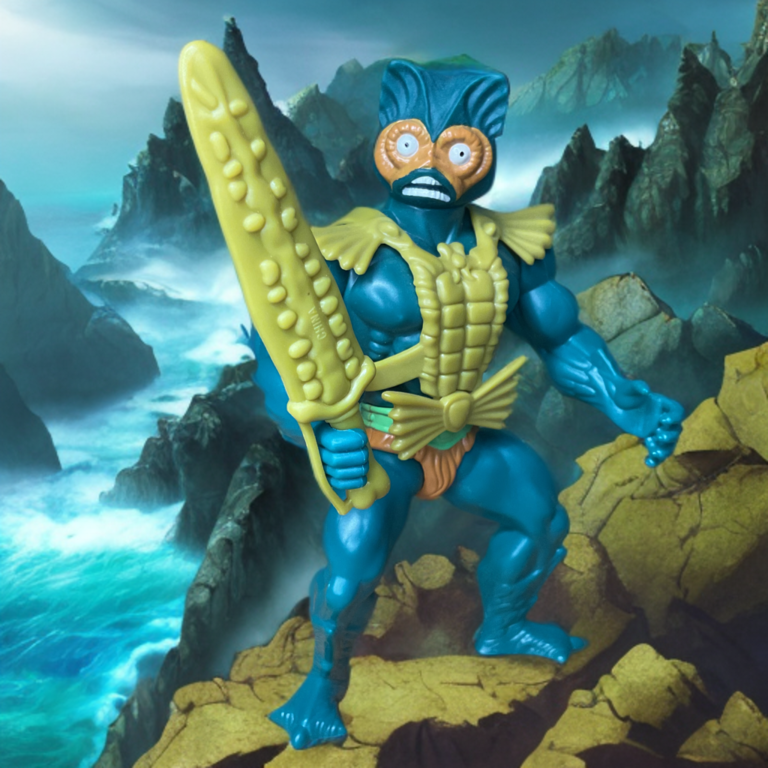
The Repaint Conspiracy: Scented Rubber and Fuzzy Plastic – How Mattel Sold Us the Same 4 Toys Over and Over
In 1985, I didn’t realize I was participating in a masterclass on resource management. I just thought it was weird that the guy who smelled like a skunk had the same face as the guy who lived under the sea.
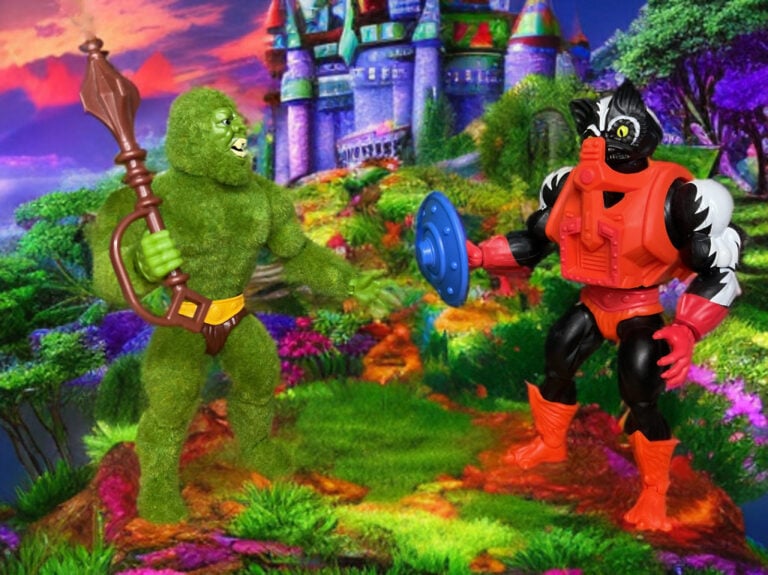
Every kid with a half-decent nose knew the score. Stinkor was just Mer-Man after a tragic industrial accident involving a perfume factory and poor life choices. Same bulging arms, same heroic proportions, same everything—except Mattel decided the aquatic villain needed a land-based counterpart who could clear a room faster than Skeletor could monologue.
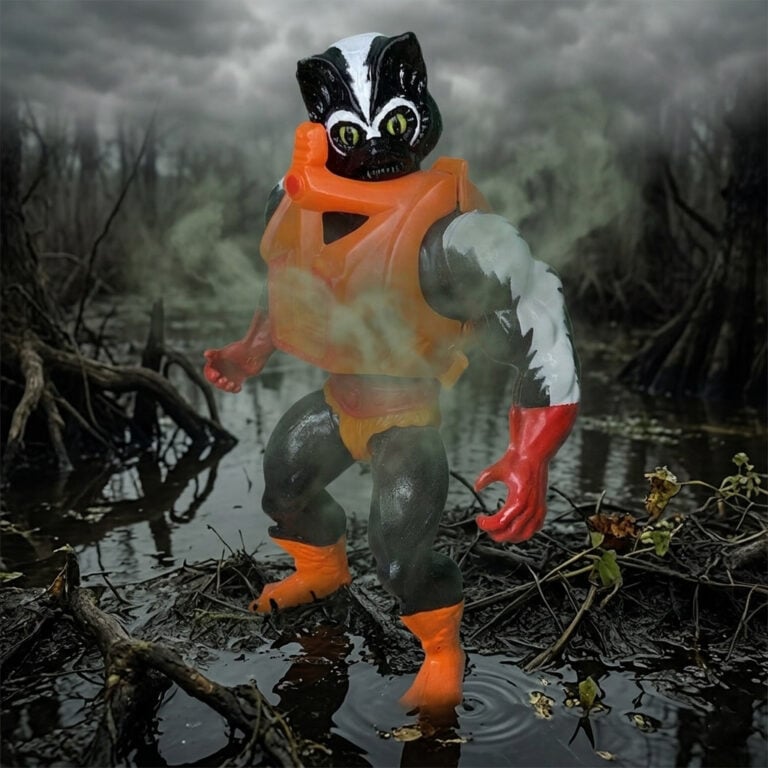
They slapped on black-and-white paint, borrowed some armor from Mekaneck (because why design new when you can borrow?), gave him a shield instead of a sword, and then doused the whole thing in a proprietary “musk” formula that probably violated several OSHA guidelines. The result? A character whose superpower was making your mom ban him from the living room. Genius cost-cutting disguised as evil genius.
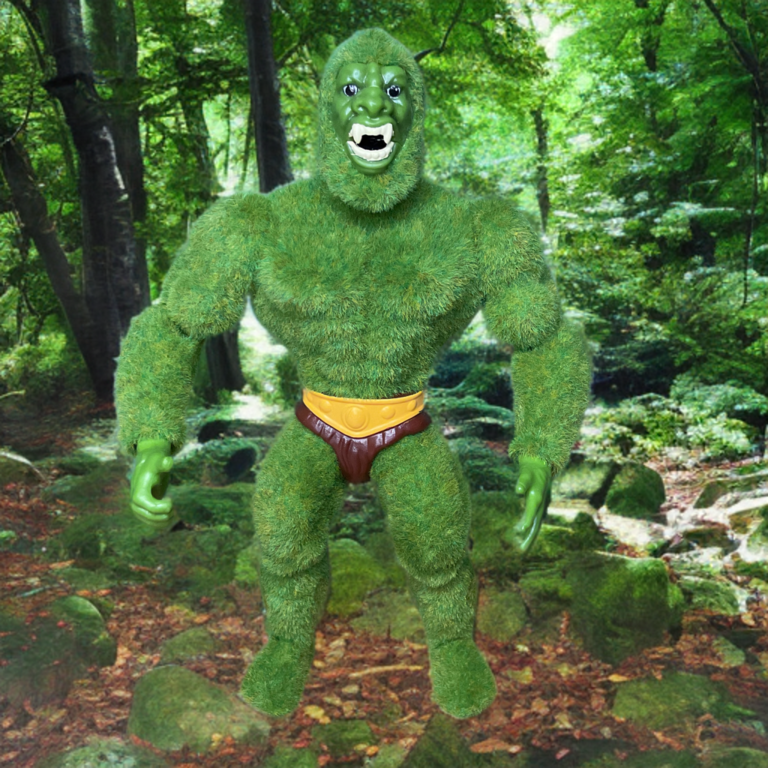
Then came the foliage department. Moss Man was Beast Man after deciding to roll around in a craft store’s clearance bin. Same orange-to-green palette shift, same furry chest harness vibe, but now with added flocking that shed like a nervous pine tree every time you posed him. Beast Man roared commands to animals; Moss Man apparently commanded houseplants and seasonal allergies. The body? Identical. The mold? Reused with the enthusiasm of a company accountant spotting a tax loophole. We owned the same figure four times—once plain, once fuzzy, once smelly, once scaly—and somehow felt like we’d built a complete Evil Warriors army.
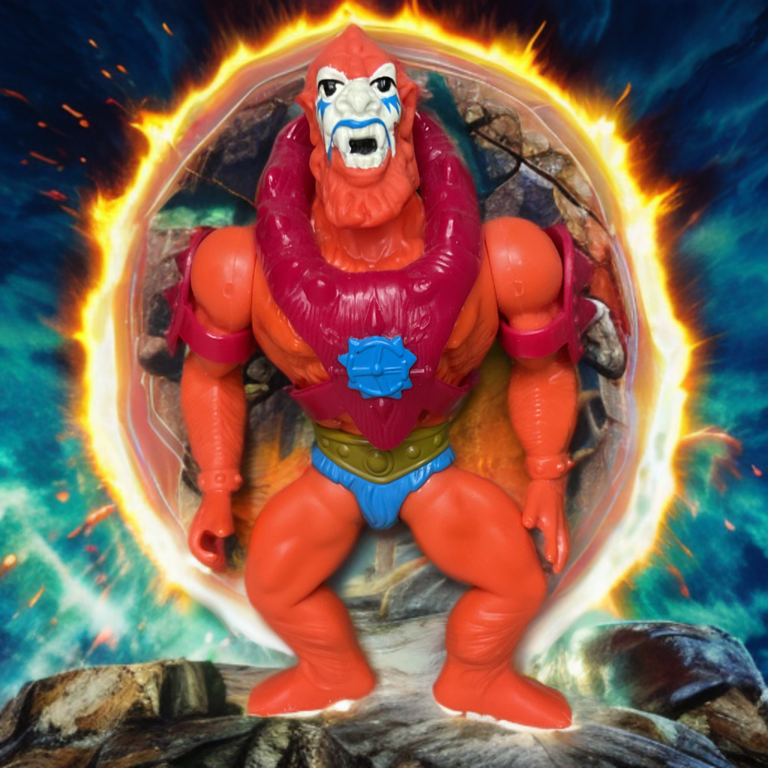
The technical details are almost too depressing to mention. Shared molds meant lower production costs, which meant more figures on shelves, which meant more kids begging for “just one more” while parents wondered why their basement smelled like a combination locker room and garden center. For those keeping score (or price guides—check the vintage MOTU part compatibility charts if you dare), this “shared mold” approach turned Mer-Man, Stinkor, Beast Man, and Moss Man into a single tragic family reunion. Different scents, different textures, same disappointed plastic soul staring back at you from the shelf.
It was absurd. It was brilliant. It was capitalism with a glue gun and a can of patchouli oil.
The Legacy of Lazy Legend-Building (and Why We Still Buy Them)
Decades later, we laugh—mostly at our younger selves for not noticing the emperor had no new clothes (or at least no new torso). Mattel didn’t fool us so much as train us. We learned to accept that true heroism isn’t in originality; it’s in repainting the same six inches of injection-molded glory and calling it a day. The repaint conspiracy endures because it worked: we kept buying, the battles kept raging, and somewhere in a landfill, four identical action figures are still judging us for falling for it.
So next time you crack open a vintage lot and spot that familiar muscular silhouette in yet another color scheme, raise a tiny plastic sword in salute. To Mattel: congratulations on the greatest grift never admitted. To us collectors: we’re all in on the joke now. And honestly? We’d pay double for the smell alone.
Keep fighting the good fight—one suspiciously identical mold at a time.
The Eternian Recycled Mold Compatibility Chart: Forensic Evidence of the Great Shell Game
This chart is a summary of the forensic evidence uncovered in our investigation of the vintage MOTU parts used to build “new” figures for the Masters of the Universe line. The compatibility percentages are based on a scientific calculation of how many distinct plastic pieces were re-used, factoring in “the texture of deception.”
| “New” Figure | Alleged Base Figure | Mold Compatibility Rating | Evidence of Recycled Parts | Sensational Distraction Used |
| Stinkor | Mer-Man | 98.5% | Utilizes Mer-Man’s distinct scaly head, torso, and limb molds. | The legendary skunk odor and a red utility vest. |
| Moss Man | Beast Man | 99.1% | Shares the identical face sculpt, broad shoulders, and torso armor pattern. | The introduction of green, fuzz-like “flocking” over the raw plastic. |
| Faker | He-Man | 97.8% | He-Man’s complete body, arms, legs, and facial features. | An aggressive cyan-blue paint job and an orange-red sword. |
| Grizzlor | Beast Man | 91.3% | Most torso and leg components are reused from the Beast Man catalog. | An obsessive amount of brown, “fur-like” fibers that detach in seconds. |
| Kobra Khan | Mer-Man | 62.0% | Utilizes the lower torso and some joint pieces shared by all early “Evil Warriors.” | A brand-new reptilian head sculpt and a terrifying “spray feature.” |
Technical Note from the Archives: Price Guides and Authenticity
A note for serious investigators cross-referencing this against an official Masters of the Universe price guide: The secondary market value for these recycled figures is higher than their original counterparts. Mattel’s cost-saving measure created scarcity. It is harder to find a Stinkor whose skunk scent has persevered than it is to find a standard Mer-Man.
This creates an authenticity crisis: the shared mold strategy means that the market is flooded with customized “vintage MOTU parts” from figures that collectors have cobbled together from different sources. Mattel created a system where we may be buying a 90% Beast Man under the green Moss Man fuzz. We are not just collecting figures; we are collecting historical artifacts of industrial frugality.


 English
  Deutsch
  Français
  Português do Brasil
  日本語
日本語  Español
  English (Australia)