

Slice & Dice: Elite Cobra Ninja Force Unleashed
Ah, the eternal dance of good versus evil, heroism versus villainy, and—most importantly in the world of action figures—plastic versus plastic. But when Hasbro drops a bomb like the G.I. Joe Classified Series #160, Cobra Ninjas Slice & Dice, it’s not just a skirmish; it’s a full-blown shuriken shower in the toy aisle. Released in September 2025 as a Hasbro Pulse exclusive for the princely sum of $54.99, this 2-pack isn’t content with being mere collectibles. No, sir. These are the yin and yang of Cobra’s ninja underbelly: Slice, the crimson-clad sword savant with a scorpion’s sting, and Dice, the shadowy staff-slinger whose dragon motif hides a penchant for bone-crunching ballet. Together, they’re like if Mortal Kombat crashed a sushi bar—lethal, elegant, and probably over-tipping with throwing stars.
As a lifelong G.I. Joe aficionado who’s hoarded more figures than a dragon guards gold (and let’s be real, my shelf real estate is starting to look like a tiny Tokyo skyline), I approached this set with the skepticism of a Joe facing down Cobra Commander’s latest monologue. Would it live up to the hype of the Classified line’s ninja renaissance? Could it outshine the likes of Storm Shadow or the Red Ninjas in articulation and attitude? Spoiler: It doesn’t just shine; it slices, dices, and juliennes your expectations into confetti. Buckle up, fellow yo-Joe-ers, because we’re about to embark on a vast odyssey through unboxing euphoria, sculpt supremacy, accessory anarchy, pose pandemonium, and enough witty asides to make even Destro chuckle under his iron mask. Let’s roll out.
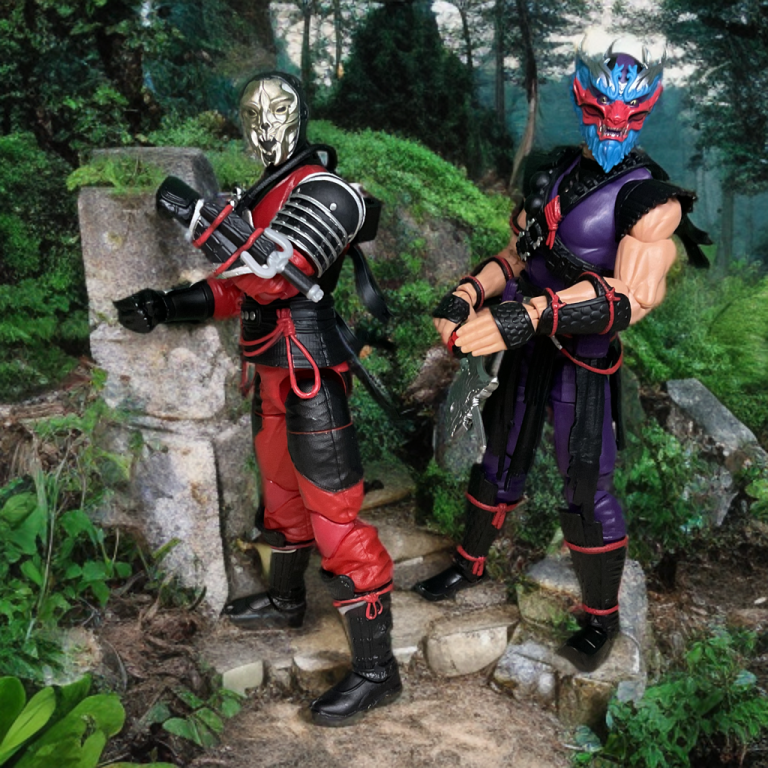
Unboxing: The Gateway to Ninja Nirvana
Picture this: It’s a crisp autumn morning in 2025, the kind where the leaves are turning but your inner child is already plotting world domination via diorama. The package arrives in that signature Hasbro Pulse stealth mode—no fanfare, just a nondescript box that could pass for Amazon’s latest impulse buy (guilty as charged). But oh, the reveal! The windowed box is a collector’s fever dream: vibrant reds and blacks clash like a Cobra-La fever dream, with dynamic digital renders of Slice mid-Scorpion Slash and Dice twirling his bo-staff in a Flying Dragon flourish. File card icons peek through, evoking the glory days of ’80s cardbacks, complete with original character artwork that screams “vintage homage meets modern menace.”
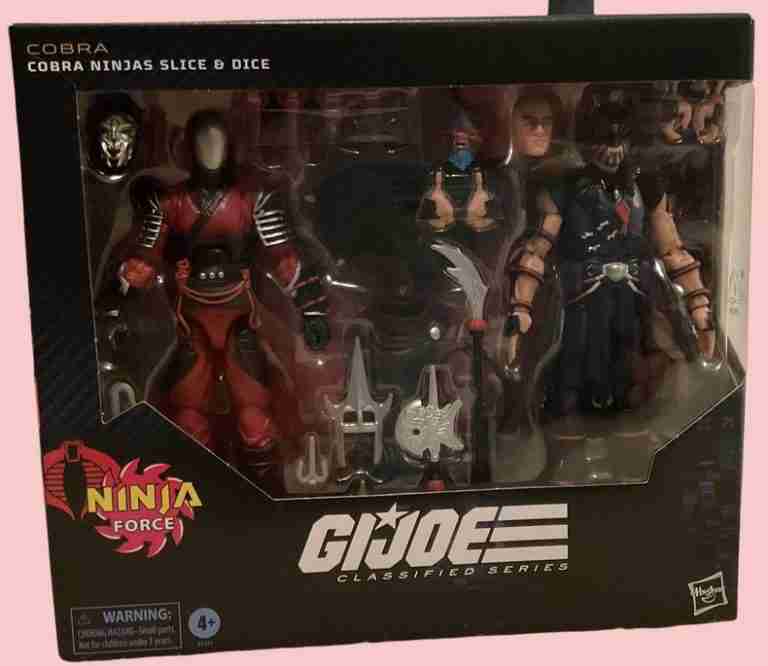
Tearing into it (gently, of course—re-sealable blisters are a godsend for display fiends like me), you’re greeted by 24—count ’em, twenty-four—accessory pieces tumbling out like a ninja’s loot bag after a heist. No cheap baggies here; everything’s cradled in foam inserts that whisper “premium” louder than Baroness’s accent. The figures themselves perch like coiled vipers, Slice’s red armor gleaming under the scorpion mask, Dice’s purple-black ensemble lurking in dragon-shadow subtlety. It’s not just unboxing; it’s initiation into Cobra’s elite shadow squad. And at $54.99 for two fully loaded 6-inch elites? That’s value sharper than Slice’s hook swords. If pricing were a battlefield, Hasbro just deployed a tactical nuke.
But let’s not get ahead of ourselves. Before we worship at the altar of articulation, we must dissect the duo themselves. Starting with the man (or masked marauder) who puts the “slice” in “slicendice”: the one, the only, Cobra Ninja Slice.
Slice: The Red Reaper’s Renaissance
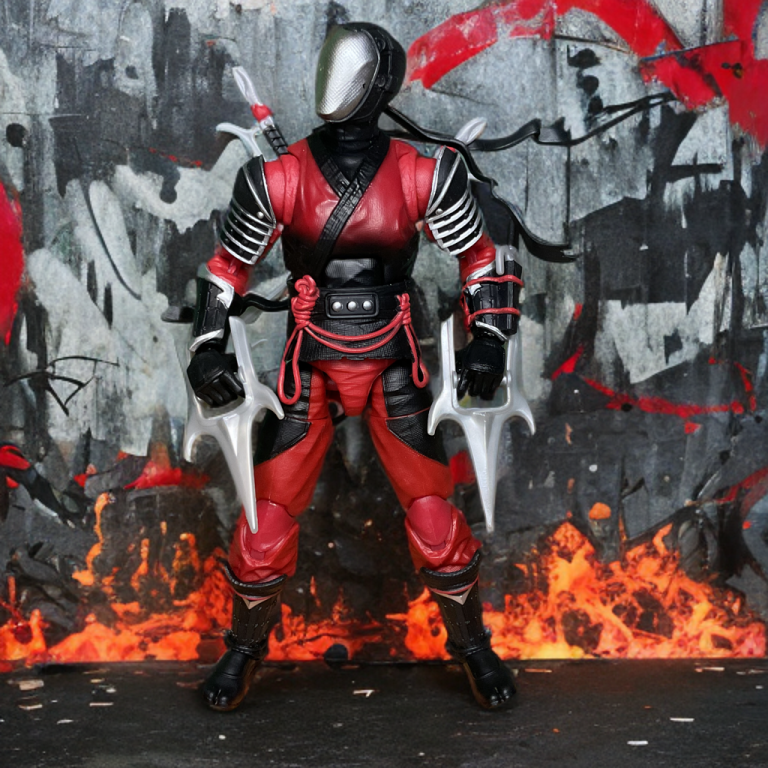
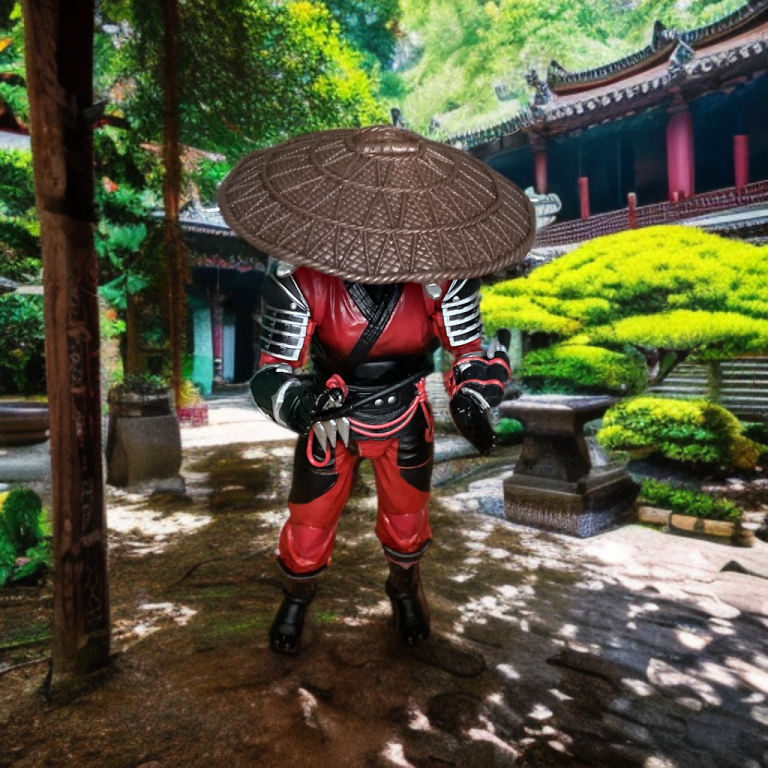
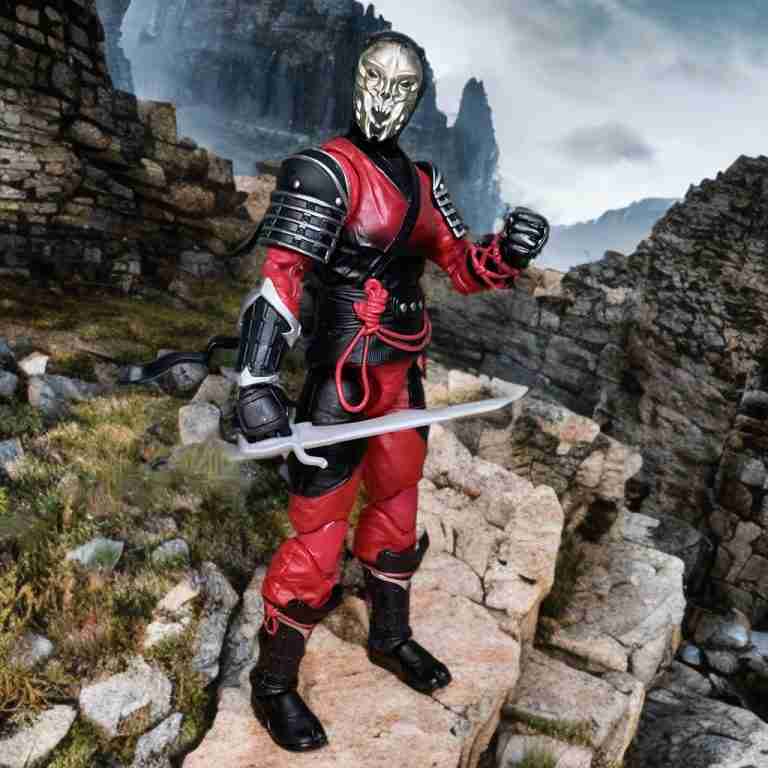
Slice. Where do I even begin with this scarlet specter? Born in the ninja boom of 1993’s Ninja Force wave, Slice was Cobra’s answer to the question: “What if Snake Eyes defected, but instead of brooding silence, he brought a vendetta and a vanity mirror?” Clad in that iconic red armor—evoking everything from feudal samurai to a rejected Power Ranger—Classified Slice is a masterclass in evolution. The sculpt? Top-tier Hasbro sorcery. His torso is a symphony of layered plates and subtle chainmail texturing, capturing the original’s chunky charm while adding anatomical nuance that makes him feel alive, not just articulated. The legs boast reinforced greaves with etched scorpion motifs, and those arms? Bulging with vein-popping detail under the sleeve guards, ready to unleash hell one backhand at a time.
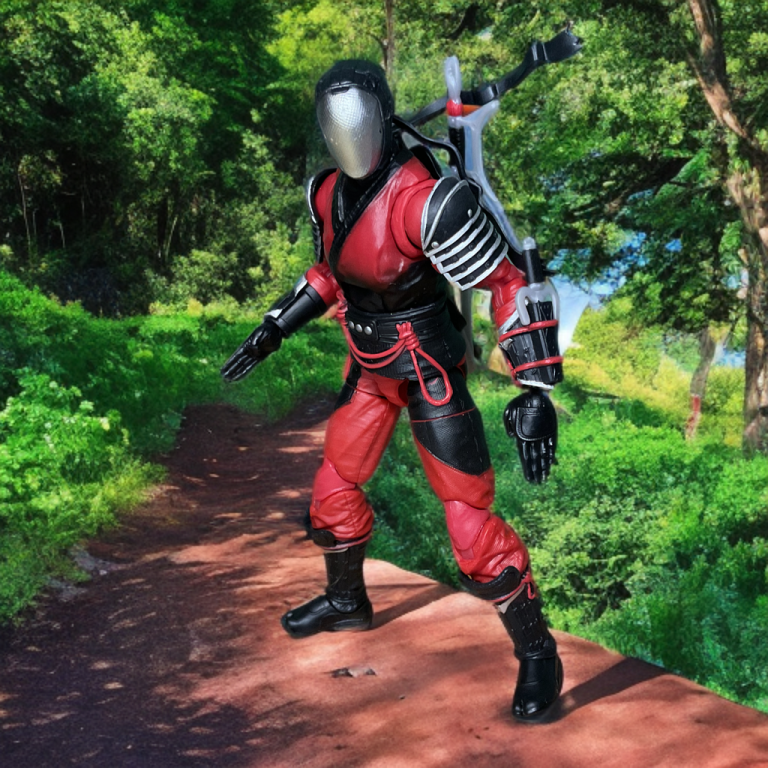
Paint apps are where Slice truly stings. That crimson is no flat fire-engine red; it’s a metallic sheen with subtle weathering—scratches and fades that suggest he’s fresh off a brawl with Kamakura in some forgotten dojo. The scorpion mask head is a standout: glossy black with gold accents that pop like Cobra’s ego, eyes glowing with malevolent LED potential (okay, not really, but in my headcanon, they do). Swap to the unmasked head (wait, does he have one? No, but the alternate scorpion variant adds feral flair), and you’re treated to a snarling visage that’s equal parts intimidating and “I dare you to cast him in the live-action reboot.” Flesh tones are warm, scars implied through shadow play—Hasbro’s airbrush wizards earning their keep.
Articulation? Thirty points, baby, and they work. Ball-jointed neck swivels with menace, double-elbow hinges for those extended slashes, and thigh swivels that let him pivot like a pro wrestler tagging in doom. The waist crunch? Divine for dynamic leans. But here’s the witty caveat: In a line known for god-tier posing, Slice occasionally demands a toothpick stand-in for ultra-aggressive stances—like balancing on one foot while dual-wielding katars. It’s a minor quibble, akin to complaining your Ferrari needs premium gas. Pose him mid-leap, hook swords crossed in X-mark-the-Joe, and he’s a diorama darling.
Now, accessories—ah, the meaty marrow of Slice’s mayhem. Two hook swords that click into his grips with satisfying heft, curved like scorpion tails ready to parry a bayonet. Twin knives for close-quarters cosplay, sleek and silver with red-wrapped hilts. The katars? Punch daggers that scream “underarm ambush,” fitting flush against his forearms for that armored assassin vibe. Then the sai—pronged perfection for blocking blades—and a sash dangling kunai like deadly keychains. Don’t sleep on the hat (a conical rice paddy stunner) or the removable cape, which drapes with fabric-like rigidity, billowing in imaginary winds. Four swappable hands—fists, grips, and open palms—mean endless customization. Mix in Dice’s gear, and suddenly you’ve got a ninja trooper factory. Slice isn’t just a figure; he’s a modular menace, begging for your shelf to become a Cobra covert op.
Wait, I’ve barely warmed up. Time to roll the dice—literally—on his shadowy sidekick.
Dice: The Dragon’s Dicey Delight
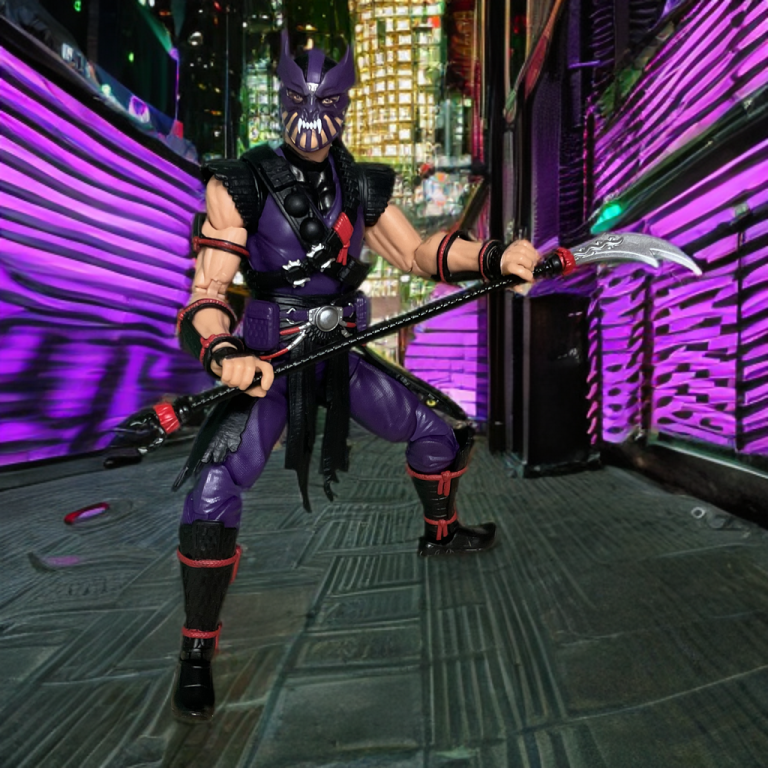
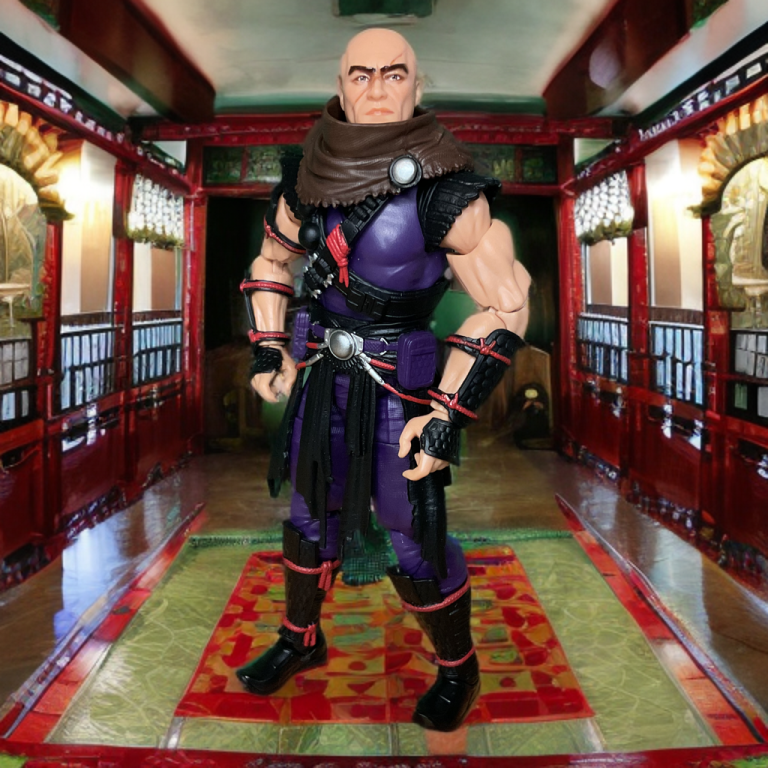
If Slice is the flamboyant frontman, Dice is the brooding bassist, laying down stealthy rhythms in the shadows. Hailing from the same ’93 Ninja Force roster, Dice was always the yin to Slice’s yang: where his partner flaunted red flair, Dice slunk in black and purple, a cat-like saboteur whose “Flying Dragon” technique turned bo-staffs into blur-of-death instruments. Classified Dice honors this duality with a sculpt that’s stealth personified. His frame is leaner than Slice’s bulk, with elongated limbs for that wiry whiplash aesthetic—think Zartan on a keto diet, but with better hair (under the mask, anyway). The torso features quilted gi panels and dragon-scale embossing on the pauldrons, subtle enough for subtlety but detailed enough to reward macro-lens scrutiny. Legs are wrapped in purple bindings, evoking ancient scrolls unrolled for vengeance, and the feet? Perched for precarious perches, toes curled like they’re gripping a cliffside in Kyoto.
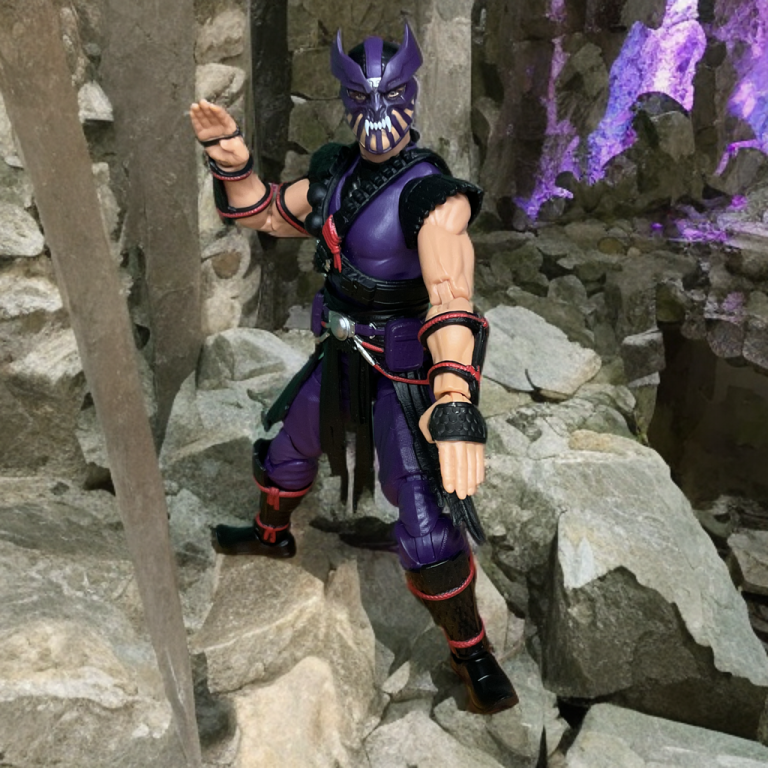
Paint-wise, Dice is a master of monochrome mischief. Deep blacks absorb light like a black hole at a funeral, contrasted by vibrant purple accents on the mask and cuffs—think eggplant elegance meets midnight menace. The dragon mask head is a revelation: sculpted with flowing whiskers and snarling maw, painted in pearlescent scales that shift from green to gold under lamp light. Swap to the traditional Dice-clan masked head—a more subdued oni visage with horn stubs and furrowed brows—and you’ve got versatility for “stealth mode” versus “berserker bash.” No weathering here; Dice is pristine predator, his gloss finishes implying he’s the one doing the scuffing, not receiving it.
Articulation mirrors Slice’s glory: 30 points of pure pose poetry. The bo-staff integration shines—swivel wrists for spins that feel balletic, not brittle. Ankle tilts allow for those low sweeps, and the ab crunch facilitates torso twists that make his dragon roar feel visceral. Minor nit: The ball-jointed shoulders can bind slightly when fully extended with axes, but a quick warm-up (read: gentle manipulation) fixes it. Pose him in a staff whirl, cape (wait, that’s Slice’s—borrow it!) fluttering, and Dice becomes the dark heart of any display.
Accessories for Dice? A streamlined symphony to Slice’s orchestra. The bladed bo-staff is the star: double-ended with razor edges that snap into place, weighted for realistic twirls (pro tip: clear a coffee table first). Twin battle axes, hefty and hooked, fit his palms like they were forged in Cobra’s own foundry—perfect for cleaving crates or Joe egos. Four hands again—relaxed, action-ready—round out the kit. Fewer pieces than Slice, but oh, the synergy: Slap Slice’s sai on Dice for a hybrid horror, or vice versa for cross-pollinated chaos. It’s troop-building catnip, turning two figures into an army of eight (or more, if you’re feeling remix-y).
At this juncture, let’s pivot from individual spotlights to the duet’s duet: how they harmonize in the grand G.I. Joe ballet.
Synergy and Playability: Tag-Team Takedowns
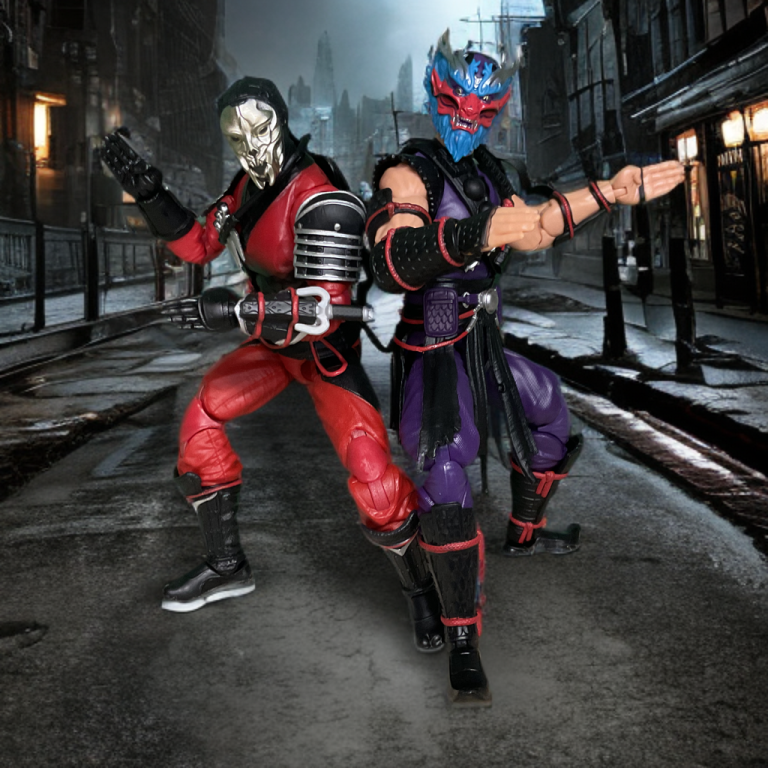
What elevates Slice & Dice from “cool ninjas” to “classified compulsion”? Their interplay. These aren’t solo acts; they’re scripted for tandem terror. Imagine a diorama: Slice lunging with hook swords in a Scorpion Slash arc, Dice vaulting overhead with a Flying Dragon staff spin, axes glinting like fallen stars. The articulation synergy is chef’s kiss—shared height scale means seamless team poses, from back-to-back defenses to synchronized slashes. Playability? Off the charts for adults and kids alike (choking hazard noted, but 3+ my foot; this is grown-folks geometry). The accessories encourage mad science: Deck Slice in Dice’s axes for a berserker twist, or arm Dice with katars for puncture-party precision. It’s Lego logic meets ninja lore—endless, emergent storytelling.
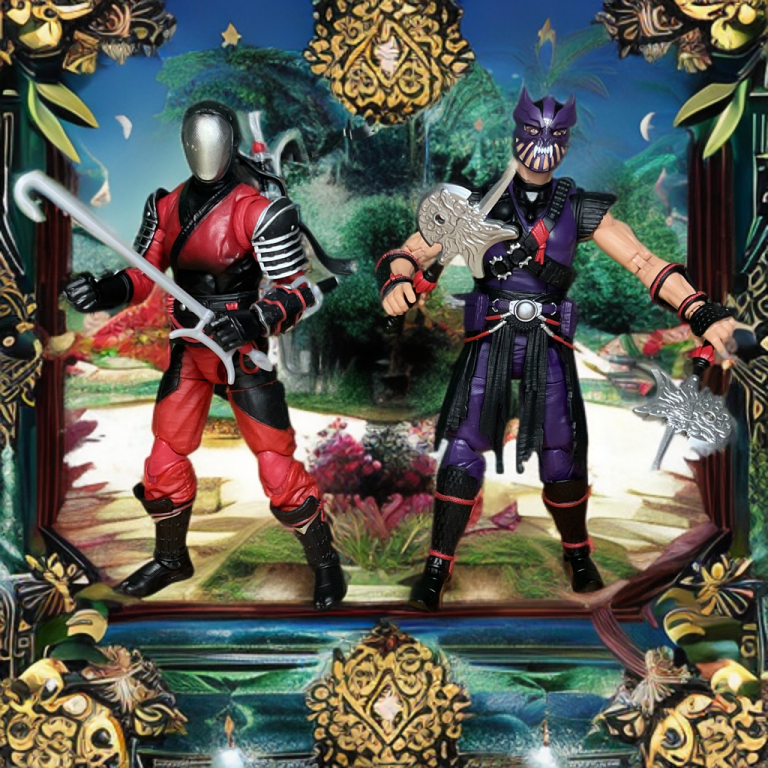
In action, they hold up against the Classified pantheon. Compared to the original ’93 figures (blocky bricks with charm but charm alone), these are quantum leaps: softer plastics prevent brittle breaks, joints whisper-smooth out of the box. Versus modern kin like the Crimson Guard or Night Force ninjas, Slice & Dice edge out in accessory density—24 pieces versus the usual 8-12—making them bang-for-buck bandits. Paint holds a candle to deluxe waves like Hawk with M.M.S., though Dice’s subtlety shines in low-light shelves where flashier foes fade. Cons? That pose-support quibble persists; a $10 stand set is advisable for epic tableaux. And exclusivity? Pulse-only means scalpers lurk, but at MSRP, it’s a steal compared to aftermarket markups.
Lore-wise, these bad boys tie into G.I. Joe’s richest veins. Slice and Dice debuted amid Ninja Force’s ’90s pivot, when Joes traded tanks for throwing stars and Cobra countered with shadow warriors. Comics saw them brainwashed by Firefly, clashing with Storm Shadow in arcs that read like ninja soap operas (betrayal! Redemption! More betrayal!). In your collection, they slot beside Zartan for Dreadnok diversions or Storm Shadow for reluctant rivalries. All that aside: Pair them with a Snake Eyes figure, and you’ve got enough dramatic stares to fuel a Marvel crossover. “You sliced my heart, brother!” Cue the rain-soaked rooftop duel.
Value Verdict: Worth the Ninja Nickels?
At $54.99, is this 2-pack a heist or a hold-up? Unequivocally the former. Per figure, it’s $27.50—cheaper than a single deluxe like Budo, with double the drama. For collectors, the window box is display dynamite; for players, durability defies desk dives. Drawbacks? Limited run means FOMO fuel, and if you’re accessory-averse, it’s overload (but who is?). Ideal for: Cobra completists craving ninja depth, diorama divas building black-ops scenes, or casual fans dipping toes into Classified’s cool waters. Skip if your shelf is Joe-jammed or budget’s battling BATs.
Closing Slash: Yo Joe, Indeed
In a toy landscape littered with lukewarm rehashes, G.I. Joe Classified #160 Cobra Ninjas Slice & Dice emerges as a katana through the clutter—sharp, stylish, and unapologetically fun. Hasbro didn’t just update these ’90s icons; they amplified their essence, blending nostalgia with nuance in a 2-pack that punches way above its weight class. From Slice’s scorpion swagger to Dice’s dragon dexterity, every facet gleams with wit-worthy workmanship. Whether you’re posing them in perpetual peril or pondering their place in Cobra’s canon, one thing’s clear: These ninjas don’t just fight; they finesse the fray.
So, grab your Pulse account, channel your inner Destro, and add this duo to your arsenal. Your shelf will thank you—probably with a silent nod and a subtle shuriken salute. Rating? 9.5 out of 10 scorpion stings. (One deducted for that pesky pose wobble; fix it, Hasbro, and we’re at perfection.) Yo Joe? More like Yo Know: Slice & Dice are the classified coup d’état your collection craves. Now, if you’ll excuse me, I’ve got a diorama date with destiny. Over and out.
Don’t miss: G.I. Joe Classified Crankcase Review: AWE Striker Driver
Shadows in the Spotlight: Unraveling the Ninja Force Saga in G.I. Joe Comics
The G.I. Joe Marvel Comics run, penned largely by Larry Hama from 1982 to 1994, transformed Hasbro’s toy soldiers into a sprawling epic of espionage, betrayal, and explosive action. Amid the tanks, lasers, and Cobra Commander’s endless schemes, one subplot sliced through the chaos like a well-honed katana: the Ninja Force. Emerging in the early 1990s as both a toy sub-line and a comic narrative pivot, Ninja Force injected a dose of martial arts mysticism into the franchise’s military grit. It wasn’t just about flipping bad guys— it was a deep dive into clan loyalties, ancient vendettas, and the razor-thin line between ally and enemy. Spanning roughly issues #117 to #155 (with the core arc hitting stride around #135), this storyline blended high-stakes global heists with intimate character reckonings, all while tying back to the series’ foundational ninja lore centered on Snake Eyes and Storm Shadow. Let’s stealth our way through its origins, roster, pivotal plots, and lasting echoes.
Shadows in the Spotlight: Unraveling the Ninja Force Saga in G.I. Joe Comics
The G.I. Joe Marvel Comics run, penned largely by Larry Hama from 1982 to 1994, transformed Hasbro’s toy soldiers into a sprawling epic of espionage, betrayal, and explosive action. Amid the tanks, lasers, and Cobra Commander’s endless schemes, one subplot sliced through the chaos like a well-honed katana: the Ninja Force. Emerging in the early 1990s as both a toy sub-line and a comic narrative pivot, Ninja Force injected martial arts mysticism into the franchise’s military grit. It wasn’t just about flipping bad guys—it was a deep dive into clan loyalties, ancient vendettas, and the razor-thin line between ally and enemy. Spanning roughly issues #117 to #155 (with the core arc hitting its stride around #135), this storyline blended high-stakes global heists with intimate character reckonings, all while tying back to the series’ foundational ninja lore centered on Snake Eyes and Storm Shadow. Let’s stealth our way through its origins, roster, pivotal plots, and lasting echoes.
The Forging of Blades: Origins and Formation
Ninja Force didn’t materialize from thin air (or a Hasbro boardroom whim, though that played a part). It was born from necessity in the comics’ later era, as Cobra escalated its covert operations with shadowy assassins, forcing the Joes to counter with their own elite shadow squad. The concept debuted subtly in issue #117 (“Arise, Serpentor, Arise! Part 5”), where Storm Shadow—fresh off his redemption arc from Cobra defector to uneasy Joe ally—begins training a cadre of ninja hopefuls. This ragtag group interrupts their grueling sessions for a distress call from Snake Eyes, jetting off to Beirut to bail out their mute master. It’s a baptism by fire: ninjas pausing mid-spar to answer a beeper (yes, pagers were peak ’90s tech), only to dive into urban warfare against Cobra remnants.
By issue #135 (“Ninjas Own the Night”), the team solidifies as an official Joe sub-unit, a direct response to Cobra’s Night Creepers—a horde of masked mercenaries moonlighting as global thieves. Hama, drawing from his own Vietnam veteran background and fascination with Eastern mysticism, framed Ninja Force as the Joes’ “soft power” arm: less about brute force, more about precision strikes, infiltration, and philosophical duels. Toy-wise, it launched in 1992 with spring-loaded “Real Ninja Action!” gimmicks, but in the comics, it grounded the mysticism in gritty realism—think sweat-soaked dojos in abandoned water towers, not Hollywood wire-fu.
This formation ties directly to the broader ninja lore Hama wove since issue #21’s iconic “Silent Interlude,” where Snake Eyes’ tragic backstory (facial scars from a helicopter crash, vow of silence) intertwined with Storm Shadow’s Arashikage clan heritage. The clan, once a clandestine Japanese ninja lineage dormant for centuries, splintered after the Hard Master’s suspicious death—initially blamed on Snake Eyes but later pinned on Zartan in a twist of holographic deception. Ninja Force becomes the clan’s fractured legacy reborn: Storm Shadow as sensei, Snake Eyes as silent enforcer, recruiting outsiders to rebuild what Cobra shattered. It’s Hama’s meditation on mentorship, envy, and redemption, echoing real-world martial arts tropes where skill breeds both bonds and bitterness.
The Roster: Warriors of Wind and Shadow
Ninja Force’s lineup was a motley crew of veterans, prodigies, and cultural mash-ups, split between Joe loyalists and Cobra infiltrators. Hama used them to explore themes of identity—are you defined by your clan, your scars, or your choices? Here’s the breakdown:
G.I. Joe Ninja Force (The Defenders):
- Snake Eyes: The brooding core, a Delta Force ghost turned Arashikage heir. Mute and masked, he’s the tactical genius whose Vietnam-forged bond with Storm Shadow anchors the team. In the arc, he leads brutal training montages, pushing recruits to exhaustion while haunted by clan ghosts.
- Storm Shadow: The white-clad wildcard, ex-Cobra Viper turned Joe (post-issue #98 redemption). As de facto leader, he imparts Arashikage wisdom but grapples with sibling rivalry over Snake Eyes. His cell-phone-interrupted spars highlight the era’s blend of ancient arts and modern mayhem.
- Jinx (Kim Arashikage): Storm Shadow’s cousin and the team’s kunoichi (female ninja). A Soft Master apprentice, she’s fierce with sai daggers and torn between family duty and Joe ideals. Her arc delves into gender dynamics in ninja traditions.
- T’JBang: A telekinetic martial artist of Vietnamese descent, blending mysticism with MACV-SOG roots. He adds supernatural flair, levitating foes during castle sieges.
- Banzai: Explosives expert with a samurai vibe, quick with katanas and quips. Represents the “everyman” ninja—street-smart over scholarly.
- Bushido: Honorable swordsman, echoing feudal bushido code. His rigid ethics clash with the team’s pragmatism.
- Nunchuk and Dojo: Early recruits focused on weapon mastery—nunchaku chains and bo staffs, respectively. They embody the toy line’s gadget-heavy fun but evolve into reliable flankers.
- Kamakura: A later addition (issue #119), Snake Eyes’ protégé and “new blood” to the Arashikage line. His growth from novice to guardian symbolizes legacy renewal.
- Scarlett (Shana O’Hara): The wildcard wildcard. As the team’s intel whiz with a crossbow, she trains with them but bolts in #135, feeling like the odd non-ninja out. Her defection arc is the emotional gut-punch.
Cobra’s Shadow Syndicate (The Infiltrators)
Cobra’s ninja contingent mirrors the Joe’s Ninja Force, embodying chaos and betrayal. These shadowy operatives fuel the saga’s tension with their lethal skills and twisted loyalties. Here’s the lineup:
- Slice and Dice: The red-and-purple duo of doom, Cobra’s ninja enforcers. Slice, a scorpion-motif swordsman, and Dice, a dragon-staff wielder, lead Red Ninja squads, clashing with Joes in brutal melee frenzies. They’re not mindless mooks—Hama gives them Arashikage clan backstories, positioning them as dark reflections of Snake Eyes and Storm Shadow. Their rivalry with the Joes, especially in castle sieges, crackles with personal stakes. (Note: Your mention of recently hearing about Slice and Dice might refer to their revival in Hasbro’s G.I. Joe Classified toy line as Pulse exclusives, popular among collectors since 2020.)
- Red Ninjas: Slice’s loyalist horde, brainwashed Arashikage offshoots turned Cobra cannon fodder. Once tied to the clan’s noble lineage, they’re now expendable pawns, their humanity eroded by Cobra’s conditioning.
- Night Creepers: Zartan’s elite assassins, masked thieves with a penchant for global smash-and-grabs. As the arc’s faceless swarm, their heists reveal Cobra’s tech-hoarding desperation, driving the conflict’s global scale.
This yin-yang roster fueled endless rivalries: Joe vs. Cobra mirror matches, internal jealousies (e.g., Storm Shadow’s envy of Snake Eyes’ prowess), and crossovers like Scarlett’s flirtation with the dark side.
Blades Drawn: Major Plot Arcs and Twists
The Ninja Force saga unfolds in a whirlwind of issues, pivoting from training montages to world-spanning betrayals. It’s less a linear epic, more a ninja scroll—nonlinear, layered, with flashbacks peeling back clan secrets like an onion.
Arc 1: Assembly and the Night Creeper Surge (#117–#134) Storm Shadow’s water-tower dojo becomes ground zero in #117, as the team gels amid calls to action—like reinforcing Snake Eyes in Beirut against Cobra-La holdouts. By #121–#123 (“Silent Castle” trilogy), Ninja Force storms a Cobra brainwashing hub in Scotland. Here, they tangle with Slice, Dice, and Red Ninjas in a hall-of-mirrors melee, while Baroness fights her programming and Destro unveils the castle’s nanite-repair secrets. Key twist: The Joes escape a Viper minefield ambush, but Cobra Commander pursues, setting a cat-and-mouse tone. Scarlett’s frustration simmers—she’s a sharpshooter in a swordfight.
Arc 2: Ninjas Own the Night and Betrayals (#135–#140) The heart of the lore explodes in #135: Night Creepers launch a blitz—hijacking microchips in Tokyo, weapons in New Jersey, and secrets in D.C.—all under Cobra Commander’s paranoid gaze. They kidnap Dr. Biggles-Jones and her rail-gun prototype, a “superweapon” to tip global scales. Snake Eyes’ hellish drills (think logs, waterfalls, and wolf spars) forge the team, but Scarlett quits, storming off to Hawk for “real” missions. The issue ends with Ninja Force ambushing Creepers at Storm Shadow’s hideout—shurikens fly, loyalties strain.
In #136 (“Reversals and Betrayals”), Ninja Force crushes a Creeper squad, but intel leaks Scarlett’s insurance tweak, cueing Cobra’s recruitment play. Zarana and Road Pig schmooze her in the Alps; meanwhile, Slice and Dice nab Destro and Baroness in Trans-Carpathia, dragooning them into castle overhauls. Climax: Scarlett and Biggles-Jones, tempted by power, join Cobra—a shocker that fractures the team. Ninja Force thwarts a B-2 bomber hijack, but the base’s location eludes them. Hama milks the drama: Is Scarlett a double agent or true turncoat?
Arc 3: Fractured Clans and Reckonings (#141–#155) The fallout ripples. Issues #141–#145 pit a splintered Ninja Force against empowered Cobra ninjas, with Storm Shadow questioning his teaching, echoing his own Arashikage failures. Kamakura’s apprenticeship deepens as he and Snake Eyes hunt Red Ninja kidnappers in Asia. Scarlett’s “defection” arc peaks in #149–#152, revealing it as a deep-cover gambit to dismantle Cobra’s rail-gun plot from within—culminating in a Joe rescue op blending stealth and shootouts. Battles escalate: Dojo’s staff whirls against Dice’s dragon spins; T’JBang’s telekinesis counters Night Creeper swarms. Resolutions tie loose ends—Destro and Baroness break free, Creepers scatter, and Scarlett reaffirms her Joe stripes, scarred but wiser.
Hama peppers flashbacks: Storm Shadow recounts mastering skills through teaching, mirroring his envy of Snake Eyes. Ancient ninja wizards like Kirigan (from earlier arcs) lurk in cameos, hinting at deeper mysticism.
Echoes in the Dojo: Impact and Legacy
Ninja Force wasn’t just a ‘90s toy cash-in; it revitalized the comics’ waning run, boosting sales amid Marvel’s bankruptcy woes and bridging to the DiC cartoon’s ninja-heavy seasons. It amplified Hama’s ninja mythos—Arashikage as a phoenix rising from Vietnam’s ashes—exploring how trauma forges (or breaks) warriors. Scarlett’s arc humanized the team, showing even elites crack under isolation. For Cobra, it humanized villains: Slice and Dice as twisted clan brothers, Night Creepers as opportunistic shadows.
Post-Marvel, echoes persist: IDW reboots remix Ninja Force rivalries; the 2009 Rise of Cobra film nods to clan betrayals; Classified toys revive Slice and Dice as Pulse exclusives. Critically, it’s peak Hama—witty banter amid brutality, like ninjas beeping mid-fight. Flaws? Pacing lags in multi-issue chases, and toy-accurate outfits date it (Kirby helmets, anyone?). Yet, it endures as G.I. Joe’s soulful slice: In a world of BETs and brain-scanners, true power lies in the shadows, where a thrown star can rewrite destinies.
If this whets your blade, dive into #135—it’s where the night truly owns the ninjas. Yo Joe? More like Yo, Sensei.
Scarlett’s “Defection” in G.I. Joe: A Real American Hero – An Undercover Gambit Dissected
In the sprawling narrative of Larry Hama’s G.I. Joe: A Real American Hero (Marvel Comics, 1982–1994), few plot twists carry the emotional weight and strategic intrigue of Scarlett’s apparent defection to Cobra during the Ninja Force era. Spanning issues #135 to #141 (May 1993 to October 1993), this arc transforms Shana M. O’Hara—G.I. Joe’s sharp-witted intelligence specialist and crossbow-wielding powerhouse—from a steadfast team player into a seeming traitor, only to reveal her as a masterful double agent. What begins as personal frustration evolves into a high-stakes infiltration that tests loyalties, explores themes of isolation and sacrifice, and underscores Hama’s knack for blending military espionage with personal drama. This analysis delves into the timeline of events, Scarlett’s character arc, thematic underpinnings, broader impacts on the G.I. Joe lore, and critical reception, drawing on detailed issue summaries to unpack how this “defection” serves as a pivotal, if brief, chapter in the series.
Timeline of Events: From Frustration to Feigned Betrayal
The seeds of Scarlett’s “defection” are sown in G.I. Joe #135 (“Ninjas Own the Night,” May 1993), amid the escalating threat of Cobra’s Night Creepers, who orchestrate global heists of technology and weapons, including the abduction of scientist Dr. Biggles-Jones and her rail-gun prototype. Scarlett, integrated into Ninja Force (comprising Snake Eyes, Storm Shadow, Jinx, Nunchuk, Dojo, and T’JBang), participates in grueling training sessions under Snake Eyes’ command. However, she voices deep dissatisfaction, feeling like an outsider in a group dominated by true ninjas—her background as a counterintelligence expert clashes with the mystical, melee-focused ethos. This culminates in a heated argument, prompting her to storm off. Crucially, this exit is under orders from General Hawk, who reassigns her to a secretive mission, setting the stage for her undercover role. Meanwhile, Ninja Force mobilizes against the Night Creepers at Storm Shadow’s hideout, but Scarlett’s departure signals a shift, hinting at her impending isolation.
By #136 (“Reversals and Betrayals,” June 1993), Cobra exploits Scarlett’s perceived vulnerability. After Ninja Force decimates a Night Creeper squad, Cobra Commander learns of Scarlett’s recent change in life insurance beneficiary—from Snake Eyes (her longtime romantic partner) to her sister—interpreting it as a sign of discontent. He dispatches Zarana and Road Pig to the Swiss Alps with a recruitment pitch, offering her power and wealth. Scarlett, alongside the captured Dr. Biggles-Jones, accepts, marking her apparent defection. This decision shocks readers, but context from later issues reveals it as a calculated ploy: the beneficiary change was a deliberate breadcrumb to lure Cobra into approaching her, allowing infiltration.
The facade solidifies in #137 (“The Traitor Strikes,” July 1993), where Scarlett undergoes Cobra’s initiation ritual, drinking detoxified venom to pledge loyalty. As a “good faith” test, she’s tasked with assassinating Hawk under the watchful eyes of Slice and Dice. She fires a shot that seemingly misses but severs a jeep’s gas line, causing an explosion—yet Hawk and Stalker emerge unscathed, clad in fireproof suits. This staged “failure” maintains her cover while protecting allies. Snake Eyes, unaware of the plan, hesitates to attack her during the escape. Hawk later confides in the team that Scarlett is a planted double agent, emphasizing the operation’s secrecy to ensure authenticity.
Tensions peak in #138 (“Unfoldings,” August 1993) at Destro’s transforming castle in Trans-Carpathia. Scarlett, now embedded in Cobra, leads a search for Cobra Commander and Baroness in hidden passages, saving Dr. Biggles-Jones from a collapsing floor. When confronting Destro and Baroness (aided by parachuting Storm Shadow and Snake Eyes), Snake Eyes stabs her in the chest—a non-lethal wound, per a pre-arranged signal or trust in her resilience. This act, while preserving her cover, underscores the personal cost: Snake Eyes later expresses remorse to Hawk, who reassures him Scarlett would understand the necessity.
Recovery dominates #139 (“Realignments,” September 1993), with Scarlett in surgery for her “clean” wound, arousing Slice’s suspicions. The issue shifts focus to larger Cobra-Transformer crossovers (e.g., Megatron’s alliance), but Scarlett’s passive role highlights her vulnerability amid the deception.
In #140 (“Goin’ South,” October 1993), still hospitalized, Scarlett faces Dr. Biggles-Jones’ accusation of lingering Joe loyalty, which she denies to maintain cover. She astutely warns Biggles-Jones that Cobra will discard her once Dr. Mindbender is revived, showcasing her strategic insight. Snake Eyes observes covertly, adding emotional layers to their strained bond.
The arc resolves in #141 (“Sucker Punch,” November 1993), where Dr. Biggles-Jones reveals both are double agents—a disclosure overheard by the revived Mindbender. Mindbender sics Slice and Dice on Scarlett, but she escapes into Millville’s streets. She boldly challenges Megatron when he threatens Biggles-Jones, aiding in a sewer rescue of Roadblock’s team. Hawk scraps the mission, pulling Scarlett back, effectively ending her undercover stint.
Character Development: Sacrifice, Isolation, and Resilience
Scarlett’s arc deepens her beyond Snake Eyes’ love interest or the token female Joe. Her initial frustration in #135 authentically stems from feeling sidelined in Ninja Force, reflecting Hama’s exploration of team dynamics and gender roles—Scarlett, a lawyer-turned-soldier, excels in intellect and marksmanship, not ninjutsu mysticism. This vulnerability makes her “defection” believable, humanizing her as someone grappling with belonging.
The undercover operation demands immense sacrifice: faking betrayal strains her relationship with Snake Eyes (e.g., the stabbing in #138), and enduring physical peril (wounds, venom ritual) tests her resolve. Yet, her actions—staged assassinations, timely warnings—demonstrate unyielding loyalty and cunning. By #141, her emergence as a double agent reaffirms her core heroism, but the emotional scars linger, adding depth to her bond with Snake Eyes and the team.
Thematic Elements: Loyalty, Deception, and the Cost of War
Hama uses Scarlett’s story to probe themes of loyalty under duress, mirroring real-world espionage where agents must embody betrayal to serve a greater good. The arc critiques isolation in specialized units like Ninja Force, where Scarlett’s “otherness” (non-ninja status) parallels broader military exclusion. Deception’s toll is evident in interpersonal strains—Snake Eyes’ hesitation and remorse highlight trust’s fragility.
Gender dynamics subtly emerge: As the only female in many scenes, Scarlett navigates male-dominated spaces (Cobra’s hierarchy, Ninja Force), using intellect over brute force. The Transformers crossover amplifies absurdity, contrasting human intrigue with robotic might, but Scarlett’s arc grounds the narrative in personal stakes.
Impact on G.I. Joe Lore and Critical Reception
This subplot enriches the Ninja Force saga, linking it to Cobra’s tech-grabs and Transformer alliances, while foreshadowing Mindbender’s return. It reinforces Scarlett’s pivotal role in the mythos—since her debut in #1, she’s been a linchpin, but this arc elevates her to espionage icon, influencing later depictions (e.g., IDW reboots, films).
Fan reception, based on discussions, views it as a “shock” twist resolved too quickly (issues #136–#141), with some critiquing the Ninja Force era’s “silly” mysticism. Critics praise Hama’s pacing for emotional punch, though the brevity limits deeper exploration. In retrospect, it’s a testament to the series’ blend of action and character-driven drama, proving even icons like Scarlett can “fall” to rise stronger.
In sum, Scarlett’s defection is no mere plot device but a nuanced study in subterfuge and sacrifice, encapsulating G.I. Joe’s ethos: Knowing is half the battle, but enduring the deception is the rest. This arc remains a fan-favorite for its tension and resolution, reminding us why Scarlett endures as the heart of the Joes.
Silent Storm: Snake Eyes’ Emotional Reaction to Scarlett’s “Defection” in G.I. Joe Comics
In Larry Hama’s G.I. Joe: A Real American Hero (Marvel Comics, issues #135–#141, May–October 1993), Scarlett’s apparent defection to Cobra during the Ninja Force arc is a gut-wrenching pivot that tests the emotional resilience of Snake Eyes, the mute, masked linchpin of the G.I. Joe team. As Scarlett’s longtime romantic partner and a stoic Arashikage ninja, Snake Eyes is defined by his silence and discipline, yet this arc peels back his enigmatic facade to reveal a complex interplay of trust, guilt, and suppressed anguish. His emotional reaction—conveyed through actions, body language, and sparse textual cues due to his muteness—underscores Hama’s mastery in crafting depth without dialogue. This analysis explores Snake Eyes’ emotional journey across the arc, detailing key moments, their significance to his character, thematic resonance, and broader impact on the G.I. Joe narrative, drawing on specific issues to illuminate his silent turmoil.
Context and Emotional Baseline
Snake Eyes, introduced in G.I. Joe #1 (1982), is a Vietnam vet turned Delta Force operative, scarred and silenced by a helicopter crash that killed his family. His bond with Scarlett (Shana O’Hara), forged through shared missions and mutual respect, is one of the series’ emotional anchors, evolving from camaraderie to romance by the late ’80s. By the Ninja Force era, he’s a sensei alongside Storm Shadow, training recruits like Kamakura while grappling with his Arashikage clan’s fractured legacy. His muteness, a vow post-injury, forces him to express emotions through physicality—swordplay, glances, or rare written notes—making his reactions to Scarlett’s “betrayal” a study in understated intensity.
The arc begins in #135 (“Ninjas Own the Night,” May 1993), where Scarlett, frustrated by her outsider status in the ninja-heavy team, storms off after a heated exchange, unbeknownst to Snake Eyes under orders from Hawk for a covert mission. Her subsequent “defection” to Cobra, orchestrated as a double-agent ploy, unfolds without Snake Eyes being privy to the plan, amplifying his emotional stakes.
Key Moments of Emotional Reaction
1. Initial Shock and Restraint (#136, “Reversals and Betrayals,” May 1993)
Scarlett’s acceptance of Cobra’s recruitment pitch—prompted by Zarana and Road Pig leveraging her changed insurance beneficiary—hits like a shuriken to the heart. Snake Eyes, leading Ninja Force against Night Creepers, learns of her defection indirectly through intercepted Cobra intel. Hama depicts his reaction through body language: a rare panel shows his masked eyes narrowing, fists clenching around his katana, a subtle betrayal of his disciplined calm. His silence amplifies the tension—he can’t voice his disbelief, but his posture screams it. Notably, he doesn’t lash out or pursue her immediately, reflecting his trust in Scarlett’s judgment, tempered by confusion. This restraint hints at an internal struggle: Is her defection real, or is there a deeper play? His decision to focus on the Creeper mission suggests a compartmentalization of personal pain for duty, a hallmark of his character.
2. Hesitation in Confrontation (#137, “The Traitor Strikes,” June 1993)
The emotional crux arrives when Scarlett, under Cobra’s orders, attempts to “assassinate” Hawk to prove her loyalty. Snake Eyes, part of the Joe response team, confronts her during the staged attack. Hama frames a pivotal moment: Scarlett fires a crossbow bolt that “misses” Hawk, igniting a jeep’s gas line, but Snake Eyes hesitates to engage her. His sword remains sheathed, a stark contrast to his usual decisiveness against Cobra foes like Slice or Dice. A close-up panel captures his masked face, eyes widened in a rare display of uncertainty, suggesting a flicker of hope that her actions are a ruse. This hesitation is telling—Snake Eyes, who once killed a Cobra assassin without blinking, can’t bring himself to strike Scarlett, revealing the depth of their bond and his internal conflict between duty and love.
3. Guilt and Sacrifice (#138, “Unfoldings,” July 1993)
The emotional stakes escalate at Destro’s transforming castle in Trans-Carpathia, where Scarlett, embedded with Cobra, navigates hidden passages. Snake Eyes and Storm Shadow parachute in to rescue Destro and Baroness, encountering Scarlett. In a scripted act to preserve her cover, Snake Eyes stabs her in the chest—a non-lethal wound, likely pre-arranged or instinctively measured due to his surgical precision. The panel is haunting: Scarlett crumples, Snake Eyes’ blade drips, and his body language—shoulders slumped, head tilted—conveys instant regret. Post-mission, he seeks out Hawk, communicating via a rare written note (a nod to earlier issues like #26): “Did I go too far?” Hawk’s reassurance that Scarlett would understand underscores the necessity, but Snake Eyes’ lingering stillness suggests guilt. This moment crystallizes his emotional turmoil: the act of harming his partner, even strategically, violates his protective instincts, leaving a scar as real as his own.
4. Vigil and Resolution (#139–#141, August–October 1993)
While Scarlett recovers in #139 (“Realignments”), Snake Eyes keeps a covert vigil, observing her hospital room from a distance. His presence—crouched on a rooftop, silhouette against the moon—evokes a samurai guarding a fallen comrade, blending devotion with powerlessness. Hama uses this to highlight Snake Eyes’ isolation; he can’t communicate his fears or seek reassurance, amplifying his internal burden. In #140 (“Goin’ South”), he watches Scarlett deflect Dr. Biggles-Jones’ accusations of Joe loyalty, his masked gaze unreadable but heavy with unspoken trust. The arc resolves in #141 (“Sucker Punch”), where Scarlett’s double-agent status is exposed, and she escapes Cobra’s wrath with Snake Eyes’ indirect aid (covering her sewer escape with Ninja Force). Their reunion is understated—a shared glance, her hand on his shoulder—conveying relief and reconciliation without words. Snake Eyes’ emotional arc closes with restored faith, but the lingering weight of his actions suggests a deepened bond forged through shared sacrifice.
Character and Thematic Significance
Snake Eyes’ reaction to Scarlett’s “defection” enriches his character by exposing vulnerabilities beneath his stoic exterior. His muteness, often a narrative strength, becomes a liability here, preventing him from seeking clarity or expressing pain, forcing reliance on physical cues. Hama uses this to explore themes of trust in relationships—Snake Eyes’ hesitation and guilt reflect a faith in Scarlett that overrides evidence, contrasting with Cobra’s paranoia-driven betrayals (e.g., Slice suspecting Scarlett in #139). The stabbing incident echoes the Arashikage clan’s history of fratricidal mistrust (e.g., Storm Shadow’s false blame for the Hard Master’s death), positioning Snake Eyes as a man caught between duty to the mission and loyalty to his heart.
The arc also underscores sacrifice as a cornerstone of heroism. Snake Eyes’ willingness to wound Scarlett for the greater good parallels her own risk in infiltrating Cobra, reinforcing their partnership as one of mutual endurance. Thematically, it ties to the Ninja Force saga’s focus on fractured loyalties—Snake Eyes’ emotional turmoil mirrors Storm Shadow’s envy and Scarlett’s isolation, making the team’s unity a hard-won triumph.
Impact on G.I. Joe Lore
This subplot deepens Snake Eyes’ role as the emotional core of the Joes, humanizing a character often mythologized as invincible. His reaction to Scarlett’s “betrayal” reinforces their relationship as a narrative anchor, influencing later depictions in IDW comics and films like G.I. Joe: The Rise of Cobra (2009), where their bond is central. Within the Ninja Force arc, it sets up Scarlett’s reintegration and the team’s resolve against Cobra’s Night Creepers, grounding the fantastical Transformer crossovers with personal stakes.
Fan discussions, as seen on platforms like Reddit, praise the arc for its emotional weight but note its brevity limits deeper exploration. Hama’s choice to keep Snake Eyes’ inner thoughts opaque (no thought bubbles, only actions) divides readers—some see it as genius subtlety, others as frustratingly vague. Regardless, it cements his silent strength, making his rare displays of vulnerability (e.g., the note to Hawk) resonate profoundly.
Conclusion
Snake Eyes’ emotional reaction to Scarlett’s “defection” is a masterclass in silent storytelling, using restraint, hesitation, and guilt to convey a ninja’s heart breaking and mending. From his initial shock to the wrenching act of wounding her, his journey is one of trust tested and reaffirmed, adding layers to a character defined by absence—of voice, of face, but never of feeling. In Hama’s hands, Snake Eyes becomes more than a masked warrior; he’s a man navigating love and duty in a world of shadows. For fans, this arc is a poignant reminder: Even the silent can scream inside, and knowing that pain is half the battle. Yo Joe.
 English
  Deutsch
  Français
  Português do Brasil
  日本語
日本語  Español
  English (Australia)