

Stonedar: The Rock-Hard Hero You Need in Your Collection
Picture the setting: a universe where muscles bulge, swords clash, and heroes come in all shapes, sizes, and even mineral compositions. Enter the world of Masters of the Universe, a franchise that’s been flexing its nostalgic muscles since the 1980s. Among its vast array of characters, few are as uniquely grounded – or should I say, asteroid-bound – as Stonedar. This review dives deep into the Masters of the Universe Origins line’s take on this rocky icon, exploring every crag and crater of what makes this figure a standout in any collection.
The Origins series has been a boon for fans, blending vintage aesthetics with modern playability. Stonedar, the leader of the Rock People, fits right in with his transformative design that’s equal parts toy engineering marvel and space-faring spectacle. Whether you’re a longtime Eternia enthusiast or a newcomer drawn by the allure of action figures that double as celestial bodies, this piece promises to roll through the details with rocky humor and heart. We’ll cover his background, the unboxing experience, design elements, movement capabilities, included gear, visual finishes, entertainment potential, and why he deserves a spot on your shelf. Buckle up; it’s going to be a meteoric journey.
The Legend of Stonedar
Stonedar hails from a peaceful planet inhabited by the Rock People, also known as the Comet Warriors. As their heroic leader, he embodies strength, resilience, and an unwavering commitment to harmony. His people lived in tranquility, free from the scourges of hunger or conflict, until the arrival of the Evil Horde disrupted their serene existence.
The Horde, under Hordak’s command, deployed an orbiting satellite called the ‘energy stealer’ to besiege their world. This device threatened to drain the planet’s life force, endangering all inhabitants. In a bold act of defiance, Stonedar and his comrades transformed into living meteors, hurtling through space to shatter the menacing satellite. This victory, however, came at a cost, as a powerful light storm from the Horde Empire dislodged them from their orbit, propelling them across the cosmos.

Eventually, Stonedar landed on the magical planet of Eternia. Though his clan preferred to avoid strife, he recognized that some threats demanded confrontation. Aligning with He-Man and the Masters of the Universe, Stonedar brought his unique abilities to the fight against evil. His blazing armor can temporarily blind foes, and he possesses the power to morph into a boulder form for defense, making him a formidable ally in battles.
Introduced late in the original toy line, Stonedar appeared in various media, including comics and animated series. In the She-Ra: Princess of Power episodes, he showcased his rock-solid determination. Voiced by George DiCenzo in the 1980s cartoons, his character emphasized themes of peace through strength. Later depictions, such as in Masters of the Universe Classics, expanded on his backstory, revealing his real name as Gayn and reinforcing his role as a reluctant but resolute warrior.
This official history paints Stonedar as more than just a figure; he’s a symbol of enduring fortitude in the face of adversity. His journey from a distant world to Eternia’s front lines highlights the franchise’s blend of sci-fi and fantasy, where even rocks can become heroes.
Unboxing and First Impressions
Opening a Masters of the Universe Origins package is like unwrapping a time capsule from the ‘80s, but with a fresh coat of paint – or in this case, a fresh layer of cosmic dust. The Stonedar figure arrives in collector-friendly packaging that pays homage to the classic line while shouting “I’m special!” from the rooftops. The cardback features vibrant artwork depicting the leader of the Rock People in all his glory, surrounded by hints of Eternian chaos. It’s the kind of box that makes you hesitate to rip it open, lest you disturb the perfect alignment of plastic and cardboard.
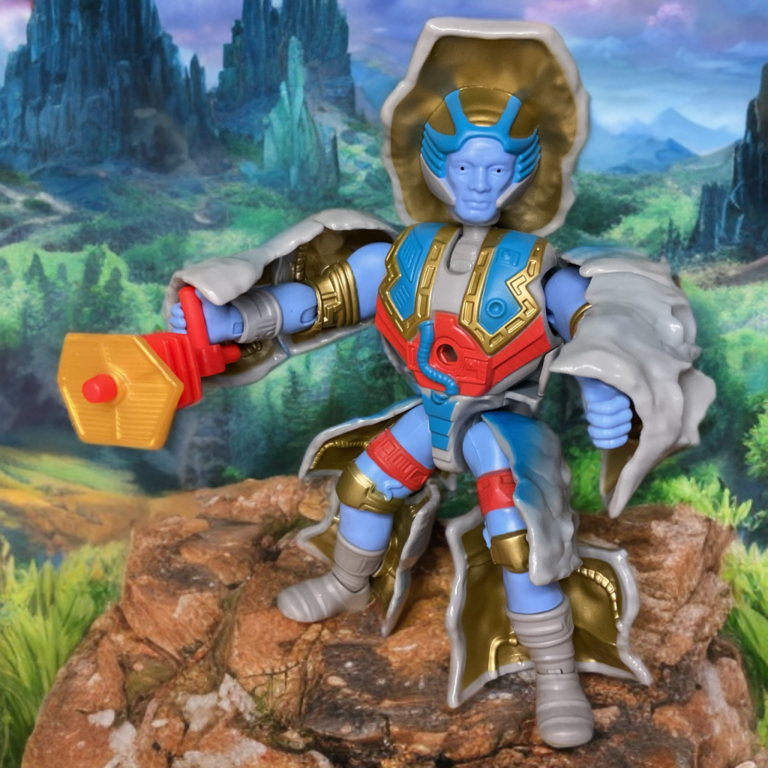
Sliding the blister off – a feature that’s a godsend for mint-on-card collectors – reveals the figure nestled securely. No twist ties here; it’s all about easy access. The first thing that strikes you is the heft. At 5.5 inches tall, Stonedar feels substantial, like he’s carved from actual meteorite rather than plastic. His blue-toned body with gold, red, and silver accents pops immediately, evoking that vintage vibe while promising modern fun.
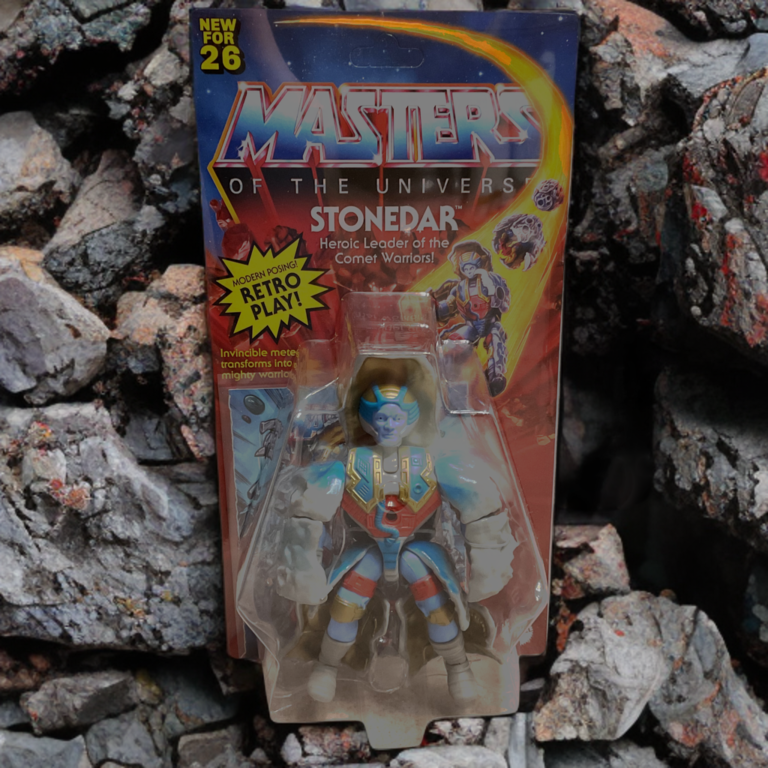
Popping him out, the 11 attached rock plates catch the light, hinting at the transformation gimmick. They’re not loose; everything clicks and folds with satisfying precision. The serene expression on his face – a mix of wise elder and stoic guardian – invites you to pose him right away. First impressions? This isn’t just a toy; it’s a portal to imaginative play, wrapped in nostalgia. If your inner child isn’t doing cartwheels by now, check for a pulse.
But let’s not rush. The packaging also includes a mini comic titled “Destroyer of Worlds,” a bite-sized story that fits neatly into the lore. It’s printed on quality paper, with artwork that captures the essence of the character’s adventures. Tucking it away for later reading adds to the excitement. Overall, unboxing Stonedar is an event, setting the stage for hours of enjoyment.
Sculpt and Design: A Rocky Masterpiece
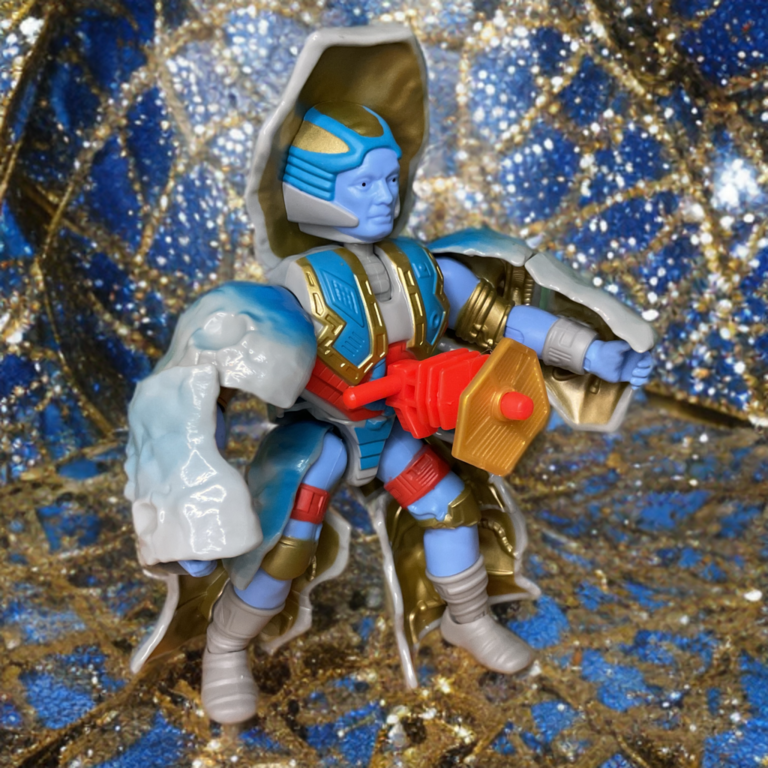
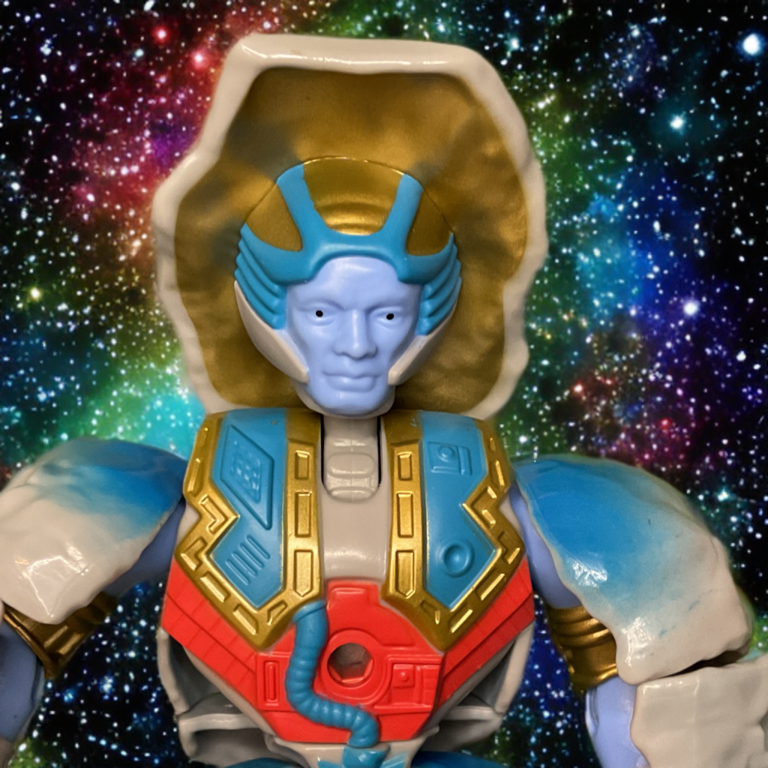
The sculpt of Stonedar in the Origins line is nothing short of stellar. Mattel has captured the essence of a living rock creature with a humanoid twist, blending organic crags with mechanical flourishes. His body is a symphony of blue plastic, textured to mimic stone while incorporating robotic elements like visible joints and panels. The head sculpt is particularly impressive: a helmet-like formation frames a calm, blue face with golden visor details that scream “intergalactic sage.”
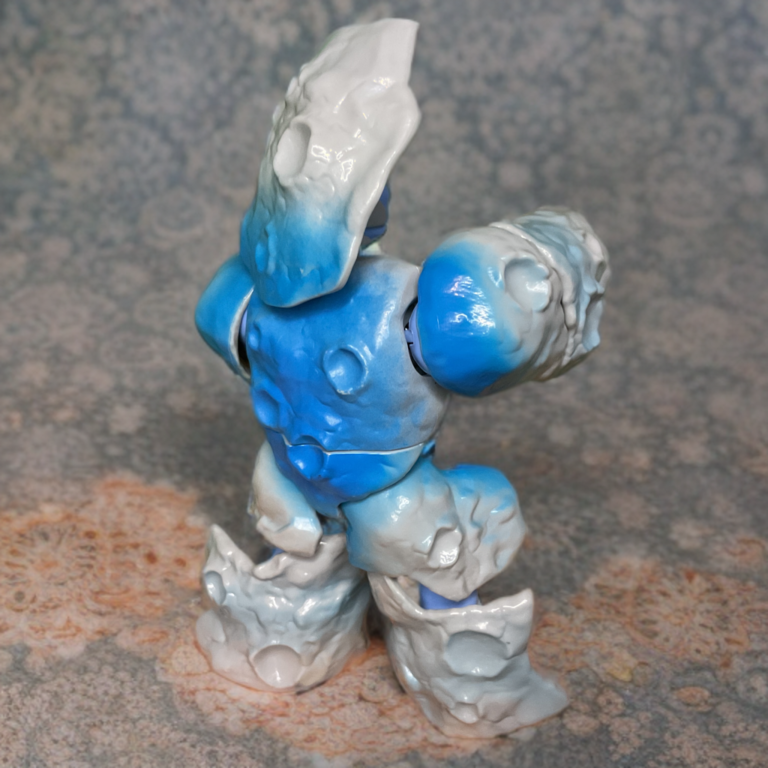
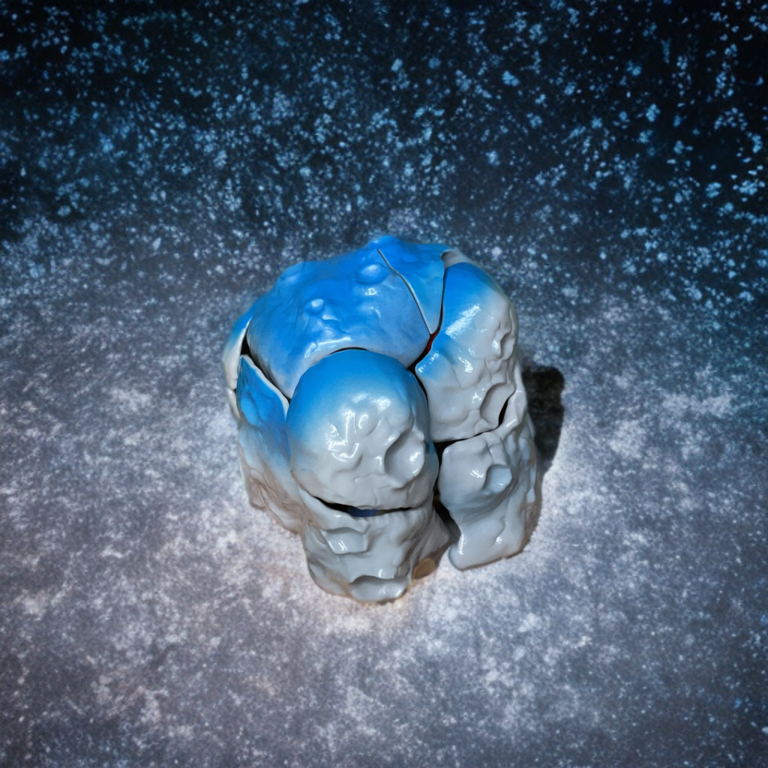
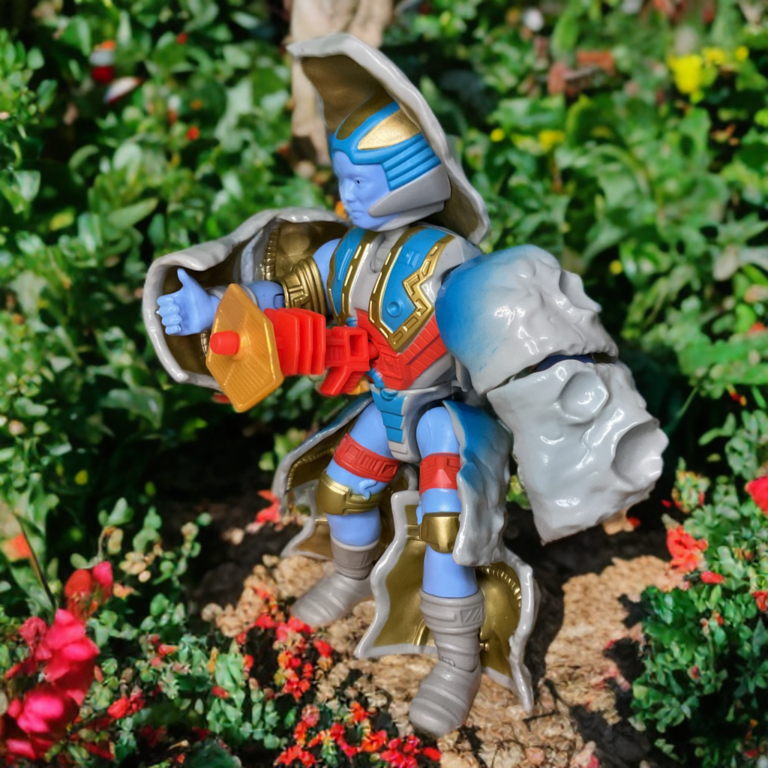
The 11 rock plates are the star of the show. Attached via hinges and pegs, they form armor that looks battle-worn yet elegant. Each plate has unique texturing – some smooth, others pitted like lunar surfaces – adding depth to the design. When open, they give Stonedar a winged, imposing silhouette; folded, they encase him in a comet form that’s compact and display-ready.
Comparisons to the vintage figure are inevitable. The original Stonedar was groundbreaking for its time, but this Origins version refines it with sharper details and better proportions. The legs, for instance, have red bands and gray boots that ground the design, pun intended. Arms feature gold cuffs and articulated shoulders, allowing for expressive gestures. It’s a design that respects the past while embracing contemporary toy-making techniques.
Humorously, Stonedar looks like he could star in his own sci-fi sitcom: “Rocky Road to Eternia,” where he navigates alliances with quips about being “set in his ways.” But seriously, the sculpt invites storytelling. Imagine him crash-landing in your display case, ready to defend against Skeletor’s schemes. The attention to detail, from the hex ports on his torso to the subtle gradients in paint, makes this a masterpiece for both play and admiration.
Expanding on the comet transformation, it’s a clever engineering feat. Folding the plates requires no force; everything snaps into place with audible clicks. In comet mode, he resembles a jagged asteroid, complete with a port for his blaster to act as an antenna. This dual functionality elevates the design beyond static figures, making Stonedar a dynamic addition to the line.
Articulation and Posability
With 16 points of articulation, Stonedar is no statue – he’s a poseable powerhouse. Shoulders swivel 360 degrees, elbows bend for dramatic gestures, and wrists rotate for gripping action. The head turns fully, allowing him to survey the battlefield with that serene gaze. Hips offer forward and side kicks, knees bend deeply, and ankles pivot for stable stances on uneven terrain.
This level of movement is a step up from vintage figures, where articulation was often limited. Here, you can pose Stonedar in mid-transformation, plates half-folded, as if caught in a cosmic shift. Or have him wielding his blaster in a reluctant battle pose, true to his peaceful nature. The rock plates don’t hinder posability; they enhance it, adding flair to dynamic setups.
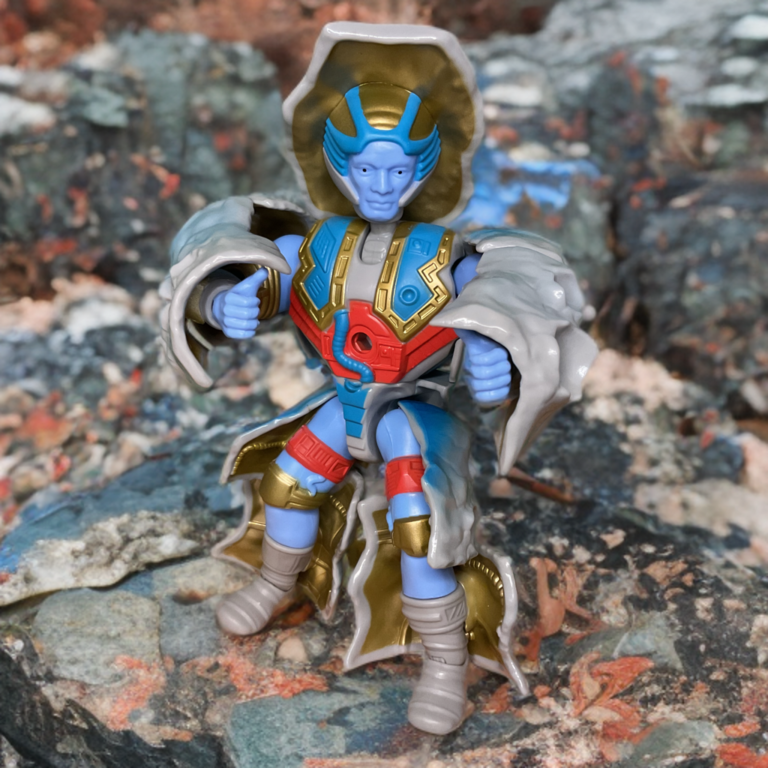
Testing it out, I posed him alongside other Origins figures – He-Man charging, Skeletor scheming – and Stonedar held his own. His balance is impeccable, thanks to the wide stance and weighted feet. Even in comet form, he rolls smoothly across surfaces, adding a play element that’s pure fun. If articulation were a sport, Stonedar would be an Olympian, gold medal in flexibility.
One quirky note: the plates can sometimes flap if not secured, but that’s part of the charm. It encourages experimentation, like partial folds for custom looks. Overall, the posability makes Stonedar versatile for dioramas, photography, or epic play sessions.
Accessories: Tools of the Trade
Stonedar comes equipped with essentials that complement his character perfectly. The handheld light blazer blaster is a highlight, designed with a red barrel and gold accents that match his palette. It’s ergonomic, fitting snugly in his grip for action poses. But the real magic happens when you plug it into his body as a radar antenna – a dual-purpose feature that’s ingenious.
This blaster isn’t just for show; it adds layers to play, allowing Stonedar to switch from offense to reconnaissance. The mini comic “Destroyer of Worlds” is another gem, packed with artwork and narrative that ties into his lore. It’s compact, easy to store, and sparks imagination.
These items enhance the figure without overwhelming it, keeping the focus on Stonedar’s transformative nature.
Paint and Detailing
The paint application on Stonedar is crisp and vibrant, elevating the sculpt to collector-grade status. The blue body has subtle shading, giving a metallic sheen that suggests alien alloy rather than plain rock. Gold highlights on the helmet and cuffs gleam under light, while red details pop with intensity.
No slop here; edges are clean, even on intricate patterns. The face features precise eyes and mouth, conveying wisdom. Rock plates have varied tones – grays, silvers – with weathering effects for realism. It’s paint that tells a story of space travels and battles.
In comet mode, the paints unify into a cohesive asteroid look. Detailing like the hex ports adds functionality and flair.
Play Value and Fun Factor
Stonedar’s play value is sky-high – or should I say, space-high. The transformation gimmick alone provides endless entertainment, folding and unfolding like a puzzle toy. Pair him with other figures for mock battles; his peaceful demeanor makes for ironic heroics.
Kids and adults alike will enjoy rolling him in comet form across floors, simulating crashes. The blaster’s versatility sparks creative scenarios. Durability is top-notch; he’s built to withstand enthusiastic play.
Fun factor? Off the charts. He’s the figure that turns a quiet afternoon into an Eternian epic.
Collectibility
In the Origins line, Stonedar is a must-have for completists. His exclusivity to Mattel Creations adds rarity, and the packaging is display-worthy. He pairs well with Rokkon or Horde foes, enhancing collections.
As a late-addition character, he fills a niche, appealing to deep-cut fans. Value-wise, he’s a solid investment, with nostalgia driving demand.
Conclusion
Wrapping up, the Masters of the Universe Origins Stonedar is a triumph of toy design, blending lore, innovation, and fun. From his legendary background to the tactile joy of his features, he’s a figure that rocks the collection world. Whether posing, transforming, or simply admiring, Stonedar delivers. If you’re on the fence, take the plunge – this comet warrior is worth the orbit.


 English
  Deutsch
  Français
  Português do Brasil
  日本語
日本語  Español
  English (Australia)