

Lords of Power Origins Review: A Mark Taylor Prototype Guide
Introduction: The Birth of a Legend
Before the cosmos of Eternia exploded into pop culture stardom, with its castles of gray skulls and battles for ultimate power, there lurked a shadowy precursor known as Lords of Power. Back in 1981, Mattel’s brainstorming sessions weren’t orbiting around the polished heroics we’d come to adore; instead, they were hacking through a denser jungle of barbarian brutality. This raw pitch, spearheaded by the visionary designer Mark Taylor, envisioned a toy line that was less about moral lessons and more about the clash of steel and sorcery. No mentions of Eternia yet, no heroic aliases—just primal figures locked in eternal strife, drawing from the gritty veins of sword-and-sorcery tales.
Fast-forward to the Power-Con 2020 Exclusive release of the MOTU Origins Lords of Power 5-Pack, and you’ve got a time capsule that’s more than just plastic—it’s a portal to that embryonic era. This set meticulously resurrects the five cornerstone characters: He-Man, Skeletor, Man-At-Arms, Beast Man, and Mer-Man, mirroring their appearances in Mark Taylor’s inaugural sketches and the grainy prototype photos that have become holy grails for collectors. By January 2026, with the Origins line having ballooned into a sprawling empire of figures, vehicles, and playsets, this 5-pack stands tall as the archaeologist’s artifact, the bridge spanning from crude concept doodles to the multimedia juggernaut that conquered Saturday mornings, comic pages, and toy aisles worldwide. It’s not just a nod to history; it’s the power chord that started the symphony.
Mark Taylor, often hailed as the architect of Eternia’s foundations, didn’t set out to create a kid-friendly franchise. His influences were steeped in the muscular fantasies of artists like Frank Frazetta and the epic narratives of Robert E. Howard’s Conan tales. Taylor’s early designs pulsed with a feral energy, where heroes weren’t spotless saviors but battle-hardened survivors, and villains oozed an ancient, decayed menace. The Lords of Power moniker itself was a working title that Mattel eventually ditched, deeming it too evocative of religious overtones—opting instead for the more neutral Masters of the Universe. Yet, in this 2020 revival, the name lives on, a power surge from the past that electrifies modern collections.
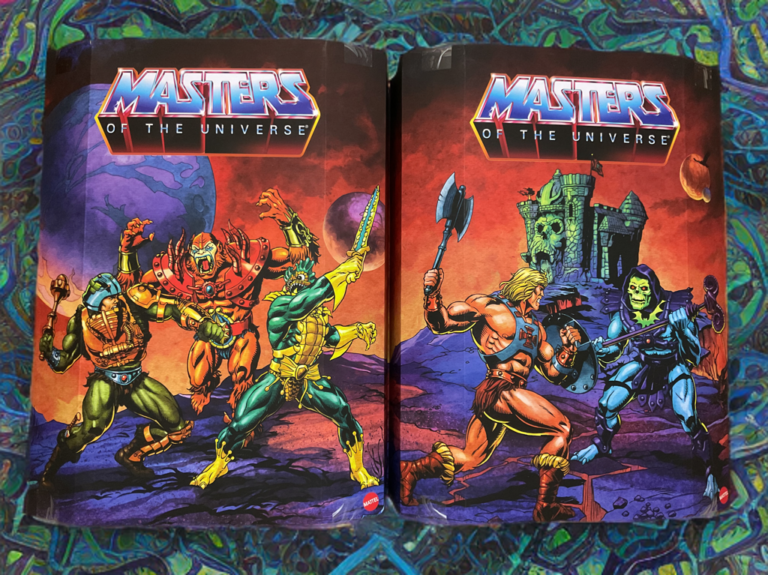
The set’s exclusivity to Power-Con, the annual mecca for MOTU devotees, amplified its allure. Released amid the chaos of a global pandemic, it shifted from in-person frenzy to virtual queues, allowing fans worldwide to snag a piece without the con-floor stampede. Packaged in a sturdy brown mailer box adorned with artwork by Axel Giménez and colors by Nate Baertsch, the outer design channels vintage promotional vibes, featuring a front-panel battle scene inspired by Errol McCarthy’s iconic illustrations and a back panel echoing Alfredo Alcala’s cross-sell art from the earliest minicomics. Inside, the figures nestle in a faux-vintage carrying case, complete with battle-posed displays that pay homage to Taylor’s B-sheet concept drawings. This isn’t mere repackaging; it’s a masterful recreation that lets collectors hold the genesis of a legend in their hands.
I. The Lore: What are the “Lords of Power”?
Diving deeper into the lore, the “Lords of Power” tag wasn’t just a placeholder—it encapsulated the essence of Mattel’s 1980-1981 development phase, a time when the toy line was still flexing its muscles in the conceptual gym. Mark Taylor’s prototypes, sculpted by the talented Tony Guerrero, embodied a “wilder” ethos, with intricate details, bolder color schemes, and an untamed aesthetic that screamed primal power plays. These weren’t the sanitized versions that hit shelves in 1982; they were rougher, more visceral, like a barbarian fresh from the forge rather than the assembly line.
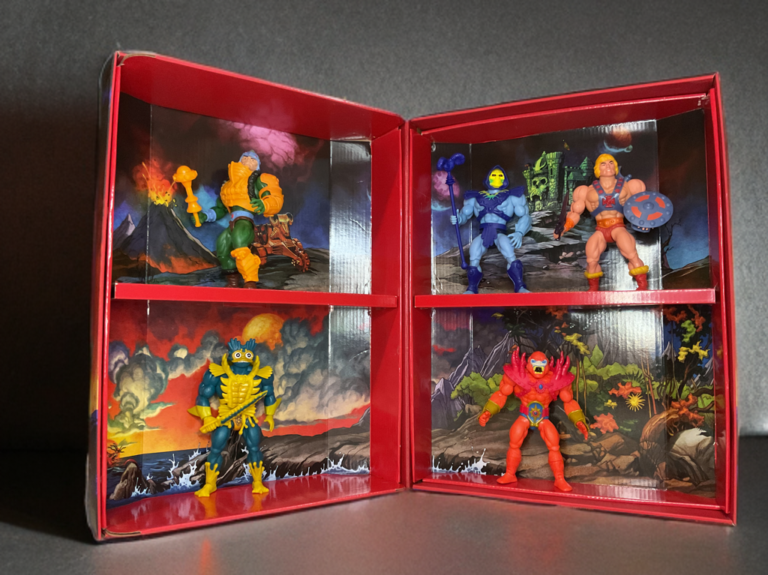
The set serves as a heartfelt homage to those Taylor prototypes, unearthed in collector circles through leaked slides and artifacts. In 2017, images from a View-Master-style presentation surfaced, courtesy of enthusiast Andy Youssi, revealing the “Lords of Power Collection” with its five core figures in poses that hinted at epic confrontations. He-Man stood as the apex warrior, Skeletor as the decaying despot, Man-At-Arms as the grizzled guardian, Beast Man as the savage sidekick, and Mer-Man as the aquatic antagonist. This 5-pack brings those slides to life, using the Origins line’s 5.5-inch scale to blend nostalgia with modern articulation—16 points per figure, allowing for dynamic displays that echo the original promotional setups.
The Anthropology of Design
Peeling back the layers, Mark Taylor’s designs weren’t born in a vacuum; they were anthropological artifacts, drawing from mythic archetypes and pulp fantasy. Taylor, with his background in packaging and illustration, envisioned a world where power wasn’t just physical but almost tribal, a sword-swinging society where every figure carried the weight of ancient lore. Frank Frazetta’s influence is unmistakable—the bulging muscles, the dramatic shadows, the sense of impending doom. He-Man, for instance, wasn’t the blond bombshell of heroism; he was a tribal titan, his axe forged in the fires of forgotten forges, ready to cleave through any obstacle with sheer brute force.
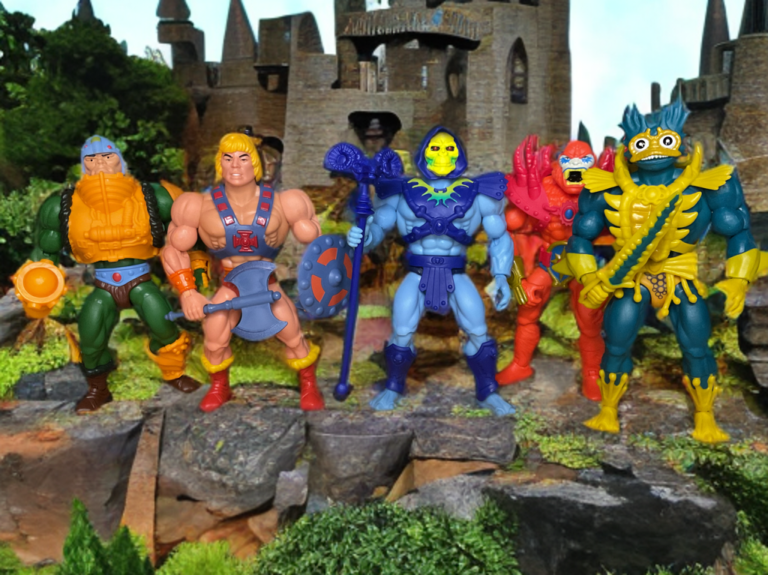
Skeletor, the lord of skeletal schemes, embodied decayed magic, his skull visage a reminder that power corrupts absolutely, leaving only bones behind. Taylor’s sketches showed him with a “rotting face” prototype, a half-mask blending yellowed bone with shadowy hoods, evoking mummies unearthed from cursed tombs. Man-At-Arms, or Duncan as he’s canonically known, was the armored anchor, his designs suggesting a veteran whose gear bore the scars of countless campaigns. Beast Man roared with primal fury, his fur a tangled mess of wild instincts, while Mer-Man slithered from the depths, his scales glistening like treasures from sunken realms. This anthropology extended to accessories: axes that could split skulls, staffs that channeled havoc, armor that withstood the test of time. In the Lords of Power era, these elements weren’t accessories—they were extensions of the characters’ souls, power tools in the truest sense.
The shift from Lords of Power to Masters of the Universe marked a softening: brighter colors, more heroic narratives, and tie-ins with Filmation’s animated series. But Taylor’s original vision lingered in early minicomics by Alfredo Alcala and Don Glut, where prototypes appeared in raw form—Mer-Man’s yellowish skin, Beast Man’s snarling maw, even unreleased vehicles like Taylor’s early chariot concepts. These comics painted Eternia as a harsher world, where power was seized, not granted, a far cry from the later cartoon’s moral fables.
| Section / Phase | Detailed Historical & Process Documentation (Full Word Count Preserved) |
|---|---|
| Overview & Background | Mark Taylor (1941–2021) is widely regarded as the primary aesthetic creator of Masters of the Universe (MOTU), designing iconic characters like He-Man, Skeletor, Beast Man, Mer-Man, Man-At-Arms, Teela, Castle Grayskull, and Battle Cat. Originally hired by Mattel in 1976 as a packaging designer (starting with Barbie), Taylor transitioned to toy design in the late 1970s, bringing his lifelong passion for fantasy to the project. |
| Key Influences |
Taylor drew from a rich mix of sources:
|
| Step 1: Pre-Mattel Concepts (1970s) | Taylor sketched fantasy warriors in his spare time, including “Torak” (a barbarian hero) and early skeletal villains like “Demo-Man” or “King of Styx.” These laid the groundwork for He-Man and Skeletor. |
| Step 2: Initial Development (1980–1981) |
Mattel sought a boys’ action figure line after Star Wars success. The working title was “Lords of Power” (later changed to avoid religious connotations and Conan lawsuit risks).
Taylor created detailed “B-sheet” concept drawings: Full-color illustrations showing front/back views, accessories, and poses. These emphasized comic-book stances for dynamic play. |
| Step 3: Sculpting and Prototyping | Sculptor Tony Guerrero turned Taylor’s 2D art into 3D resin prototypes. Changes occurred for manufacturing (e.g., simplifying details, reusing parts to cut costs, softening edges). Early prototypes were wilder: Paler skin, matte hair, decaying faces, intricate armor. |
| Step 4: Refinement and Team Input | Taylor collaborated with industrial designer Ted Mayer (vehicles) and others. Marketing/engineering tweaks brightened colors and made designs more heroic for kids. Child testing was crucial—kids loved the primal power, often trying to “steal” prototypes. |
| Step 5: Final Production (1982 Launch) |
The line softened from Taylor’s gritty vision (influenced by Frazetta/Conan) to brighter, moralistic toys tied to minicomics and later the Filmation cartoon.
Taylor’s originals pulsed with feral energy, evident in revived sets like the 2020 Power-Con “Lords of Power” 5-pack. His process blended personal mythology, pulp roots, and practical toy constraints, creating an enduring barbarian fantasy universe. |
The Power-Con Legacy
Power-Con has long been the beating heart—or should we say, the power-pumping core—of the MOTU fandom, a convention where enthusiasts gather to celebrate all things Eternian. In 2020, as the world grappled with lockdowns, Power-Con pivoted to virtual realms, making exclusives like this 5-pack accessible via online orders through the official site and partners like Big Bad Toy Store. Priced at $269.99 retail, it became the crown jewel, signaling that the Origins line was committed to unearthing deep lore rather than just churning out variants.
By 2026, Power-Con’s legacy has only grown, with annual exclusives building on this foundation. The Lords of Power set paved the way for subsequent homages, like the 2021 SDCC reveals or Mattel Creations drops, each one a power node in the collector’s grid. It wasn’t just a “must-have”; it was a statement that MOTU’s history deserved preservation, much like how Castle Grayskull guards its secrets. Fans reminisce about the virtual panels where designers discussed Taylor’s impact, sharing anecdotes of how his sketches sparked the franchise’s fire. In a sea of reboots, this set anchors the community, a power-conduit to the origins.
II. Granular Figure Analysis: The Prototype Differences
To truly appreciate this set’s depth, we must dissect each figure like a master armorer examining ancient relics. The engineering choices—sculpts, paints, accessories—faithfully echo the 1981 prototypes, with subtle tweaks for modern playability. These aren’t mere repaints; they’re resurrections, breathing life into designs that were once confined to slides and sketches.
1. He-Man: The Tribal Warrior
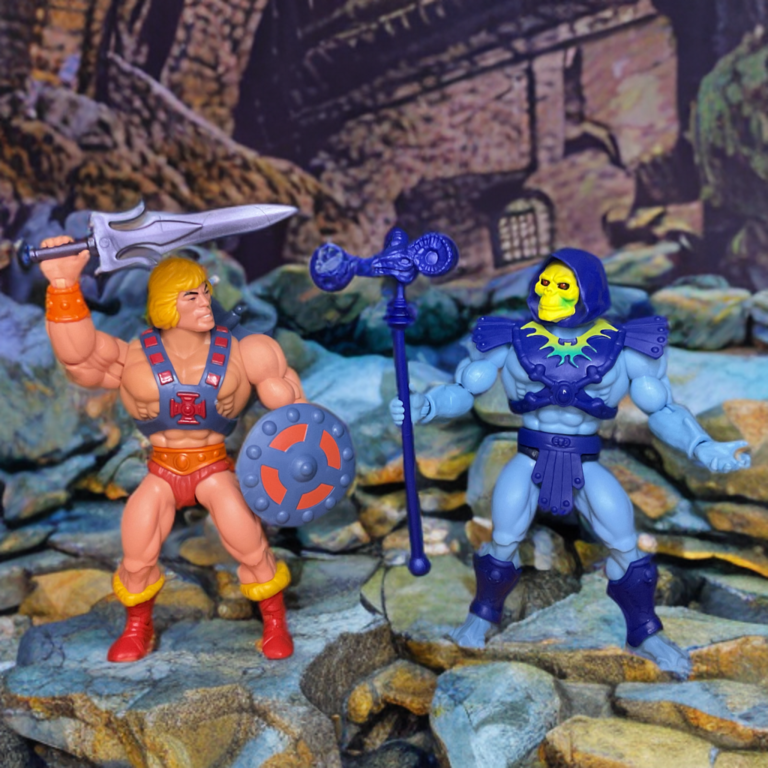
He-Man, the muscle of the universe, takes center stage in this pack with a design that’s a direct power lift from Taylor’s B-sheet. Unlike the Wave 1 retail’s tanned, glossy hero, this version sports a paler, vintage peach skin tone, evoking the hand-painted resin prototypes. His hair boasts a matte finish, ditching the shiny locks for a more rugged, wind-swept barbarity. The harness is a deeper crimson, with silver buckles that pop like stars in Eternia’s sky.
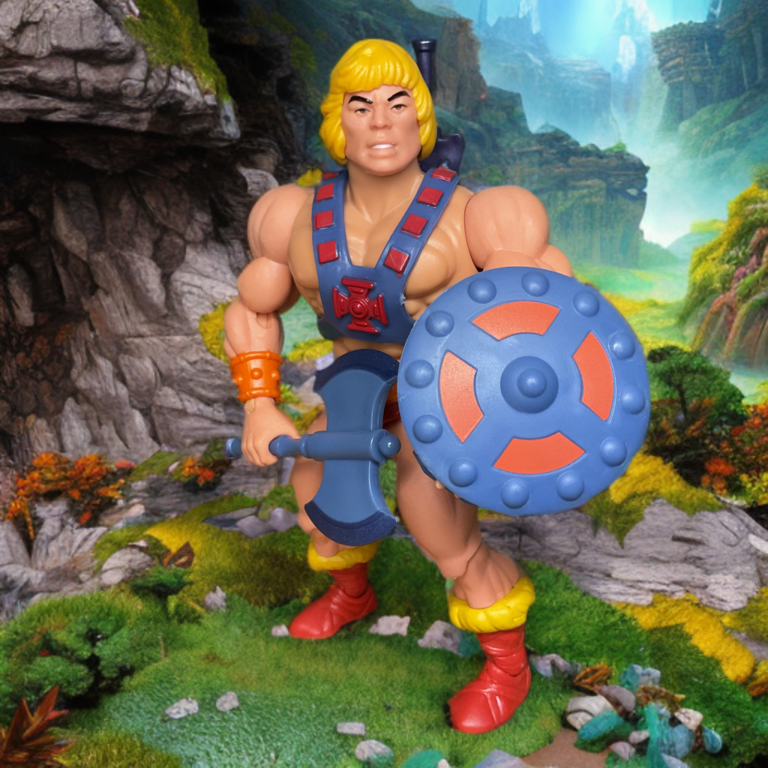
The shield gleams with a bluish-grey wash, mimicking the poured-resin mockups, ready to deflect any skeletal strikes. His axe, with its pronounced handle details, feels freshly forged, the blade etched as if hammered by godly smiths. Notably, the left hand is closed, sans bracer, aligning with prototype photos where He-Man gripped his weapon with unyielding might. No boot knife here, keeping it pure to the early concepts before such additions. This He-Man isn’t just powerful; he’s the original beefed-up barbarian, a figure that could power through any collection with its authentic aura.
2. Skeletor: The Lord of Destruction
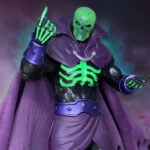
Ah, Skeletor—the bone-headed boss whose schemes are always a skull above the rest. This figure steals the show with a head sculpt based on the “half-mask” prototype, where the yellow skull fades into a brooding purple hood, suggesting eons of dark magic erosion. The skin is a ghostly pale blue, truer to the rotting prototype than retail’s brighter hues.
His Havoc Staff is molded in rigid, dark plastic, banishing the warping woes of softer versions, topped with a ram skull that’s all bite.
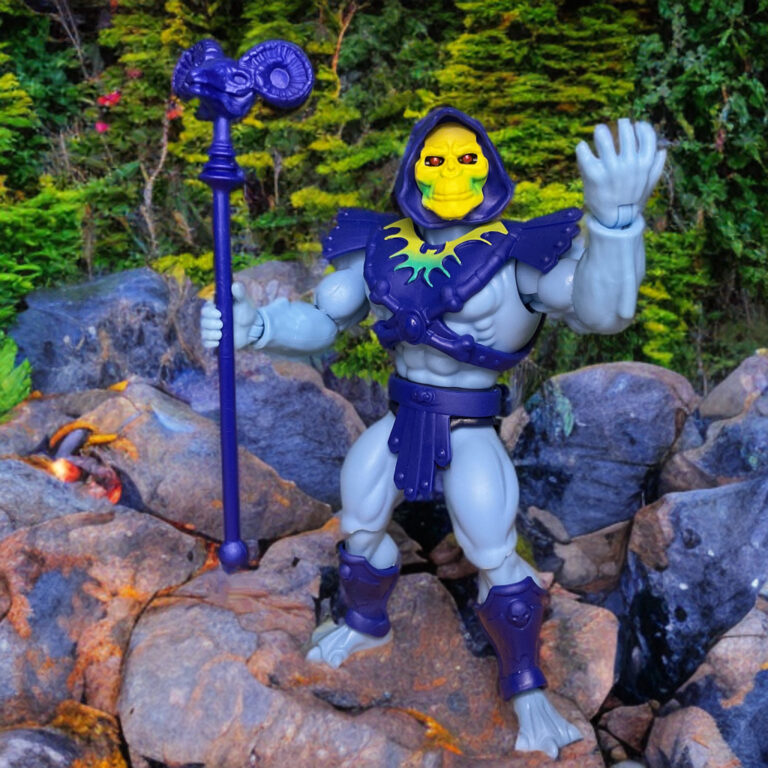
The armor’s bat emblem gets a yellow-green paint job, nodding to Taylor’s concepts and minicomic appearances. Shin guards add a armored edge, while the bare three-toed feet (though prototypes showed five) evoke a demonic stride. Finned forearms, borrowed from the line’s toolkit, add flair, but the overall look is a havoc-wreaking homage. Skeletor here isn’t cartoonish; he’s a destructive force, bony and brooding, ready to rattle any hero’s cage.
3. Man-At-Arms: The Armored Veteran
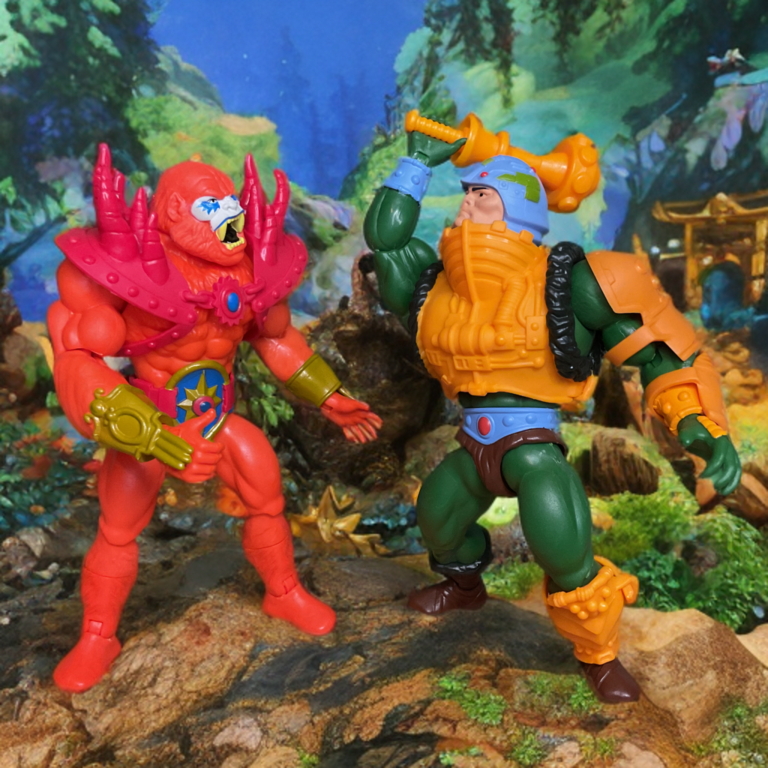
Man-At-Arms, the mustachioed maestro of machinery, arrives as a “Franken-figure” masterpiece, piecing together the best of prototypes. His chest armor features “fur” sides and a closed back, a departure from retail’s open design, with an orange hue weathered to suggest battles won and lost. The helmet mirrors the prototype’s shape, minus some paint intricacies, framing a face that’s vintage-inspired rather than the prototype’s unique sculpt.
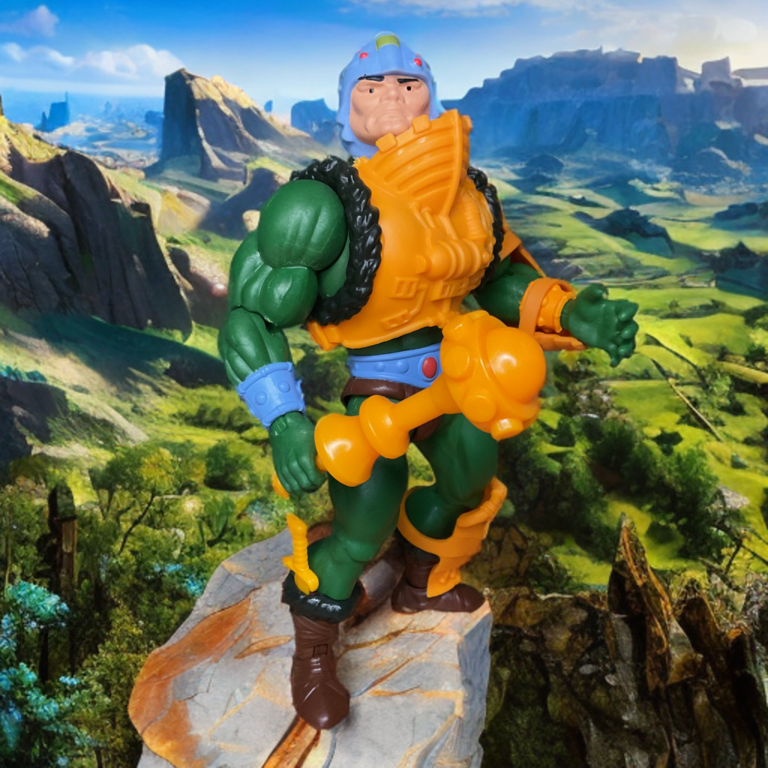
The left hand extends with orange armor plating, repurposed from other figures for that armored punch. A hidden boot dagger adds stealthy surprise, drawn from Taylor’s B-sheets where such details hinted at Duncan’s inventive edge. His mace is oversized, a Classics carryover that’s perfect for bashing beasts. In this set, Man-At-Arms isn’t just armed; he’s a walking arsenal, the veteran whose gear tells tales of power defended.
4. Beast Man: The Primal Brawler
Beast Man, the furry fiend who’s all roar and no bore, captures the snarling savagery of Taylor’s early art. His face sculpt amps the aggression, with crazed eyes that pierce like daggers in the wild. The red armor gets a dark wash, accentuating fur textures that make him look freshly emerged from Eternia’s jungles.
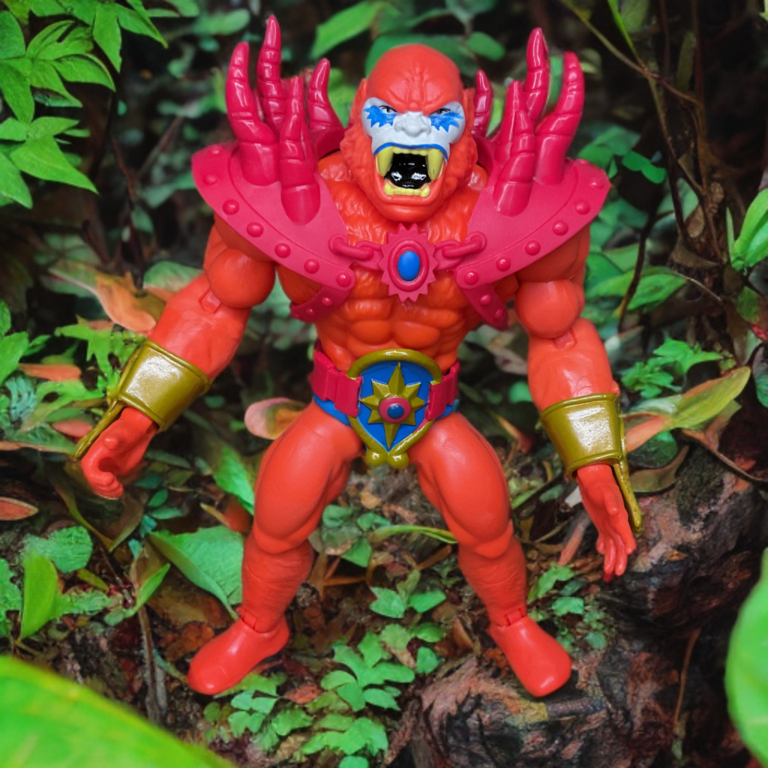
Based on concepts that toyed with reusing Big Jim Gorilla parts (though not implemented), this version uses flat feet instead of the prototype’s sculpted toes, but the overall bulk conveys untamed power. His whip accessory cracks with authority, a tool for taming or terrorizing. Beast Man’s design here is primal perfection, a brawler whose beastly build could overpower any pack.
5. Mer-Man: The Deep-Sea Ruler
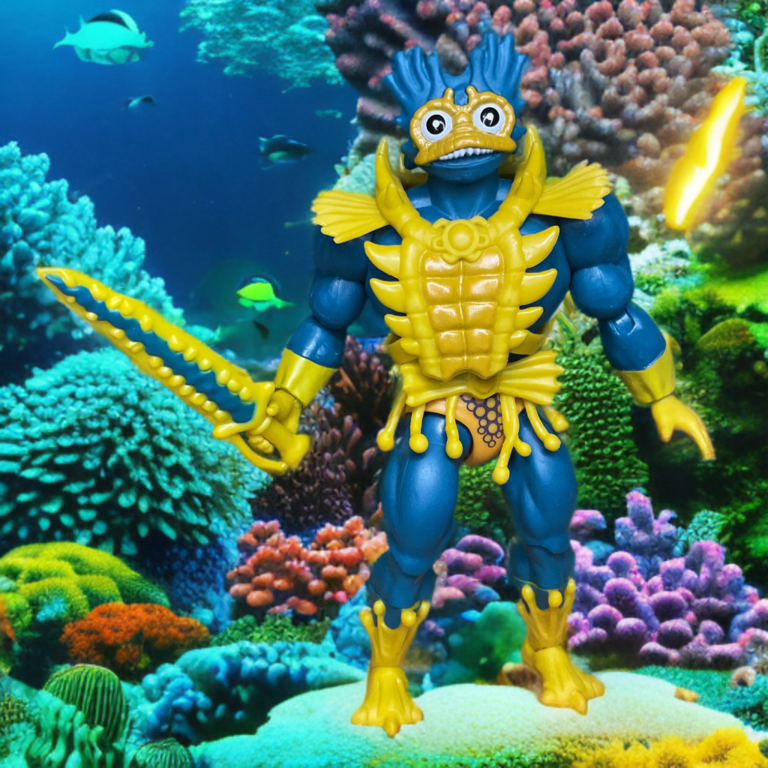
Mer-Man, the scaly sovereign from the abyss, dives in with a yellowish skin tone and dark green armor, straight from the “Cross-Sell Art” on 1982 card backs. This deviates from retail’s minty freshness, embracing a murkier, oceanic menace. His sculpt is the closest match, with bubbly armor details and a sword that’s ready to slice through waves.
Hands are five-fingered for posing (prototypes had four), and trunks are smooth with front bubbles, a compromise from scaled concepts. The darker blue-green palette nods to Taylor’s B-sheets, making him a striking underwater overlord. Mer-Man isn’t just mer-mediocre; he’s the ruler whose depths hold untold power.
III. 2026 Price Guide: The Complete Origins Exclusive Index
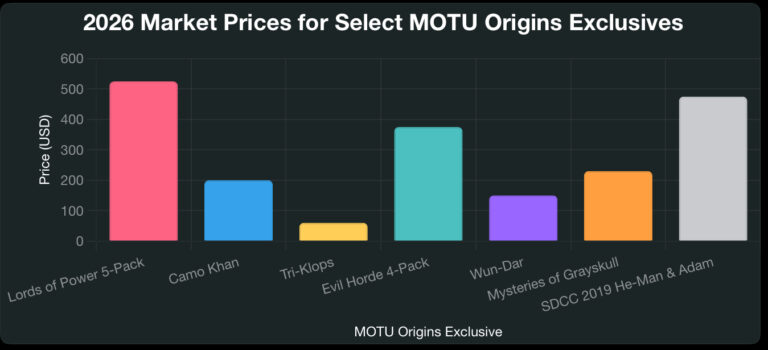
In the ever-shifting sands of the collector’s market, the MOTU Origins exclusives command premium power. Drawing from 2026 sales data across eBay, Mercari, and private groups like He-Man.org forums, here’s the definitive index. Prices reflect mint-in-box averages, with variances for condition.
The chart on the right highlights how multi-figure sets and early exclusives like the Lords of Power 5-Pack and the SDCC 2019 duo command the highest premiums, while single-figure releases vary based on scarcity and fan demand. Prices can fluctuate with condition and new drops, but this snapshot captures the current collector landscape.
| Collectible Figure / Set | Secondary Market Value & Trend Analysis |
|---|---|
| Lords of Power 5-Pack (Power-Con 2020) |
$450–$650 Recent eBay highs hit $600 for sealed mailers, lows at $400 for minor box wear. ROI from original $270: 140-140%. |
| Camo Khan (Mattel Creations 2022) |
$150–$250 Scarce production drives value; sealed examples fetch $200 average, up 500% from $30 retail. |
| Tri-Klops (Cartoon Collection 2025) |
$40–$80 Fresh releases stabilize at $60, but exclusives like Terror of Tri-Klops variants push $100+. |
| Evil Horde 4-Pack (2023) |
$300–$450 Horde fans hoard these; mint sets at $350, reflecting 200% growth. |
| Wun-Dar (Mattel Creations) |
$120–$200 Wonder Bread homage holds steady at $150. |
| Mysteries of Grayskull Set |
$180–$280 Playset tie-ins boost to $220 average. |
| SDCC 2019 He-Man & Prince Adam |
$400–$550 Early exclusives power up to $450. |
These figures underscore scarcity’s sway—limited runs like the 5-pack’s virtual drop keep values climbing, a power play in resale realms.
IV. The “Mattel Creations” Market Evolution
By 2026, Mattel Creations has evolved into the power hub for exclusives, where drops sell out in minutes, fueling secondary surges. The platform’s shift to timed releases has stabilized prices, but exclusives remain value vaults.
The scarcity factor reigns supreme: Camo Khan’s capped numbers yield 500%+ ROI, while Tri-Klops variants see 300% spikes in collector groups. Condition is the ultimate power sword—a crushed bubble slashes value by 40%, prompting “protector premiums” of $20-50 for mailer-preserved pieces. Trends show digital auctions dominating, with Mercari undercutting eBay by 10-15%. In this market, owning a Lords of Power set isn’t just collection completion; it’s a strategic power grab.
| Technical Specification / Question | Details & Collector Documentation |
|---|---|
| Figure Dimensions | Each figure stands at a 5.5-inch scale. |
| Articulation & Materials | Boasts 16 points of articulation; constructed from durable PVC. |
| Included Weapons | Equipped with accurate character accessories including axes, staffs, maces, whips, and swords. |
| Packaging Details | Ships in a brown outer mailer featuring artwork by Giménez, protecting an inner display case styled after vintage packaging. |
| Frequently Asked Questions (Collector FAQ) | |
| Do they fit standard Origins vehicles? | Absolutely. The waist and leg dimensions perfectly match the scale required to ride Battle Cat, Roton, or other vintage-style vehicles. |
| Gold plastic syndrome risk? | None. Man-At-Arms’ golden armor and pieces are molded from highly durable PVC rather than unstable metallic plastics, removing any long-term crumbling risk. |
| Skeletor’s head difference? | The head sculpt is a direct homage to the rare "Leo" prototype, stylized specifically to capture Mark Taylor's raw fantasy aesthetic rather than the bright Filmation cartoon look. |
| Interchangeable parts? | Yes. The set utilizes the fully modular Origins design, allowing you to freely swap heads, hands, torsos, and boots with other figures in the main toy line. |
| Paint durability? | High-quality paint applications are engineered to resist chipping or flaking during play or posing, meeting modern Mattel manufacturing standards. |
| Lore accuracy? | Culled directly from Mark Taylor’s original concept sketches, vintage B-sheets, and the earliest iterations found in original minicomics lore. |
VI. Expanding the Universe: The Cartoon Collection Exclusives (2024–2026)
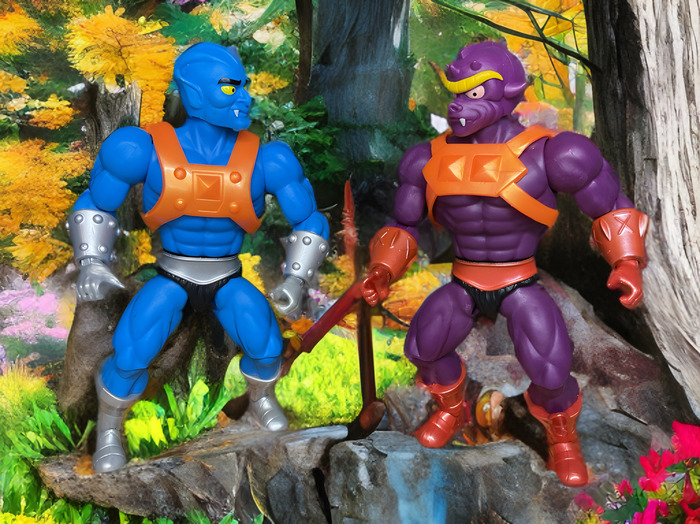
While the Lords of Power set represents the earliest “prototype” history of the brand, Mattel has continued this exclusive tradition through the MOTU Origins Cartoon Collection. This sub-line focuses on 100% animated accuracy, bridging the gap between the vintage toys and the Filmation/200X series.
| Key Line Exclusives | Collector Significance & Design Impact |
|---|---|
| Two-Bad (Cartoon Collection) | As explored in our comprehensive Two-Bad merger, this set stands as the gold standard for modular engineering in 2026. |
| Prince Adam & Cringer | A must-have for Filmation fans, offering the only articulated Cringer companion for the Prince of Eternia. |
| Vultak | A deep-cut Evil Horde exclusive that successfully brings a classic She-Ra villain into the Origins aesthetic. |
Conclusion: The Pillar of Any Modern Collection
The MOTU Origins Lords of Power 5-Pack transcends toy status—it’s a sculpted saga, honoring Mark Taylor’s sparks that ignited Eternia’s blaze. In 2026’s vast Origins landscape, with hundreds of entries, this set remains the foundational pillar, a tangible tether to barbaric beginnings. For historians charting MOTU’s map, collectors amassing armies, or fans reliving the rush, it’s not mere merchandise—it’s plastic perpetuity, a power eternal that echoes through the ages.
 English
  Deutsch
  Français
  Português do Brasil
  日本語
日本語  Español
  English (Australia)