

Force Works: Iron Man’s 1994 Animated Superhero Team Unveiled
Force Works: Iron Man’s 1994 Animated Strike Force Unveiled
When the Iron Man animated series premiered on September 24, 1994, as part of the Marvel Action Hour, it carried the weight of a new era for Marvel Films Animation. While viewers tuned in expecting the high-tech, solo industrial adventures of Tony Stark, they were immediately introduced to a radical departure from the “lone hero” trope: a specialized, proactive superhero strike force known as Force Works.
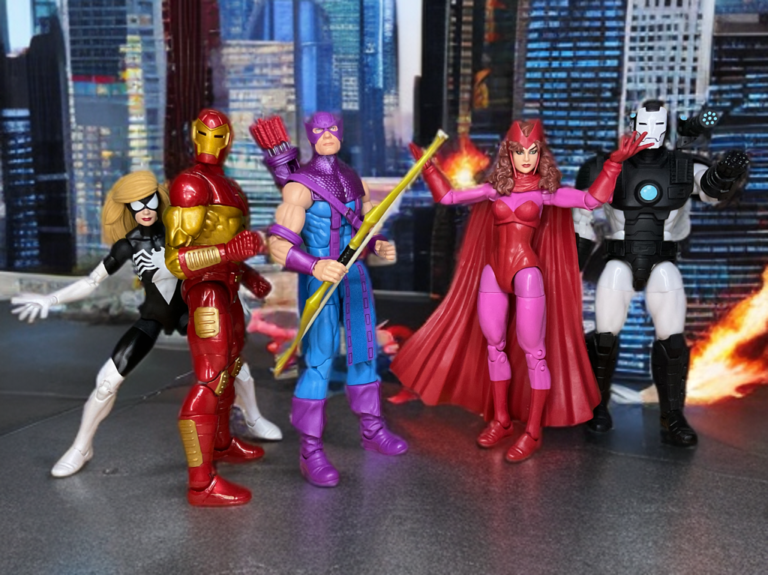
For thirteen episodes, Iron Man led what was arguably the most diverse and strategically advanced squad in 1990s animation. Comprising Iron Man, War Machine, Hawkeye, Scarlet Witch, Spider-Woman (Julia Carpenter), and the enigmatic alien Century, Force Works functioned as a high-stakes military hierarchy. Unlike the Avengers, who typically waited for a crisis to emerge, Force Works was built on a foundation of preemption.
The Philosophy of “Total Offense”
This wasn’t a loose alliance of guest stars or a simple team-up; it was a professional paramilitary organization. Operating from Stark Island—a high-tech fortress off the coast of California—Force Works embodied Tony Stark’s belief that the best defense is a relentless, calculated offense. They utilized the Chaos Computer, a sophisticated A.I. forecasting system that analyzed world events to predict where the Mandarin or MODOK would strike next.
In a Saturday morning landscape dominated by the “schoolhouse” vibes of the X-Men or the solo struggles of Spider-Man, Force Works was a trailblazer. They were Marvel’s first true animated “strike force,” predating the cinematic team-ups of the modern era by nearly two decades. They weren’t just heroes; they were a technological deterrent.
The Comic Book Roots: A “Reverse-Pipeline” Success
The history of Force Works is one of the most fascinating “glitches” in Marvel’s media timeline. While the team officially debuted in Force Works #1 (July 1994)—penned by Dan Abnett and Andy Lanning—the animated series was developed in parallel. Due to the lengthy production cycles of 90s animation, the show’s version of the team was finalized and voiced before the comic book had even finished its first story arc.
In the comics, Force Works was born from the dissolution of the West Coast Avengers. Tony Stark, frustrated by the bureaucratic limitations of the main Avengers branch, decided to fund a leaner, meaner unit. While the comic featured U.S. Agent as a core member, the animated series made the pivotal decision to swap him for Hawkeye. This choice provided a more recognizable “Avenger” link for general audiences while maintaining the internal friction that made the team’s dynamics so compelling.
| Feature | Marvel Comics (1994) | Animated Series (Season 1) |
| Core Leader | Iron Man / Scarlet Witch | Iron Man |
| Enforcer | U.S. Agent | Hawkeye |
| Headquarters | The Works (Ventura, CA) | Stark Island (Pacific Fortress) |
| Primary Tech | Chaos Computer / Recorder | Chaos Computer / Mandate |
| Team Dynamic | Disillusioned Avengers | High-Tech Strike Force |
Producers Ron Friedman and Stan Lee intentionally leaned into the Force Works branding to distinguish the show from its contemporaries. They didn’t want another group of teenagers or mutants; they wanted a team of seasoned professionals. By the time the Marvel Action Hour hit the airwaves, Force Works had achieved more mainstream visibility in three months of television than they had in nearly a year of comic publication.
The Comic Book Roots: A “Parallel Universe” Launch
The birth of Force Works is a fascinating case study in Marvel’s 1990s multimedia strategy. The team officially made their print debut in Force Works #1 (July 1994), a high-octane relaunch penned by the legendary duo Dan Abnett and Andy Lanning (frequently referred to as DnA) with gritty pencils by Tom Tenney.
In the source material, the team was born from the wreckage of the West Coast Avengers. Following a series of tactical failures, Tony Stark became disillusioned with the Avengers’ traditional, “wait-for-disaster-to-strike” philosophy. He walked away from the main branch to form a proactive unit that utilized the Chaos Computer—a system that combined advanced algorithms with Wanda Maximoff’s “Chaos Magic” to predict future catastrophes. The comic-book roster was a powerhouse: Iron Man, War Machine, Scarlet Witch, Spider-Woman (Julia Carpenter), U.S. Agent, and later the lunar hero Moonraker and the alien Century.
The Animation Anomaly: Print vs. Screen
While the first comic issues technically hit newsstands a few months before the September 24, 1994 premiere of the Marvel Action Hour, the animated series was already deep in production long before the first comic script was finalized. This created a unique “reverse-pipeline” effect. Because the show reached a massive Saturday morning audience, many fans experienced the team’s dynamics, the Stark Island headquarters, and the Century origin story through the lens of animation before ever seeing the printed page.
Producers Ron Friedman and Stan Lee (who served as a consulting producer) were strategic in this choice. They didn’t want Iron Man to feel like a retread of the X-Men’s school-based drama or Spider-Man’s freelance struggles. They pushed for the Force Works concept specifically to create a professional, paramilitary atmosphere. It wasn’t just a superhero team; it was a high-tech corporate security force—essentially “S.H.I.E.L.D. with superpowers.”
This corporate-professional aesthetic was key to differentiating Season 1. While the comic eventually drifted into more cosmic and supernatural territories, the animated series kept Force Works focused on the industrial war against the Mandarin, making them the premier “tech-first” team of the 90s.
Key Differences: Page vs. Screen
The Six Core Members
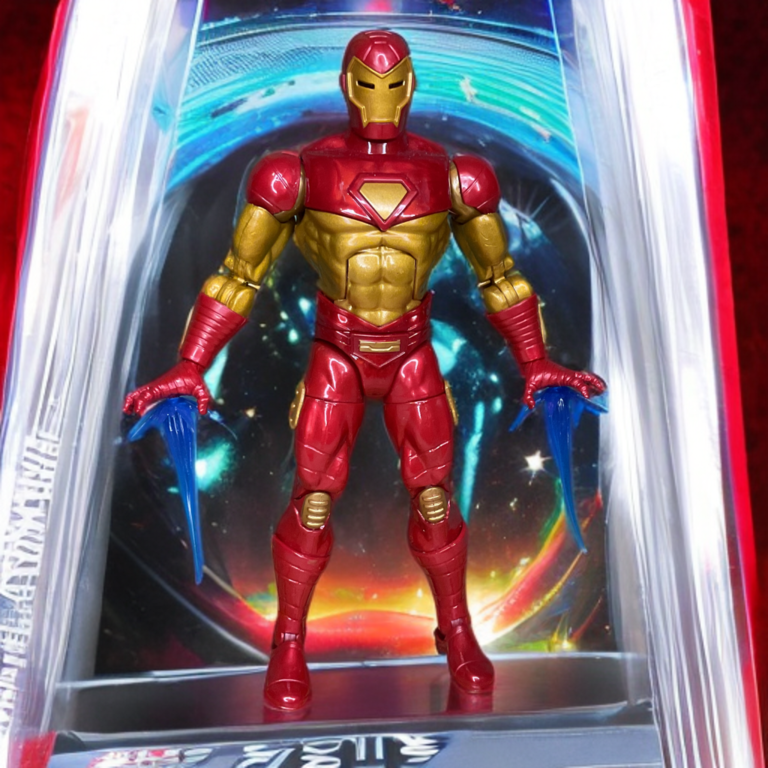
Recreating the Force Works ‘Total Offense’ strategy using various modern Marvel Legends action figures.
1. Iron Man (Tony Stark) – The Strategic Architect
Voiced by: Robert Hays (Airplane!, Starman)
The Animated Persona: In the 1994 series, Tony Stark was portrayed as the ultimate “Tech-Commander.” Voiced with a commanding, authoritative baritone by Robert Hays, this version of Tony was less focused on quips and more focused on tactical efficiency. As the billionaire CEO of Stark Enterprises, he wasn’t just the leader; he was the team’s bankroller, chief engineer, and lead strategist. His personality in Season 1 was often defined by his friction with the team—specifically Hawkeye—as he frequently prioritized the cold logic of the Chaos Computer over the instincts of his teammates.
The “Modular” Advantage: Season 1 was the era of the Modular Armor, arguably the most iconic look for Iron Man in the 90s. The show utilized a “Hall of Armor” sequence in almost every episode, emphasizing the suit’s versatility. Tony didn’t just have one suit; he had a modular system that allowed for rapid field-swaps. When the mission went underwater, he deployed the Hydro Armor; when the Mandarin retreated to his orbital station, Tony donned the bulkier Deep Space Armor. This focus on specialized gear made the show feel like a weekly showcase for Stark’s industrial genius.
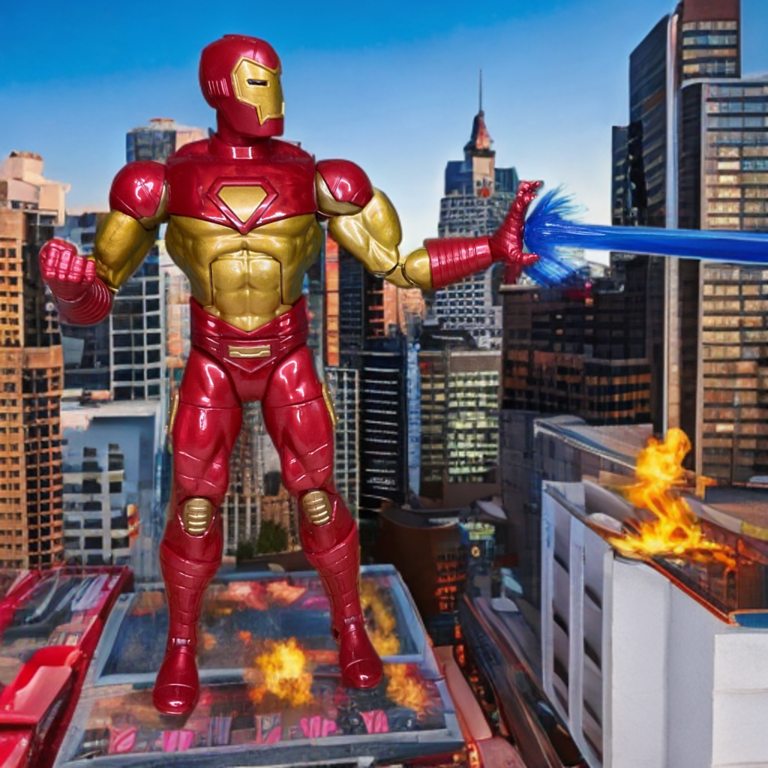
The Leader’s Burden: Tony’s role in Force Works was to prove his “Total Offense” theory. He designed Stark Island not just as a home, but as a proactive hub where global threats were monitored 24/7. While he provided the team with cutting-edge tech and a floating fortress, his “my way or the highway” leadership style was the primary source of the show’s internal drama. He wasn’t just fighting the Mandarin; he was fighting to prove that his technology could protect the world better than traditional, reactive superheroics.
The Collector’s Edge: The Toy Biz Modular Iron Man
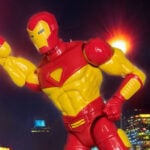
For collectors, the 1994 Toy Biz Modular Iron Man is the definitive piece of this era. Known for its “light-up” chest piece and removable shoulder pads, it captured the aesthetic that Robert Hays voiced so perfectly. Today, the Marvel Legends “Iron Man: The Animated Series” figure (on the retro cardback) serves as the modern upgrade, bringing the high-end articulation that 90s kids could only dream of while keeping that vibrant, saturated red-and-gold color palette.
2. War Machine (James “Rhodey” Rhodes) – The Heavy Ordnance
Voiced by: James Avery (The Fresh Prince of Bel-Air)
The Animated Persona: In Season 1, James “Rhodey” Rhodes was voiced by the late, great James Avery. Avery brought a booming, authoritative, and deeply soulful presence to the character, making Rhodey much more than just “the guy in the other suit.” He served as the Field Commander of Force Works and Tony Stark’s primary moral compass. While Tony was often blinded by tech and “Chaos Theory,” Rhodey was the grounded soldier who kept the team’s humanity intact. His relationship with Tony was the heart of the series, defined by a “brothers-in-arms” bond that survived even the most heated tactical disagreements.
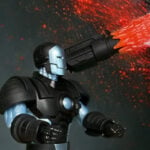
The “Walking Arsenal” Aesthetic: The War Machine armor in the 1994 series was a masterclass in 90s “extreme” design. It was bulkier, grittier, and significantly more aggressive than Tony’s Modular suit. The show emphasized its Variable Threat Response capabilities—meaning Rhodey was never without a solution for a fight. His signature shoulder-mounted dual-barreled cannon (which pivoted independently) and his wrist-mounted missile pods were treated as a localized deterrent. Whenever Force Works faced a literal army of the Mandarin’s drones or a titan like Fin Fang Foom, it was Rhodey who stepped up to provide the suppressing fire.
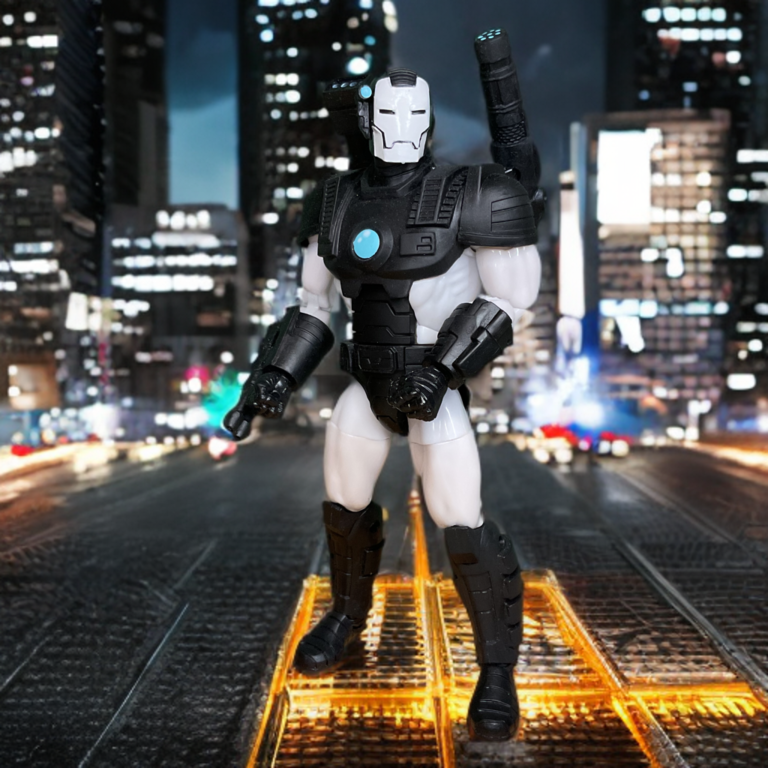
The Tactical Anchor: Rhodey’s role was often to execute the “Total Offense” strategy on the ground. While Tony coordinated from the air or the Stark Island war room, Rhodey led the charge. His military background was frequently referenced, giving Force Works the disciplined edge they needed to function as a strike force rather than a disorganized group of vigilantes. He was the one who translated Stark’s complex algorithms into “boots-on-the-ground” victory.
The Collector’s Edge: The Toy Biz War Machine
The 1994 Toy Biz War Machine figure was a legendary piece of plastic engineering. It featured a “double-shot” missile launcher on the shoulder and a gatling gun that could swap positions. It was heavy, sturdy, and felt “dangerous” in a way few other figures did. For modern collectors, the Marvel Legends Deluxe War Machine (based on the Marvel Comics and Animated look) is a must-have. It includes the “unmasked” Rhodey head and multiple blast effects, allowing you to recreate James Avery’s most intense battle scenes with premium 2026-level detail.
3. Hawkeye (Clint Barton) – The Precision Tactician
Voiced by: John Reilly (General Hospital, Passions)
The Animated Persona: Clint Barton, the legendary Hawkeye, was the resident firebrand of Force Works. Voiced by John Reilly with a gritty, defiant edge, this version of Hawkeye was far from a “sidekick.” Clad in his iconic purple-and-blue 90s ensemble—complete with the flared mask and chainmail-patterned tunic—he served as the team’s primary dissenter. Clint was the vocal critic of Tony Stark’s “Total Offense” philosophy; he viewed the Chaos Computer as a crutch and frequently ignored Stark’s tactical orders to follow his own gut instincts. This friction reached its peak in the episode “The Defection of Hawkeye,” highlighting the archer’s struggle to reconcile his solo hero past with the rigid structure of Force Works.
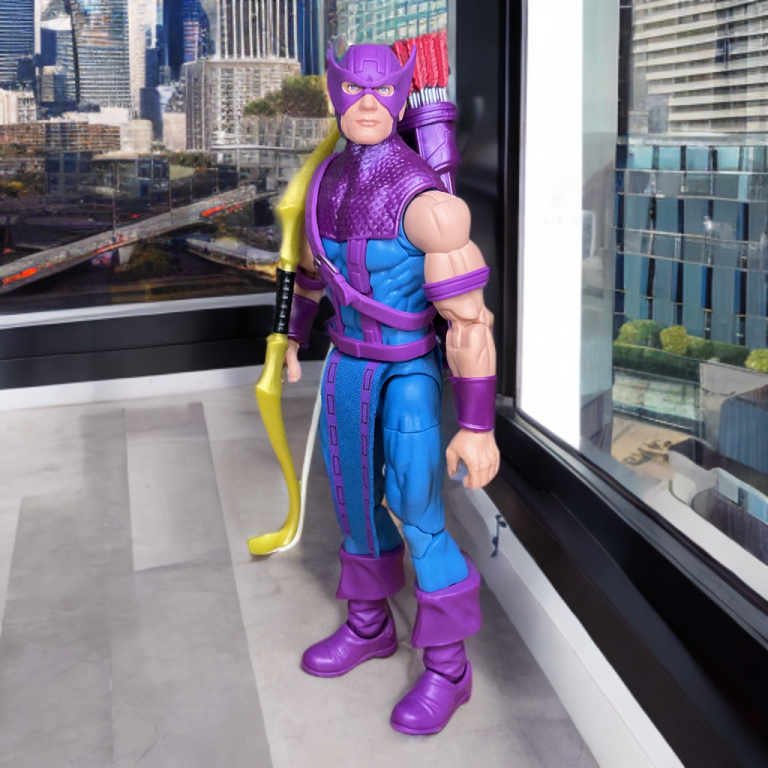
The Trick Arrow Arsenal: In Season 1, Hawkeye’s archery wasn’t just a gimmick; it was a high-tech countermeasure designed to exploit the weaknesses of the Mandarin’s rogues. The show highlighted his S.H.I.E.L.D.-grade tactical quiver, featuring specialized payloads:
Sonic Arrows: Used to disrupt the psionic frequencies of MODOK.
Acid & EMP Arrows: Vital for dismantling the heavy armor of Whirlwind and Blacklash.
Thermal Arrows: His primary defense against the freezing blasts of Blizzard.
His role on the battlefield was “Precision Disruption”—he was the one who could find the one-inch gap in a villain’s armor from three blocks away while the Iron Man and War Machine provided the distraction.
The Tactical Dissident: While Rhodey was the Field Commander, Hawkeye was the “Tactical Auditor.” He was the only one brave enough to call out Tony when a mission plan put civilians at risk or relied too heavily on unproven tech. This dynamic gave the show its “team-under-pressure” energy, proving that Force Works was a group of strong-willed individuals rather than just “Stark’s Soldiers.”
The Collector’s Edge: The Toy Biz Hawkeye
The 1994 Toy Biz Hawkeye is a nostalgic heavy-hitter. It featured a “rapid-fire” arrow-launching action that was surprisingly effective (and prone to losing arrows behind the radiator). For modern shelves, the Marvel Legends Retro Carded Hawkeye is the definitive update. It perfectly captures that specific 1994 purple-and-blue saturation and includes the signature flared mask that defined his Marvel Action Hour appearance. Posing him with a drawn bow next to the Modular Iron Man is the ultimate way to recreate that Season 1 internal rivalry.
4. Scarlet Witch (Wanda Maximoff) – The Probability Specialist
Voiced by: Katherine Moffat (Season 1)
The Animated Persona: In Season 1, Wanda Maximoff was voiced by Katherine Moffat, who gave her a sophisticated, slightly mysterious tone. Unlike the reality-shattering version seen in modern media, the ’94 Scarlet Witch was portrayed as a “Probability Manipulator.” She was the team’s secret weapon against the Mandarin’s Ten Rings. While Iron Man fought with tech and Rhodey fought with lead, Wanda fought with the “Hex”—the ability to tilt the odds in Force Works’ favor. She was often the most composed member of the team, acting as a bridge between Century’s cryptic alien riddles and Stark’s cold algorithms.
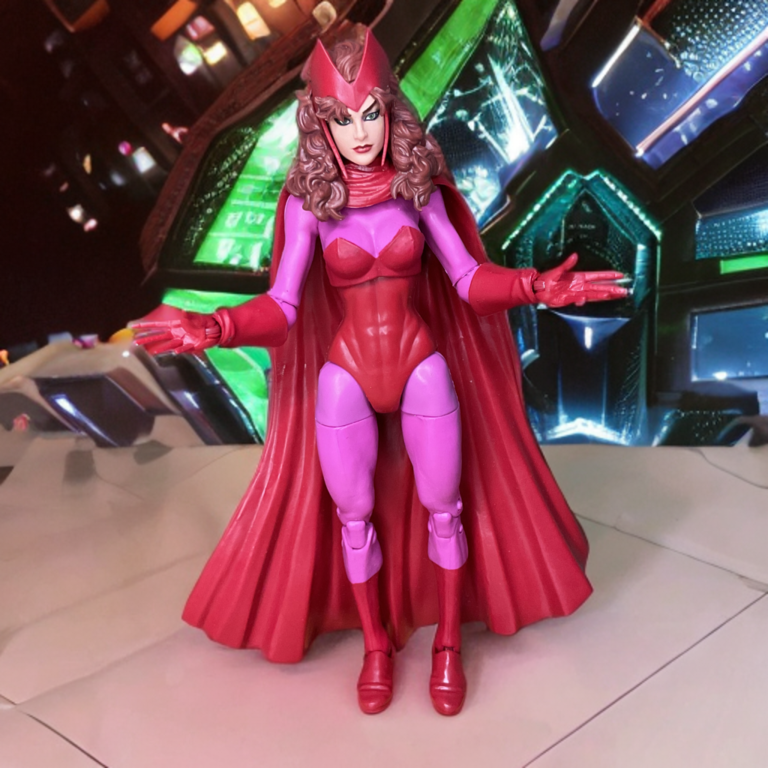
The “Hex Bolt” Tactical Advantage: In the world of the Marvel Action Hour, Wanda’s powers were visualized as vibrant pink energy spheres. Her role was “Combat Sabotage.” She didn’t just blast enemies; she made their weapons backfire.
Technological Disruption: Her hexes could cause a villain’s jetpack to stall mid-air or jam Blacklash’s whips.
Environmental Luck: She could cause a ceiling to collapse at the exact moment a rogue tried to escape.
Anti-Magic: Her presence was vital during encounters with the Mandarin, as her “Hex” could occasionally deflect or dissipate the elemental blasts from his rings, providing a crucial opening for Iron Man to strike.
The Mystic/Science Balance: Wanda served a critical narrative role in Season 1: she validated the Chaos Computer. Because her powers were rooted in probability and “chaos,” she was the only member who truly understood how Tony’s predictive algorithms worked. While Hawkeye saw a machine, Wanda saw a digital version of her own intuition. This made her one of Tony’s most reliable (though often underutilized) allies during the “Armor Wars” arc.
The Collector’s Edge: The Toy Biz Scarlet Witch
The 1994 Toy Biz Scarlet Witch is a classic of the era, though she was notoriously difficult to find in some regions. She featured a “Hex-Bolt” launching action and came with a removable cape that captured her flared 90s headpiece perfectly. For the modern enthusiast, the Marvel Legends Retro West Coast Avengers/Force Works Scarlet Witch is the gold standard. It features her signature “action-pose” hands and a vibrant paint job that mirrors the high-contrast animation of the ’94 series. She is the essential “energy” component to any Force Works shelf display.
5. Spider-Woman (Julia Carpenter) – The Stealth Operative
Voiced by: Casey DeFranco (Season 1)
The Animated Persona: Julia Carpenter brought a unique, tactical energy to the Marvel Action Hour. Voiced by Casey DeFranco with a blend of professional focus and warmth, this version of Spider-Woman was the team’s “Eyes and Ears.” Clad in her striking black-and-white ensemble (famously inspired by the symbiote suit), she provided the team with a level of agility and covert-ops expertise that the bulkier armored heroes lacked. Unlike the Peter Parker variant of the era, Julia was portrayed as a seasoned, mission-ready professional who didn’t let her personal life distract her from the “Total Offense” objective.
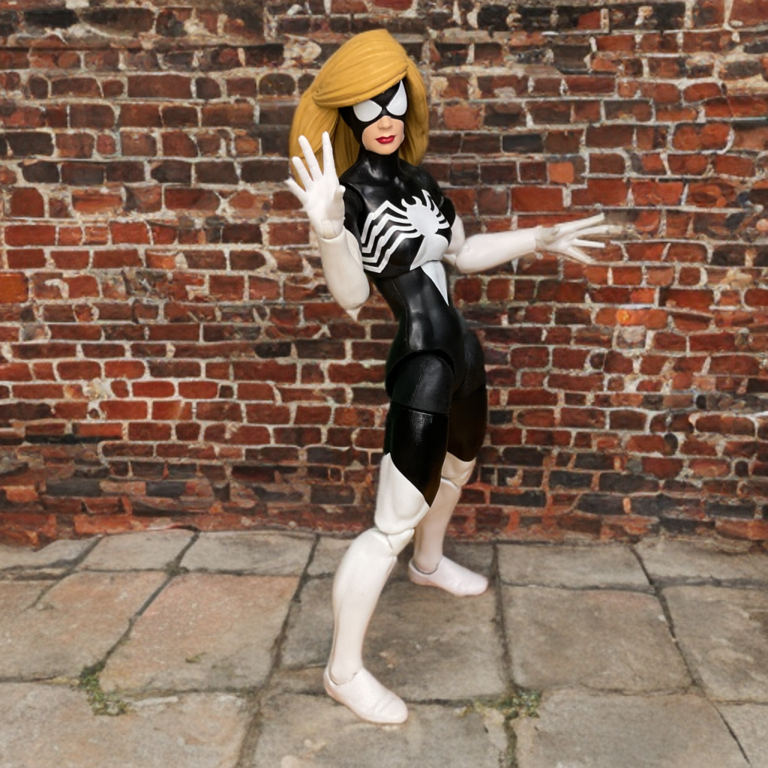
The Psi-Web and Precognitive Advantage: Julia’s powers were distinct from the traditional “web-shooters” of the 90s. Her Psychic Webbing was an extension of her own bio-energy, allowing for incredible battlefield control:
Psi-Web Constructs: She could create energy-based nets to trap villains like Dreadknight or form protective shields to catch falling debris.
Limited Precognition: Her “Spider-Sense” was often framed as a localized precognitive flash, allowing her to warn Tony or Rhodey of a sneak attack seconds before it happened.
Infiltration: Her ability to cling to any surface made her the go-to agent for infiltrating the Mandarin’s orbital platforms or Stark’s own high-security vaults during the “Armor Wars” crises.
The Emotional Intelligence of the Team: Beyond her physical prowess, Julia served as a vital mediator. While Tony and Hawkeye were frequently at each other’s throats, Julia often provided the calm, logical perspective that kept the team from imploding. She was the one who could interpret Tony’s complex technical demands and translate them into actionable field orders for the rest of the squad.
The Collector’s Edge: The Toy Biz Spider-Woman
The 1994 Toy Biz Spider-Woman figure is a standout of the line, featuring a “suction cup” crawling action that allowed her to actually stick to windows or smooth surfaces—perfectly capturing her wall-crawling nature. For modern collectors, the Marvel Legends Julia Carpenter Spider-Woman is the definitive version. It nails the sleek, athletic build seen in the animation and features the specific pink-tinted psychic web effects. Placing her in a dynamic, wall-crawling pose behind the bulkier War Machine adds the perfect layer of “covert-ops” depth to a Force Works display.
6. Century – The Alien Enigma
Voiced by: Jim Cummings (Winnie the Pooh, Darkwing Duck)
The Animated Persona: Century was the true “wild card” of the Marvel Action Hour. Voiced with a deep, resonant, and philosophical tone by the legendary Jim Cummings, Century provided the team with a cosmic perspective that grounded Tony’s industrial world. Contrary to popular belief, he wasn’t created exclusively for the show; he was a contemporary comic creation from the Force Works relaunch. He was a “Composite Being” from the planet Hodomur, possessing the collective knowledge and combat skills of his planet’s greatest warriors. Exiled by the Brethren, he found a new purpose among Earth’s armored heroes, often acting as the team’s spiritual anchor.
The Staff of Parallax: Century’s primary weapon, the Staff of Parallax, was one of the most powerful artifacts in Season 1. It wasn’t just a blunt instrument; it was a conduit for cosmic manipulation:
Interdimensional Tracking: Century could sense “chaos streams” and interdimensional rifts, allowing Force Works to track the Mandarin’s teleports or find hidden bases that Stark’s sensors missed.
Energy Absorption & Projection: He could siphon the energy from incoming attacks—such as Fin Fang Foom’s fire—and blast it back at his enemies with amplified force.
Teleportation: His staff allowed him to open gateways, providing Force Works with an instantaneous “insertion” method that bypassed enemy radar.
The “Mystic” Logic: Century served as the vital counterpoint to the Chaos Computer. While the machine analyzed data, Century felt the “patterns” of the universe. This frequently put him in the middle of Tony and Hawkeye’s arguments; he was the only member Tony truly respected because the alien’s “mystical” insights consistently outperformed the team’s advanced sensors. His cryptic dialogue and stoic demeanor added a layer of high-concept sci-fi to what could have been a standard superhero show.
The Collector’s Edge: The Toy Biz Century
The 1994 Toy Biz Century is one of the most unique figures in the entire line. He stood slightly taller than the rest of the team and came with a massive, translucent Staff of Parallax that featured a “spinning” energy effect. His long, molded white hair and detailed alien armor made him a standout on any 90s shelf. For modern collectors, the Marvel Legends Century (released in the retro-carded Iron Man wave) is a phenomenal update. It nails his “composite warrior” physique and features premium paint apps on his staff, finally giving the team’s mystic the high-end representation he deserves.
Headquarters & Technology: Stark Island and the Chaos Computer
Force Works didn’t operate out of a traditional mansion or a city skyscraper. Instead, they were stationed on Stark Island, a massive, privately owned fortress located in the Pacific Ocean, off the coast of California. Far from being a mere “floating island” in the air, it was a terrestrial marvel of engineering, cloaked from satellite detection and enemy radar by a sophisticated stealth-shielding array.
This base was the physical manifestation of Tony Stark’s “Total Offense” philosophy. It wasn’t just a home; it was a global monitoring hub designed to intercept threats before they reached civilian soil.
The Inner Workings of Stark Island
The Chaos Computer (The Mandate System)
The most vital piece of technology on the island was the Chaos Computer (frequently referred to as the Mandate). This wasn't just a search engine; it was a predictive A.I. that analyzed "Chaos Streams"—global patterns in weather, economics, and communication—to identify the Mandarin’s movements before they happened.
Predict-and-Preempt
This A.I. allowed Force Works to strike with surgical precision. If the computer detected a spike in gamma radiation in the South Pacific, the team was in the air before the first alarm even sounded.
The Mystical Link
One of the show's most unique lore points was that the Chaos Computer’s logic was often verified by Scarlet Witch’s hex-intuition and Century’s cosmic senses, creating a rare 90s fusion of "Magic vs. Machine."
Force Works: Season 1 Tactical Mission Log (1994)
| Tactical File | Mission Objective | Target Profiles | Intelligence Summary |
| 01 | And the Sea Shall Give Up Its Dead | Mandarin, Hypnotia | First full Force Works deployment to intercept a radioactive sub. |
| 02 | Rejoice! I Am Ultimo… | Ultimo, Justin Hammer | Massive scale combat against the Ultimo automaton. |
| 03 | Data In, Chaos Out | Whirlwind, MODOK | Chaos Computer predicts global crash; Rhodey’s loyalty tested. |
| 04 | Silence My Companion… | Blacklash, Dreadknight | High-stakes rescue mission involving Julia Carpenter’s family. |
| 05 | The Grim Reaper… | Mandarin, MODOK | Aerial recovery of the Stark “Grim Reaper” stealth prototype. |
| 06 | Enemy Without, Enemy Within | Mandarin, Dreadknight | Unlikely tactical alliance with MODOK to protect Alana Ulanova. |
| 07 | The Origin of the Mandarin | Mandarin | Visual archives uncovered regarding the history of the Ten Rings. |
| 08 | The Defection of Hawkeye | Dreadknight, MODOK | Internal friction peaks; Force Works pursues a “rogue” archer. |
| 09 | Iron Man to the 2nd Power (I) | MODOK | Investigation into a duplicate armor frame committing thefts. |
| 10 | Iron Man to the 2nd Power (II) | The Mandarin’s Legion | Final confrontation between the true Iron Man and the imposter. |
| 11 | The Origin of Iron Man (I) | Fin Fang Foom | Data log of the Mark I armor’s construction in the cave. |
| 12 | The Origin of Iron Man (II) | Justin Hammer | Tactical defense of Tony Stark during a vulnerable recovery phase. |
| 13 | The Wedding of Iron Man | Mandarin, Hypnotia | Counter-intelligence mission during a deceptive social event. |
🔍 Setting the Record Straight: The 1994 Episode Mystery
If you’ve looked at other episode guides online, you’ve likely seen conflicting information. Here is why the Fantasy Action Figures guide is the definitive version:
The “Origin” Swap: While produced to be the series premiere, the two-part Origin of Iron Man actually aired as Episodes 11 and 12 of Season 1. Most databases mistakenly list them as the start of the series.
The Armor Wars Confusion: Many fans believe The Armor Wars was the Season 1 finale. In reality, that iconic storyline didn’t take place until Season 2, Episode 8, after the show’s massive creative “reboot.”
Production vs. Broadcast: We have organized this guide by Original Air Date (1994), ensuring it matches the experience of fans who watched the Marvel Action Hour on Saturday mornings.
Collector’s Field Guide: Season 1 Show-to-Shelf Accuracy
When hunting for 1994 era figures, it’s important to note which designs actually represent the Season 1 Force Works era versus the later "Reboot" designs.
(Modular Armor)
(The "Avery" Era)
(First Appearance)
(Force Works Completionist)
(Julia Carpenter)
Behind the Armor: Voice Cast and Production Details
The 1994 Iron Man animated series was a cornerstone of the Marvel Action Hour, a syndicated block that aimed to create a cohesive Marvel Animated Universe. The production was a massive undertaking, blending veteran Hollywood voice talent with some of the biggest names in prog-rock and animation history.
The Voice of Force Works
The voice director, Stu Rosen, assembled a powerhouse cast that gave Force Works its distinct, professional gravitas:
Best known for Airplane!, Hays provided a stoic, authoritative lead.
The Fresh Prince star brought a commanding, paternal strength to Rhodey in Season 1.
A veteran of General Hospital, Reilly’s gritty performance perfectly captured the archer’s rebellious streak.
The legendary voice of Darkwing Duck performed double duty, voicing both the team’s most mystical ally and its most erratic villain.
Production Powerhouse
The Iconic Soundtrack
One of the most memorable aspects of Season 1 was its hard-hitting, progressive rock theme. It was composed by Keith Emerson, the virtuoso keyboardist of Emerson, Lake & Palmer. Emerson’s score utilized heavy synths and aggressive guitar riffs, perfectly matching the industrial, “Stark Tech” vibe of the show. While the theme was replaced in Season 2, his Season 1 composition remains the definitive “Iron Man” anthem for many 90s kids.
The Marvel Action Hour Connection
Iron Man aired alongside the Fantastic Four animated series. The two shows frequently shared assets, voice directors, and even a similar character design philosophy. This was Marvel’s first real attempt at a “Shared Universe” on television, with Force Works and the FF existing in the same timeline—a precursor to the massive crossovers that would eventually define the MCU.
Why Force Works Was Disbanded
Despite the ambitious world-building of Season 1, the 1995 premiere of Season 2 brought a "hard reset" to the series. This wasn't due to low ratings, but a creative shift spearheaded by new producer Tom Tataranowicz. He wanted to move away from the "villain-of-the-week" ensemble format and focus on a more mature, serialized story centering on Tony Stark’s personal journey.
The Creative Pivot
The production moved to Koko Enterprises, resulting in a vastly improved, more cinematic animation style that ditched the 90s saturation for a grittier, "comic book" look.
The On-Screen Split
In the Season 2 premiere, "The Beast Within," the team is officially dissolved. Following the perceived death of the Mandarin, the members felt their proactive mission was complete. Hawkeye, still resentful of Tony’s leadership, led the exodus.
The Toy Biz Influence
While Toy Biz continued the line, the focus shifted from team members to "Action Feature" villains and an endless array of Iron Man armor variants (like the Arctic and Stealth suits) which sold better than the secondary Force Works members.
Where Are They Now? The Post-Series Fate of the Team
Iron Man & War Machine
Continued as the leads of Season 2 and eventually became the billion-dollar faces of the Marvel Cinematic Universe.
Hawkeye & Scarlet Witch
While they vanished from the Iron Man show, they became icons of the Marvel vs. Capcom fighting game series and, eventually, pillars of the MCU Avengers.
Spider-Woman (Julia Carpenter)
Julia evolved significantly in the comics, eventually taking on the mantle of Arachne and later the new Madame Web.
Century
Contrary to the "exclusive" myth, Century was a Marvel Comics creation who debuted in Force Works #1. After the comic and show ended, he appeared in the Avengers: United They Stand comic and was even featured in the Marvel Heroic Roleplaying game. While he hasn't hit the MCU yet, he remains a cult favorite among "90s cosmic" fans.
Conclusion: A Forgotten Gem of 1990s Marvel Animation
Force Works represented one of the boldest creative experiments of the Marvel Action Hour: what happens when you give Iron Man his own private, high-tech Justice League? For one glorious season, viewers watched Tony Stark evolve from a lone industrialist into a true tactical commander, leading a diverse strike force of armored allies, probability-warping mutants, master archers, psychic web-slingers, and cosmic aliens.
The fortified Stark Island, the predictive logic of the Chaos Computer, and the constant, ego-driven banter between Hawkeye and Tony—all combined to create an atmosphere that was uniquely, unapologetically 1994. It was a season where “Total Offense” wasn’t just a strategy; it was the heart of the show.
Though corporate pivots and a Season 2 creative overhaul dissolved the team after just thirteen episodes, Force Works endures as proof that Marvel’s animated universe was capable of taking massive swings.
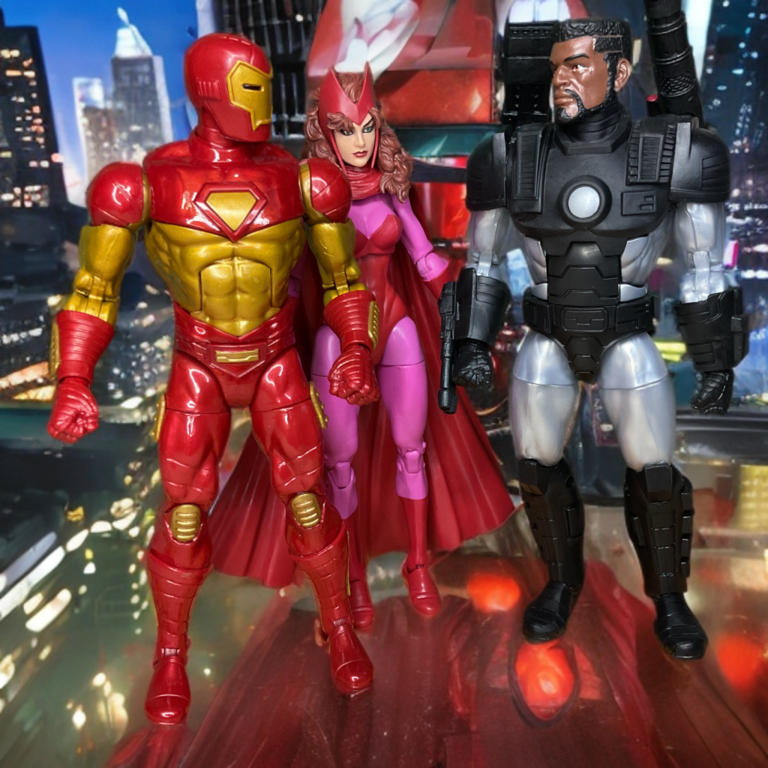
In an age before the MCU made cinematic team-ups a cultural expectation, the 1994 Iron Man series dared to ask: “What if Iron Man built his own Avengers—and did it his way?” The answer, for one unforgettable season of Saturday morning history, was Force Works.
 English
  Deutsch
  Français
  Português do Brasil
  日本語
日本語  Español
  English (Australia)