

Why These 1980s D&D Modules Are Now Worth a Fortune
The 1980s marked a golden era for Dungeons & Dragons, with TSR releasing a flood of unforgettable adventure modules that defined old-school gaming. From the epic Greyhawk slave-lord series (A1–A4) and the groundbreaking Dragonlance saga (DL1–DL14) to Basic D&D wilderness classics like B4: The Lost City and X1: The Isle of Dread, these modules captured the imagination of a generation.
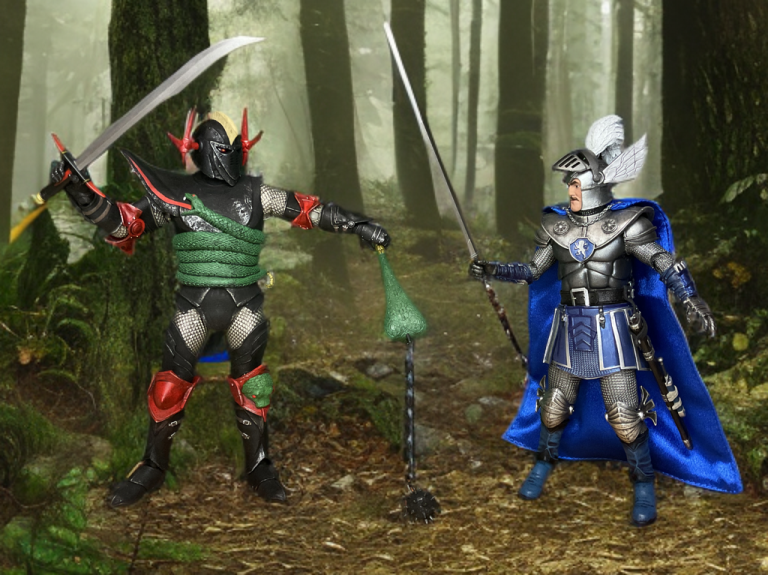
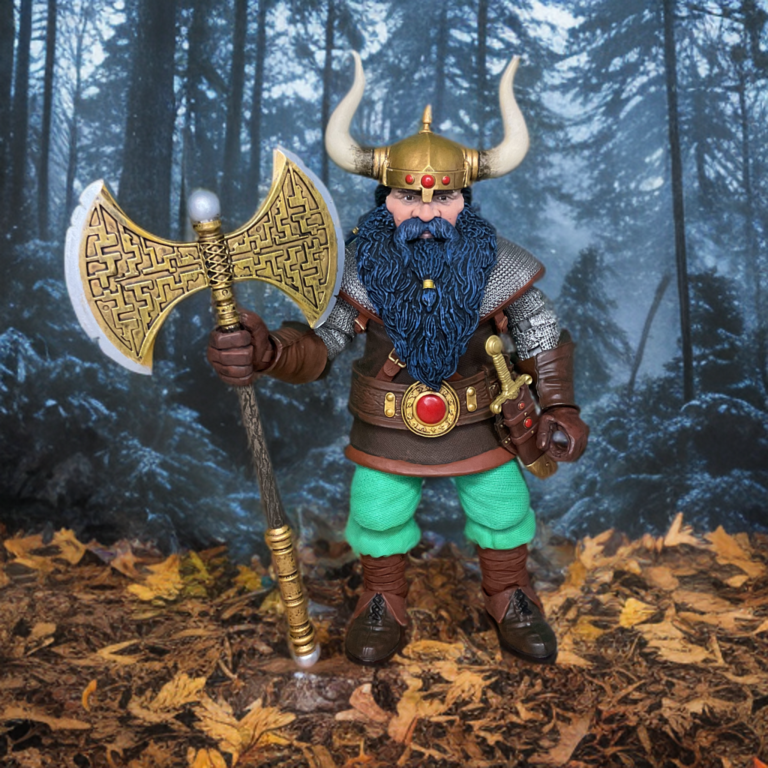
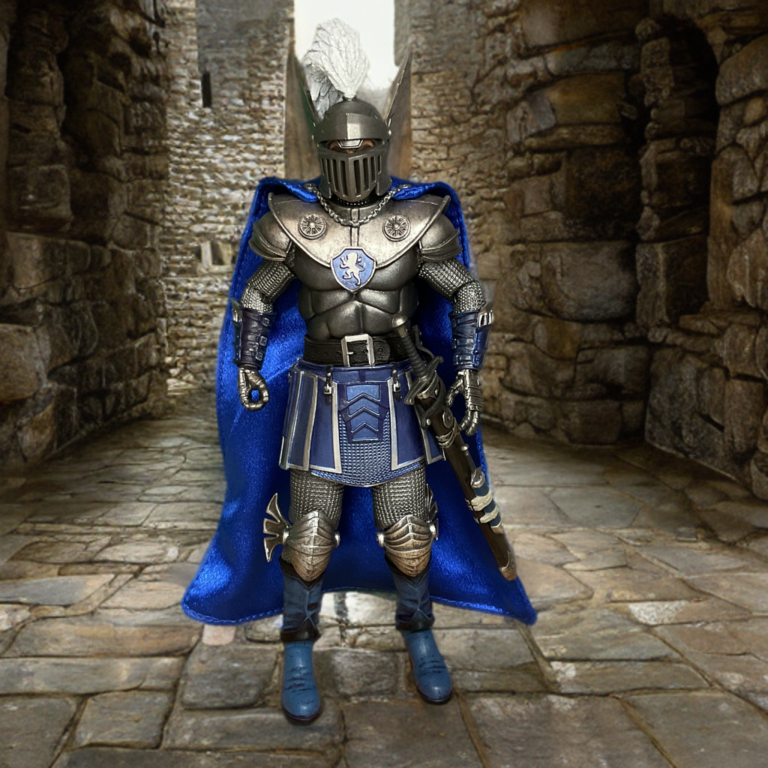
Many adventures tied directly into TSR’s popular LJN action figure line, bringing pre-generated heroes and villains to the table. Standouts include paladin Strongheart, the heroic knight who rides into battle on his steed Destrier; his fallen rival Warduke, the blue-helmed evil warrior corrupted by the Heartstone; and the sinister Grimsword, the evil knight whose dark blade strikes fear into adventurers. These characters appeared with full stats in modules like XL1: Quest for the Heartstone (1984), blending toy-inspired fun with classic dungeon crawling. Dive into this extensive chart of 1980s TSR modules, reliving the modules that shaped D&D history.
A Brief History: Why These “Modules” Exist
In the late 1970s and early 80s, Dungeons & Dragons was a brand-new frontier. Before the internet, if you wanted to play D&D, you either spent weeks writing your own adventure or you bought a “Dungeon Module.”
Originally, these were called “modules” because they were designed to be modular—self-contained scenarios that a Dungeon Master could “plug in” to their own campaign world. They weren’t just books; they were utilitarian tools.
The Tournament Roots: Many of the most famous 80s modules (like the A-Series or S1: Tomb of Horrors) began as high-stakes tournament adventures at conventions like Gen Con. They were designed to test a player’s skill, which is why early modules are famously difficult.
The “Play Aid” Design: This is why they are so fragile today. TSR designed them with detachable covers to serve as maps and included loose-leaf cardstock for miniatures. They were meant to be used at a messy table covered in soda and dice—not to sit in a plastic slab on a shelf.
The Transition to Narrative: By the mid-80s, modules shifted from simple “dungeon crawls” to epic stories like Dragonlance and Ravenloft. This shift turned the modules from disposable tools into cherished pieces of fantasy literature, laying the groundwork for the collector’s market we see in 2026.
Why Are These 1980s D&D Modules Now Worth a Fortune?
It isn’t just nostalgia driving the price of 1980s TSR modules—it’s a “perfect storm” of scarcity, pop-culture resurgence, and the physical fragility of the products themselves. In 2026, finding a “clean” copy of a classic adventure like Quest for the Heartstone is increasingly difficult.
Here is why those thin paper booklets are now commanding premium prices at auction.
The “Action Figure” Connection
Unlike standard modules, the era of Warduke, Strongheart, and Grimsword was part of a specific marketing push to link the tabletop game with the 1980s LJN action figure line. This created a unique “crossover appeal” where vintage toy collectors now compete directly with D&D players for the same items.
The standout factor here is the “Warduke Effect.” Warduke has become a cult icon, even appearing in recent 50th-anniversary NECA figure lines. Because he is effectively the “Boba Fett” of D&D, any module featuring him—specifically XL1: Quest for the Heartstone—sees a massive price bump regardless of the gameplay quality.
Extreme Physical Fragility
TSR modules from the 80s were never intended to be heirloom items. They were designed as “disposable” play aids, which makes finding a high-grade survivor a miracle.
Self-Destructing Covers: The iconic detachable outer covers often doubled as maps. Once a Dungeon Master detached them or wrote notes on them (which was the intended use), the collector value plummeted.
Acidic Paper: The interior pages were printed on low-grade paper that yellows and becomes brittle over 40+ years. High-grade (CGC graded) copies are exceptionally rare, with some 9.0+ copies of 80s classics listed for $800 to $1,200+ in 2026.
The Rise of “Old School Essentials” (OSE)
The “Old School Renaissance” (OSR) movement has exploded in recent years. Modern players are increasingly moving away from the complex rules of newer editions and returning to the “Basic/Expert” (B/X) rules of the 80s.
This isn’t just about sitting on a shelf; people actually want to run these adventures. This high demand for “play copies” keeps the floor price high even for mid-grade items, as players hunt for authentic table experiences.
The Scarcity of “Un-punched” Components
Many 80s modules included “extras” that were meant to be destroyed or modified, such as fold-up cardstock miniatures or hex maps. In the 80s, kids did exactly what they were supposed to: they immediately punched these out to play.
In 2026, a “Complete & Un-punched” module is a total unicorn. For example, legendary modules like B10: Night’s Dark Terror or I6: Ravenloft can triple in price if all the original inserts are still attached and intact.
The 1980s TSR Collector’s Index: Value & Volatility Guide
The 1980s was the era where TSR expanded Dungeons & Dragons from a hobbyist dungeon-crawl into a massive multimedia franchise. Today, collectors are not just looking for “books”—they are looking for specific versions, rare covers, and “un-punched” components.
Below is the breakdown of the 1980s TSR catalog with 2026 market values.
⚠️ Market Volatility Warning
Collectors should note that 1980s TSR module prices are highly fluid. In 2026, we are seeing rapid price swings (often 20–40% within a single quarter) driven by:
The “Slab” Premium: CGC-graded 9.0+ copies can command 10x the price of raw copies, but this sector is prone to sudden “corrections” as more copies are discovered.
Completeness Checks: A module’s value can drop by 50% or more if a single “un-punched” cardstock insert or map is missing.
Media Spikes: Pop-culture mentions (movies, shows, or new toy lines) create temporary “hype bubbles.”
Disclaimer: Listed prices are based on April 2026 market averages. Always check “Sold” listings for real-time data.
A-Series: The Slave Lords
These are the “blue chips” of Greyhawk collecting.
| Code | TSR # | Title | Levels | Year | 2026 Avg. Price (Raw) | Volatility |
| A1 | 9039 | Slave Pits of the Undercity | 4–7 | 1980 | $55 – $85 | Medium |
| A2 | 9040 | Secret of the Slavers Stockade | 4–7 | 1981 | $45 – $70 | Low |
| A3 | 9041 | Assault on the Aerie of the Slave Lords | 4–7 | 1981 | $45 – $75 | Low |
| A4 | 9042 | In the Dungeons of the Slave Lords | 4–7 | 1981 | $60 – $95 | Medium |
| A1–4 | 9167 | Scourge of the Slave Lords (Comp) | 7–11 | 1986 | $150 – $225 | High |
B-Series: Basic & Mystara Classics
Warning: Prices for “Un-punched” copies are often double the listed average.
| Code | TSR # | Title | Levels | Year | 2026 Avg. Price (Raw) | Notes |
| B3 | 9044 | Palace of the Silver Princess | 1–3 | 1981 | $45 – $75 | Green cover version |
| B4 | 9049 | The Lost City | 1–3 | 1982 | $65 – $110 | High Demand |
| B5 | 9078 | Horror on the Hill | 1–3 | 1983 | $40 – $65 | |
| B6 | 9086 | The Veiled Society | 1–3 | 1984 | $140 – $210 | Must be un-punched |
| B7 | 9115 | Rahasia | 1–3 | 1984 | $35 – $60 | |
| B8 | 9106 | Journey to the Rock | 1–3 | 1984 | $30 – $50 | |
| B9 | 9143 | Castle Caldwell and Beyond | 1–3 | 1985 | $35 – $55 | |
| B10 | 9149 | Night’s Dark Terror | 2–4 | 1986 | $300 – $450 | Extreme Volatility |
| B11 | 9260 | King’s Festival | 1 | 1989 | $50 – $85 | |
| B12 | 9261 | Queen’s Harvest | 1–2 | 1989 | $55 – $90 | |
| BSOLO | 9097 | Ghost of Lion Castle | 1–3 | 1984 | $45 – $80 |
C-Series: Competition & Tournament Classics
Warning: These modules were designed for tournament scoring. A “Complete” copy MUST include the original separate illustration booklets and un-marked scoring sheets. If these are missing or written on, the value drops by 40–60%.
| Code | TSR # | Title | Levels | Year | 2026 Avg. Price |
| C1 | 9032 | Hidden Shrine of Tamoachan | 5–7 | 1980 | $85 – $130 |
| C2 | 9038 | Ghost Tower of Inverness | 5–7 | 1980 | $70 – $110 |
| C3 | 9110 | The Lost Island of Castanamir | 1–4 | 1984 | $40 – $65 |
| C4 | 9107 | To Find a King | 4–7 | 1985 | $65 – $100 |
| C5 | 9109 | The Bane of Llywelyn | 4–7 | 1985 | $60 – $95 |
| C6 | 9206 | Official RPGA Tournament Handbook | 4–8 | 1987 | $110 – $180 |
The Specialty & Epic Series
CA/CB/CM/DA Series:
CA1/CA2 (Lankhmar): Steady performers at $75 – $120.
CB1/CB2 (Conan): High crossover appeal. $90 – $150.
DA1–DA4 (Blackmoor): Arneson’s legacy. High volatility due to low print runs. $120 – $200.
Dragonlance (DL) & Ravenloft (I):
DL1: Dragons of Despair (1984) — $50 – $85.
I6: Ravenloft (1983) — $120 – $250 (Watch for the “Strahd Cover” condition).
GDQ1-7: Queen of the Spiders (1986) — $300 – $550.
The “Big Three” Heavy Hitters
If you are tracking market movement, these three define the 2026 landscape:
XL1: Quest for the Heartstone (1984): The Warduke tie-in.
Market Status: Rising. * Price: $110 – $190 (Raw, Complete).
I6: Ravenloft (1983): The birth of Strahd.
Market Status: Stable. * Price: $175 – $300.
DL1–DL14 (Dragonlance): The full 16-module run.
Market Status: Bullish. * Price: $1,200 – $1,800 for a full matching-condition set.
Toy Tie-Ins (XL & AC)
This was the window where D&D met the LJN action figure line.
AC1: The Shady Dragon Inn (TSR 9075, 1983): Provides the first stats for Warduke and Strongheart. Price: $60 – $110.
XL1: Quest for the Heartstone (TSR 9114, 1984): The official LJN toy crossover. Finding this with the inner art booklet intact is the key. Price: $85 – $150 (CGC graded 9.0+ copies have hit $800+).
XSOLO: Labyrinth of Dread (1983): Invisible ink module. If the “pen” hasn’t leaked and the ink is still usable, it’s a rarity. Price: $75 – $130.
The Warduke Premium
While most TSR modules are collected by tabletop enthusiasts, the XL1: Quest for the Heartstone belongs to a rare category of “crossover” assets. Because of Warduke’s legendary status in the vintage toy world, this module is one of the few items where high-end toy collectors will consistently outbid D&D players.
In 2026, the market for “slabbed” copies has reached unprecedented heights; a CGC 9.4 graded copy has been seen listed as high as $3,400+. However, for the average collector, raw but complete copies (including the vital 4-page illustration booklet) typically remain in the $110 – $190 range. If you find one with a crisp, un-migrated ink signature or a “store-fresh” cover, expect to pay a significant premium.
Epic Series: Dragonlance (DL) & Ravenloft (I)
These modules introduced narrative-heavy gaming and gothic horror.
| Code | Title | Year | Significance | Avg. Price (2026) |
| DL1 | Dragons of Despair | 1984 | First Dragonlance appearance | $50 – $85 |
| DL14 | Dragons of Triumph | 1986 | Conclusion of the epic | $70 – $110 |
| I6 | Ravenloft | 1983 | First Appearance of Strahd | $120 – $250 |
| I10 | Ravenloft II | 1986 | House on Gryphon Hill | $60 – $95 |
| GDQ1-7 | Queen of the Spiders | 1986 | Giant/Drow supermodule | $300 – $550 |
High-Level & Global Series (CM, DA, OA)
As players leveled up, TSR released “Expert” and “Master” content.
CM1-CM9 (Companion Series): High-level play for the Mystara setting. CM1: Test of the Warlords is a staple. Avg. Price: $40 – $75 each.
DA1-DA4 (Blackmoor Series): Dave Arneson’s return to D&D. These are famously difficult to find in “Like New” condition. Avg. Price: $80 – $140.
OA1-OA7 (Oriental Adventures): Introduced the Kara-Tur setting. OA1: Swords of the Daimyo often includes maps that are usually missing. Price: $50 – $90.
Why Condition is King in 2026
If you are looking at your own collection or buying new stock, remember the “Un-punched Premium”:
B6: The Veiled Society: Contains cardstock buildings. If they are still flat/un-punched, the value is $150+.
I3-I5: Desert of Desolation: This trilogy is often found as a compilation (I3-5), but the original individual modules command more if the maps are “crisp” and never folded back.
The “Sticker” Rare: Some UK versions of modules (like B10) have a “B/X1” sticker over the original code. These are regional rarities that can double the price for serious collectors.
Pro-Tip: Always use a flashlight to check the spine for ‘hidden’ staple rust, which can migrate to the pages and drop a Grade 9.0 module to a 6.0 overnight.
Volatility Summary
| Category | Volatility Rating | Trend | Recommendation |
| “Holy Grails” (B3 Orange, Woodgrain) | Low | 📈 Stable/Up | These are “blue chip” assets; they rarely drop. |
| Graded 9.0+ Common Modules | High | 📉 Correcting | Don’t overpay for the “plastic slab” right now. |
| Un-punched/Complete Raw Sets | Medium | ↔️ Neutral | High demand, but buyers are becoming pickier about “acid tan.” |
| LJN Tie-ins (XL1, AC1) | Low | 📈 Rising | The “Warduke” cult following is insulating these from the dip. |
Conclusion
TSR’s 1980s D&D modules remain timeless treasures, blending innovative adventure design with the era’s pop-culture flair—from high-stakes tournaments and wilderness treks to epic campaigns like Dragonlance. Characters such as the noble Strongheart, treacherous Warduke, and menacing Grimsword added personality and replay value, turning one-shot adventures into legendary tales still played today. Whether you’re rediscovering classics like Ravenloft (I6), the Desert of Desolation trilogy, or the toy-line tie-ins of Quest for the Heartstone, these modules capture the raw excitement of early D&D. Many are available in PDF form for modern tables, proving that the 1980s TSR legacy endures. Grab your dice, summon your party, and step back into the golden age of fantasy roleplaying—where heroes like Strongheart still battle villains like Warduke and Grimsword in endless quests for glory.



 English
  Deutsch
  Français
  Português do Brasil
  日本語
日本語  Español
  English (Australia)