

Why the G.I. Joe Classified Lifeline is the Best Medic Figure Yet: Bio & Review
In the expansive G.I. Joe universe, where heroes clash with serpentine villains in battles that span jungles, deserts, and urban sprawls, one figure stands out not for his firepower but for his unwavering commitment to preserving life amid the chaos. Edwin “Lifeline” Steen, the team’s dedicated rescue trooper, embodies the quieter side of heroism—the kind that involves patching up wounds rather than inflicting them. This article dives deep into the essence of Lifeline, exploring his background, his pivotal role within the G.I. Joe team, and a hands-on look at his latest incarnation in the 6-inch Classified Series. Whether you’re a longtime collector reminiscing about the 1980s glory days or a newcomer drawn to the modern revamps, Lifeline’s story is a reminder that sometimes the greatest strength lies in healing rather than harming.
Picture the scene: amid the explosions and laser fire that define a typical G.I. Joe skirmish, there’s a guy in bright red gear rushing in, not with a bazooka, but with a med kit. That’s Lifeline in a nutshell—a beacon of hope in a world of high-stakes conflict. His journey from a Seattle paramedic to a key member of America’s elite fighting force is as compelling as any action-packed mission. And now, with the Classified Series bringing him back in stunning detail, it’s the perfect time to revisit what makes this character tick. We’ll break it down step by step, from his origins to the nitty-gritty of the figure itself, ensuring you get the full picture of why Lifeline deserves a spot on your shelf.
The Man Behind the Mask: Edwin “Lifeline” Steen
Edwin Steen, better known by his codename Lifeline, hails from Seattle, Washington, a city known for its rainy skies and innovative spirit. Born into a family with strong moral foundations—his father was a priest—Steen grew up with a deep respect for life and a aversion to unnecessary violence. This upbringing shaped him into the principled individual who would later become an indispensable part of the G.I. Joe team. His military rank of E-5, or Sergeant, reflects his earned expertise rather than a thirst for combat glory.
Steen’s path to the Joes wasn’t paved with dreams of glory on the battlefield. Instead, it was rooted in real-world heroism. For five years, he served as a paramedic with the Seattle Fire Department, where he honed his skills in high-pressure emergency situations. Imagine crawling into a burning vehicle to save a driver with severe injuries, all while keeping your cool and even humming a classical tune like the 1812 Overture—that’s the kind of unflappable resolve Steen brought to his work.
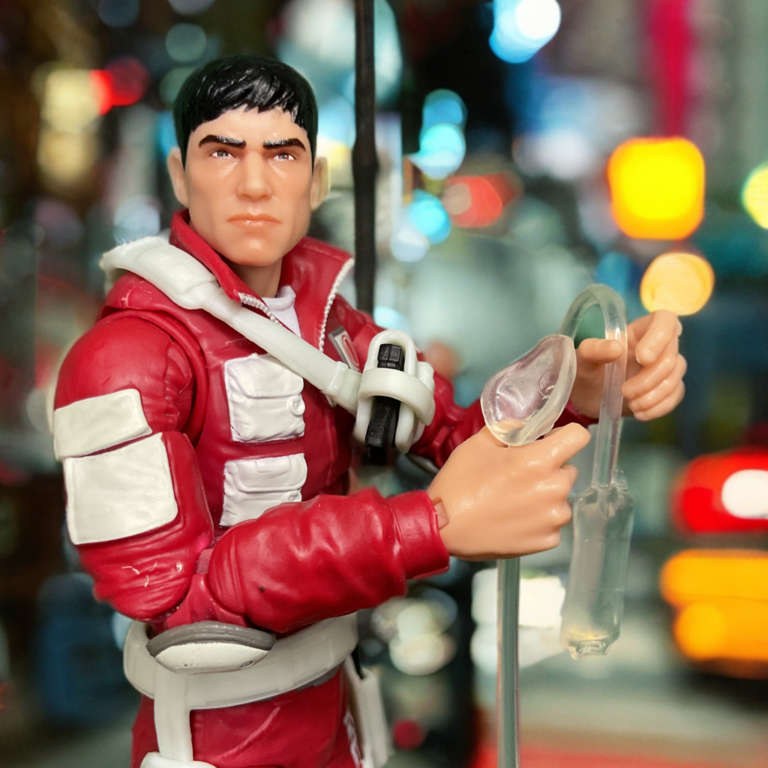
He applied tourniquets, checked pulses, and dragged victims to safety just as vehicles exploded behind him. These experiences built not just his medical prowess but also his ability to stay composed when everything around him was falling apart.
When Steen enlisted in the Army as a corpsman, he quickly distinguished himself. He graduated in the top ten percent of his class at Fort Benning’s Airborne School, showcasing his physical and mental fortitude. But what drew him to G.I. Joe? The hazardous duty bonuses, sure, but more importantly, the opportunity to apply his talents on a global scale, saving lives in the most dangerous corners of the world. In the G.I. Joe lore, Steen is portrayed as someone who sees the military not as a machine for destruction but as a platform for protection and aid.
His personality is a blend of compassion and discipline. As a black belt in Aikido, a martial art that emphasizes redirecting an opponent’s energy rather than striking back, Steen embodies non-aggressive defense. This skill set allows him to neutralize threats without escalating violence, aligning perfectly with his core belief that life is the most precious resource. In team dynamics, he’s the voice of reason, often reminding his comrades that victory isn’t just about defeating Cobra but about ensuring everyone makes it home.
From Seattle Streets to Battlefield Feats: Lifeline’s Early Life
Delving deeper into Steen’s formative years, Seattle provided a backdrop that contrasted sharply with the adrenaline-fueled world he would later inhabit. Growing up in the Pacific Northwest, he was surrounded by natural beauty—think evergreen forests and Puget Sound vistas—but also urban challenges that tested his empathy from a young age. His father’s role as a priest instilled in him a moral compass that prioritized helping others over personal gain. Family dinners likely involved discussions on ethics, community service, and the sanctity of human life, themes that would echo throughout his career.
As a paramedic, Steen’s days were filled with the unpredictable rhythm of emergency response. Seattle’s fire department, one of the busiest in the nation, exposed him to everything from car accidents on slick rainy roads to medical crises in high-rise buildings. He learned to improvise with limited resources, a skill that would prove invaluable in G.I. Joe operations where supply lines could be cut off at any moment. One anecdote from his file highlights his bravery: entering a flaming car to rescue a bleeding driver, using the man’s own belt as a tourniquet while monitoring vital signs. The vehicle detonated seconds after he pulled the victim free, yet Steen remained focused, ensuring survival.
This period also built his resilience. Paramedics face burnout from constant exposure to trauma, but Steen’s grounded nature—perhaps influenced by his Aikido training—helped him cope. Aikido, which he pursued to black belt level, isn’t about offense; it’s about harmony and redirection. Practicing throws and holds that use an attacker’s momentum against them taught him that true power comes from control, not aggression. By the time he joined the Army, he was already a seasoned lifesaver, ready for the rigors of military medicine.
Enlisting as a corpsman marked a turning point. Corpsmen are the Navy and Marine equivalent of Army medics, but Steen’s Army path led him through airborne training, where he excelled. Fort Benning’s grueling regimen—parachute jumps, obstacle courses, survival drills—tested his limits, but he thrived, finishing near the top. This success opened doors to elite units, and when G.I. Joe came calling, it was a natural fit. The team’s need for a dedicated medic aligned with his expertise, and the “hazardous duty” aspect? Well, that just meant more opportunities to make a difference.
Joining the Joes: A Call to Hazardous Duty
Lifeline’s entry into G.I. Joe in 1986 coincided with the team’s expansion during a peak in Cobra threats. As the first dedicated rescue trooper, he filled a gap left by earlier medics like Doc, bringing a fresh perspective to field medicine. His recruitment was driven by his proven track record: paramedic experience, airborne qualifications, and a willingness to tackle danger head-on. The Joes, facing increasingly complex operations against Cobra’s global schemes, needed someone who could keep the team operational under fire.
Upon joining, Lifeline quickly integrated into the core team. His role extended beyond bandaging wounds; he provided tactical advice on evacuation routes, improvised medical solutions in hostile environments, and even psychological support to battle-weary comrades. In one early mission, he oversaw the evacuation of wounded personnel after the first Cobra Island civil war, ensuring no one was left behind amid the rubble and crossfire.
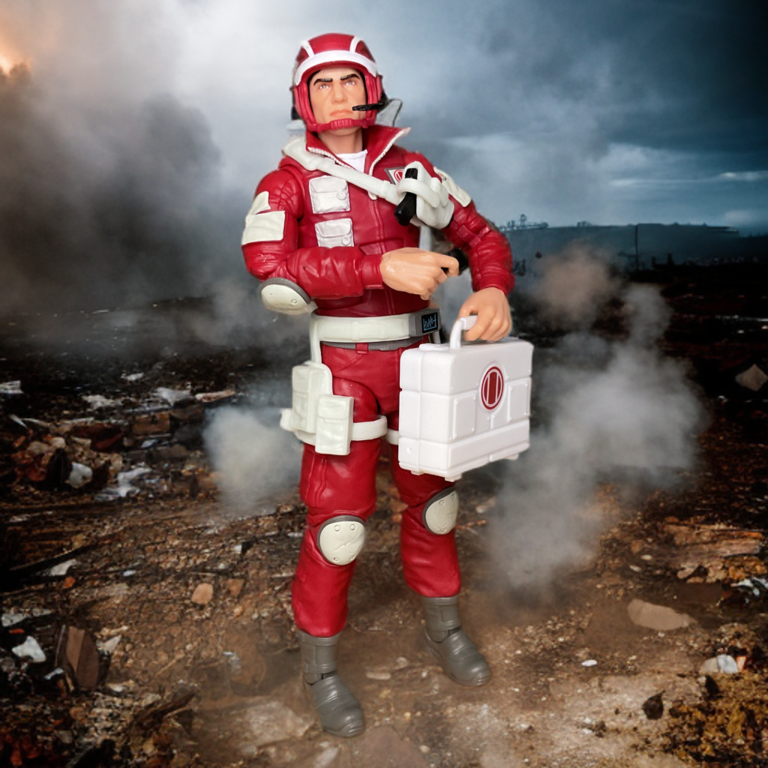
His presence boosted morale—knowing a skilled medic was on hand allowed Joes to push harder against enemies like Destro or the Baroness.
Family ties added depth to his story. His priest father initially viewed the military with skepticism, seeing it as conflicting with pacifist ideals. Over time, through episodes exploring their relationship, the father came to appreciate Steen’s choice as an extension of his calling to help others. This reconciliation highlighted Lifeline’s internal balance: a man of peace in a world of war.
As part of Tiger Force, a specialized subunit for jungle and high-mobility operations, Lifeline adapted his skills to even harsher conditions. Missions in dense forests or urban hotspots required quick thinking, like destroying classified wreckage to prevent Cobra capture while rescuing teammates. His trial basis with the main team led to this assignment, proving his value in diverse scenarios.
Pacifism in Action: Lifeline’s Philosophy
At the heart of Lifeline’s character is his pacifism, a trait that sets him apart in a franchise built on action. He views weapons as offensive tools, preferring to avoid them altogether. This isn’t cowardice—far from it. In situations where others might reach for a gun, Lifeline relies on his wits, medical knowledge, and Aikido expertise. For instance, during a confrontation with the Oktober Guard, he used Aikido to subdue an opponent without lethal force, earning respect from allies and foes alike.
This philosophy stems from his belief that life is irreplaceable. In the heat of battle, while Joes like Hawk or Flint engage directly, Lifeline focuses on extraction and treatment. He’s been known to refuse firearms even in dire straits, like dangling over a piranha-infested pool, opting instead for clever escapes. This approach sometimes frustrates teammates, but it ultimately saves lives and de-escalates conflicts.
In broader G.I. Joe narratives, Lifeline’s stance humanizes the team. It reminds viewers and readers that heroism isn’t monolithic; it can be quiet, supportive, and life-affirming. His interactions with characters like Lift-Ticket or Bree Van Mark showcase this, where his compassion turns potential disasters into triumphs.
Key Missions and Adventures
Lifeline’s operational history is packed with high-stakes escapades that highlight his indispensable role. One standout was the Malay jungle mission, where a Joe team transporting a captured Cobra Firebat was ambushed by the Oktober Guard. Both aircraft crashed, leading to capture by river pirates under Sarawak Sally. Forced into a champion fight, Lifeline faced Horrorshow, defeating him with Aikido holds and refusing to allow his execution. This act of mercy impressed Sally, resulting in the release of both teams and a temporary alliance.
On Cobra Island during the civil war, Lifeline coordinated wounded evacuations, navigating minefields and sniper fire to ensure safe extractions. His calm under pressure prevented further casualties amid the factional fighting between Serpentor and Cobra Commander.
As a Tiger Force member, he tackled terrorists from the Lower Darklonian Separatist Front in New York, using his skills to treat injured civilians while the team neutralized threats. In Jordan, he helped destroy a downed Phantom X-19 stealth bomber to keep it from Cobra hands, all while aiding Ghostrider and Scarlett.
Other adventures include faking a millionaire’s death to lure out Storm Shadow, breaking a Crimson Guard siege in a British village, treating Destro at a London base (who later escaped), investigating an Atlantic W.H.A.L.E. attack, and a Vietnam trip to assist Gung-Ho with old comrades. These missions underscore his versatility, from urban ops to wilderness survival.
Appearances in Comics
Lifeline’s comic tenure began in Marvel’s G.I. Joe: Special Missions #4 (1987), where his pacifism clashed with team expectations but proved effective against the Oktober Guard. He featured in issues like #51 of the main series, supervising post-civil war evacuations on Cobra Island.
In Tiger Force arcs, he appeared in stories involving New York terrorist hunts and Jordan wreckage ops. Action Force (British) comics expanded his role, including Italian Cobra intel transmissions, Dexter’s faked death, village sieges, Destro’s treatment and escape, Atlantic investigations, and Vietnam excursions.
Across 89 issues in various runs, Lifeline’s portrayals emphasize his medical expertise and non-violent resolutions, making him a moral anchor for the team.
On the Small Screen: Cartoon Exploits
Lifeline debuted in the Sunbow animated series during season 2’s “Arise, Serpentor, Arise! Part 1” (1986), voiced by Stan Wojno. He refused to help Lift-Ticket fight, staying true to his principles.
In “The Million Dollar Medic,” he saved heiress Bree Van Mark during a Cobra attack on her father’s yacht, leading to her infatuation and Cobra’s extortion attempts. Lifeline’s heroism shone as he protected her without aggression.
“The Most Dangerous Thing in the World” saw him promoted to colonel via Cobra hack, alongside Shipwreck and Dial-Tone, throwing the Joes into chaos. His leadership focused on de-escalation.
In “Second Hand Emotions,” emotional manipulations tested his resolve, but he persevered in aiding the team.
He appeared briefly in G.I. Joe: The Movie (1987), contributing to the fight against Cobra-La.
Overall, he featured in over 200 scenes across 23 of 29 season 2 episodes, plus miniseries cameos, always as the steadfast medic.
The Medics From G.I. Joe
The G.I. Joe universe features several dedicated medic and medical specialist characters who serve as combat medics, doctors, corpsmen, and field healers for the Joe team. These roles emphasize saving lives amid intense battles against Cobra, often highlighting themes of pacifism, quick thinking under fire, and unwavering commitment to the Hippocratic Oath.
Below is a comprehensive chart of the primary medic characters from official G.I. Joe lore (primarily the A Real American Hero continuity, including toys, comics, and cartoons). This focuses on those explicitly designated as medics, doctors, or medical specialists who received action figures or prominent roles.
| Code Name | Real Name | Primary Specialty | Rank | Year Introduced | Key Notes / Role Highlights |
|---|---|---|---|---|---|
| Doc | Carl W. Greer | Medical Doctor / Medic | Captain (O-3) | 1983 | Original team medic; pacifist; chief medical officer; killed in Marvel comics (issue #109) by a SAW Viper; recently re-released in Classified Series (#122) with updated gear like a stretcher and medical pouches. |
| Lifeline | Edwin “Lifeline” Steen | Rescue Trooper / Paramedic | Sergeant (E-5) | 1986 | Pacifist black belt in Aikido; refuses weapons; focuses on field rescue and treatment; prominent in comics and Sunbow cartoon (e.g., “The Million Dollar Medic”); recent Classified Series release with med pack, IV bag, etc. |
| Stretcher | Thomas J. Larivee | Medical Specialist | Sergeant | 1990 | Battlefield medic; born in Hartford, CT; emphasized rapid evacuation and treatment in harsh conditions. |
| Med-Alert | Kirk Bacus | Medic | Corporal (E-4) | 2006 | Modern-era field medic; part of later toy waves focusing on emergency response. |
| Sideswipe | Andrew Frankel | Medical Specialist | N/A | 2002 | Combat medic variant; handled trauma care in high-risk ops. |
| Carla “Doc” Greer | Carla P. Greer | Medical Doctor | Captain (O-3) | 2007 | Niece of original Doc (Carl Greer); convention exclusive; carries on family legacy in medicine for the team. |
Additional Context on Medics in the G.I. Joe Universe
- Core Focus: Most medics are Joe team members (not Cobra), as Cobra’s medical roles tend toward twisted science (e.g., Scalpel as Cobra’s chief medic, a sadistic surgeon). The Joes’ medics prioritize preservation of life, often clashing philosophically with the team’s combat-heavy missions.
- Notable Absences or Variants: Some characters like Sparks (occasional field support) or Hi-Tech (tech/med hybrid in later eras) provide medical aid but aren’t full-time medics. No dedicated Navy corpsmen or Air Force pararescue-style figures dominate, though Lifeline’s paramedic background echoes real-world roles.
- Modern Updates: In the Classified Series (6-inch line), both Doc and Lifeline have received high-detail figures with accessories tailored to their healing roles—reflecting fan demand for these support heroes alongside flashier combatants.
- Rarity in Lore: Medics are underrepresented compared to pilots, infantry, or ninjas, but they anchor the team’s humanity. Doc and Lifeline appear most frequently in stories, symbolizing hope amid chaos.
This chart draws from official sources like Hasbro filecards, Marvel/Devil’s Due/IDW comics, Sunbow/DiC cartoons, and YoJoe/Joepedia archives.
The Classified Series Debut
Fast-forward to today, and Lifeline joins the G.I. Joe Classified Series as figure #186, a 6-inch scale update that captures his essence with modern flair. Released by Hasbro, this iteration scales up the classic design for enhanced detail and playability, appealing to both nostalgic fans and new collectors. The bright red uniform with white straps evokes his rescue trooper roots, while the accessories nod to his medical mandate.
This series reimagines vintage figures with superior articulation and sculpting, making Lifeline a standout addition. His inclusion reflects Hasbro’s commitment to diverse team roles, ensuring medics get their due alongside heavy hitters like Snake Eyes.
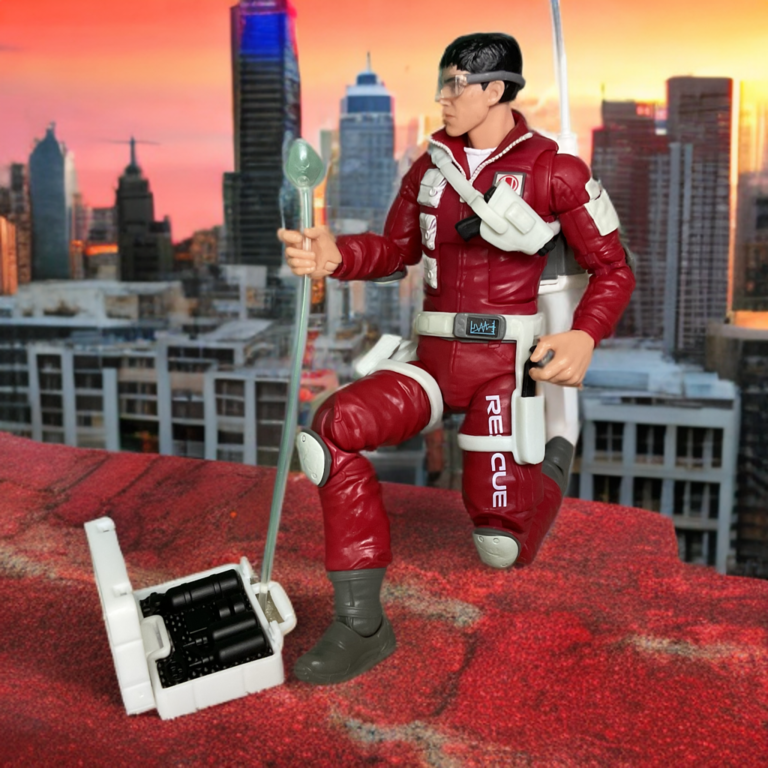
Unboxing the Hero: First Impressions
Opening the Classified Lifeline package is like reuniting with an old friend who’s had a glow-up. The box art features dynamic side panels showcasing Steen in action, helmet on and gear ready. Inside, the figure stands tall at 6 inches, with a sturdy build that feels premium. The red plastic has a matte finish that avoids cheap shine, and the white accents pop without overwhelming.
Initial handling reveals smooth joints and a balanced weight—perfect for display or play. No loose parts or paint slop; it’s clear Hasbro put care into this release.
Sculpt and Detailing
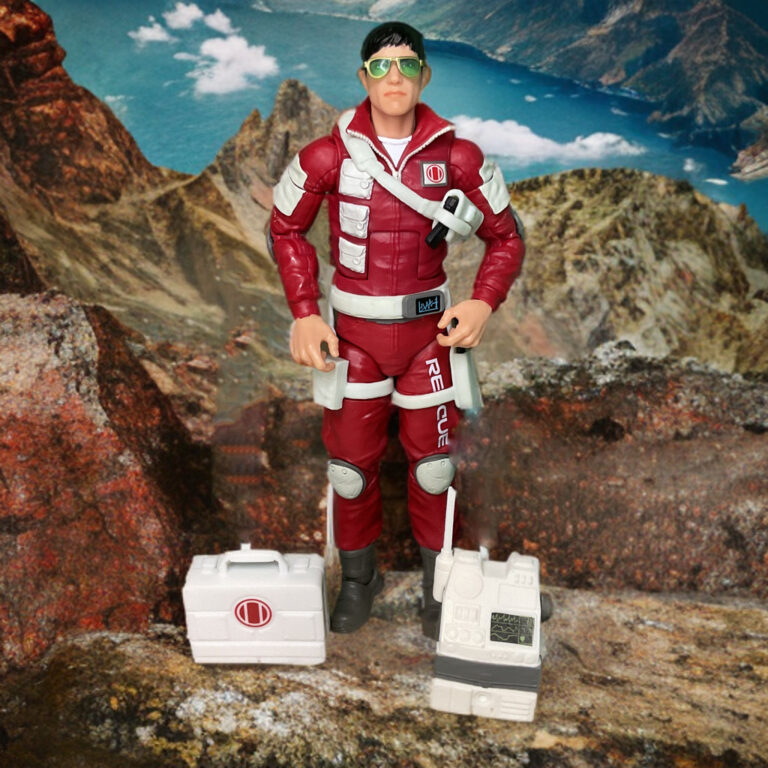
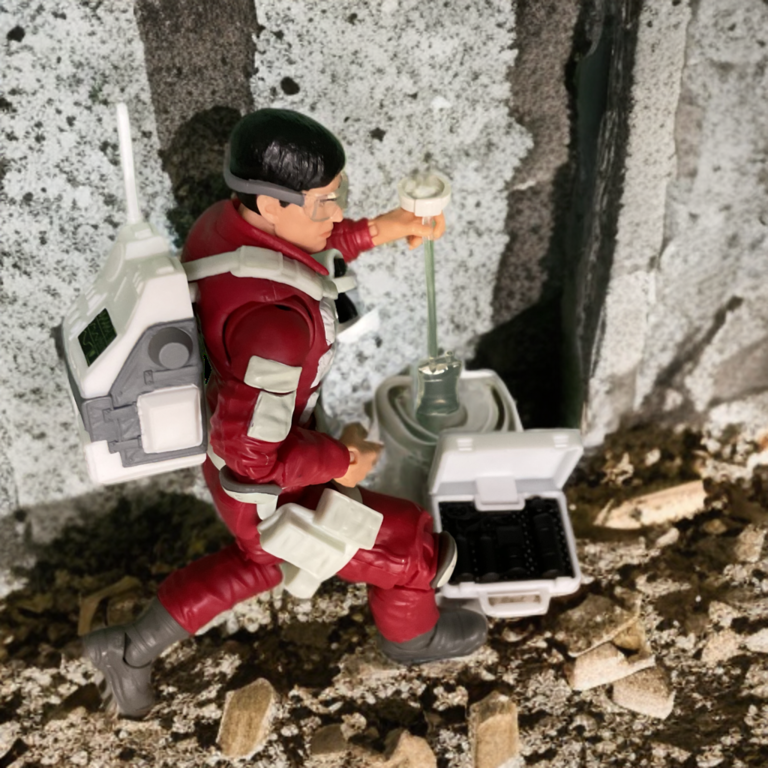
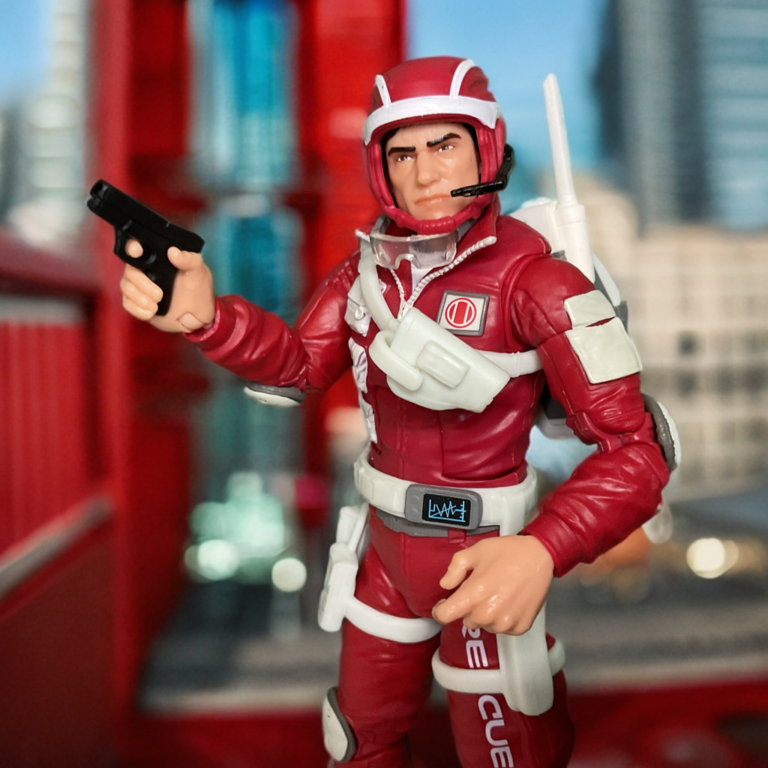
The sculpt nails Lifeline’s athletic yet approachable physique. His torso features molded straps and pouches for realism, with “Rescue” text on the leg paying homage to the original. The head sculpt includes black hair under the helmet and options for glasses, capturing his intellectual vibe.
Details like the white stripe on the helmet and textured fabric on the pants add depth. The boots have practical treads, and the gloves suggest readiness for gritty work. Compared to smaller vintage figures, this version feels lifelike, with subtle muscle definition that suits a field medic.

Articulation and Poseability
With over 20 points of articulation, including double-jointed knees and elbows, swivels at wrists and ankles, and a ball-jointed neck, Lifeline poses dynamically. You can recreate Aikido stances or medic crouches with ease. The backpack and med pack attach securely without hindering movement.
Stability is excellent, even in action poses, thanks to rock-solid engineering. It’s a step up from earlier Classified figures, offering fluid motion for dioramas or photography.
Accessories Breakdown
Lifeline comes loaded with tools for his trade. The helmet fits snugly, with a visor for added protection. Three pairs of glasses offer customization—one clear, one tinted, one perhaps for reading patient charts in the field.
For defense, there’s a pistol and knife, compact and detailed for quick draw scenarios. The flashlight clips to gear, ideal for night ops. The med pack opens to reveal compartments, while the backpack holds essentials. An IV bag and oxygen mask complete the set, perfect for simulating field treatments.
Each piece is scaled accurately, with no flimsy parts—everything enhances the figure’s functionality.
Comparison to Vintage Figures
The 1986 original was a 3.75-inch gem with red and white attire, but limited articulation. Accessories included a handgun, backpack, medical case, and airmask—similar but simpler.
The 1988 Tiger Force variant shifted to yellow and green for camouflage, with updated gear. Later versions, like the 1991 mail-in, dropped weapons to emphasize pacifism.
The Classified edition towers over them in size and detail, but retains the spirit—bright colors, medical focus—making it a worthy evolution.
Collector’s Corner: Value and Rarity
As #186 in the Classified line, Lifeline holds strong resale value, especially mint-in-box. Retail around $25, but exclusives or variants could climb. His role as a support character makes him essential for completing team displays.
Rarity isn’t extreme yet, but demand from 80s fans keeps him sought-after. Pair him with Doc or Stretcher for a medical squad setup.
Final Verdict
Edwin “Lifeline” Steen isn’t the flashiest Joe, but his Classified figure captures what makes him enduring: reliability, compassion, and quiet heroism. Whether diving into his rich history or posing the figure on your desk, he’s a testament to the franchise’s depth. If you’re building a collection or just appreciate unsung heroes, this one’s a must-have. Yo Joe!

 English
  Deutsch
  Français
  Português do Brasil
  日本語
日本語  Español
  English (Australia)