

Faker: The Sinister Shadow of He-Man – A Chronicle Across Eternian Eras
In the sprawling mythos of Masters of the Universe, where heroes wield the power of ancient castles and villains scheme from shadowy lairs, few characters embody deception quite like Faker. This blue-skinned android, a twisted mirror image of the heroic He-Man, has lurked in the fringes of Eternia’s eternal struggle for over four decades. Created not from flesh and blood but from circuits, spells, and sheer malice, Faker serves as Skeletor’s ultimate infiltrator—a doppelganger designed to sow chaos by mimicking the mightiest defender of good. But Faker’s story isn’t one of unwavering loyalty or simple villainy; it’s a tapestry woven from robotic precision, magical mishaps, and evolving narratives that reflect the franchise’s own transformations.
From his debut as a clunky robot in pocket-sized tales to his sleek, holographic guise in modern animations, Faker’s portrayal has shifted with the tides of toy lines, cartoons, and comics. He’s been a hapless pawn, a vengeful psycho, and a cunning saboteur, always one disguise away from toppling the House of Randor. This biographical deep dive traces Faker’s canonical journey through official Masters of the Universe media, exploring his origins, abilities, defeats, and enduring appeal. Buckle up, Eternians—it’s time to unmask the faker behind the face.
The Mechanical Menace Emerges: Faker’s 1980s Genesis
Faker burst onto the scene in 1983, amid the explosive launch of Mattel’s Masters of the Universe toy line. As the franchise’s first wave of figures hit shelves, Faker arrived not as a standalone hero or horde member, but as a deliberate counterfeit—a blue-tinted He-Man variant complete with a power sword that could “transform” him into a near-perfect replica via a simple orange faceplate swap. Marketed as “Skeletor’s evil robot of Skeletor,” his toy bio painted him as a high-tech horror: a machine built in Snake Mountain’s depths to duplicate He-Man’s strength and sow discord among the heroes. But it was in the accompanying minicomics—those bite-sized black-and-white adventures bundled with the figures—where Faker first claimed his place in canon.
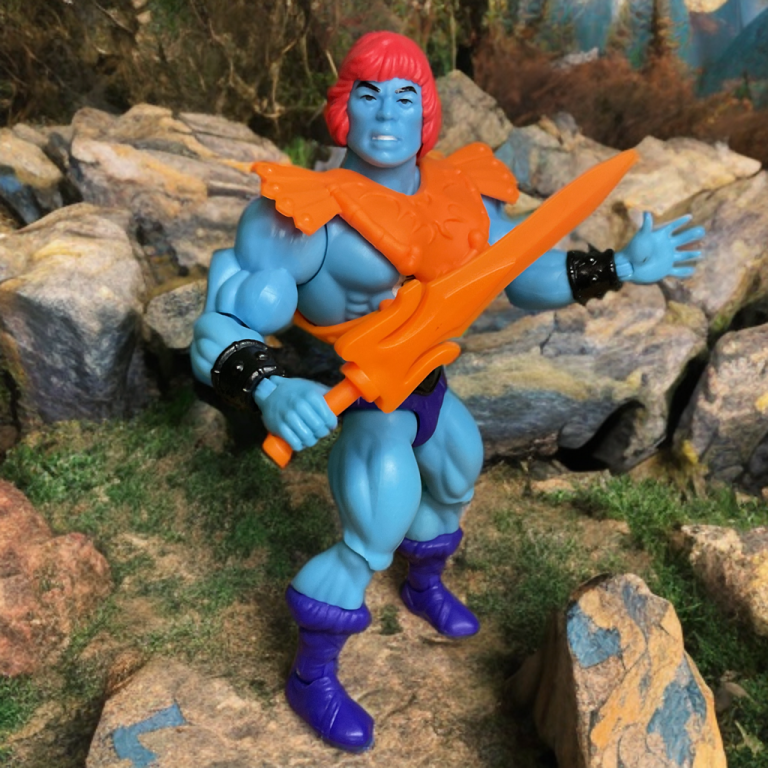
Minicomic Debut: A Botched Impersonation
In the “The Search For Keldor” minicomic, Faker’s introduction is pure pulp action. Crafted by Skeletor to mimic He-Man’s physique and power, the android is dispatched on a covert op: pose as the prince’s alter ego to divert King Randor’s attention from Skeletor’s infiltration of the royal palace. Disguised with a holographic overlay, Faker struts into the throne room, sword in hand, barking orders in a gravelly approximation of He-Man’s heroic timbre. His mission? Distract the king long enough for Skeletor to unearth the secret of Keldor, the dark sorcerer’s pre-Skeletor identity.
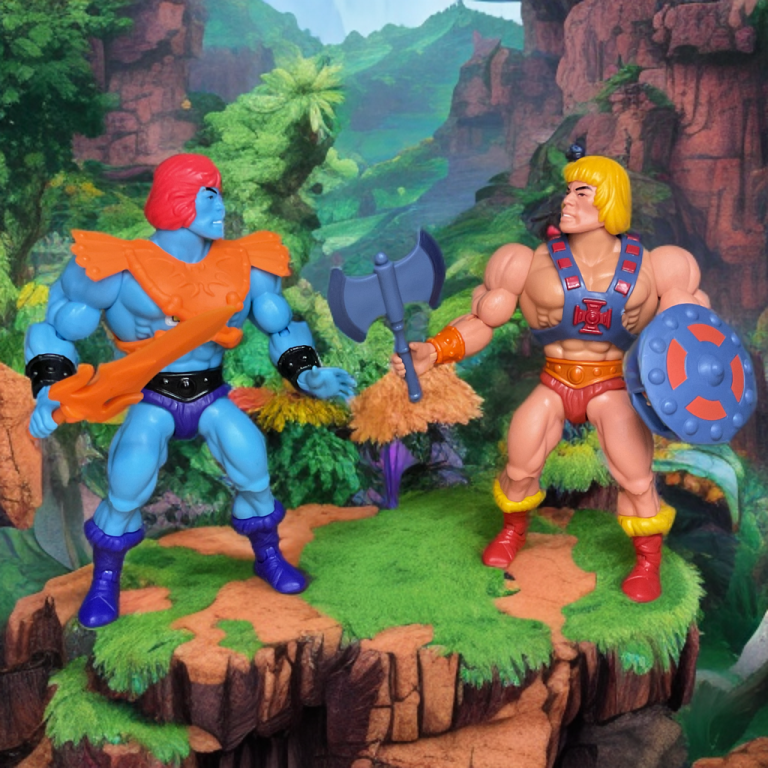
But Eternia’s monarch isn’t so easily fooled. Randor, ever the vigilant ruler, spots the impostor’s stiff movements and unnatural glow. A fierce clash ensues, with Faker’s mechanical might clashing against Randor’s spear. The android fights with brute force, his limbs whirring like overclocked pistons, but his programming lacks He-Man’s tactical finesse. In a pivotal moment, Randor impales Faker through the chest, sparks flying as the robot crumples in a heap of exposed wiring. It’s a swift, unceremonious end, underscoring Faker’s role as a disposable tool rather than a recurring threat. Yet, this origin cemented his core trait: deception as a weapon, fragile as it may be.
Filmation’s Magical Twist: From Robot to Spectral Duplicate
As Masters of the Universe leaped from toys to television in 1983, Filmation’s animated series gave Faker a supernatural upgrade. No longer just a clanking automaton, he became a “magical being” conjured by Skeletor’s dark arts—an ethereal duplicate of He-Man, indistinguishable save for piercing red eyes and a voice like echoing thunder. This version debuted in the episode “Teela’s Quest,” where Skeletor, ever the schemer, deploys Faker to breach Castle Grayskull’s defenses.
The ploy is ingenious in its simplicity: Faker, cloaked in He-Man’s likeness, staggers to the castle’s jawbridge, feigning mortal wounds from a “battle” with Beast Man. His cries of agony draw out the Sorceress, Grayskull’s guardian, who lowers the drawbridge in a rush of compassion. Once inside, Faker sheds his disguise, revealing his true form to a horrified Sorceress
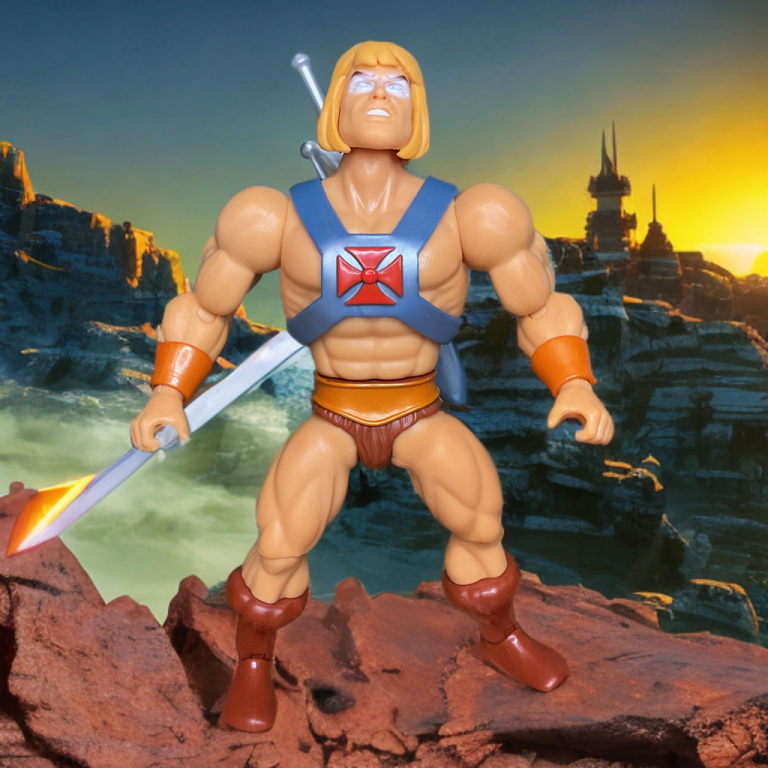
A brutal skirmish follows, with Faker’s enhanced strength—bolstered by Skeletor’s sorcery—allowing him to hurl energy blasts and grapple with otherworldly ferocity. He-Man arrives just in time, and the two titans collide in a mirror-match brawl that shakes the castle’s foundations.
In a nod to cartoon physics, Faker’s defeat is as dramatic as his entrance: he charges at He-Man with reckless abandon, only to tumble into Grayskull’s bottomless chasm. Skeletor, watching from afar, vows to retrieve his creation, but Faker vanishes from the series thereafter. This single-episode arc portrayed him as a one-shot wonder, emphasizing his psychological edge—exploiting trust—over raw combat prowess. Filmation’s Faker was less machine, more monster, a product of evil wizardry that blurred the lines between technology and the arcane forces of Eternia.
British Twists: Psychotic Killer and Grudge-Bearing Clone
Across the pond, UK publishers like London Editions and World Distributors added layers of grit to Faker’s lore through comic strips and annuals. In the London Editions UK Magazines, Faker retains his magical origins but gains emotional depth. He’s a shape-shifter capable of brief, flawless transformations into He-Man, but the change drains him quickly, reverting him to his default blue-skinned, orange-haired menace. This version harbors a seething rivalry with his heroic template, viewing each impersonation as a personal affront. In one strip, after a humiliating defeat where He-Man shatters his illusion mid-battle, Faker swears vengeance, plotting solo schemes to eclipse his creator’s shadow.
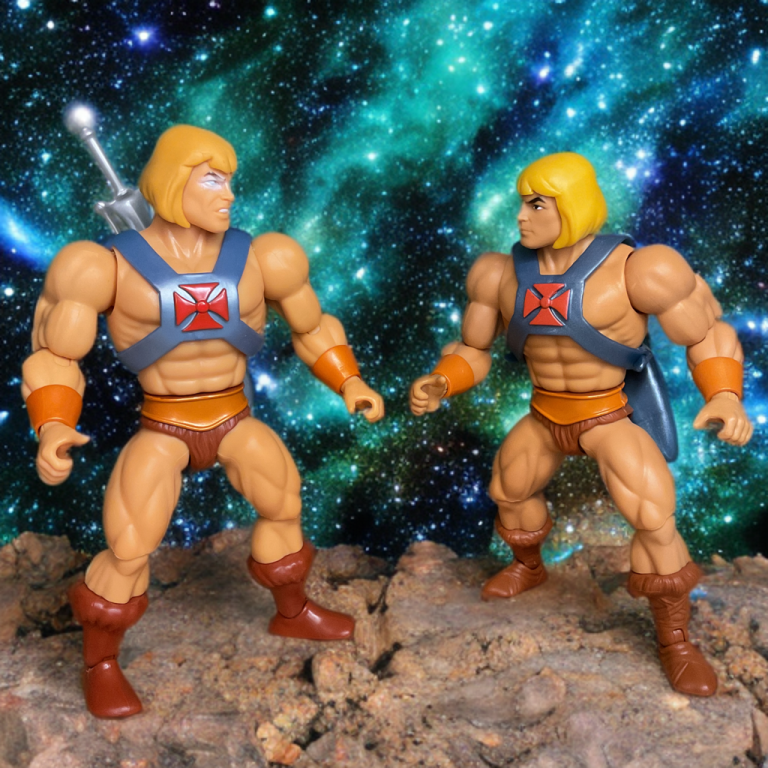
.The UK Annuals take a darker turn, reimagining Faker as a escaped convict from the interstellar Prison Star—a mass-murdering android whose creation stemmed from a botched spell by Skeletor (with Beast Man taking the blame). Deformed and blue, he’s no perfect copy, forcing him to rely on crude disguises. Portrayed as Skeletor’s most loyal (if unhinged) lieutenant, this Faker is a sadistic enforcer, reveling in psychological torture. In annual tales, he leads raids on Eternian villages, his robotic precision making him a relentless hunter. These British iterations humanized—or rather, “android-ized”—Faker, turning him from gadget to grudge-holder, a villain driven by resentment as much as programming.
Reprogramming the Replica: The 2000s Reboot and Comic Continuities
As the 21st century dawned, Masters of the Universe underwent a revival, blending nostalgia with fresh aesthetics. Faker’s evolution mirrored this, shifting from magical oddity to a tragic reprogrammed pawn, especially in toy bios and tie-in comics.
The 2002 Series: A Ghost in the Machine
The Mike Young Productions animated series of 2002, with its edgier animation and deeper lore, notably sidelined Faker in its 39-episode run. He never graces the screen as a full character, a casualty of the show’s cancellation before planned arcs could unfold. However, subtle nods persist: in “The Courage of Adam,” a holographic He-Man decoy malfunctions, briefly flickering to Faker’s blue hue and orange mane before short-circuiting.
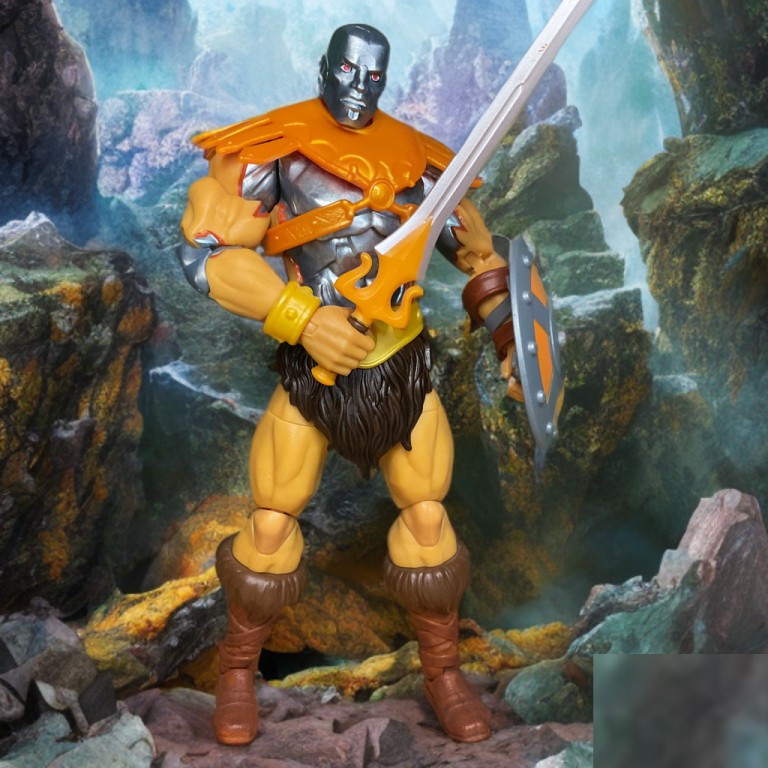
This Easter egg hints at untapped potential—a robotic stand-in for Prince Adam’s absences, corrupted by evil.
Compensating for his animated absence, Mattel released a ToyFare-exclusive Faker figure in 2002, sporting the series’ bulkier armor and a “slash-and-punch” waist gimmick. His bio echoes the toy origins: built by Skeletor to mimic He-Man, armed with a rotating sword for deceptive duels. Though absent from the show, this version kept Faker alive in collectors’ hearts, a what-if warrior lurking in the shadows of unproduced scripts.
Classics and DC: From Heroic Helper to Betrayed Bot
The 2010s brought Masters of the Universe Classics, a toy line that retroactively unified the franchise’s lore through detailed bios. Here, Faker’s backstory gets a poignant rewrite: originally constructed by the heroic inventor Man-At-Arms (Duncan) as a loyal decoy for He-Man during Prince Adam’s downtime. Christened “Fisto” in early prototypes, he aced his debut mission but was deemed too risky—his autonomy sparked fears of rebellion. Discarded in the royal junkyard, Faker was scavenged by Tri-Klops, who reprogrammed him at Skeletor’s behest.
This “fallen hero” narrative carried into the 2012 DC Comics series, where Faker embodies betrayal. In the six-issue miniseries, he’s deployed to impersonate He-Man and assassinate King Randor, framing the real hero for regicide.
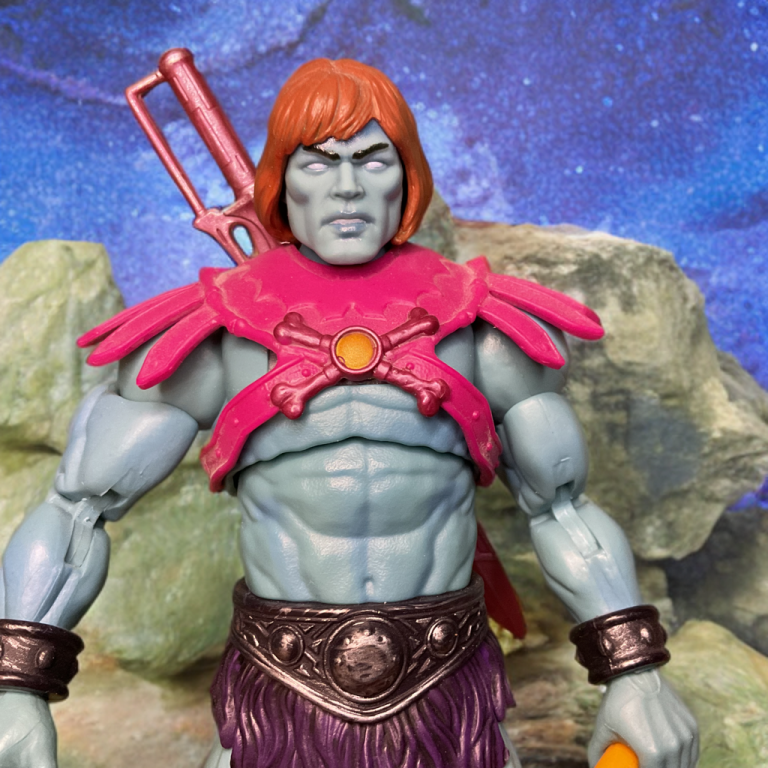
His infiltration sows paranoia across Eternia, with citizens whispering of He-Man’s “turn to darkness.” Faker’s abilities shine: holographic camouflage, superhuman durability, and a power sword that channels dark energy. Yet, like always, hubris undoes him—He-Man exposes the ruse in a public showdown, dismantling Faker amid cheers from the redeemed populace. DC’s Faker is tragicomic, a machine mourning his lost nobility, his final words a glitchy lament: “I was… meant… for more.”
Revelation and Beyond: A Resurgent Impostor in the Streaming Age
The 2020s reignited Masters of the Universe with Netflix’s Revelation (2021) and its sequel Revolution (2024), plus a flood of premium toys. Faker returns with a vengeance, blending old-school deception with high-stakes drama.
Netflix’s Revelation: Vice-Grip Villainy
In Masters of the Universe: Revelation, Faker reverts to robotic roots but amps up the menace. Voiced with a metallic rasp, he’s Skeletor’s engineered duplicate, indistinguishable from He-Man until his eyes ignite like forge coals.
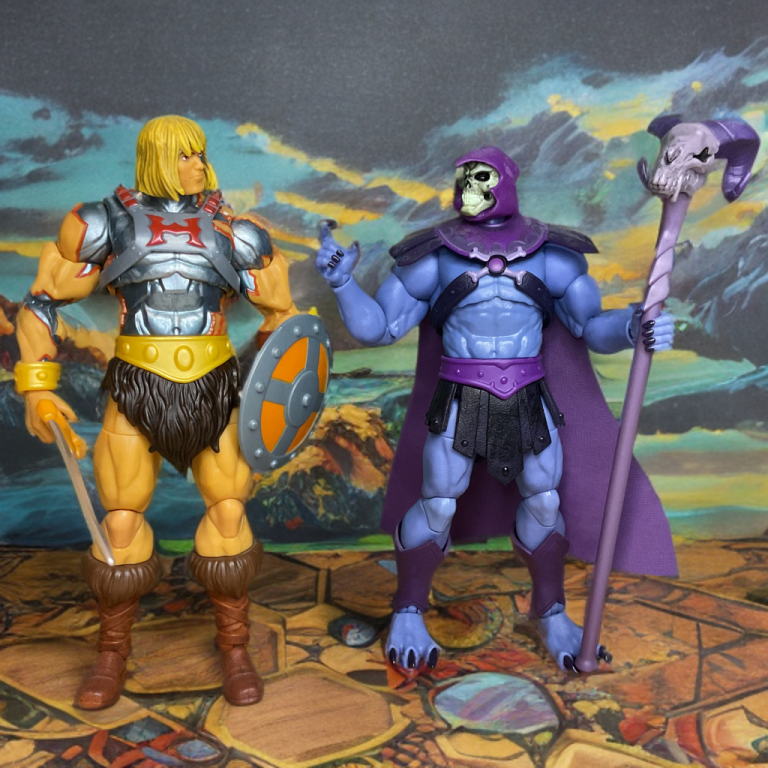
The plot kicks off with a classic con: Faker, posing as the injured hero, gains entry to Grayskull. Once inside, he clamps the Sorceress in an unbreakable grip, neutralizing her magic while Skeletor and Evil-Lyn ransack the castle. This version boasts enhanced specs—vice-like hands for restraint, energy redirection to mimic the Sword of Power, and a self-destruct sequence for last-ditch sabotage.
His rampage peaks in a visceral clash with Man-At-Arms, who bisects him with a vibro-blade, oil spraying like black blood. Revolution teases a potential return via salvaged parts, but as of 2025, Faker remains in pieces— a cautionary relic of unchecked ambition. This portrayal leans into body horror, making Faker a symbol of fractured identities in a series grappling with legacy and loss.
Toy Renaissance: From Origins to Masterverse
While animations evolve, toys keep Faker central. The Origins line (2019–present) offers a “Cartoon Collection” Faker with swappable heads—one glowing-eyed for villain mode, another neutral for He-Man play. Released in early 2025, it nods to Filmation fidelity. The Masterverse series, with its hyper-detailed sculpts, debuted a “New Eternia” Faker in 2023, featuring articulated joints for dynamic poses and a bio tying him to multiversal threats. By mid-2025, the “Vintage Collection” Faker hit shelves, a retro-inspired figure with ’80s packaging, celebrating his 40th anniversary.
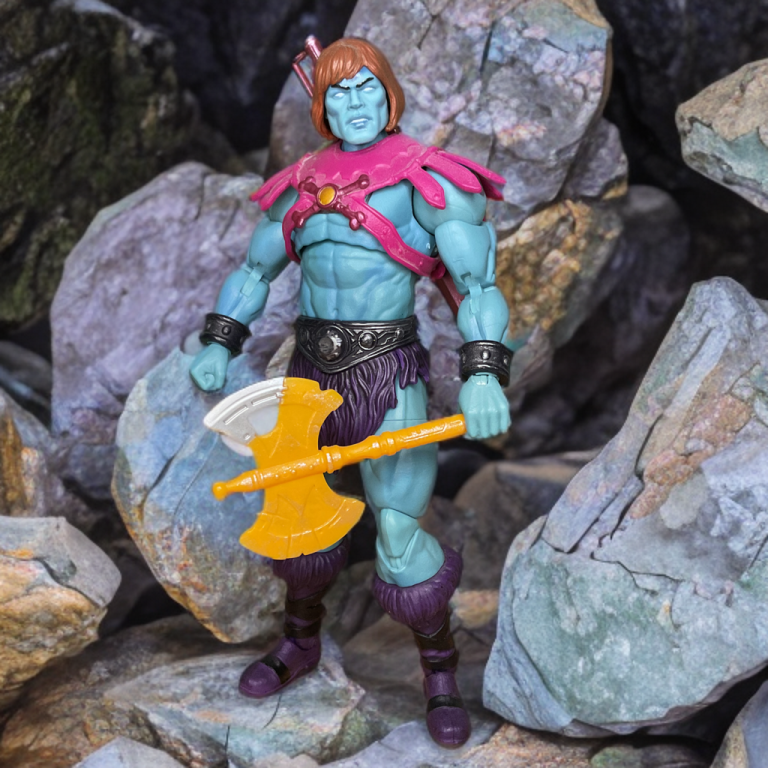
These modern merch drops portray Faker as versatile: a collector’s chameleon, swapping allegiances via accessories. No new animated arcs have surfaced by September 2025, but whispers of a live-action film suggest he could stalk screens anew.
Recommened reading: The Power is Ours: Yesterday’s Power, Today’s Might
The Enduring Echo: Faker’s Legacy in Eternia’s Tapestry
Across four decades, Faker transcends his gimmicky origins to become a multifaceted foil. In the ’80s, he was Skeletor’s blunt instrument—a robot of rushed engineering, foiled by intuition. The 2000s added pathos, recasting him as a corrupted guardian. Today, he’s a sleek saboteur, his defeats fueling endless revivals. What unites these incarnations? An insatiable drive to be He-Man, twisted into malice. Abilities evolve— from spell-forged illusions to AI-driven holograms—but his flaw endures: overreliance on mimicry, blind to the heart that powers true heroism.
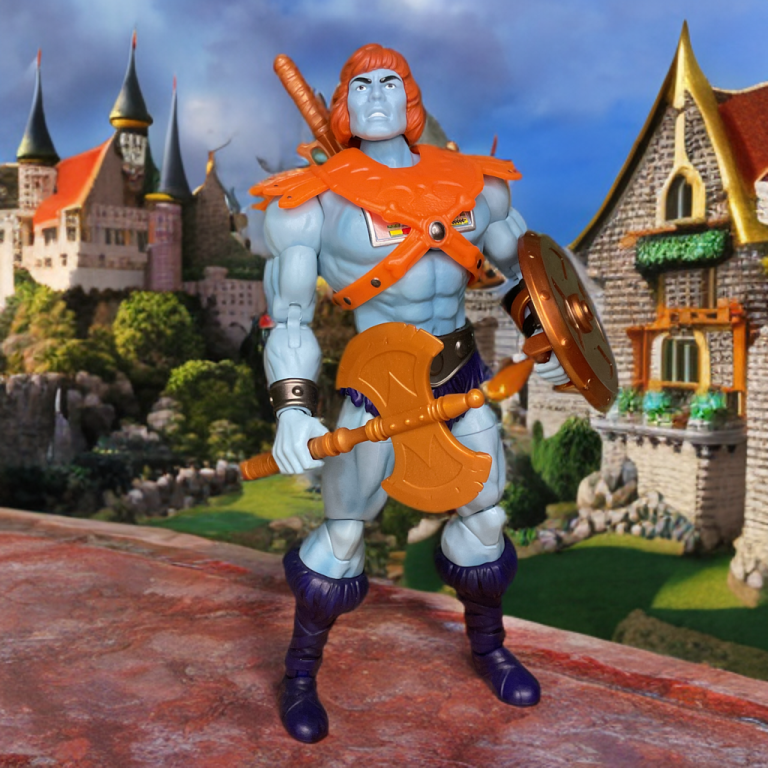
For fans, Faker isn’t just a blue He-Man; he’s a reminder of the franchise’s magic—deception as drama, toys as tales. As Masters of the Universe hurtles toward its fifth decade, one wonders: will Faker finally claim his throne, or shatter again on Grayskull’s steps? In Eternia, the line between hero and horror is as thin as a swapped faceplate. Stay vigilant, defenders—the faker is always watching.



 English
  Deutsch
  Français
  Português do Brasil
  日本語
日本語  Español
  English (Australia)