

Expectation vs. Reality: When the Box Art Promised Frazetta but the Toy Delivered a Diaper
“The Box Art Lied to Me”
Picture this: You’re eight years old in 1984, standing in the aisle of Toys “R” Us, heart pounding like a war drum in a Frazetta painting. The box in your trembling hands isn’t just cardboard—it’s a portal. Oil-painted warriors with abs carved from granite clash under blood-red skies, swords flashing like lightning, muscles bulging in ways that make Michelangelo weep with envy. Frank Frazetta himself could’ve signed it. Then you tear it open at home, and out tumbles… a five-and-a-half-inch chunk of yellow plastic wearing what looks suspiciously like a fuzzy adult diaper, arms frozen in a half-hearted “power punch” that couldn’t swat a fly. Welcome to the greatest con in childhood consumerism: the box art deception.
This isn’t just nostalgia talking. This is a full-blown false advertising manifesto, the kind that would make a class-action lawyer salivate. The back of those 1982 cardbacks (and the glorious painted boxes that followed) were gateways to savage, mist-covered worlds of blood and iron. The toy inside? A guy with spring-loaded knee joints that locked up faster than a cheap watch, thighs that rubbed together like two reluctant sumo wrestlers, and an outfit that screamed “I lost a bet with my tailor.” We’re talking Masters of the Universe, the Remco Conan line, and every sword-and-sorcery knockoff that promised Frazetta but delivered fuzzy crotch armor. Let’s sue the past. Let’s laugh at the lies. Let’s dive deep into this highly humorous autopsy of toy marketing malpractice.
The Box Art Deception: Where Oil Paint Met Plastic Reality
The dry hook hits like a Battle Cat pounce: “The back of a 1982 cardback was a gateway to a savage, mist-covered world of blood and iron. Then you opened the box and found a guy with ‘waist-twist power punch’ action who couldn’t even sit in a chair properly.” And boy, did it deliver. We’re zeroing in on the SEO gold here—William George art, Earl Norem masterpieces, and that sweet, searchable vintage cardback art that still has grown men (and art enthusiasts) scouring eBay like treasure hunters. These weren’t your run-of-the-mill cartoon scribbles.
THE MARKETING BAIT-AND-SWITCH INDEX
The gap between box art expectations and plastic reality (Scale 1-10)
| Metric | Box Art (Expectation) | Actual Toy (Reality) |
| Muscle Definition & Vascularity | 10 | 4 (Chunky block of butter) |
| Weapon Structural Integrity | 10 | 2 (Overcooked spaghetti) |
| Anatomical Correctness | 9 | 1 (Perpetual bow-legged squat) |
| Loincloth Majestic-ness | 10 | 0 (Lint-collecting fuzzy diaper) |
| Ability to Stand / Pose | 10 | 3 (Topples if you breathe too hard) |
No, these were paintings. Real oil-on-canvas epics by artists who treated a $4.99 action figure box like it was the Sistine Chapel of Eternia. William George, the undisputed king of MOTU box art from 1984 onward, didn’t just illustrate—he orchestrated symphonies of carnage. Take his Battle Armor He-Man and Road Ripper piece: There’s He-Man, armor gleaming, rocketing across a rocky desert on a vehicle that looks like it could conquer galaxies. Tiny dragon-like creatures scatter in terror. A volcano erupts in the background like the planet itself is cheering him on. Muscles? Rippling. Pose? Heroic mid-leap. It screamed, “Buy me, kid, and you’ll ride into legend!” Reality? The Road Ripper toy was a clunky yellow tricycle with wheels that popped off if you looked at them funny. He-Man sat on it like a drunk on a bar stool—zero balance, maximum embarrassment. Earl Norem, the other titan of 80s toy art, brought that raw Frazetta energy to MOTU posters, magazines, and select packaging. His style? Pure barbarian beefcake. Think Conan the Barbarian crossed with a fever dream of oil paint and sweat. Norem’s work on the later waves—those 1986-1987 figures—made Skeletor look like he was one skull-laugh away from toppling empires. But slap that art on a cardback, and the toy inside was Skeletor with a staff that bent like overcooked spaghetti and legs held together by a rubber band that snapped if you pulled too hard. This was the deception, folks. The box art lied. It promised Frazetta. It delivered diaper.
William George: The Michelangelo of Muscle and Mayhem
Let’s give William George his flowers—because the man painted like he was auditioning for Valhalla’s art gallery. His 1984 output alone could fill a museum wing. Battle Armor He-Man and Battle Cat? They don’t just leap into battle; they defy gravity in a whirlwind of fur, fangs, and fury. The cat’s eyes glow with primal rage. He-Man’s sword arcs through the air, cleaving imaginary foes. Background? Craggy mountains, swirling clouds, the faint hint of a distant castle that makes you believe Eternia is real and waiting for your plastic army to save it.
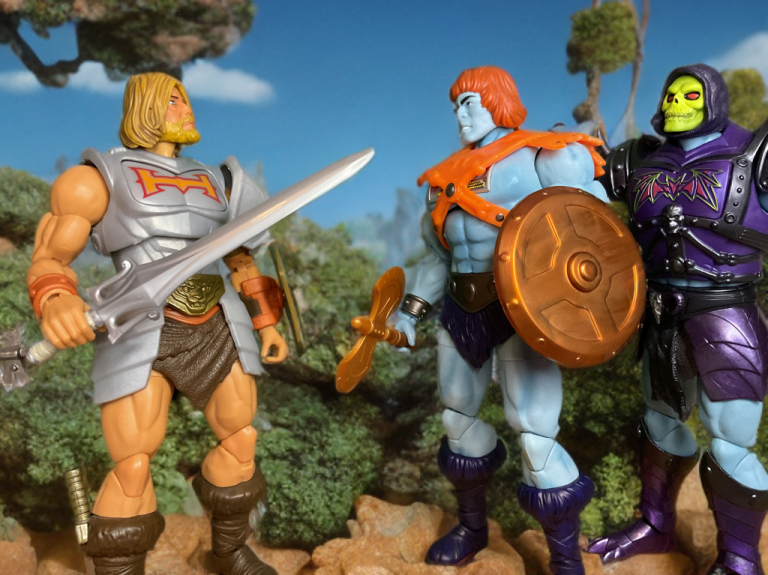
But here’s the humor in the horror: You get the toy home, and Battle Cat is a green tiger with a saddle that slips off if you sneeze. He-Man? His “armor” is two flimsy chest plates that pop open like a bad novelty gag. Limited knee mobility? More like no knee mobility. The figure’s legs were engineered by someone who hated children—or at least hated the concept of a toy actually posing like the box art. You’d try to recreate that epic leap, and instead, your He-Man would topple forward, face-planting into the carpet like a drunk barbarian after last call at the mead hall.
George’s style was cinematic before CGI existed. His Dragon Walker box? A massive, dragon-headed vehicle stomping across volcanic badlands, He-Man at the controls like a gladiator piloting a kaiju. Tiny warriors (probably meant to be the evil little minions) cower in the foreground. It was Frazetta meets Mad Max on steroids. The toy? A wobbly plastic contraption with legs that clicked like arthritic knees and a “walking” action that mostly involved you manually shoving it across the floor while making explosion noises. False advertising? Your Honor, Exhibit A is this box. Exhibit B is the sad plastic dinosaur reject inside.
And don’t get me started on the cardback cross-sells. Those tiny William George vignettes on the back? They showed entire dioramas of glory—He-Man battling hordes under stormy skies. Your actual collection? Five figures huddled in a shoebox, two of them missing accessories, all of them looking like they needed a chiropractor.
Earl Norem: The Frazetta Whisperer Who Painted Our Dreams (Then Crushed Them)
Earl Norem wasn’t just an artist; he was the bridge between Frank Frazetta’s sword-swinging savagery and your allowance money. His MOTU magazine covers and posters? Pure dynamite. Muscular heroes in loincloths (there it is—the diaper foreshadowing) locked in eternal combat with skull-faced villains. Norem’s brush strokes captured sweat, sinew, and sheer testosterone in ways that made the plastic toys look like they’d been designed by a committee of accountants. Take his work on the later MOTU waves—those 1987 figures with the “Laser” variants or the Evil Horde crew. Norem painted them like they were stepping out of a Savage Sword of Conan cover. Thunderous poses.
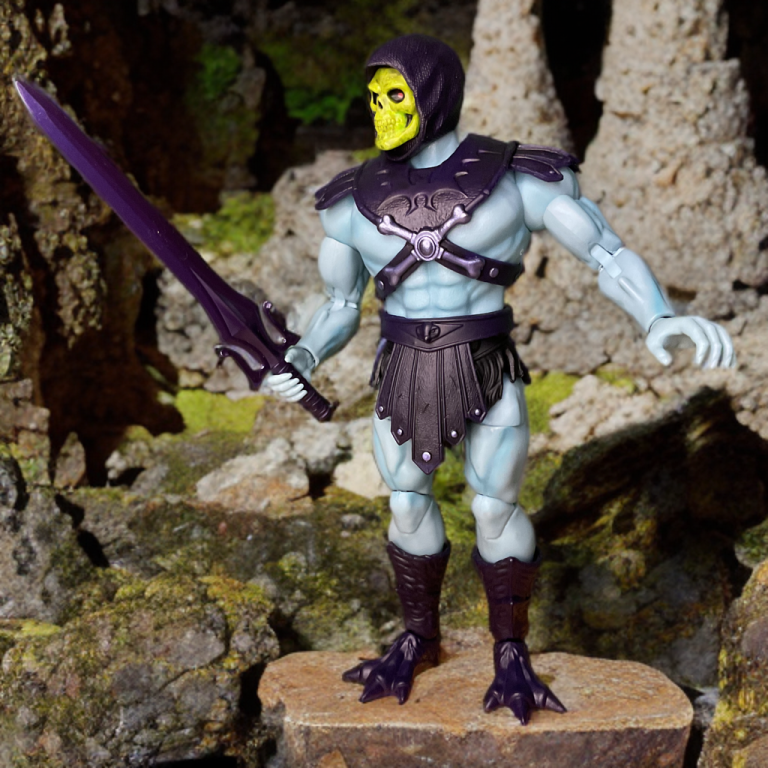
Dramatic lighting. Backgrounds that screamed “epic quest” louder than a movie trailer voiceover. One piece shows a wave of heroes charging across a battlefield, capes billowing, weapons raised. It promised a war for the ages. Reality check: The figures had “waist-spring” punch moves that clicked once and then locked forever. Knee joints? Non-existent on all of them. And the outfits? Let’s talk about that furry diaper again. He-Man’s iconic orange shorts weren’t just clothing—they were a crime against plastic. On the box art, they looked like battle-worn leather, rugged and heroic. In hand? A bumpy, molded mess that collected dust like it was paid to do so. Move the legs (if you could), and the shorts would ride up like the world’s most uncomfortable thong. Norem’s art made it majestic. The toy made it… well, let’s just say it explained why He-Man never sat down in the cartoons. Norem’s Conan connections seal the deal. His earlier work on barbarian-themed mags fed directly into that Frazetta vibe, and when Mattel leaned into it for MOTU, it was like stealing fire from the gods. Then Remco tried it with their own line, and we’ll get there. But Norem’s genius? It elevated cheap plastic to myth. Until you opened the blister pack.
The Remco Conan Line: When the Movie’s Spirit Met Dollar-Store Despair
Ah, the 1984 Remco Conan the Barbarian toys. If MOTU was the emperor of the diaper deception, Conan was its exiled cousin who showed up late to the party in even cheaper armor. Inspired by Arnold Schwarzenegger’s sword-swinging slab of beef in the 1982 film (itself a love letter to Frazetta), Remco cranked out 5.5-inch figures that looked like MOTU rejects after a bad night at the gym. The box art? Epic as heck. Conan in war paint, muscles gleaming under barbarian torchlight, Thoth-Amon (yes, they made an evil sorcerer figure!) looming like a shadow from the pits of hell. It promised Hyborian Age glory—blood feuds, ancient curses, and loincloths that actually fit like they belonged on a Cimmerian warrior. The packaging screamed “Conan the Destroyer” vibes, with fiery backgrounds and skulls piled high. Inside?
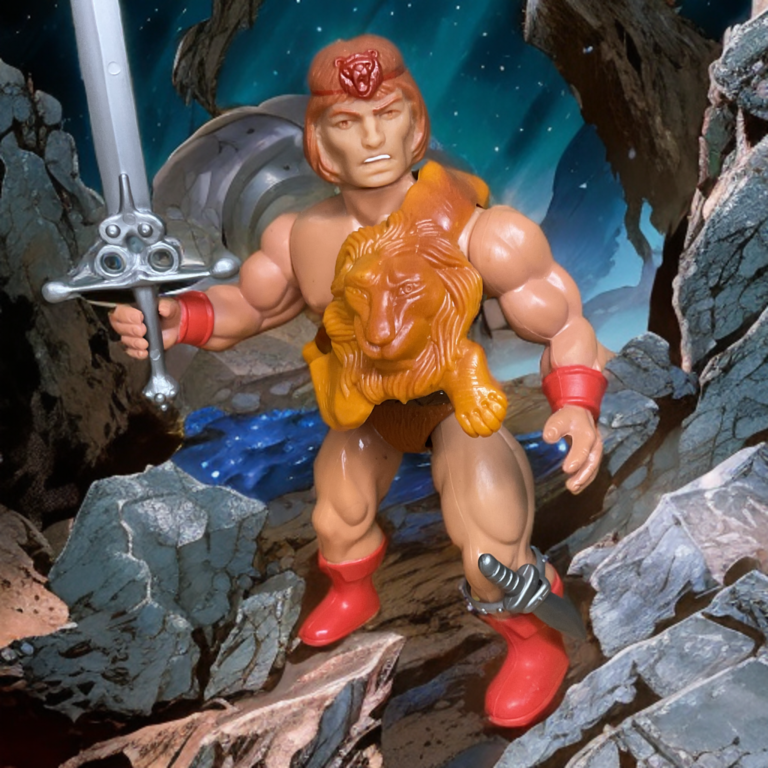
A chunky plastic Conan with arms that rotated only at 360 degrees, legs that refused to bend (hello again, V-crotch hip joints), and a sword that was basically a glorified butter knife. The “war paint” version? Just some red smears that looked like he got into a fight with a ketchup bottle. And the diaper? Oh, it was there. Conan’s furry shorts were even fuzzier, even saggier, like someone upholstered a diaper in shag carpet and called it “barbarian chic.” Remco tried so hard. They scaled it to match MOTU so your He-Man could team up with Conan in the ultimate crossover battle. But the toys? They fought like stiff-jointed robots with arthritis. You’d pose them for that epic box-art duel, and they’d just… stand there. Staring blankly. One strong breeze from your bedroom fan, and down they went. False advertising lawsuit number two: “Your Honor, the box showed Thoth-Amon summoning demons. The toy couldn’t summon enough grip to hold its own staff.” This line died fast—Conan deserved better than plastic that felt like it was molded from recycled lunch trays. But the art? It lived on in our hearts as the ultimate bait-and-switch. Frazetta promised a barbarian king. Remco delivered a guy who couldn’t even conquer the carpet.
He-Man: The Original Furry Diaper Debacle
Let’s zoom in on the poster boy for this whole scam: He-Man himself. William George’s box art painted him as a god among men—golden hair flowing, sword raised to the heavens, body like a Greek statue that hit the gym for a decade straight. One classic piece: He-Man atop Battle Cat, charging through a storm-ravaged landscape, lightning cracking overhead. It was pure Frazetta homage—raw power, untamed wilderness, the kind of scene that made you believe in destiny.
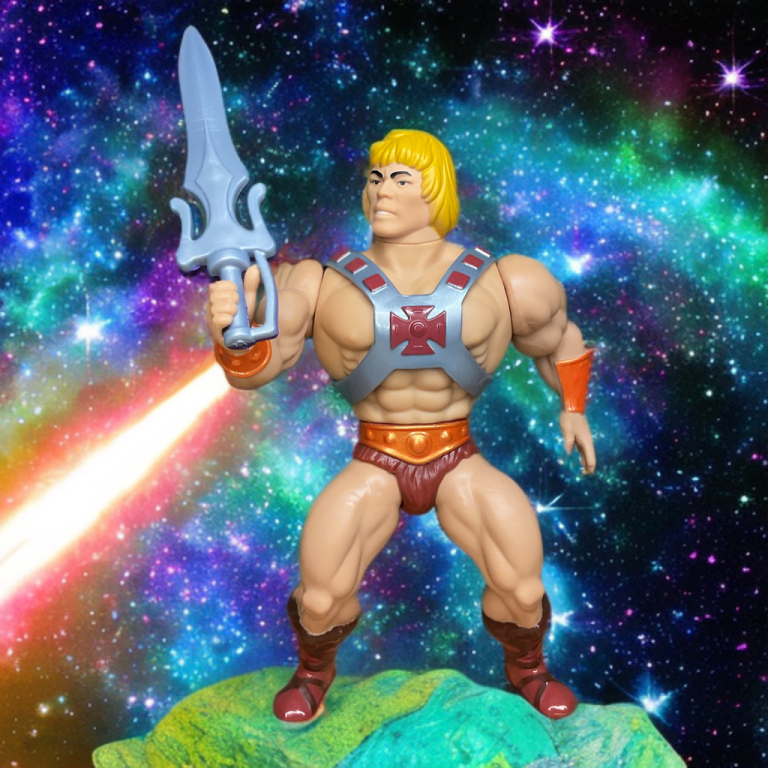
The toy? A yellow-torsoed hunk in green shorts that were definitely designed to look like they were made from a Muppet’s pelt. Bend him? The waist twist worked (barely), but the hips? They creaked like old hinges and stayed at a “perpetual bow-legged” squat. The power sword? It was a chunky hunk of plastic that snapped into his hand like it was glued there forever. Try to recreate the box-art pose, and you’d end up with a figure that looked like it was doing the world’s most awkward yoga.
Skeletor and the Horde: Skull-Faced Lies and Fuzzy Villainy
Villains got the same treatment. Earl Norem’s Skeletor paintings? Menacing masterpieces. The lord of Snake Mountain, staff crackling with evil energy, cape billowing like a storm cloud. Box art showed him cackling atop Panthor (his Battle Cat equivalent), a purple menace ready to conquer Eternia. It was theatrical villainy at its finest—Frazetta’s dark mirror.
The toy? A blue-skinned skeleton with a hood that never stayed on and legs that couldn’t support his own ego. The “Terror Claws” variant George painted? Claws extended like a nightmare crab. In hand? Claws that flopped around like wet noodles. And don’t forget the Horde—those bug-eyed goons in Norem’s posters looked like an invading army from hell. Toys? Stiff, repetitive, and about as threatening as a sock puppet.
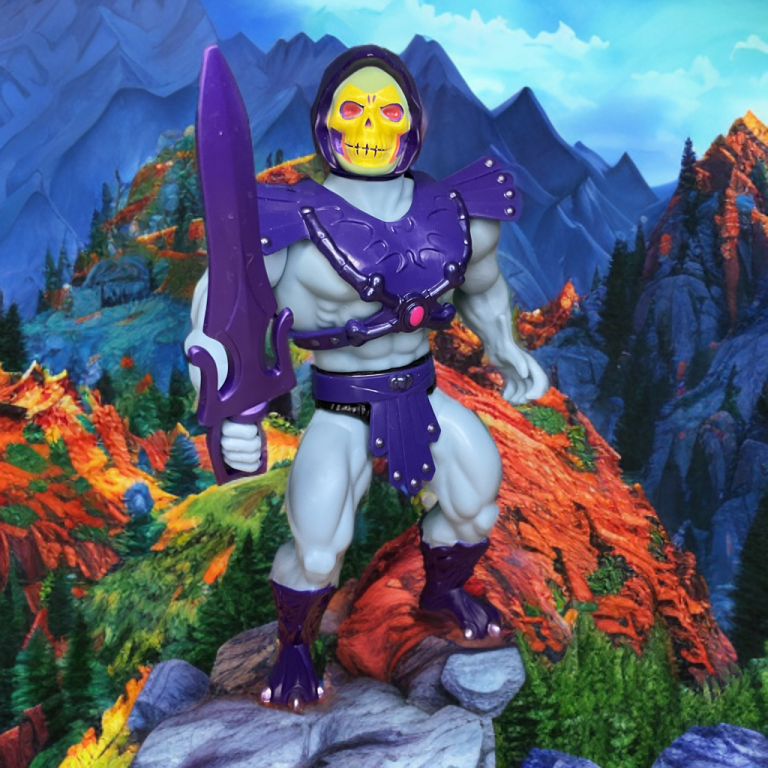
The humor peaks when you imagine the “lawsuit”: “Plaintiff alleges that the box art depicted Skeletor as an immortal sorcerer of terror. Defendant delivered a figure whose head popped off if you looked at it sideways and whose staff doubled as a back-scratcher.”
The Anatomy of the Diaper: Limited Articulation and Other Crimes Against Play
Let’s get technical—because the deception went deeper than paint. Every toy in this era suffered from “diaper dynamics”: skimpy furry bottoms that restricted movement like a bad pair of tighty-whities. Add in the 5.5-inch scale’s curse—arms that swung in two directions max, knees that were more sculptural than functional, and waists that twisted like a rusty doorknob. William George’s art showed fluid motion, dynamic leaps, full-body heroism. The plastic? It posed like a mannequin in a windstorm.
You tried. Oh, you tried. Recreating that Road Ripper race? The vehicle flipped. Staging the Dragon Walker assault? It tipped. The box art promised infinite poses. Reality gave you “standing” and “slightly leaning.” It was like buying a Ferrari poster and getting a Hot Wheels with square wheels.
"DIAPER DYNAMICS" ANATOMY METRICS
Engineering limits and structural choke-points of standard 1980s design
Imaginary Class-Action Lawsuit: Kids of the ’80s vs. Mattel and Remco
Your Honor, members of the jury—mostly former eight-year-olds with allowance trauma—we present the evidence. Exhibit 1: William George’s volcanic epics. Exhibit 2: The actual He-Man with his perpetual wedgie. Damages? Crushed dreams, hours of futile posing, and a lingering suspicion that marketing departments hate children.
We demand reparations: Free modern reissues with actual articulation. Or at least an apology letter from the ghost of 1984 Mattel execs. “Sorry the box lied. Here’s a real sword.”
The laughter comes from the truth: We loved them anyway. The deception made the toys better in memory. The box art fueled our imaginations so hard that the stubby plastic became legends by proxy.
Nostalgia’s Sweet Revenge: Why the Lies Still Win
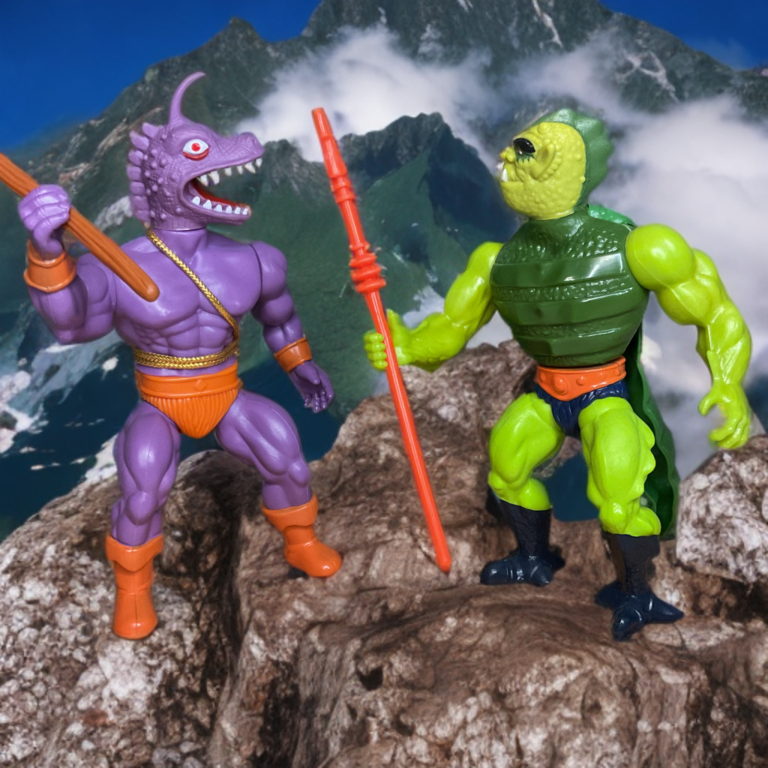
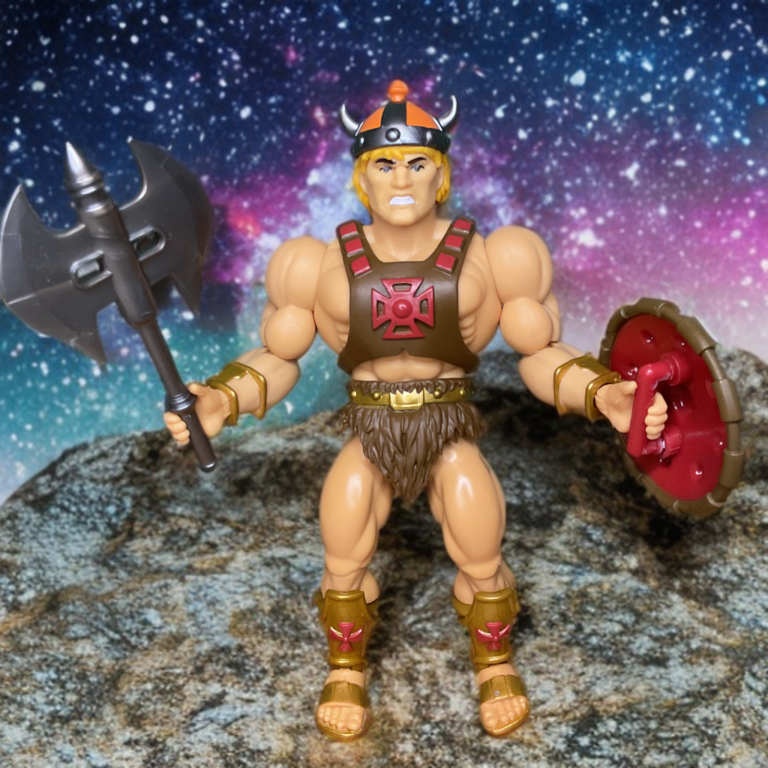
Fast-forward to today. Super7’s Ultimates line? They finally fixed it—articulation that matches the art, details that honor Norem and George. But the vintage stuff? We still collect it. We still chuckle at the diaper. Because deep down, that false advertising taught us something: Fantasy isn’t in the plastic. It’s in the paint. The box art didn’t just sell toys—it sold worlds. Frazetta-style dreams wrapped around a hunk of styrene.
We’d buy it all over again. Lint-covered shorts and all.
Other Lines That Joined the Deception Club
It wasn’t just MOTU and Conan. Thundercats had box art that roared with feline fury—Lion-O leaping across chasms like a Norem barbarian. Toys? Stiff cats with capes that tangled. Blackstar? Space-fantasy art promising galactic conquest. Reality: A wizard with a star staff that looked like a glow stick. Every 80s fantasy line borrowed that Frazetta magic, painted it on the cardback, then shipped out the diaper brigade.
Vintage cardback art enthusiasts know the drill. Those back panels with mini-scenes? Gold. The front? Deception incarnate.
Modern Echoes and Why We’ll Never Stop Laughing
Today, the collector market has undergone a strange, high-stakes evolution. We hunt eBay for pristine William George boxes not for the toys inside—which most of us already have in loose, scuffed-up bins—but for the unblemished cardboard itself. We are paying hundreds, sometimes thousands, for the “portal” we threw in the trash in 1984. Earl Norem’s original oil paintings now fetch elite collector prices in gallery auctions because that stuff was real; it wasn’t just marketing, it was world-building at its most muscular.
The toys? They remain the ultimate shelf queens with bad hips, propped up by acrylic stands because their internal rubber bands have long since surrendered to the cruel physics of time. They stand there, bow-legged and stubborn, clutching their “overcooked spaghetti” accessories with a grip that’s more suggestion than science.
NOSTALGIA VALUATION MATRIX
Comparing original baseline metrics vs. modern secondary market behavior
But when you place that stubby, 5.5-inch figure in front of a high-resolution print of the box art it came in, the magic trick still works. The brain bridges the gap between the $4.99 plastic reality and the Sistine Chapel of Eternia. Together, they form the perfect, high-octane punchline to our childhood: a physical reminder that our imaginations were the strongest “action feature” ever marketed.
The box art promised Frazetta. The toy delivered a diaper. And we wouldn’t have it any other way.
Forge Your Path with Us!
???? Choose Your Next Battle
 Frank Frazetta’s Hidden Influences: The Masters Who Forged the Ultimate Barbarian
 Eternia’s Dark Secret: How the 1982 Castle Grayskull Box Art Pulled the Ultimate Barbarian Bait-and-Switch
 Ultimate Guide to Zoloworld Realm of the Underworld (ROTU)
 Is This the Definitive Frazetta Conan Action Figure? Ultimate Review
 English
  Deutsch
  Français
  Português do Brasil
  日本語
日本語  Español
  English (Australia)