

The Armored Avenger Hits the 90s: A Look Back at the 1994 Animated Series
In 1994, the landscape of Saturday morning cartoons was undergoing a seismic shift. While X-Men: The Animated Series was already a powerhouse, Marvel looked to expand its televised empire by launching The Marvel Action Hour. This ambitious programming block paired Iron Man with the Fantastic Four, giving Tony Stark his first solo animated headliner since the 1966 “Marvel Super Heroes” segments. For fans of a certain age, this wasn’t just a cartoon—it was the definitive introduction to the high-tech world of Stark Enterprises and the “Modular Armor” that has recently seen a resurgence in the collecting world.
A Tale of Two Seasons: The 13-Episode Split
The 1994 Iron Man series is unique in animation history due to its radical mid-series transformation. The show ran for a total of 26 episodes, but it is effectively two different programs sharing the same title.
Season 1 (Episodes 1-13): Produced by Rainbow Animation Group, this season focused on a team-based dynamic. It leaned heavily into “villain-of-the-week” tropes and featured 3D-rendered CGI transformation sequences that were cutting-edge for the time.
Season 2 (Episodes 14-26): After a lukewarm reception to the first season, Koko Enterprises took over the animation, and the writing shifted toward a darker, serialized tone. This “reboot” changed everything from the character designs to the opening theme song, creating a more mature narrative that aligned closer to the comic book source material.
The “Retro” Appeal: Why the 1994 Modular Armor Still Matters
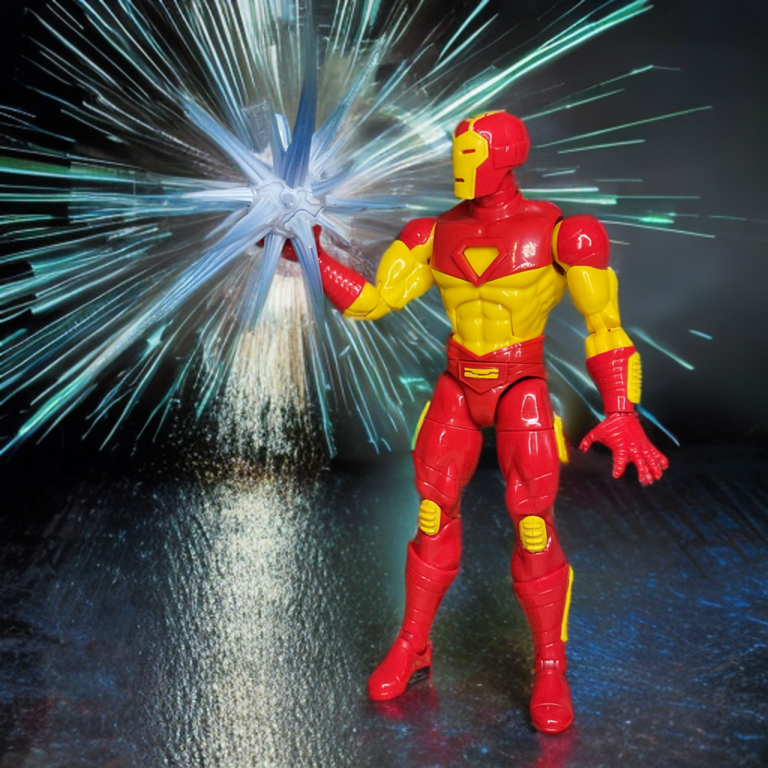
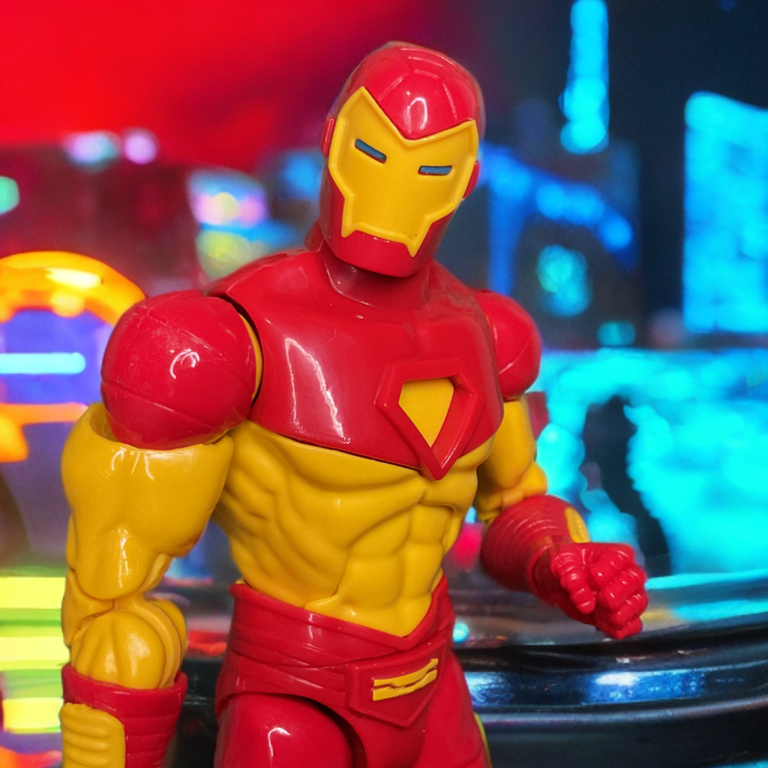
Why are collectors still hunting for the Marvel Legends Retro Deluxe Iron Man today? Much of that passion stems from the visual identity established in the 1994 animated series. This show immortalized the Model 13 “Modular Armor”, characterized by its distinctive square-shaped arc reactor and specialized “plug-and-play” weapon systems.
This specific iteration of Tony Stark—complete with the era-appropriate longer hair and the high-stakes corporate espionage of the show—represents a nostalgic bridge between the classic Silver Age comics and the modern MCU. For many, this show was the first time we saw the armor as a versatile, customizable tool rather than just a static suit of lights, making the “Retro” aesthetic a permanent fixture in the Hall of Armor.
The Definitive 90s Collectible: Breaking Down the Deluxe Figure
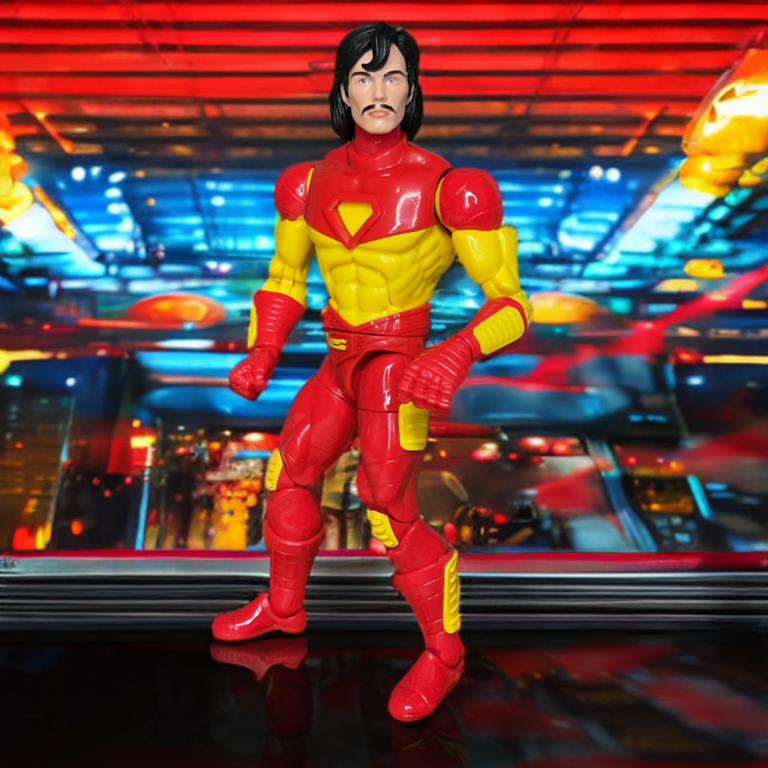
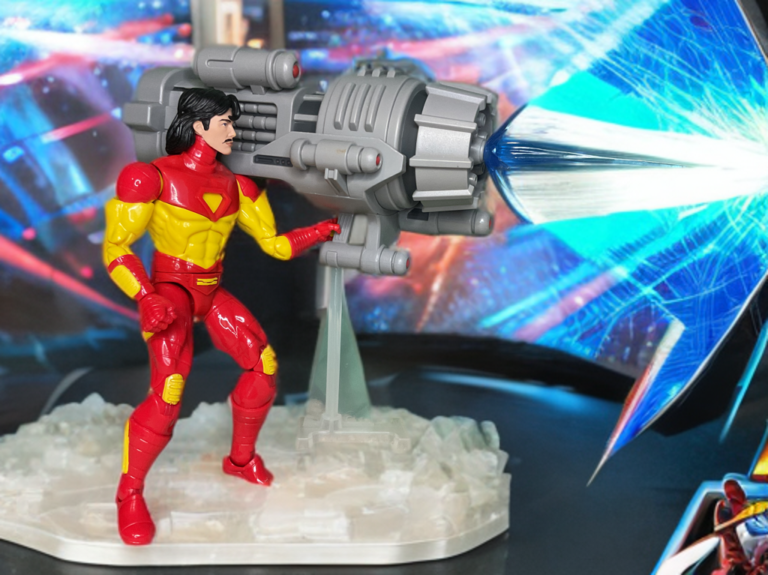
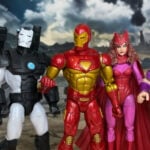
The Marvel Legends Retro Deluxe release isn’t just a repaint; it’s a love letter to the 1994 Marvel Action Hour era. Hasbro has designed this figure to mirror the “evolving range of advanced weaponry” that made the show famous. Here is what makes this specific release a “must-have” for fans of the ’94 series:
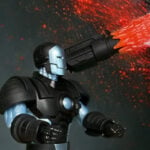
The Signature Plasma Cannon: The centerpiece of this deluxe set is the massive Plasma Cannon accessory. In the show, the Modular Armor was famous for its ability to attach external weapon pods. This accessory captures that “over-the-top” 90s firepower perfectly, allowing fans to recreate the iconic transformation sequences.
The Unmasked “90s Tony” Portrait: The inclusion of the alternate head is a direct nod to the first season’s character design. It features Tony Stark’s signature longer hair (the “mullet” era), capturing the specific aesthetic of the Stark portrayed in the Force Works war room.
The “Retro” Packaging: Part of the appeal lies in the Kenner-inspired blister card. The bright colors and character art evoke the original Toy Biz line from 1994, triggering instant nostalgia for anyone who walked the toy aisles during the show’s original run.
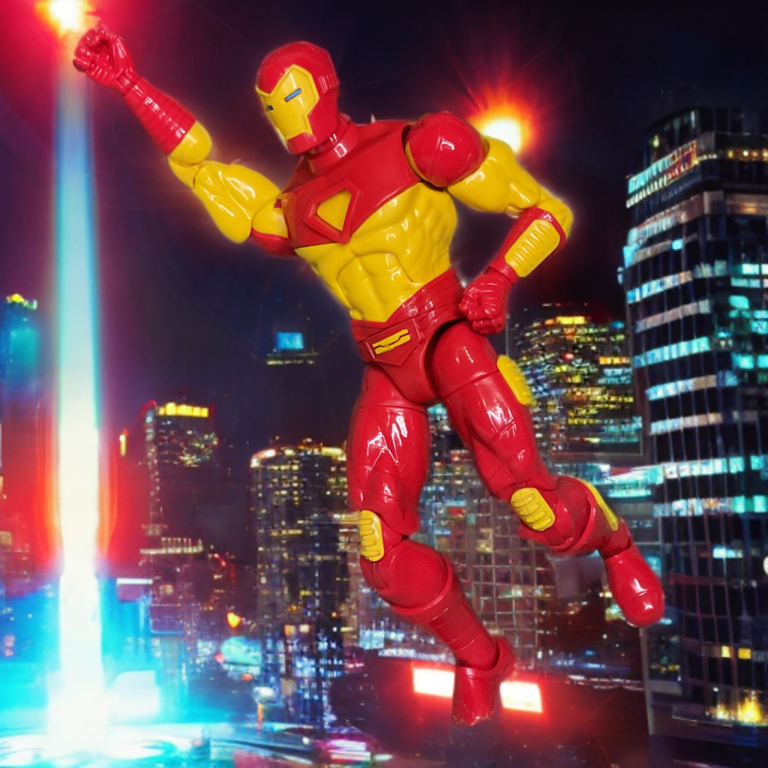
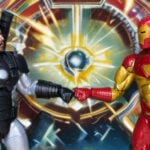
Advanced Posability and FX: To reflect the dynamic action of the series, the figure includes two blue blast FX and multiple alternate hands. Whether you are posing him for a “Uni-Beam” blast or a dual-repulsor flight pose, the figure mirrors the fluid (and sometimes experimental) animation styles of both Season 1 and Season 2.
More Than Just Metal: A Versatile Tool
The 1994 series changed the way we perceived Iron Man’s capabilities. Before this, the armor was often seen as a singular suit. The 1994 “Modular” concept introduced the idea that Tony could swap parts for specific missions—underwater, space, or heavy combat. The Retro Deluxe figure celebrates this “Swiss Army Knife” approach to superheroics, giving collectors the most “complete” version of the 90s Armored Avenger ever produced in the 6-inch scale.
Season 1: Iron Man and the Force Works Era
In its debut season, Iron Man deviated sharply from the “lone hero” trope that had defined the character for decades. Instead of a solo crusade, the show surrounded Tony Stark with Force Works, a high-octane superhero team. This was a masterclass in cross-media promotion: the Force Works comic book spin-off had launched just months prior, in July 1994, following the disbanding of the West Coast Avengers.
In this animated iteration, Tony Stark isn’t just a benefactor or a guy who provides the quinjet; he is the tactical leader and central nervous system of a diverse group of heroes. Operating out of a high-tech island laboratory, the dynamic was less about “secret identities” and more about a rapid-response strike force managing global threats.
The Force Works Roster: A 90s Powerhouse
The team provided a variety of power sets and clashing personalities, creating a “found family” dynamic that was often tested by Tony’s perfectionism:
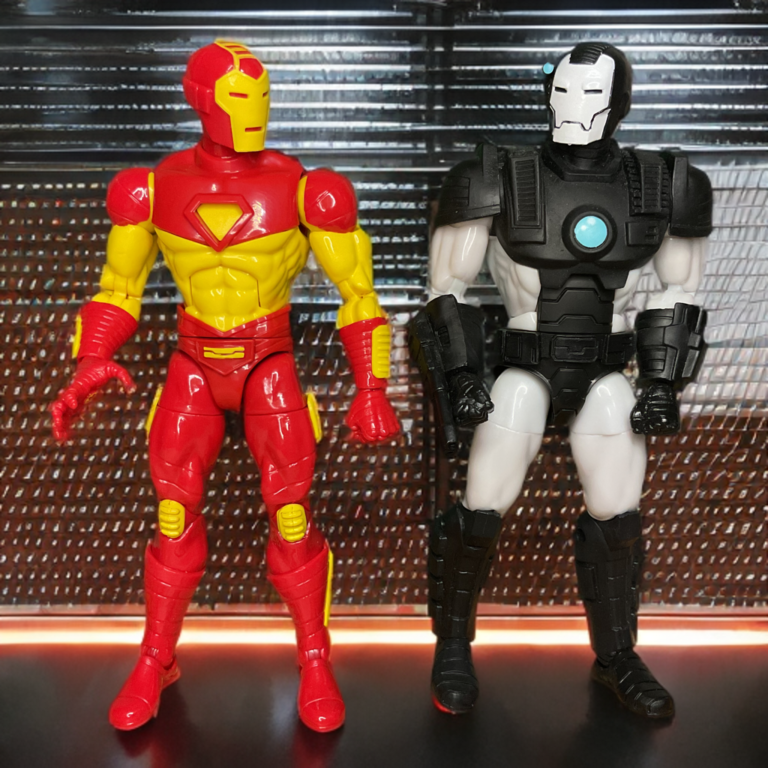
War Machine (James Rhodes): Tony’s best friend and the team’s heavy hitter. Rhodey’s presence ensured that even when Iron Man was managing technical failures, the team had significant tactical firepower. In Season 1, his armor mirrored the bulky, grey-and-black aesthetic that made him a fan favorite.
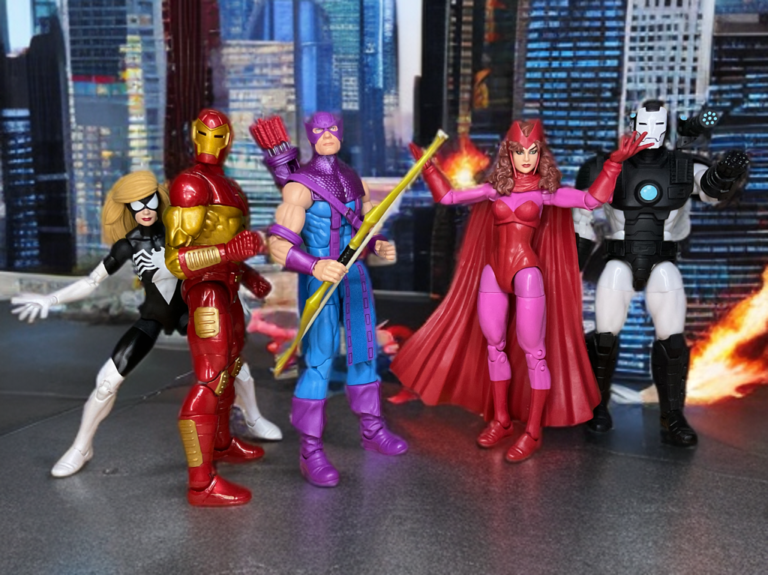
Spider-Woman (Julia Carpenter): Serving as the team’s primary scout and agility expert, Julia utilized her “psi-webs” to trap enemies. She often acted as the moral compass for the group, grounding the team when Tony’s corporate interests or ego got in the way.
Scarlet Witch (Wanda Maximoff): In a departure from her later reality-warping depictions, Wanda utilized “hex bolts” and mystical energy. Her role was crucial in countering the Mandarin’s supernatural artifacts, providing a magical defense against his ten rings.
Hawkeye (Clint Barton): The team’s resident hothead. Sporting his 90s purple-and-blue attire, Clint’s constant friction with Tony Stark provided the season’s primary internal drama. He often questioned Tony’s leadership, representing the “rebel” spirit of the team.
Century: An enigmatic alien powerhouse and a “modular man” from another dimension. His inclusion added a cosmic, high-concept layer to the roster, wielding a massive staff and possessing the ability to “teleport” the team when needed.
The “Toy-etic” Design Philosophy
The inclusion of Force Works wasn’t just for narrative depth; it was a visual feast designed to sell action figures. Every member had a distinct silhouette and color palette, which looked striking during the Season 1 transformation sequences. This era of the show leaned heavily into the “Modular” aspect of the team—often showing the heroes prepping their gear in the “Hall of Armor” before heading into battle. For fans of the 1994 series, Force Works represented the ultimate “What If?”—asking what Iron Man could achieve if he had a dedicated team of specialists at his beck and call 24/7.
The Rogues Gallery: Season 1 Villains
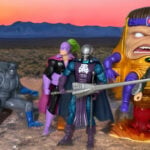
The primary conflict of Season 1 was a classic struggle for power between Iron Man and his arch-nemesis, The Mandarin. This iteration of the Mandarin wasn’t just a lone shadow; he was a megalomaniacal conqueror who sought the ten power rings of alien origin to achieve total world domination. To counter the combined might of Force Works, he surrounded himself with a “Legion of Doom” style collective known as The Mandarin’s Hand.
The Leader: The Mandarin
In a design choice unique to the 1990s, the Mandarin was portrayed with green skin, an aesthetic meant to emphasize his mystical corruption and alien influence. Operating from his hidden mountain fortress, his rivalry with Tony Stark was both personal and ideological. It represented the ultimate clash between ancient mysticism and cutting-edge technology. While Stark relied on logic and engineering, the Mandarin wielded primordial forces, viewing Stark’s armor as a mere toy compared to the power of his rings.
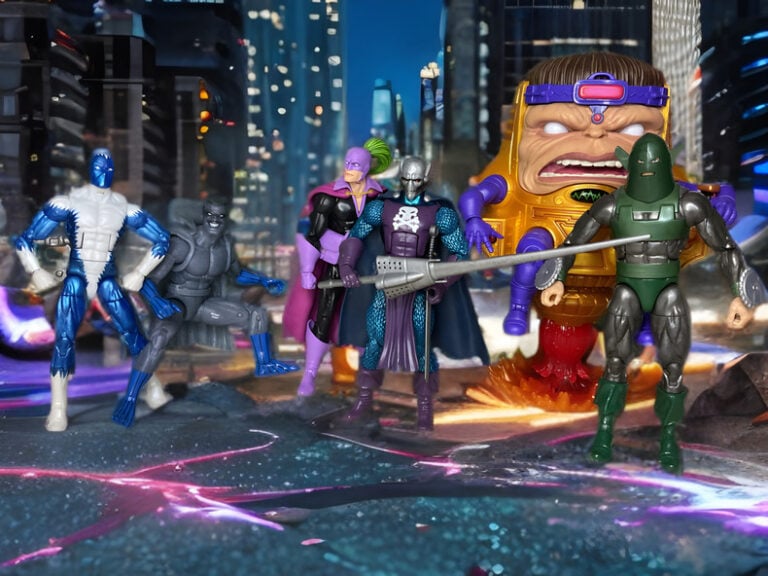
The Mandarin’s Hand (The Minions)
To ensure he could match the numbers of Force Works, the Mandarin employed a massive stable of Marvel villains. Many of these characters were heavily redesigned to fit the 90s aesthetic, making them as “toy-etic” as the heroes they fought:
MODOK: Serving as the Mandarin’s chief scientist, this version of the Mental Organism Designed Only for Killing was scaled down to roughly human size. He functioned as a mobile tactical unit, often clashing with Tony Stark’s own artificial intelligence systems.
Hypnotia: A completely original character created specifically for the 1994 animated series. As the team’s master of illusion and mind control, she provided a psychological threat that the more physical villains couldn’t match.
Dreadknight: A dark, armored warrior who served as the Mandarin’s primary enforcer. He was almost always seen atop his Hellhorse—a robotic, winged black steed—giving the villains a terrifying aerial presence.
- Blacklash: Known for his signature energy-whips, Blacklash was the team’s mid-range specialist. His whips were capable of ensnaring the Modular Armor or War Machine, often grounding the heroes and leaving them vulnerable to the Mandarin’s ring blasts.
Blizzard: Providing the team’s cryokinetic (ice) attacks, Blizzard was a constant environmental threat. He was frequently tasked with freezing Stark’s sophisticated weaponry or creating icy hazards to hinder the mobility of Force Works.
Grey Gargoyle: Used primarily for his ability to turn anything he touched into stone. This led to high-stakes episodes where members of Force Works were temporarily petrified, leaving Iron Man to fight the Mandarin’s Hand alone.
Whirlwind & Living Laser: These two provided the team with speed and energy-based offense. The Living Laser, in particular, was a recurring thorn in Stark’s side, as his light-based powers could often bypass the Modular Armor’s standard shielding.
Fin Fang Foom: Perhaps the most imposing minion, the legendary dragon served as the Mandarin’s ultimate weapon. However, the show added a layer of intrigue by revealing Foom had his own secret agenda, tied to the true origin of the Mandarin’s rings.
The Corporate Threat: Justin Hammer
While the Mandarin’s Hand provided the physical threat, Justin Hammer acted as the treacherous corporate shadow. Hammer frequently funded the villains and attempted to sabotage Stark Enterprises from the boardroom. This dual-threat structure meant that Tony Stark had to fight a war on two fronts: one in the skies of the city and one in the financial markets of the world.
The Mission Logs: Iron Man Season 1 Episode Guide
The debut season of Iron Man (1994) consisted of 13 high-stakes episodes that introduced the world to the “Modular Armor” and the shifting alliances of Force Works.
| No. | Episode Title | Original Air Date | Briefing & Intel |
| 1 | “And the Sea Shall Give Up Its Dead” | Sept 24, 1994 | Hypnotia sinks a nuclear sub, only for the crew to return a year later as radioactive zombies under the Mandarin’s command. |
| 2 | “Rejoice! I Am Ultimo, Thy Deliverer” | Oct 1, 1994 | The Mandarin and Justin Hammer unearth the ancient giant robot Ultimo, using a control device to pit the titan against Tony Stark. |
| 3 | “Data In, Chaos Out” | Oct 8, 1994 | A global financial meltdown is orchestrated by the Mandarin, who successfully brainwashes War Machine into attacking his own leader. |
| 4 | “Silence My Companion, Death My Destination” | Oct 15, 1994 | The Mandarin uses Julia Carpenter’s daughter, Rachel, as bait in a trap that tests the limits of Iron Man’s failing power reserves. |
| 5 | “The Grim Reaper Wears a Teflon Coat” | Oct 22, 1994 | After MODOK’s forces hijack a top-secret Stark Enterprises stealth jet, Tony must intercept the “Grim Reaper” before it reaches the Mandarin. |
| 6 | “Enemy Without, Enemy Within” | Oct 29, 1994 | In a rare moment of vulnerability, MODOK seeks Iron Man’s help to save his wife, Alana Ulanova, from the Mandarin’s recklessness. |
| 7 | “The Origin of the Mandarin” | Nov 5, 1994 | While investigating an attack on a Stark oil rig, Spider-Woman uncovers a “black box” that details the Mandarin’s rise to power and his discovery of the rings. |
| 8 | “The Defection of Hawkeye” | Nov 12, 1994 | Tensions within Force Works boil over as the team begins to suspect that the hot-headed Hawkeye has sold them out to the enemy. |
| 9 | “Iron Man to the Second Power, Part 1” | Nov 19, 1994 | Technology is turned against its creator when MODOK successfully engineers a lethal Iron Man duplicate to infiltrate the team. |
| 10 | “Iron Man to the Second Power, Part 2” | Nov 26, 1994 | Force Works races against time to find the genuine Tony Stark as the Living Laser makes his debut to bolster the Mandarin’s forces. |
| 11 | “The Origin of Iron Man, Part 1” | Dec 3, 1994 | A flashback journey into Tony’s past reveals his captivity and the desperate creation of the first Iron Man suit alongside Yinsen. |
| 12 | “The Origin of Iron Man, Part 2” | Dec 10, 1994 | While Tony struggles to finalize his armor repairs in the wild, Force Works and the Mandarin’s minions engage in a frantic search to reach him first. |
| 13 | “The Wedding of Iron Man” | Dec 17, 1994 | The season finale takes a personal turn as Tony Stark and Julia Carpenter (Spider-Woman) prepare to walk down the aisle—but the Mandarin has other plans. |
Quick Trivia for Fans
Note: Fans often point to the “Origin” episodes (11 and 12) as the highlights of the season, as they provided the foundation for the cinematic origin story many would recognize years later in the 2008 film.
The Great Pivot: Transitioning to Season 2
The transition between the first and second seasons of Iron Man is one of the most drastic tonal shifts in Western animation history. Following a first season that many felt was too “toy-centric” and campy, Marvel made the bold decision to fire the original production team and bring in Tom Tataranowicz to oversee a complete creative overhaul.
The transition was immediate and jarring for viewers. The bright, Saturday-morning aesthetics were replaced by a grim, cinematic atmosphere. The most symbolic change was the disbanding of Force Works. In the Season 2 premiere, “The Beast Within,” the team splinters due to Tony’s increasing secrecy and the weight of their constant failures. This left Tony Stark as a more isolated figure, supported only by the core duo of War Machine and Spider-Woman, shifting the focus back to the man inside the machine.
Season 2: A Darker, Serialized Evolution
Season 2 abandoned the “villain-of-the-week” formula in favor of long-form, serialized storytelling. The stakes felt real, the character designs were updated to be more mature (famously giving Tony a shorter, more modern haircut), and the animation quality saw a massive spike in detail.
The Search for the Rings: The Mandarin was no longer a bumbling commander. He became a desperate, dangerous hermit traversing the globe to reclaim his lost rings, leading to a much more threatening confrontation in the series finale.
Comic Accuracy & “Armor Wars”: This season leaned heavily into the comics, most notably with an adaptation of the Armor Wars storyline. Tony’s obsession with protecting his technology led him to hunt down both friends and foes, adding a layer of moral ambiguity that was completely absent from Season 1.
A New Tone: The lighthearted banter was replaced by internal monologues and heavy metal—literally. The new opening theme, featuring a heavy guitar riff and Tony forging his armor, set the stage for a show that was finally taking its protagonist seriously.
Season 2: The “Armor Wars” and Serialized Stakes
Season 2 abandoned the “villain-of-the-week” trope for serialized arcs, most notably the legendary Armor Wars. This storyline explored Tony’s obsession with his tech being used by others, leading him into conflict with both the government and his fellow heroes.
| No. | Episode Title | Original Air Date | Briefing & Intel |
| 14 | “The Beast Within” | Sept 23, 1995 | Fin Fang Foom betrays the Mandarin, leading to a dragon-led assault on humanity. Force Works disbands, leaving Tony to face a surviving Mandarin alone. |
| 15 | “Fire and Rain” | Sept 30, 1995 | Tony and Rhodey team up to stop Firebrand, forcing War Machine to confront his deep-seated fear of water to save the day. |
| 16 | “Cell of Iron” | Oct 7, 1995 | A.I.M. attacks the Star Well satellite. Iron Man must defend the orbital station against the high-tech cult and the solar-powered Sunturion. |
| 17 | “Not Far From the Tree” | Oct 14, 1995 | The shocking return of Howard Stark is threatened by A.I.M. and the Crimson Dynamo, who are determined to eliminate Tony’s father. |
| 18 | “Beauty Knows No Pain” | Oct 21, 1995 | Tony’s past haunts him as Madame Masque emerges, seeking to harness the ancient power of Isis to restore her beauty. |
| 19 | “Iron Man, On the Inside” | Nov 4, 1995 | A classic “Fantastic Voyage” scenario: Iron Man must shrink down to enter Hawkeye’s body and save him from internal injuries caused by Ultimo. |
| 20 | “Distant Boundaries” | Nov 11, 1995 | The show takes a cosmic turn as Tony Stark travels to the alien planet Elysian to face intergalactic threats. |
| 21 | “The Armor Wars, Part 1” | Nov 18, 1995 | Discovering his tech has been stolen, Tony goes on a rogue mission to “negate” every armored hero and villain, including Stingray and Beetle. |
| 22 | “The Armor Wars, Part 2” | Nov 25, 1995 | S.H.I.E.L.D. hunts Tony as he continues his crusade against the Ghost and Firepower, risking his reputation for his technology’s security. |
| 23 | “Empowered” | Feb 3, 1996 | A desperate MODOK scours the globe to find one of the Mandarin’s lost rings, hoping to seize power for himself. |
| 24 | “Hulk Buster” | Feb 10, 1996 | Bruce Banner appears in a high-stakes crossover, helping Tony recover a ring while showcasing the debut of the specialized Hulkbuster armor. |
| 25 | “Hands of the Mandarin, Pt. 1” | Feb 17, 1996 | The Mandarin regains his full power and announces his ultimate plan to plunge the world into a new dark age. |
| 26 | “Hands of the Mandarin, Pt. 2” | Feb 24, 1996 | In the series finale, the former members of Force Works reunite for one final battle to save Iron Man and stop the Mandarin forever. |
Fan & Viewer Reactions: A Tale of Two Tones
The reaction to the two seasons of the 1994 Iron Man series remains a point of intense discussion in collector circles and animation archives. It is rare for a show to undergo such a violent internal shift in quality and tone, leading to a polarized legacy that still sparks debate on forums and at conventions today.
Season 1 Reception: The Struggle for Identity
At the time of its release, fans and critics were largely underwhelmed by the show’s debut. While expectations were high following the success of X-Men: TAS, the first 13 episodes felt like a step backward into the campier tropes of 1980s cartoons.
The CGI Repetition: While the 3D-rendered transformation sequences were technically “cutting-edge” for 1994, the novelty wore off quickly. These “stock footage” segments often ate up significant screen time, making the episodes feel formulaic and repetitive to older viewers who wanted more story and less “toy-etic” padding.
A Crowded Canvas: The primary complaint from longtime Marvel fans was that the inclusion of Force Works crowded out Tony Stark’s own character development. Instead of a deep dive into the psyche of a billionaire inventor, the show often felt like a generic ensemble superhero show where Iron Man was simply the man who paid the bills.
The Villain Problem: The Mandarin’s “Legion of Doom” approach was viewed as a regression. By surrounding the Mandarin with a massive roster of bumbling henchmen, the show stripped him of his menacing, solitary aura, making him feel like a Saturday-morning caricature rather than a global threat.
Season 2 Reception: The “Golden Age” Evolution
The second season is widely regarded as a masterpiece of 90s superhero animation. When the new production team took over, they didn’t just tweak the show—they rebuilt it from the circuits up. This era is now cited alongside Spider-Man: TAS as a pillar of the Marvel Animated Universe.
Visual Maturity: Fans immediately noticed the improved art style. The character proportions became more realistic, the shading more dramatic, and the movement more fluid. The “Modular Armor” finally looked heavy and powerful, rather than like a bright plastic toy.
Emotional Depth and Serialization: The shift to long-form storytelling allowed for genuine character growth. Viewers praised the exploration of Tony’s flaws—his arrogance, his paranoia during the Armor Wars, and the isolation he felt after Force Works disbanded. For many, this was the first time they saw Tony Stark as a complex, vulnerable human being.
The “Definitive” Choice: To this day, when fans look for the “definitive” animated Iron Man, they almost exclusively point to Season 2. The combination of the “shredding” heavy metal theme song and the high-stakes, comic-accurate writing cemented its place in history. It proved that Iron Man didn’t need a massive team to be interesting; he just needed a story that took his technology and his humanity seriously.
The Collector’s Verdict
For those holding the Marvel Legends Retro Deluxe figure, this “Tale of Two Tones” is what makes the collectible so special. The figure bridges the gap—offering the Season 1 “90s Tony” aesthetic with the high-octane weaponry that defined the action of Season 2. It is a physical tribute to a show that, despite its rocky start, eventually found its soul and defined a generation of the Armored Avenger.
Conclusion: The Legacy of ’94
The 1994 Iron Man animated series remains a fascinating time capsule of an era where Marvel was still finding its footing in the media landscape. It gave us the iconic Modular Armor, established War Machine as a household name, and proved that superhero stories could evolve and mature alongside their audience.
Whether you prefer the colorful team-up energy of Season 1 or the gritty, serialized drama of Season 2, there is no denying the show’s impact. With the release of the Marvel Legends Retro Deluxe Iron Man, fans can finally hold a piece of that 1994 history in their hands—a tribute to the show that taught us that even a man of iron has a heart, and even the best heroes sometimes need a reboot.
Disclaimer: Iron Man and all related characters are trademarks of Marvel Characters, Inc. This review is a work of fan commentary and is not affiliated with or endorsed by Hasbro or Marvel.
 English
  Deutsch
  Français
  Português do Brasil
  日本語
日本語  Español
  English (Australia)