

War Machine : L'histoire complète de James Rhodes dans Marvel Comics
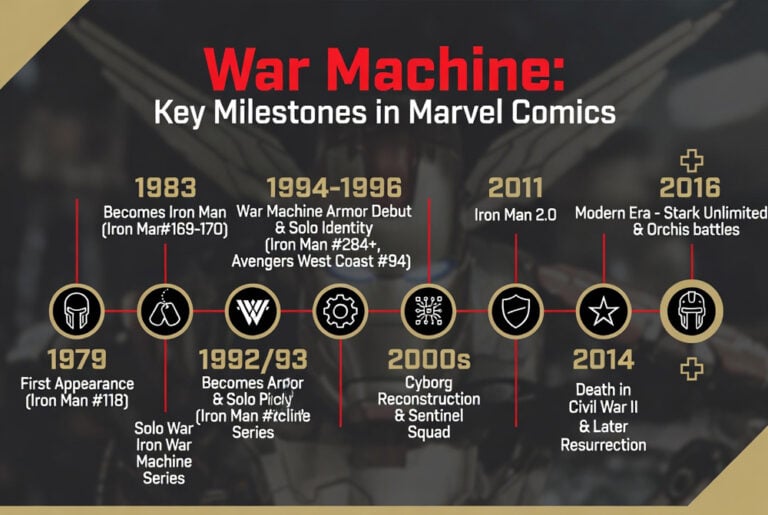
James Rupert “Rhodey” Rhodes stands as one of Marvel Comics’ most enduring and grounded superheroes, an essential character whose story blends military realism, friendship, betrayal, and redemption across decades of canon. Created by the legendary team of David Michelinie, John Byrne, et Bob Layton, Rhodey first appeared in Iron Man #118 (1979). He is far more than a supporting character; he is a decorated U.S. Marine pilot, a skilled aviator-engineer, and Tony Stark’s most trusted confidant. Over time, he evolved into a powerhouse superhero in his own right, one of the few individuals worthy of wielding advanced Stark technology. Unlike Iron Man’s sleek, experimental suits, Rhodey’s armor emphasizes raw military power with heavy weaponry and a no-nonsense combat focus. Throughout his storied career, he has headlined multiple solo series, including War Machine Vol. 1 & 2, Iron Man 2.0, et Iron Patriot, while serving as a cornerstone for teams like the Avengers and Les travaux forcés. His narrative arc is defined by resilience in the face of racism, the psychological weight of duty, and the heavy cost of heroism.
| Attribut | Data |
| Full Name | James Rupert Rhodes |
| Première apparition | Homme de fer #118 (January 1979) |
| Key Creators | David Michelinie, John Byrne, Bob Layton |
| Military Rank | Lieutenant Colonel (USMC) |
| Primary Teams | Avengers, Avengers de la côte ouest, Force Works, Secret Avengers |
| Notable Armor | War Machine Model I, Eidolon Warwear, Iron Patriot |
Early Life in Philadelphia and the Path to Service
The foundation of Rhodey’s noble character was built in the Grays Ferry area of South Philadelphia. Growing up in a churchgoing family led by his parents, Terence and Roberta Rhodes, James faced significant hardship from an early age. He was forced to endure racist abuse from white children who physically attacked him and sought to exclude him from local parks. Paradoxically, as he reached his teenage years, he was targeted by Black gang members who accused him of thinking he was “better than them” simply because he prioritized education and self-improvement over street life. Despite these social pressures, Rhodey remained determined. His childhood was marked by a fierce loyalty to those he cared for, such as his close friend Glenda Sandoval, whom he once defended from bullies at the cost of a stint in juvenile detention.
His drive to escape these environments led him to excel academically, eventually enlisting in the United States Marine Corps where he honed his skills as a helicopter pilot and aviation engineer.
Military Service and the Siancong Connection
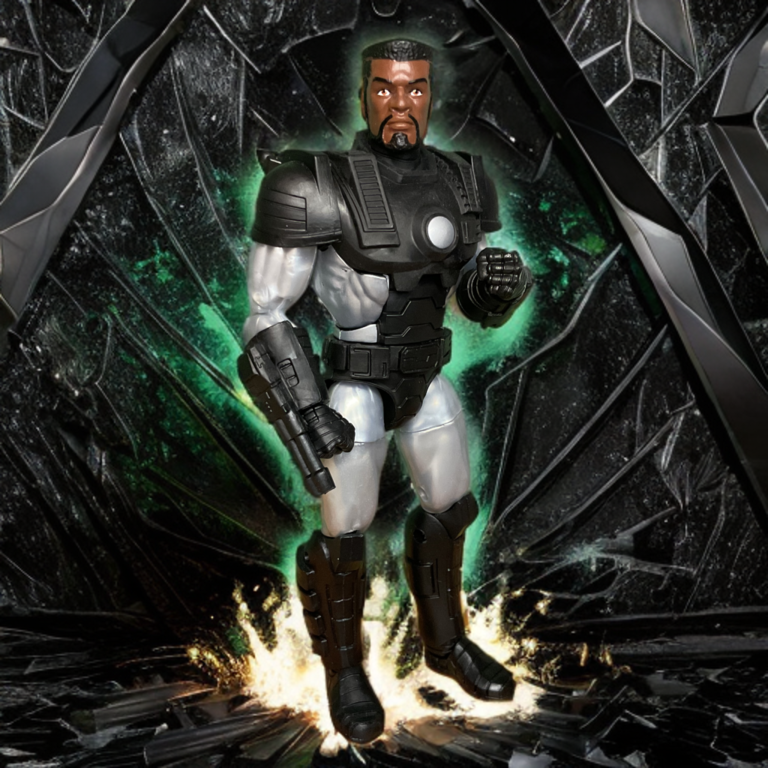
Rhodey’s professional life was forged in the heat of combat during several tours in Southeast Asia. While his origin was initially tied to the Vietnam War, Marvel’s sliding timeline eventually retconned these events to the fictional conflict in Siancong. It was during a pivotal mission behind enemy lines that his helicopter was shot down by rockets. While attempting to repair the craft, he encountered a wounded Tony Stark, who had just escaped captivity in his primitive, early Iron Man armor. This life-or-death encounter forged an instant, unbreakable bond as the two teamed up to fight off enemy forces and steal a helicopter to reach safety at the U.S. embassy. Though he initially declined Tony’s offer of a job, Rhodey eventually joined Stark Industries. Rising to become the chief aviation engineer and head of security, he became the keeper of Tony’s greatest secret. In this role, he proved invaluable, defending the company and the Iron Man legacy against corporate and physical threats from the likes of Roxxon and Justin Hammer.
Stepping into the Iron Man Mantle
The friendship between Stark and Rhodes was tested when Tony’s severe alcoholism left him unable to safely operate the Iron Man suit. In Iron Man #169–170 (1983), Rhodey reluctantly donned the armor to protect Stark’s interests against Magma and the forces of Obadiah Stane. During this era, Rhodey proved his mettle on a cosmic scale, fighting in the original Guerres secrètes and helping to establish the West Coast Avengers. However, the transition was not without a heavy price. The armor’s cybernetic feedback was not calibrated for Rhodey’s brain, leading to agonizing headaches, paranoia, and increasingly erratic behavior. Combined with the PTSD from a near-fatal re-entry into Earth’s atmosphere, the psychological toll became overwhelming. While he eventually stepped down once Tony recovered, the experience forever altered their dynamic and set the stage for Rhodey to find an identity that was entirely his own.
The Birth of the War Machine and Solo Independence
In the early 1990s, the need for a more militarized response to global threats led Tony to create the Variable Threat Response Battle Suit (Model XVI, Mark I). This was the birth of the true War Machine armor, a suit packed with gatling guns and heavy ordnance designed to counter the Masters of Silence. Following Stark’s apparent assassination—which was actually a ruse to place himself in cryogenic suspension—Rhodey inherited Stark Enterprises and took up the mantle of the “Machine.” The subsequent discovery that Tony had faked his death and manipulated his closest friend led to a deep sense of betrayal. Rhodey severed ties, adopted the War Machine codename officially, and embarked on a solo career from 1994 to 1996. During this period, he operated as a global peacekeeper, tackling human rights issues and revolutions in nations like Imaya. He even briefly utilized the alien Eidolon Warwear armor and engaged in several brutal clashes with Stark before they reached a partial reconciliation.
Cybernetic Rebirth and Global Crisis
The 2000s brought further trauma and transformation for James Rhodes. After investigating the tragic death of his sister, Jeanette, Rhodey took a leadership role as the commander of Sentinel Squad ONE. However, a devastating terrorist bombing left him critically injured, resulting in the loss of his limbs and facial features. In an act of radical preservation, Stark rebuilt him as a cyborg, integrating advanced prosthetics directly into his physiology.
As a man-machine hybrid, he piloted massive satellite armor to repel Skrull invaders during the Invasion secrète and battled the corporate corruption of the Le règne des ténèbres era. During these conflicts, he even absorbed the Ultimo virus to stop its spread. Eventually, Rhodey was able to regain his full humanity by transferring his consciousness into a healthy clone body, allowing him to serve in the Heroic Age as “Iron Man 2.0” and the Iron Patriot, where he commanded drone forces and survived the catastrophic events of Avengers contre X-Men.
Death, Resurrection, and the Modern Era
One of the most significant schisms in Marvel history was ignited by Rhodey’s death in Civil War II (2016). While in a relationship with Carol Danvers (Captain Marvel), Rhodey was killed by Thanos during an ambush at Project P.E.G.A.S.U.S. This loss became the catalyst for the conflict between Iron Man and Captain Marvel over the use of precognitive visions. Stark eventually succeeded in resurrecting his friend, though the process left Rhodey with a profound phobia of being encased in armor—a hurdle he eventually overcame using bio-pod DNA tech. In the modern era, he has rejoined Stark Unlimited as a military liaison, fighting against the likes of Korvac and the Orchis organization. He continues to prove that his true heroism comes from his character; whether he is overcoming childhood trauma in Philadelphia or commanding a drone army, James Rhodes remains the “man inside the machine” whose unbreakable resilience defines the very best of the Marvel Universe.
The Independent Path: Worldwatch and the Eidolon Warwear
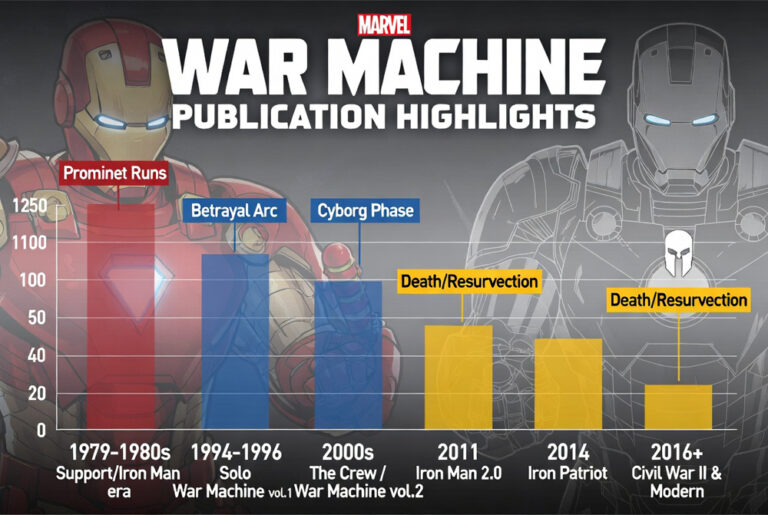
The dawn of Rhodey’s independent era was marked by the high-stakes drama of Iron Man #284 (1992), when Tony Stark’s apparent assassination forced Rhodey into the dual roles of CEO of Stark Enterprises and the primary pilot of the newly minted Variable Threat Response Battle Suit. This Model XVI, Mark I armor served as the definitive blueprint for the War Machine identity, trading Stark’s usual agility for a devastating array of gatling guns, missiles, and reinforced plating. The revelation that Tony had orchestrated his own “death” caused a rift so deep that Rhodey severed all professional ties to operate as a solo agent. During his influential 1994–1996 solo series, which spanned twenty-five issues, he aligned himself with the human-rights organization Worldwatch. In this capacity, he recruited allies like Sheva Joseph and intervened in global crises such as the revolution in Imaya. Although he temporarily rejoined the West Coast Avengers and navigated a personal relationship with Rae LaCoste, his tension with Stark remained explosive.
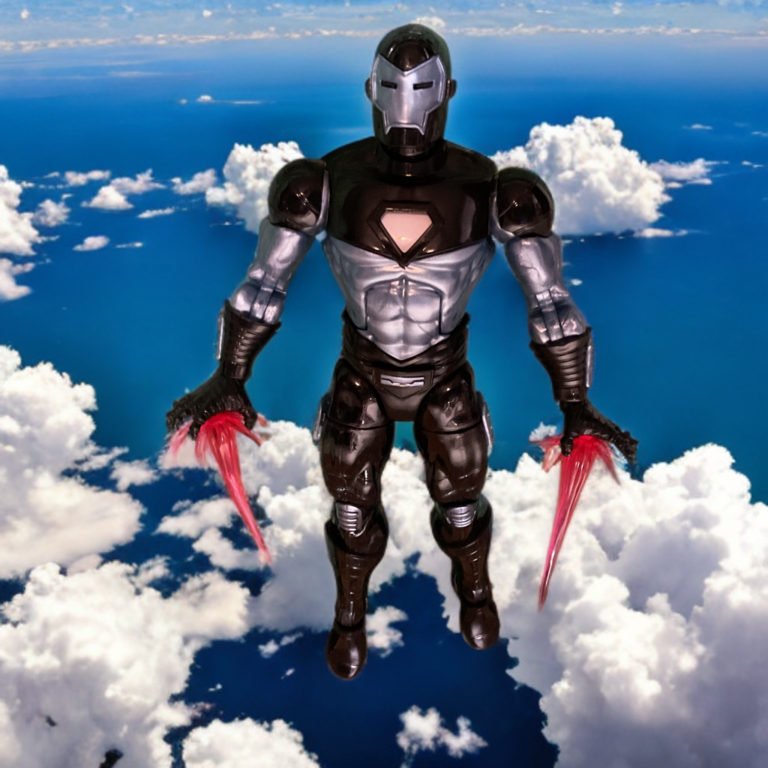
This reached a peak in War Machine #8 et Iron Man #310, where the two friends engaged in a brutal, no-holds-barred draw. This era also saw Rhodey utilize the bizarre, biological Eidolon Warwear armor to combat the Mandarin and even time-traveling Nazis, a journey that concluded with him heroically sacrificing the alien suit to ensure Stark’s proprietary technology stayed out of the hands of predatory corporations.
From Salvage Yards to the Cyborg Reconstruction
Following a brief retirement spent running a salvage company, Rhodey reconciled with Tony and redirected his tactical focus toward investigative justice. This transition was highlighted in the 2003 series The Crew, where he looked into the suspicious death of his sister, Jeanette, and exposed deep-seated urban corruption. His expertise as a military instructor eventually led him to command Sentinel Squad ONE in the wake of the first Superhuman Civil War. However, his service nearly cost him everything when a terrorist bombing left him in a state of critical physical ruin, necessitating the replacement of his limbs and much of his face with advanced prosthetic components.
As a cyborg, Rhodey became a literal extension of the Iron Man legacy, a transformation that allowed him to pilot a colossal satellite-based armor system during the 2008 Secret Invasion to repel the Skrull fleet. During the subsequent Le règne des ténèbres period, he functioned as a one-man army against corrupt entities like Roxxon and Eaglestar. He demonstrated incredible fortitude by absorbing the Ultimo virus to dismantle criminal networks, eventually undergoing a complex mind-transfer into a healthy clone body to reclaim his humanity and shed his cybernetic constraints.
The Heroic Age and the Burden of Global Security
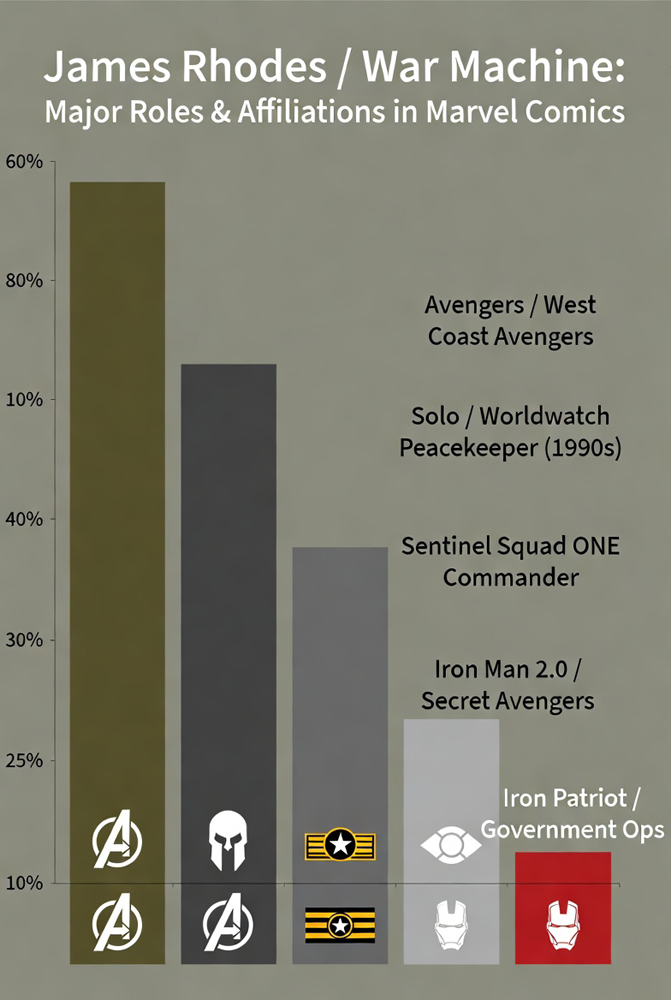
Le Heroic Age signaled a return to formal team dynamics for Rhodey, though his methods remained distinct and strategically focused. He proved his technical brilliance by using the Rescue armor to reboot Tony Stark’s mind following the events of World Most Wanted. Transitioning into the role of a government-sponsored operative known as Iron Man 2.0, he utilized upgraded stealth-based War Machine suits and integrated drone control systems while serving with the Secret Avengers. His resilience was tested on suicide missions against the Phoenix Force during the Avengers contre X-Men crossover, and he was even forced to fake his own death to gain a tactical advantage against the Mandarin. Under the moniker of “the Pilot,” he commanded sentient Iron Patriot drones, further bridging the gap between human intuition and autonomous military technology. Whether serving as an Avenger under S.H.I.E.L.D. or leading drone strike teams, Rhodey remained a vital liaison between the superhuman community and the global military industrial complex.
Modern Resurrection and the Battle Against Orchis
The tragic ambush at Project P.E.G.A.S.U.S. during Civil War II (2016) remains one of the most impactful moments in Rhodey’s history, as his death at the hands of Thanos fractured the superhero community and left Tony Stark in a state of inconsolable grief. However, Rhodey’s story did not end with his sacrifice; Stark eventually utilized a system-wide reboot to facilitate his resurrection. Rejoining Stark Unlimited as an Armed Forces liaison, Rhodey had to navigate the profound psychological trauma of his death, eventually overcoming an intense phobia of his own armor through the use of bio-pod DNA correction. His recent history has seen him at the forefront of AI-driven conflicts, fighting Ultron and joining forces with Les travaux forcés, as well as participating in the cosmic struggle against Korvac. Most recently, Rhodey’s strategic mind was put to the ultimate test after Feilong’s hostile takeover of Stark Unlimited.
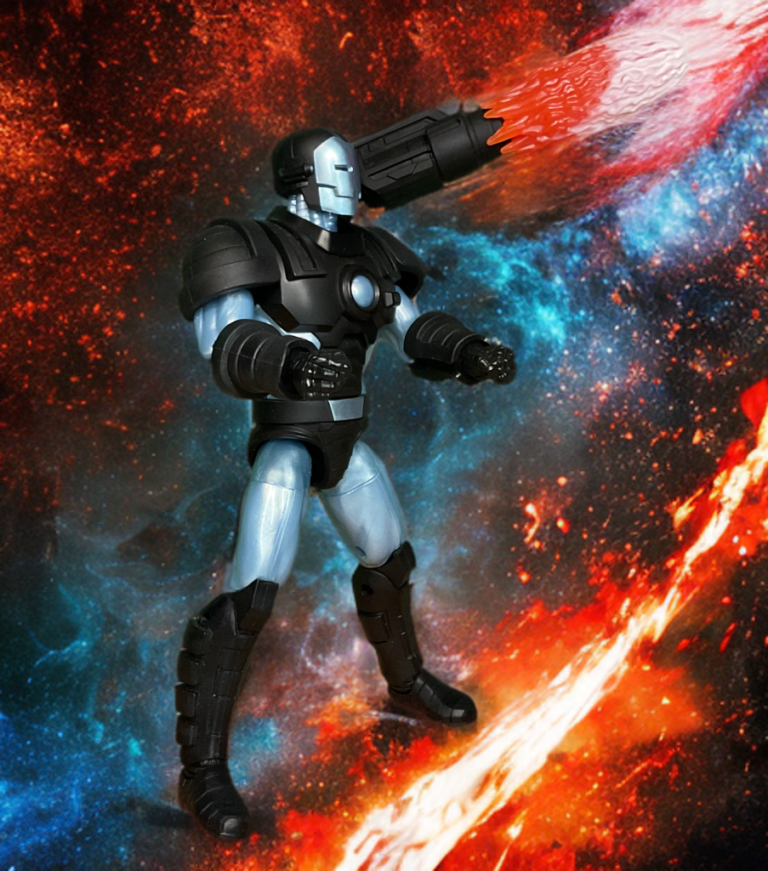
Despite being imprisoned, he managed a daring escape using miniaturized armor tech and successfully rallied a diverse army—including reformed villains—to stand as the final line of defense against the extremist forces of Orchis, cementing his legacy as a leader who can find hope in the darkest theaters of war.
Cinematic and Animated Legacy: Rhodey Across Media
Beyond the printed page, James Rhodes has become a fixture of Marvel animation, frequently portrayed as Tony Stark’s Ffessential ally or a formidable independent agent. His most prominent animated tenure began with the 1994 Iron Man animated series, where he was a central member of the Force Works team. Voiced initially by James Avery and later by Dorian Harewood, this version of Rhodey added significant emotional depth to the character by exploring his struggle with claustrophobia—a trauma rooted in a near-drowning incident while encased in his armor. Throughout two seasons, he balanced high-stakes combat against the Mandarin and Ultimo with his role as Tony’s emotional anchor. His reach in the 1990s extended to non-speaking cameos in X-Men : The Animated Series and a voiced appearance in Spider-Man : The Animated Series, as well as a notable team-up in The Incredible Hulk episode “Helping Hand, Iron Fist.“
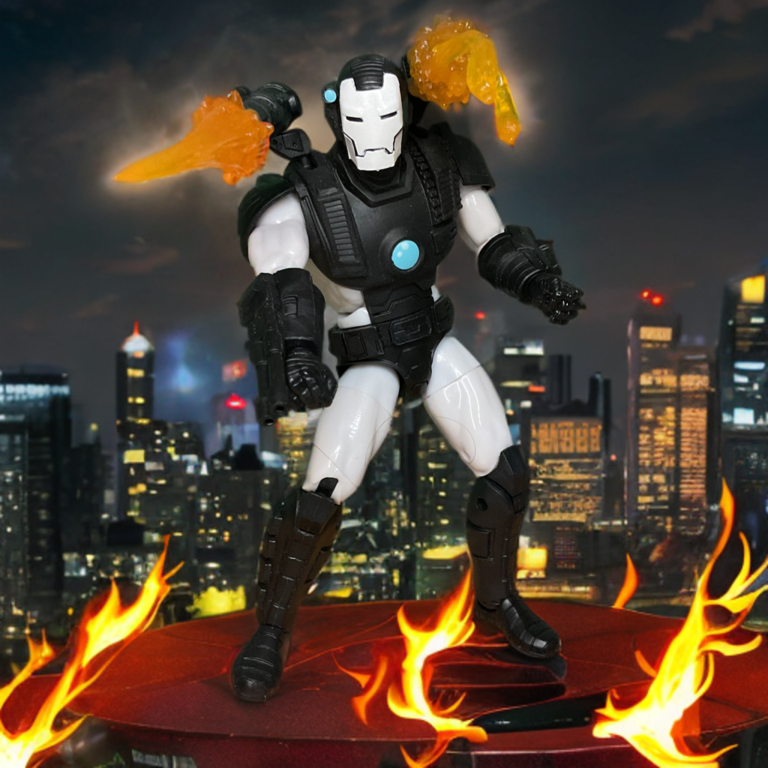
The 21st century brought diverse reinterpretations of the character, notably the teenage version of Rhodey in Iron Man: Armored Adventures (2009), voiced by Daniel Bacon, who discovers a combat-heavy War Machine suit to support a young Tony Stark. En Les Avengers : Les plus grands héros de la Terre, Bumper Robinson voiced Rhodey as a founding member of the New Avengers, while international audiences saw him in Marvel Disk Wars: The Avengers et L'émission Super Hero Squad. Rhodey’s cinematic presence was further solidified in animated features like The Invincible Iron Man (2007) and the high-octane Iron Man: Rise of Technovore (2013), each emphasizing his unique blend of military discipline and firepower.
The Arsenal: A Deep Dive into War Machine Armor Variants
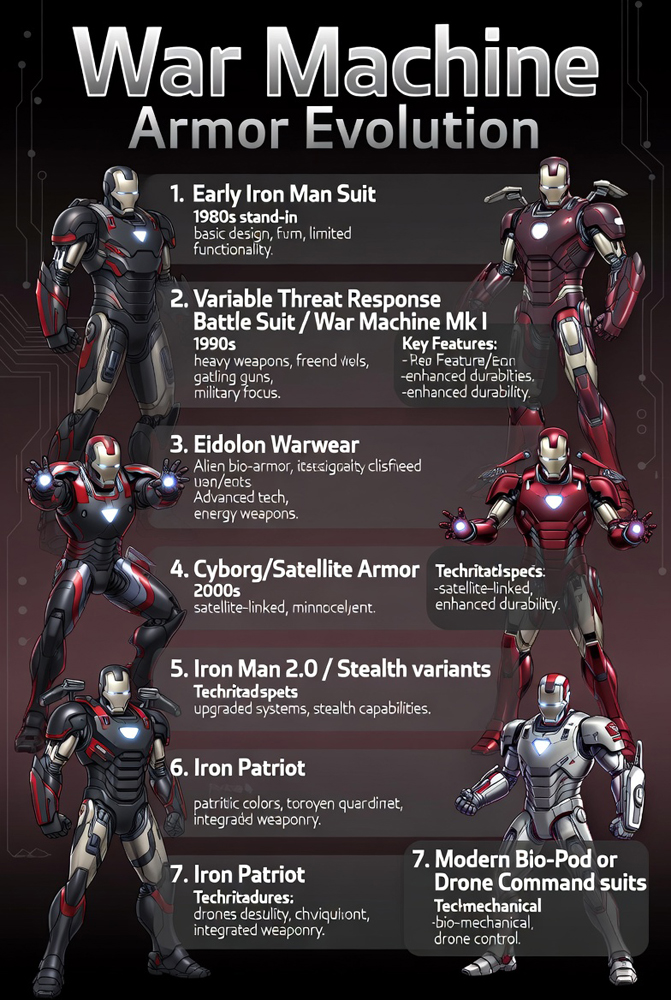
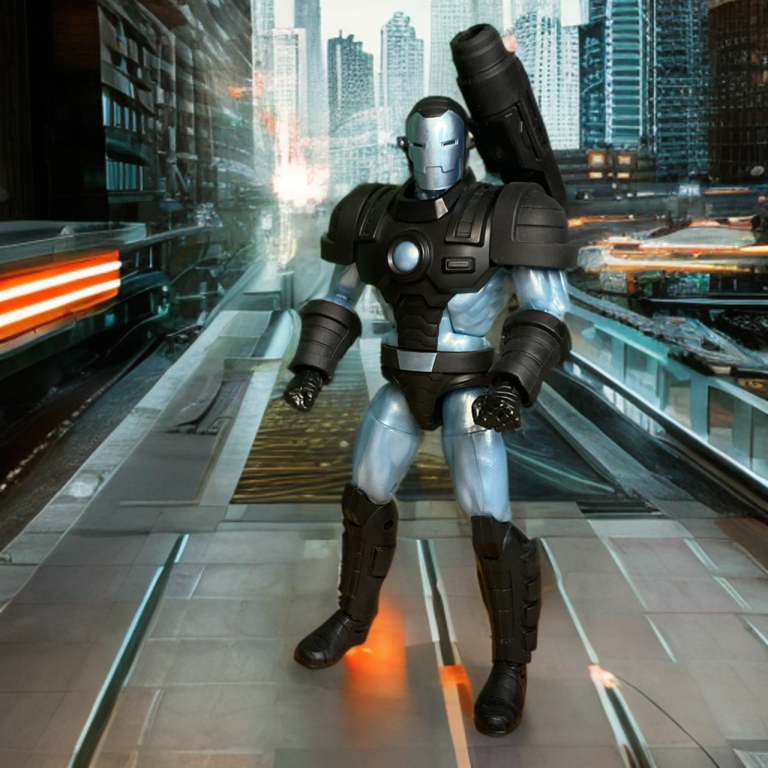
The evolution of Rhodey’s equipment reflects a militarized departure from standard Iron Man technology. While Tony Stark’s suits often focus on sleek versatility and experimental science, the War Machine armors are designed for battlefield dominance and raw ordnance, earning them the reputation of being a “tank in humanoid form.” The signature aesthetic—a no-nonsense black-and-silver or gunmetal gray—complements a combat loadout featuring shoulder-mounted gatling guns, missile pods, and reinforced plating. These suits have consistently adapted to Rhodey’s personal history, from his time as a government operative to his years as a cybernetic survivor.
The foundation of this legacy is the Classic War Machine Armor (Model I / Iron Man Model XI), which debuted in Iron Man #282 (1992). Originally designed as the Variable Threat Response Battle Suit to counter the Masters of Silence, it became Rhodey’s primary identity following Stark’s apparent death. This suit defined his solo career, sacrificing agility for superior durability and a massive weapons array, including wrist-mounted machine guns and a powerful unibeam. When this armor was lost or damaged, Rhodey turned to transitional variants like the Eidolon Warwear, an organic extraterrestrial biological suit that was highly adaptive but notoriously unstable. During his tenure with Sentinel Squad ONE, he utilized the Stanetech/Initiative Armor, a bulkier, tactical version integrated with government-backed Sentinel technology.
As Rhodey’s physical body changed, so did his tech. The Cyborg-Integrated Armor era saw the suits partially merged with his neural system, allowing for direct mental control and near-instant deployment after his catastrophic injuries. In more recent years, he has operated with the Iron Man 2.0 suit—a stealth-heavy variant with advanced drone-command capabilities—and various Iron Patriot iterations. While the latter featured a patriotic red-white-and-blue scheme often used for government propaganda, they retained the devastating firepower of the original War Machine. The most modern iterations include Après la résurrection suits that utilize bio-pod DNA tech to help Rhodey manage his psychological trauma, alongside massive satellite-style armors and hybrid drone swarms designed to counter global threats like Orchis or Ultron.
Evolution and Tactical Trade-offs
The trajectory of Rhodey’s arsenal highlights a consistent theme of power versus psychological cost. His suits allow for incredible feats, such as lifting over 100 tons and achieving flight speeds exceeding Mach 2, yet they carry inherent vulnerabilities. The reliance on heavy external ordnance makes him a target for hacking and electromagnetic pulses (EMPs), while the “man inside the machine” must constantly balance the emotional weight of warfare with the physical strain of high-impact combat. In animation and the broader MCU, these technical roots remain consistent: even when the armor evolves into the nano-tech or bunker-buster variants seen in modern films, the core philosophy remains. James Rhodes is not a genius inventor seeking to disrupt the status quo, but a disciplined soldier using the ultimate tool to protect it. Whether in a solo gritty comic run or a global animated team-up, the War Machine serves as a testament to the power of duty backed by overwhelming force.
The Enduring Brotherhood: Tony Stark and James Rhodes
Le relationship between Tony Stark and James Rupert “Rhodey” Rhodes stands as one of the most complex and heartfelt friendships in the Marvel Universe. It is a bond forged in the fires of combat, tested by extreme ego and perceived betrayal, and repeatedly rebuilt through unwavering loyalty and mutual respect. Within this dynamic, Rhodey serves as Tony’s essential moral anchor—a disciplined Marine pilot who possesses the unique authority to call out Stark’s recklessness while remaining ready to suit up and fight by his side. Their history is a blend of brotherly banter, profound trust, and the occasional explosive clash, representing a partnership where Tony has repeatedly entrusted Rhodey with his greatest legacy: the Iron Man mantle.
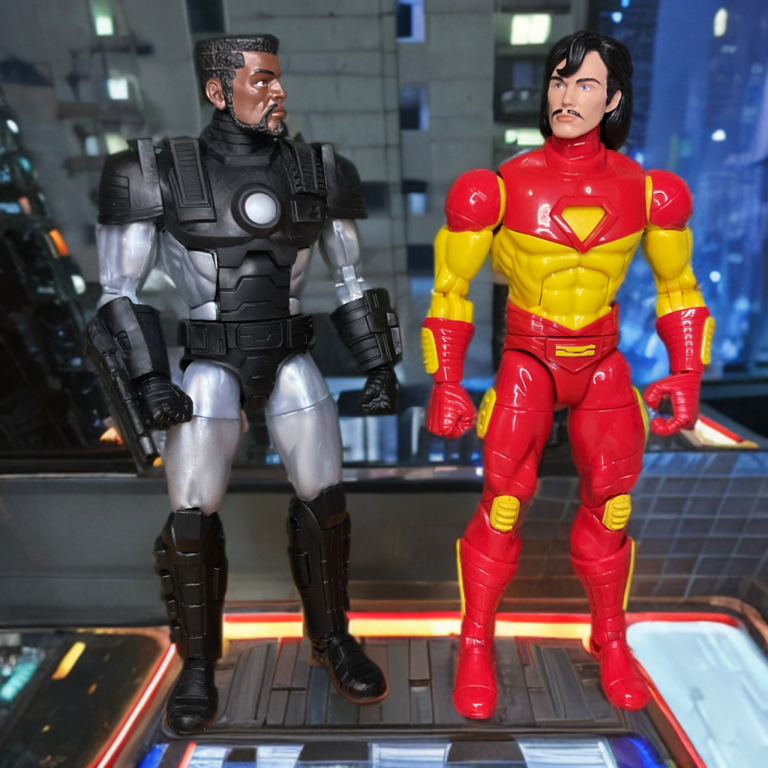
Battlefield Origins and the Iron Man Legacy
This legendary brotherhood began in the jungles of Siancong, a setting that serves as Marvel’s modern stand-in for Vietnam-era conflicts. When a wounded Tony Stark, encased in his primitive, early Iron Man armor, encountered the downed Marine pilot, they formed an instant life-or-death connection. Together, they fought off enemy forces, commandeered a helicopter, and escaped to the safety of the U.S. embassy. This experience led Tony to offer Rhodey a position as his personal pilot at Stark Industries—a role Rhodey eventually accepted, rising to become the chief aviation engineer and Tony’s most trusted confidant. As one of the first people to learn Stark’s secret identity, Rhodey became a stabilizing force that balanced Tony’s self-destructive tendencies with military discipline and no-nonsense honesty.
The depth of this trust was most evident during the 1980s when Tony’s severe alcoholism left him incapacitated. Stark turned to Rhodey to assume the role of Iron Man, a mantle Rhodey carried through the original Guerres secrètes and into the formation of the West Coast Avengers. Although the armor’s uncalibrated cybernetic feedback eventually caused Rhodey significant physical and mental strain, leading to temporary conflict between the two, the era cemented their bond. Tony had trusted only one man to uphold his heroic legacy, and Rhodey had proven himself worthy of that burden.
Betrayal, Independence, and the War Machine Era
The relationship faced its greatest strain in the early 1990s following the creation of the heavily armed Variable Threat Response Battle Suit. When Rhodey discovered that Tony had faked his own death—leaving Rhodey to manage the fallout of Stark Enterprises while in cryogenic suspension—the sense of manipulation felt like a total betrayal. Rhodey severed ties to operate independently as War Machine, leading to their most intense confrontation in War Machine #8 et Iron Man #310. This was a brutal, no-holds-barred draw that proved Rhodey could match Stark blow-for-blow. However, their shared history and common enemies, such as the Mandarin and Ultimo, eventually led to a hard-won reconciliation. Tony learned to respect Rhodey’s independence, while Rhodey realized he could never fully abandon the man who was essentially his brother.
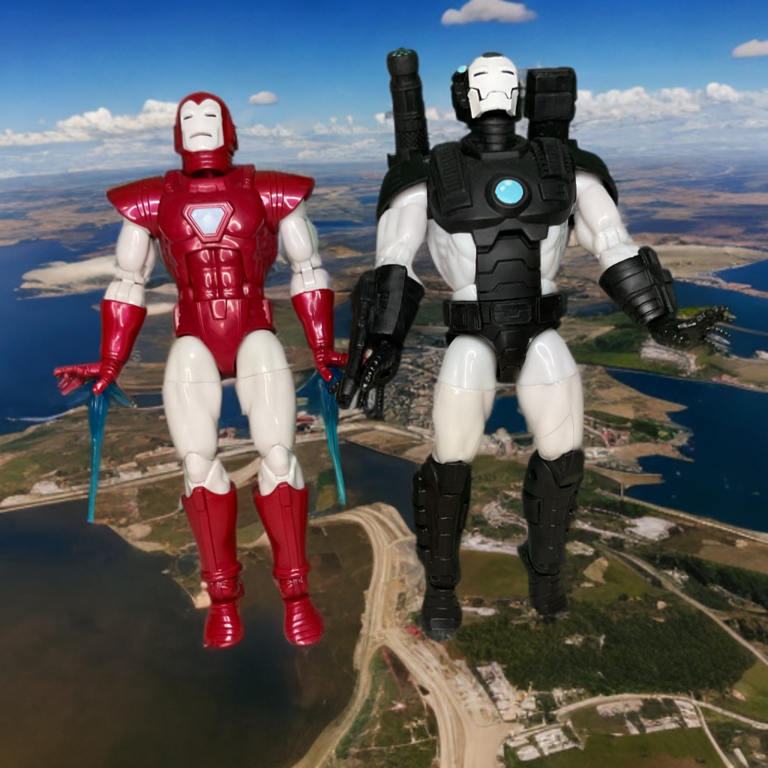
Sacrifice and the Resilience of Found Family
In later years, their fates became even more intertwined. Following a terrorist attack that left Rhodey critically injured, Tony utilized his genius to rebuild his friend with cybernetic enhancements. Rhodey continued to support Stark through the ideological rifts of the first Civil War and the global chaos of the Secret Invasion. He even went so far as to reboot Tony’s brain using the Rescue armor when Stark’s mind was wiped. The ultimate test of this bond occurred during Civil War II, when Rhodey’s death at the hands of Thanos shattered Tony’s world. The sheer magnitude of Tony’s grief fueled the resulting schism with Captain Marvel, underscoring that Rhodey was the emotional heart of Stark’s life. Tony’s eventual resurrection of his friend allowed them to rejoin forces against modern threats like Orchis, proving that their partnership is a cornerstone of the Marvel landscape.
This brotherhood is equally celebrated in the 1994 Iron Man animated series, where Rhodey is portrayed as the steadfast head of security who balances Tony’s ego with warmth and humor. Whether it is Tony throwing a surprise party for Rhodey or Rhodey letting out an anguished “TONYYYYYY!” when he fears for his friend’s life, the show highlights a true partnership of equals. Tony provides the visionary innovation, while Rhodey provides the integrity and blunt honesty required to keep that vision grounded. Ultimately, the saga of Tony Stark and James Rhodes proves that the strongest alliances in the Marvel Universe aren’t built on repulsors and missiles, but on the men inside the suits who refuse to let each other fall. Their story remains a testament to the fact that true friendship can survive the heaviest armor and the deepest wounds.
Conclusion
From a loyal Marine pilot to Iron Man successor, solo War Machine, cybernetic survivor, and resurrected Avenger, James “Rhodey” Rhodes embodies resilience, loyalty, and moral complexity in the Marvel Universe. His bond with Tony Stark—marked by friendship, betrayal, and reconciliation—anchors one of comics’ greatest duos, while his independent heroism and military ethos set him apart. Despite losses, deaths, and identity struggles, Rhodey remains a symbol of duty and firepower. Whether suiting up in classic black-and-silver War Machine armor or piloting drone legions, he proves that true strength lies not just in technology, but in the man inside the machine. His ongoing saga continues to evolve with new threats in the modern Marvel landscape.
 English
  Deutsch
  Français
  Português do Brasil
  日本語
日本語  Español
  English (Australia)