

Lost World of the Warlord Toys: Remco’s 1982 Vintage Quest
In the early 1980s, toy shelves brimmed with muscle-bound warriors clashing in realms of magic and might, where imagination ruled and plastic heroes stood tall against impossible odds. Amid this surge of fantasy fervor, Remco unveiled the Lost World of the Warlord line in 1982, a collection that captured the essence of DC Comics’ sprawling saga. Drawing from Mike Grell’s creation, these 5.5-inch figures transported kids to Skartaris, a hidden world inside Earth where eternal sunlight illuminated endless adventures.
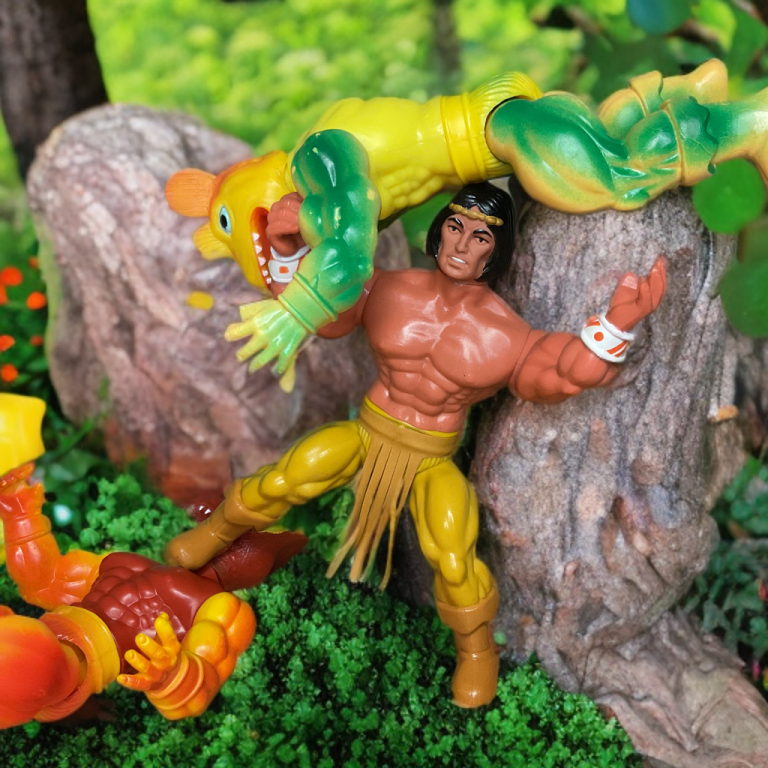
Compatible with other lines like Masters of the Universe and Pirates of the Galaxseas, they invited crossovers that turned playtime into sprawling epics. What made this short-lived series special was its blend of comic-book lore with tangible, poseable excitement—figures that weren’t just toys but portals to stories of valor, betrayal, and survival. Collectors today chase these rarities, reminiscing about the thrill of unboxing a hero ready to charge into battle, sword or pistol in hand.
Let’s start with the centerpiece of the line, the figure who embodied the clash of modern grit and ancient heroism.
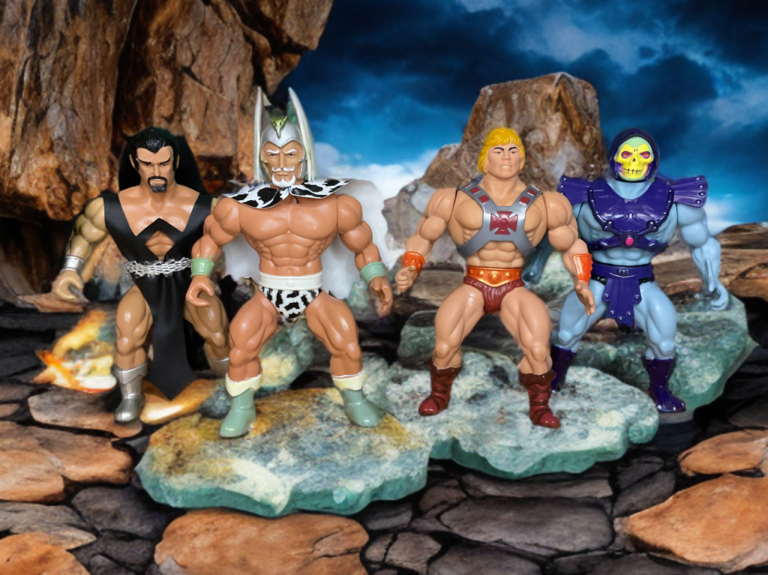
While Remco was building Skartaris, Mattel was expanding the cosmos with MOTU Cosmic Enforcers.
1. Warlord
Travis Morgan, known as the Warlord, stands as the unbreakable heart of Skartaris’ tales. A U.S. Air Force pilot during the Vietnam era, Morgan’s journey began when his SR-71 Blackbird veered off course over the North Pole, plunging him through a rift into the inner world. Emerging in a land where dinosaurs roamed alongside medieval kingdoms, he adapted swiftly, trading his flight suit for fur-trimmed armor and a winged helmet that became his signature. Armed with his trusty .44 AutoMag pistol—a relic from his old life—he supplemented it with a sword forged in the fires of necessity. Morgan’s exploits involved forging alliances, toppling tyrants, and navigating the treacherous politics of Shamballah, the city he helped defend. His leadership shone in battles against sorcerous threats, where his tactical mind, honed in modern warfare, gave him an edge over barbaric foes. Time and again, he proved that courage wasn’t about brute strength but strategic resolve, often rallying disparate tribes against common enemies like invading armies from shadowed realms.
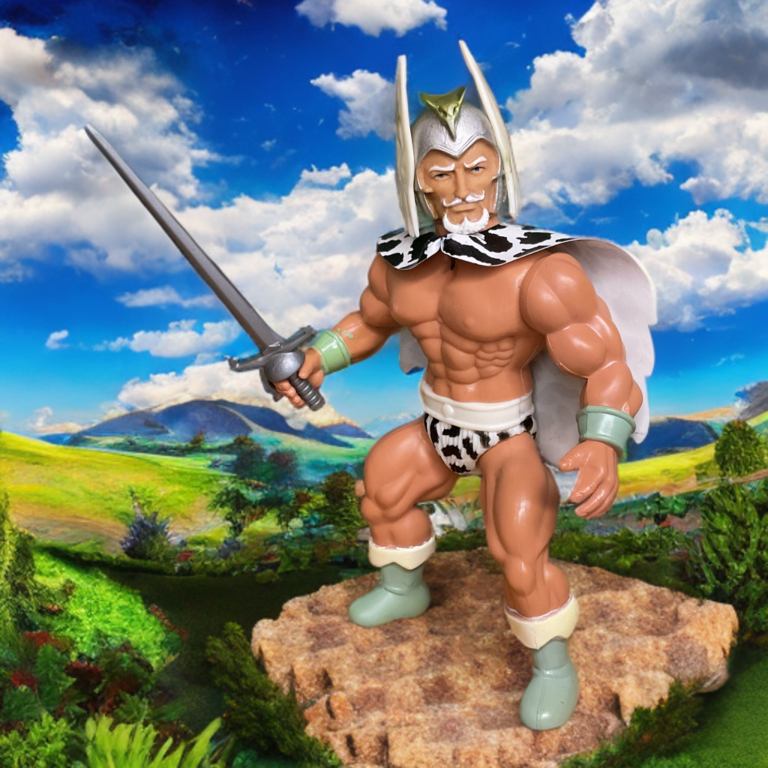
Remco figure captured this essence with remarkable flair, standing at 5.5 inches with a muscular build that screamed ready-for-action. Molded in a dynamic crouch, it featured articulated joints at the shoulders, hips, and knees, allowing for dramatic poses mid-swing or mid-leap. The sculpt included detailed fur boots, a white tunic evoking his comic garb, and that iconic winged helmet perched atop a stern, bearded face. Accessories were sparse but spot-on: a silver sword that fit snugly in his grip, symbolizing his dual mastery of gun and blade (though the toy omitted the pistol to keep things kid-friendly). No variants emerged for this flagship figure, but its design held up as the line’s anchor, often reissued in limited forms post-1982. In play, it paired perfectly with beasts and vehicles from other sets, turning any carpet into a battlefield.
From a collector’s vantage, the Warlord figure holds up as a gem of 1980s toy engineering—sturdy enough to survive roughhousing yet detailed enough to display. Imagine a jet jockey dropped into a sword-swinging saga; it’s like if Indiana Jones traded his whip for a war helm and decided to stick around. The paint apps, though prone to chipping on the helmet wings, added a layer of authenticity, with metallic accents that caught the light during imaginary duels. Its compatibility with MOTU meant endless mash-ups, where Warlord could team up with He-Man against Skeletor stand-ins. Nostalgically, holding one today evokes those afternoons spent scripting epic narratives, where Morgan’s unyielding spirit reminded us that heroes adapt or perish. If toys could talk, this one would quip about preferring dogfights over dragon fights, but settling for both.
2. Deimos
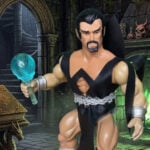
No saga thrives without a formidable antagonist, and Deimos filled that role with chilling precision in the Warlord chronicles. As the high priest of evil in Skartaris, this sorcerer wielded dark magic drawn from ancient tomes and forbidden rituals. His ambitions centered on conquering Shamballah and bending its people to his will, often through necromancy and illusions that sowed chaos. Deimos clashed repeatedly with Morgan, their enmity peaking in brutal confrontations where his spells met the Warlord’s steel. Resurrected multiple times—once fused with a beast that slew him, another as a grotesque hybrid—he embodied unrelenting malice. With a goatee framing his sneering face and robes hiding arcane artifacts, Deimos manipulated kings and conjured horrors, always one incantation away from ultimate power. His downfall came via decapitation, but his shadow lingered as a testament to the perils of unchecked ambition.

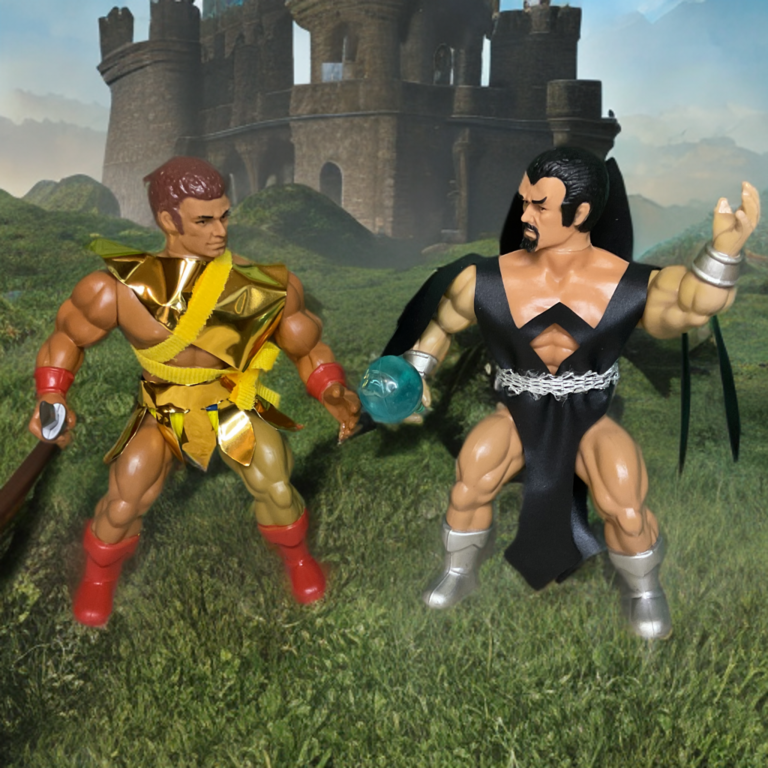
Remco’s Deimos figure brought this villain to life in vivid, menacing detail, using the same base mold as the heroes but with sinister twists. The sculpt featured flowing robes in deep blue plastic, a hooded head with piercing eyes, and clawed hands ready to cast spells. Articulation mirrored the line’s standard, enabling dramatic gestures like summoning poses. Accessories included a staff topped with a crystal orb, perfect for imagining dark rituals, and a dagger for close-quarters treachery. Variants were absent, but the figure’s dark color scheme set it apart, with metallic paints on the staff adding a mystical gleam. It shipped on a cardback highlighting its role as the arch-foe, complete with comic-style art.
In reflective terms, Deimos was the toy you loved to hate— the one that always ended up buried under a pile of defeated heroes in play sessions. Its design invited villainous monologues, with that hood casting shadows that made it look eternally scheming. Picture a wizard who couldn’t stay dead; it’s as if he had a subscription to resurrection services, always popping back for round two. Collectors prize it for its rarity, as paint wear on the robes reveals the underlying plastic like battle scars. Playing with it sparked creativity, turning simple skirmishes into tales of betrayal and comeback. Today, it stands as a reminder that every hero needs a proper nemesis, one whose plastic form still whispers plots from the shelf.
3. Aarak
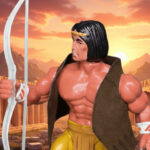
Aarak, better known as Arak, Son of Thunder, brought a unique cultural fusion to the Warlord universe through crossovers that expanded Skartaris’ lore. Born to a Quontauka Native American mother and the thunder god He-No, Arak survived his tribe’s massacre as a boy, drifting at sea until Vikings rescued him. Raised as one of them, he adopted the name Arak (his pronunciation of Eric) and honed skills in swordplay, archery, and tracking. His adventures spanned medieval Europe under Charlemagne, battling serpents, demons, and gods, while his divine heritage granted abilities like weather manipulation and illusion-casting. In Warlord #48, an insert preview introduced him, leading to crossovers where he allied with Morgan against mutual threats. Later, mystical encounters reshaped him with Native American attire, including fringed pants and a Mohawk, emphasizing his shamanic roots and longevity.
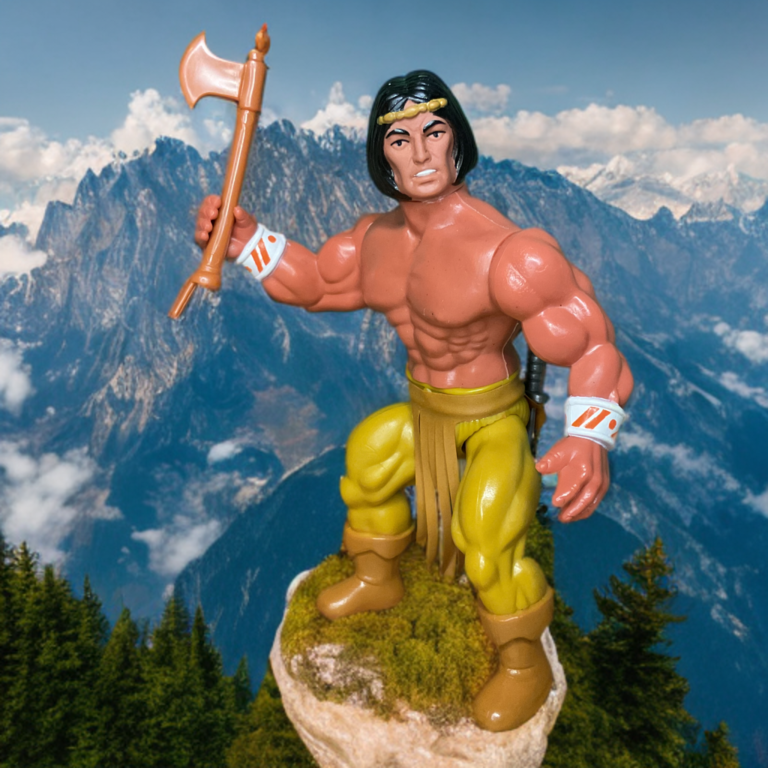
The Remco figure embodied this hybrid warrior with a lean, agile sculpt, differing slightly from the bulkier molds. It featured long hair, a bare chest with tribal markings, and leather-like pants in brown tones. Joints allowed for archery stances or tomahawk swings, capturing his versatile combat style. Accessories comprised a tomahawk and bow with arrows, evoking his dual Viking-Native heritage. Two variants existed: one with a brown loincloth and white/brown bracelets, the other sporting a brown vest and yellow bracelets, offering collectors subtle differences in paint and sculpt details.
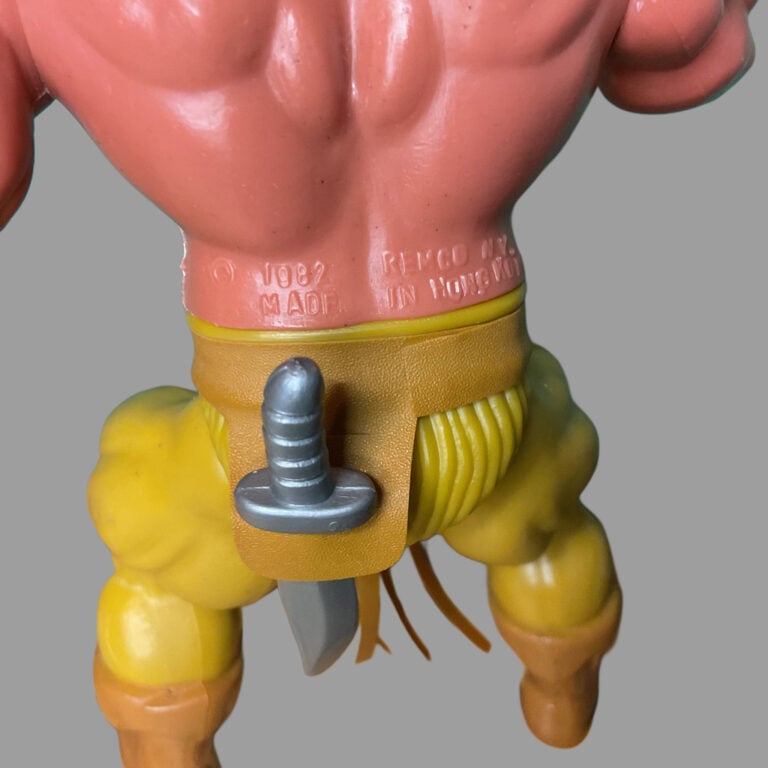
Nostalgically, Arak’s figure was the wildcard in playtime, blending cultures in ways that sparked inventive stories—like a Viking-raised shaman outwitting dinosaurs. Its variants added replay value, as if the toy itself evolved like the character. Think of him as the ultimate survivor, washing up on shores of adventure with thunder in his veins. The accessories held up well, though arrows often vanished under couches, turning hunts into real quests. For enthusiasts, it’s a bridge between comic worlds, its design holding echoes of Conan but with a fresh twist. Displaying it now conjures memories of mixing mythologies, where Arak’s presence turned battles multicultural.
4. Hercules
Hercules, DC’s take on the legendary demigod, intersected with Warlord’s world through mythological ties and post-apocalyptic tales. Son of Zeus, he embodied raw power, completing labors that included slaying beasts and conquering kingdoms. In DC lore, he once enslaved the Amazons, tricking Queen Hippolyta into yielding her girdle under Ares’ influence, representing masculine dominance clashing with feminine strength. His adventures extended to the Great Disaster era, wandering ruined Earths, befriending survivors, and battling mad gods in a series called Hercules Unbound. Though not a direct Warlord staple, his mythic essence aligned with Skartaris’ timeless conflicts, where gods meddled in mortal affairs.
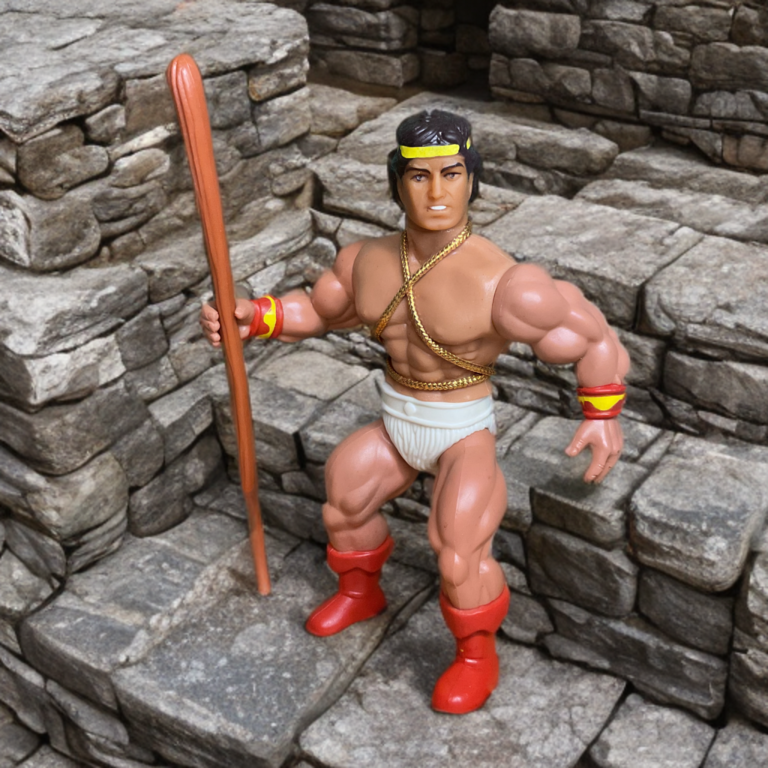
Remco’s Hercules figure channeled this might with a hulking build, bare-chested and clad in shorts, lion-skin accents nodding to his labors. The sculpt emphasized massive arms and legs, with articulation for power poses like club-swinging. Accessories featured a staff (doubling as a club), ideal for smashing foes. Variants included tan shorts and white shorts, plus a rare “Clone Smasher” cardback from a promotional event by Hercules Computer Technology, making it a holy grail for hunters. The figure’s compatibility shone in group plays, towering over others like a true titan.
Reflecting back, Hercules was the brute force in any toy lineup, the one you’d pit against multiple villains for epic showdowns. Its variants fueled debates over which looked more heroic, as if the demigod couldn’t decide on his outfit. Envision a god slumming it in a lost world—talk about a demotion from Olympus. The staff’s durability meant it survived many “labors,” though joints loosened from overuse. Collectors value its scarcity, especially the promo version, evoking the thrill of unearthing buried treasure. It encapsulated the joy of mythic play, where one figure could rewrite legends.
5. Mikola
Mikola Rostov added a layer of supernatural intrigue to Warlord’s ensemble. A Russian fencing master, he followed his lover Mariah Romanova into Skartaris, seeking escape from a lycanthropic curse that turned him into a werewolf under full moons. His origin traced to a spell gone awry, binding a wolf spirit within him. In Skartaris’ perpetual light, he hoped for relief, but the curse persisted, forcing him to harness the “wolf spirit” in battles. As Morgan’s ally, he excelled in swordsmanship and hand-to-hand, his dual nature making him a fierce warrior against threats like New Atlantis forces. Jennifer Morgan eventually cured him, allowing control over his feral side without full transformations.
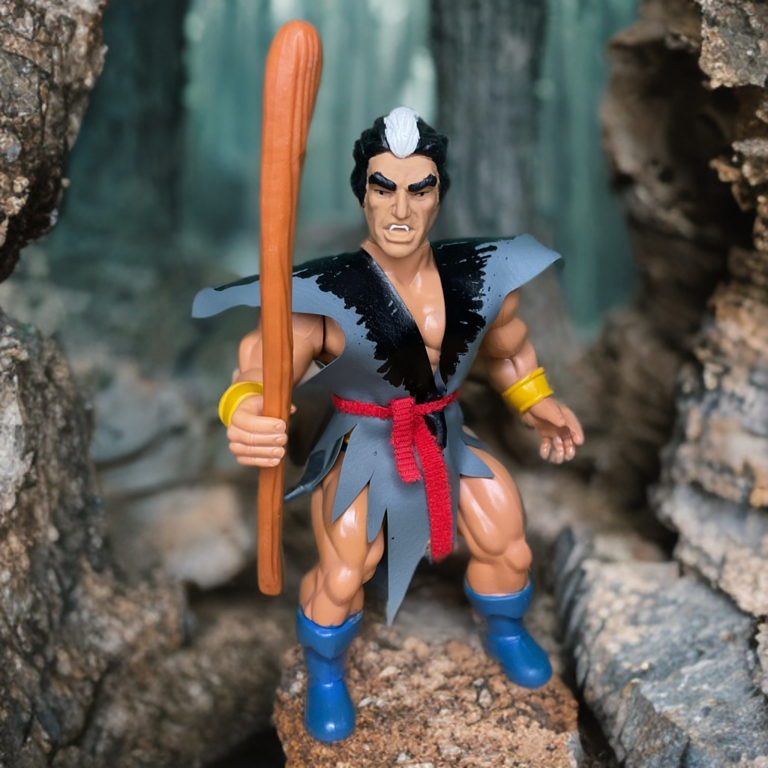
The Remco figure depicted Mikola in mid-transformation, with furred limbs, fangs, and claws on the standard mold. Black hair with a white stripe variant contrasted the brown-haired version, adding collector variety. Accessories included a sword for his human prowess and claws molded into the hands for beastly attacks. The Warteam version, originally dubbed Warman, came with altered weapons, emphasizing his versatility.
In hindsight, Mikola was the toy that added unpredictability— one moment a suave swordsman, the next a snarling beast. Variants let you choose your flavor of fury, like ordering werewolf with or without highlights. Imagine a fencer moonlighting as a monster; it’s the ultimate side hustle. The figure’s details, like textured fur, held up to play, though paint on the stripe flaked like shedding fur. It inspired stories of inner conflict, blending heroism with horror. For fans, it’s a standout for its comic fidelity, reminding us that even in lost worlds, personal demons follow.
6. Machiste
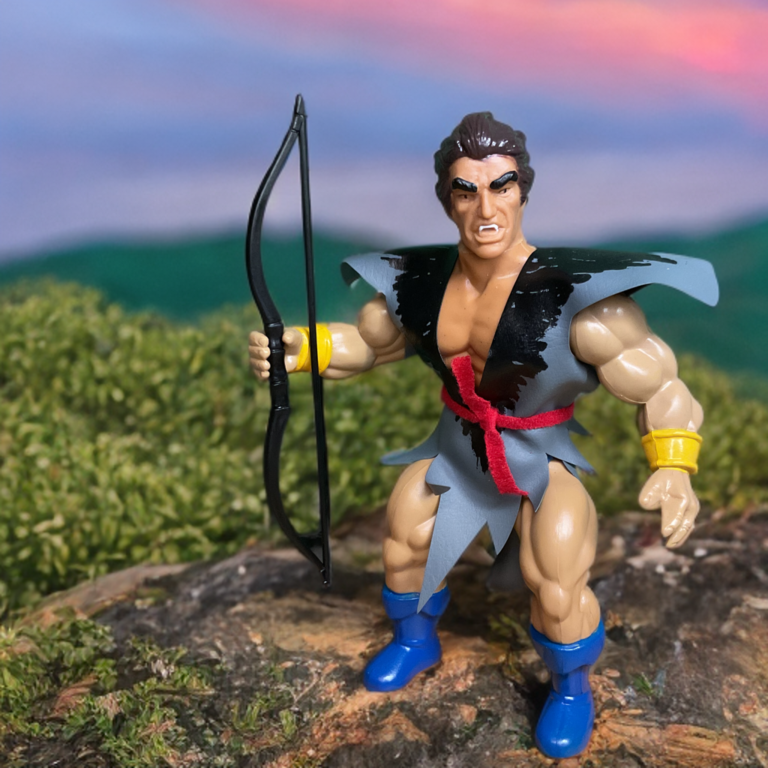
Machiste, king of Kiro, forged an unbreakable bond with Morgan in the fires of adversity. Born in Skartaris, he endured slavery on a galley ship, where he met the Warlord during a revolt. Skilled in hand-to-hand, swordsmanship, and daggers, he became a key ally, his bald head and crown marking his royal status. Battles against Deimos and invaders honed his leadership, often wielding a spiked mace in comic depictions. His loyalty shone in quests to reclaim thrones and protect realms, embodying the warrior’s code in a land of perpetual strife.
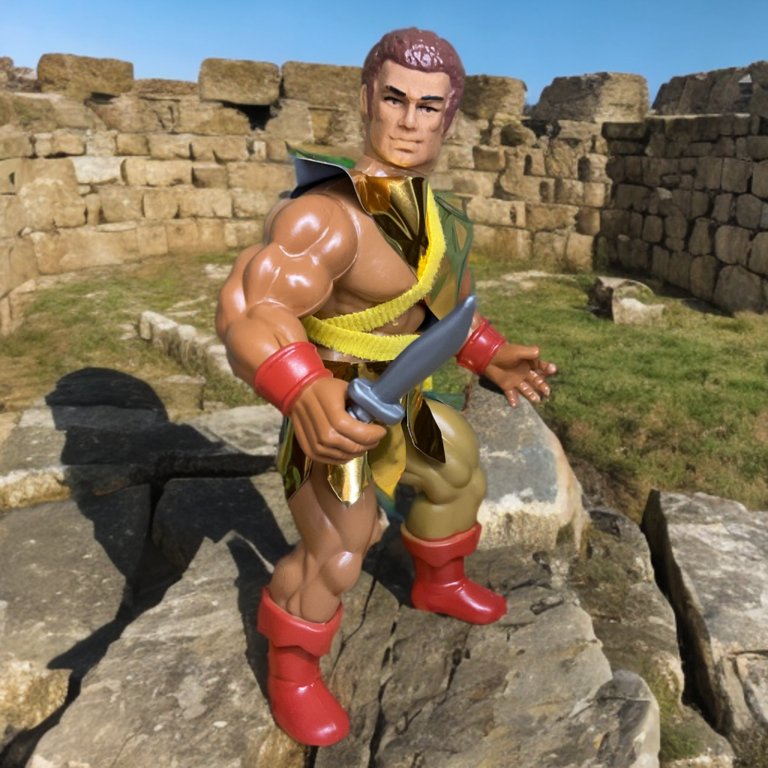
Remco’s Machiste figure used an early design sans spiked hand, with armored shoulders and a determined expression. Articulation supported dynamic combat poses, and accessories featured a mace and shield for royal defense. No major variants, but its build meshed seamlessly with the line.
Looking back, Machiste was the steadfast sidekick toy, always backing up the Warlord in makeshift alliances. No frills, just reliable might—like the friend who shows up with tools when your chariot breaks. The mace’s weight made swings satisfying, though shields often got lost in the fray. It captured the essence of camaraderie, turning solo plays into team efforts. Collectors appreciate its understated role, a nod to enduring friendships in fantasy lore.
Don’t miss: The Ultimate Guide: 1982 Remco Warrior Beasts Action Figures
| Character | Primary Accessories | Notable Variants | Role in Skartaris |
| Warlord | Silver Sword | White tunic, winged helmet | The Leader / Hero |
| Deimos | Crystal Staff & Dagger | Hooded blue robes | Arch-Nemesis Sorcerer |
| Arak | Tomahawk & Bow | Brown Vest vs. Loincloth | Viking-Native Shaman |
| Hercules | Staff / Smasher Club | Tan vs. White Shorts | Mythic Power-House |
| Mikola | Sword & Molded Claws | White Hair Stripe vs. Solid | Cursed Werewolf Ally |
| Machiste | Mace & Shield | Early non-spiked hand design | Warrior King of Kiro |
Warteam Playsets
Beyond individual figures, the Warteam playsets elevated play to grand scales, bundling riders with mounts and siege engines for immersive Skartaris sieges.
The Mighty Stallion with Arak paired the thunder-son with a majestic steed, available in black, brown, or white hues. The horse featured articulated legs for galloping poses, saddled with reins and stirrups. Arak’s figure slotted perfectly, tomahawk raised, evoking charges through misty valleys. This set encouraged exploration narratives, where Arak scouted enemy lines on his loyal mount.
Similarly, the Mighty Stallion with Deimos turned the sorcerer into a mounted menace, his staff gleaming atop the steed. The contrast of dark robes against the horse’s coat made for striking visuals, ideal for villainous pursuits or ritualistic rides.
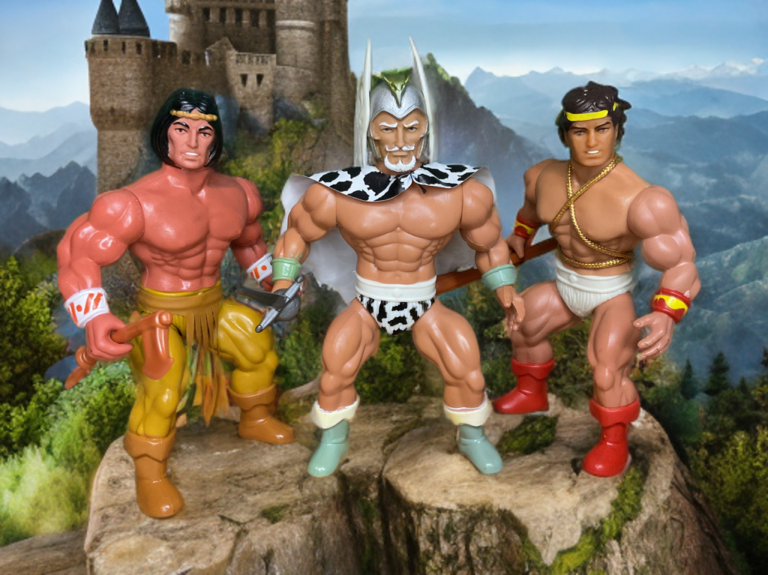
The Mighty Stallion with Machiste transformed the king into a cavalry commander, mace in hand as he led charges. The set’s royal flair added hierarchy to battles, with the horse’s durability handling rough terrain plays.
The Mighty Stallion with Mikola blended werewolf ferocity with equestrian speed, the figure’s claws gripping reins for hybrid assaults. Variants in horse colors allowed customization, sparking tales of moonlit hunts.
Warpult (light) served as a siege catapult in pale tones, complete with a cardboard backdrop depicting Skartaris landscapes. It launched projectiles, perfect for bombarding fortresses, with a stand for stability.
Its counterpart, Warpult (dark), offered a shadowy variant with silver wheels, evoking nocturnal assaults. Both encouraged engineering fun, tweaking tension for accurate shots.
The Journey Through Time Playset stood as the crown jewel, rarest of all, bundling a catapult, assorted weapons, and accessories like barriers and treasures. It simulated time-warped adventures, with figures navigating portals implied by backdrops. Hard to find even then, it turned backyards into multidimensional war zones.
These sets weren’t mere add-ons; they built worlds, where a simple launch could topple empires or a ride could span eras.
| Set Name | Key Figure Included | Major Features |
| Mighty Stallion | Arak / Deimos / Machiste | Articulated horse with saddle |
| Warpult (Light/Dark) | Siege Engine | Working catapult with projectiles |
| Journey Through Time | Mega-Playset (Rare) | Catapult, barriers, and treasure |
Forever Imprinted in Time
As we sheath our swords and stable our steeds, the Lost World of the Warlord endures as a testament to 1980s ingenuity. These toys bridged comics and play, fostering stories that outlasted their plastic forms. In an era of digital distractions, they remind us of hands-on heroism, where imagination conquered all. Whether displayed or rediscovered in attics, they whisper of Skartaris’ eternal light, inviting one more battle for old times’ sake.
For the Updated:
| Character | Loose (Incomplete) | Loose (Complete w/ Accessories) | Mint On Card (MOC) |
| Warlord | $25 – $40 | $60 – $85 | $175 – $250 |
| Deimos | $20 – $35 | $55 – $75 | $150 – $225 |
| Arak | $25 – $40 | $70 – $100 | $180 – $240 |
| Hercules | $20 – $35 | $50 – $80 | $140 – $200 |
| Mikola | $15 – $30 | $45 – $70 | $130 – $190 |
| Machiste | $20 – $35 | $50 – $75 | $140 – $210 |
The “Holy Grail” Rarity Values
Hercules (Clone Smasher Cardback): $500+ (Extremely Rare promo)
Journey Through Time Playset: $300 – $600+ (Depending on box condition/completeness)
The Warteam (Figure + Horse Box Sets): $150 – $300 (Sealed)
Market Note: These values are based on recent 2024-2025 secondary market sales and can fluctuate. The biggest factor in value for Remco toys is the condition of the plastic (watch out for ‘sticky leg’ syndrome) and whether original weapons like Arak’s bow or Deimos’s staff are present, as these are frequently lost.
The Warlord’s Modern Legacy
While the 1982 Lost World of the Warlord line remains a cornerstone of vintage collecting, the adventure didn’t end in the 80s. Many of the original molds and the ‘barbarian chic’ aesthetic have been resurrected for a new generation. If you want to see how the spirit of Travis Morgan lives on through modern engineering and expanded lore, check out our Ultimate Guide to Zoloworld’s Realm of the Underworld—the true spiritual successor to the Remco Warlord legacy.
Recommended reading: The “Peg Hunter’s” Guide: How to Spot an Immortal Remco on eBay
 English
  Deutsch
  Français
  Português do Brasil
  日本語
日本語  Español
  English (Australia)