

The Forgotten Warlord: How Machiste Defined the Peplum Era
In the vast tapestry of heroic fantasy, few figures embody raw strength, unyielding loyalty, and timeless adventure quite like Machiste. A towering warrior of bronze-age might and modern comic-book legend, he strides through a hidden realm of dinosaurs, sorcery, and lost civilizations as the steadfast companion to one of DC Comics’ most iconic sword-and-sorcery heroes. Yet his roots stretch far deeper than the pages of any monthly title—back to the flickering silver screens of early Italian cinema, where a muscular champion named Maciste first captured the world’s imagination. This article explores the full life and exploits of Machiste from the Lost World of the Warlord, tracing his path from galley slave to king and eternal adventurer. It also examines the legendary Italian film hero whose name and archetype shaped him, along with the 1982 action figure that brought the character to toy shelves worldwide. Prepare to journey into Skartaris, a world where one man’s iron will—and later, his iron mace—helped forge legends.
The Italian Film Hero Maciste: Origins, Lore, and Silent-Era Dominance
The story of the cinematic Maciste begins in 1914 with the groundbreaking Italian epic Cabiria, directed by Giovanni Pastrone and written in part by the celebrated poet Gabriele d’Annunzio. Set during the Second Punic War, the film follows a young Roman girl kidnapped and threatened with sacrifice to the Carthaginian god Moloch. Among the rescuers stands Maciste, a Nubian slave of colossal strength portrayed by dockworker-turned-actor Bartolomeo Pagano. Pagano’s performance—lifting massive millstones, snapping chains, and battling foes with bare hands—stole the show. Audiences left theaters talking less about the heroine and more about the indomitable strongman who embodied Italian virility and heroism.
D’Annunzio deliberately chose the name “Maciste.” Classical sources, including Strabo’s Geographica and ancient dictionaries, link it to an epithet of Heracles (Hercules), meaning “tallest,” “greatest,” or “longest in time.” A folk etymology later suggested “born of the rock,” tying the hero to elemental power. In Cabiria, Maciste is no god but a mortal slave whose physical prowess and moral courage elevate him to mythic status. The character resonated so powerfully that Pagano returned in a 1915 solo vehicle simply titled Maciste (released in the U.S. as Marvelous Maciste). Here the lines between actor and role blurred: the heroine of the new story watches Cabiria in a theater, then seeks out Pagano himself at the studio, merging fiction and reality in a meta-narrative that delighted audiences.
Over the next decade, Pagano starred in approximately 27 silent Maciste films, transforming the character into a versatile, timeless champion who could appear in any era or locale. The series mixed historical epics, contemporary adventures, comedies, and outright fantasy. Key entries include:
• Maciste bersagliere (1916) and Maciste alpino (1916), where he fights as an Italian soldier during World War I, boosting national morale.
• Maciste atleta (1917), showcasing Olympic-level feats.
• Maciste all’inferno (1925), a dazzling descent into Hell that deeply impressed young Federico Fellini and influenced his later work.
• Maciste imperatore (1924) and Il gigante delle dolomiti (1927), in which he rules empires or battles in the Italian Alps.
Common lore threads run through them all. Maciste is the ultimate populist hero: a working-class everyman of superhuman strength who topples tyrants, rescues innocents (often beautiful queens or princesses), and defeats monsters or evil sorcerers. He operates outside strict historical continuity, traveling from ancient Egypt to modern Mongolia or even the afterlife. Themes emphasize justice over aristocracy, physical might in service of the weak, and a paternal protectiveness. Pagano’s real-life persona—rugged, genial, and massively built—cemented the character as Italy’s answer to Douglas Fairbanks. At his peak, Pagano earned enormous sums and became a cultural icon of Latin strength and decency. The silent Maciste films helped define the “strongman” genre that later birthed the 1960s peplum wave.
The 1960s Peplum Revival: Maciste’s Colorful Return and Global Reach
After Pagano retired in the late 1920s, Maciste lay dormant until the sword-and-sandal boom ignited by Steve Reeves’ Hercules (1958). Between 1960 and 1965, Italian studios produced roughly 25 new Maciste films in vibrant color and sound. Different actors rotated through the role—Mark Forest (seven times), Gordon Scott, Kirk Morris, Gordon Mitchell, Reg Park, and others—yet each portrayed the same archetypal hero: a god-like strongman with no fixed origin, unbound by time. One film even has him declare his name means “born of the rock,” echoing the folk etymology.
Notable titles illustrate the range:
• Maciste nella valle dei re (1960, a.k.a. Son of Samson) pits him against Egyptian intrigue.
• Maciste nella terra dei ciclopi (1961, a.k.a. Atlas in the Land of the Cyclops) features a one-eyed giant and an evil queen.
• Maciste contro il vampiro (1961, a.k.a. Goliath and the Vampires) blends horror with muscle.
• Maciste all’inferno (1962 remake, a.k.a. The Witch’s Curse) sends him back to the underworld.
• Maciste contro i mostri (1962, a.k.a. Fire Monsters Against the Son of Hercules) and Maciste contro i cacciatori di teste (1962, a.k.a. Colossus and the Headhunters) deliver prehistoric beasts and jungle tribes.
Plots followed a reliable formula: an evil ruler or sorceress threatens a kingdom; a rightful heir or captive princess needs saving; Maciste arrives, endures chains or arena combat, then unleashes superhuman feats—toppling pillars, wrestling lions, or hurling boulders. Belly dances, chariot races, and spectacular sets were standard. Some entries crossed genres, including comedies like Totò contro Maciste (1962) and team-ups such as Ercole, Sansone, Maciste e Ursus: gli invincibili (1964). American distributors often retitled them as Hercules or Samson vehicles for the Sons of Hercules TV package, broadening their reach.
The 1960s Maciste reinforced the same lore: a wandering champion of justice whose strength serves the oppressed. His adventures spanned Ice Age cavemen to Genghis Khan’s court, underscoring his mythic immortality. These films, though campy by modern standards, kept the strongman tradition alive and directly fed the sword-and-sorcery boom that would soon reach American comics.
| Year | Original Italian Title | English / U.S. Title(s) | Lead Actor | Notes & Availability |
|---|---|---|---|---|
| 1960 | Maciste nella valle dei re | Son of Samson / Maciste the Mighty | Mark Forest | Egyptian revolt; strong revival start. Often on YouTube. |
| 1961 | Maciste nella terra dei ciclopi | Atlas in the Land of the Cyclops | Gordon Mitchell | Epic Cyclops battle + evil queen. Frequently uploaded. |
| 1961 | Maciste contro il vampiro | Goliath and the Vampires | Gordon Scott | Horror-fantasy mix; very popular on free sites. |
| 1961 | Il trionfo di Maciste | Triumph of Maciste | Kirk Morris | Egyptian volcano god plot; great action choreography. |
| 1961 | Maciste alla corte del gran khan | Samson and the 7 Miracles of the World | Gordon Scott | Asian/Mongol setting; highly regarded entry. |
| 1961 | Maciste, l'uomo più forte del mondo | Mole Men Against the Son of Hercules | Mark Forest | Unique subterranean adventure vs. Mole Men. |
| 1962 | Maciste contro i mostri | Fire Monsters Against the Son of Hercules | Reg Park | Prehistoric beasts and dinosaurs. Cult favorite. |
| 1962 | Maciste all'inferno | The Witch's Curse / Maciste in Hell | Kirk Morris | Underworld descent; amazing visuals. HD versions on YT. |
| 1962 | Maciste contro lo sceicco | Samson Against the Sheik | Ed Fury | Desert tyranny battles; classic desert adventure. |
| 1962 | Maciste, il gladiatore più forte | Colossus of the Arena | Mark Forest | Gladiatorial spectacle; focus on bodybuilder feats. |
| 1962 | Maciste contro i cacciatori di teste | Colossus and the Headhunters | Kirk Morris | Jungle rescues vs. headhunters; common online. |
| 1963 | Maciste, l'eroe più grande | Goliath and the Sins of Babylon | Mark Forest | Babylonian intrigue; one of Forest's best. |
| 1963 | Maciste contro i mongoli | Hercules Against the Mongols | Mark Forest | Mongol empire clashes; action-heavy. |
| 1964 | Maciste nelle miniere di Salomone | Maciste in King Solomon's Mines | Reg Park | Mines, treasure, and slavery; available on Tubi. |
| 1964 | Maciste, gladiatore di Sparta | The Terror of Rome Against the Son of Hercules | Mark Forest | Spartan gladiator games; full versions easy to find. |
From Silver Screen Strongman to Comic Book Warrior: The Connection to DC’s Machiste
The DC Comics character Machiste carries the same classical name—derived from the Heracles epithet popularized by the Italian films—and channels the same archetype of the unbreakable strongman hero operating in a fantastical lost world. Creator Mike Grell, crafting The Warlord as a love letter to Edgar Rice Burroughs, Robert E. Howard, and Frank Frazetta, populated Skartaris with larger-than-life warriors. Choosing “Machiste” for the stalwart ally was no accident; it evoked the Italian cinema’s beloved champion of raw power and loyalty, transplanting that spirit into a new medium and setting. Both heroes are bald, muscular titans who begin in bondage, rise through gladiatorial combat, and dedicate themselves to freeing the oppressed while enjoying the thrill of battle. The films’ emphasis on spectacle—arena fights, monstrous foes, tyrannical sorcerers—mirrors the comic’s dinosaurs, magic, and endless quests. Thus the Italian Maciste’s legacy lives on through his DC namesake, bridging silent-era Italy and Bronze-Age American fantasy.
Machiste’s Origins in Skartaris: From Galley Slave to Gladiator
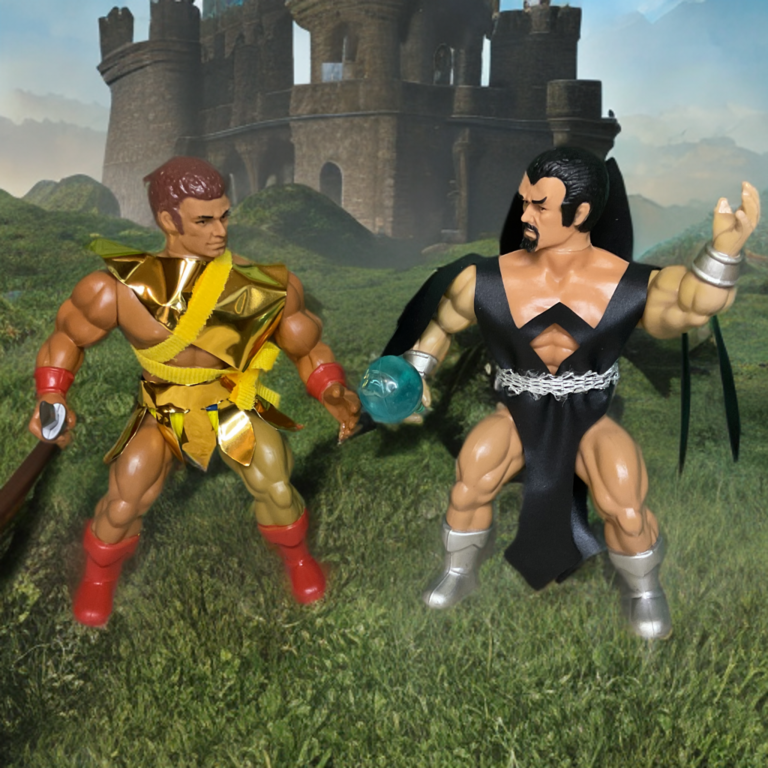
In the hollow-earth realm of Skartaris—where the sun never sets and prehistoric beasts roam alongside Atlantean ruins—Machiste was born a free man of the city-state Kiro. His early life ended in chains when the sorcerer-king Deimos of Thera launched conquests across the land. Captured and sold into slavery aboard the grim galley ship Gryfalcon, Machiste endured back-breaking labor at the oars. It was here, roughly twenty-one years before the main events of The Warlord, that he first encountered Travis Morgan, the displaced U.S. Air Force pilot who would become the Warlord.
Morgan, having crashed through a polar gateway into Skartaris, found himself enslaved alongside Machiste. The two forged an instant bond. The grueling galley work hardened their bodies and minds. Soon the Theran overseers recognized their fighting potential and sold them to a gladiatorial school.
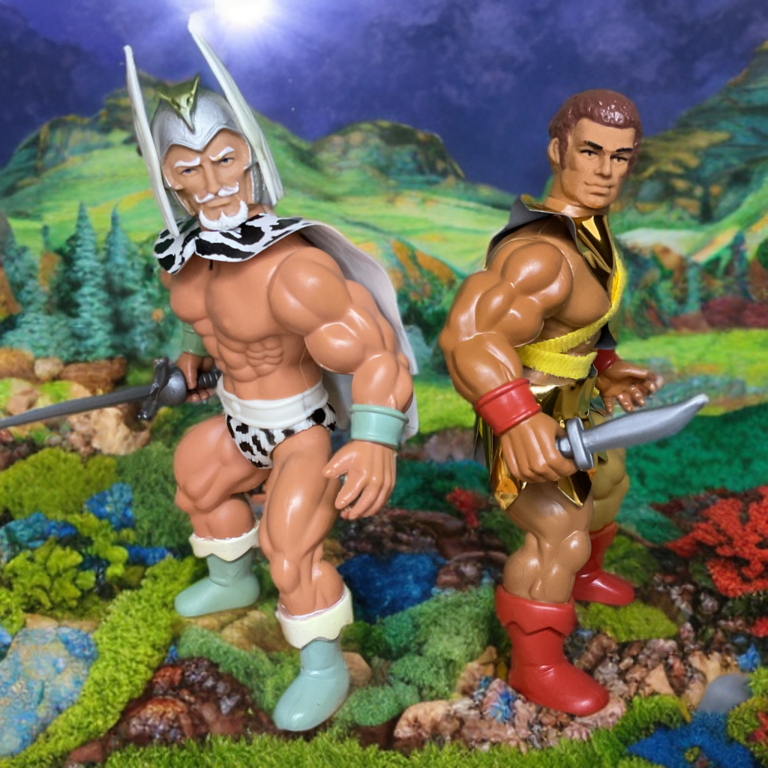
There the legendary retired champion Shebal trained them in sword, spear, and bare-knuckle combat. Machiste and Morgan quickly rose as the most feared gladiators in Skartaris, their victories drawing crowds and the attention of Deimos himself.
The Great Revolt and the Birth of a Legend
When Morgan spotted Princess Tara of Shamballah among the spectators—one of Deimos’ captives—he resolved to escape. Machiste stood by his side without hesitation. Together they sparked a slave revolt that swelled into a full-scale rebellion. Two hundred gladiators followed their lead, forming the core of a liberating army. Nineteen years before the present-day stories, they stormed the city of Thera, overthrew Deimos, and freed Tara and countless others. In the chaos Morgan earned the title “Warlord,” and Machiste returned home to Kiro as a hero, his reputation as a warrior without peer secured.
The King of Kiro and the Curse of the Demonic Axe
Peace proved short-lived. Back in Kiro, Machiste discovered an ancient battle-axe infused with a demonic entity. The weapon bonded to his right hand, refusing to release its grip. Under its corrupting influence, Machiste became a tyrannical ruler, his once-noble spirit twisted into cruelty. Word reached the Warlord, who journeyed to Kiro with his new ally, the Russian scientist Mariah Romanova. In a desperate duel—chronicled in the pages of Warlord #7—Morgan severed Machiste’s possessed hand, breaking the axe’s spell. Freed but maimed, Machiste crafted a replacement: a spiked iron mace permanently affixed to his wrist. The weapon became both symbol and tool of his renewed purpose.
The Iron Hand of Vengeance and Enduring Alliances
With his new mace-hand, Machiste left Kiro to wander and fight alongside the Warlord. He formed a deep romantic bond with Mariah Romanova. Their adventures took a dramatic turn when Mariah was pulled through a time portal into Skartaris’ distant past—the Age of the Wizard Kings. Machiste followed, living for a time in that era as her lover and befriending the wizard Mongo Ironhand. The couple eventually returned to the present, where Machiste aided the Warlord against the invading forces of New Atlantis. Victorious, he resumed his throne in Kiro, though the duties of kingship never fully satisfied his restless spirit.
Machiste the Adventurer: Further Quests and the Call of Battle
Machiste’s loyalty repeatedly pulled him from his kingdom. Seventeen years ago he joined the quest to rescue the Warlord’s kidnapped son Joshua, still recovering from the axe ordeal. Nine years ago he helped save the Warlord’s daughter Jennifer from Theran slavers. Eight years ago he fought alongside allies including Shakira and Aton to reclaim a Kaambuku outpost from the Snake People. Throughout, Machiste remained the easy-going counterpoint to the Warlord’s brooding intensity—trading quips, sharing campfires, and charging into battle with unbreakable courage. A superb swordsman, horseman, and hand-to-hand fighter even before the mace, he wielded the spiked weapon with devastating effect. No superhuman powers graced him; his greatness stemmed purely from skill, willpower, and loyalty.
The Remco Action Figure: Machiste Comes to Toy Shelves
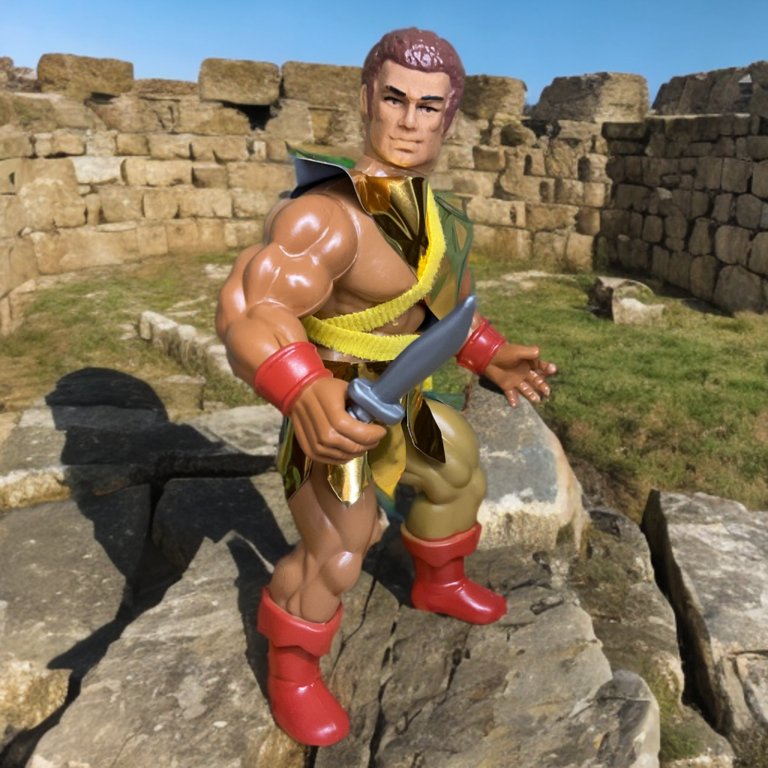
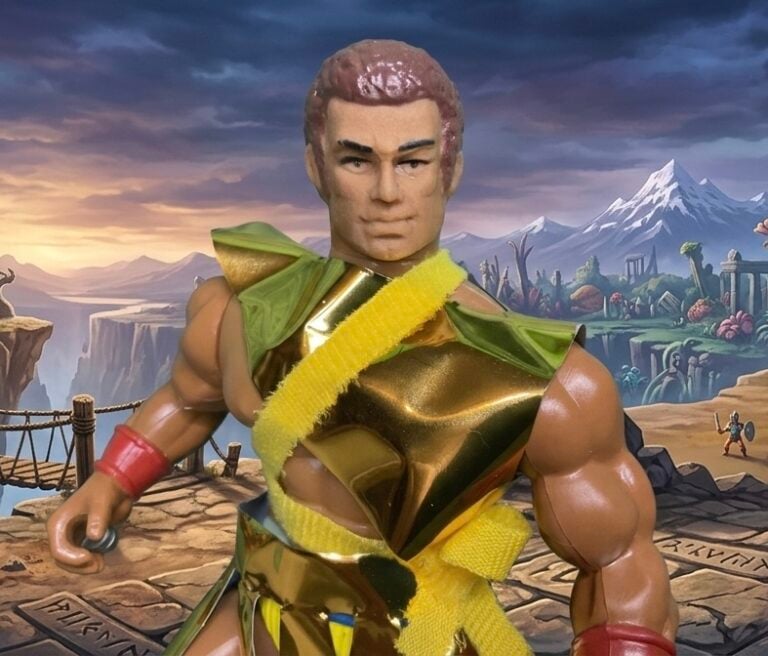
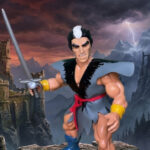
In 1982, at the height of the Masters of the Universe craze, Remco launched the Lost World of the Warlord toy line to capitalize on the comic’s popularity. The 5½-inch figures were designed for compatibility with He-Man playsets and vehicles. Machiste appeared in Series 1 as part of the “Warteam,” packaged with a Mighty Stallion horse in black, brown, or white variants. The figure captured an early-comic appearance—before the hand-severing incident—depicting him two-handed and wielding a mace accessory rather than the iconic spiked prosthetic. This choice reflected his debut look from Warlord #2, complete with bald head, muscular build, and barbarian attire.
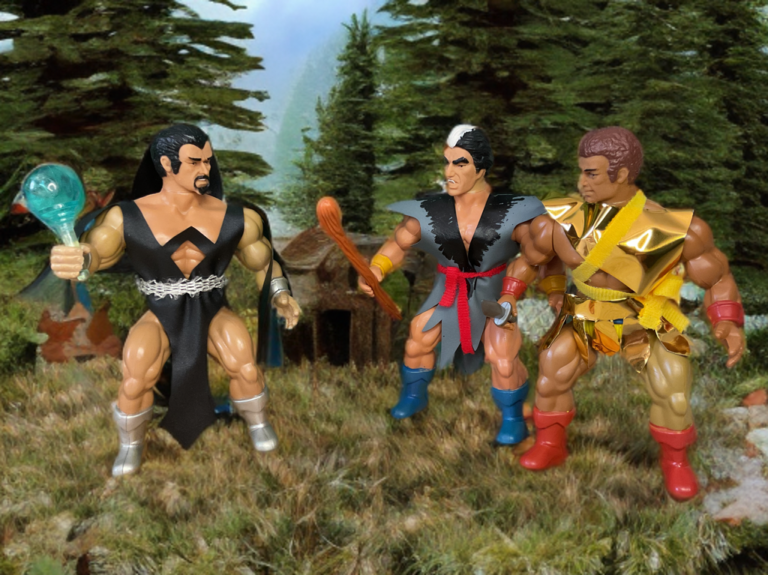
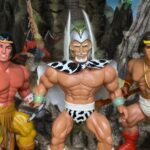
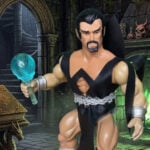
Accessories included weapons and armor pieces that complemented the line’s other releases: Warlord himself, Deimos, Mikola Rostov, Arak, and Hercules (the latter two borrowed from other DC titles). Vehicles like the Warpult catapult and the Journey Through Time playset expanded play options. Cardbacks featured a free DC Comics insert mini-comic providing backstory, helping young fans connect the toys to the ongoing series. Though the line was smaller and less marketed than Mattel’s offerings, Machiste’s figure brought the character’s heroic presence into bedrooms worldwide. Collectors today prize the rare variants and note how the design perfectly captured the thrill-seeking warrior who would rather adventure than rule.
Conclusion
From the sun-baked arenas of ancient Carthage to the dinosaur-haunted jungles of Skartaris, and finally to plastic shelves in 1982 toy aisles, Machiste stands as an enduring symbol of heroic strength and steadfast friendship. The Italian film series gave the world a champion whose name and deeds inspired generations; DC Comics transplanted that spirit into a fully realized fantasy realm where one man’s courage helped topple tyrants and forge unbreakable bonds. Whether swinging a demonic axe under curse, wielding a spiked mace in redemption, or riding beside the Warlord against impossible odds, Machiste never faltered. His story reminds us that true heroes need no superpowers—only loyalty, skill, and the willingness to fight for what is right. In Skartaris and beyond, the legend of Machiste endures, inviting new generations to pick up a sword (or a toy mace) and join the eternal battle for freedom.
 English
  Deutsch
  Français
  Português do Brasil
  日本語
日本語  Español
  English (Australia)