

All About Satyrs and Fauns
Satyrs and fauns are fascinating figures from mythology, often intertwined in ancient stories but with distinct origins and characteristics. Below is a comprehensive biography of satyrs, followed by a detailed comparison with fauns to clarify their differences.
Biography of Satyrs
Origins and Mythological Context: Satyrs are creatures from ancient Greek mythology, first appearing in texts and art around the 8th century BCE. They are typically depicted as half-human, half-beast beings, embodying the wild, untamed aspects of nature. Satyrs are closely associated with Dionysus (or Bacchus in Roman mythology), the god of wine, fertility, ritual madness, and ecstasy. They were considered his companions, reveling in his entourage alongside maenads (frenzied female followers) and other mythological beings.
Physical Description: Satyrs are usually portrayed with human-like upper bodies but with distinct animalistic features. Early depictions in Greek art (Archaic and Classical periods, circa 600–400 BCE) showed them with horse-like traits, such as pointed ears, tails, and sometimes hooves. By the Hellenistic period (circa 323–31 BCE), their depiction shifted to include more goat-like features, such as horns, furry legs, and cloven hooves, aligning them closer to the imagery of fauns. Satyrs are often shown with exaggerated physical traits symbolizing their association with fertility and hedonism.

Personality and Behavior: Satyrs are characterized by their lustful, mischievous, and hedonistic nature. They are notorious for their love of wine, music, dance, and sexual pursuits, often chasing nymphs or maenads in mythological tales. They are skilled musicians, frequently depicted playing the aulos (a double-reed pipe) or panpipes, and are known for their bawdy humor and lack of restraint. While often portrayed as jovial and carefree, satyrs could also be dangerous when consumed by lust or drunkenness, embodying the chaotic side of nature.
Role in Mythology: Satyrs appear in numerous Greek myths and artistic representations, often as comic relief or symbols of excess. They feature in the works of poets like Hesiod and playwrights like Euripides, notably in the satyr plays—humorous dramas performed alongside tragedies in ancient Greek theater. For example, Euripides’ Cyclops (circa 408 BCE) is a surviving satyr play where satyrs assist Odysseus against the Cyclops Polyphemus. They also appear in vase paintings and sculptures, often in scenes of revelry or pursuit.
Cultural Significance: In Greek culture, satyrs represented the primal, untamed forces of nature and human instinct. They served as a counterpoint to the civilized ideals of Greek society, embodying the dangers and joys of giving in to base desires. Their association with Dionysus tied them to themes of fertility, creativity, and the transcendence of societal norms through ecstatic worship. Over time, their image softened in Roman and later European art, where they became more playful and less menacing.
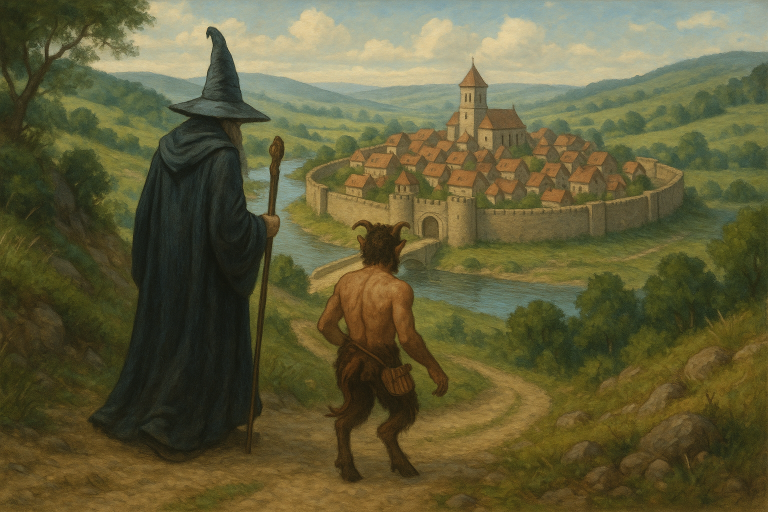
Evolution in Later Traditions: As Greek mythology blended with Roman traditions, satyrs were increasingly conflated with fauns, the Roman equivalent. In medieval and Renaissance art, satyrs appeared in pastoral scenes, often as romanticized figures of rustic charm. By the modern era, they became stock characters in fantasy literature and media, appearing in works like C.S. Lewis’s The Chronicles of Narnia (as fauns and satyrs) and Rick Riordan’s Percy Jackson series, where they are depicted as protectors of nature.
Differences Between Satyrs and Fauns
While satyrs and fauns are often confused due to their similar appearances and roles in mythology, they originate from distinct cultural traditions and have subtle differences in characterization.
1. Cultural Origins:
• Satyrs: Greek in origin, tied to Dionysus and the wild, ecstatic aspects of Greek religion. They appear in early Greek literature and art, such as Homeric hymns and Attic vase paintings.
• Fauns: Roman in origin, associated with the god Faunus, a deity of the forest, fields, and fertility (akin to the Greek Pan). Fauns are rooted in Roman rustic and pastoral traditions, appearing in works like Ovid’s Metamorphoses (circa 8 CE).

2. Physical Appearance:
• Satyrs: Early satyrs had horse-like features (e.g., tails, ears), but later Greek and Roman art depicted them with goat-like traits (horns, hooves, furry legs). They often have exaggerated sexual features, emphasizing their lustful nature.
• Fauns: Consistently depicted with goat-like features, such as small horns, pointed ears, and cloven hooves, resembling the god Pan. Fauns are generally less overtly sexual in depiction, with a softer, more pastoral appearance.
3. Personality and Behavior:
• Satyrs: Known for their rowdy, hedonistic behavior, including drunkenness, lust, and mischief. They are chaotic and often disruptive, embodying the wild energy of Dionysian worship.
• Fauns: Gentler and more pastoral, fauns are associated with the tranquility of the countryside. They are playful and musical but less aggressive or lascivious than satyrs, often depicted as shy or benevolent protectors of nature.
4. Mythological Roles:
• Satyrs: Companions of Dionysus, they participate in his revels and are central to satyr plays in Greek theater. Their stories often involve chasing nymphs or causing trouble in their pursuit of pleasure.
• Fauns: Linked to Faunus and the rustic Roman landscape, they are more localized spirits of the forest and fields. They are less tied to grand mythological narratives and more to pastoral poetry, like Virgil’s Eclogues.
5. Cultural Evolution:
• Satyrs: Retained their wild, Dionysian character in Greek and early Roman contexts but became more romanticized in later European art, blending with faun imagery.
• Fauns: In Roman and later traditions, fauns became symbols of pastoral innocence and rustic charm, especially in Renaissance and neoclassical art (e.g., Poussin’s paintings). They are less associated with chaos and more with idyllic nature.
Key Similarity: Both satyrs and fauns are hybrid creatures (half-human, half-goat by later depictions) associated with nature, music, and fertility. Their conflation in Roman times and later art led to overlapping imagery, particularly in the shared goat-like features inspired by Pan.
Key Difference: The primary distinction lies in their cultural tone: satyrs are wild, chaotic, and tied to Dionysian excess, while fauns are gentler, pastoral, and linked to Roman rustic traditions. Think of satyrs as the rowdy partygoers of mythology and fauns as the quiet, flute-playing shepherds.

In Dungeons & Dragons, satyrs (and fauns, who are often considered the same or a very similar race) are a type of Fey creature. They are known for their carefree, hedonistic, and whimsical nature, embodying the wild and untamed aspects of nature.
Here’s a summary of their role:
Fey Creatures: Satyrs are native to the Feywild, a plane of existence that is a more magical, beautiful, and perilous reflection of the Material Plane. This connection to the Feywild gives them a natural resistance to magic and an affinity for nature.
Reverly and Mischief: Satyrs are famous for their love of music, wine, dancing, and general merriment. They are often depicted playing panpipes that can charm or lull creatures to sleep. Their boisterous celebrations, or revels, are a core part of their identity.
Playable Race: Satyrs are a playable race in some D&D sourcebooks, most notably Mythic Odysseys of Theros. As a player character, they often get a bonus to Charisma and Dexterity, reflecting their charming and agile nature. Their racial abilities include magic resistance, proficiency in certain skills, and the ability to jump higher and farther.
Historical Conflation: Historically, in D&D and other fantasy settings, the terms “satyr” and “faun” have been used interchangeably. While some lore might differentiate them (e.g., satyrs being more closely associated with goats and fauns with deer), in D&D they are generally treated as the same creature with the same characteristics.
Relationship to other Races: Satyrs often have friendly relationships with other Fey creatures like dryads and centaurs. They are generally wary of mortals but can be enticed with good food, drink, and a good time.
Conclusion
Satyrs are vibrant, chaotic figures from Greek mythology, embodying the untamed spirit of nature and Dionysian revelry. Fauns, their Roman counterparts, share similar traits but lean toward a more serene, pastoral identity. While their visual depictions merged over time, their origins and temperaments distinguish them in mythological lore.




 English
  Deutsch
  Français
  Português do Brasil
  日本語
日本語  Español
  English (Australia)