

The Dream Match That Never Was: Sting vs. The Undertaker
Welcome to another deep dive into the world of action figures and the legends they represent. At FantasyActionFigures.com, we celebrate the stories behind the plastic heroes, from epic battles in distant galaxies to the squared circle of professional wrestling. Today, we’re stepping into the ring with two icons whose paths crossed in our imaginations but never in reality: Sting and The Undertaker. Using meticulously posed action figures, we’ll recreate the buildup and the match that fans have dreamed about for decades. This isn’t fan fiction—it’s a nostalgic exploration grounded in wrestling history, visualized through the timeless appeal of collectible figures.
Before we unleash the figures into the fray, let’s ground this in the real world. Why did Sting vs. The Undertaker never happen? It’s a question that has haunted wrestling fans since the 1990s. Sting, whose real name is Steve Borden, spent the bulk of his prime years in World Championship Wrestling (WCW), where he became a franchise player. From his colorful “Surfer Sting” days to the brooding “Crow” persona that defined his war against the New World Order (nWo), he was WCW’s beacon of hope during the Monday Night Wars. Meanwhile, Mark Calaway, better known as The Undertaker, was the undead cornerstone of the World Wrestling Federation (WWF, now WWE). Debuting at Survivor Series 1990, he embodied mystery and invincibility, with his WrestleMania streak becoming legendary.
The promotions were bitter rivals, making crossovers impossible until WWE acquired WCW in 2001. By then, Sting had chosen to stay away from WWE, citing creative concerns and a desire to preserve his character’s integrity. He wrestled in TNA (now Impact Wrestling) from 2003 to 2014, building a legacy outside Vince McMahon’s empire. When Sting finally signed with WWE in 2014, anticipation skyrocketed for a dream match against The Undertaker. Both were in their 50s, but their mystique remained unmatched. However, fate intervened. Sting debuted at Survivor Series 2014, leading to a WrestleMania 31 clash with Triple H instead. Plans for Undertaker vs. Sting were reportedly discussed, but according to wrestling journalist Dave Meltzer and Undertaker himself on his “Six Feet Under” podcast, Vince McMahon simply didn’t see the value in it. McMahon allegedly viewed Sting as not on The Undertaker’s level, despite fan demand. Injuries played a role too—Sting suffered a career-ending neck injury in a 2015 match against Seth Rollins, while Undertaker was selective with his appearances, focusing on preserving his aura. Timing, egos, and corporate decisions conspired against it. As Undertaker reflected, “It just didn’t work out.” Fans were left with “what ifs,” much like the non-closure we’ll embrace here. Now, let’s turn to the figures to bring this phantom feud to life.
The Early Careers: From Humble Beginnings to Iconic Personas
To understand the gravity of this dream match, we must rewind to the origins of these two titans. Using action figures from their early eras, we can recreate snapshots of their journeys, highlighting how they evolved from rookies to legends. These poses aren’t just static—they tell a story of grit, reinvention, and the wrestling business’s unforgiving nature.
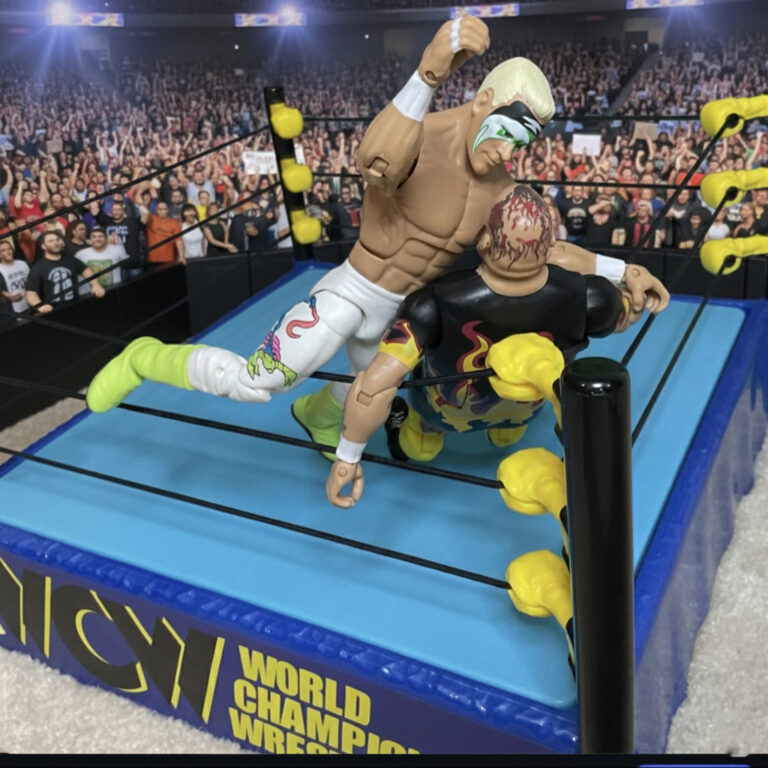
Sting’s wrestling odyssey began in 1985 under the name Flash Borden, but he quickly teamed up with Jim Hellwig (later The Ultimate Warrior) as part of The Blade Runners in the Universal Wrestling Federation (UWF). Clad in face paint and leather, they were raw powerhouses, learning the ropes in tag team warfare. By 1987, Sting had gone solo in WCW, adopting the “Surfer Sting” gimmick—a bleach-blond, charismatic babyface with neon tights and boundless energy. He feuded with the likes of Ric Flair and The Four Horsemen, capturing his first WCW World Heavyweight Championship in 1990 at The Great American Bash. This era defined Sting as WCW’s everyman hero, resilient against heels and corporate takeovers.
Contrast that with The Undertaker’s ascent. Mark Calaway entered the scene in 1987 with World Class Championship Wrestling (WCCW) as Texas Red, a masked giant in red attire, honing his skills in brutal brawls. He bounced through promotions like the Continental Wrestling Association (CWA) as The Master of Pain and The Punisher, before landing in WCW briefly as Mean Mark Callous, managed by Paul E. Dangerously (Paul Heyman). It was in WWF where he transformed. At Survivor Series 1990, managed by Brother Love (later Paul Bearer), The Undertaker debuted as a zombie-like mortician, no-selling attacks and tombstoning opponents. His early feuds with Hulk Hogan and Jake “The Snake” Roberts solidified his supernatural gimmick, leading to multiple WWF Championships.
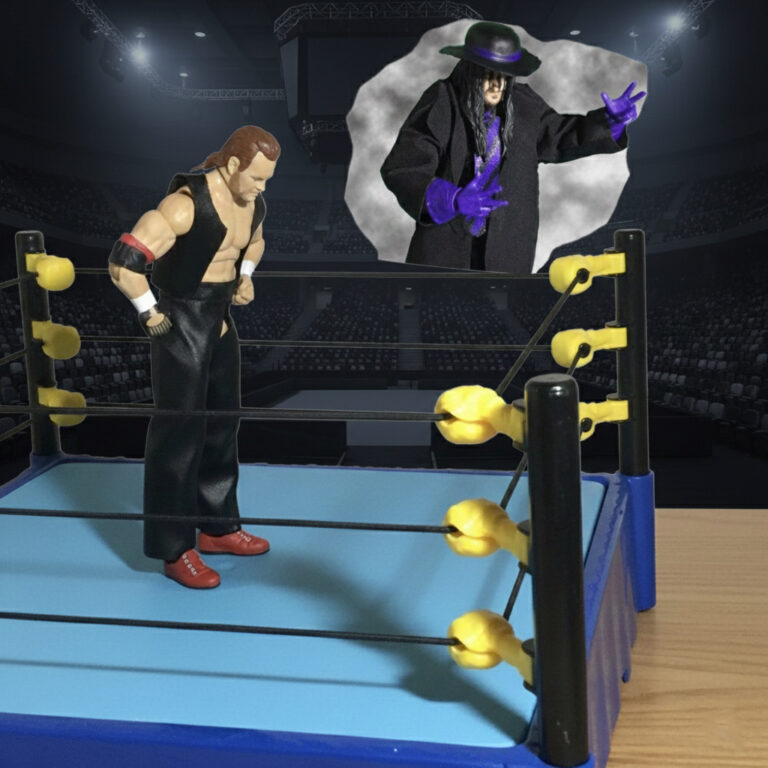
These early years were marked by trial and error. Sting’s transition from tag team brute to solo star required charisma and adaptability, while Undertaker’s gimmick evolution demanded commitment to kayfabe—staying in character at all times. Imagine posing these figures side by side: the vibrant Sting clashing with the somber Undertaker, foreshadowing a battle of light versus darkness.
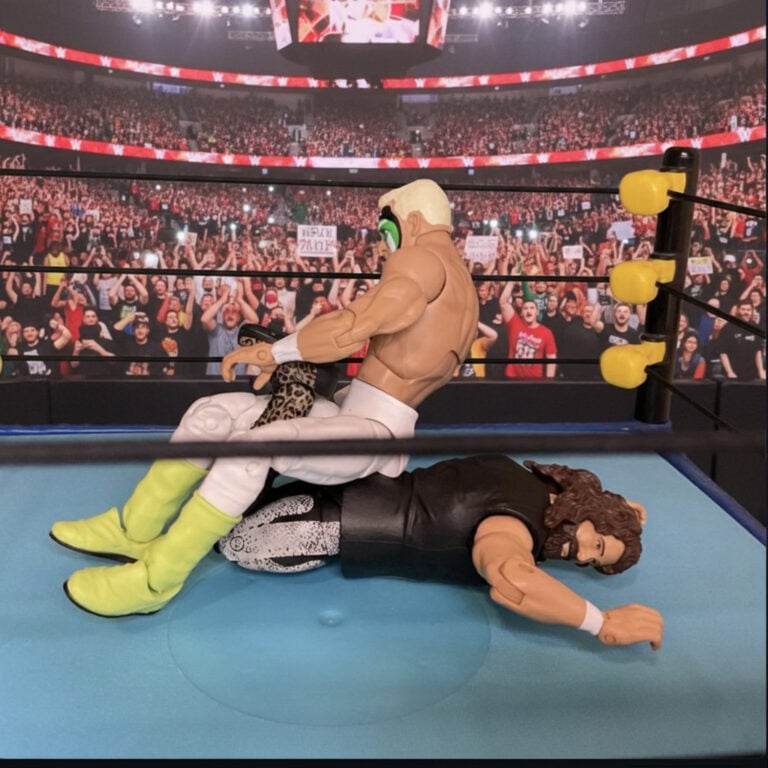
Diving deeper, Sting’s 1990s saw him battle legends like Vader and Hulk Hogan, but it was the 1996 arrival of the nWo that birthed his Crow persona. Inspired by the film “The Crow,” Sting went silent and vengeful, descending from rafters with a baseball bat to combat the invaders. This reinvention kept him relevant amid WCW’s chaos. Undertaker, meanwhile, faced his own trials—feuds with Mankind (Mick Foley) pushed his limits, culminating in brutal matches like Buried Alive and Boiler Room Brawls. His 1997-1998 run included the infamous Hell in a Cell against Mankind at King of the Ring 1998, where Foley took death-defying bumps off the cell.
These foundational periods built their mystiques. Sting represented hope and vigilance; Undertaker, inevitable doom. Through action figures, we can capture these evolutions—posing them in recreated vignettes that honor their histories without altering facts.
Building the Hype: The Road to Confrontation
With their backstories set, let’s build the anticipation for this hypothetical clash. In the world of action figures, we can simulate the promos, vignettes, and rivalries that would have led to Sting vs. Undertaker. Picture a custom diorama: a dimly lit arena, fog machines, and dramatic lighting to set the scene.
Sting’s Crow era (1996-1999) was WCW’s answer to darkness invading the light. Silent, cloaked in black, he struck from the shadows, bat in hand, against Hollywood Hogan and the nWo. The Undertaker’s Deadman phase, especially post-1998, amplified his supernatural elements—lightning strikes, druid escorts, and resurrections. A feud would have pitted vigilante justice against eternal judgment.
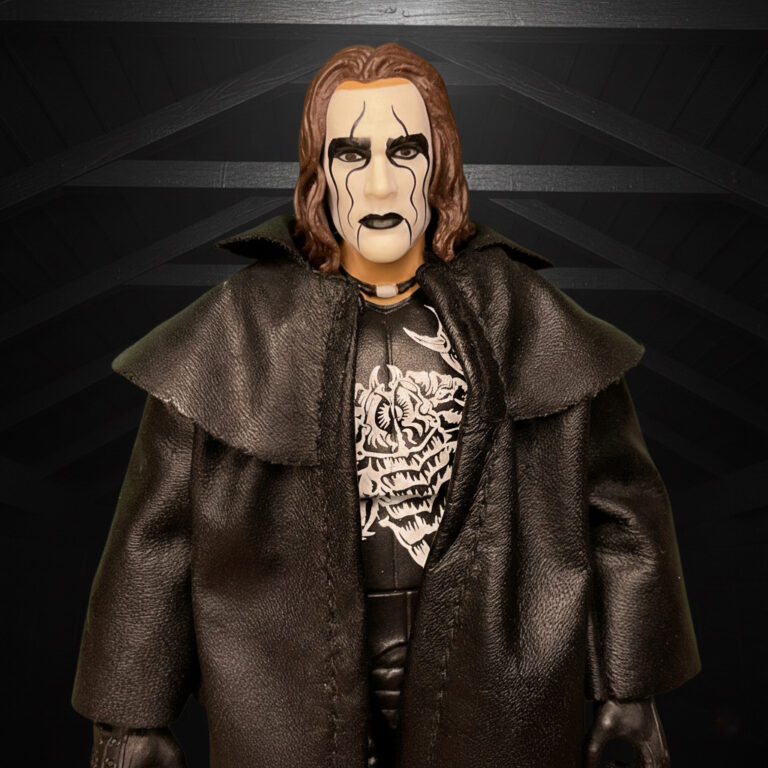
Imagine the buildup starting on a fictional “Monday Night Raw” episode. The lights dim, Undertaker’s gong echoes, and he cuts a promo: “Sting, you lurk in the rafters like a crow scavenging the dead. But I am the reaper. At WrestleMania, your soul will rest… in… peace.” Cut to Sting, figure posed in the crowd with overcoat draped, bat raised silently in response—no words needed, just intensity.
Weeks of vignettes follow. One shows Undertaker in a graveyard, burying a Sting effigy. Another has Sting ambushing Ministry of Darkness members (Undertaker’s faction) with bat strikes. The hype mirrors real rivalries: Sting’s nWo wars taught him guerrilla tactics, while Undertaker’s battles with Kane honed his resilience.
As tension mounts, entrance rehearsals become key. Sting’s figure descends via string rig, coat billowing, bat gleaming. Undertaker’s rolls in with druids, urn glowing, hat shadowing his eyes.
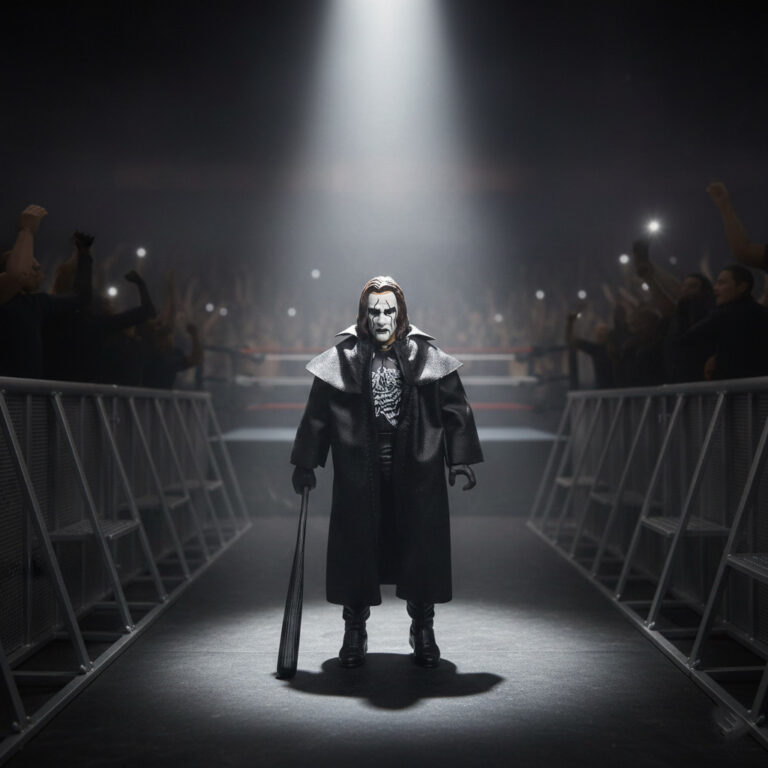
This buildup isn’t speculation; it’s rooted in their real gimmicks. Sting’s Crow was about silent rebellion, Undertaker’s about orchestrated fear. Through figures, we visualize the promos that never aired, the stares that never locked.
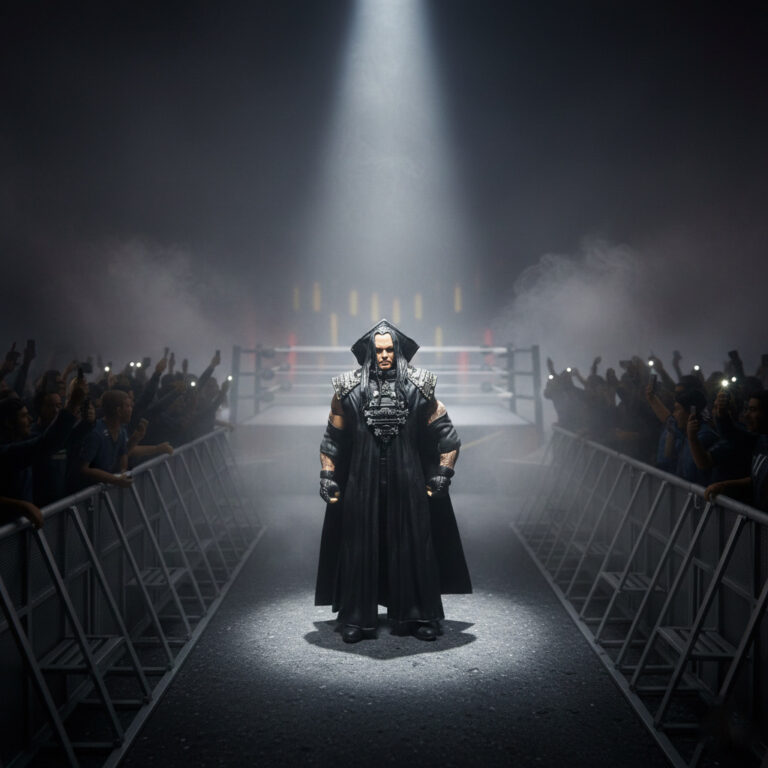
The Match: Kayfabe Clash of Titans
Now, the bell rings. We’re in full kayfabe mode—treating this as a legitimate WWE event, circa late 1990s peak. The arena: a custom Hell in a Cell structure, nodding to Undertaker’s iconic match with Mankind. No escapes, no mercy. Sting’s Crow figure enters first, shedding the overcoat to reveal black tights, face paint stark white against the shadows. Baseball bat left at ringside, per rules. Undertaker follows, Hell in a Cell attire—black and purple gear, gloves, and that unyielding stare from his 1998 defining moment.
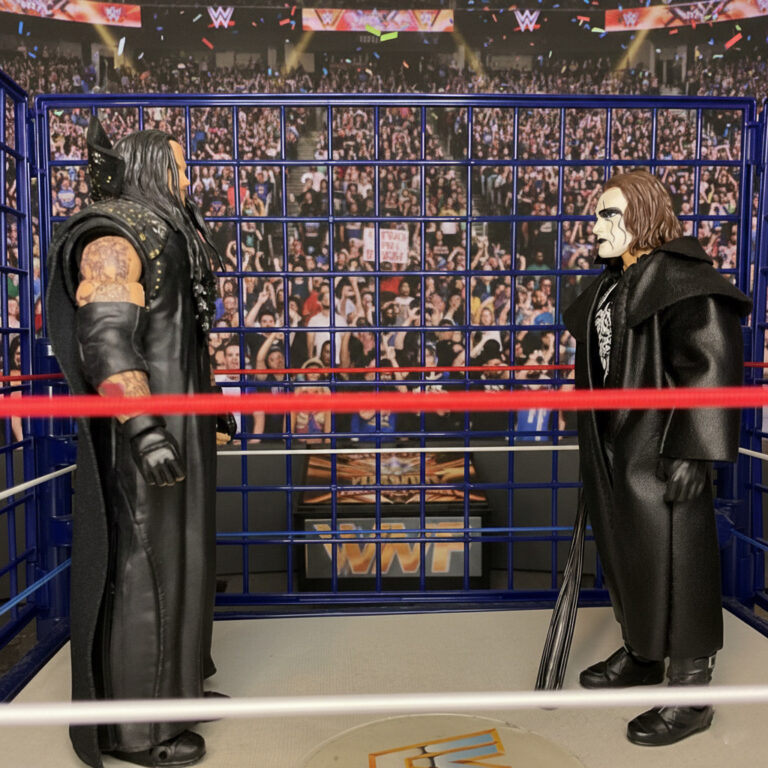
The referee signals, and they circle. Sting strikes first with a boot to the midsection, followed by rapid punches echoing his Scorpion Death Drop setup. Undertaker no-sells, grabbing Sting by the throat for a chokeslam attempt. Sting counters with a knee lift, sending the Phenom staggering. The crowd (imagined through figure dioramas) erupts.
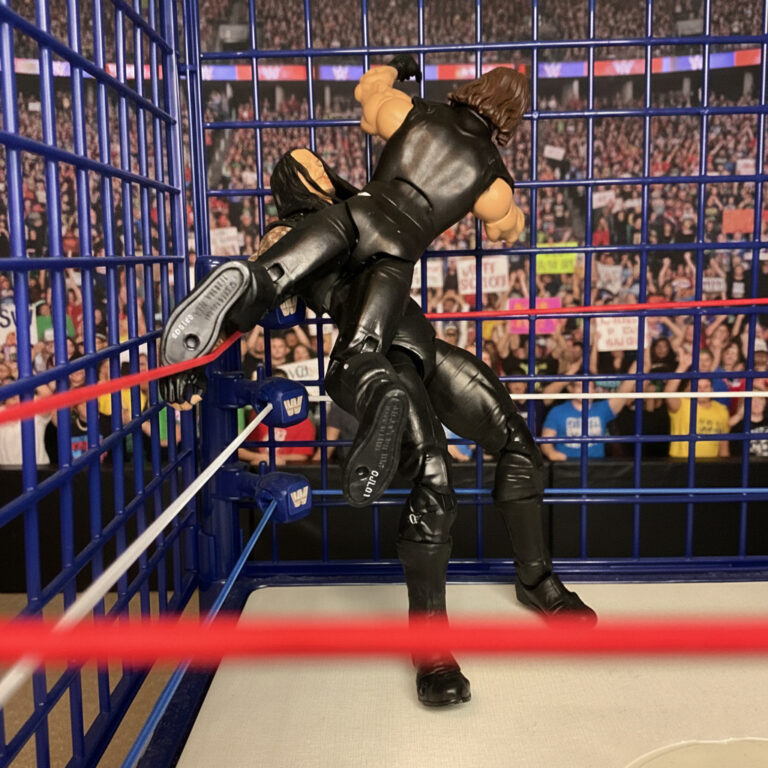
Early exchanges favor Sting’s agility. He whips Undertaker into the corner, follows with a Stinger Splash—figure posed mid-leap, impacting the turnbuckle. Undertaker reels but retaliates with a big boot, leveling Sting. Ground and pound ensues: Undertaker’s soup bones (punches) rain down, but Sting rolls away, kipping up in classic resilient fashion.
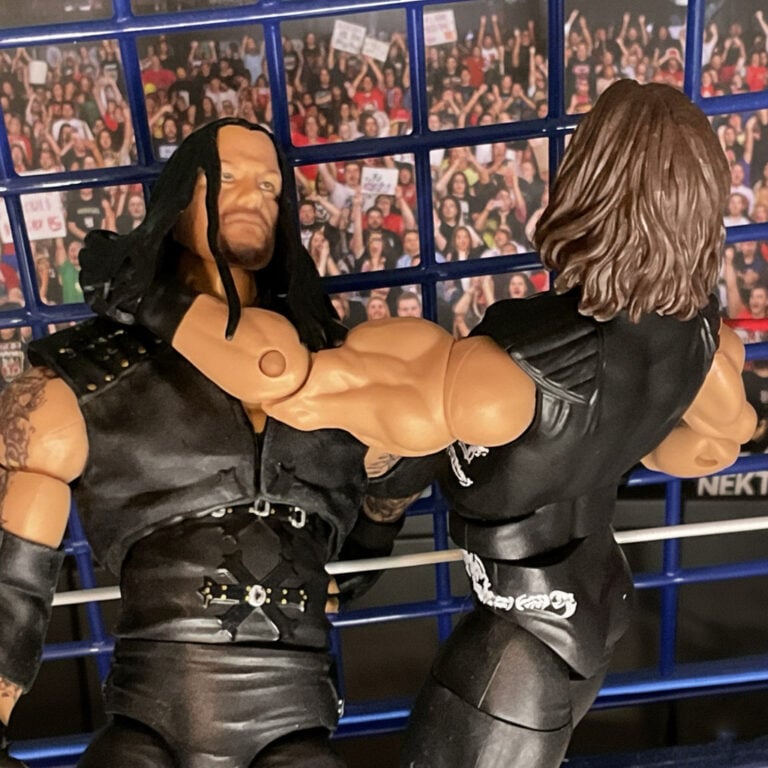
Momentum shifts as Undertaker unleashes his arsenal. A leg drop across the throat, then a snake eyes drop on the turnbuckle. Sting fights back with scorpion leg sweeps, targeting the knees to ground the giant. They brawl outside the ring, slamming each other into the cell—figures dented props simulating chain-link impacts.
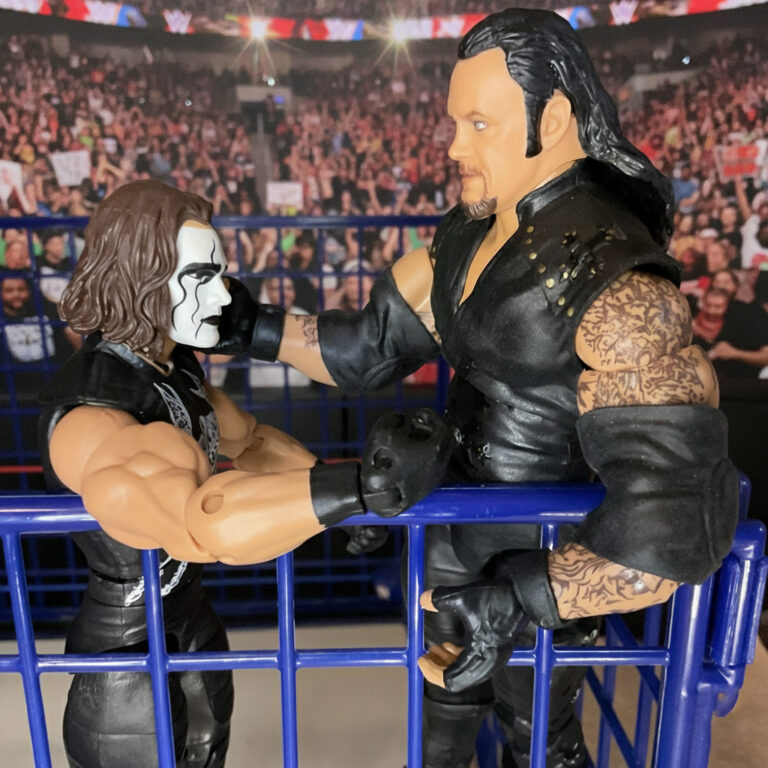
Climax builds
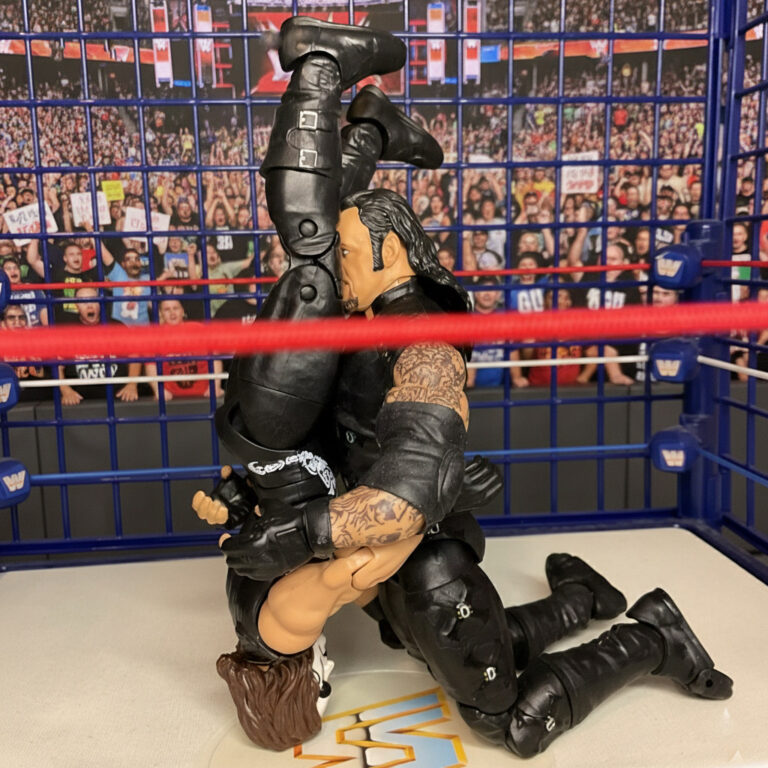
Sting locks in the Scorpion Deathlock, wrenching Undertaker’s legs. The Deadman powers out, sitting up undead-style. He hoists Sting for a Tombstone Piledriver, but Sting reverses into a DDT. Both down, the ref counts… 1… 2… 3… but they stir at 9.
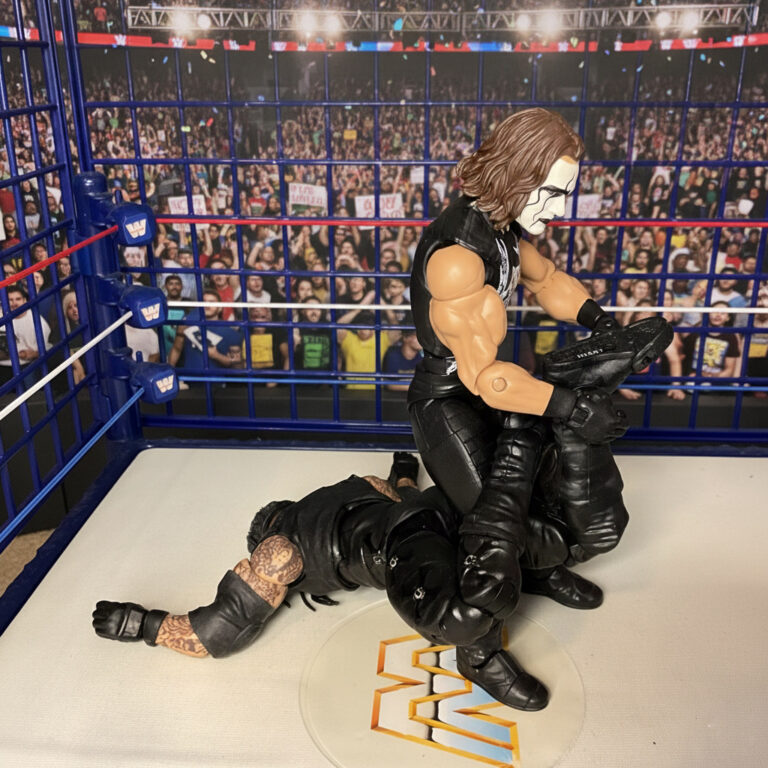
Escalation
Weapons enter via kayfabe logic. Sting grabs his bat from under the ring (a nod to his vigilante ways), cracking it across Undertaker’s back. Undertaker responds with a chair shot, echoing his hardcore history. Blood (red paint on figures) flows symbolically.
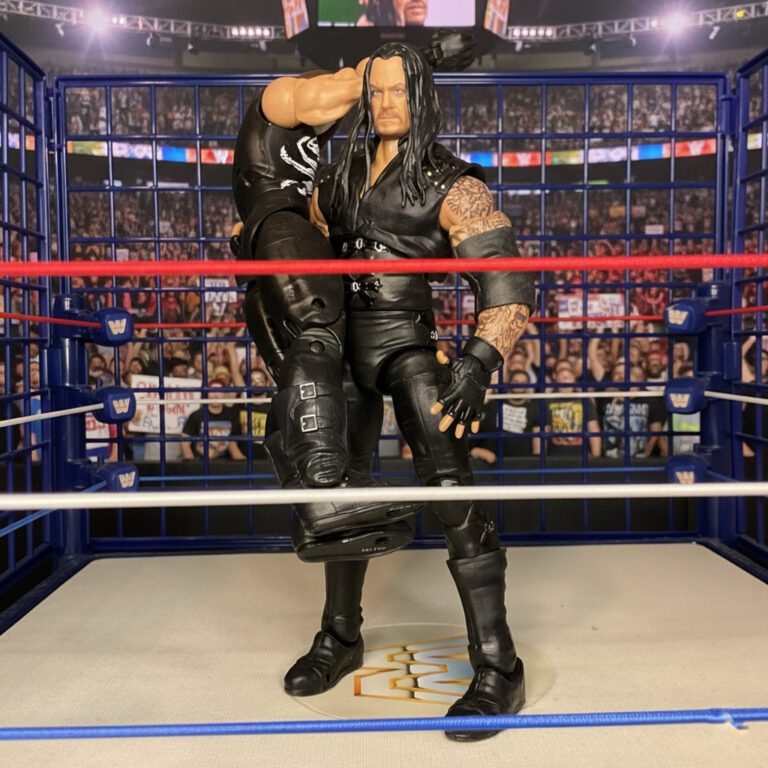
They climb the cell, recreating danger. Sting teeters on the edge, bat in hand; Undertaker pursues. A mistimed move sends both crashing through the roof (carefully posed collapse). Inside, chaos: Last Ride powerbomb from Undertaker, countered by Sting’s Scorpion Death Drop.
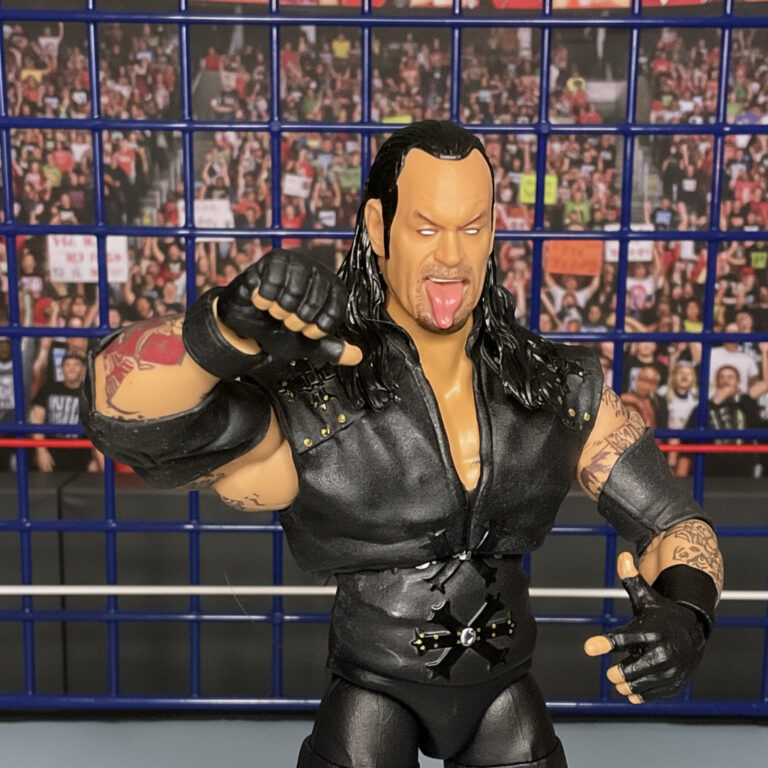
As the match hits 20 minutes, exhaustion sets in. Both attempt finishers—Undertaker’s Tombstone connects, but Sting kicks out at 2.9. Sting’s Death Drop follows, same result. They brawl to the outside again, slamming into the cell repeatedly.
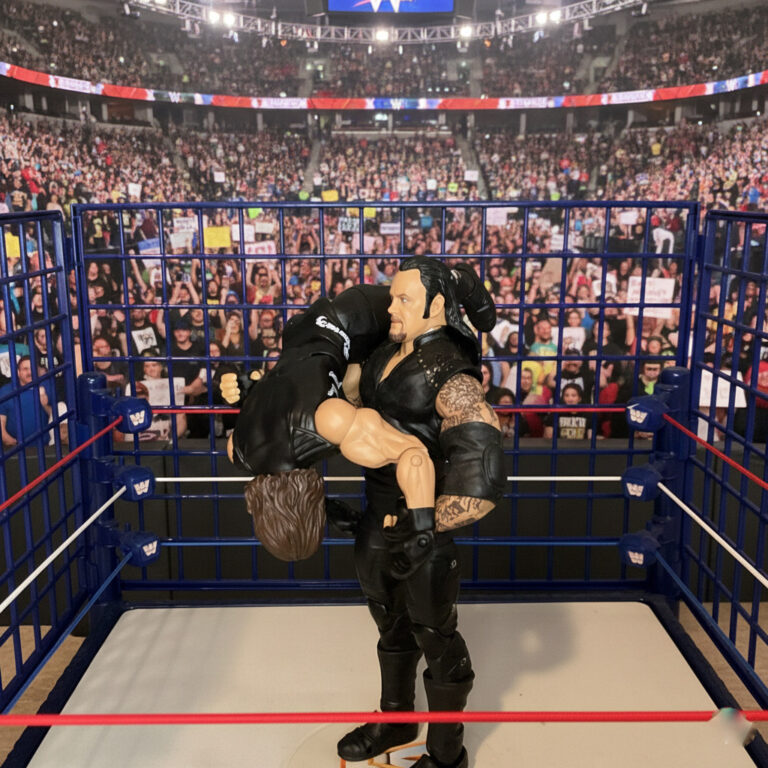
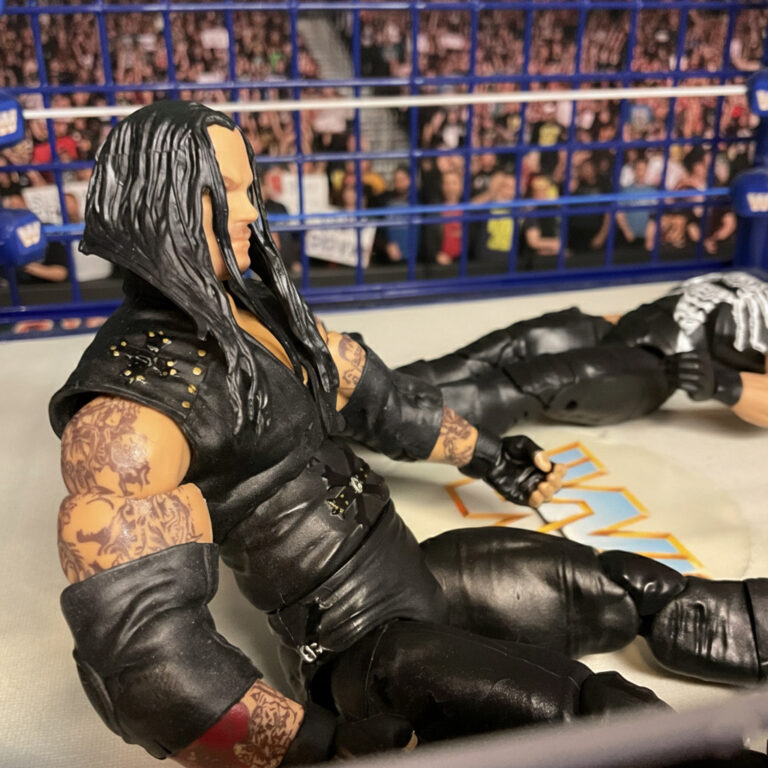
The ref counts them out as they lay motionless outside—double count-out. No pin, no submission. The bell rings, but the war feels unfinished. Lights flicker, Undertaker sits up; Sting stirs in the shadows. Fade to black.
Conclusion: Eternal What-Ifs and Figure Legacy
In the annals of wrestling lore, Sting vs. The Undertaker remains a phantom masterpiece—a match that teases but never delivers closure. Through these action figures, we’ve honored their histories, from early struggles to peak mystiques, without inventing outcomes. The double count-out preserves the mystery: Who would have won? We’ll never know, much like in real life. Collectibles like the Crow Sting with bat and Hell in a Cell Undertaker keep these legends alive, inviting fans to pose their own scenarios. At FantasyActionFigures.com, this is what we cherish—nostalgia without the drama. What dream match will we recreate next?
Check out: Wrestling Lore: The Vader and Stevie Ray Incident
 English
  Deutsch
  Français
  Português do Brasil
  日本語
日本語  Español
  English (Australia)