

Why Blast-Attak is the Most Volatile Villain in the Masters of the Universe Origins Line
The Walking Time Bomb: A Look at MOTU Origins Blast-Attak
Back in 1987, the Masters of the Universe (MOTU) line was entering what historians—and slightly confused parents—might call its “experimental” phase. The brand was transitioning from barbarian fantasy into a neon-soaked, sci-fi fever dream. While that final vintage wave managed to deliver absolute icons like the ethereal Scare Glow and the stealthy Ninjor, it also birthed Blast-Attak, a character that feels like the result of a late-night dare in the Mattel design lab. You have to admire the sheer audacity of a villain whose primary tactical advantage is blowing himself to smithereens. He is quite literally the only henchman in Eternia who requires a broom and a dustpan more often than a healer.
The new Masters of the Universe Origins version leans heavily into that 80s absurdity, perfectly capturing the chunky, retro build that fans remember from the twilight of the original run.
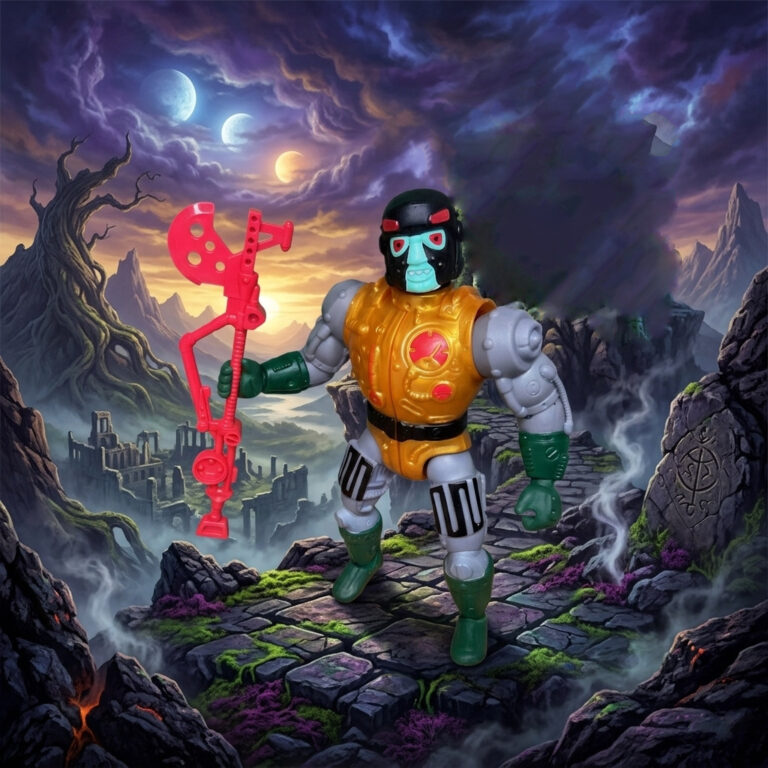
There’s a certain “industrial chic” to his design; he’s hefty, unapologetically robotic, and looks as though he was cobbled together from spare parts found in the back of Trap Jaw’s garage. While some might argue that a warrior who explodes upon impact is a sign that the writers were hitting the caffeine a bit too hard toward the end of the line, there is no denying that his silhouette stands out on a shelf.
The Origins update preserves that glorious bulk, giving him a presence that feels more like a piece of heavy machinery than a standard soldier. He isn’t sleek or agile; he is a tank that happens to be his own ammunition. This figure captures the weird pivot point of the late 80s where the line moved away from “Masters of the Universe” and toward “Masters of the Mechanical Engineering Department.” Whether you find his self-immolating gimmick to be a stroke of genius or a hilariously desperate attempt to find a new action feature, Blast-Attak remains a fascinating relic of Eternian history. He represents a time when the stakes were high, the designs were wild, and the “good guys” had to figure out how to fight a man who is essentially a sentient frag grenade.
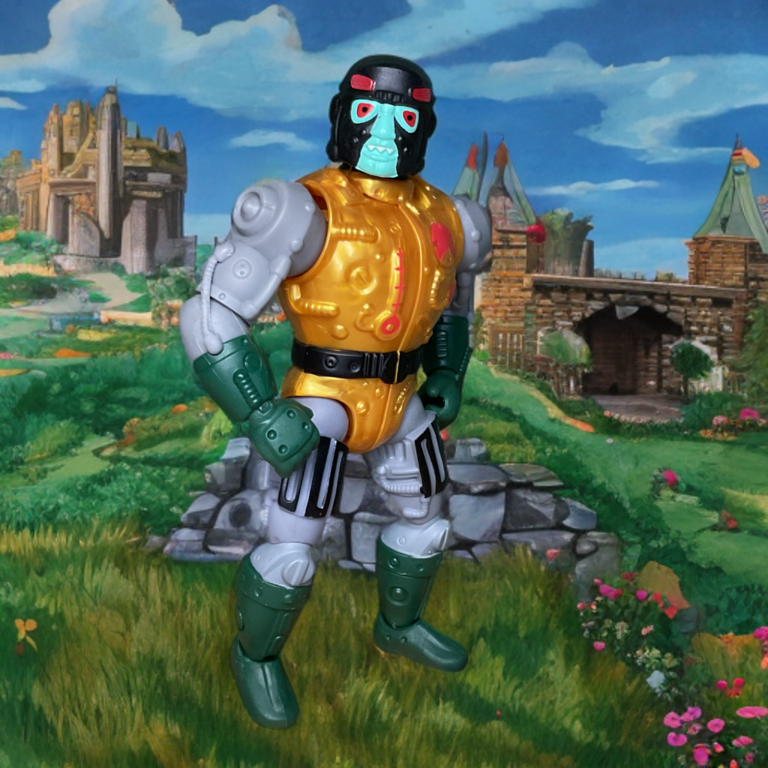
The Breakdown (Literally)
The Origins Blast-Attak stays true to the “Program Robot” aesthetic. He features a mechanical, bulky sculpt that feels substantial in hand. Of course, the main event is his signature action feature:
The Split: Using the included detonator unit’s pump trigger, you can trigger his internal timer (metaphorically speaking) and watch the figure split into two distinct halves.
The Arsenal: He comes equipped with his classic techno-style halberd, perfect for poking enemies before he decides to go nuclear.
The Presentation: The collectible packaging features vibrant new artwork of his battle exploits and includes an all-new mini-comic to flesh out his role in the current narrative.
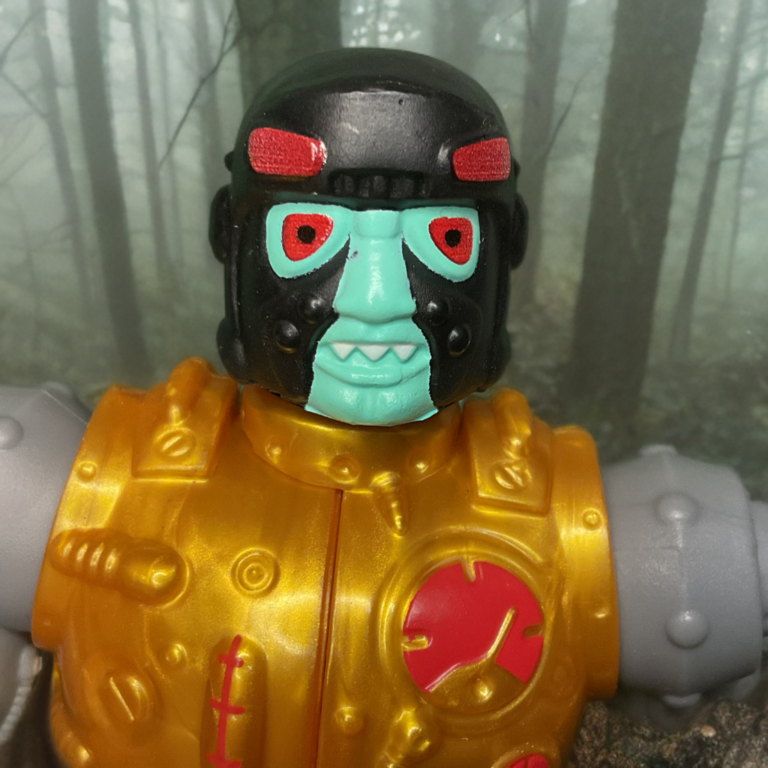
Official Character Biography: The Mechanical Menace
Blast-Attak – Program Robot Serial Number 1710
Originally constructed within the hidden laboratories of the Scientists of Prahvus, Blast-Attak was never intended to be a mere soldier; he was engineered as a mobile weapon of mass destruction. A marvel of dark technology, this robotic mercenary is governed by a singular, unwavering program: the total devastation of any target designated by his masters. Unlike organic warriors who rely on skill or magic, Serial Number 1710 operates on cold, pitiless logic, viewing every battlefield as an equation to be solved through explosive force.
As an autonomous android, his primary offensive capability is as terrifying as it is efficient. Blast-Attak possesses the unique ability to harness his internal power core to build up immense pressure to a critical, volatile point. Upon reaching this threshold, he triggers a controlled thermal-nuclear explosion that levels everything in his immediate vicinity. While such an act would be a final sacrifice for any other entity, Blast-Attak is a masterwork of self-sustaining engineering.
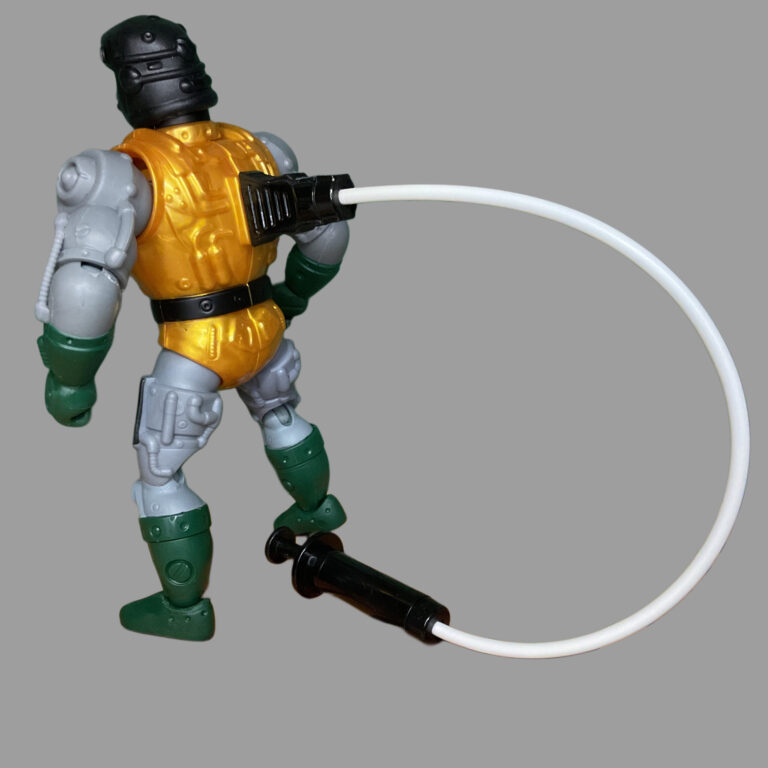
His sophisticated systems are designed for instantaneous self-repair. Following a detonation, his scattered components utilize a high-intensity magnetic recall system, drawing his armored body parts back together with violent speed. This allows him to reassemble in seconds, standing tall amidst the smoking ruins of his enemies to continue his assault. Throughout his history, his allegiances have shifted—having been utilized by the Snake Men to sow terror and sought after by the Evil Warriors for his sheer raw power—but his internal circuits remain loyal only to his core directive. He is a relentless, unfeeling engine of chaos, programmed to ensure that no victory for the side of good remains standing.
Final Thoughts: The Glory of Explosive Absurdity
Is Blast-Attak a bit silly? Absolutely. But in the grand tapestry of Eternia—a world where a man wears a literal grandfather clock on his chest and a bee-humanoid flies into combat in fuzzy platform boots—a self-destructing robot actually starts to feel grounded, if not outright logical. He arrived at a time when the Masters of the Universe line was throwing everything at the wall to see what stuck, and while some designs hit the mark of “mythic cool,” Blast-Attak landed squarely in the territory of “glorious toyetic mayhem.”
He might lack the dark, Shakespearean charisma of Skeletor or the shadowed, lethal mystery of Ninjor, but his bulky silhouette and bizarre play feature make him a quintessential piece of late-80s nostalgia. He serves as a plastic time capsule from an era when the only thing bigger than the muscles in the toy aisles were the unhinged creative risks being taken behind the scenes. There is a certain poetic irony in a collectible figure that is engineered specifically to be broken; it defies the usual collector instinct to keep everything pristine and instead invites you to embrace the chaos.
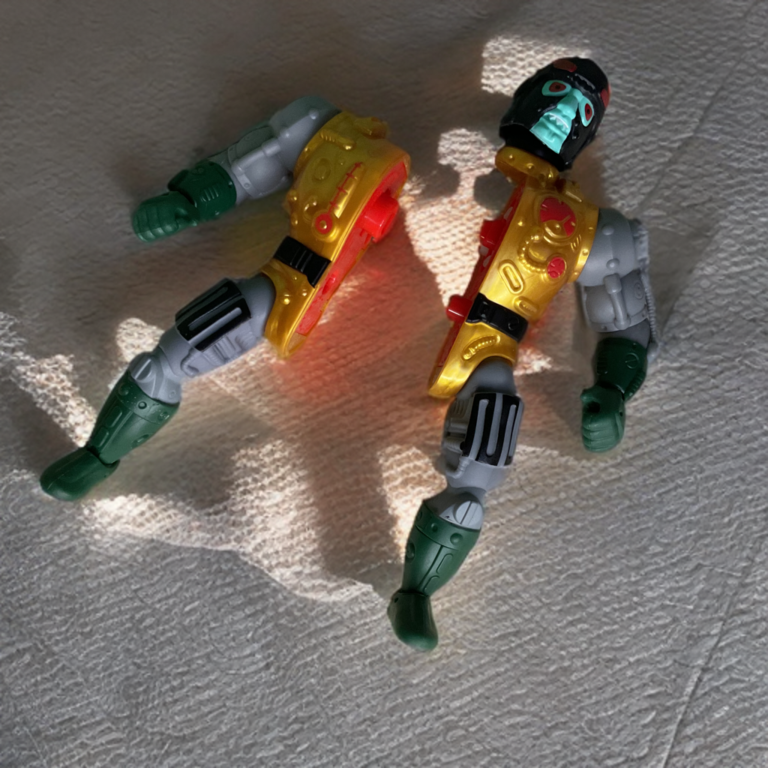
Even if he wasn’t a front-runner in your childhood battles, it is difficult not to appreciate the engineering of a character whose entire personality is “I blow up and then I’m fine.” He represents the peak of the “gimmick era,” a period that prioritized high-concept play features over traditional lore. The Origins release honors that legacy, giving us a version that feels premium while retaining the clunky charm of a robot that was clearly designed by someone who thought, “What if we just made a grenade with legs?” In the end, Blast-Attak isn’t just another henchman; he is a reminder that the best parts of this franchise are often the ones that don’t take themselves too seriously. He came into the world as a walking demolition derby, and decades later, he’s still the most explosive guest at the party.

 English
  Deutsch
  Français
  Português do Brasil
  日本語
日本語  Español
  English (Australia)