

Top 5 Underrated Warrior Beasts Figures for Your Shelf
In the golden era of 1980s action figures, Remco’s Warrior Beasts line emerged as a gritty, beastly counterpart to the polished heroes of Mattel’s Masters of the Universe (MOTU). Released in 1982, these 5.5-inch villains were designed as foes for Remco’s own Lost World of the Warlord series, but their monstrous designs and compatibility with other fantasy lines made them instant favorites for imaginative play. Often overlooked in favor of more mainstream toys, the Warrior Beasts captured the raw, primal energy of the decade’s fantasy boom, with their snarling heads, muscular bodies, and simple yet effective accessories.
This top 5 list spotlights the most underrated figures from the line: Gecko (Version 1), Wolf Warrior, Hydraz, Zardus, and Craven. We’ll delve into their intricate sculpt details, highlighting the craftsmanship that went into their beastly features and poses. Play value will be explored through their articulation, weapon compatibility, and how they enhanced epic battles. Nostalgic memories from 80s kids—gleaned from forums, YouTube retrospectives, and collector anecdotes—will bring to life how these figures were mixed with He-Man, Skeletor, and other lines for backyard adventures that blurred the lines between official canon and kid-created lore.
Drawing from collector guides, eBay listings, and fan discussions, this article not only celebrates these underappreciated beasts but also provides practical insights like a price chart based on recent market data. Whether you’re a seasoned collector hunting for variants or a newcomer rediscovering 80s nostalgia, these Warrior Beasts deserve a spot on your shelf. Let’s roar into the details!
1. Gecko (Version 1)
The iconic purple variant from Remco’s 1982 Warrior Beasts line, remains one of the most visually captivating and underrated lizard-men figures of the 1980s action figure boom. This bold, single-color purple sculpt captures the essence of a cunning, reptilian villain—often positioned as a stealthy ambush predator in the beastly ranks—while delivering that raw, primal fantasy energy that made Remco’s knock-off-inspired toys so appealing to kids mixing them with Masters of the Universe (MOTU) heroes. As the rarer and more striking of the two main Gecko colorways (purple vs. the later green/yellow Version 2), Version 1 stands out for its otherworldly hue, making it a collector favorite and a perfect “dark lizard” foil to heroic figures like He-Man.
Sculpt Details
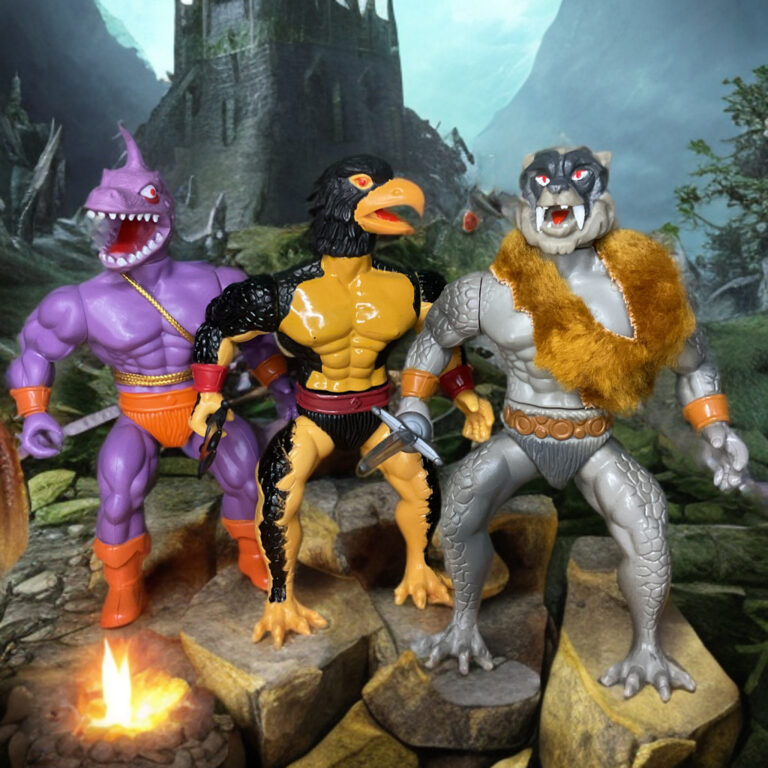
Gecko Version 1’s sculpt is a masterclass in 80s budget-line creativity, blending a muscular humanoid body with exaggerated reptilian features for maximum menace. The head is the undisputed star: a fierce, elongated lizard snout with a wide-open maw full of jagged white teeth, a protruding tongue (often molded in bright red plastic for contrast), and small, beady eyes that give him a cold, calculating stare. A single prominent horn or spike rises from the top of the head like a sinister crest, adding to his demonic lizard-man vibe. The head is fully purple, with subtle molded scales and ridges along the cheeks and jawline for texture—simple but effective detailing that makes the face pop even without heavy paint apps.
The body follows the Warrior Beasts’ standard muscular template—broad, over-the-top shoulders, chiseled pectorals, defined abs, and powerful limbs—but customized with reptilian flair. Raised scale patterns cover the torso, arms, and legs in molded relief, creating a textured, armored hide look that’s tactile and visually interesting. The purple plastic gives the entire figure a uniform, alien glow, with no major color breaks except for accents: orange-brown wrists and boots (molded in a contrasting tan/orange plastic for a barbaric, tribal feel), and a gold rope or sash wrapped around the chest and waist like a primitive bandolier or harness. This gold rope accessory is unique to Version 1 in many collector accounts, adding a nomadic warrior touch and distinguishing it from later variants.
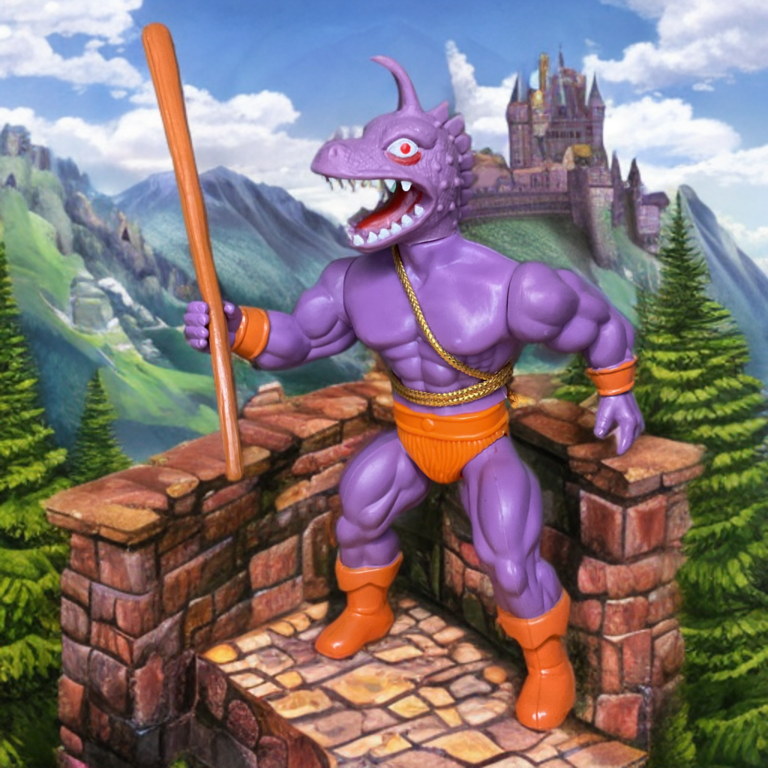
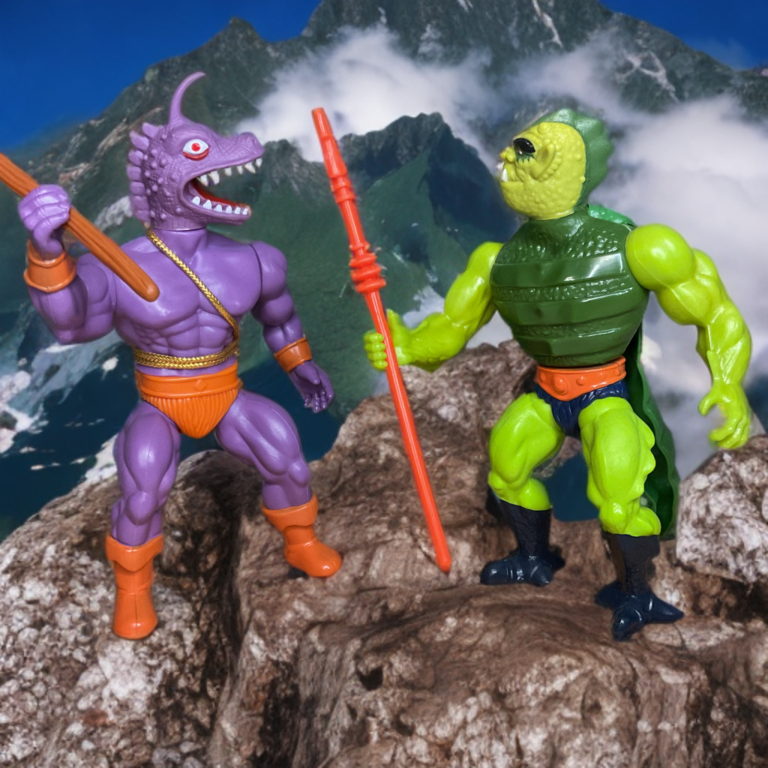
The lower body features an orange loincloth or skirt-like molding with fringed edges, cinched by a simple belt, and thick, clawed feet for stability in dynamic poses. Hands are sculpted with curled fingers and claws, gripping accessories tightly. The overall stance is crouched and ready-to-strike, with slightly bent knees and forward-leaning torso that screams ambush predator. Paint is minimal (eyes often white or yellow dots, perhaps red tongue accents), but the bold purple dominates, making wear over time add character rather than detract. Variants are mostly color-related—purple is Version 1, with some minor production differences in belt wrapping or plastic shading—but the core sculpt remains consistent. The figure stands about 5.5 inches tall, scales perfectly with MOTU, and bears the ©1982 REMCO stamp on the leg or back.
Accessories
Version 1 Gecko typically came with a brown staff—a long, simple wooden-style pole weapon that could serve as a spear, club, or walking stick in play. This accessory is versatile and iconic to the figure in collector guides, often shared across Warrior Beasts but perfectly suited to Gecko’s stealthy, probing style. Some early packaging or mixed reports note the gold rope harness as a secondary “accessory” molded onto the body or removable in variants, adding to his savage look. The staff’s length encourages creative combat—thrusting from afar or using it to vault over obstacles—and its compatibility with MOTU weapons (swapping for He-Man’s axe or Skeletor’s staff) was a huge draw for kids customizing battles.
Play Value
With the standard five points of articulation (neck, shoulders, hips), Gecko Version 1 offers enough poseability for slinking, lunging, or striking poses without the complexity that could lead to breakage. The durable purple plastic holds up remarkably well to rough play, and the clawed hands/feet provide grip for “climbing” terrain or grabbing foes. His scale and style make him a seamless MOTU villain—imagine him lurking in shadows to ambush Battle Cat, teaming with Beast Man for reptilian schemes, or serving as Skeletor’s sneaky scout. The staff adds ranged attack options, while the purple color inspired “poison lizard” or “shadow reptile” roles in kid-created lore. Lightweight yet sturdy, he survived backyard wars, sandbox sieges, and indoor adventures with minimal wear beyond loose joints over decades.
Nostalgic Memories from 80s Kids
80s kids who grew up with limited budgets often remember Gecko Version 1 as their go-to “creepy crawler” villain—affordable, colorful, and full of personality. Forum anecdotes and retrospectives highlight his role in epic crossovers: “Purple Gecko was my ultimate sneak attacker—he’d hide behind rocks in the yard, staff ready, then pounce on He-Man like a real lizard,” one collector shared in old threads. Others recall mixing him with Warlord (Travis Morgan) or Blackstar figures for fantasy mash-ups: “We’d have Gecko leading a beast patrol, using that staff to probe traps or disarm heroes—hours of storytelling in the backyard fort.” His bold purple made him stand out in toy bins, and for many, he filled the “reptile minion” gap when full MOTU sets were out of reach.
In group play, Gecko often became the scout or assassin, his lizard theme sparking games of hide-and-seek battles or “poison strikes.” Modern YouTube collectors call him a “hidden gem” for the striking color and poseability, with fans noting the thrill of hunting the rarer purple variant today (as green/yellow became more common later). His affordability back then fueled massive imagination—turning a simple purple lizard-man into the stuff of childhood legends.
Gecko Version 1’s electric purple sculpt, versatile staff, and nostalgic ambush potential make him a true underrated standout in the Warrior Beasts line. If you’re diving into vintage collecting, chase a complete purple example—his slithering menace and bold look add instant flair and 80s magic to any fantasy shelf!
2. Wolf Warrior
Wolf Warrior prowls into our underrated spotlight as the ferocious, fur-clad barbarian of Remco’s 1982 Warrior Beasts line—a standout wolf-headed villain that captures the wild, untamed essence of 80s fantasy action figures. This figure, often hailed as one of the most sought-after in the original series due to its unique pelt accessory and striking sculpt, embodies a lone predator archetype: part savage warrior, part howling beast. Positioned as a villain in the loosely tied Lost World of the Warlord universe (inspired by DC Comics), Wolf Warrior feels like a primal counterpart to MOTU’s Beast Man or a darker take on heroic barbarians—perfect for leading pack ambushes or solo hunts in kid-created epics.
Sculpt Details
Wolf Warrior’s sculpt is one of Remco’s most memorable from the era, blending a detailed animal head with a hyper-muscular humanoid body for maximum ferocity. The head is the centerpiece: a snarling wolf muzzle with bared white fangs (molded prominently, often with a red-painted tongue or interior for extra menace), furrowed brows, pointed ears, and piercing red eyes that convey raw aggression. The fur mane/collar is sculpted in black plastic with textured strands flowing down the shoulders and neck, giving a matted, wild look that extends the beastly theme.
The body uses the line’s standard over-the-top muscular frame—broad shoulders, exaggerated pectorals, ripped abs, and thick limbs—but customized with fur-like texturing: raised ridges and subtle patterns simulate matted pelt across the arms, chest, and legs, especially on the gray or brownish-gray plastic tones.
Recommended reading: Remco Warrior Beasts Araks vs Gauna: Rare 80s Toy Comparison
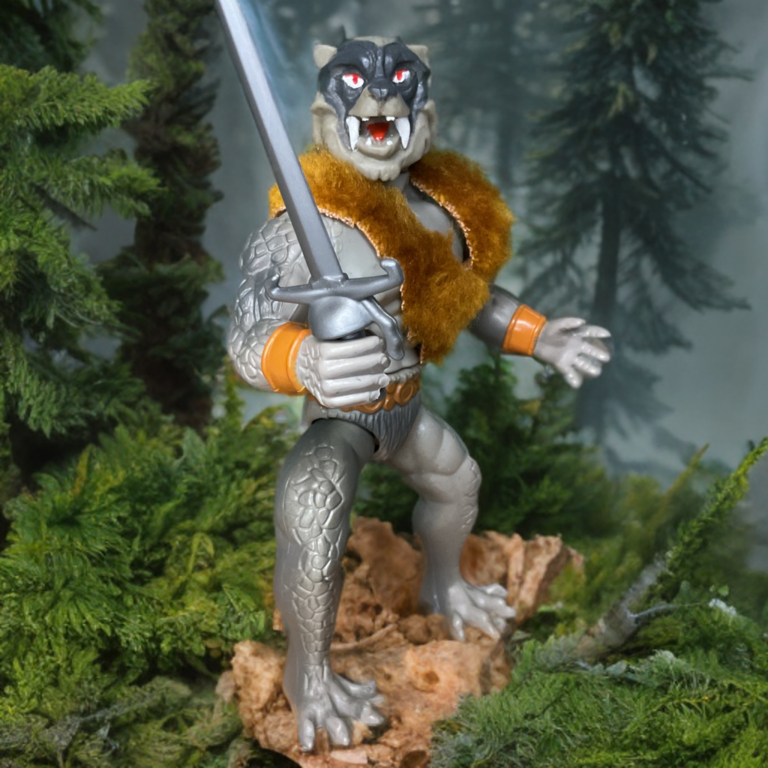
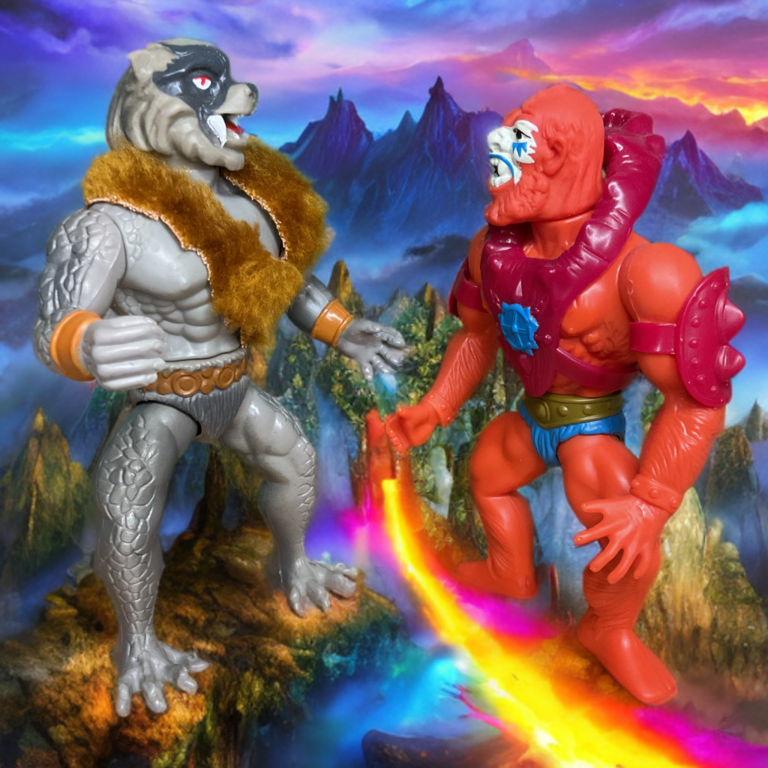
The torso often features a darker wash or black accents on the shoulders and back for depth, while the lower body includes clawed hands (curled for gripping) and taloned feet with three forward claws and one rear for predatory stability. Orange or red wrist/ankle cuffs add barbaric flair, and a simple belt (sometimes brown or black with raised details) cinches the waist.
The overall pose is aggressive and dynamic—slightly crouched with legs apart for a lunging stance, arms ready to strike or howl. No major variants are widely documented beyond minor production differences (e.g., slight color shifts in gray tones or paint wear on eyes/fangs), but the faux-fur pelt vest is the key distinguishing element—often lost over time, making complete figures rarer. The figure stands about 5.5 inches, scales perfectly with MOTU, and carries the ©1982 REMCO stamp on the leg or back.
Accessories
Wolf Warrior’s standout accessory is the removable faux-fur pelt vest/garment—a soft, textured brown or tan piece that drapes over the shoulders and chest like a nomadic barbarian’s trophy hide. This is unique to him in the line (not shared with others), adding immense play and display value—it’s often the make-or-break for “complete” status among collectors. He also typically includes a silver sword (a sleek, metallic blade with a simple hilt, shared across several Warrior Beasts but fitting his slashing style perfectly). The sword grips securely in his clawed hands, and its compatibility with MOTU weapons (e.g., swapping for He-Man’s Power Sword) was a huge bonus for custom battles.
Play Value
With five points of articulation (neck, shoulders, hips), Wolf Warrior delivers solid poseability for howling lunges, sword swings, or crouched stalking poses. The durable plastic and tight joints (in good examples) hold up to rough 80s-style play—backyard chases, sandbox sieges, or indoor fort defenses. His scale matches MOTU flawlessly, making him a natural villain ally for Skeletor (leading beast packs) or rival to Beast Man in turf wars. The pelt vest encourages role-play as a pack leader or lone wolf scout, while the sword enables duels, disarms, or thrown attacks in pretend flight. Lightweight yet sturdy, he excelled in group adventures, often surviving years with minimal breakage beyond loose limbs over decades.
Nostalgic Memories from 80s Kids
80s kids frequently recall Wolf Warrior as the “wild card” or “alpha beast” in mixed-line fantasies—forums and retrospectives are packed with stories of him howling victory after epic clashes. One collector shared: “Wolf Warrior was my ultimate ground attacker—he’d charge through the yard with that pelt flapping, sword high, leading imaginary wolves against He-Man and his crew.” Others mixed him with Blackstar, Warlord, or even Hercules figures: “We’d have him team up with Skeletor for night raids or scout ahead in our tree-fort battles—his fur made him look so savage!”
In budget play, he filled the “feral warrior” role perfectly, sparking creative crossovers: “No fancy vehicles needed; Wolf Warrior turned a pile of sticks into a den, and we’d howl along with him during backyard wars.” YouTube reviews and posts today call him “ferocious” and “highly sought-after,” with fans noting the pelt’s rarity amps up nostalgia—finding a complete one feels like reclaiming childhood glory.
Wolf Warrior’s unique pelt, snarling wolf sculpt, and primal play energy cement why he’s a top underrated gem in the Warrior Beasts lineup. If you’re hunting for your shelf, prioritize complete examples with the fur garment and sword—his howling presence adds untamed 80s ferocity to any vintage fantasy collection!
3. Hydraz
Hydraz slithers to the forefront as one of the most ambitious and visually striking figures in Remco’s 1982 Warrior Beasts line—a true multi-headed mythological menace that draws directly from the legendary hydra of Greek lore. This two-headed reptile warrior stands out for pushing the boundaries of what a budget 80s action figure could achieve, delivering a grotesque, regenerating-beast vibe that’s perfect for epic villain roles. Often described as a “two-headed hydra” or “two-headed ogre/giant” in collector circles, Hydraz embodies the raw, monstrous creativity of the era, serving as a formidable foe that could overwhelm heroes through sheer overwhelming presence. His design feels like a darker, more primal take on MOTU’s beastly villains, making him a standout in cross-line battles and a favorite for kids who loved unbeatable monsters.
Sculpt Details
Hydraz’s sculpt is a highlight of Remco’s ingenuity, especially considering the line’s affordable production roots. The defining feature is the dual-headed neck: a long, serpentine extension rising from the shoulders, splitting into two fierce dragon-like heads. Each head features an open-mouthed snarl with sharp fangs, protruding horns (often a central horn or ridge on the forehead), and small, beady eyes that convey savage intelligence and rage. The heads are sculpted with textured scales along the necks and faces, including subtle ridges and folds that give a reptilian, armored look. One head typically angles forward aggressively, while the other might tilt slightly for a “multi-angle attack” feel, adding dynamism even in static display.
The body is the classic muscular Warrior Beasts humanoid frame—broad shoulders, chiseled pectorals, defined abs, and powerful limbs—but overlaid with detailed reptilian scaling. The torso and arms feature raised, overlapping scale patterns in brown plastic, mimicking tough hide or natural armor plating. The chest muscles are prominently molded, with subtle contours that catch light for added depth. Arms end in clawed hands sculpted to grip weapons securely, while the legs are thick and powerful, terminating in three-toed clawed feet for a stable, predatory stance. Red gauntlets (molded bright red cuffs on the forearms) provide a bold color pop, contrasting the earthy brown body tones.
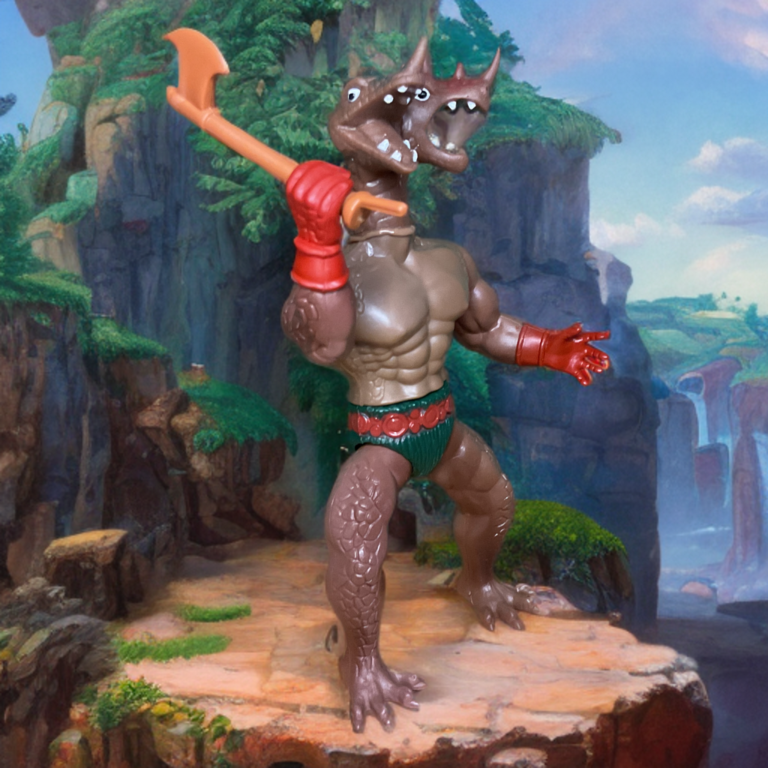
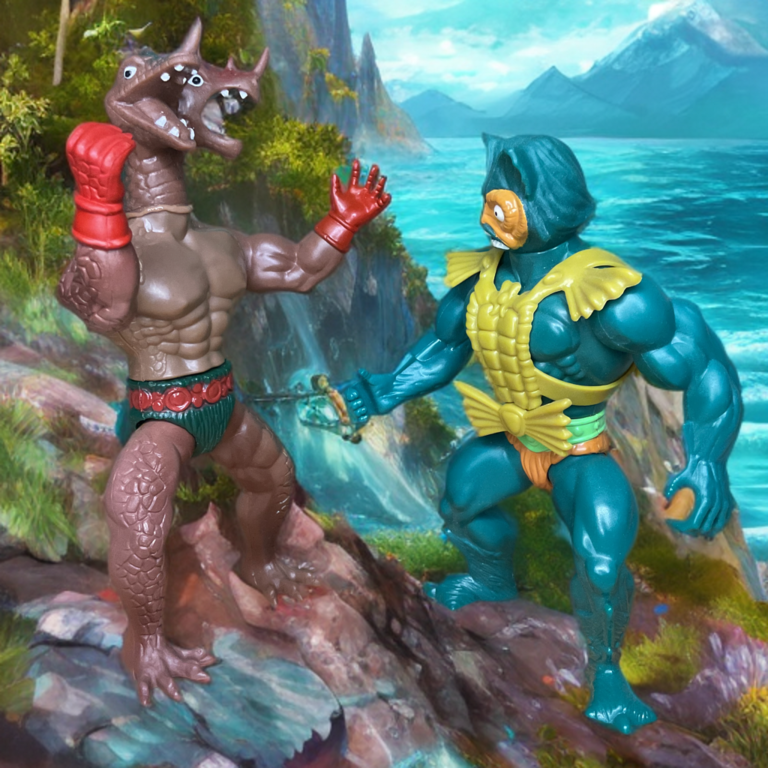
The lower body includes a green loincloth with a textured, fringed design and a decorative red belt featuring raised circular motifs (like red discs or gems) for a barbaric, tribal warrior aesthetic. The overall color scheme—brown scaled body, red accents, green loincloth—gives Hydraz a swampy, ancient monster vibe, with paint apps limited but effective (eyes often black or white dots, occasional washes for shadow on scales). Variants are subtle, mostly in accessory packaging or minor production color shifts (e.g., slight hue differences in the brown plastic from batch variations), but the core sculpt remains consistent. The figure bears the standard ©1982 REMCO stamp on the leg or back, and at about 5.5-6 inches tall, it scales perfectly with MOTU figures for seamless integration.
Accessories
Collector consensus points to Hydraz coming with a brown axe (a hefty, chopping weapon with a wide blade, ideal for brutal swings) and a silver dagger (a sleek, pointed blade for close-quarters stabbing or throwing). These accessories are shared across several Warrior Beasts figures but fit Hydraz perfectly— the axe in one clawed hand for heavy attacks, the dagger in the other for dual-wielding menace. The weapons’ compatibility with MOTU scales allows easy swaps: kids could equip him with He-Man’s Power Sword for a “regenerating” upgrade or Skeletor’s staff for a mystical twist. The axe’s handle grips tightly in his hands, encouraging creative combat poses.
Play Value
Hydraz shines in play with the line’s five points of articulation (neck for head swivels—though limited by the dual design—shoulders, and hips), enabling dynamic multi-angle strikes, lunging poses, or “head-butting” attacks where one head distracts while the other bites. The dual heads inspire imaginative mechanics like “regeneration” in battles—if one “head” gets “chopped off” (by removing the figure from play temporarily), the other keeps fighting. His durable plastic and sturdy build hold up to rough handling, from indoor castle sieges to outdoor monster hunts in backyards or parks.
At MOTU-compatible scale, Hydraz excels as a boss-level villain: team him with Beast Man for a beast horde, or have him overwhelm He-Man in scenarios where his heads allow tag-team tactics against single heroes. The clawed feet provide grip on uneven terrain, and the weapons encourage dueling or disarming play. Collectors note his longevity in childhood collections—many survived years of abuse with tight joints and minimal breakage.
Nostalgic Memories from 80s Kids
Forum posts, YouTube retrospectives, and collector anecdotes highlight Hydraz as the “unbeatable hydra” in mixed-line adventures. Many 80s kids remember him as the ultimate boss enemy: “Hydraz was my regenerating monster—he’d lose one head in battle, but the other kept coming, driving He-Man crazy in our backyard wars,” one forum user recalled from old Action-Figures.ca threads. Others shared mixing him with Warlord or Blackstar figures: “He guarded treasure in our forts; we’d have epic stories where his heads argued over who got the kill—pure kid lore!”
In group play, Hydraz often led ambushes or flanked heroes, his dual heads sparking creative “multi-tasking” scenarios like one scouting while the other attacked. For kids on tighter budgets, he filled the “mythical beast” role missing from pricier lines, turning simple toys into hours of mythological mayhem. Modern YouTube reviews praise his “ambitious sculpt” and call him a keeper, with fans noting the thrill of finding one complete (especially with both weapons, as accessories often got lost). His rarity in complete condition today adds to the nostalgia—scoring a Hydraz feels like unearthing a grail piece from the 80s.
Hydraz’s mythological flair, bold dual-head design, and endless play potential make him a true underrated gem in the Warrior Beasts pantheon. If you’re expanding your vintage collection, prioritize a complete example with the axe and dagger—his regenerating terror brings epic scale and monstrous fun to any fantasy display!
4. Zardus
Zardus buzzes into the Warrior Beasts lineup as one of the most unique and underrated insectoid villains from Remco’s 1982 series—a creepy, bug-man hybrid that stands apart from the line’s more reptilian or mammalian beasts. Often labeled as a “demon/warlock” type in collector guides (with some sources noting his head sculpt evokes a demonic insect warrior), Zardus brings an alien, otherworldly horror element to the fantasy roster. His design feels like a primal, swarm-leading antagonist, perfect for overwhelming heroic forces in imaginative battles, and his obscurity today only adds to his cult appeal among vintage toy hunters.
Sculpt Details
Zardus’s sculpt is a standout for capturing that raw 80s budget-line charm while delivering genuine creep factor. The head is the focal point: a bug-like demonic face with mandibles (sharp, protruding jaws for a snarling expression), compound eyes (often painted red or black for an eerie, multifaceted stare), and prominent antennae that curve upward like horns or feelers. Some descriptions highlight a warlock/demon vibe with subtle ridges or horns integrated into the insect theme, giving him a sorcerous, mutated appearance rather than a pure realistic bug. The head is typically molded in a dark color (black or deep purple tones) with accents that pop against the body.
The body follows the standard Warrior Beasts muscular humanoid template—broad shoulders, defined pectorals, abs, and powerful limbs—but with textured, segmented armor-like details that mimic an exoskeleton or chitin plating. Raised ridges and overlapping plates cover the chest, arms, and legs, creating a armored insect look without added pieces. The torso often features color contrasts: collectors note variants with a blue chest versus yellow/green, or even rarer flesh-tone limbs (likely production batches or fading over time, but documented as intentional color runs). Arms end in clawed hands sculpted for gripping weapons tightly, while the legs have segmented, jointed detailing and end in clawed feet for a scuttling, predatory stance.
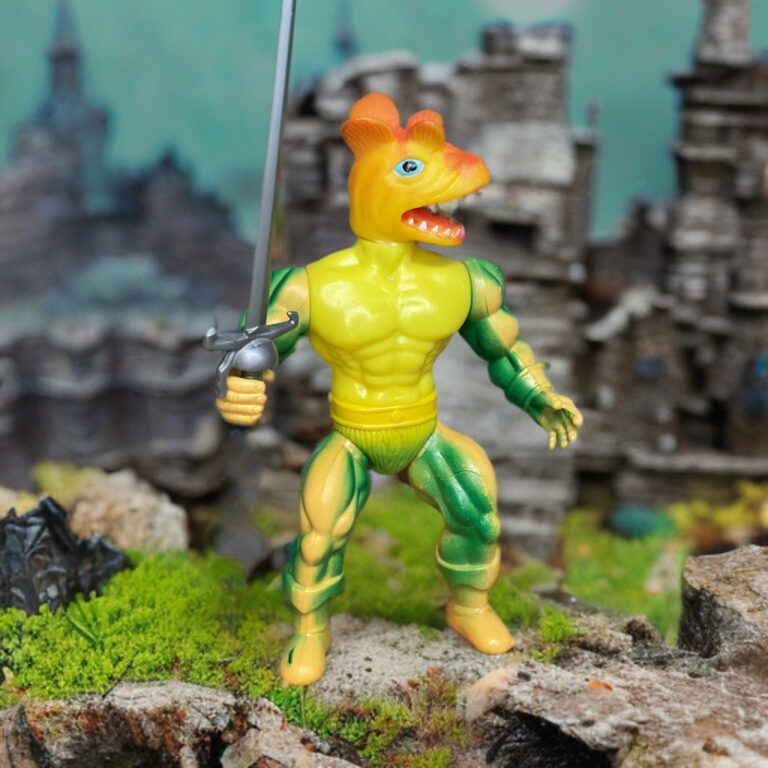
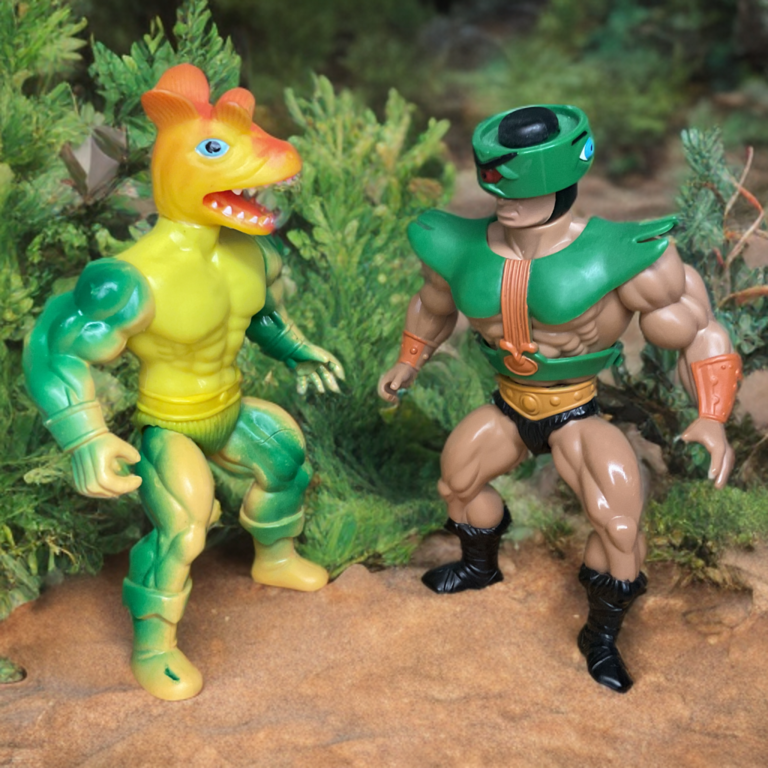
The overall pose is aggressive and hunched, evoking a ready-to-pounce insect ready for ambush. Paint apps are minimal but effective—red eyes, perhaps black washes on textures for depth, and occasional accents on claws or mandibles. Variants include limb color differences (yellow/green standard vs. blue chest or flesh-tone arms/legs), making complete examples with original hues highly sought after. The figure bears the ©1982 REMCO stamp on the leg or back, and his 5.5-inch scale ensures perfect compatibility with MOTU and similar lines.
Accessories
Zardus typically came with a silver sword (a sleek, metallic blade that’s shared across several Warrior Beasts figures, including some from the Lost World of the Warlord line). This accessory is versatile—long enough for slashing or thrusting, with a simple hilt that fits securely in his clawed grip. Some collector reports mention brown axe variants in mixed packaging, but the silver sword is the most consistently documented as his primary weapon. The sword’s compatibility shines in cross-line play: kids often swapped it with MOTU weapons like He-Man’s Power Sword or Skeletor’s Havoc Staff for custom upgrades, turning Zardus into a deadly insect sorcerer or assassin.
Play Value
With the line’s standard five points of articulation (neck, shoulders, hips), Zardus offers solid poseability for scuttling ambushes, lunging attacks, or commanding poses as a swarm leader. His lightweight, durable plastic withstands rough handling—ideal for outdoor backyard battles or indoor fort sieges—while the clawed hands and feet allow him to “cling” to other figures or terrain in creative setups. The insect theme inspires endless scenarios: leading hordes of imaginary bugs, burrowing under “ground” (sandboxes or blankets), or swarming heroes from all angles.
His MOTU-scale compatibility makes him a natural villain enhancer—pair him with Beast Man for a beastly alliance, or have him ambush He-Man in epic crossover fights. The sword encourages dueling play, and his creepy design sparked role-playing as an alien invader or cursed demon, adding layers to group adventures. Durability was key for 80s kids; many survived years of play with minimal breakage, often ending up as the “boss bug” in toy collections.
Nostalgic Memories from 80s Kids
Collector anecdotes and forum posts paint Zardus as the ultimate “creepy crawler” villain in mixed-line play. Many 80s kids recall him as the swarm master—leading invisible insect armies against He-Man or Hercules in backyard wars. One forum user shared: “Zardus was my bug overlord; he’d scuttle across the carpet, sword raised, directing ‘minions’ to overwhelm the good guys—hours of chaos!” Others mixed him with Blackstar or Galaxy Warriors figures, imagining sci-fi invasions: “He’d ambush from under the bed or in the sandbox, his antennae twitching like he was sensing prey.”
In group settings, Zardus often flanked or scouted, his bug theme fueling stories of hive takeovers or demonic curses. “We didn’t have fancy playsets, but Zardus turned a pile of dirt into a bug lair—total imagination fuel,” recalled a collector. YouTube retrospectives and posts praise his niche horror appeal, with fans noting how his underrated status (rarer listings, accessory loss) makes finding a complete one feel like a win. For budget-conscious kids, he filled the “monster bug” gap missing from pricier lines, sparking creative crossovers that blurred brands.
Zardus’s blend of insect-demon aesthetics, solid play features, and nostalgic swarm-lord potential explains why he deserves more love in Warrior Beasts discussions. If you’re building a collection, prioritize examples with the silver sword and watch for those color variants—his buggy menace adds a delightfully weird edge to any vintage fantasy shelf!
5. Craven
Craven stands out as one of the most visually distinctive and underrated figures in Remco’s 1982 Warrior Beasts line—a true avian villain that brings a unique aerial threat to the beastly roster. Often described as a “black bird-man” or harpy-like warrior, Craven captures the primal, monstrous fantasy vibe of the era while offering something different from the more reptilian or mammalian beasts in the series. His design feels like a dark counterpart to heroic flyers in lines like Masters of the Universe (think a twisted version of Stratos), making him a perfect addition to villainous armies or custom crossovers.
Sculpt Details
Craven’s sculpt is a highlight of Remco’s budget-conscious yet creative approach to 1980s action figures. The head is the star: a prominent, oversized eagle-like beak in bright yellow (often with a fierce open-mouthed expression showing a red tongue or interior), framed by a wild mane of black “feathers” or fur that flows down the neck and shoulders. The eyes are small, piercing red dots that give him an intense, predatory glare—simple but effective for evoking menace without complex paint apps. The beak’s sculpt includes subtle ridges and a hooked tip, adding realism to the bird theme.
The body is muscular and humanoid, typical of the Warrior Beasts’ 5.5-inch scale, with broad shoulders, defined pectorals, and abs molded in a dynamic, lunging pose. The torso and limbs feature black plastic with textured, scale-like patterns that mimic feathers or tough hide—raised, overlapping ridges cover the arms, shoulders, and parts of the legs, creating a layered, armored look without needing extra pieces. The chest and abdomen are in a contrasting yellow-tan plastic, often with black paint splatters or washes to simulate battle-worn feathers or shadows, giving him a rugged, weathered appearance straight out of the box.
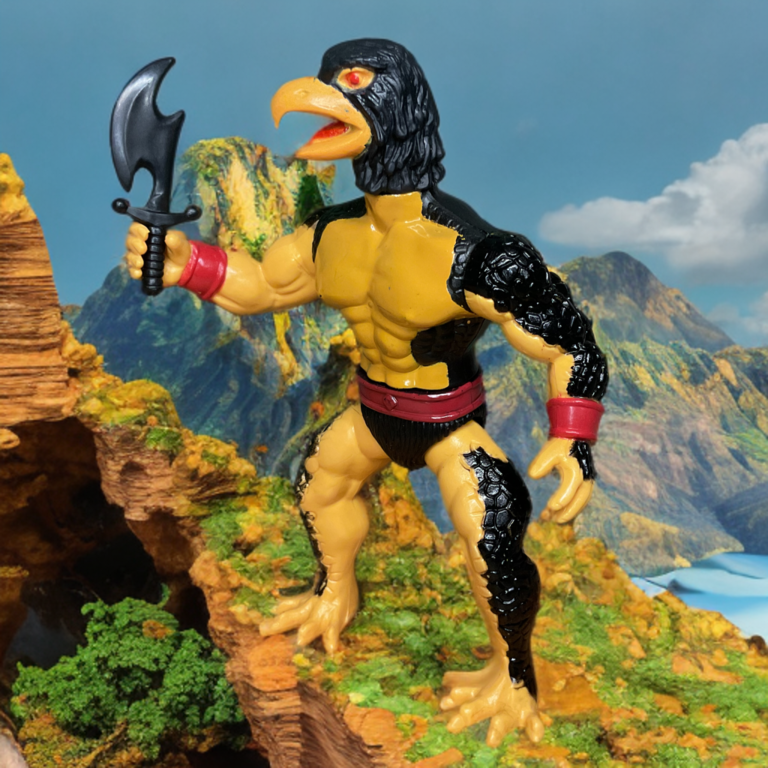
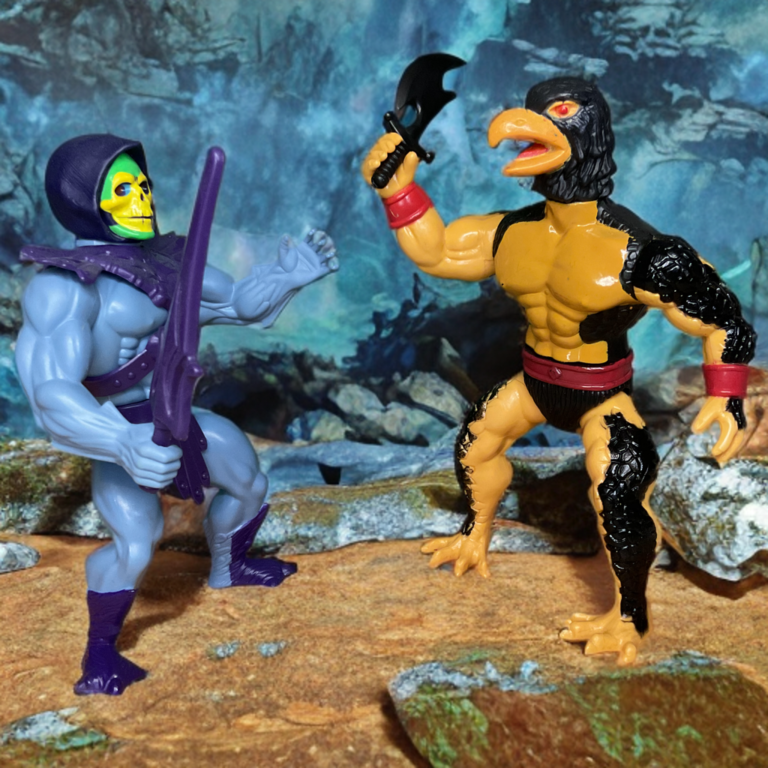
His legs end in taloned, bird-like feet—three forward claws and one rear—for a gripping, perching stance that’s stable on shelves or in play setups. The hands are clawed as well, sculpted to tightly grip accessories. Red wrist cuffs (molded in bright red plastic) add a pop of color and barbaric flair, while a simple red belt with a diamond-shaped buckle cinches the waist, completing the savage warrior aesthetic. The overall color scheme—black feathered accents on yellow-tan skin—makes Craven pop visually among the line’s earthier tones, and paint wear over time often enhances his battle-scarred look rather than detracting from it.
Remco included subtle variants, such as slight differences in paint application (e.g., more or less black wash on the torso) or rare color test shots (some collectors report ultra-rare variants with altered hues, though the standard is black/yellow/red). The figure bears the classic ©1982 REMCO N.Y. stamp on the leg or back, confirming authenticity.
Play Value
Craven excels in play thanks to his five points of articulation (neck, shoulders, and hips), which allow for dramatic soaring poses, diving attacks, or perched scouting stances. The clawed hands and feet make him excellent at “grabbing” other figures or weapons, while the lightweight plastic ensures he holds up during rough backyard battles without breaking easily. His scale matches MOTU perfectly, so he integrates seamlessly—pair him with Skeletor for aerial reconnaissance or pit him against He-Man in epic sky duels.
The included accessory is typically a brown or black axe (sometimes with a silver variant in mixed packaging reports), with a long handle perfect for slashing from above or throwing in pretend flight. Kids could swap in MOTU weapons like Stratos’ jetpack harness or Skeletor’s staff for hybrid customs, turning Craven into a flying assassin or scout. His bird theme inspired creative scenarios: dive-bombing from tree branches, scouting enemy camps, or leading flocks of imaginary minions. The durable sculpt and simple design meant he survived years of play, often ending up as a favorite “boss” enemy in group adventures.
Nostalgic Memories from 80s Kids
Collector forums and retrospectives are full of fond recollections of Craven’s role in mixed-line play. Many 80s kids remember him as the “sneaky flyer” who added verticality to battles—perched on fences or shelves, he’d swoop down on He-Man or Hercules figures, creating ambushes that felt cinematic. One forum poster shared: “Craven was my go-to for dive attacks; I’d launch him from the top of the slide in our backyard, and he’d ‘attack’ the good guys below—total chaos!” Others mixed him with Warlord or Blackstar heroes, imagining him as a corrupted guardian or spy in fantasy realms.
In group play, Craven often scouted ahead or flanked enemies, his bird design sparking stories of aerial warfare or beastly alliances. “He’d team up with Wolf Warrior for ground-and-air combos against my MOTU crew,” recalled a collector, highlighting how these affordable Remco figures filled gaps in kids’ collections and fueled endless imagination. For those without full MOTU sets, Craven provided that “flying villain” archetype missing from cheaper lines, making him a staple in creative crossovers that blurred toy brands.
Even today, YouTube reviews and collector posts praise his underrated status—videos call him “awesome” and “love it” for the unique sculpt, with fans noting how his rarity now (due to lost accessories and play wear) makes complete examples special finds.
Warrior Beasts Price Guide (Approximate USD, Jan 2026)
This is only a partial list. View the full and updated [Warrior Beasts (1982)] price guide.
| Figure | Loose (No Acc.) | Complete (Full Acc.) | Carded / MOC | Collector Notes |
| Gecko (V1 Purple) | $30 – $50 | $60 – $90 | $150 – $250 | Purple is the rarer variant; check for paint rubs. |
| Wolf Warrior | $40 – $60 | $80 – $120 | $200 – $300 | The pelt vest is essential for “Complete” status. |
| Hydraz | $50 – $70 | $100 – $150 | $250 – $400 | Necks are prone to cracking. |
| Zardus | $25 – $45 | $50 – $80 | $120 – $200 | Generally lower demand, making it a good entry point. |
| Craven | $30 – $50 | $60 – $100 | $150 – $250 | Beak and feather paint details fade with heavy play. |
Price Fluctuation Warning: Secondary market prices for vintage action figures can change rapidly due to collector demand, rarity, and condition (mint vs. opened).
Pro-Tip: Treat these figures as a hobby first and an investment second. The most stable “value” is the one you get from having them on your shelf!
Conclusion
The Warrior Beasts line, with underrated stars like Gecko, Wolf Warrior, Hydraz, Zardus, and Craven, reminds us why 1980s toys endure—through sculpt innovation, endless play, and heartfelt nostalgia. These figures weren’t just knock-offs; they were gateways to imagination, mixing seamlessly with MOTU for timeless adventures. As prices fluctuate, now’s the time to hunt these beasts and relive the magic. Whether on your shelf or in stories, they roar eternal.
 English
  Deutsch
  Français
  Português do Brasil
  日本語
日本語  Español
  English (Australia)