

From Sniveling Fool to Feral Warlord: Beast Man Reborn
The Beast Awakens: How Revelation Rescued Beast Man from Decades of Cartoon Shame
For nearly forty years, the Masters of the Universe franchise carried a quiet embarrassment in its roster: Beast Man, Skeletor’s supposed “strong-arm,” was little more than a punching bag with orange fur. The Filmation cartoon of 1983 cemented him as the patron saint of incompetent henchmen: loud, dim, easily tricked by He-Man in a fake mustache, and prone to whimpering “Y-yes, Skeletor” before being hurled across Snake Mountain by his own master. Children laughed. Adults winced. Somewhere in the multiverse, a proud savage died inside every time he appeared on screen.

Then came Kevin Smith’s Masters of the Universe: Revelation in 2021, and with it, a resurrection so complete it felt like an act of cosmic justice. The Beast Man who stalks the halls of this darker, bloodier Eternia is not the same creature. He is taller, broader, scarred like a gladiator who lost count of his fights, and possessed of a gravel-throated dignity that the old cartoon never allowed. Most shockingly, he is brave. Not “brave for a coward” brave; legitimately, terrifyingly brave. This is the story of how the most mocked villain in 1980s animation clawed his way back to relevance, and why his new allegiance to an ascendant Evil-Lyn may be the single best character arc the franchise has ever delivered.
The Old Shame: Filmation’s Beast Man, the Eternal Fall Guy
Let us speak plainly. The 1983 Filmation series needed its villains to lose every week for toy-commercial reasons, and Beast Man drew the shortest straw. His résumé reads like a blooper reel:
• Regularly outwitted by a house cat (Cringer).
• Sent flying by a single backhand from He-Man so often that it became a running gag.
• Capable of summoning an army of monsters… who inevitably turned on him the moment He-Man looked at them sternly.
• Voiced with a whining Brooklyn accent that made him sound like a furry version of Jar Jar Binks two decades early.

He wasn’t merely incompetent; he was performative incompetence, the kind of villain parents pointed to when telling their kids “see, evil is stupid.” Even among Skeletor’s inner circle he ranked dead last in menace. Trap Jaw had mechanical menace. Evil-Lyn had sorcery and cunning. Tri-Klops had… well, three eyes and a bad attitude. Beast Man had fur and a whipping habit. Whenever Skeletor needed someone to scream at, the camera panned to the red ape-man shrinking in the corner. It was cruelty dressed as comedy, and it lasted 130 episodes.
Toy accurate? Yes. Canon defining? Unfortunately. For generations of fans, “Beast Man” became shorthand for “useless muscle.” The 2002 MYP reboot tried to salvage him with a deeper voice and tribal armor, but still had him fleeing in terror from a teenage girl wielding the Power Sword for five minutes. The damage was done.
Revelation’s Radical Surgery
When the first trailer for Revelation dropped, many expected nostalgia with sharper animation. What we got was a post-apocalyptic war story where magic itself was dying, and every character, hero or villain, was forced to evolve or perish. Beast Man’s transformation begins in the very first episode, but it’s subtle enough that you might miss its weight.
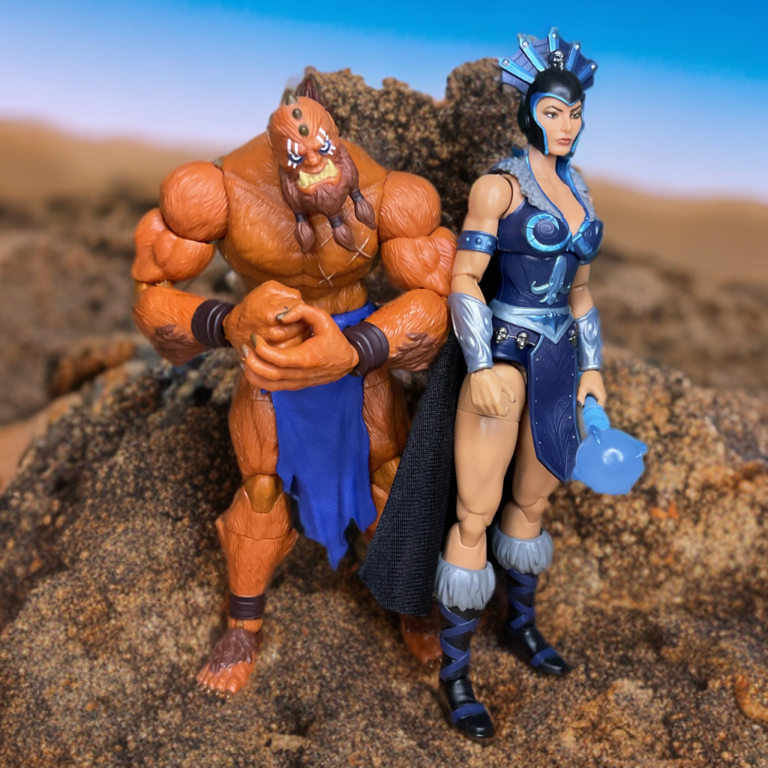
Skeletor, mortally wounded, is literally torn in half by his own ambition. Evil-Lyn, no longer content to be the sidelined sorceress, picks up the pieces of power. And Beast Man? He does not whine. He does not cower. He kneels, not to Skeletor’s broken corpse, but to her. The moment is wordless, shot in close-up: matted fur, yellow eyes burning, fangs bared not in fear but in something close to reverence. It is the first time in live-action or animation that Beast Man has ever looked noble.
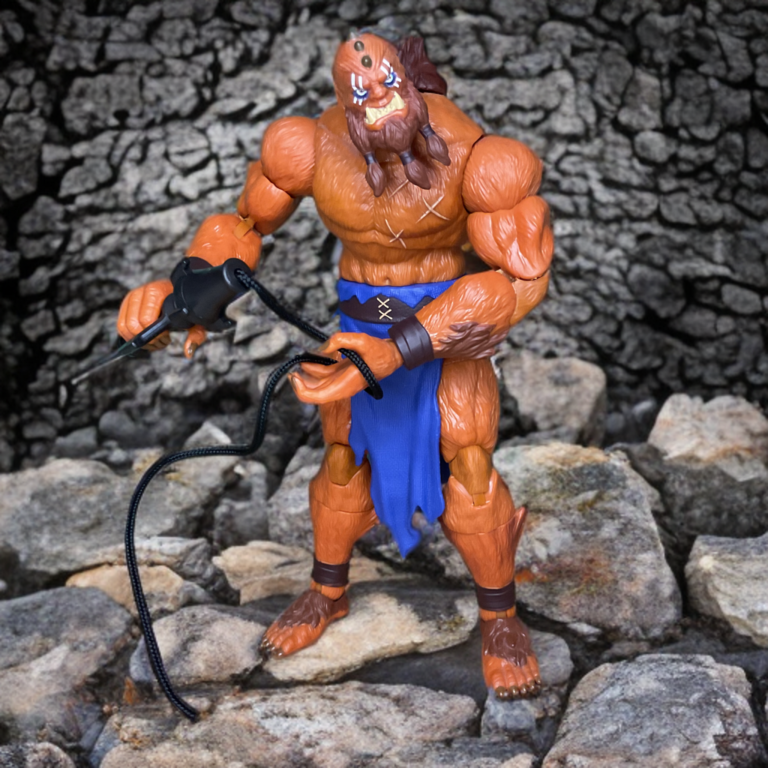
From that point forward, the character operates on an entirely different level. He speaks less, but when he does, people listen. His voice, still provided by the masterful Jason Mewes in the European cut and later by Kevin Michael Richardson, has dropped two octaves into a predator’s growl. He leads charges into battle without hesitation. He fights Scare-Glow one-on-one in the afterlife and holds his own. When Subternia’s shadows swarm, he stands back-to-back with Evil-Lyn, protecting her the way a wolf protects its alpha. There is no slapstick. There are no comic-relief beatings. There is only blood, loyalty, and the sense that this creature has finally been allowed to become what the original mini-comics hinted he could be: a primal force of nature.
The Psychology of the New Beast
What Revelation understands, and every previous version ignored, is that savagery and cowardice are not natural bedfellows. A creature covered in battle scars, capable of ripping a man in half, does not whimper by default. Filmation wrote him as comic relief because the show needed a safe villain for children. Revelation writes him as a veteran of countless wars who has simply been waiting for a leader worthy of his strength.
His devotion to Evil-Lyn is the key. Where Skeletor ruled through terror and humiliation, Evil-Lyn rules through respect and shared ambition. Watch the quiet moments: she touches the fur on his shoulder without fear; he lowers his head slightly when she speaks, not in submission but in recognition. It’s a partnership of predators. She gives him purpose; he gives her muscle that will not betray her.
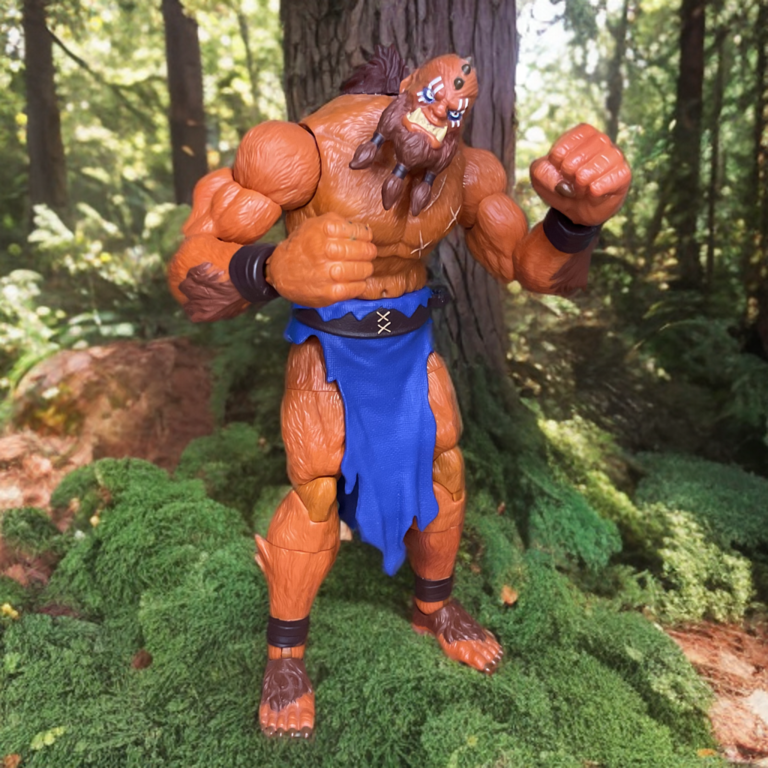
In the second half of the season, when she ascends to godhood as Sorceress of Darkness, Beast Man is the only Evil Warrior who does not abandon her in terror. He stays. He fights the entire universe at her side. That is not the behavior of a coward. That is the behavior of a warrior who has finally found a cause worth dying for.
Physical Redesign: Scars Tell the Story Filmation Never Did
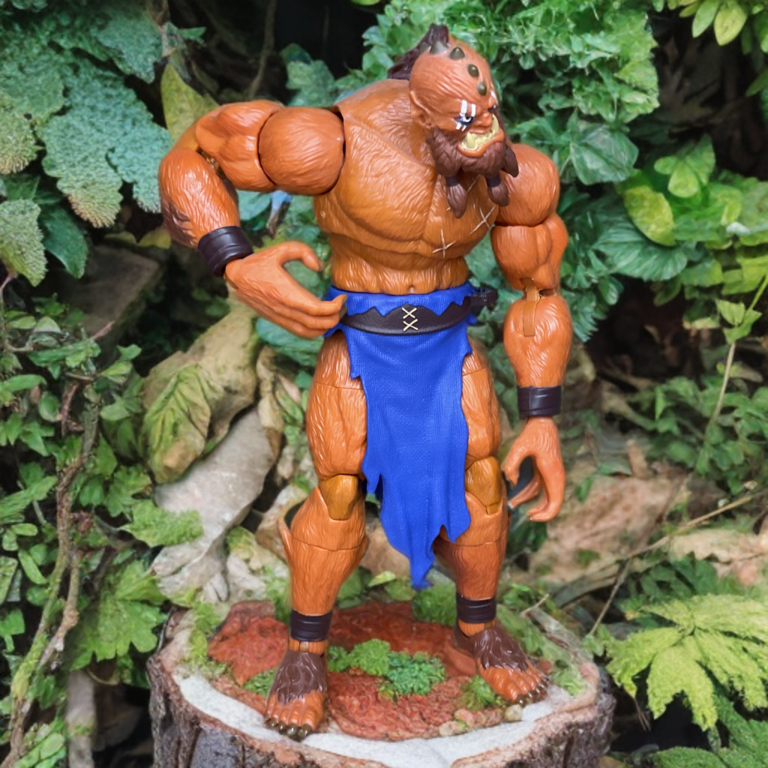
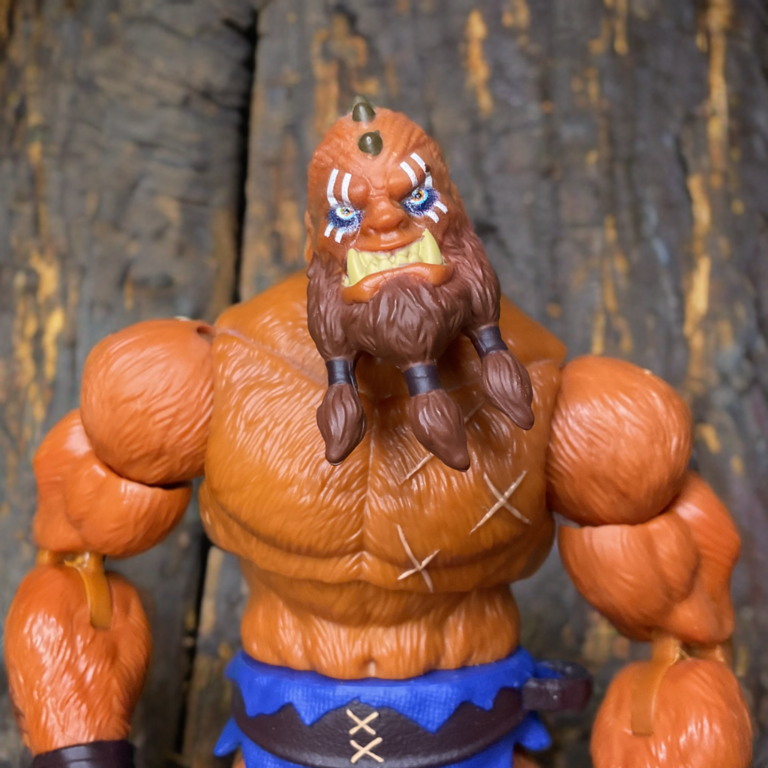
The visual overhaul is more than Netflix budget. This Beast Man is a roadmap of pain. His fur is no longer the pristine orange-red of the toy; it’s sun-bleached, blood-crusted, patchy in places where old wounds never quite healed. One ear is torn. His harness is cracked leather held together by bone pins. The filmmakers let concept artist Powerhouse Animation go full Frank Frazetta: every inch of him looks like he wrestled a saber-tooth and won, barely. When he roars, spittle flies and the screen shakes. This is not a man in a suit. This is a monster who has survived Eternia’s worst and kept coming.
Even his color palette tells a story. The bright, toyetic reds and yellows are muted into rust and dried blood. His eyes, once cartoonish white circles, are now sulfur yellow with tiny pupils, always scanning for threats. When he moves, it’s with the deliberate prowl of something that knows it is the apex predator in any room without Skeletor in it.
The Break with Skeletor: A Long-Overdue Emancipation
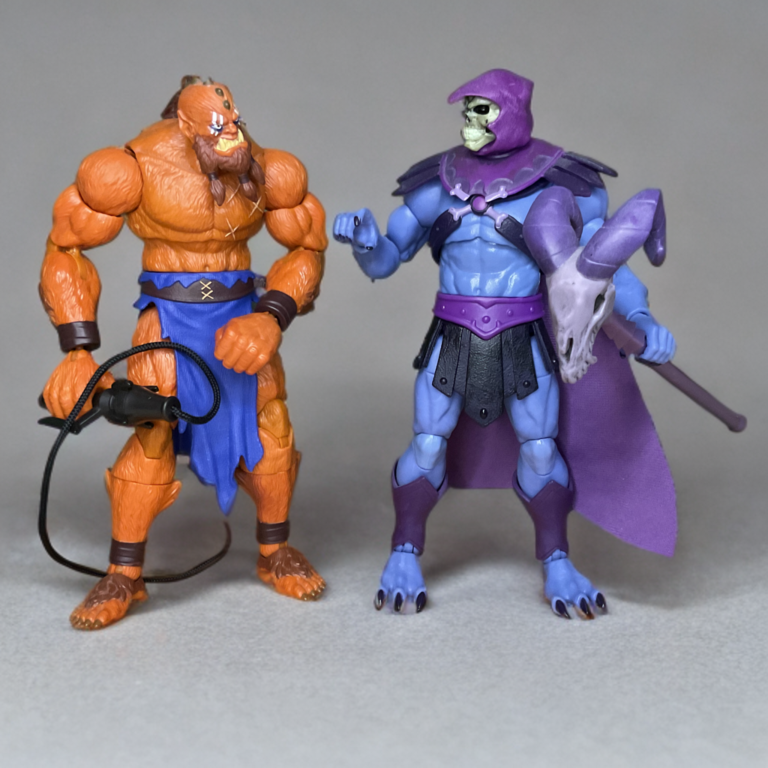
Perhaps the most satisfying element of Revelation’s Beast Man is how cleanly it severs him from Skeletor’s abuse. In the old days, every episode ended with Skeletor striking him or banishing him to the void. Revelation flips the script: Skeletor returns as the all-powerful Skelegod, and Beast Man openly defies him. Not with words; he’s still a beast of few syllables; but with action. He chooses Evil-Lyn over the master who tormented him for decades. When Skeletor demands obedience, Beast Man simply turns his back and walks away. The moment is never underlined with dialogue. It doesn’t need to be. After forty years of watching this character eat humiliation, seeing him refuse to kneel is cathartic in a way few fictional rebellions ever manage.
A New Archetype: The Honorable Monster
Revelation’s Beast Man occupies rare territory in modern storytelling: the honorable monster. He is not redeemed; he is still evil, still delights in violence, still serves darkness. But there is a code. He does not betray. He does not run. He protects what is his. In a franchise long dominated by clear-cut good and evil, he becomes something more interesting: a creature whose morality is pack-based, primal, and internally consistent. Evil-Lyn earns his loyalty the way a wolf earns the pack; through strength and vision. Skeletor never did.
This is the version of Beast Man that the original 1982 mini-comics teased before Filmation sanded off his edges: a savage chieftain who commanded armies of beasts because he was the most fearsome among them. Revelation finally delivers on that promise.
The Fur Finally Fits the Legend
When the credits roll on Revelation’s final battle, Beast Man stands atop the ruins of Castle Grayskull beside a godlike Evil-Lyn, roaring into the storm as heaven itself burns. He has no throne, no grand speech, no redemption arc. He has what he always should have had: respect, purpose, and the space to be terrifying.
The cowardly, whining lackey of 1983 is dead, and no one is mourning him. In his place stands a scarred, loyal, unstoppable engine of fur and fang who reminds us that sometimes the most satisfying character development isn’t heroism; it’s allowing a monster to finally, undeniably, be a monster.
Somewhere in the void, the Filmation Beast Man is still getting punted across Snake Mountain by a laughing He-Man. Ignore him. The real Beast Man has better things to do. He has a dark queen to serve, a world to conquer, and four decades of humiliation to make the universe pay for, one broken bone the time.
And this time, no one is laughing.




 English
  Deutsch
  Français
  Português do Brasil
  日本語
日本語  Español
  English (Australia)