

Borrowed Glory: The Remco Recycling Program
The Efficiency of the Muscle
In the high-stakes toy aisles of 1982, Mattel was the undisputed heavyweight champion. Their Masters of the Universe line didn’t just sell toys; it sold a new anatomy. But while Mattel was investing millions in unique sculpts for characters like Leech or Mantenna, a scrappy contender named Remco was watching from the sidelines with a much more cynical—and arguably brilliant—business plan.
Remco didn’t want to reinvent the wheel. They wanted to take the wheel, coat it in a slightly different shade of brown plastic, and sell it back to you as a “Warrior Wheel.” This was the birth of the Remco Recycling Program, a decade-long masterclass in getting away with it. By the time the dust settled, Remco had populated half the toy boxes in America with figures that were essentially the same five inches of plastic wearing different hats.
Exhibit A: The “Generic Meathead” Torso
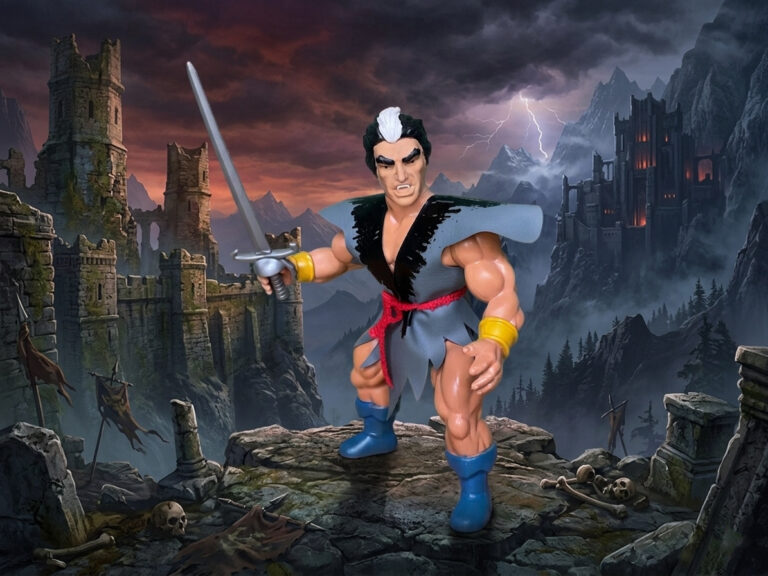
The cornerstone of Remco’s empire was a squat, ultra-buff torso with arms permanently set in a “I’m carrying two invisible watermelons” pose. This single mold served as:
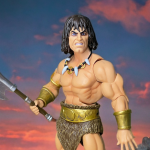
Conan the Barbarian: Just add a fur loincloth.
The Warlord: Same body, but give him a helmet and call him “Travis Morgan.”
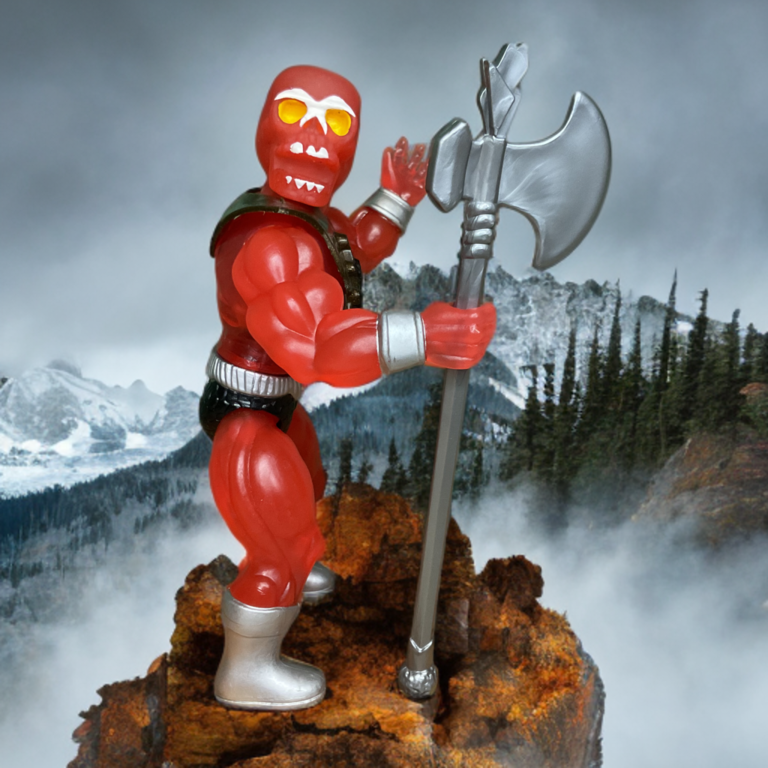
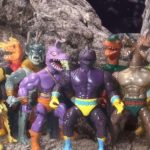
Warrior Beasts: Keep the body, swap the head for a lizard, and suddenly it’s a monster.
AWA All-Star Wrestling: Give him some trunks and boots, and—presto—you have Rick Martel.
The Roast: It’s the action-figure equivalent of an actor playing Hamlet, James Bond, and a professional chef while wearing the exact same tuxedo in every scene.
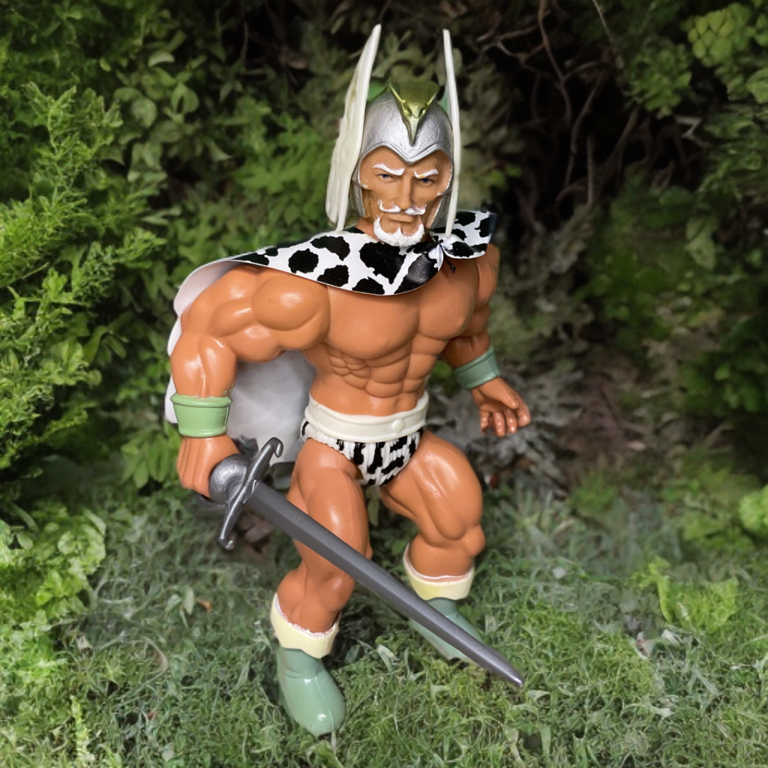
The Anatomy of a Legend (or: One Torso to Rule Them All)
To understand the Remco heist, you have to look at the “Generic Meathead” mold. This was a 5½-inch tall, ultra-buff silhouette characterized by a “V-taper” torso and arms permanently locked in a state of mid-bicep flex.
While MOTU figures had a “power punch” spring-loaded waist, Remco figures were largely static. They stood there, arms wide, looking like they were perpetually waiting for someone to hand them a very large sandwich. This mold was the “White T-Shirt” of the toy world. It was basic, it was sturdy, and it was shockingly versatile.
1. The Barbarian Phase: Conan and the Quest for Free Royalties
It started with Conan the Barbarian. When the 1982 film hit, Remco secured the license. They sculpted a head that bore a passing (but legally safe) resemblance to Arnold Schwarzenegger and slapped it on the Meathead Torso.
But why stop at Conan? Remco realized that if you took that same body and swapped the hair color, you had a “generic” barbarian. This led to the Lost World of the Warlord line. Suddenly, Travis Morgan (The Warlord) was standing on shelves looking suspiciously like Conan’s twin brother. They even shared the same boots. If you were a kid in 1983, you weren’t buying a new character; you were buying a variant of a figure you already owned, rebranded with a different mini-comic.
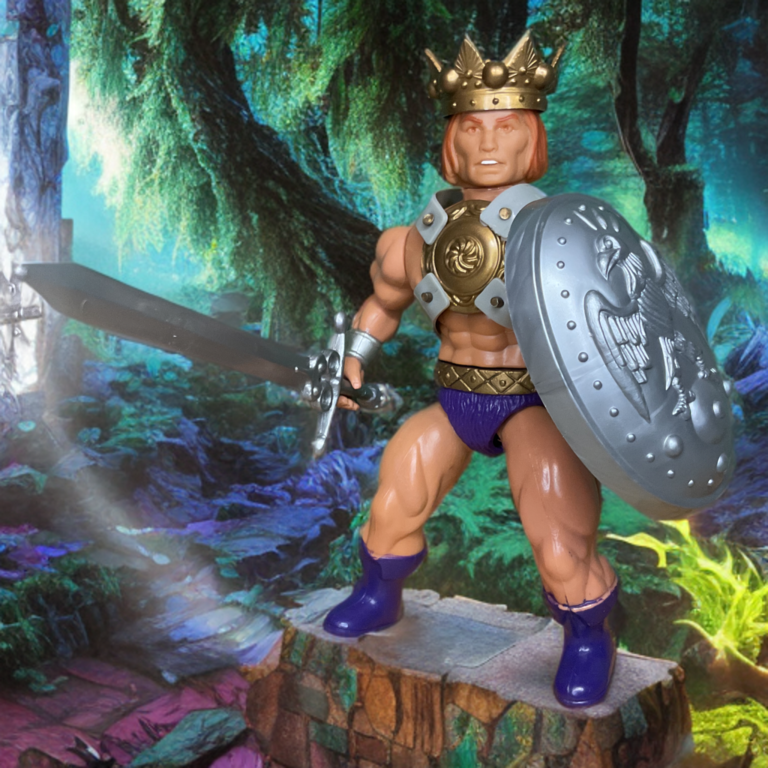
2. The Creature Feature: Warrior Beasts
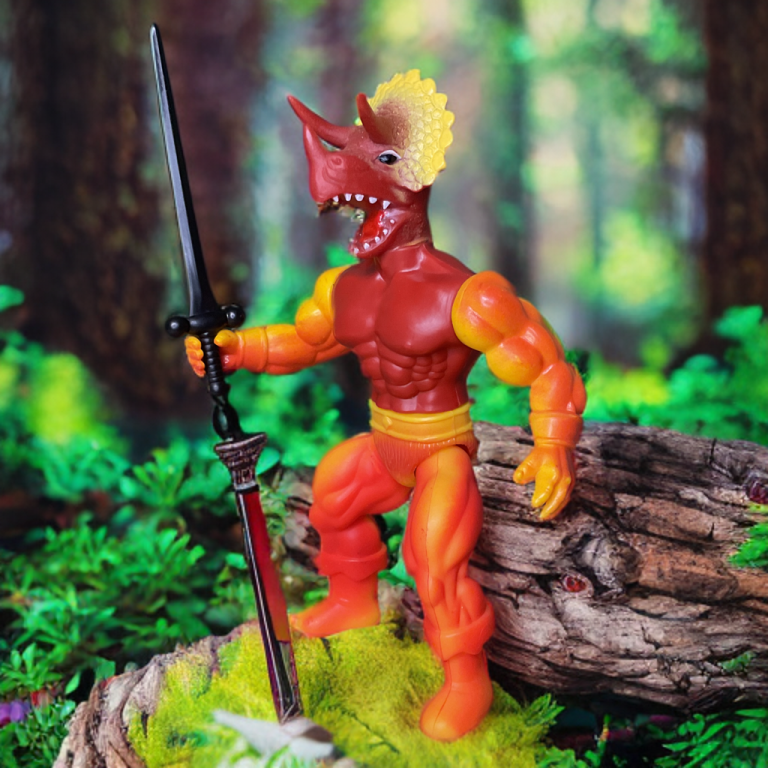
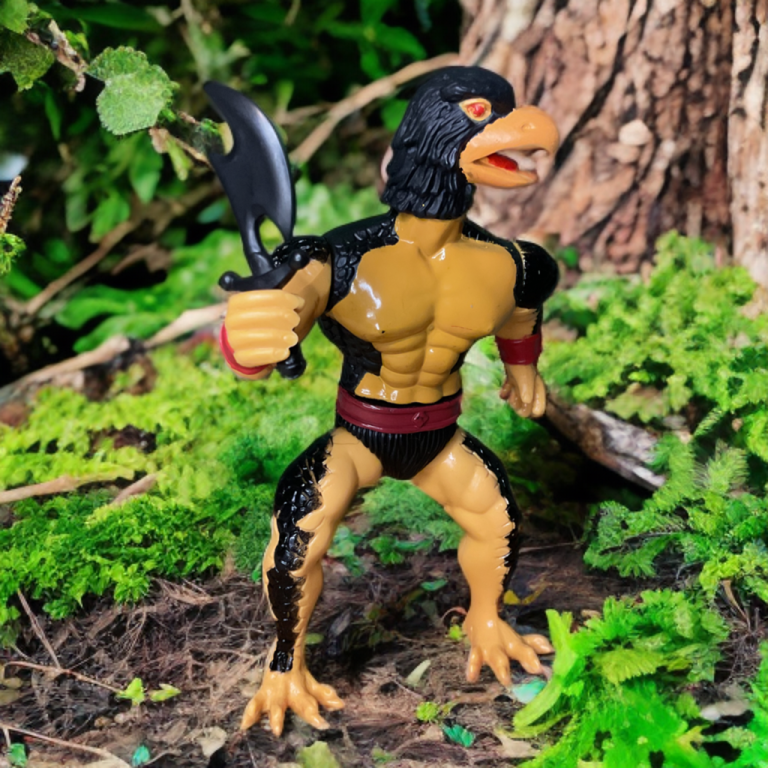
By 1984, the “Barbarian” craze was pivoting toward “Monster-Men.” Remco’s solution? Don’t change the body—change the species. The Warrior Beasts line is a fever dream of evolutionary shortcuts.
Guana: A lizard head on a human body.
Craven the Hunter: A bird head on a human body.
Skullman: A literal skeleton head on… you guessed it, a body with full muscular definition and tan skin.
The dry humor here lies in the biological impossibility. Skullman remains a favorite among toy historians because he represents the peak of Remco’s laziness: a man whose head has decomposed to the bone, yet who has clearly stayed consistent with his bench press routine and tanning bed sessions.
The Legal Battle: Mattel vs. Remco (The “Look-Alike” War)
You can’t talk about Remco without talking about the courtroom drama. Mattel was not thrilled that Remco was essentially selling “discount He-Men.” They sued, claiming that Remco’s figures were “confusingly similar” to the MOTU line.
The defense from Remco was legendary in its audacity. They argued that the 5½-inch scale and the “muscular warrior” aesthetic were part of a public domain tradition of fantasy art (think Frank Frazetta). Essentially, Remco told the judge, “We didn’t steal He-Man; we both just stole the idea of a guy in a loincloth.”
The court eventually ruled in Remco’s favor, a decision that opened the floodgates. This ruling is the reason why, forty years later, the “indie” toy scene (led by companies like Zoloworld) can still produce figures in this specific “retro” style. Remco didn’t just recycle plastic; they fought for the right for everyone to recycle plastic.
Ergonomics Roast: The “Universal Grip” and the 45-Degree Sword
If the bodies were recycled, the accessories were practically scavenged. Remco developed a universal hand sculpt with a circular grip. In theory, this allowed any figure to hold any weapon.
In practice, it was an ergonomic disaster.
The Friction Fail: The weapons were made of a slick, hard plastic that had zero “bite” against the hand.
The Weapon Tilt: Because the grip was a perfect circle, there was nothing to stop a broadsword from rotating. Within five seconds of play, your fierce warrior would be holding his sword horizontally like he was attempting to flip a giant pancake.
The “Snap-On” Armor: Remco’s armor used a “hook and eye” system that was designed to stay on for approximately three seconds. If your figure took a “heroic fall” off the coffee table, he would hit the floor and instantly shed his armor like a panicked crustacean.
The AWA Pivot: Wrestlers in Barbarian Boots
When the fantasy craze began to wane, Remco looked at their massive stockpile of Meathead Torsos and asked, “Who else is buff and wears no shirt?” The answer was the American Wrestling Association (AWA).
The AWA All-Star Wrestling line (1985) is the crowning achievement of the Recycling Program. They took the same fantasy body, painted on some wrestling trunks, and gave us Rick Martel, The Freebirds, and Baron Von Raschke.
The hilarity here is in the footwear. If you look closely at a vintage AWA Baron Von Raschke, he is wearing the exact same “wrapped leather” barbarian boots as Conan. Apparently, in the Remco universe, the AWA professional wrestling circuit was strictly “Barbarian Casual.”
The Collector’s Audit: Identifying the “Franken-Toys”
For the modern toy historian, identifying Remco parts is like being a plastic archaeologist.
The “Tan Line” Test: Because Remco used different batches of plastic for the heads and torsos, many vintage figures now suffer from “Two-Tone Syndrome,” where the head has aged into a pale grey while the body remains a vibrant orange-tan.
The Leg Band Rot: Much like their MOTU cousins, Remco legs were held on by rubber connectors. However, Remco’s rubber was… let’s say, “economical.” A “Complete” Remco figure today is a rarity because most of them have spent the last three decades with their limbs detached in the bottom of a storage bin.
The Final Tally: Why We Still Care
Why does a “loose complete” Warrior Beasts Guana sell for $85 on eBay in 2026? It’s not because the toy was “good” in a traditional sense. It’s because Remco captured a specific, weird moment in digital publishing and toy history. They provided the “B-Movie” equivalent of the toy world.
They weren’t the main event; they were the weird, gritty, recycled undercard that made the world of 80s play feel bigger. They proved that with one mold and enough audacity, you could build a kingdom. Or at least a very profitable clearance aisle.
 English
  Deutsch
  Français
  Português do Brasil
  日本語
日本語  Español
  English (Australia)