

The Ultimate Comparison: MOTU vs. Legends of Dragonore Figures
A Clash of Retro Titans
In the realm of action figures, few lines evoke the raw excitement of battling barbarians, sorcerers, and mythical beasts quite like the ones from the 1980s. Picture this: bulky heroes with rippling muscles, villains with glowing eyes, and accessories that could turn a cardboard box into a fortress of doom. On one side, we have the venerable Masters of the Universe (MOTU) 5.5″ figures, the undisputed kings of the toy aisle back when MTV was young and shoulder pads were mandatory. On the other, the upstart Legends of Dragonore, a modern homage that’s less a copycat and more a long-lost cousin crashing the family reunion with a cooler haircut.
This piece pits these two worlds against each other, highlighting what makes them tick, where they overlap like Venn diagrams in a fantasy novel, and where they diverge like plot twists in a choose-your-own-adventure book. We’ll dig into their backstories, dissect their designs, and even throw in a handy chart to compare key players. Whether you’re a grizzled collector dusting off your vintage He-Man or a newcomer eyeing that shiny new Oskuro figure, buckle up for a ride through toy history that’s equal parts nostalgia and novelty.
Why compare them at all? Because Legends of Dragonore didn’t just appear out of thin air—it’s built on the bones of what made MOTU a phenomenon. But it’s also carving its own path, blending old-school charm with fresh ideas that could make even Skeletor crack a smile (if he had lips). Let’s start by rewinding the clock to the origins of these plastic powerhouses.
The Birth of Masters of the Universe: 80s Muscle and Magic
Back in 1982, Mattel unleashed Masters of the Universe upon an unsuspecting world of kids who were still recovering from the disco era. The line was born from a perfect storm of influences: the success of Star Wars figures, the rise of fantasy films like Conan the Barbarian, and a dash of marketing genius. Designer Mark Taylor, along with a team of sculptors and artists, crafted a universe where Eternia was the battleground for good versus evil. He-Man, the most powerful man in the universe, led the charge with his trusty Battle Cat, while Skeletor schemed from Snake Mountain with henchmen like Beast Man and Trap Jaw.
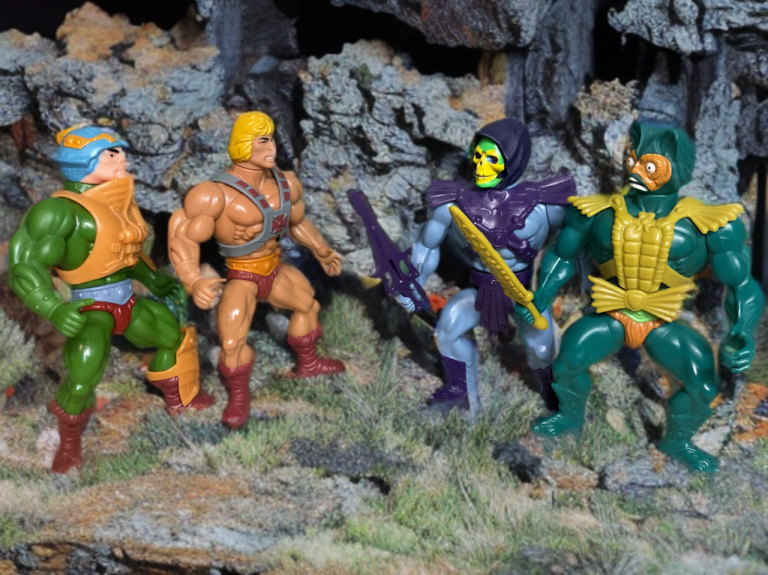
The 5.5″ scale was a deliberate choice—big enough to feel substantial in small hands, yet affordable to produce en masse. These figures weren’t just toys; they were gateways to imagination. Each came with minimal articulation (usually five or six points), but what they lacked in poseability, they made up for in durability and swappability. Heads popped off, arms interchanged, and weapons could be mixed like a mad scientist’s lab experiment. The line exploded, spawning cartoons, comics, and even a live-action movie starring Dolph Lundgren as He-Man and Frank Langella as a memorably hammy Skeletor.
By the mid-80s, MOTU had sold millions, but like all empires, it faced decline. Competition from Transformers and G.I. Joe, plus market saturation, led to its fade-out by 1987. Yet, its legacy endured, inspiring reboots like the 2002 line and the current Origins series, which recreates that vintage feel for modern collectors. The original 5.5″ figures remain icons, fetching premium prices on eBay for their chunky aesthetics and that unmistakable scent of aged plastic.
What set MOTU apart was its blend of sci-fi and fantasy. Laser guns alongside swords? Check. Hover vehicles in medieval castles? Absolutely. It was a sandbox where kids could script their own epics, and that’s the spark that still burns bright today.
Unveiling Legends of Dragonore: From Concept to Collectible
Fast-forward to the 2020s, and enter Legends of Dragonore, a line that’s like finding an unreleased sequel to your favorite childhood movie. The idea sprouted in the mind of Emiliano Santalucia, an artist known for his work on MOTU comics and designs. Around 2021, Santalucia teamed up with modeler Peer Brauner and even tapped original MOTU designer Mark Taylor for some concepts. Their goal? To recapture the essence of 80s action figures without stepping on trademarks.
The name “Dragonore” itself is a nod to history—it was one of the early working titles for what became Masters of the Universe. Mattel toyed with “Lords of Power” and “Dragonore” before settling on MOTU. Santalucia and company saw an opportunity to explore those abandoned ideas, creating a parallel universe of heroes and horrors.
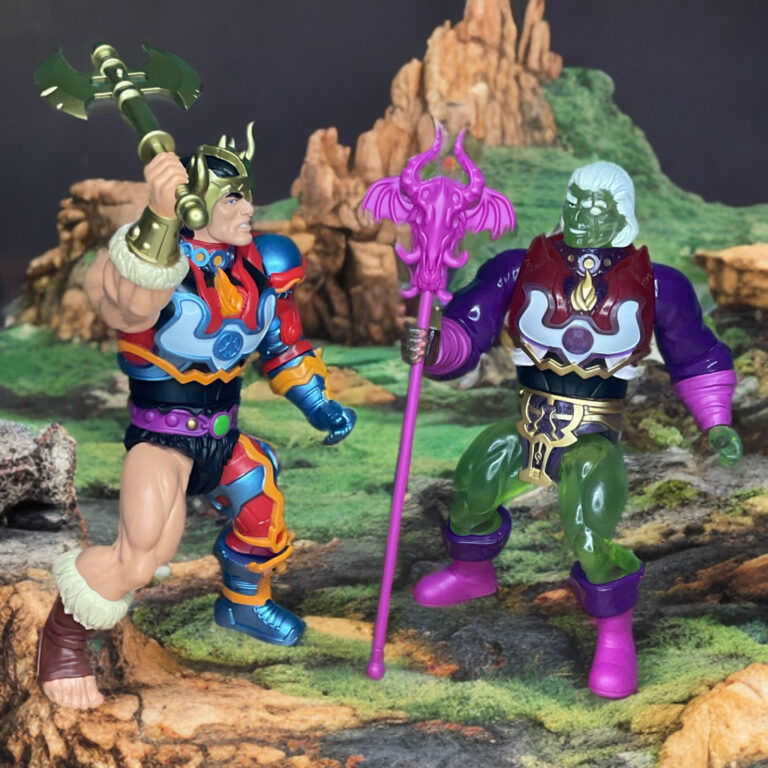
Formo Toys, the indie company behind it, officially launched the line in late 2023 with Wave 1, titled “The Beginning.” Preorders flew off virtual shelves, thanks to hype from toy conventions like Power-Con. The figures hit the scene amid a retro toy revival, where collectors crave that tactile, no-frills play experience. Production kicked off with crowdfunding elements, ensuring fan input shaped the direction.
What started as sketches evolved into fully realized 5.5″ figures, complete with pop-apart joints for customization. The first wave included six characters, each packing build-a-figure parts for a “Divine Armor” bonus. By 2025, waves expanded to include cosmic warriors and dragons, showing the line’s ambition to build a sprawling mythos. It’s not just a toy line; it’s a love letter to an era, born from passion projects in garages and online forums.
Shared DNA: Where MOTU and Dragonore Align
At first glance, slipping a Legends of Dragonore figure next to a vintage MOTU one feels like reuniting separated twins. Both lines embrace the 5.5″ scale, making them perfect shelf mates. Articulation is kept simple—six points for most, focusing on shoulders, hips, neck, and sometimes waist twists. This isn’t about hyper-posable modern marvels; it’s about that satisfying “click” when you swap an arm or head.
Thematically, they’re siblings in the fantasy genre. MOTU’s Eternia brims with muscular warriors, beastly foes, and magical artifacts. Dragonore mirrors this with its own world of ancient prophecies, divine armors, and clashing factions. Heroes wield axes and shields, villains lurk with dark powers, and creatures add that extra layer of wonder. Both encourage mix-and-match play, where a barbarian’s torso could end up on a skeleton’s legs for hilarious hybrids.
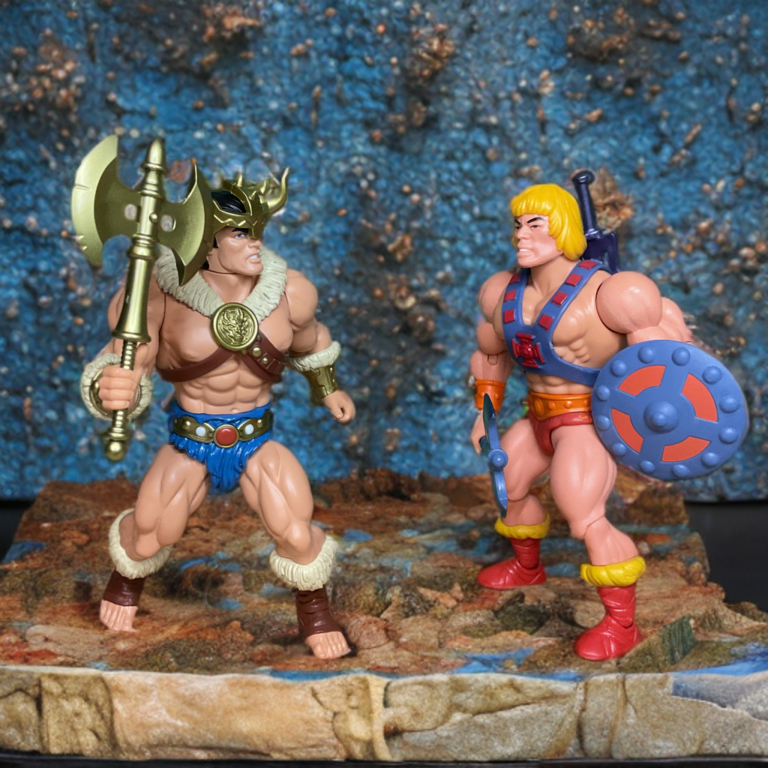
Accessories are another overlap. MOTU figures came with weapons like power swords and battle axes, often in bright, clashing colors. Dragonore ups the ante with removable armor, belts, and modular tools that snap on and off. The build-a-figure concept in Dragonore echoes MOTU’s vehicle and playset integrations, where collecting multiples unlocked bigger adventures.
Even the packaging screams similarity: Carded blisters with vibrant art, bios on the back teasing lore. It’s all designed to evoke that toy aisle thrill, where the box art alone could fuel hours of play. Collectors note how Dragonore figures “fit perfectly” into MOTU displays, blending seamlessly without looking out of place.
But it’s the spirit that binds them most. Both lines champion creativity over complexity. In an age of app-connected toys, they remind us that sometimes, a hunk of plastic with a sword is all you need to conquer imaginary worlds.
Diverging Paths: What Sets Them Apart
While they share a family resemblance, MOTU and Dragonore aren’t identical. MOTU, as a product of 80s mass-market mania, was backed by Mattel’s powerhouse marketing. It had a full ecosystem: animated series by Filmation, mini-comics, and tie-ins galore. Dragonore, being an indie effort, relies on grassroots buzz, convention reveals, and online communities. No Saturday morning cartoon (yet), but plenty of YouTube unboxings and fan art.
Design-wise, MOTU leaned into bold, primary colors and exaggerated physiques—think He-Man’s perma-tan and Skeletor’s blue skin. Dragonore refines this with more intricate sculpts, thanks to modern tooling. Figures like Oskuro boast detailed textures on armor, while MOTU’s were smoother, almost cartoonish. Dragonore also introduces build-a-figures from the get-go, a mechanic MOTU toyed with later in variants.
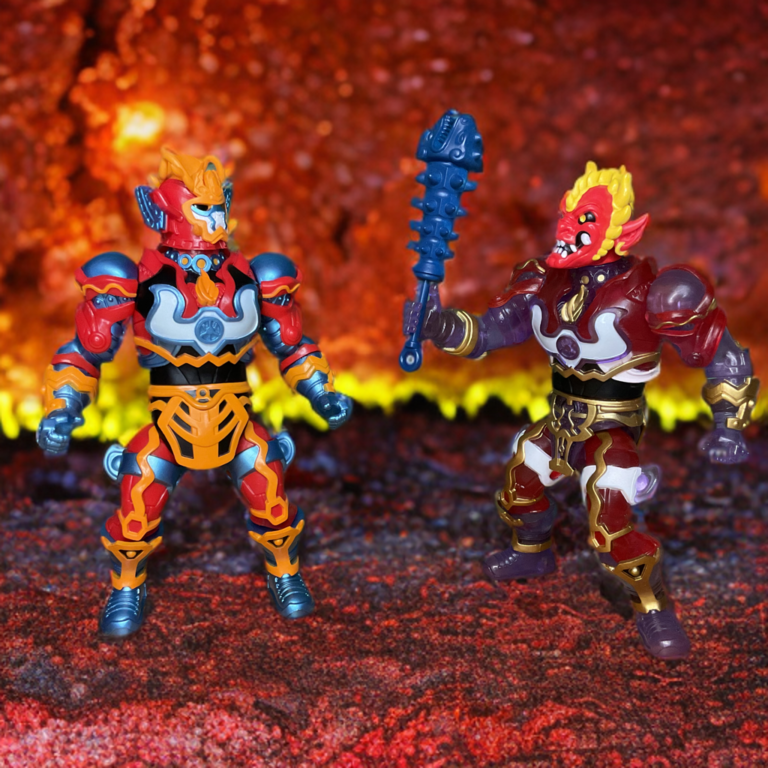
Lore diverges too. MOTU’s story revolved around Castle Grayskull’s secrets and the eternal He-Man/Skeletor feud. Dragonore crafts its own tale: “The Beginning” wave sets up a prophecy involving divine armors and ancient guardians. Characters draw from unused MOTU concepts—Barbaro echoes prototype He-Man designs, but with fresh twists like cosmic elements in later waves.
Availability marks a big split. Vintage MOTU figures are collector’s items, often yellowed and loose-jointed from decades of play. Dragonore is fresh off the presses, with limited editions and preorders that sell out fast. Price points reflect this: A mint MOTU He-Man might cost hundreds, while a Dragonore figure runs $30-40 new.
Finally, community focus differs. MOTU has a massive, established fanbase with forums debating every variant. Dragonore is building its tribe, appealing to MOTU fans seeking something new without betraying the old.
Character Showdown: Heroes, Villains, and Beasts
No comparison is complete without pitting the stars against each other. MOTU’s roster is legendary, with over 100 figures across its run. Dragonore is younger, with waves still rolling out, but its characters pack punchy personalities. Here’s a deep dive into key matchups, highlighting how they echo or evolve each other.
Take He-Man versus Barbaro. He-Man, the blond barbarian with the power sword, embodies pure heroism. Barbaro, from Dragonore’s first wave, is based on Tony Barbaro’s prototype sculpt for early MOTU. He’s got the harness, the axe, but adds removable pauldrons and a more rugged, battle-worn vibe. While He-Man shouts “I have the power!”, Barbaro feels like the gritty reboot, ready for a darker tale.
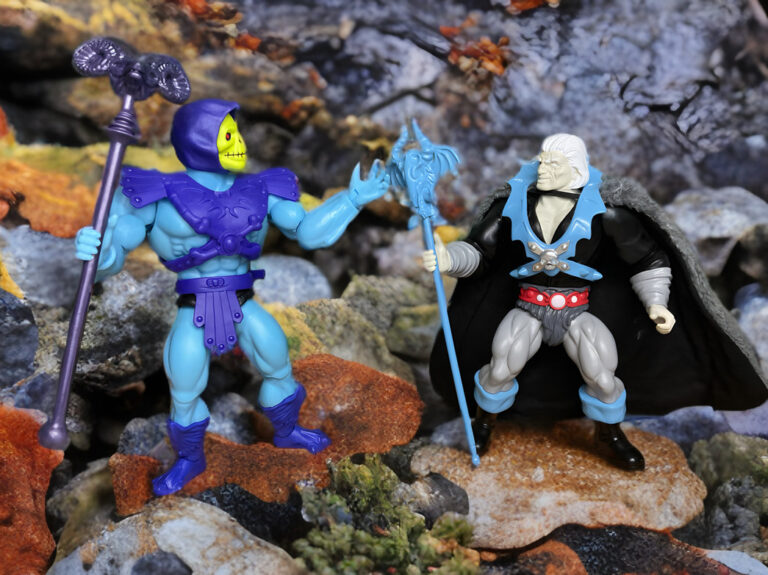
Skeletor finds a foil in Oskuro. The skull-faced overlord of evil, with his havoc staff and cackling laugh, is MOTU’s ultimate baddie. Oskuro, a shadowy warrior with demonic horns, comes with build parts and modular armor. He’s less campy, more menacing, like if Skeletor traded his purple hood for a black metal aesthetic.
Beast Man versus Arboreos (from Dragonore Wave 2). Beast Man, the furry brute loyal to Skeletor, controls animals with his whip. Arboreos, a tree-like guardian, brings elemental flair—vines for limbs, axe for chopping foes. It’s nature versus beast, with Arboreos offering eco-twists absent in MOTU’s more tech-infused beasts.
Sharella, Dragonore’s archer heroine, parallels Teela or Evil-Lyn. With bow and quiver, she’s agile where MOTU women were often warriors or sorceresses. Dragonore emphasizes diversity early, with figures like her pushing boundaries MOTU explored later.
For creatures, MOTU’s Battle Cat (a green tiger with saddle) meets Dragonore’s dragons. These winged beasts, revealed in 2023, are poseable mounts with snapping jaws, expanding play beyond humanoids.
And don’t forget Keldor, Dragonore’s skeletal schemer, akin to Skeletor’s pre-acid origin. He borrows from MOTU lore but adds pop-apart features for custom undead armies.
| Character | MOTU Equivalent | Similarities | Differences | Accessories | Play Value |
|---|---|---|---|---|---|
| Barbaro | He-Man | Muscular build, heroic stance, axe wielder | More modular joints, removable belt | Axe, shield, armor pieces | High customization vs classic swap |
| Oskuro | Skeletor | Dark lord theme | Detailed textures, build-a-parts | Staff, cape, divine armor piece | Menacing poses vs campy evil |
| Yondara | Teela | Female warrior, ranged weapons | Archer focus, lighter armor | Staff, helmet | Agility emphasis vs swordplay |
| Onitor | Beast Man | Bestial appearance, nature ties | Demon-based vs furry mammal | Spiked mace, whip | Elemental attacks vs animal control |
| Arboryous | Moss Man | Nature, plant and vegetation-based warriors | Sensory features, and customization options | Tree branch club | Vernal Sage healer |
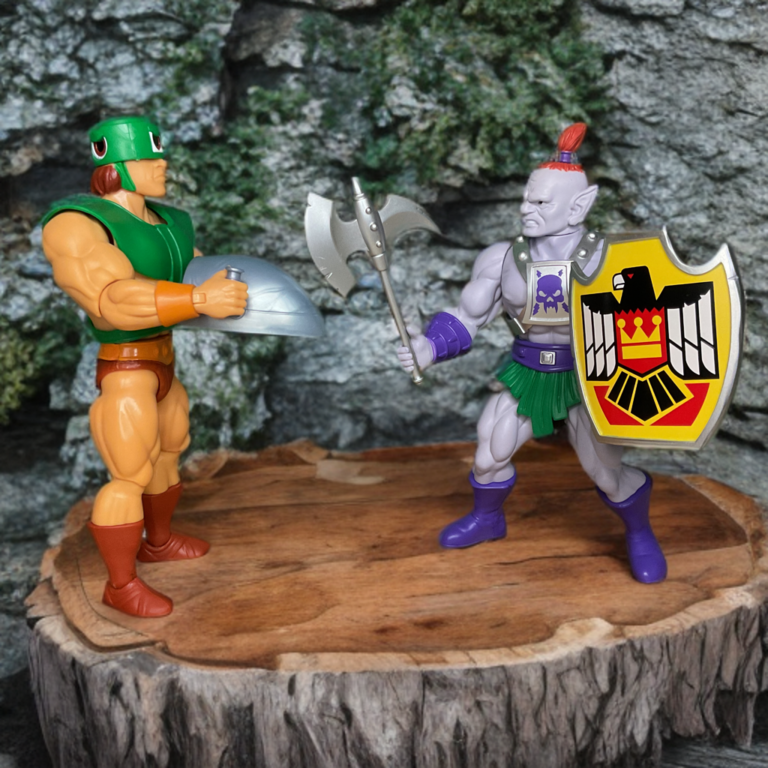
| Magnon | Man-At-Arms | Tech-savvy guardian, warrior | Cosmic elements, shield bearer | Shield, modular axe, nace | Defense builds vs gadgetry |
| Dragons (Wave 2) | Battle Cat/Panthor | Mountable creatures, fierce | Flying capability, multiple variants | Wings, jaws | Aerial battles vs ground charges |
This chart underscores how Dragonore builds on MOTU foundations while injecting fresh mechanics.
Collectibility and Community: Building Your Empire
Collecting MOTU today means hunting variants—like the rare “Wonder Bread” He-Man or international exclusives. Condition is king; carded figures command top dollar, with grading services like AFA adding prestige. Communities thrive on sites like He-Man.org, where fans trade, restore, and debate.
Dragonore, being new, focuses on limited runs and early bird kits. Wave 1’s set of six, with the Divine Armor build, became instant grails. Formo Toys engages fans via social media, teasing waves at events like Power-Con. Prices are accessible, but scalpers lurk, driving up aftermarket values.
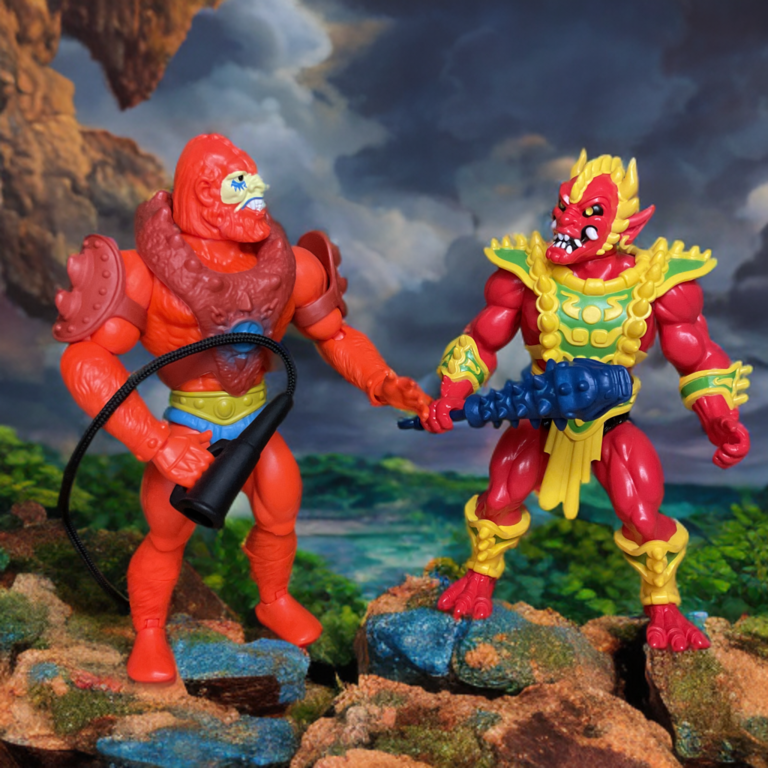
Both lines foster creativity. MOTU customizers swap parts for hybrids; Dragonore’s modularity amps this up, compatible with vintage pieces. Imagine a He-Man torso on Oskuro legs—pure chaos.
Investment-wise, MOTU has proven value, appreciating over decades. Dragonore could follow if it sustains momentum, especially with expansions like Warriors of the Galaxy.
Cultural Impact: From Toy Boxes to Pop Culture
When Masters of the Universe burst onto the scene in the early 1980s, it didn’t just dominate toy aisles—it reshaped the cultural landscape like a Battle Ram plowing through a horde of Evil Warriors. This line of beefy action figures and their accompanying animated series became a cornerstone of 80s kid culture, blending sword-and-sorcery fantasy with sci-fi flair in a way that left an indelible mark on everything from fashion to film. Take the iconic catchphrase “By the power of Grayskull!”—it’s not just a battle cry; it’s a meme that’s echoed through decades, popping up in everything from viral videos to casual office banter. The show’s moral lessons at the end of each episode, dishing out wisdom on friendship, honesty, and standing up to bullies, turned playtime into a subtle ethics class, all while hawking more plastic heroes. But let’s not sugarcoat it: MOTU was also a masterclass in consumerism, teaching kids that true power came from collecting every variant, vehicle, and villain to complete the set.
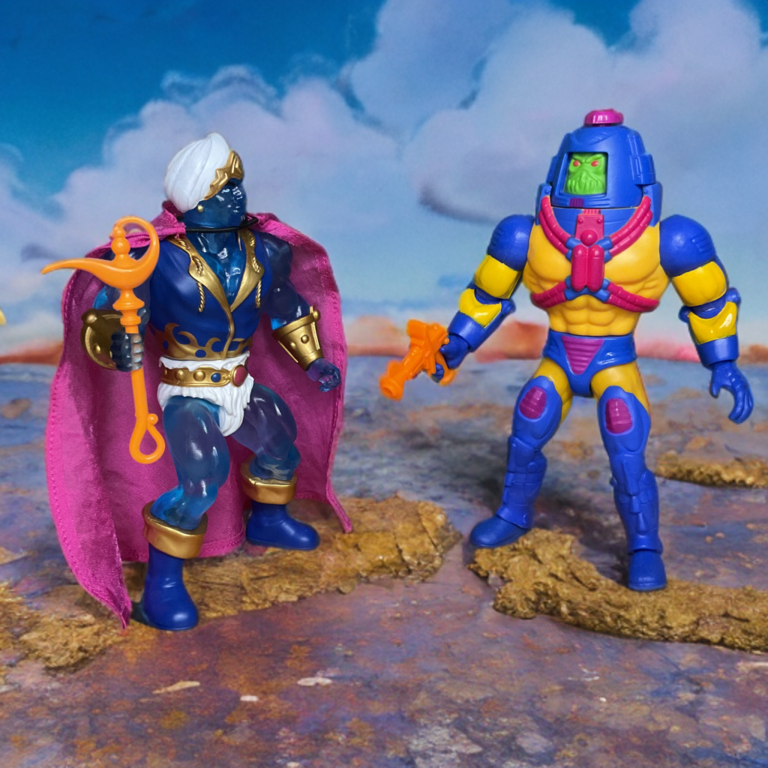
Fast-forward to today, and MOTU’s fingerprints are all over modern media. Netflix’s Revelation series revived the saga with a mature twist, delving into deeper lore and character arcs that nod to the original while appealing to grown-up fans. It’s part of a broader revival, including reboots and comics that keep Eternia’s battles alive. Beyond screens, MOTU influenced the hyper-muscular aesthetic that’s become a staple in Hollywood—think actors like Chris Hemsworth in Thor films bulking up to He-Man proportions, channeling that same over-the-top heroism. The franchise helped pave the way for today’s superhero blockbusters, where mythic backstories and epic clashes mirror Eternia’s eternal good-vs-evil showdowns. Even in comics and games, elements like magical transformations (hello, Shazam!) and colorful ensembles owe a debt to He-Man’s world. And don’t forget the philosophical undertones: MOTU sparked kids’ imaginations about justice, self-empowerment, and the balance of technology and magic, themes that resonate in everything from Star Wars sequels to fantasy novels.
On the flip side, MOTU’s impact wasn’t all heroic. It set unrealistic body standards for boys, much like Barbie did for girls, promoting a chiseled, invincible ideal that’s trickled into gym culture and action star physiques. Yet, its legacy endures through parodies, like in Family Guy sketches or Robot Chicken skits, proving that even Skeletor’s schemes can inspire laughter across generations. The franchise’s blend of campy humor, bold colors, and larger-than-life drama has made it a pop culture touchstone, influencing how we tell stories about heroes in a post-magic age.
Now, enter Legends of Dragonore, the plucky newcomer that’s still carving its niche in this toy multiverse. Launched in 2023 by Formo Toys, it’s riding the nostalgia wave like a dragon soaring over ancient ruins, appealing to aging 80s kids who now want to pass the torch—or axe—to their own offspring. In our screen-saturated era, Dragonore offers a refreshing dose of analog play: no batteries required, just pure, tactile fun with pop-apart figures that encourage hands-on creativity. It’s a reminder that sometimes the best adventures happen off-grid, away from apps and algorithms, fostering family bonding over epic battles in the living room.
What makes Dragonore stand out is its indie spirit, born from passionate creators like Emiliano Santalucia who drew from unused MOTU concepts to build something fresh. This grassroots approach empowers smaller teams to dream big, proving that you don’t need a corporate giant like Mattel to launch a universe-conquering line. Fans rave about how it explores untapped potentials, like modular builds and diverse character designs that feel evolutionary rather than imitative. Sure, critics grumble about the heavy MOTU vibes—whispering “rip-off” in collector forums—but that’s like calling every fantasy tale a Tolkien clone. Dragonore isn’t stealing; it’s saluting, remixing the formula with sharper sculpts, elemental themes, and a focus on community-driven expansions.
As Dragonore grows, its cultural ripple is just starting to spread. Online unboxings, fan customs, and convention buzz are building a dedicated tribe, much like MOTU did back in the day. It taps into the retro revival trend, where vinyl records and cassette tapes are cool again, positioning itself as the antidote to digital fatigue. Parents sharing these figures with kids aren’t just reliving their youth; they’re creating new traditions, blending old-school play with modern inclusivity. If MOTU taught us about heroism wrapped in consumerism, Dragonore might just school us on sustainable creativity in a fast-fashion world. Time will tell if it spawns its own memes or media empires, but for now, it’s a beacon for indie toy makers, showing that big ideas can indeed start small—and scale up to legendary status.
Future Horizons: What’s Next for These Legends
Masters of the Universe isn’t gathering dust in Castle Grayskull’s attic; it’s charging forward like He-Man on a turbo-charged Attack Trak. With the highly anticipated live-action movie set to hit theaters on June 5, 2026, starring a cast that’s got fans buzzing, Mattel is unleashing a torrent of new toys to match. The Origins and Masterverse lines continue to blend vintage charm with contemporary flair, offering collectors detailed figures that honor the 5.5″ roots while adding modern articulation and accessories. But the real excitement? A dual-pronged assault with the “Core” line for kids—featuring 5.5″ figures with actor likenesses from the film, like He-Man, Skeletor, Teela, Beast Man, and a mysterious Skel-Knight—and the “Chronicles” series for die-hard fans, packed with premium details and deeper lore dives.
Expect vehicles like the flying Roton (with Skeletor piloting it in a bold new twist) and a roaring Battle Cat with interactive features, plus role-play gems such as a 27-inch Power Sword that lights up and a talking Skeletor mask that belts out movie phrases and sinister laughs. These hit shelves in spring 2026, timed perfectly for the film’s global rollout on April 25, aiming to recapture the toy aisle magic for a new generation while satisfying nostalgic adults. Mattel’s strategy is clear: bridge the gap between play and collectibility, with exclusives and variants that could spark crossovers with other franchises. Who knows—maybe a MOTU/Transformers mash-up or a comic tie-in that expands Eternia’s borders even further?
Meanwhile, Legends of Dragonore is spreading its wings—literally—with dragons, cavemen, and cosmic warriors on the horizon. Formo Toys has already shipped Wave 2: Dragon Hunt, complete with beasts, hunters, and build-a-figure bonuses that expand the mythos. Warriors of the Galaxy Wave 2 joins the fray, introducing space-faring heroes and villains that push beyond earthly battles. Look for exclusives like Auritor in red and blue armor debuting at conventions, and the Cave Men Tribe Grunts 3-Pack, adding primal grunts to your army-building fun. Early 2026 shipments promise more, including limited editions and preorders that sell out faster than a dragon’s fiery breath. This indie powerhouse is hinting at a vast universe, with teases of cosmic spikes, ancient tribes, and perhaps even intergalactic alliances that could rival MOTU’s scope.
Could these two titans collide? A collaboration seems like a dream—imagine swapping parts between He-Man and Barbaro for ultimate custom figures. Or crossovers in comics, where Eternia meets Dragonore’s realms. For now, they coexist like friendly rivals, enriching the toy landscape with options for every collector. MOTU brings the blockbuster backing, while Dragonore offers agile, fan-focused innovation. Together, they’re ensuring that 5.5″ action figures remain a force in a world of digital distractions, promising endless quests for years to come.
Conclusion: Choosing Your Side in the Toy Saga
In the grand arena of action figures, where plastic warriors clash and imaginations reign supreme, Masters of the Universe and Legends of Dragonore stand as twin pillars of epic storytelling. Whether you’re hoisting the Power Sword with MOTU’s timeless classics or assembling divine armors in Dragonore’s evolving world, both lines deliver that rush of timeless fun—the kind that turns a rainy afternoon into a saga of sorcery and swordplay. They prove that great toys aren’t bound by eras; they transcend them, sparking joy in every posed battle, every swapped limb, and every invented alliance.
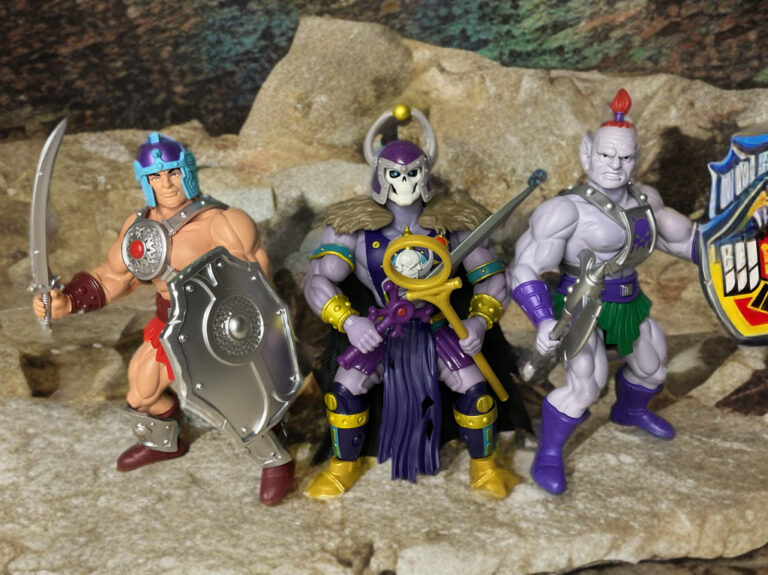
MOTU, with its deep-rooted legacy, reminds us of the power in nostalgia, evolving through movies, reboots, and collector lines that keep Eternia’s flame burning bright. Dragonore, fresh and fierce, injects new energy, showing how indie passion can rebirth retro magic for modern shelves. You don’t have to pick a side—mix them, match them, and create hybrids that would make even Man-E-Faces jealous. In the end, it’s not about declaring winners in this toy tussle; it’s about the stories we weave with them, the memories we forge, and the quests we embark on. So grab a figure, whether it’s a vintage He-Man or a shiny new Oskuro, invent your own prophecy, and let the adventure unfold. After all, in the universe of play, the real power is yours.
 English
  Deutsch
  Français
  Português do Brasil
  日本語
日本語  Español
  English (Australia)