

More Than a Triple Changer: The Complete Biography of Blitzwing
The Versatile Decepticon Dynamo
In the vast universe of Transformers, few characters embody chaos and adaptability quite like Blitzwing. As one of the original Triple Changers introduced in the Generation 1 era, Blitzwing stands out for his ability to shift seamlessly between robot, jet, and tank modes, keeping both allies and enemies guessing. This Decepticon warrior isn’t just about brute force; his history spans multiple continuities, showcasing a blend of strategic cunning, outright aggression, and unpredictable behavior that has made him a memorable antagonist across cartoons, comics, movies, and more. From his debut on Earth-stealing missions to his fractured psyche in later incarnations, Blitzwing’s journey reflects the evolving nature of the Transformers franchise itself. Official canon paints him as a loudmouthed, belligerent fighter with a cruel sense of humor, often disrupting battles by rapidly changing forms to sow confusion. His electron scimitar and gyro-blaster rifle are signature tools of destruction, but it’s his triple-changing prowess that truly sets him apart, allowing him to dominate air and ground assaults alike. Over the decades, Blitzwing has evolved from a straightforward G1 thug to complex versions in Animated and live-action films, each adding layers to his legacy while staying true to his core as a Decepticon powerhouse.
Blitzwing’s origins tie back to the eternal war between Autobots and Decepticons, where his versatility made him a key asset. In various timelines, he’s been a strategist, a berserker, and even a victim of experimental upgrades gone awry. His dislike among fellow Decepticons stems from his abrasive personality, yet his battlefield effectiveness commands respect.
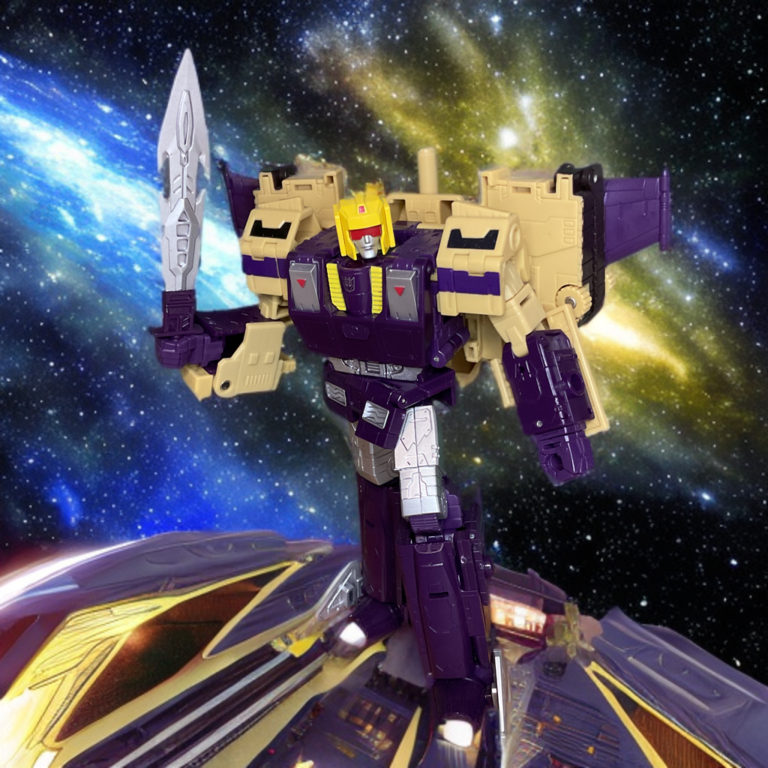
Whether bombing from the skies in jet mode or rolling over obstacles as a tank, Blitzwing thrives on the thrill of combat, often laughing maniacally as he unleashes destruction. This biography delves into his complete history across official canon, tracing his exploits from Cybertron’s ancient conflicts to Earth’s modern skirmishes, highlighting key events, abilities, and roles that define this more-than-triple-changing icon.
Origins of the Triple Changer Gimmick
The triple changer idea debuted in the Diaclone toy line (the Japanese predecessor to Transformers) in the early 1980s. Late in Diaclone’s production, Takara introduced designs for robots that could transform into two distinct alternate modes in addition to robot form. This was a step up from standard two-mode Transformers to add novelty and complexity.
- The specific mold that became G1 Blitzwing was the Diaclone “Triple Changer Jet Fighter Type” (designed by Kōjin Ōno in 1983). It transformed from robot to a MiG-25-inspired jet fighter and a Type-74 tank.
- Its counterpart was the shuttle/train mold that became Astrotrain.
- These were released in the Transformers line in 1985 (second year of G1 toys), making Blitzwing and Astrotrain the first true Triple Changers in the brand. (Earlier figures like Wheeljack or Tracks had pseudo-multi-modes but weren’t official Triple Changers.)
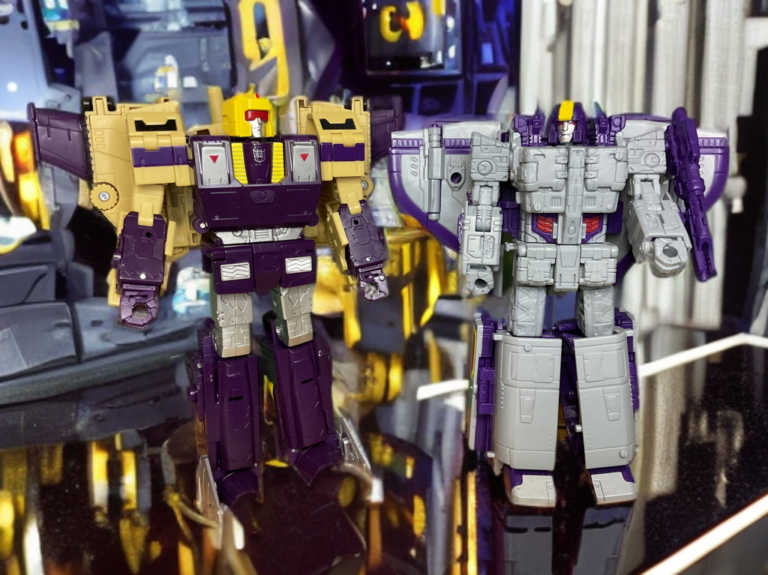
The gimmick was purely a toy engineering feat—no die-cast parts like earlier Diaclone figures, allowing variable-scale vehicles and more complex transformations. The US patent for Blitzwing’s design (filed 1984) highlights the reconfigurable jet-plane mechanics.
In-universe explanations vary by continuity:
- In G1 cartoon/comics, Triple Changers like Blitzwing and Astrotrain simply “evolved” or were integrated into Megatron’s forces with no deep origin story—sometimes implied as rare or experimental upgrades.
- Some comics (e.g., More Than Meets the Eye) tie Blitzwing’s ability to Shockwave’s experiments.
- In Transformers Animated, Blackarachnia rebuilt Blitzwing as a Triple Changer post-Great War, but the process fractured his mind into three personalities (Icy, Hothead, Random)—a direct link between the gimmick and character psychology.
- Other continuities (e.g., Cloud) treat triple-changing as an inborn rare ability.
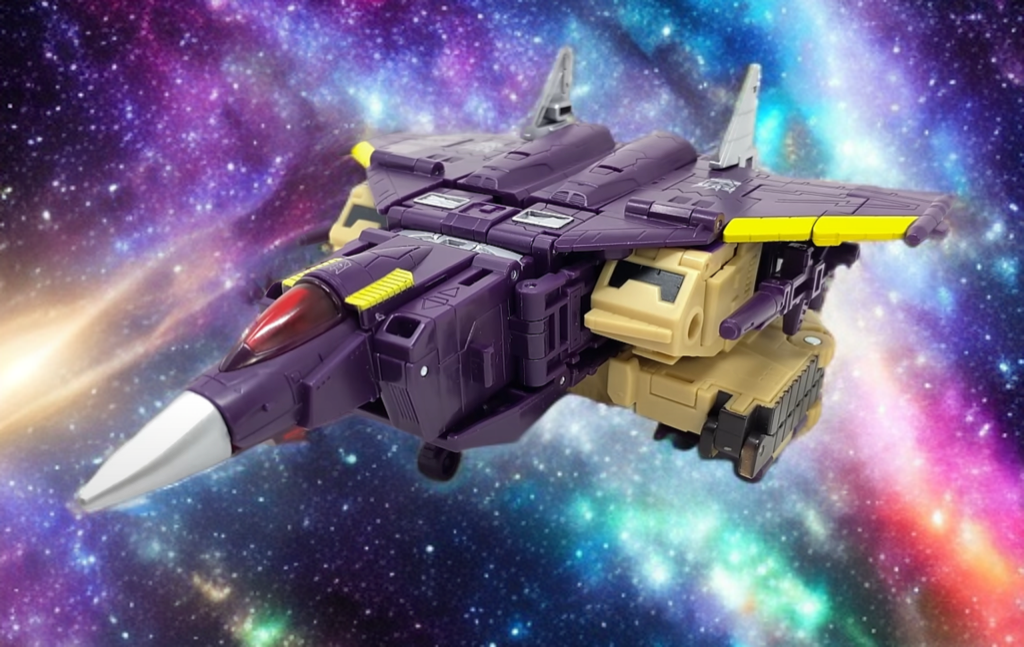
The engineering challenged toy designers: early Triple Changers often had “unconvincing” vehicle modes (blocky, abstracted) due to cramming three modes into one figure. Blitzwing’s jet and tank are notoriously “mis-transformed” looking in animation (e.g., backwards tank orientation), based on prototype or misassembled toy photos.
The Gimmick in Blitzwing Toys
Blitzwing’s triple-changing has been a core play feature across releases:
- G1 (1985): Robot → MiG-25 jet (with spring-loaded missiles, weakened in US for safety) → Type-74 tank. Heavy die-cast parts, removable turret, hidden horizontal stabilizers in jet mode.
- Animated (2008 Voyager): Added a rotating three-face head gimmick (inspired by Masters of the Universe’s Man-E-Faces) to match his personality split—though the knob was often stiff.
- Modern lines like Generations/Legacy (e.g., 2013 Voyager, 2022 Leader Class): Smoother transformations, better proportions, homage details, and extras like Energon gauntlets (a line-wide gimmick for weapon-building, not show-specific).
- Many toys emphasize rapid mode-switching for “battle confusion,” mirroring lore where Triple Changers outflank enemies by changing forms quickly.
Why Blitzwing Embodies the Gimmick
Blitzwing is synonymous with triple-changing because he was one of the first, and his jet/tank combo offers perfect air/ground versatility. Later versions (e.g., Animated’s mind-fracture tie-in) creatively link the physical gimmick to personality chaos, while others keep it straightforward. Even in the Bumblebee movie (where he’s a Seeker, not explicitly triple-changing on-screen), prequel comics nod to it.
Overall, the triple changer gimmick started as Takara’s late-Diaclone innovation to refresh the line, became a fan-favorite engineering milestone, and gave Blitzwing his defining edge as a chaotic, adaptable Decepticon warrior. It’s one of the franchise’s most enduring toy concepts
Generation 1: The Classic Triple Threat
Blitzwing’s story begins in the Generation 1 continuity, where he emerges as a formidable Decepticon Triple Changer. Forged on Cybertron, Blitzwing joined Megatron’s forces in 1985, arriving on Earth to bolster the Decepticon ranks. His initial mission involved stealing energon from Dinobot Island, where he engaged in a tank-mode duel with the Autobot Warpath, showcasing his ground combat prowess. This early appearance highlighted his abilities: rapid transformations that disorient foes, a heat-seeking missile launcher in jet mode, and heavy artillery in tank form. Blitzwing’s personality quickly shone through as unlikable and jerky, with a brainless sense of humor that endeared him to no one but made him a terror in battle.
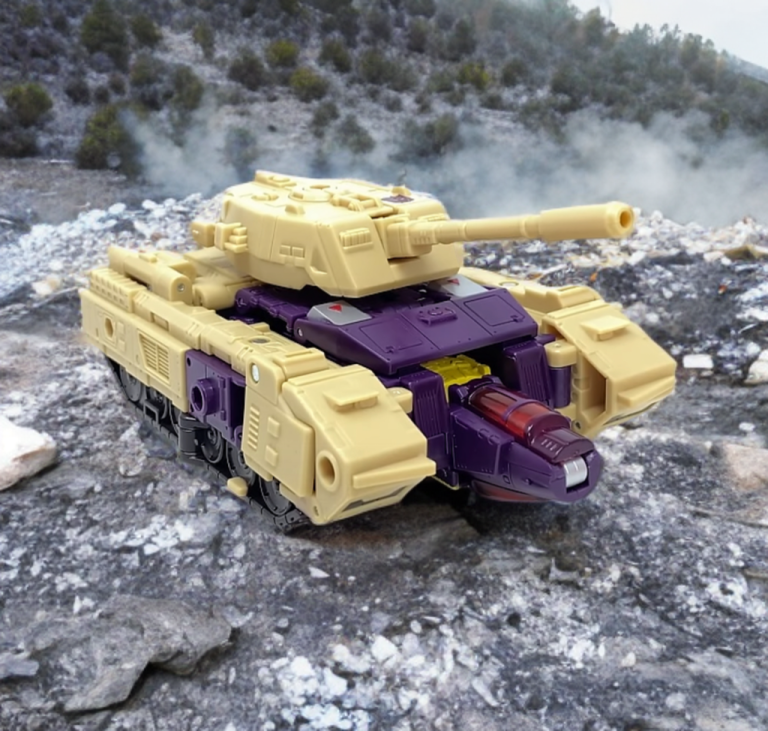
As the war escalated, Blitzwing suffered from cybertonium depletion, a condition affecting many Transformers, but he recovered to participate in the Golden Lagoon incident. There, he and other Decepticons coated themselves in electrum, gaining temporary invulnerability, only to battle the Autobots over the resource. In another botanical threat, Blitzwing teamed with Dirge and Ramjet to combat the Morphobots, using his jet mode to evade and attack the plant-like enemies. His poor decision-making became evident in schemes like kidnapping a football coach to outsmart the Autobots, which backfired spectacularly, leading to his capture by humans. Escaping by stomping threats, Blitzwing continued his chaotic path.
A pivotal moment came in the Triple Takeover, where Blitzwing and Astrotrain attempted a coup against Megatron and Starscream. They enlisted the Constructicons to build a maze, aiming for fame and fortune, but were swiftly defeated and forced to rejoin the ranks. Negotiating with Lord Chumley for Autobot captures, Blitzwing found himself trapped again, highlighting his recurring misfortunes. During the Cosmic Rust crisis, he transported Perceptor’s captors in an enlarged jet form, evading the Aerialbots with his agility.
By 2005, Blitzwing led the assault on Autobot City, battling Hot Rod and Kup at Lookout Mountain. Surviving Optimus Prime’s attacks, he attended Starscream’s coronation after Megatron’s defeat. On Chaar, he rejected Quintesson bribes due to suspicion, greeted Galvatron’s return, and uncovered the Quintessons’ plot to destroy all Transformers. In a rare alliance, he teamed with Rodimus Prime to stop Sharkticons but was banished by Galvatron for perceived betrayal after deactivating Transformers across the galaxy via a nullifying switch.
Japanese Extensions & Obscure Media
In the Japanese cartoon extensions, Blitzwing’s origins link to being an Overcharge, attendant to a Quintesson invader in the Legends World. A future version named him “Blitzwing” and urged independence. He attacked the Trigger space station, stole Energon, and fought in The Battle of the Star Gate. In The Headmasters, he assaulted Cybertron in 2011, chased Sunstreaker, distracted Aerialbots for Trypticon’s infiltration, guarded Chaar, and fled an Arctic showdown. The Legends comic saw his body infected with black balls in 2021, becoming a Headmaster and witnessing Majin Zarak. e-HOBBY comics featured him battling amid Grand Scourge’s attack. In Legacy VS500, he spectated the Speedia 500 race. Cloud timelines showed him observing orbital attacks and surviving interruptions. TV Magazine comics had him distracting in Arizona, destroying Yokohama, and defeated by Tracks. Super-God Masterforce manga included a holographic Blitzwing illusion. Ask Vector Prime placed him assaulting Guardian City. Deviations depicted his retreat post-Unicron.
Marvel Comics
Marvel Comics portrayed Blitzwing as a feared Cybertronian killer in Operation: Volcano, ambushed by Wreckers but saved by Megatron’s call. He witnessed Straxus’s mind swap with Megatron. Infected with Scraplets, he captured Blaster but was cured and fought a monster. Aiding thefts, retrieving Megatron’s remains, and battling on the Moon against Grimlock, he lost to an energo-sword. Sliced by Horri-Bull in civil war, he chanted in Generation 2 conquests but was defeated. Regeneration One zombified him by 2012, deployed against Wreckers, and off-lined. Transformers ’84 showed early war assaults. Sticker Adventures and coloring books featured power plant raids and Oil Valley fights. Big Looker storybooks had him short-circuiting oil trucks. Find Your Fate Junior books involved luring Autobots, hunting Sparkplug, and sphere retrievals. Milton Bradley comic deactivated him in the Ark crash, repaired millions of years later. Ladybird Books commanded Space Station Argon, destroyed by Hound’s trick.
Dreamwave Comics
Dreamwave continuity had Blitzwing assisting Shockwave’s Iacon assault, retreating from destruction, captured as dangerous, abducted by The Fallen, serving as lieutenant, mutated, captured in Operation Liberation, damaged Megatron, rallied against Dinobots, and torn by Predacons. G.I. Joe crossovers disrupted him to 1970s Earth, attacking ceremonies. The Beast Within saw him cheering Predaking. 2005 IDW forged him as Triorian Guard, holding Bumblebee hostage, leading divisions, destroying outposts, allying for energon, bombing bunkers, supercharged against Avengers, plotting with Sixshot, defending bases, combining into Galvatronus. Impaled by Talon, vivisected for M.A.S.K. tech. Spotlight: Mirage hunted in Pegasus Cluster. Hearts of Steel guarded during industrial revolution, fell under Elder God. Mini Mayhem! and Robot Heroes featured minor roles. Ultimate Pop-Up Universe pursued AllSpark. Generations bio split his mind into strategist, hothead, and bizarre personalities. Kre-O manga invaded picnics. Beast Wars: Uprising referenced Overcharges. 2019 IDW served in Age of Expansion, joined New Heavies, ambushed guards, invaded cities, agreed to talks, fought as Computron sacrificed.
Blitzwing’s G1 era cemented him as a versatile, if unreliable, Decepticon, with his triple modes enabling diverse tactics across countless battles.
Overview of Blitzwing’s Personalities
Blitzwing, the iconic Decepticon Triple Changer, has exhibited a range of personalities across Transformers continuities, often reflecting the tone and style of each era’s storytelling. In core canon, his character draws from a foundation of aggression and unpredictability, but adaptations layer on nuances like fractured psyches, sadism, or strategic cunning. These variations stem from his origins as a versatile warrior whose rapid mode shifts mirror his volatile temperament. Below, I’ll break down his personalities by major continuity, highlighting key traits, influences, and comparisons. This comparison draws solely from official sources like cartoons, comics, films, and toy bios, avoiding fan interpretations.
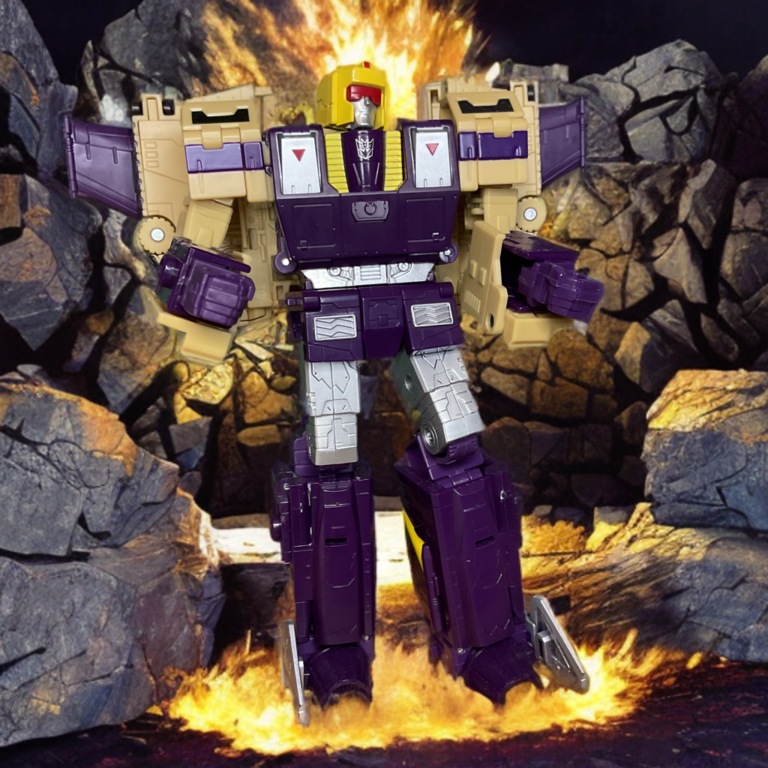
Generation 1 (G1) Continuity: The Belligerent Loudmouth
In the original G1 cartoon and comics (including Marvel, Dreamwave, and early IDW tie-ins), Blitzwing is portrayed as a straightforward, abrasive Decepticon thug. He’s loudmouthed and belligerent, with a cruel streak that manifests in mocking enemies during battles—such as taunting Autobots while bombing them from jet mode or stomping human captors for amusement. His sense of humor is described as “brainless” and unlikable, often alienating even fellow Decepticons like Starscream or Astrotrain, leading to internal conflicts like the attempted coup in “Triple Takeover.” He’s impulsive and poor at decision-making, as seen in failed schemes like kidnapping a football coach or negotiating with human lords, which frequently backfire.
In Marvel comics, this evolves slightly into a feared killer with a reputation for efficiency in operations like Operation: Volcano, but he remains hotheaded, chanting battle cries during conquests and showing frustration in defeats. Dreamwave adds a layer of opportunistic loyalty, rallying against threats like The Fallen but ultimately meeting brutal ends. Compared to later versions, G1 Blitzwing lacks psychological depth; he’s a brute-force antagonist driven by destruction and ego, without the split personalities seen elsewhere. His aggression is consistent but one-dimensional, making him more of a comic relief villain than a complex threat.
Transformers Animated: The Fractured Lunatic
The Animated series introduces Blitzwing’s most distinctive personality: a fractured psyche resulting from Blackarachnia’s experimental upgrades during the Great War’s aftermath. Long after the war ended and the Decepticons went into hiding, Blackarachnia rebuilt him into a Triple Changer, granting him three alternate personalities—each corresponding to one of his three faces that rotate in his head. Icy is a cold, calculating strategist represented by a long, blue face with a monocle, speaking with quiet disdain and using ice-based weaponry in jet mode. Hothead is a short-tempered, raging brute with a wide, red, gap-toothed face, prone to violent threats and outbursts, wielding heat/fire attacks in tank mode. Random is an erratic, completely bonkers joker with a black jack-o’-lantern-like face featuring a sharp-toothed red grin, tossing out bad puns, nursery rhymes, non sequiturs, or hysterical laughter while blending elements unpredictably.
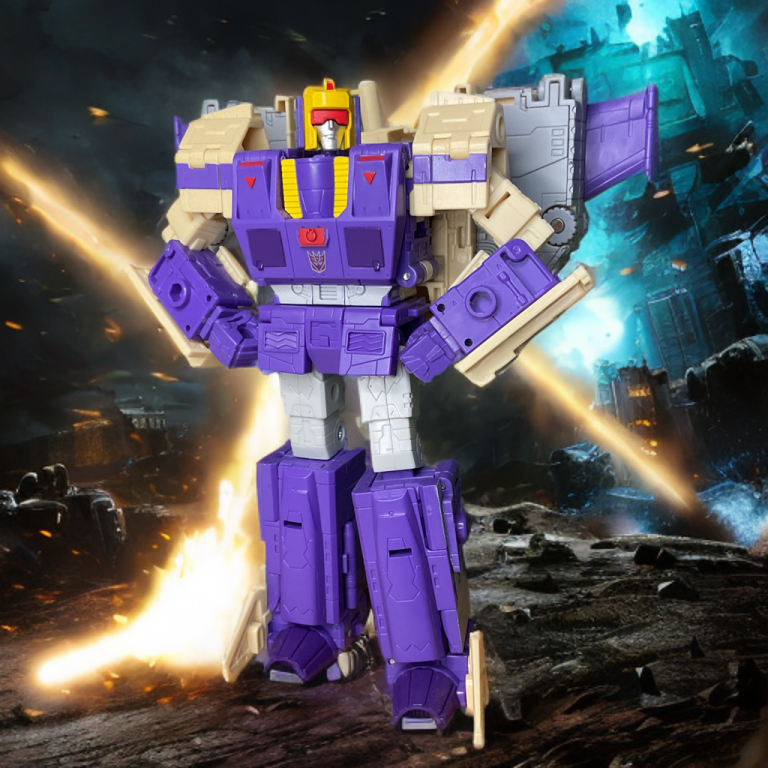
All three personalities share a thick German accent (an improvisation by voice actor Bumper Robinson inspired by the character’s name, which evokes “blitzkrieg”), adding to his cartoonish yet menacing presence. They switch faces unpredictably—often mid-sentence or mid-battle—leading to chaotic outbursts like bursting into song (“The Itsy Bitsy Spider”), bickering with himself, or shifting from calm analysis to explosive rage. This version amplifies G1’s belligerence into full-blown mental instability; Hothead mirrors the original’s impulsiveness (e.g., clashing with Lugnut over petty rivalries or destroying a Megatron statue in frustration), while Icy provides a strategic edge absent in early portrayals, such as plotting bounties, quick countermeasures against Autobots, or efficient captures. Random adds pure whimsy and unpredictability, making him a volatile wildcard—accidentally freezing allies, laughing maniacally during pursuits, or throwing random distractions.
Blitzwing’s wartime prowess was evident early, as he destroyed Kappa Supreme while escorting a supply convoy. Aboard the Nemesis during the AllSpark’s rediscovery, he partially froze Blackarachnia’s arm for her attitude, demanded respect, but was silenced by Megatron when he began singing. After fleeing the crash in an escape pod, he held a bizarre funeral at New Kaon, vowing revenge on the Autobots (and joking about mustaches on their faceplates), built a Megatron statue (destroyed by Lugnut, sparking a firefight), and placed a bounty on Optimus Prime—paying Lockdown with Lugnut’s detonation device, clashing over contacts, and reconciling via Swindle.
He investigated Nemesis wreckage on the Moon, mistook Earth machines for sentients, battled at construction sites, froze Bumblebee, was repaired by Starscream (pledging allegiance), and retrieved the AllSpark Key from Ratchet by freezing him and ripping off his arm. He aided Megatron’s restoration, fought in rampages (dominating until an EMP and taunt forced a mid-air mode shift into a lake), helped construct a space bridge with Sumdac, retrieved a tachyon transmitter, repeatedly offlined Starscream, froze Bulkhead and entire landscapes while pursuing fragments, destroyed infrastructure (foiled by Sari), and tricked Constructicons into labor (stopped by Megatron). Captured by Lockdown for Sentinel Prime, he escaped a storm, froze Sentinel in a counter-capture, was refrozen and paraded on Cybertron. He invaded Detroit virtually and attacked Autobots in later episodes like “Five Servos of Doom,” “Human Error, Part I,” and “Decepticon Air.”
Shorts featured him heckling Starscream, praising in fantasy sequences, building pools, or spinning medallions. In the book Prime Suspect, he stole a Pixie-6 controller disguised as Optimus. Comics like “The Cool” showed him chasing Autobots, delivering the Key, fleeing booby-trapped Starscream, and getting stasis-cuffed by speedsters. Games like Transformers Animated: The Game and Action Packs incorporated his personality switches into invasions and debuffs.
Compared to G1, Animated Blitzwing is far more psychologically layered and humorous, transforming his cruelty into entertaining lunacy rather than mere thuggery. It’s a direct evolution, exaggerating the “jerky” traits into a full mental disorder for comedic effect, while his fractured mind—tied to his triple modes—makes him a uniquely volatile force, switching from ice blasts to fire cannons or erratic combos mid-fight and embodying peak Decepticon unpredictability.
Bumblebee Movie Continuity: The Sadistic Vengeful Hunter
In the Bumblebee film continuity (encompassing the 2018 live-action movie Bumblebee and its official prequel tie-ins), Blitzwing emerges as a violent, sadistic Decepticon Seeker driven by raw vengeance and personal grudge against Bumblebee (originally designated B-127). This incarnation strips away the loudmouthed antics of G1 and the fractured psyche of Animated, delivering instead a cold, methodical, and unyieldingly aggressive hunter whose brutality makes him one of the most grounded and menacing versions of the character.
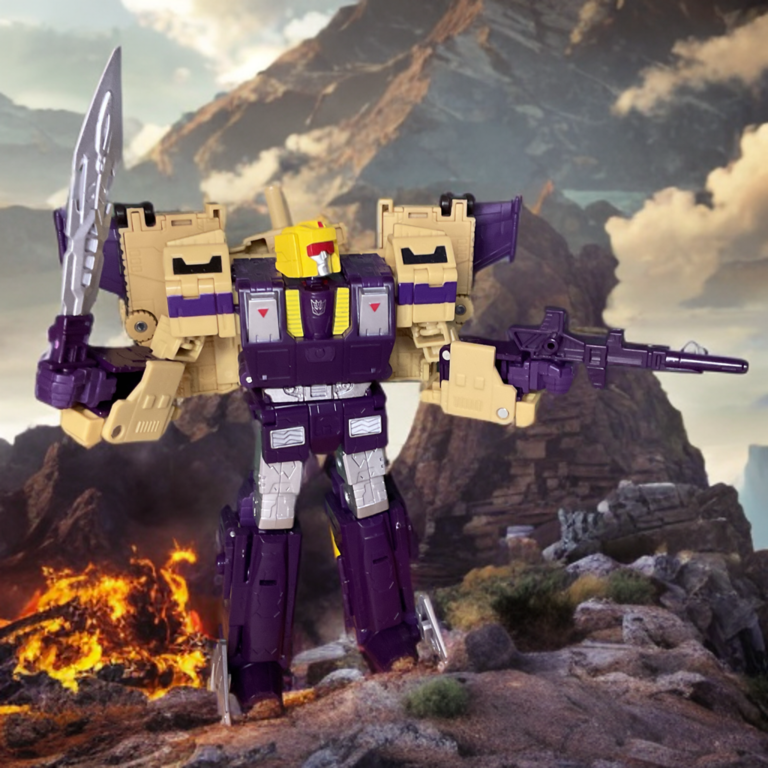
Blitzwing’s backstory begins during the Great War on Cybertron, where he served as the handler for the Decepticon spy Diabla during her infiltration of the Autobots. Humiliated by Bumblebee in this operation, Blitzwing recalled Diabla back to Decepticon ranks and was left for dead or otherwise scarred by the encounter, fueling a deep-seated oath of revenge. Thousands of years later, during Earth’s Cold War era, he arrived on the planet under the command of the Decepticon Malignus, reuniting with Diabla in 1964 London. There, he ambushed Bumblebee, who narrowly escaped by detonating a gas main. Blitzwing supported Malignus’s schemes, confronting the defecting Diabla when she turned against the Decepticons to aid Bumblebee—nearly killing her in the process, though the conflict resulted in Dead End’s death via a warhead explosion. Blitzwing survived by using a corpse as a shield, demonstrating ruthless opportunism before evading capture and lying low for decades.
On Cybertron (in flashbacks tied to the broader continuity), Blitzwing operated under Shockwave and Soundwave during Megatron’s absence, participating in conquests and visible among Decepticon forces. He pursued the fleeing B-127 through the skies until the Autobot’s crash-landing on Earth set the stage for their final confrontation.
In the main Bumblebee film (set in 1987), Blitzwing bombards a Sector Seven training exercise and Bumblebee in his jet mode, raining missiles before transforming to engage in close combat. He overpowers the damaged Autobot, subduing him, tearing out his voice box in a savage act of silencing, and preparing a point-blank execution while taunting Bumblebee with assurances of a “screaming death.” In a moment of desperate ingenuity, Bumblebee jams one of Blitzwing’s own missiles into his armor, causing it to detonate and obliterate the Decepticon—ending his threat abruptly but impactfully.
Blitzwing’s personality is defined by arrogance, sadism, and unbridled aggression: he mocks his prey’s courage, enjoys inflicting pain, and interrogates with cruel efficiency using blades and blasters. There’s no humor, fragmentation, or comic relief—only cold dominance and relentless pursuit. This makes him efficient in combat (echoing Animated’s “Icy” side in methodical hunter instincts) but without true strategic depth; he’s more a brutal enforcer than a planner, his arrogance ultimately proving his downfall as Bumblebee outsmarts him.
His abilities include jet-mode transformation for aerial bombardment and pursuit, superhuman strength (easily lifting and slamming opponents), flight capability even in robot mode, missile barrages, a Null-ray Blaster for disabling foes, and an Electron Spike Blade for close-quarters lethality. He demonstrates remarkable durability, surviving explosions by tactical improvisation and enduring heavy damage before his explosive demise.
Blitzwing serves as a vengeful antagonist embodying pure Decepticon aggression, his actions directly contributing to key Autobot victories by forcing Bumblebee’s evolution from scout to resilient survivor. His short screen time amplifies his menace—he’s a “We Hardly Knew Ye” villain whose brutal efficiency leaves a lasting mark on the story.
Appearances span the core film Bumblebee (2018), where he features prominently in the opening sequence, as well as prequel comics and stories that expand his grudge:
- Bumblebee Movie Prequel (IDW comic miniseries, including issues like “Energon Is Forever” and “From Cybertron with Love”), detailing his handler role with Diabla, Earth arrival under Malignus, and clashes in London.
- Sector 7 Adventures: The Battle at Half Dome, showing his involvement in Sector Seven confrontations and a bet or rivalry with Soundwave elements.
- Bumblebee’s First Life on Earth (tie-in stories, such as “Picked Up from the Junkyard”), covering his aerial pursuit of B-127 upon arrival.
- The junior novelization Transformers: Bumblebee: The Junior Novel, adapting the film’s events with added context.
Compared to other continuities, this movie Blitzwing is the most intense and live-action grounded: he lacks G1’s bombastic humor or Animated’s personality splits, focusing instead on heightened personal vendetta and visceral brutality that echoes G1’s core destructiveness while fitting the rebooted film’s more serious, character-driven tone. His brief but pivotal role cements him as a memorable catalyst for Bumblebee’s arc, proving that even short-lived villains can deliver lasting impact in the Transformers saga.
2005 IDW Continuity: The Opportunistic Loyalist
In the 2005 IDW comics, Blitzwing starts as a pre-war Triorian Guard enforcer—brutal, efficient, and loyal to authority figures like the Senate or later Decepticon leaders. He’s calculating in early roles, holding hostages like Bumblebee to manipulate Optimus or leading divisions in assaults on refineries. As wars escalate, he shows opportunism, switching allegiances (e.g., from Scorponok to Megatron) and surviving limb losses with grumbling resilience. His hotheaded side emerges in frustrations, like mocking teammates or panicking at defeats, but he’s more strategic than G1, bombing bridges or raiding bases with precision.
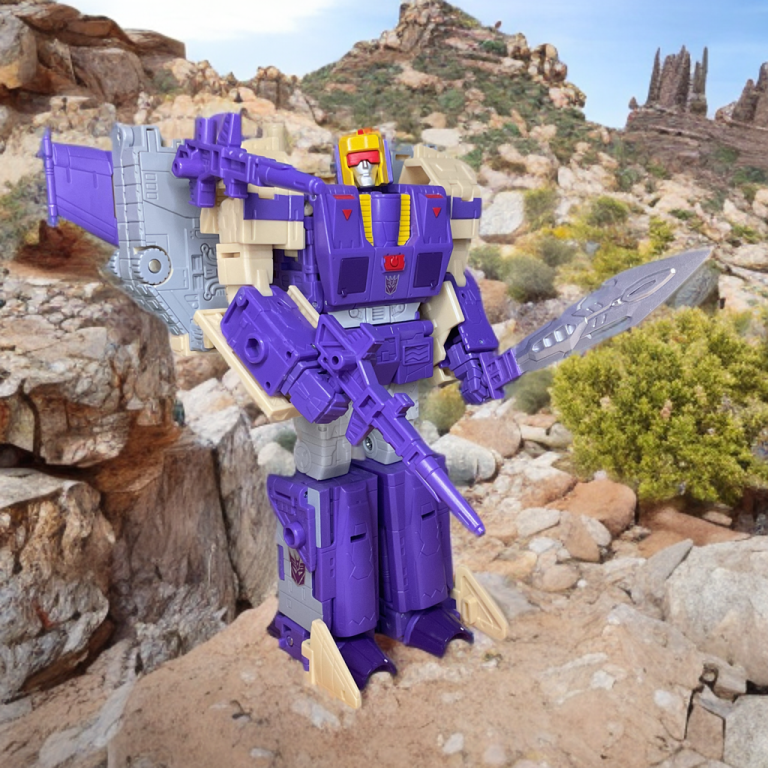
In crossovers like Transformers/Avengers, he’s supercharged and defensive, while in Unicron arcs, he’s a reluctant combiner in Galvatronus. This version blends Animated’s Icy strategist with G1’s belligerence, adding survivalist adaptability—resisting mind control or vivisection. Compared to Animated, it’s less fractured and more cohesive; versus the movie, it’s less sadistic and more tactical, portraying him as a durable mid-tier officer rather than a solo hunter.
2019 IDW Continuity: The Battle-Hardened Veteran
The 2019 IDW reboot casts Blitzwing as an Age of Expansion veteran under Strika’s New Heavies, emphasizing tactical loyalty and bravado. He’s taunting and competitive, mocking Apeface during ambushes and spurring teams against combiners like Computron. His personality mixes hotheaded aggression (blowing up guards) with strategic assaults on cities like Crystal City. He agrees to talks post-defeat, showing pragmatic flexibility absent in purer villain portrayals.
This is closer to 2005 IDW’s opportunist but with pre-Earth war focus, lacking G1’s humor or Animated’s insanity. Compared broadly, it’s a streamlined warrior—aggressive like the movie but team-oriented, sacrificing flair for grounded military demeanor.
Other Minor Continuities: Echoes and Twists
- Generations Toy Bio (2013 Voyager): Explicitly splits his mind into three personalities (strategist, hothead, bizarre joker), directly echoing Animated but retrofitting it to G1/IDW roots. This bridges continuities, adding psychological depth to his classic design.
- Hearts of Steel: Silent guardian turned eldritch thrall—minimal personality, but implies stoic loyalty, a muted version of IDW’s enforcer without aggression.
- Regeneration One: Zombified horde member—mindless and pain-ignoring, stripping all traits for shambling destructiveness, a dark twist on G1’s thuggery.
- Beast Wars: Uprising: Referenced via “processor-fragged” descendants, implying inherited instability like Animated’s fracture, but no direct personality.
- Kre-O Manga: Comedic invader with cartoonish chaos, akin to G1’s brainless humor but in brick form—impulsive and easily thwarted.
- Cloud Continuity: Ambitious exile with leadership envy, mocking Starscream and seizing command briefly. Opportunistic like IDW, but betrayal-prone, adding G1’s unreliability.
- Aligned Continuity: Subtle voice ties to Shockwave suggest cold calculation, but no full appearances—hints at Icy-like demeanor.
Hearts of Steel: The Industrial Revolution Guardian
Set in an alternate 19th-century Earth infused with Cybertronian tech, the Hearts of Steel miniseries casts Blitzwing as a steadfast Decepticon guardian under Starscream’s command. He stands watch over their hidden base during the industrial revolution, a silent sentinel amid steam engines and iron forges. When ancient Elder Gods awaken and enthrall the Decepticons, Blitzwing falls under their cosmic influence, defending Port Cenotaph against human intruders and an international naval fleet. His jet mode rains destruction from above, but he’s ultimately shot down in the fray, crashing amid the eldritch chaos. This brief role highlights Blitzwing’s adaptability to archaic settings, blending his modern firepower with Victorian-era dread.
Regeneration One: The Zombified Horde Member
In the Regeneration One continuation of the Marvel G1 comics, Blitzwing meets a grim fate by 2012, lobotomized into one of Megatron’s undead “Ex-bots”—a horde of zombified Decepticons deployed as disposable shock troops. Sent to California to hunt survivors of the Wreckers, he rides atop Megatron’s battle sled, clashing with Whirl in a pain-ignoring frenzy. His undead state makes him relentless, but he’s off-lined when Circuit Smasher sabotages the Ark, obliterating his remains in orbit. This portrayal twists Blitzwing into a horrifying, mindless enforcer, stripping away his personality for pure, shambling destructiveness—a far cry from his cunning G1 roots.
Beast Wars: Uprising: The Processor-Fragged Legacy
The dystopian Beast Wars: Uprising prose stories offer a mere nod to Blitzwing, referencing him through Overshoot’s quip about “processor-fragged little brothers” known as Overcharges. This implies Blitzwing’s lineage or experiments led to mentally unstable descendants, tying into themes of Cybertronian evolution and decay in a post-Great War era dominated by Maximals and Predacons. No direct appearances, but it expands his influence into future generations, hinting at a fractured family tree amid the Uprising’s grim resistance narratives.
Kre-O: The Picnic-Ruining Invader
In the lighthearted Kre-O online manga, Blitzwing joins a Decepticon invasion force crashing an Autobot picnic, embodying cartoonish chaos in brick form. He scatters the heroes with his triple modes, but Optimus Prime turns the tables, binding him and dragging him back to the festivities as a reluctant “guest.” This comedic take pokes fun at his belligerent nature, reducing epic battles to slapstick antics in a world of buildable bots.
Cloud Continuity: The Ambitious Underground Exile
The Cloud continuity reimagines Blitzwing as an exiled Decepticon in the Underground of Cloud World, far from Metropolis’s glitz. Envied for his jet and tank modes, he partners with Astrotrain and harbors ambitions for Decepticon leadership. Inspired by Megatron’s rallying cry to seize power from the Autobot-controlled SARA, Blitzwing dives into early Autobot-Decepticon clashes. After Megatron vanishes post-duel with Optimus, the faction turns to Starscream—much to Blitzwing’s disdain. In Metropolis battles, he mocks Starscream’s cowardice, showcasing his Triple Changer prowess to seize command after knocking aside an overpowered Starscream. However, Optimus’s return overwhelms them, forcing surrender. As Blitzwing disarms, a vengeful Starscream in a new tank body blasts his head off with a null-ray. Astrotrain avenges him by abandoning Starscream later, but Blitzwing’s arc ends in betrayal, underscoring his overreaching ambition in this digital-inspired realm.
2019 IDW Continuity: The Age of Expansion Veteran
In the rebooted 2019 IDW universe, Blitzwing is a battle-hardened veteran from Cybertron’s Age of Expansion, fighting alongside Dai Atlas against combiners like Abominus. During the War of the Threefold Spark, he serves under Strika, confronting the treacherous Exarchon outside Yuss ruins before joining her elite artillery unit, the New Heavies. Ambushing Ironhide’s Senate Guard, he blows up Roulette and taunts Apeface about true Triple Changing, only to get shot in the back during the Forge Pyramid assault. He battles Autobots in Protihex and leads the charge on Crystal City’s fortifications, spurring his team against Computron despite Lodestar’s intervention. Agreeing to talks with Optimus after the tide turns, he assembles at Darkmount for a fierce showdown where Computron’s sacrifice aids the Autobots’ escape aboard the Ark. This continuity emphasizes Blitzwing’s tactical edge and loyalty in a pre-Earth era of political intrigue and escalating wars.
Additional Minor Variations: Crossovers and Bios
Blitzwing pops up in quirky crossovers like Transformers/Back to the Future, overseeing human slaves in a conquered Hill Valley for energon production. In the Energon Universe, he fights alongside Shockwave against Optimus in ancient battles, only to be offlined aboard the Ark in the modern day. The Dreamwave Generation One arcs see him assaulting Iacon under Shockwave, getting abducted by The Fallen, mutating under experiments, and ultimately torn apart by Predacons after rallying against Optimus’s uprising. G.I. Joe vs. Transformers displaces him to 1970s Earth for attacks on peace ceremonies, while The Beast Within has him cheering Predaking’s rampage. In Spotlight: Mirage, he hunts in the Pegasus Cluster, defeated by Hound. Mini Mayhem! and Robot Heroes feature him in minor Earth skirmishes, and The Ultimate Pop-Up Universe pits him against Autobots over the AllSpark.
The Generations toy bio (2013 Voyager) splits his mind into three personalities—a calm strategist, fiery hothead, and erratic joker—echoing Animated but tying back to G1 roots. In the Aligned continuity family, subtle voice ties link him to Shockwave through shared thematic elements in bios, though no direct appearances occur, perhaps nodding to their cold, calculating demeanors in broader lore.
These diverse portrayals amplify Blitzwing’s core as a shape-shifting wildcard, expanding his legacy from undead horrors to multiversal exiles while maintaining that gleeful, destructive spark. Whether forging alliances or facing explosive ends, he proves there’s always more than meets the eye—or the turret—to this Triple Changer.
Key Personality Differences:
| Continuity | Core Traits | Key Influences | Comparison to G1 Baseline |
|---|---|---|---|
| G1 | Belligerent, loudmouthed, cruel humor, impulsive | War loyalty, poor decisions | Baseline: Straightforward thug; least complex. |
| Animated | Fractured (Icy strategist, Hothead brute, Random joker) | Experimental upgrades | Most chaotic evolution; amplifies G1 impulsiveness into mental splits for humor. |
| Bumblebee Movie | Sadistic, vengeful, aggressive | Personal grudges | Darkest and most intense; removes humor for raw menace, echoing G1 brutality but personalized. |
| 2005 IDW | Opportunistic, efficient, hotheaded loyalist | Pre-war enforcement, survival | Adds strategy to G1; less fractured than Animated, more tactical than movie. |
| 2019 IDW | Tactical veteran, taunting, pragmatic | Expansion wars, team dynamics | Streamlined warrior; blends IDW opportunism with G1 aggression, minus insanity. |
| Generations Bio | Split minds (strategist, hothead, joker) | Toy lore retrofit | Direct nod to Animated; bridges G1 with psychological depth. |
| Others (e.g., Regeneration One, Kre-O) | Varies: Mindless zombie, comedic invader | Alternate scenarios | Extremes of G1 traits—either stripped to destructiveness or exaggerated for comedy. |
Across all, Blitzwing’s aggression persists, but continuities adapt it: G1 for classic villainy, Animated for comedy, movie for horror, IDW for depth. This versatility mirrors his Triple Changer nature, making him a chameleon of Decepticon personalities.
Legacy: Enduring Impact of the Triple Changer
Blitzwing stands as one of the most enduring and adaptable figures in the Transformers franchise, a character whose triple-changing ability—shifting between robot, jet fighter, and tank modes—has come to symbolize the core innovation of the entire brand: transformation as both literal mechanics and narrative versatility. Debuting in 1985 as part of the Generation 1 (G1) lineup, he quickly became a fan-favorite Decepticon, not for being the most powerful or charismatic leader like Megatron or Starscream, but for his chaotic, unpredictable energy that injected raw excitement into battles. Over four decades, Blitzwing has evolved from a straightforward battlefield brute into a multifaceted villain whose various incarnations reflect the franchise’s growth, experimentation, and commitment to multiversal storytelling. His legacy lies in how he embodies adaptability—both in-universe through his modes and out-of-universe through redesigns, personality shifts, and recurring toy releases—while consistently delivering a blend of humor, rage, and strategic menace that keeps fans returning.
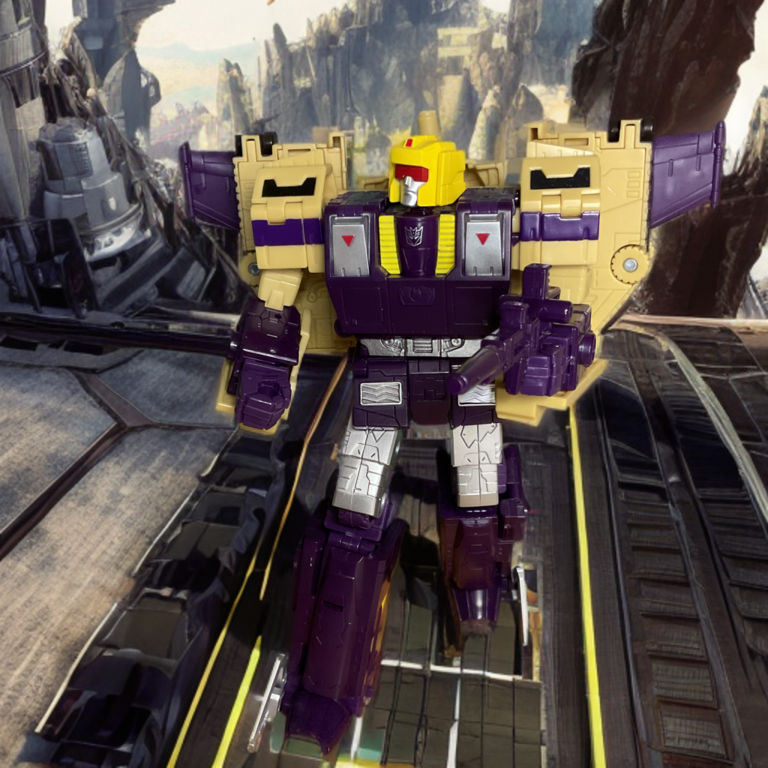
At the heart of Blitzwing’s appeal is his triple-changer gimmick, one of the earliest and most ambitious engineering feats in Transformers toys. The original 1985 G1 figure, originally rooted in Diaclone tooling, required complex transformations that challenged kids and collectors alike, with a MiG-25-inspired jet mode for aerial dominance and a Type-74 tank for ground assault. This versatility influenced subsequent designs, paving the way for other Triple Changers like Astrotrain and Springer, and even broader concepts like combiners or multi-mode characters in later lines. In modern eras, the Legacy series (particularly the 2022 Leader Class release) updated this classic mold with Generations-style engineering—smoother joints, better proportions, and homage details—while celebrating the “universes collide” theme that brings together characters from across the multiverse. Reviewers and fans often hail it as one of the best mainline Blitzwing figures ever, praising its faithful G1-inspired deco combined with modern articulation and play value. This toy’s success underscores how Blitzwing’s design continues to drive innovation: his modes force engineers to balance aesthetics, functionality, and nostalgia, influencing the franchise’s emphasis on “multiple epic modes” in lines like Legacy/Evolution and Studio Series.
Blitzwing’s narrative impact is equally profound. In G1 stories, he represented the chaotic underbelly of the Decepticons—loyal yet treacherous, often scheming coups or bungling plans in episodes like “Triple Takeover” or “The Golden Lagoon.” His survival through major events, including The Transformers: The Movie, cemented him as a resilient mid-tier villain. Later continuities built on this foundation: the Animated series fractured his mind into three distinct personalities (Icy strategist, Hothead brute, and Random joker), turning him into a breakout comedic force and scene-stealer. This version is frequently cited by fans as superior to G1 in depth and entertainment value, with his constant personality switches and German-accented outbursts creating memorable moments like tuba solos or mid-battle singing. The Bumblebee film’s sadistic, grudge-holding Seeker added gritty intensity, while IDW comics (both 2005 and 2019 runs) portrayed him as a tactical enforcer, opportunistic survivor, and battle-hardened veteran, expanding his role in pre-war intrigue and large-scale conflicts.
These evolutions have kept Blitzwing relevant across media. He appears in cartoons, comics, video games (like Fall of Cybertron), novels, and crossovers, often as a wildcard who disrupts plans with his mode-shifting chaos. His influence extends to storytelling tropes: the “unstable triple-changer” archetype (echoed in characters with split psyches or multiple forms) and the idea of Decepticons as fractious, personality-driven forces rather than monolithic armies. In fan discussions, Blitzwing is praised for his unpredictability—he’s not just muscle; he’s a force of disruption that mirrors the franchise’s own shifts from 80s cartoons to mature comics and live-action grit.
Fan reception solidifies his status as a staple. Collectors and reviewers frequently call him a “favorite Decepticon” for blending menace with humor, with Animated’s version earning particular love for its dissociative comedy and memorable quotes. Legacy-era toys receive glowing praise for recapturing that G1 essence while fixing past flaws (like vehicle mode stability), proving his enduring market draw. Even in live-action debates, his Bumblebee design is singled out as a high point for logical, believable transformation engineering. Merchandise remains strong: from reissues and two-packs to video game tie-ins and modern Leader Class figures, Blitzwing consistently sells as a “must-have” for Triple Changer enthusiasts.
Ultimately, Blitzwing’s legacy is one of chaotic endurance. His triple modes aren’t just a toy gimmick—they represent the Transformers franchise’s ability to reinvent itself while honoring origins. From G1 thug causing battlefield mayhem to Animated lunatic stealing scenes, to modern tactical powerhouse in comics and toys, he blends humor, rage, and strategy into a character who feels eternally fresh. In a universe defined by change, Blitzwing proves that versatility isn’t just survival—it’s supremacy. As the franchise approaches new eras, his unpredictable energy ensures he’ll keep transforming, adapting, and terrorizing for generations to come.
Action Figure Release Versions of Blitzwing
| Year | Line | Continuity/Version | Key Features |
|---|---|---|---|
| 1985 | The Transformers (G1) | G1 | Triple Changer: robot to MiG-25 jet or Type-74 tank; accessories: gyro-blaster rifle, electron scimitar, 3 concussion missiles. |
| 2005 | The Transformers Collection | G1 Reissue | Reissue of 1985 figure; bookbox packaging; strong missile launchers, pointed sword. |
| 2005 | Collector’s Edition (e-HOBBY) | G1 (Overcharge) | Diaclone coloration; triple changer; represents original form. |
| 2008 | Transformers Animated (Voyager) | Animated | Triple Changer: robot, jet (F-14 Tomcat-like), tank; rotating faces dial, spring-loaded forearm panels; 2 flame missiles. |
| 2009 | McDonald’s Happy Meal | Animated | Simplified tank transformation; French exclusive. |
| 2010 | Takara Animated (Second Wave) | Animated | Metallic dull-gold and purple paint; Darkness Showdown two-pack with Prowl; 2 flame missiles. |
| 2013 | Generations (Voyager) | G1/IDW | Triple Changer: robot, jet, tank; series/number 02/002; TG22 ID. |
| 2015 | Platinum Edition Triple Changers | G1 | Two-pack with Astrotrain; reissue of original Triple Changers. |
| 2018 | Bumblebee Power Series | Bumblebee Movie | Redeco of Energon Igniters Megatron; retooled head; military-green tank mode; interacts with Energon Igniter Cores. |
| 2019 | Bumblebee Nitro Series (Voyager) | Bumblebee Movie | Transforms to jet; Igniter Core; head-swapping gimmick for crazy face. |
| 2020 | Studio Series (Voyager Class) | Bumblebee Movie | 27-step transformation to Cybertronian jet; accessories: Null-ray Blaster, Electron Spike Blade, removable hands, 2 drop tanks, backdrop. |
| 2022 | Legacy / Legacy Evolution (Leader Class) | G1/IDW (main mold base for later redecos) | Triple Changer: robot, jet, tank; updated modern engineering; includes Energon gauntlets/fists and weapons. |
| 2025 | Dramatic Capture Series (Multi-pack: Triple Takeover) | G1 (show-accurate) | Redeico of Legacy Leader mold; premium cartoon-accurate colors (brighter lavender, detailed apps, blue translucent); accessories: 2 blasters, sword (no Energon fists/gauntlets); part of set with Starscream (SS86 redeco) and Astrotrain (Siege redeco) for “Triple Takeover” episode homage. |
Appearances Across Various Continuities
| Continuity | Media Type | Specific Title/Episode |
|---|---|---|
| G1 | Cartoon | Dinobot Island, Part 1; Dinobot Island, Part 2; Megatron’s Master Plan, Part 2; Desertion of the Dinobots, Part 1; The Golden Lagoon; Quest for Survival; Triple Takeover; Prime Target; Cosmic Rust; The Transformers: The Movie; The Headmasters (various episodes); Legends comic; e-HOBBY comics; Legacy VS500; Cloud; TV Magazine comics; Super-God Masterforce manga; Ask Vector Prime; Deviations. |
| G1 | Comics | Target: 2006; Resurrection!; The Cure!; Buster Witwicky and the Car Wash of Doom; Toy Soldiers!; Salvage!; Totaled!; The Flames of Boltax!; Cold War!; Dark Star; Secrets; Bugged!; Divide and Conquer!; Manoeuvres!; Aspects of Evil!; Judgment Day!; The Legacy of Unicron!; Space Pirates!; New Dawn; Loose Ends (Parts 2-5); Natural Selection, Part One; Secrets & Lies #1; The Special Teams; Galvatron Attacks; Battle at Oil Valley; Decepticon Hijack; Battle Drive; Autobot Alert!; The Transformers (Milton Bradley); Galvatron’s Air Attack. |
| G1 | Comics (Dreamwave) | The War Within #2-6; Confrontation; Conflagration; Destined for Nothing; Recipe for Hate; Prime Directive #5; New World Order; Generation 1 #0; Brothers’ Burden; Cold War; Passive Aggression; Countdown to Extinction; Revelation; Lost and Found; The Route of All Evil. |
| G1 | Comics (IDW 2005) | Infiltration #2; Hunt for Soundwave; Cause and Effect; Overthrown; Transformation; Endgame; Faces of Darkness; Rage; Fallout; Massacre; Unleashed; Primacy #4; The Hunting Party; Shining Armor #1-5; Man and Machine (Parts 2-4); Escalation #1; Spotlight: Ramjet; Escalation #3-4; Devastation #1-6; All Hail Megatron #1-12; Uneasy Lies the Head; Spotlight: Megatron; Revenge of the Decepticons (Parts 1,5); The Question; Chaos Part Three; The Death of Optimus Prime; The End of the Beginning of the World; The Verge; Before the Dawn; Plan for Everything; Heavy Is the Head; Arm the Lonely; Shockpoint; Soundwaves; Black Metal; Dark Cybertron Chapters 2-12; Earthfall (Parts 1-4). |
| G1 | Other | G.I. Joe vs. Transformers II #1-2,4; The Art of War #3; The Beast Within; Hearts of Steel; Mini Mayhem!; Robot Heroes; The Ultimate Pop-Up Universe; Generations toy bio; Kre-O manga; Beast Wars: Uprising. |
| Animated | Cartoon | Transform and Roll Out; Dispatches; A Few Loose Strands; The Thrill of the Hunt; Everything Must Go; Lost and Found; Megatron Rising (Parts 1-2); The Elite Guard; Mission Accomplished; Velocity; Rise of the Constructicons; A Fistful of Energon; Sari, No One’s Home; A Bridge Too Close (Parts I-II); Five Servos of Doom; Predacons Rising; Human Error, Part I; Decepticon Air. |
| Animated | Shorts | Starscream Heckles Megatron; Starscream’s Fantasy; Explosive Fist; Logo. |
| Animated | Books | Prime Suspect (Be the Hero). |
| Animated | Comics | The Cool (Extra #3, Episodes 5-7). |
| Animated | Games | Transformers Animated: The Game; Transformers Animated: Action Packs. |
| Bumblebee Movie | Movie | Bumblebee (2018). |
| Bumblebee Movie | Comics | Sector 7 Adventures: The Battle at Half Dome; Bumblebee’s First Life on Earth: Picked Up from the Junkyard; Bumblebee Movie Prequel (Energon Is Forever; From Cybertron with Love). |
| Bumblebee Movie | Books | Transformers: Bumblebee: The Junior Novel. |
| Other (IDW 2019) | Comics | Served in Age of Expansion; War of the Threefold Spark; confronted Exarchon; New Heavies ambushes; Forge Pyramid attack; Crystal City invasion; Darkmount assembly. |
 English
  Deutsch
  Français
  Português do Brasil
  日本語
日本語  Español
  English (Australia)