

The Ultimate Guide: 1982 Remco Warrior Beasts Action Figures
What was “The Warrior Beasts”?
The Warrior Beasts was Remco’s 5.5-inch fantasy monster line that hit shelves around late 1982 into 1983. It was developed under Remco’s Azrak-Hamway (AHI) umbrella and positioned as the enemy “monster” faction to run alongside the company’s Lost World of the Warlord heroes (another Remco fantasy line based on DC’s The Lost World of the Warlord). Contemporary Remco catalogs present the two together—“Warlord” on one page, “Warrior Beasts” on the next—and show the villains as generic (non-licensed) monsters compatible with the Warlord scale and playsets.
Although you’ll often see them lumped with Masters of the Universe (MOTU) “knockoffs,” Remco’s program was a parallel, organized toy strategy (not random bootlegs): AHI had acquired Remco’s brand years earlier and used a two-tier structure—Remco for the higher-profile, TV-advertised toys and AHI for rack-toys—then folded everything under Remco mid-80s. Warrior Beasts sits squarely in that Remco/AHI era and format.
Timeline & how they were sold (1982–1984)
- Launch window: Packaging and catalog evidence place the line in the market by 1982, with broad availability across 1983. Collector documentation and carded examples regularly show 1982 on the backers.
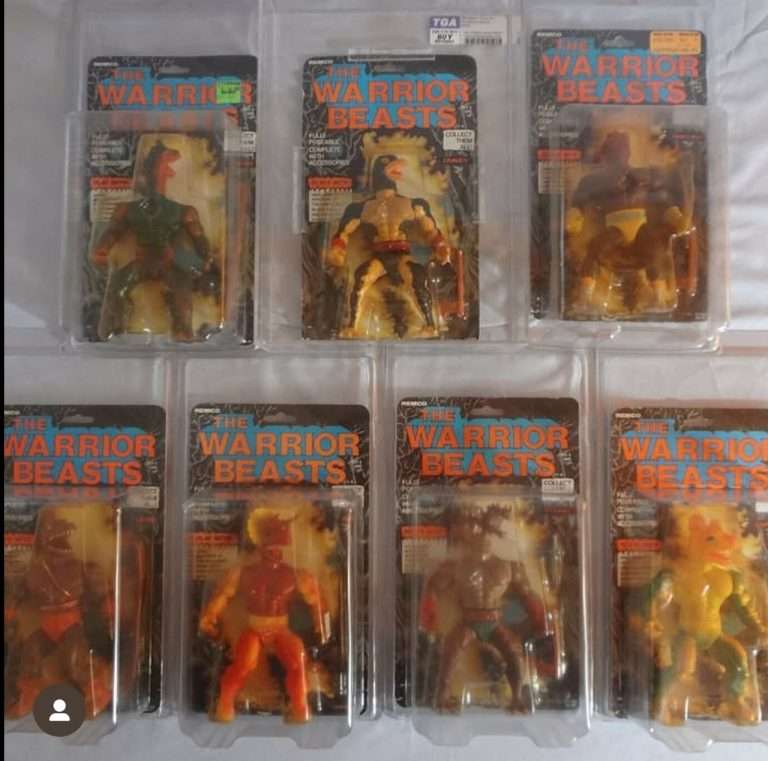
- Catalog treatment: The 1984 Remco catalog (as archived by Plaid Stallions) shows a “Warrior Beasts” singles assortment and a “Beast Team” large creature set, paired on spread pages with Warlord figures and combo playsets.
- Corporate context: Remco at this point was a division of Azrak-Hamway International (AHI); that relationship is widely documented in collector histories and Plaid Stallions’ catalog resources.
Scale, engineering & look
• Format: ~5.5-inch figures on a beefy heroic body with 6 points of articulation (swivel neck, shoulders, hips, and waist), paired with simple melee weapons and occasional soft-goods (capes, faux-fur). The bodies largely reuse Remco’s muscular base tooling with new monster heads and parts. This made them visually and physically compatible with Remco’s Warlord and, on shelves, with Mattel’s MOTU/Blackstar. (Even Warlord cardbacks promoted cross-play with MOTU/Blackstar.)
- Aesthetic: Bold, single-color or two-tone plastics with painted details; accessories in black, gray, or brown; monsters inspired by reptiles, wolves, birds, and skull motifs. Period Remco catalog photography shows typical load-outs (one or two weapons per figure) and the brand’s “collect them all” style blister cards.
Sculpting and Tooling
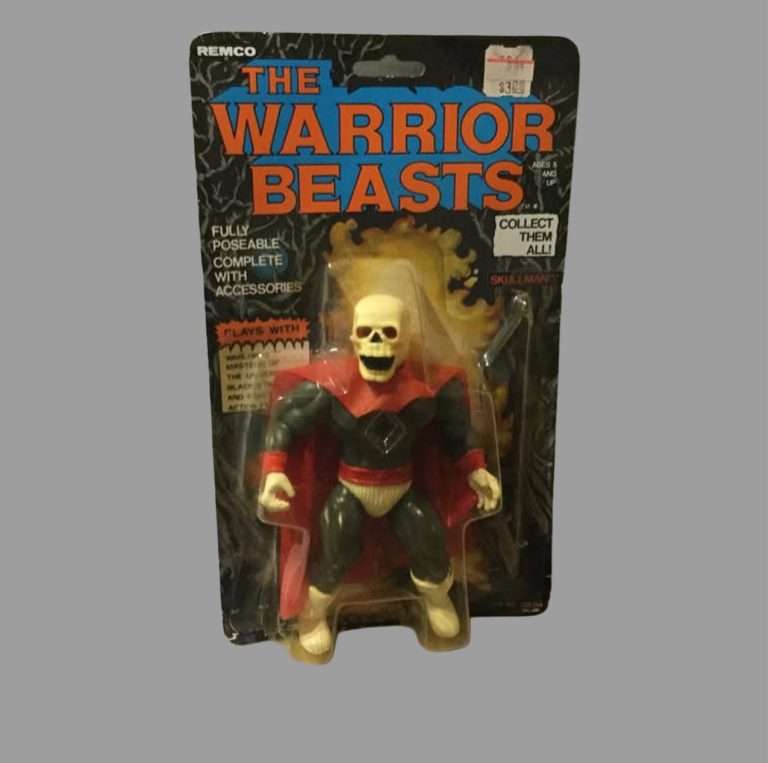
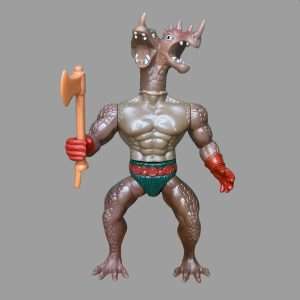
Remco’s cost-saving strategy relied on reusing Warlord’s muscular body mold for most Warrior Beasts, swapping in new heads and accessories. Hydraz’s ambitious two-headed sculpt, however, showed Remco’s willingness to push creative boundaries within their budget.
Production Quirks
Loose Warrior Beasts often show paint wear on high points like noses or claws, a result of Remco’s single-color plastic and minimal paint application. Snake Man’s thin tail is particularly prone to stress marks, making mint examples rare.
Inspiration Sources
While Remco never confirmed inspirations, Warrior Beasts’ reptilian and skull motifs echo the Dungeons & Dragons monster manuals and horror comics of the era, tapping into the same fantasy zeitgeist as MOTU.
Skull Man’s Swift Redesign: How Legal Fears Shaped Remco’s 1982 Warrior Beasts
Skull Man (sometimes referred to as Skullman) was one of the figures that exists in two main versions due to a major redesign of its head sculpt.
The original version (often called v1 or “Skullface” by collectors) featured a translucent red skull head with a hood, mounted on a translucent red body. This design bore a striking resemblance to Mattel’s Skeletor from MOTU including the overall skeletal face and hooded appearance. The second version (v2) replaced this with a much larger, non-hooded skull head in solid opaque colors (reusing a head mold from Remco’s earlier Jewel Thief figure in their 1982 Conan line, but without the translucency). Accessories like the cape, bow, and dagger remained similar, though minor production variants exist across the line—such as differences in belt styles, cape materials/textures/colors, or even mismatched parts—due to Remco’s cost-cutting practices of using whatever materials were available during manufacturing runs.
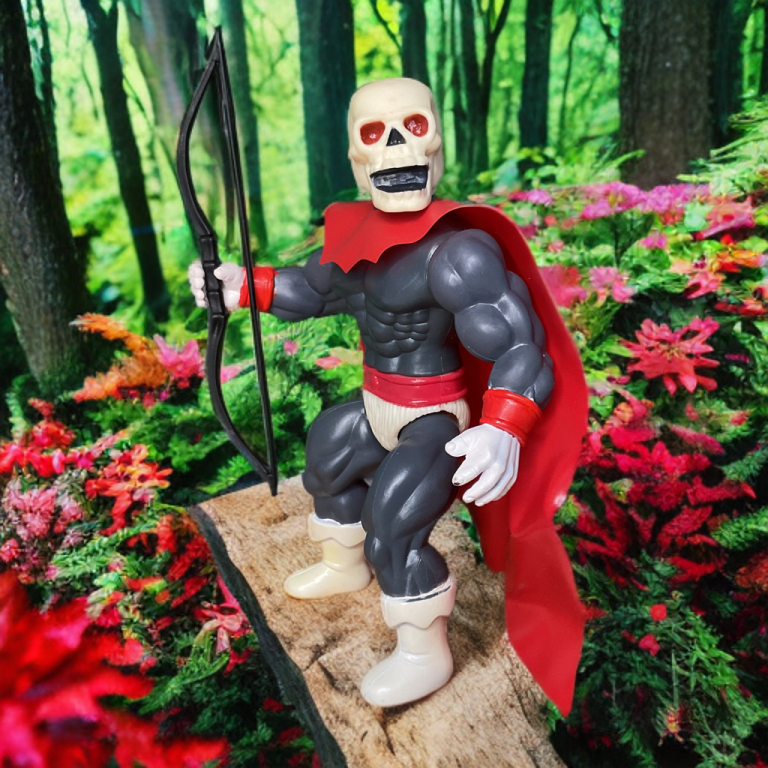
The appearance was changed so soon after the line’s 1982 launch primarily to avoid potential copyright infringement issues with Mattel. Remco’s Warrior Beasts and Warlord figures already mimicked MOTU’s muscular body types and aesthetics closely enough that Mattel sued Remco in 1983 over trade dress and design similarities, though Mattel ultimately lost the case as the court deemed the designs non-infringing. However, the original Skull Man head was especially problematic due to its near-identical look to Skeletor, prompting Remco to proactively redesign it early in production to reduce legal risks amid the growing tensions and Mattel’s aggressive protection of MOTU. This quick pivot reflects the era’s toy industry, where knock-off lines like Remco’s often faced swift pressure from larger companies like Mattel to differentiate or risk being pulled from shelves.
Complete character checklist (singles)
Below is the core roster as documented across catalogs and collector databases, with noted color/heads variants where known.
Wave 1 core (documented together in Remco’s catalog):
• Skull Man (v2 “bare skull” head & image of “hooded” v1)
• Snake Man
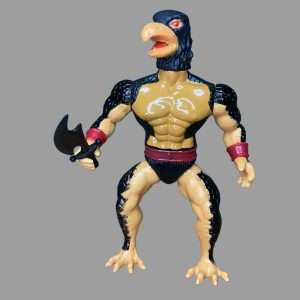
• Craven (black bird-man)
• Hydraz (two-headed hydra)
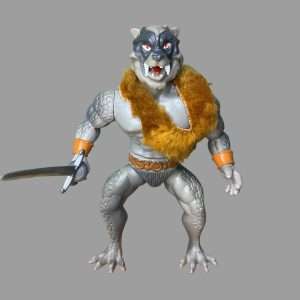
• Wolf Warrior
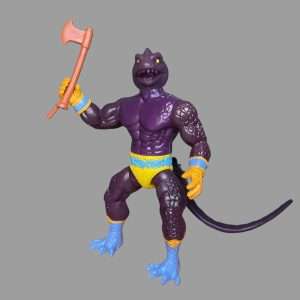
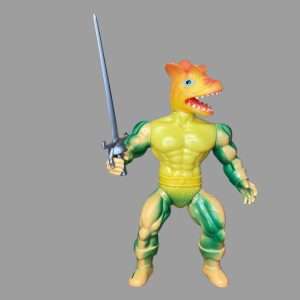
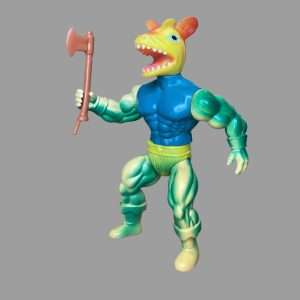
• Gecko (lizard-man)
These six are pictured/mentioned together on the catalog page; they establish the look and scale of the line.
Additional/replenishment characters (documented on checklists and packaging):
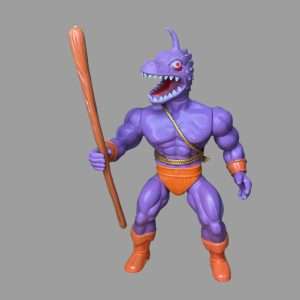
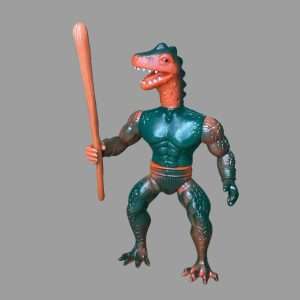
• Stegos (spiked reptilian)
• Guana (iguana-type head)
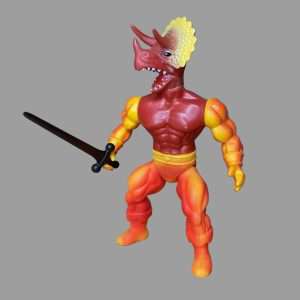
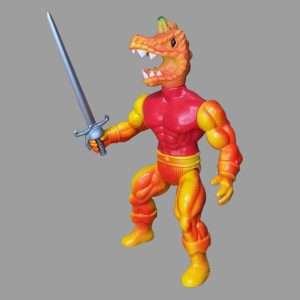
• Zardus (demon/warlock)
These appear across cardbacks and collector databases as the line expanded through 1983.
Notable variants (singles):
• Skull Man v1 (“Skull Face” hooded head) — an early run/alt head heavily discussed by collectors because of its resemblance to MOTU’s Skeletor; later runs standardize to the un-hooded skull.
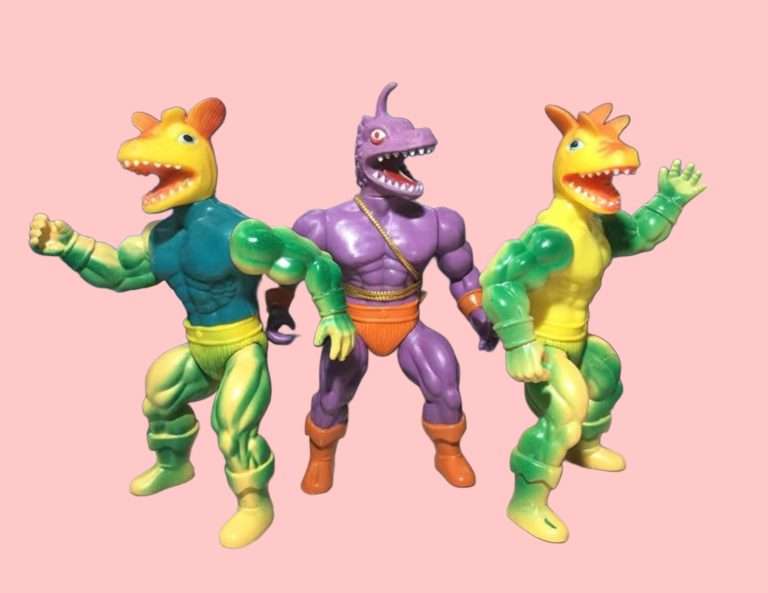
• Gecko colorways — yellow/green and purple releases are documented on carded examples and checklists.
• Zardus color variance — collectors have documented examples with flesh-tone limbs instead of yellow/green, likely a production/color-batch variant. For my own reference I simply remember Gecko/green (chest), Zardus/yellow. See photo to the right.
Beasts, big sets & combo packs
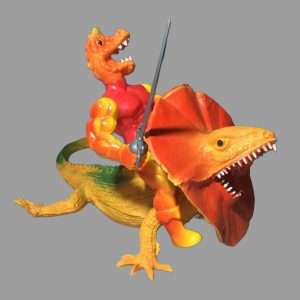
- Beast & Warrior set: Fire Dragon & Ramar (boxed “Beast Team” set). The Fire Dragon is a large ride-on creature; Ramar is a dedicated rider figure unique to this set. Remco catalog pages and collector databases list this as the large format offering for the line. The Fire Dragon features intricate detailing, with vibrant red and orange scales that enhance its fierce appearance. Ramar, equipped with a specialized harness, is designed to perfectly fit atop the dragon, creating a dynamic display. This set is highly sought after by collectors due to its limited production run and unique packaging.
- Playsets with figures (cross-line): Remco sold “Warlord & Warrior Beast” playsets, notably Journey Thru Time and Snake Pit Trap—combo packs that included one Warlord hero and a Warrior Beasts villain (e.g., Warlord + Snake Man) with small environment pieces. These are pictured in the catalog spread that markets Warlord and Warrior Beasts together.
Packaging, assortments & product numbers
• Singles assortments: The Plaid Stallions 1984 catalog page lists a “Warrior Beast Assortment #253/#254” for the core 5.5-inch figures pictured. (Remco often split colorways/characters across back-half assortment numbers.)
• Large creature set: The same catalog page tags a “Beast Team assortment #279” for the boxed Fire Dragon/Ramar.
• Other references on carded items: Collector cardback databases (e.g., Coleka) capture additional Remco reference numbers across the line (e.g., 265/266/267/268 for specific characters and colorways), reflecting case assortments and/or later shipments.
• Dated backs: Surviving cardbacks frequently show ©1982 Remco in the fine print, which is why collectors generally date first releases to late 1982.
Accessories (typical load-outs)
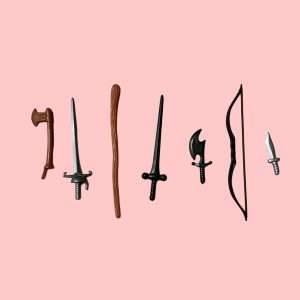
Remco standardized on one or two simple melee weapons per figure (axes, staves, knives, bows, maces/tridents), with occasional soft goods. For example, Skull Man is commonly found with a knife (and often a red cape on v2 shots), Craven with an axe, Snake Man with a trident-style spear, and Wolf Warrior with a faux-fur garment. Surviving carded/single photos and long-running collector checklists illustrate these common pack-ins. (Exact weapon color can vary by batch.)
Relationship to Warlord, MOTU and other 5.5-inch lines
• With Remco’s Warlord: The lines were marketed side-by-side; Remco even produced combo playsets bundling a Warlord hero with a Warrior Beast villain, reinforcing them as opposing factions.
• With MOTU/Blackstar: At retail, the 5.5-inch scale and body plan made Warrior Beasts cross-compatible with Mattel’s fantasy figures. Surviving Warlord cardbacks—and period commentary—explicitly pitched compatibility with MOTU & Blackstar, a cue Remco used broadly in its fantasy offerings.
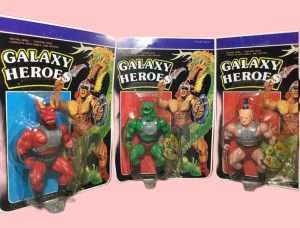
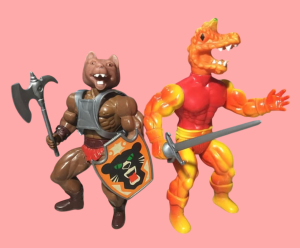
• Not to be confused with Sungold’s Galaxy Warriors/Galaxy Fighters: These were separate (third-party) 5.5-inch lines from Sungold/Sewco that arrived around 1983 and later; collectors often encounter them together but they’re different companies and molds. (Action-Figures.ca keeps separate archives for Remco’s Warrior Beasts vs. Sungold’s Galaxy Fighters.)
Known figure-by-figure notes (quick profiles)
• Skull Man (v1/v2): The line’s signature villain. v1 “Skull Face” hooded head was short-lived; v2 standardized to a bare skull. Collectors note the early v1’s visual proximity to Skeletor as a likely reason for the revision.
• Snake Man: Snake-headed brute; pictured in Remco’s own catalog as a tentpole villain and packed into the Warlord crossover playset.
• Craven: Bird-man with prominent beak; common loose with axe. Catalog group shot places him in the first six.
• Hydraz: Two-headed ogre/giant; one of the more distinctive sculpts.
• Wolf Warrior: Wolf-headed barbarian; typically seen with a fur garment.
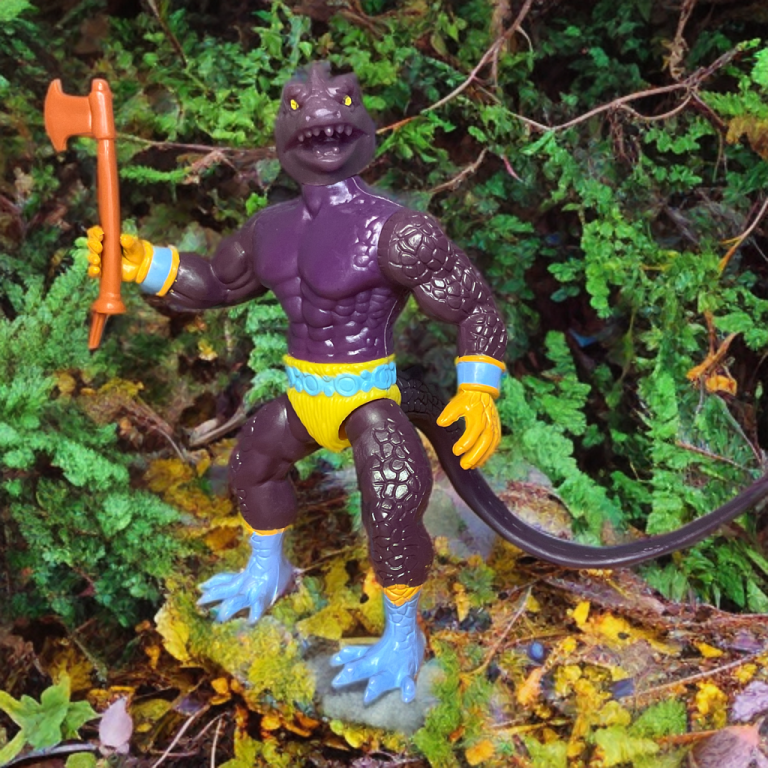
• Gecko: Lizard-man in purple or yellow/green colorways.
• Stegos & Guana: Additional reptilian sculpts that round out the monster two-packs in cardback checklists.
• Zardus: Demon/warlock type; documented limb color variation exists.
• Ramar (boxed set exclusive): Demon rider included with Fire Dragon in the “Beast Team” set.
Play value & typical issues (loose/collector notes)
• Durability: The figures are robust by early-80s standards, but loose specimens often show paint rub on noses/toes and weapon loss. Snake Man tails and thin weapons can be stress-prone. (This is borne out by decades of loose-figure trading and the relative scarcity of complete weapons.)
• Completeness drives price: Because accessories are small and variant colors exist, “100% complete” examples command a premium; the earliest Skull Man v1commands the highest attention. (Auction histories and long-running dealer write-ups note this pattern.)
Collecting Warrior Beasts Today
Current Market Value
In today’s market, carded Skull Man v1 (hooded head) can command $100–$200 at auction, while loose, complete figures like Wolf Warrior or Gecko typically sell for $10–$30. Variants and accessories significantly boost value.
Rarity Rankings
Skull Man v1 (hooded) and the Fire Dragon/Ramar Beast Team set are the holy grails of Warrior Beasts collecting, while Snake Man and Craven are more common but still prized for their iconic designs.
Fakes and Reproductions
Beware of modern reproductions like Zoloworld’s Warrior Beasts homages, which use similar designs but feature updated packaging and softer plastics. Check for ©1982 Remco branding to ensure authenticity.
Packaging details & evidence
• Cardbacks: Standard blister cards with painted/airbrushed battle scene branding and the character photo; the ©1982 Remco line appears on many backs. Surviving backs help confirm rosters and assortments.
• Assortment IDs: Singles listed in catalogs as #253/#254; large creature #279; combo playsets grouped under a Warlord/Warrior Beasts banner. (Individual figure references such as 265/266/267/268 also appear in collector databases.)
The line’s footprint & legacy
• Within Remco: Warrior Beasts helped Remco keep a credible fantasy presence next to Mattel at the height of the MOTU boom, pairing an original monster faction with a licensed/brand-forward hero line (Warlord).
• Modern homages & revivals: Independent makers have celebrated the look. Zoloworld, for instance, has produced new figures under “The Warrior Beasts” banner (e.g., Wolf Warrior) using modern interchangeable 5.5-style bodies and soft-goods, a direct homage to Remco’s originals.
• Ongoing confusion with Sungold lines: The broader 5.5-inch “KO renaissance” (Galaxy Warriors/Galaxy Fighters, etc.) keeps Warrior Beasts in the conversation, but they remain a distinct Remco property in origin and execution.
Fan Memories
For many 1980s kids, Warrior Beasts were the perfect villains for epic backyard battles, often pitted against MOTU’s He-Man or Warlord’s heroes. Collectors on forums like Action-Figures.ca recall mixing and matching figures to create sprawling fantasy wars.
Nostalgia Factor
With their snarling monster heads and chunky weapons, Warrior Beasts captured the 1980s obsession with larger-than-life villains, leaving a lasting impression on kids who saw them as MOTU’s scrappy cousins.
Zoloworld’s Role
Zoloworld’s 2020s Warrior Beasts homages recreate classics like Wolf Warrior with updated 5.5-inch bodies, interchangeable parts, and soft-goods capes, blending nostalgia with modern collecting trends.
Custom Figures
On forums like Action-Figures.ca, collectors share custom Warrior Beasts, swapping heads or weapons with MOTU figures to create unique hybrids that pay tribute to Remco’s originals.
Warrior Beasts in the 1980s Toy Wars
Toy Industry Boom
The early 1980s saw an action figure explosion, fueled by relaxed TV advertising rules and hits like Mattel’s Masters of the Universe. Remco, under Azrak-Hamway’s direction, saw opportunity in the fantasy craze and paired Warrior Beasts with their DC Comics-licensed Warlord line to compete on crowded toy shelves.
Retail Presence
Warrior Beasts were a staple in Kmart and Woolworth’s toy aisles, often sold as affordable alternatives to pricier MOTU figures. Their vibrant blister cards and cross-compatible scale made them a go-to for kids building fantasy armies on a budget.
Legacy & Modern Appeal
Warrior Beasts’ gritty, monstrous designs still resonate with collectors, as seen in Zoloworld’s 2020s homages that recreate Wolf Warrior and others with modern 5.5-inch bodies. Fan discussions on sites like Action-Figures.ca highlight the line’s distinct identity separate from Sungold’s Galaxy Warriors, while surviving 1984 Remco catalog pages (archived by Plaid Stallions) showcase their original marketing alongside Warlord. Today, the hunt for variants like Skull Man’s rare hooded v1 head keeps the line alive in collector circles, with eBay listings and toy shows driving demand for complete, carded figures.
Collecting Warrior Beasts Today
Four decades after their debut, Warrior Beasts remain a hot commodity in the vintage toy market. Carded examples of Skull Man v1 (hooded head) can fetch $100–$200 on eBay, while the boxed Fire Dragon/Ramar Beast Team set is a grail item, often exceeding $300 in mint condition. Loose, complete figures like Snake Man or Wolf Warrior typically sell for $10–$30, with accessories like capes or tridents driving up value. Collectors should verify authenticity by checking for ©1982 Remco branding on cardbacks, as modern homages from makers like Zoloworld use similar designs but feature updated packaging. Watch for paint wear on noses or claws, common on loose figures, and prioritize variants like Gecko’s purple colorway or Zardus’ flesh-tone limbs for rarity. Toy shows and forums like Action-Figures.ca are great places to trade tips and track down elusive pieces.
Quick collecting checklist (at a glance)
Singles (core): Skull Man (v2), Snake Man, Craven, Hydraz, Wolf Warrior, Gecko (purple / yellow-green)
More singles: Stegos, Guana, Zardus
Large format: Fire Dragon & Ramar (“Beast Team” set)
Combos: Journey Thru Time (Warlord + Warrior Beast), Snake Pit Trap (Warlord + Warrior Beast)
Key variants to know: Skull Man v1 hooded head; Gecko colorways; Zardus limb color variance.
Also see the: Vintage 1982 Warrior Beasts Price Guide
Collector’s Tips for Hunting Warrior Beasts
– Check eBay and toy forums for carded figures, especially for rare variants like Skull Man v1 (hooded head) or Gecko’s purple colorway. Expect premiums for complete sets with accessories.
– Verify authenticity by checking cardbacks for ©1982 Remco branding and assortment numbers (#253/#254 for singles).
– Join collector groups like Action-Figures.ca’s forums or follow Zoloworld’s modern homages for community insights.
– Watch for paint wear on loose figures (common on noses/toes) and prioritize figures with original weapons, as these drive value.
Modern Day Warrior Beasts
The DNA of the Warrior Beasts is more than just a memory; it is currently being used to build a new multiverse of mayhem. While the 1982 originals are legendary, Zoloworld has officially licensed and revived these characters to bridge the gap between vintage and modern collecting. You can see the full evolution of these creatures, including new ‘Vault’ releases and cross-over variants, in our Deep Dive into the Realm of the Underworld.
Conclusion
Remco’s Warrior Beasts may never have reached the pop-culture status of Mattel’s Masters of the Universe, but the line embodies a fascinating moment in early 1980s toy history. Built on the sturdy 5.5-inch body system Remco used across Warlord and other fantasy assortments, it offered kids and collectors a full cast of monstrous villains that could face off not only against Remco’s own heroes but also alongside (or against) MOTU, Blackstar, and other fantasy toys of the time.
What makes the Warrior Beasts so enduring today is the combination of their bold, primal sculpts and the mythology collectors have built around them.
Recommended reading: The “Peg Hunter’s” Guide: How to Spot an Immortal Remco on eBay
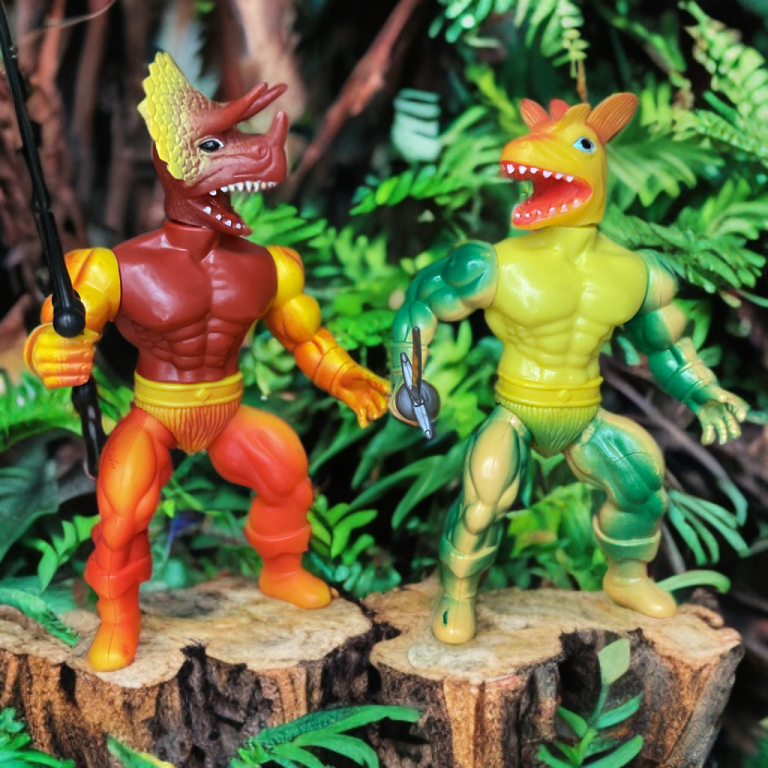
Characters like Skull Man, Snake Man, Hydraz, and Wolf Warrior stand as archetypal “bad guys” — simple yet striking designs that still hold display power four decades later. The line’s short run, coupled with key variants (like the early hooded Skull Man head or Gecko’s colorways), has only added to their mystique and desirability.
Though they were originally marketed as generic foils, The Warrior Beasts carved out their own identity — distinct from Warlord, distinct from Sungold’s Galaxy Fighters, and certainly distinct from MOTU despite obvious parallels. Their continuing influence is clear in modern homages by companies like Zoloworld, and in the way collectors continue to hunt, catalog, and preserve them as part of the larger “5.5-inch fantasy boom” of the early 1980s.
In the end, Remco’s Warrior Beasts represent both an opportunistic response to a toy craze and a surprisingly cohesive line in its own right. They are the shadowy monsters at the edge of the 1980s toy shelf — not the headliners, but unforgettable to anyone who encountered them. For collectors today, they are artifacts of creativity, competition, and the rough-and-ready spirit of early action figures, still worthy of a place in the pantheon of vintage fantasy toys.

 English
  Deutsch
  Français
  Português do Brasil
  日本語
日本語  Español
  English (Australia)