

Stinkor's Comic Origins: From Patchouli-Soaked Repaint to the Ultimate Stench Machine
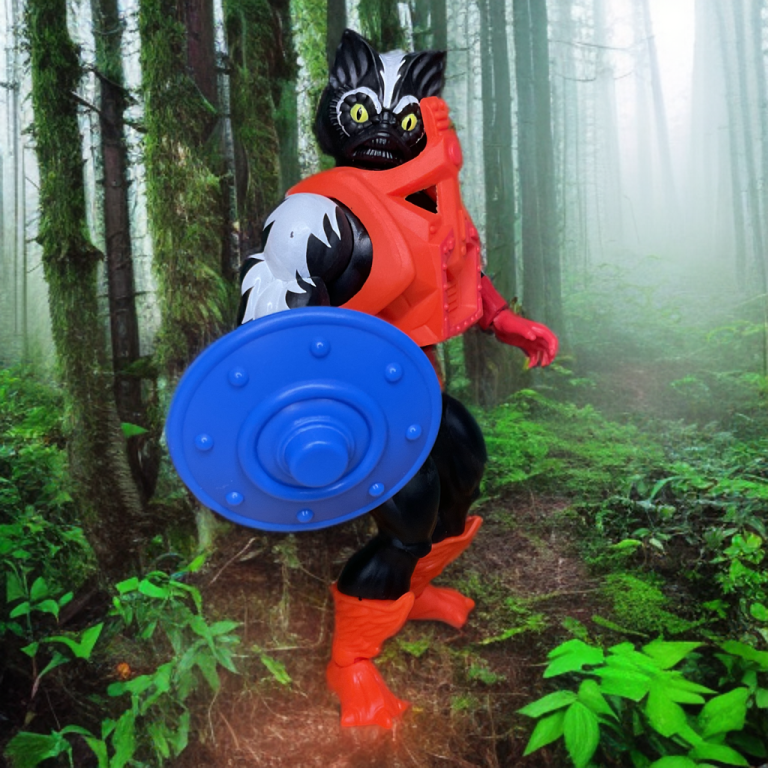
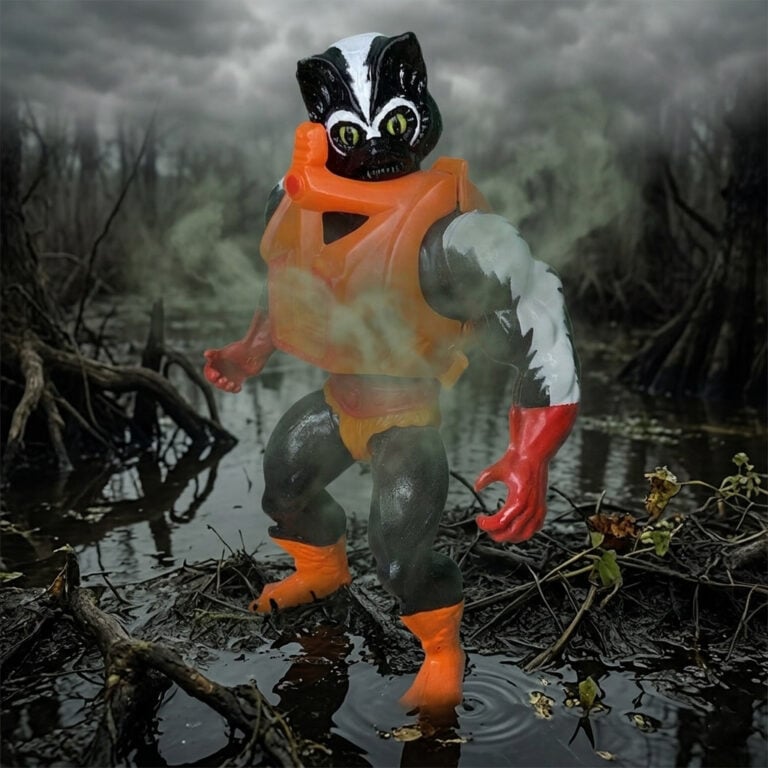
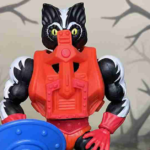
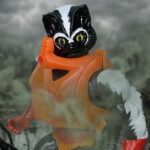
Before Stinkor became the internet’s favorite debate topic—skunk or sentient fart?—he started life as one of the most gloriously weird additions to the Masters of the Universe toyline. Released in 1985, this “Evil Master of Odors” didn’t arrive with a flashy sword or laser cannon. Instead, he came armed with a recycled Mer-Man body, Mekaneck armor, a Castle Grayskull shield, and a generous dousing of patchouli oil that made him smell like a skunk had lost a fight with a hippie commune. His true comic debut happened in the mini-comic packed right with the figure: The Stench of Evil!. Let’s sniff out his origins across the vintage minis, later comics, and expanded lore, where a simple thief’s bad decisions turned him into Eternia’s most nose-offensive villain.
The “Frankenstein” Anatomy of a Repaint
| Figure Part | Sourced From | Original Character Context |
| Head Sculpt | Mer-Man | Skeletor’s original aquatic henchman (painted black/white) |
| Torso & Limbs | Mer-Man | Scaly body design (repurposed to pass as a “skunk”) |
| Chest Armor | Mekaneck | Heroic “human periscope” armor (repainted orange) |
| Shield Accessory | Castle Grayskull / Palace Guards | Repainted blue weapons-rack gear |
| The “Stench” | Patchouli Essential Oil | Infused directly into the plastic mold mixture |
The 1985 Vintage Mini-Comic: The Stench of Evil!
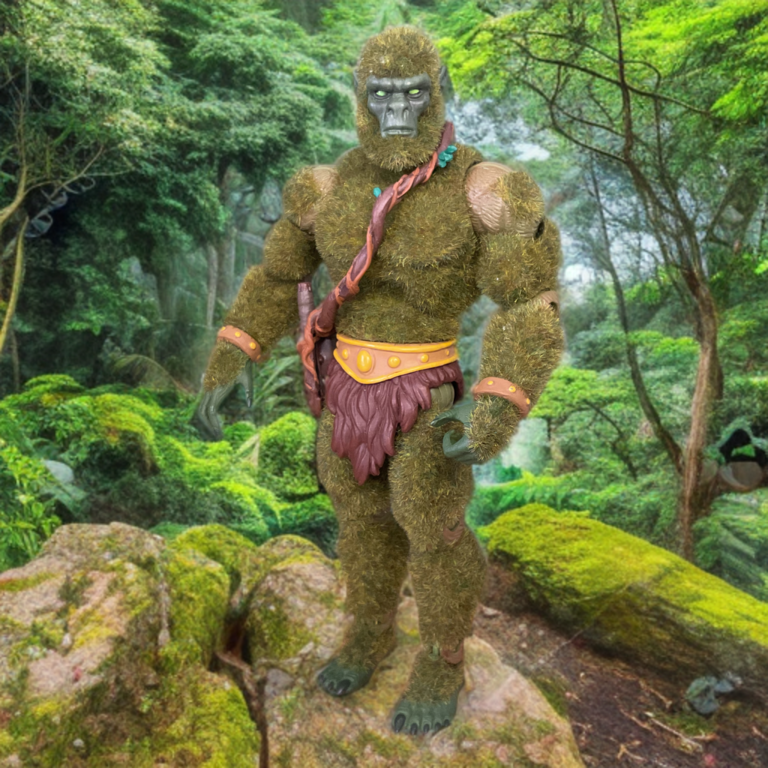
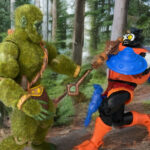
Stinkor’s very first comic appearance came bundled with his action figure in that iconic 1985 wave. Titled The Stench of Evil!, the short story introduces him as a major threat to Eternia’s wildlife. Illustrated using the cross-sell artwork style (he looks a bit different from the final toy in some panels), Stinkor wanders the countryside, his rancid odor wreaking havoc on animals and plants alike. Trees wilt, birds flee, and the ecosystem basically taps out. Only Moss Man—the heroic, pine-scented tree-man—can stand against him, countering the foul funk with his fresh, forest-fresh aroma in a battle that’s equal parts ridiculous and brilliant. It’s pure 1980s MOTU absurdity: no deep backstory, just “guy smells bad, nature suffers, Moss Man saves the day with air freshener powers.” This mini-comic also appeared with Moss Man’s figure, cementing the two as olfactory opposites. Stinkor pops up briefly in another mini-comic, Hordak – The Ruthless Leader’s Revenge!, where even the Horde finds his presence unbearable.
Pre-Mutation Life: Odiphus the Pelleezean Thief
The toy’s own packaging bio gave the first hints of depth. Stinkor belongs to the Peleezeans (sometimes spelled Pelleezeans), a race of skunk-like humanoids from a village called Pelleezeea. His birth name? Odiphus. Early hints portrayed him as a sneaky type, but the full tragicomic origin wouldn’t arrive until later media. Conceptually, he started as a recolor job—Mattel loved those for budget reasons—but the skunk aesthetic and chemical “stink treatment” made him unforgettable. Some old toy magazines speculated he began life as a stink bug idea before evolving into the striped villain we know.
1985
The Toy Debut & "Stench of Evil"
Mattel releases the figure. Without an accompanying cartoon appearance, his lore is entirely carried by a mini-comic packed with the toy, firmly establishing him as the "Evil Master of Odors."
1985–1987
The Filmation Cartoon Ban
The original series showrunners actively refuse to write episodes for Stinkor, effectively exiling him from the legendary 80s broadcast run for being too lowbrow of a gimmick.
2002
The 2002 TV Debut & "Odiphus"
The Mike Young Productions relaunch gives him a true, canonical backstory. He starts as a mutant, cat-like thief named Odiphus who gets caught in Tri-Klops' lab accident, earning his powers and a mandatory gas mask.
2005
The 2005 "Staction" Figure Evolution
The Four Horsemen redesign elevates him from a simple Mer-Man clone into a genuinely terrifying, cybernetic, biomechanical skunk mutant, cementing his evolution into a serious threat.
Expanded Origins in the 2002 Series and Tie-Ins
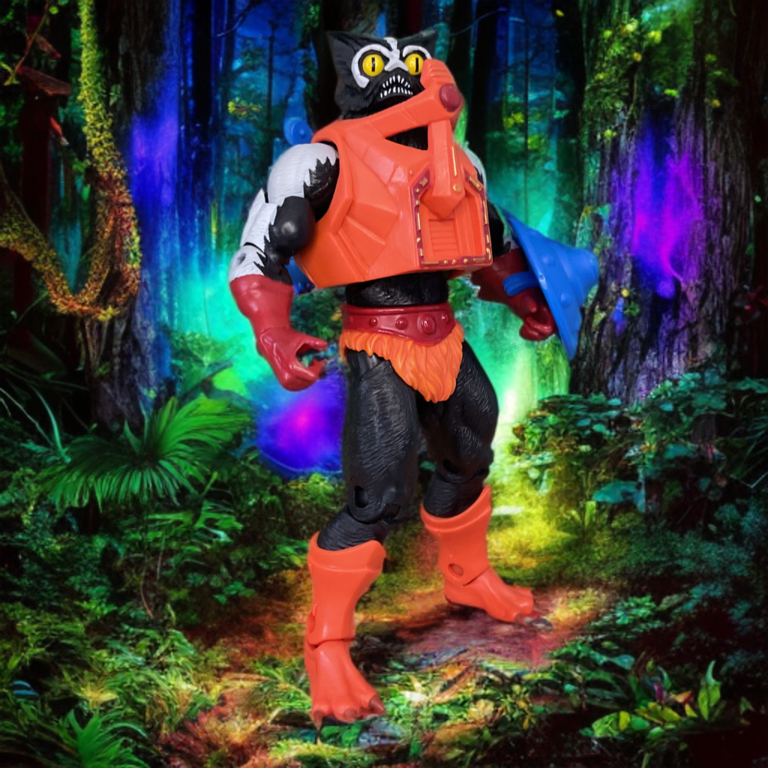
The 2002 animated series (Mike Young Productions) finally gave Stinkor his big-screen (well, TV) debut and a proper flashback origin—the first time most fans saw him move or speak. Here, Odiphus starts as a small, cat-like thief who betrays his own Pelleezean village as a child by revealing their hidden weapons to the warlord Prahvus, getting himself banished. Years later, he witnesses Kobra Khan’s escape and schemes to join Skeletor’s crew. Sneaking into Tri-Klops’ lab, Odiphus triggers a chemical accident that mutates him: he grows taller, stronger, and gains that signature unbearable stench. The twist? He’s not immune to his own smell, so he wears an oxygen mask and eventually modifies it to fire focused stink blasts like a living chemical weapon. Skeletor, initially unimpressed, recruits him after seeing the potential for clearing rooms (and battlefields). This version adds tragic layers—Odiphus always craved power and villainy, but the mutation locks him into eternal social isolation. The 2002 comics and related media largely stick to this canon.
Later Comic Expansions: Classics and Beyond
In the Masters of the Universe Classics continuity (the high-end toyline with extensive bios and mini-comics), the Peleezean thief backstory gets reinforced and expanded. Odiphus remains the core: a low-level criminal whose lab mishap turns him into Skeletor’s smelliest henchman. The Classics line even included updated figures with deeper lore cards that tie into the broader Eternian timeline. Modern revivals like the Origins line (2021 onward) often repackage The Stench of Evil! or similar shorts with the figure, keeping the vintage spirit alive while nodding to the full Odiphus saga. Across DC and other comic runs, Stinkor stays mostly a comedic side-villain, but his core remains consistent: the mutation that gave him power also cursed him with the one superpower no one wants to stand near.
In short
Stinkor’s comic origins are a perfect microcosm of Masters of the Universe storytelling—starting simple and silly in a 1985 mini-comic about smell-based ecological warfare, then growing into a surprisingly detailed tale of betrayal, ambition, and accidental villainy. From Odiphus the backstabbing cat-like thief to the mutated Peleezean stink-bomb who even Skeletor has to tolerate, his journey proves that sometimes the best (or worst) characters come from a lab accident and a heavy dose of patchouli. Whether he’s clearing Snake Mountain with sheer odor or battling Moss Man’s pine freshness, Stinkor reminds us that in Eternia, even the most ridiculous powers can leave a lasting impression. Just don’t forget the nose plugs.
Moss Man’s Counterattack: The Pine-Scented Showdown in “The Stench of Evil!”
In the wild and wonderfully weird world of 1985 Masters of the Universe mini-comics, few battles were as perfectly matched—or as hilariously olfactory—as the clash between Stinkor, the Evil Master of Odors, and Moss Man, Eternia’s living embodiment of fresh forest vibes. While Stinkor arrived on toy shelves reeking of patchouli oil (a scent that aged like a gym sock left in the sun), Moss Man countered with a subtle pine fragrance that made him the ultimate natural air freshener. Their epic (and only major) confrontation unfolds in the 14-page mini-comic The Stench of Evil!, packaged with both figures. This wasn’t a sword-swinging brawl or a laser battle—it was a full-on smell-off that pitted toxic funk against refreshing evergreen. Here’s a detailed breakdown of Moss Man’s heroic counterattack, straight from the pages of that delightfully absurd vintage story.
Setting the Stink: Skeletor’s Nefarious Plan
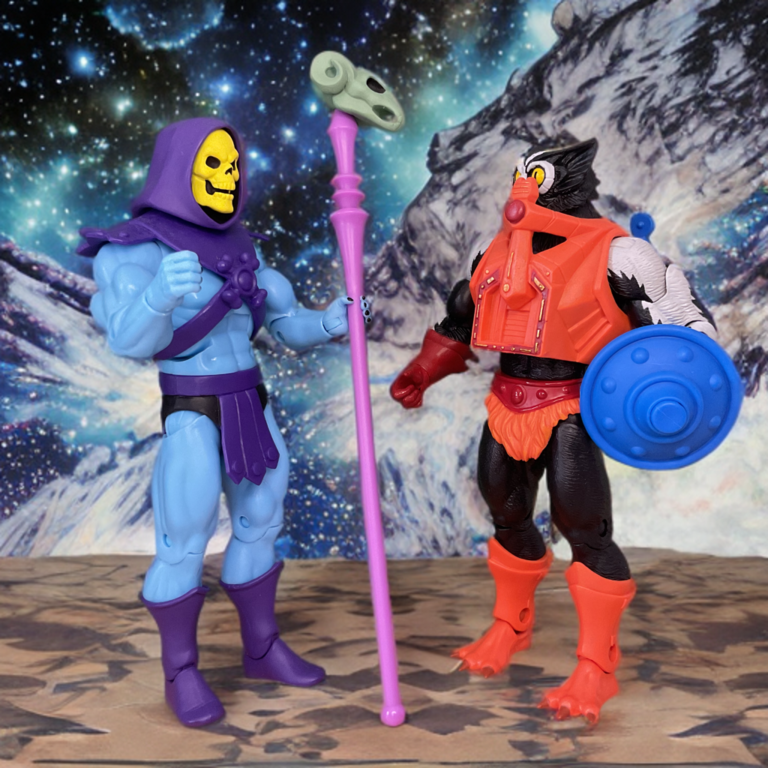
The story opens peacefully enough: The Sorceress and Moss Man are calmly enjoying the beauty of Eternia’s forests, surrounded by happy wildlife and lush greenery. But Skeletor, ever the party pooper, spies on them from afar and decides to ruin the idyllic scene. He recruits his newest henchman, Stinkor, ordering the skunk-like villain to “spoil the air in the forests with his smell.” Stinkor, reveling in all that is foul, eagerly complies. His rancid odor spreads like a toxic cloud, causing animals to flee in panic, plants to wilt, and the entire ecosystem to suffer. Not content with just ecological sabotage, Stinkor escalates by poisoning a nearby village, turning fresh air into a weapon of mass discomfort.
The Heroes’ Failed Assault
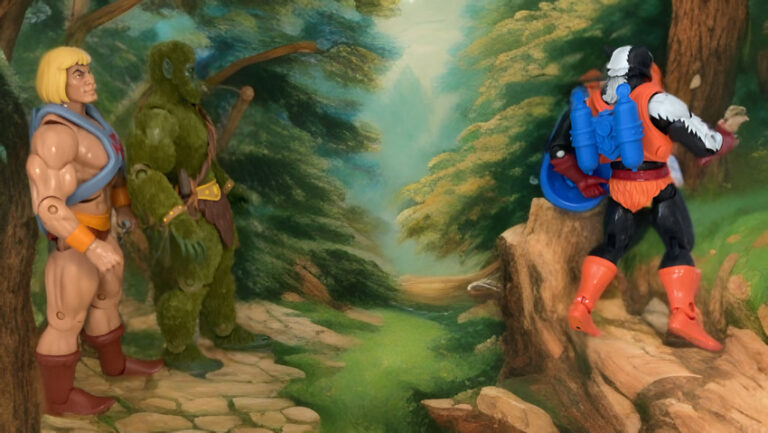
The good guys don’t sit idly by. He-Man, Teela, Stratos, and a handful of other heroic warriors charge in to confront the stench machine. But Stinkor’s power proves overwhelming: his unbearable odor paralyzes them almost instantly. They gag, choke, and stagger, unable to land a single blow. Classic lines from the comic capture the chaos—”That smell – it’s worse than a hundred skunks!” and “If only I can hold my breath long enough to strike!” Even the mighty He-Man is reduced to gasping for air. Skeletor’s plan is working beautifully; the forces of good are literally fumigated off the battlefield. Stinkor laughs maniacally, declaring his love for the foulness he’s unleashing.
Moss Man’s Pine-Fresh Counterattack
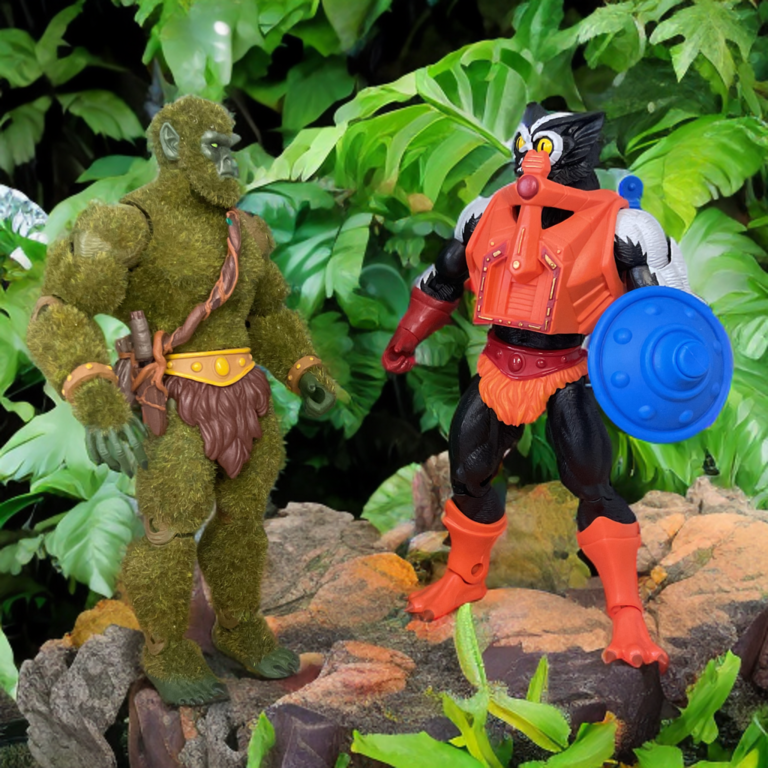
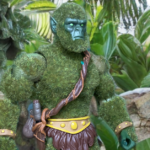
Enter the hero of the hour: Moss Man. As a living moss creature with deep ties to nature, he’s uniquely equipped to handle the crisis. While the other heroes are reeling, Moss Man steps forward—his own subtle pine scent acting as the perfect natural counteragent. The comic frames this as a direct olfactory duel: Stinkor’s “odor of evil” versus Moss Man’s refreshing, forest-fresh aroma. What perfume (or rather, pine) is to the heroes becomes poison to Stinkor. Moss Man’s scent doesn’t just mask the stink—it actively overpowers and neutralizes it, much like a real-world air freshener battling a bad odor.
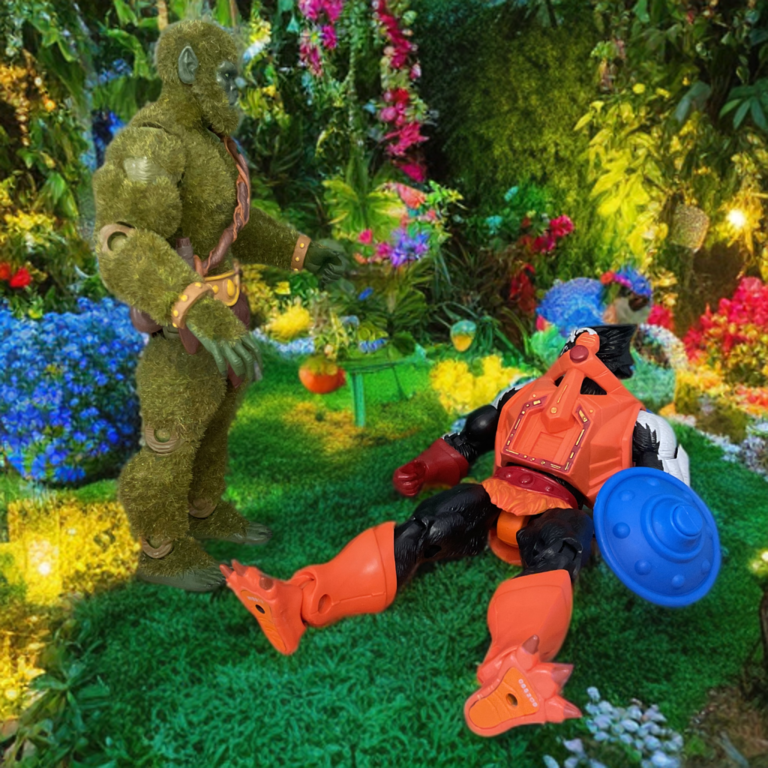
In the climax, Moss Man channels his connection to plant life, amplifying his pine essence to create a clean, invigorating wave that pushes back the toxic cloud. Stinkor, who can barely stand his own smell at times (hence his gas-mask armor in later lore), recoils in horror. The villain’s advantage evaporates as the air clears, allowing the other heroes to recover and join the fray. It’s not brute force or magic swords that win the day—it’s pure aromatic warfare. Moss Man essentially turns the battlefield into a giant pine-scented candle, proving that sometimes the best weapon is a good smell.
Aftermath and Legacy
With his stench defeated, Stinkor is forced to retreat, his grand plan foiled by the one foe whose natural fragrance he can’t tolerate. The forest begins to recover, the animals return, and peace (and fresh air) is restored to Eternia. The mini-comic ends on a triumphant note for Moss Man, cementing him as Stinkor’s arch-nemesis in the olfactory department. This clever gimmick play—two scented toys designed as perfect opposites—made the story memorable for a generation of kids who could literally smell the rivalry when they opened the packages
Character “DNA” Comparison
| Attribute | 1985 Vintage Era | 2002 Relaunch Era |
| Visual Distinctiveness | Low (Identical to Mer-Man with a paint job) | High (Unique mammalian details, mechanical tanks) |
| Power Scaling | Mildly inconvenient toxic cloud | Focused, weaponized pressure blasts |
| Self-Immunity | Immune to his own smell | Vulnerable (Requires an oxygen/filtration apparatus) |
| Skeletor’s Respect | Utterly bottom-tier comic relief | Competent, highly useful field agent |
Conclusion
Moss Man’s counterattack in The Stench of Evil! is peak 1980s MOTU creativity: a low-stakes, high-concept battle where the “powers” are built right into the toys themselves. No epic sword clashes here—just one heroic moss-man deploying his pine-fresh essence to fumigate a skunk villain and save the day. It perfectly captures why these mini-comics were so beloved: silly, self-aware fun that leaned into the figures’ unique gimmicks. Decades later, it still leaves fans chuckling (and maybe reaching for nose plugs). In the eternal debate of skunk versus fart, Moss Man proved that sometimes all you need is a little fresh air to clear the room—and win the war. If only real-life odor problems were solved so elegantly!
 English
  Deutsch
  Français
  Português do Brasil
  日本語
日本語  Español
  English (Australia)