

The Tale of Two Castles: Comparing G.I. Joe’s "Skeletons in the Closet"
Introduction: The Great Divide of 1980s G.I. Joe
The G.I. Joe franchise is famous for its “split personality” during the 1980s, a decade where the brand dominated both the printed page and the television screen. While the Marvel Comics series and the Sunbow animated series shared a toy line, a cast of iconic characters, and a general “Good vs. Evil” premise, they operated in entirely different universes with distinct sets of physical laws and character motivations.
This divergence wasn’t just a matter of minor details; it was a fundamental difference in storytelling philosophy. The comics leaned into gritty military realism and long-form political drama, while the cartoon embraced high-concept science fiction and campy adventure. A prime example of this divergence occurs in two stories sharing the same title: Marvel Comics Issue #57 and Season 1, Episode 53 of the cartoon, both titled “Skeletons in the Closet.” Despite the shared name and the atmospheric Scottish setting, they are fundamentally different narratives. One functions as a high-stakes corporate coup involving identity theft and military intelligence, while the other is a gothic mystery that fundamentally alters the family tree of a core protagonist. By examining these two versions side-by-side, we see a perfect microcosm of why G.I. Joe canon is often a “choose your own adventure” experience for collectors and historians.
Plot Breakdown: Espionage vs. The Supernatural
While both stories center on Destro’s ancestral home in Scotland, the driving forces behind the plots could not be further apart. The comic narrative treats the castle as a strategic asset and a corporate headquarters, whereas the cartoon utilizes the setting as a backdrop for high-concept psychological drama. This fundamental difference in storytelling priorities ensures that despite the shared location, the two versions of the tale occupy completely different genres.
The Comic: A Military Coup
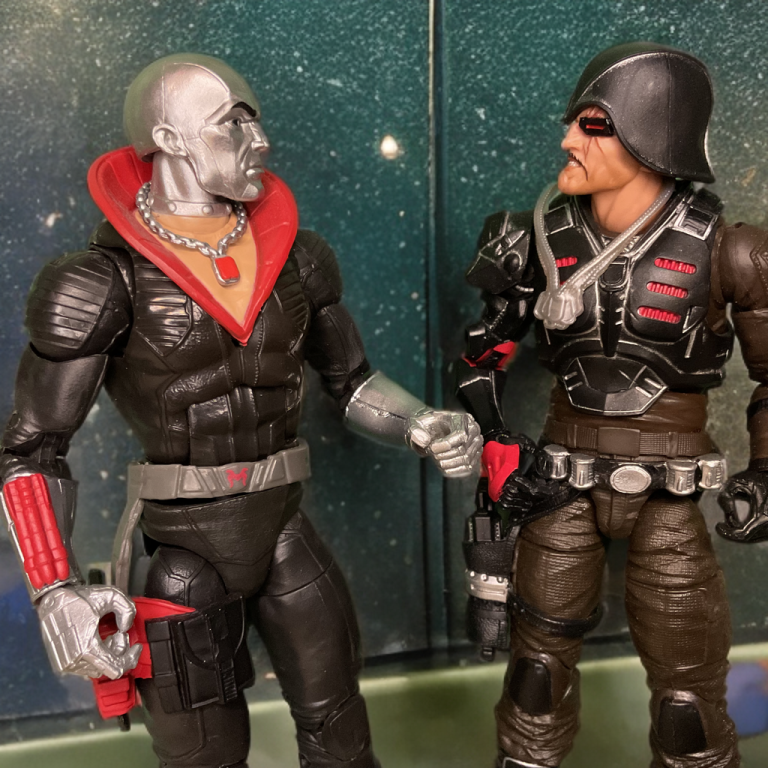
In Issue #57, the story is a grounded exercise in corporate and military espionage that emphasizes the cold, calculating nature of the arms industry. Destro returns to his castle only to find that his entire life has been hijacked by an imposter who has usurped his identity and is currently running M.A.R.S., the Military Armament Research System. The “skeleton” in this particular closet is not a ghost, but rather the mercenary Major Bludd, who is masquerading as the iron-masked weapon smith to facilitate a massive heist.
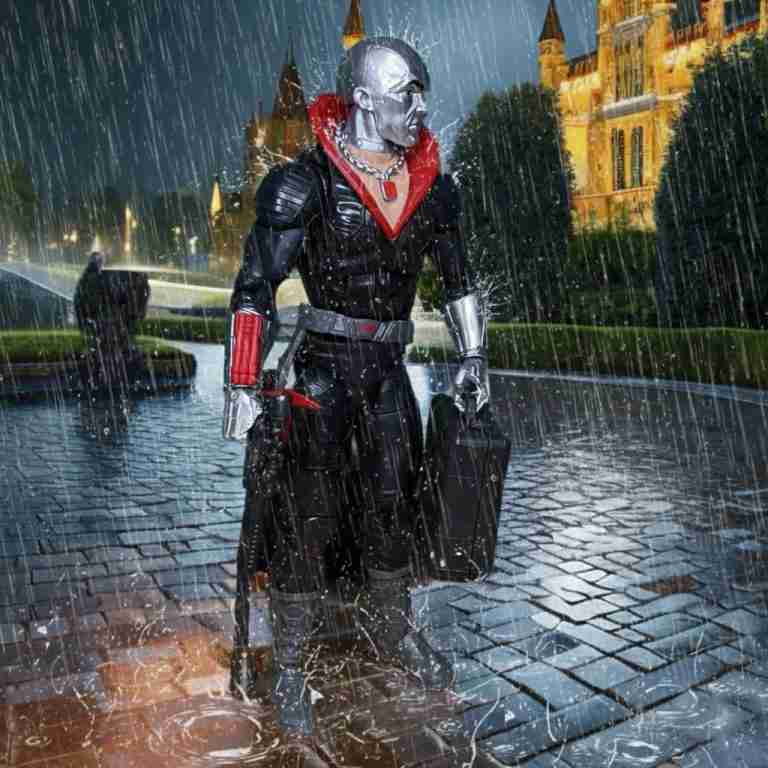
The plot hinges on the theft of highly classified designs for the Cobra Terror Drome, turning the castle into a theater of industrial sabotage. The Joes involved in the mission, specifically Flint and Lady Jaye, find themselves in the unusual position of acting as tactical consultants for their usual enemy. They form an uneasy alliance with the real Destro, helping him reclaim his birthright and his business interests in a pragmatic trade-off to secure military intelligence for the United States.
The Cartoon: Gothic Horror
The animated episode plays out like a classic supernatural thriller, leaning heavily into atmospheric tropes and psychological manipulation. In this version, the plot is set in motion when Lady Jaye inherits a supposedly haunted castle in Scotland and is informed she must survive a night within its walls to claim her inheritance. The “skeletons” here are literal and terrifying, as the Joes are forced to contend with spectral apparitions and giant spiders that seem to defy the laws of physics.
However, the supernatural elements are eventually revealed to be a sophisticated hoax orchestrated by Destro himself. He used these elaborate special effects to maintain a perimeter of fear around his private life, keeping both the Joes and Cobra at bay. The conflict is further complicated by the Baroness, who is not interested in blueprints or military secrets, but is instead attempting to sabotage Destro’s efforts out of pure romantic jealousy. This transforms the mission into a bizarre mix of a “Scooby-Doo” mystery and a high-stakes soap opera.
The Role of Lady Jaye
The character of Lady Jaye serves as the primary bridge between these two distinct stories, providing a familiar face for the audience as they navigate the damp corridors of the McCullen estate. However, her presence in each medium serves a completely different narrative purpose. While her core character traits—her intelligence, her mastery of disguise, and her relationship with Flint—remain consistent, the stakes she faces in each continuity could not be more polarized.
The Comic: The Professional Operative
In the Marvel Comics universe, Lady Jaye acts as a consummate professional operative whose priorities are strictly dictated by the mission at hand. Her involvement in the events at the castle is purely tactical and mission-driven, as she is tasked with securing the highly classified plans for the Cobra Terror Drome. In this grounded military setting, she is not searching for her roots or seeking emotional closure; she is engaging in high-stakes field work.
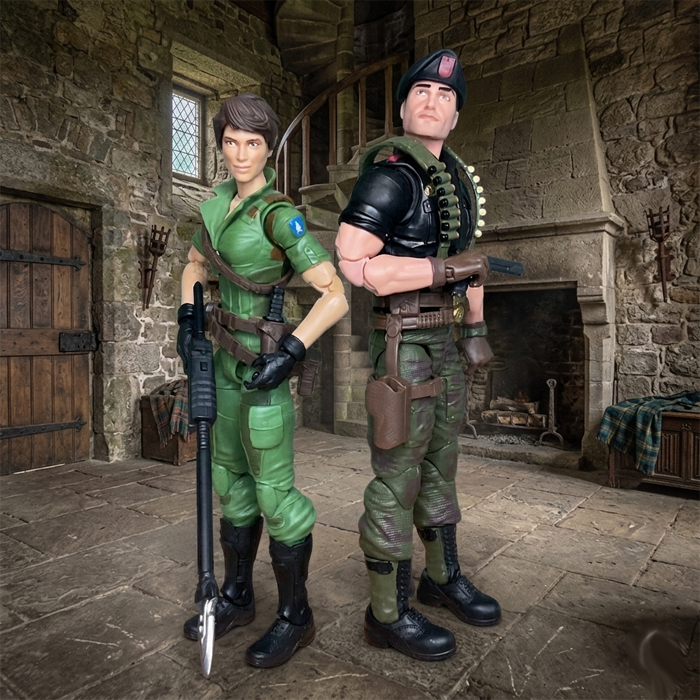
Her interaction with Destro in this version is defined by a cold, pragmatic necessity. She and Flint treat the masked arms dealer as an ally-of-convenience, a temporary partner in a dangerous game of “the enemy of my enemy is my friend.” By assisting the real Destro in thwarting Major Bludd’s attempt at identity theft, she ensures the safety of the Joes while simultaneously achieving her objective. There is no sentimentality in this interaction, only the calculated movements of a soldier fulfilling her duty to her country.
The Cartoon: The Personal Revelation
In the Sunbow animated series, the stakes for Lady Jaye shift from the professional to the deeply personal, turning a routine mission into a life-altering event. During the climax of the episode, she finds herself entangled in a dark ritual and the exploration of an ancient family tree hidden within the castle. The narrative takes a dramatic turn when the archives reveal a shocking secret that had never been hinted at before: Lady Jaye is actually a distant cousin of Destro.
This familial connection serves as the cornerstone of the episode’s legacy and remains one of the most discussed plot twists in the history of the cartoon. Suddenly, the battle between G.I. Joe and Cobra is colored by the complexity of bloodlines, suggesting that the divide between hero and villain is thinner than anyone suspected. This revelation adds a layer of gothic drama to her character, transforming her from a mere participant in the conflict into a living link to the very heritage that Destro fiercely protects.
Continuity and Canon Divergence
The reason these two stories feel so distinct is rooted in how the G.I. Joe brand was managed at the time.
| Feature | Comic Issue #57 | Cartoon Episode |
| Tone | Grounded military thriller | “Scooby-Doo” style adventure |
| The Antagonist | Major Bludd (Identity theft) | Destro & Baroness (Hoaxes and jealousy) |
| Family Ties | None between Joe and Cobra | Lady Jaye is revealed as Destro’s kin |
| Resolution | Destro regains his business | The Joes escape the “haunted” estate |
Larry Hama, the primary architect of the Marvel Comics run, famously avoided watching the cartoon to ensure his storytelling remained focused on gritty, semi-realistic military tactics. Consequently, the “Cousin Jaye” revelation from the cartoon was never adopted into the comic book canon, leaving the two “Skeletons” to exist as parallel but unrelated tales.
Conclusion: Two Legacies Under One Title
Ultimately, while the title “Skeletons in the Closet” serves as a significant thematic landmark for exploring Destro’s heritage in both mediums, these two stories are not adaptations of one another. They exist as distinct entities that reflect the specific strengths of their respective platforms. The comic book version remains a tight, character-driven exploration of the political and corporate vulnerabilities inherent in the life of a high-tech arms dealer, proving that even a man in a steel mask can have his empire stolen from within.
On the other hand, the cartoon version leans into the imaginative freedom of Saturday morning animation, exploring a campy, gothic, and deeply personal history for its protagonists. By prioritizing psychological twists and familial drama over military blueprints, it created a lasting impact on the lore that fans still debate decades later.
For enthusiasts of the G.I. Joe franchise, these two entries perfectly encapsulate the “choose your own adventure” nature of 1980s storytelling, offering one path rooted in the grit and mud of the battlefield and another shrouded in the mystery and atmosphere of the macabre.

 English
  Deutsch
  Français
  Português do Brasil
  日本語
日本語  Español
  English (Australia)