

The Ultimate Guide to Gorilla Grodd: Powers, History, and Toy Review!
In the hyper-competitive world of comic book publishing—where thousands of villains enjoy brief popularity before fading into obscurity—Gorilla Grodd has pulled off a rare feat. He has remained a front-row threat in DC Comics for well over six decades. Created by writer John Broome and artist Carmine Infantino in 1959’s The Flash #106, Grodd hasn’t just survived evolving comic book eras; he has thrived across them.
What makes Grodd such an enduring, existential threat to the DC Universe is his terrifying combination of traits. He isn’t just a physical powerhouse; he is a telepathic mastermind who attacks heroes’ minds, plans, and moral ideals.
| Canonical Bio & Ability | Power Level & Scope | Primary Tactical Function |
|---|---|---|
| Full Name & Origin | Gorilla Grodd (Evolved Simian) | First appearance: The Flash #106 (1959). Native to Gorilla City, Africa. |
| Telepathy & Mind Control | Global / Multi-target scope | Enslaving populations, manipulating foreign governments, casting mental projections, and psychic camouflage. |
| Superhuman Intelligence | Genius-level intellect | Advanced scientific engineering, strategic planning, bio-warfare, and psychological manipulation. |
| Immense Strength & Durability | Multi-ton apex physiology | Engaging powerhouse heroes in direct physical combat and absorbing heavy kinetic impact from speedsters. |
| Telekinesis | Localized physical manipulation | Levitation of heavy objects, creating kinetic shields, and executing telekinetic bludgeoning in select continuities. |
The Importance of Gorilla City
Gorilla City is far more than a colorful backdrop in Flash history—it is the engine driving Grodd’s entire identity. Nestled deep within the African jungle, this hyper-advanced sanctuary represents everything Grodd both loathes and hungers for. He rejects King Solovar’s peaceful, isolationist philosophy, viewing harmony as a pathetic waste of superior intellect. Yet, his massive ego will never allow him to simply walk away. Controlling Gorilla City symbolises absolute authority over his own species, validating his self-proclaimed destiny as the ultimate apex predator.
That internal clash is why the character works so well. Grodd isn’t just another rogue popping up in Central City to knock over an armored bank; he’s a politically driven warlord engaged in a perpetual civil war. Whether he’s staging a bloody coup, manipulating local politics from the shadows, broadcasting psychic waves to enslave his kin, or launching full-scale military invasions against the human world, his obsession with the throne adds genuine stakes to his narrative arc.
These internal struggles highlight what DC Comics does best: taking a wild Silver Age premise—a hidden city of hyper-intelligent telepathic apes—and treating it with total narrative seriousness.
Greatest Schemes & Clash of Ideologies
While many comic book villains pursue wealth or localized revenge, Grodd’s grandest plots always aim for sweeping, planetary dominance. His schemes bridge classic Silver Age absurdism with terrifying modern malice. Over the decades, his strategies have ranged from mind-controlling the entire population of Central City—and once running for governor to seize legal control—to rewriting human biology entirely during the JLApe event in an attempt to force humanity into an ape-dominated state under his absolute rule.
Grodd routinely pairs his psionic power with alien meteor technology, experimental bio-weapons, and political subversion. This relentless scope often brings him into conflict beyond the Flash family, drawing the attention of the Justice League and the Titans, while causing friction with villain alliances like the Injustice League, the Secret Society, and Lex Luthor’s Legion of Doom—groups he joins only when doing so advances his own goals.
| Campaign Type | Primary Objective | Ideological Opposition |
|---|---|---|
| Gorilla City Coups | Overthrowing King Solovar | Rejects peaceful isolationism; demands militaristic ape expansionism. |
| Global Invasions | Subjugating Humanity & De-evolution | Views human free will as an evolutionary flaw to be managed and enslaved. |
| The Flash Rivalry | Destroying Barry Allen's Ideals | Pits ruthless entitlement and control against Barry's hope, service, and responsibility. |
At its core, the rivalry between Grodd and Barry Allen is an ideological war disguised as a superhero battle. Barry represents selflessness, duty, and optimistic service, having gained his speed and immediately choosing to protect Central City. Grodd represents pure entitlement, fascism, and control. Grodd believes extraordinary power justifies ruling over the weak, whereas Barry believes power demands protecting them. What makes Grodd so resilient is that every failure simply becomes data. When a speedster undoes his technology, Grodd returns from imprisonment sharper, more arrogant, and with a fresh plan to prove that brute force and mind control will triumph over hope.
Animated, Screen, and Media Adaptations
Beyond the printed page, Gorilla Grodd has built an exceptionally strong presence across television, film, and video games. Animated series frequently feature him because his visual design translates effortlessly to the screen. Showrunners gravitate toward Grodd because he delivers an immediate visual hook: the terrifying contrast between a massive apex predator and a hyper-articulate tactical genius capable of manipulating populations.
| Core Trait | Screen Translation | Narrative Impact in Adaptations |
|---|---|---|
| Extraordinary Intelligence | Master Strategist & Engineer | Depicted building mind-control helmets, bio-weapons, and leading villain coalitions like the Secret Society. |
| Telepathic Abilities | Psionic Warfare & Illusion | Used visually on screen through glowing eyes, mental projections, and puppet-mastering civilian populations. |
| Ambition for Domination | Global Conquest & Evolutionary Supremacy | Drives multi-episode television arcs involving coups in Gorilla City or turning human cities into ape sanctuaries. |
| Conflict with the Flash | Arch-Nemesis Dynamic | Serves as a recurring high-stakes physical and mental foil for Barry Allen across both live-action and animation. |
Whether organizing the Secret Society in classic Saturday morning cartoons like Challenge of the Superfriends or orchestrating complex multi-season arcs in Justice League Unlimited, Grodd’s core traits remain preserved. His transition into live-action on The CW’s The Flash introduced him to a whole new demographic. Utilizing menacing CGI and voice work by David Sobolov, the series reimagined him as a S.T.A.R. Labs test subject mutated by the particle accelerator explosion, proving that a giant telepathic ape could be brought to mainstream television with genuine dramatic punch.
McFarlane Page Punchers Gorilla Grodd
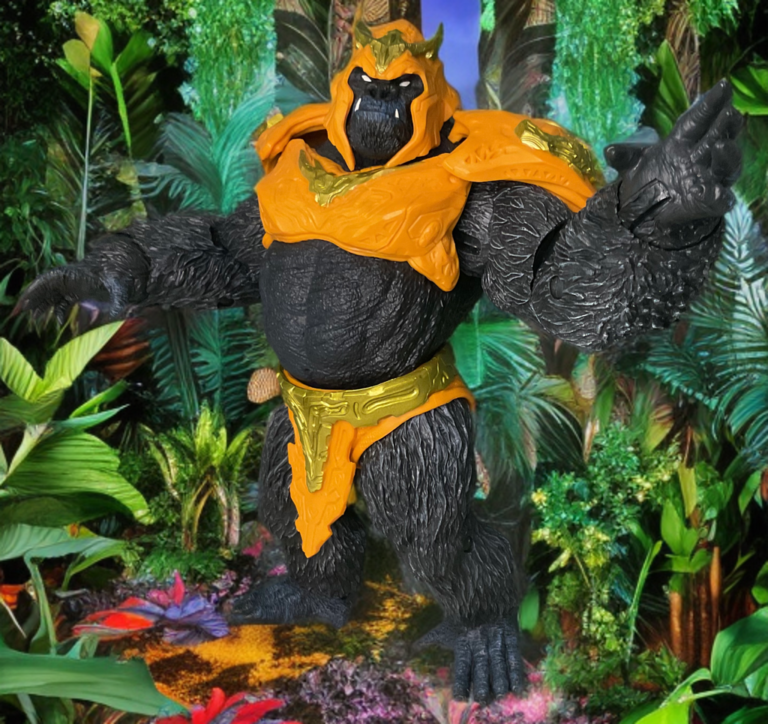
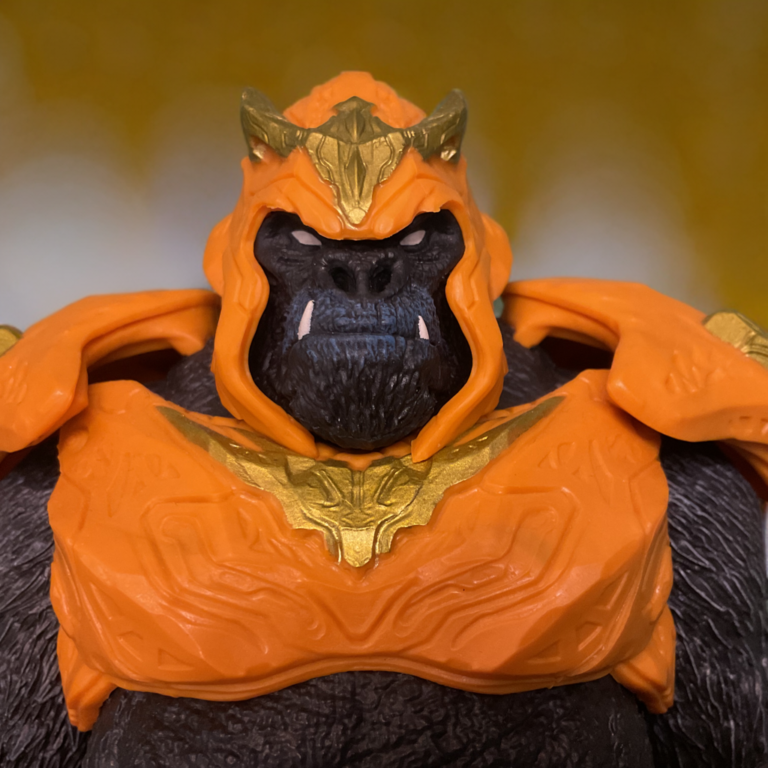
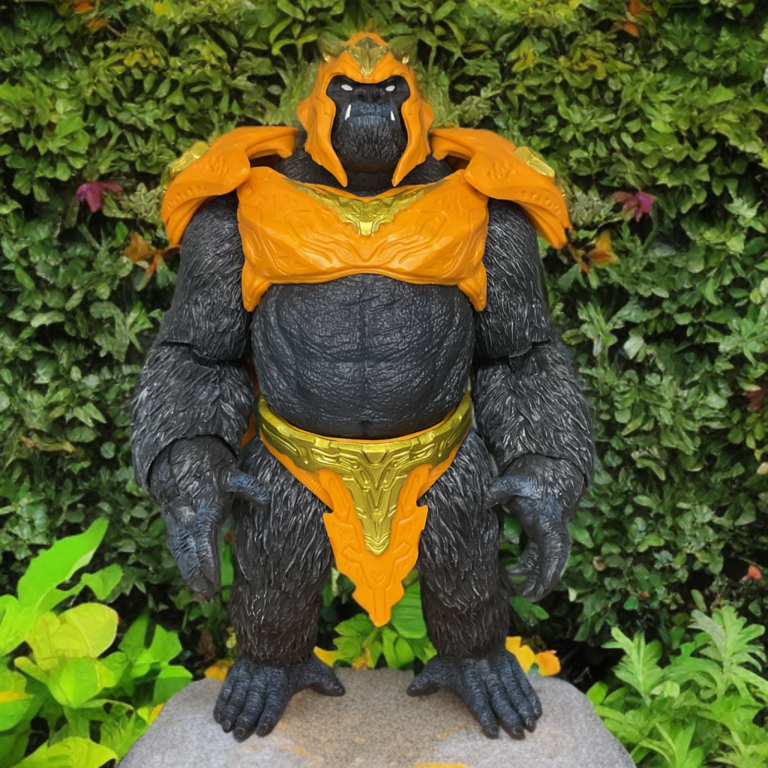
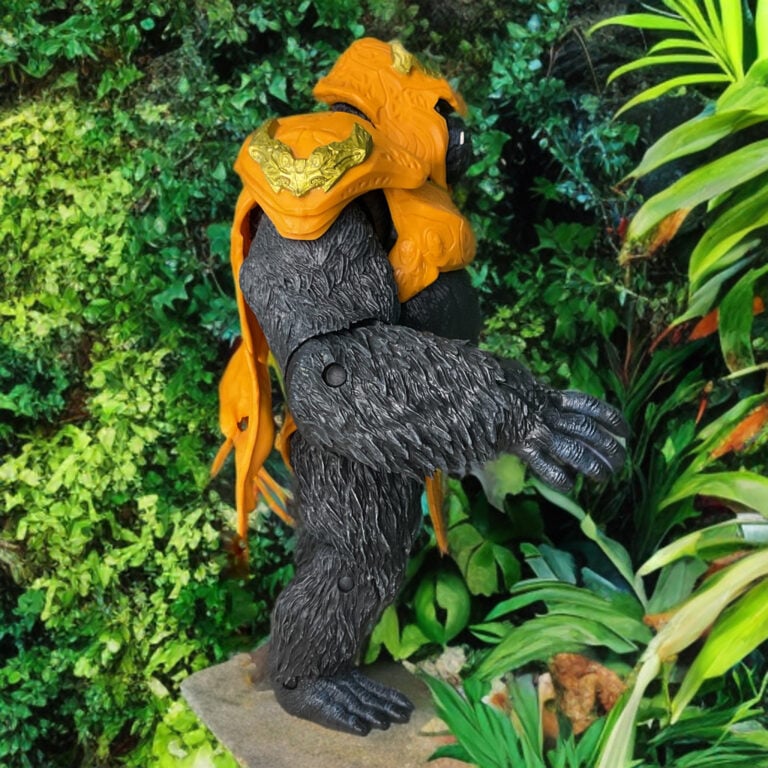
Translating a character with such a larger-than-life presence into plastic is no easy task, but the McFarlane Toys Page Punchers Gorilla Grodd figure succeeds wildly. Classified within McFarlane’s oversized “Megafig” scale to match the standard seven-inch DC Multiverse lineup, the figure captures the imposing silhouette that collectors expect from the telepathic warlord.
| Feature / Spec | Details & Dimensions | Collector Pros & Cons |
|---|---|---|
| Scale / Class | Megafig Scale (approx. 8–9 inches tall) | Pro: Massively imposing silhouette that looks intimidating next to standard 7" scale figures. |
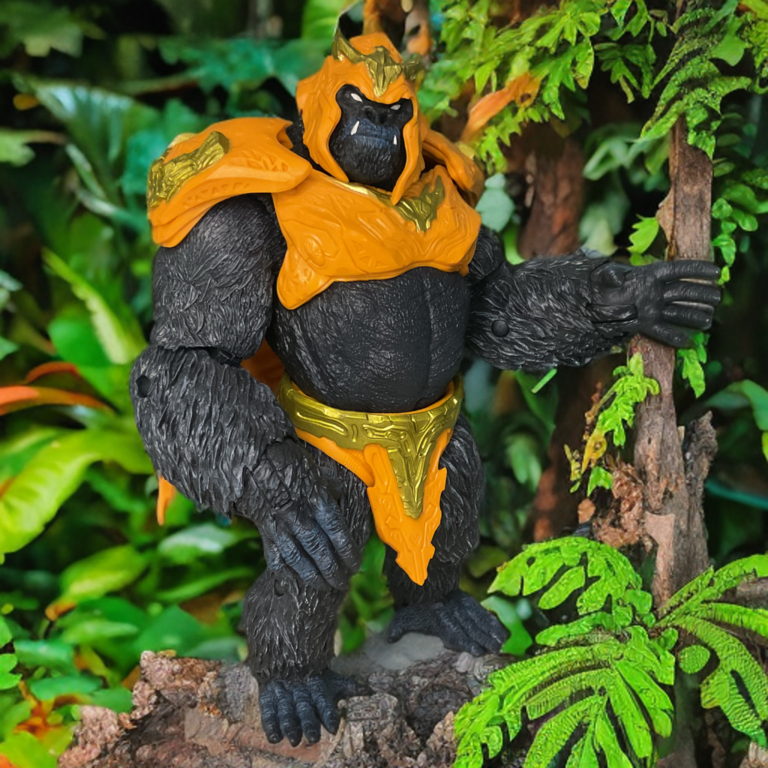
| Articulation | Ultra Articulation (Up to 22 moving parts) | Con: Bulkier design limits full range of leg movement and deep hip hinges. |
| Sculpt & Paint | Comic-accurate armor detailing | Pro/Con: Excellent physical armor texturing, but would benefit from a darker black wash to pop the colors. |
| Included Media | Exclusive Flash Comic & Art Card | Pro: Great value-add; couples the toy directly with its specific narrative source material. |
Standing between eight and nine inches tall, the physical sculpt strikes a great balance between realistic coarse fur texturing and high-tech simian armor. While the paint job is solid out of the box, customization enthusiasts will notice that a dark black acrylic wash would make the physical detail in his armor pop much more effectively.
Engineered with McFarlane’s Ultra Articulation system offering up to 22 points of movement, the figure allows for dynamic posing—whether you want Grodd hunkered down preparing a psychic assault or charging forward into battle. However, due to his sheer muscle mass and armor plates, leg mobility and deep hip stances are somewhat restricted.
The inclusion of an exclusive tie-in comic book and character art card fulfills the core promise of the Page Punchers line, connecting the physical collectible directly to its narrative roots. For Flash fans, DC collectors, and enthusiasts of legendary comic book villains, this figure stands as a fitting, heavyweight tribute to one of the Scarlet Speedster’s most dangerous foes.
While Gorilla Grodd brings sheer telepathic brute force to the table, he is far from the only threat lurking in the Legion of Doom. Readers looking to explore other cerebral heavies should dive into the sinister tactics of Brainiac and the dark psychology behind the Collector of Worlds. For action figure enthusiasts hunting down rare classic collectibles, don't miss our breakdown of why the DC Universe Classics Toyman figure is a total dream acquisition. And if you prefer cosmic terror alongside Grodd's psionic might, check out why the DC Multiverse Sinestro Corps War Sinestro figure remains an absolute must-have piece for any DC display.
Final Verdict: Why Grodd Remains King of the Jungle
From his 1959 Silver Age debut to modern comic runs, screen adaptations, and high-end action figures, Gorilla Grodd has proven that a fantastic villain concept never goes out of style. He endures because he is the total package: an unforgettable visual, a terrifying psionic heavyweight, and a deeply arrogant philosophical foil to Barry Allen’s optimistic heroism.
Whether you are diving into his decades of comic lore, watching him command the Legion of Doom on screen, or adding McFarlane’s impressive Megafig to your display shelf, Grodd commands immediate respect. He isn’t just one of the Scarlet Speedster’s oldest enemies—he is a timeless pillar of the DC Universe and a masterclass in comic book villainy.
Media Appearances & Resource Links
Explore detailed background lore, comic history, and official media entries for Gorilla Grodd across trusted archives:
- Comic History Wikipedia – Gorilla Grodd Overview & Publication History ↗
- Official DC DC Comics – Official Gorilla Grodd Character Hub ↗
- Comic Database DC Database (Fandom) – Prime Earth & Mainstream Comic Chronology ↗
- Arrowverse Arrowverse Wiki (Fandom) – Live-Action CW 'The Flash' Grodd Profile ↗
- DCAU History DC Database (Fandom) – Animated Universe (Justice League / JLU) ↗
- Video Games Injustice Wiki (Fandom) – Injustice 2 Moveset & Lore Overview ↗
- Classic Animation Hanna-Barbera Wiki (Fandom) – Challenge of the Super Friends (1978) ↗
- Lore Archive Wikipedia – Gorilla City Lore & Concept Background ↗
 English
  Deutsch
  Français
  Português do Brasil
  日本語
日本語  Español
  English (Australia)