

Hawk’s Hair-Raising Promotion: The Evolution of a G.I. Joe Icon
In the wild world of G.I. Joe: A Real American Hero, where plastic heroes battle Cobra with more explosions than a fireworks factory, even the top brass can’t escape a mid-career glow-up. Meet Colonel Clayton “Hawk” Abernathy—leader of the Joes from day one. He started the series as a crisp, blonde-haired commander in the 1982 toys and Marvel comics. Fast-forward a few years, and poof: he’s General Hawk, full-on brunette boss in the cartoons and later figures. (And that “long hand” bit? Probably a sneaky voice-to-text gremlin for “blond hair”—or maybe an obscure straight-arm figure quirk with those early thumb sculpts. Either way, we’re rolling with the real head-scratcher here.) It’s not a battlefield injury; it’s classic 80s toy marketing magic. Let’s break it down with the flair it deserves.
Early Days: The Blonde Colonel Takes Charge
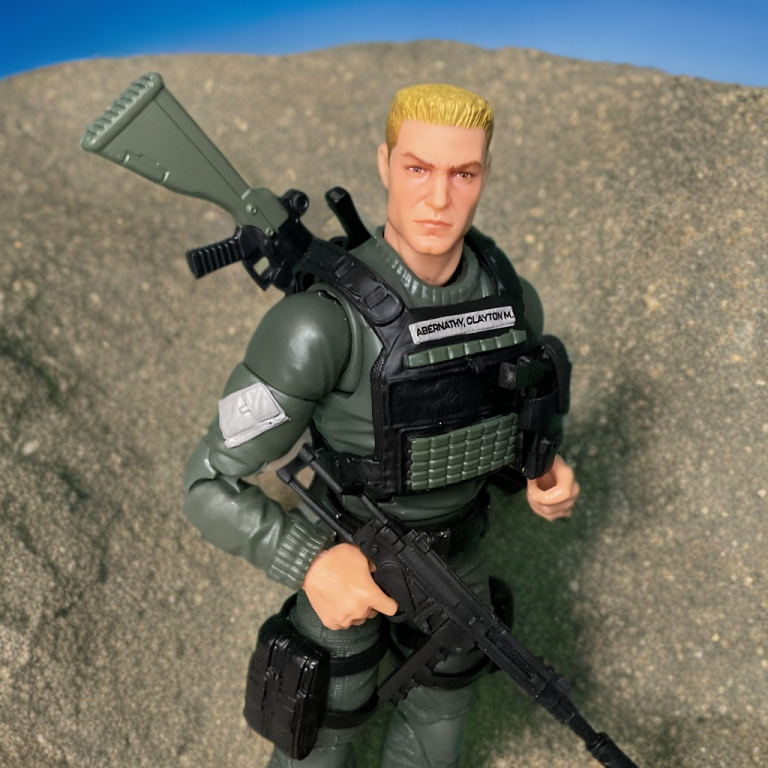
Hawk debuted in 1982 as one of the original 13 Joes—a no-nonsense West Point grad with flowing golden locks (well, as flowing as a 3.75-inch figure’s hair gets). In the Marvel comics penned by Larry Hama, he was the field leader, barking orders while looking suspiciously like a beach volleyball pro who wandered into the Pentagon.
Hawk bursts onto the scene in G.I. Joe #1 (June 1982) as a Colonel and field commander under General Lawrence Flagg. A West Point grad from a wealthy family, he’s already recruiting legends like Stalker and Snake Eyes before the series kicks off. Early stories show him leading from the front: undercover ops with Grunt against militia types, taking a point-blank shot from Cobra Commander (and surviving thanks to a vest), and barking orders while dodging lasers. Visually, he’s depicted with classic blonde hair—matching his original 1982 toy figure. He earns instant respect by mixing it up personally, not just pushing pins on a map. This era cements him as the approachable, action-oriented boss of the original 13 Joes. Kids loved him, but then came… Duke. Both blonde. Both heroic jawlines. Cue the confusion in the ranks (and on the page).
The Big Promotion: Brunette General Mode Activated
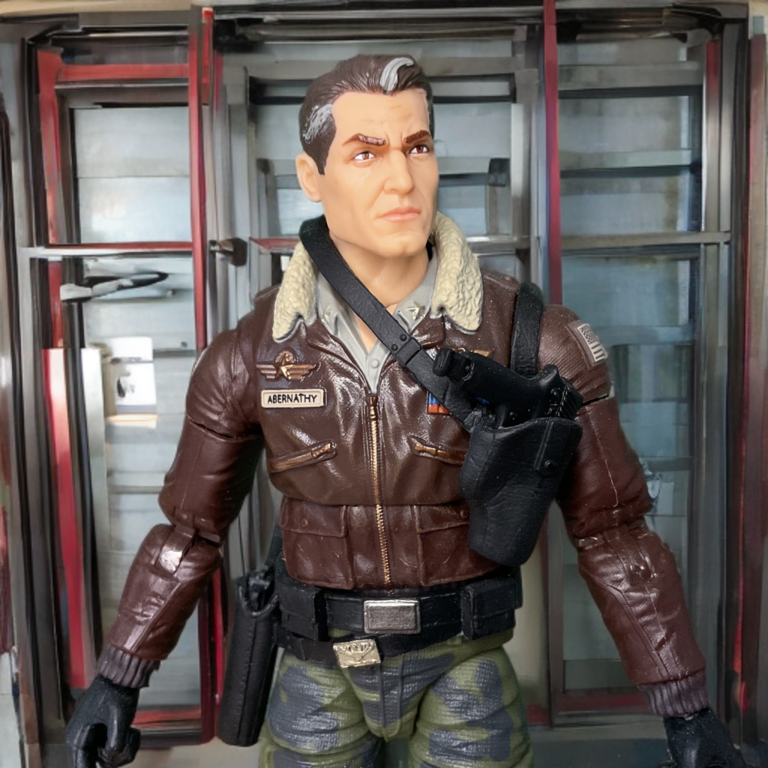
By 1986, Hawk leveled up to Brigadier General. Around issue #45 of the comics, real leadership changes hit. After Flagg’s death, Hawk steps up but delegates field ops to the newly introduced Duke. Then General Austin’s heart attack paves the way: Hawk gets bumped to Brigadier General, taking full operational command. New figure, new uniform, new hair color: rich brunette.
This is when he truly became the leader in the Sunbow animated series (think Arise, Serpentor, Arise! miniseries onward). No more Colonel confusion—he was the big cheese, coordinating from the command center while Duke handled the frontline flair. The cartoon locked it in, and later toys followed suit. Suddenly, Hawk looked like he’d traded his surfboard for a strategy briefing. He oversees big arcs like the invasion of Cobra-controlled Springfield, accepts blame when it flops, and survives a B.A.T. attack on The Pit that claims other brass. General Hollingsworth reinstates the team and backs Hawk fully.
The Real Reason: Duke’s Doppelgänger Dilemma
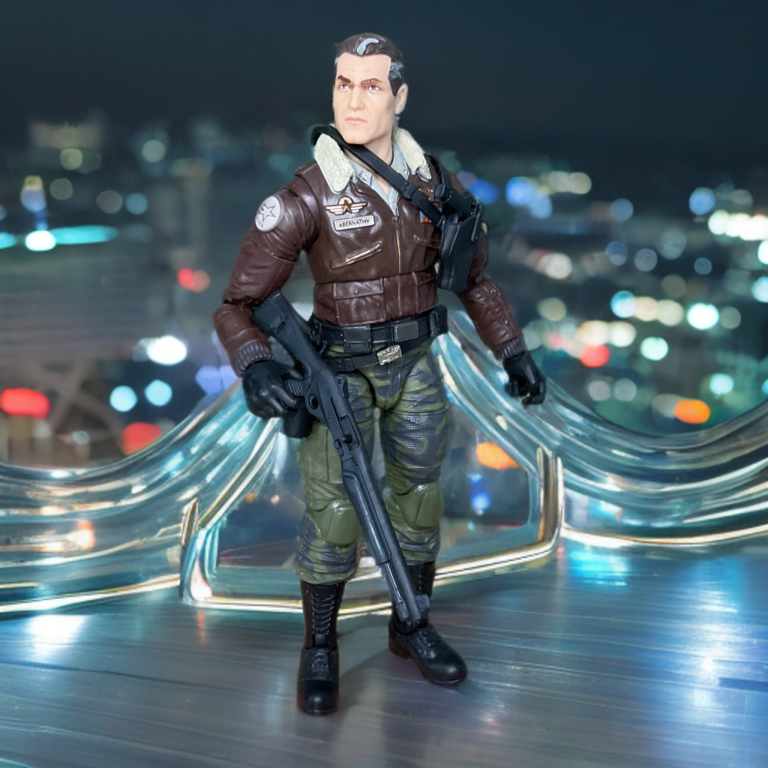
Blame it on poor Duke. Introduced in 1983 with his own blonde buzzcut, the two Joes were visual twins—great for buddy-cop vibes, terrible for little viewers trying to tell who’s who during a firefight. Hasbro and the cartoon team fixed it the easy way: Hawk hit the (imaginary) salon for a brunette makeover. It kept the characters distinct, avoided kid meltdowns (“Wait, which one’s the boss?!”), and gave Hawk that distinguished “I’ve seen some stuff” look as the team’s elder statesman. (Bonus: later versions even added gray streaks for extra gravitas.)
As the Marvel run progressed into the late 80s and toward #155 in 1994, Hawk’s artistic depiction subtly shifted. His hair darkened to align with the 1986 General Hawk toy and cartoon redesign. Comics artists eventually nodded to this, darkening his hair post-1988 while some purist fans repainted figures blonde.
Two Hawks, One Joe: The Media Showdown
The G.I. Joe universe treats Hawk like two different officers who swapped briefing notes. The comics deliver a grounded, battle-tested leader; the cartoon parks him in the command center as a wise, no-nonsense General.
| Feature | Marvel Comics (Larry Hama) | Sunbow Animated Series |
| Hair Color | Blonde (later darkening/graying) | Dark Brunette / Black |
| Rank | Frontline Colonel to Strategic General | Arrives as full General |
| Vibe | Gritty, pragmatic survivor | Stoic, “dependable dad” energy |
| Activity | Fistfights with Destro; takes real bullets | Strategic wisdom; presidential disguises |
Comics Hawk gets deeper arcs thanks to Hama’s grounded writing. He deals with corruption (even joining The Jugglers later), shows vulnerability, and leads through moral gray areas like real bullets, wounds, and deaths. The Sunbow version keeps him more one-note and kid-friendly: authoritative, level-headed, and never rattled, with a voice (Ed Gilbert) that screams reliability. He’s the steady hand preventing cartoon chaos from derailing the Joes while Cobra Commander bumbles.
When Marketing Dyed the Leader’s Hair
Picture this—Hawk’s sitting in a Joe staff meeting: “Gentlemen, Cobra’s attacking. Also, marketing says my hair makes me look too much like the new guy. Pass the hair dye and a promotion.”
It’s peak 80s toy logic: if the plastic doesn’t pop on TV, repaint it. Hawk’s dual lives boil down to audience and medium. The cartoon needed clear visuals for tiny viewers (Blonde Duke + Blonde Hawk = Chaos), so they gave him a promotion and a dye job, turning him into the cartoon dad who delegates while Duke grabs the spotlight. In the comics, he’s the guy you’d follow into a firefight; in the toon, he’s the guy who’d approve the mission from a safe distance with coffee. Duke stole the cartoon thunder, but fans know the truth: Hawk was always the original Joe in charge.
A Legacy Worth Dyeing For
From blonde Colonel to brunette General, Hawk’s transformation wasn’t about vanity—it was strategic brilliance wrapped in a toy aisle necessity. His comic journey mirrors the franchise itself: adaptive, resilient, and endlessly debatable. Marvel’s 155-issue run built him as the quiet backbone, influencing later Devil’s Due, IDW, and Skybound continuities where Hama often returned.
Whether he’s rocking the original locks or the updated style, Hawk remains the unflappable heart of G.I. Joe. He didn’t just climb the ranks; he underwent a covert operation on his follicles to stay relevant. He proves leaders don’t just age; they rebrand. Yo Joe… and pass the styling gel.
Speaking of frontline heavy-hitters and major ranks, the modern line has given similar star treatment to other classic icons. Before diving into Hawk’s ultimate legacy, make sure to check out the explosive character breakdowns and modern updates for the heavy metal rocker in the G.I. Joe Classified Series Iron Grenadier Metal-Head Review, explore the muscle behind Cobra Command with the G.I. Joe Classified Big Boa Biography and Review, and see how the team braves the frozen tundra in the G.I. Joe Classified Series Snake Eyes Polar Bear Set Review.


 English
  Deutsch
  Français
  Português do Brasil
  日本語
日本語  Español
  English (Australia)