

M.O.D.O.K. History: The Complete George Tarleton Origin Guide
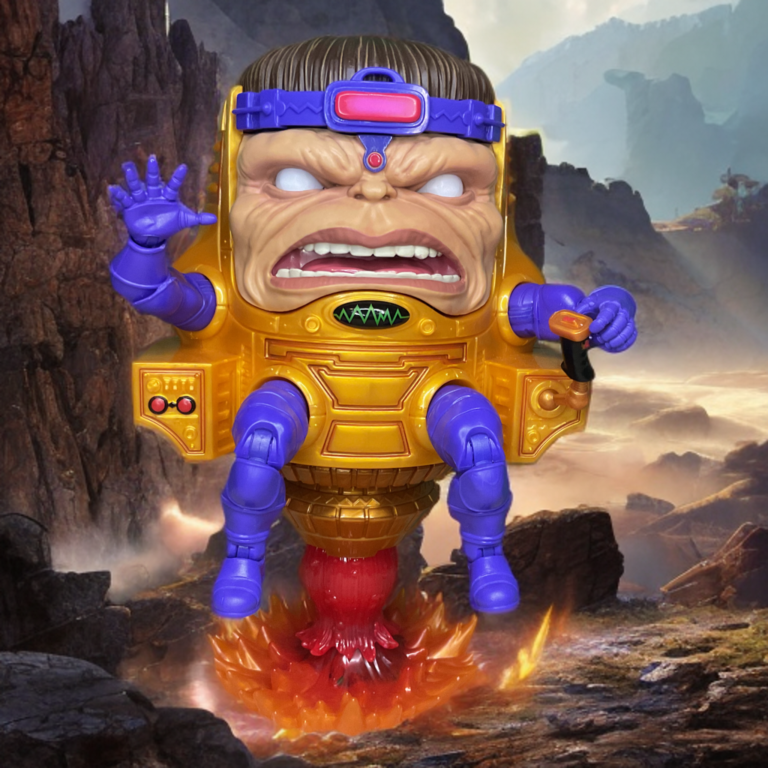
M.O.D.O.K. (Mental Organism Designed Only for Killing) stands as one of Marvel Comics’ most visually jarring and enduring personifications of scientific hubris. Created by the legendary duo of Stan Lee and Jack Kirby, he burst onto the scene in the pages of Tales of Suspense #93 (September 1967) as a literal “big bad”—a villain whose physical grotesque-ness was matched only by his cognitive capacity.
The man who would become a monster was originally George Tarleton, a low-level technician for the subversive organization A.I.M. (Advanced Idea Mechanics). In their quest to unlock the secrets of the reality-warping Cosmic Cube, A.I.M.’s “Scientist Supreme” subjected Tarleton to horrific mutagenic experiments. The goal was to create a living computer—a “Mental Organism Designed Only for Computing” (M.O.D.O.C.)—but the experiment succeeded too well. Tarleton’s brain expanded to a localized super-genius level, granting him psionic blasts and technopathic control, but at a terrible cost: his body atrophied into a vestigial state, unable to support the weight of his massive cranium.
Subject: George Tarleton // M.O.D.O.K.
Forced into the iconic Doomsday Chair—a specialized hoverchair that serves as both his life-support system and a weaponized platform—he didn’t remain a tool for long. Fueled by a newfound megalomania and deep-seated resentment of “physically perfect” humans, he murdered his creators, seized the leadership of A.I.M., and rechristened himself with a “K” for Killing.
His narrative arc is a unique blend of body horror, Shakespearean tragedy, and, in more recent years, a biting sense of dark humor. This biography tracks his complete Earth-616 comic canon, tracing his evolution from a Silver Age menace to his modern identity as a fractured, multi-layered threat, followed by a look at his significant impact across Marvel’s animated history.
The Genesis of George Tarleton
The “true” history of George Tarleton is as fractured as the mind of the creature he became. Over decades of Marvel continuity, his pre-transformation life has been rewritten and expanded, creating distinct—and often conflicting—narratives of the man behind the mask. While early accounts placed Tarleton in Erie, Pennsylvania, as a capable but unremarkable A.I.M. technician, later retcons suggested a more tactical background. In these versions, he was portrayed as a brilliant U.S. Army weapons researcher working with monstrous samples from the region of Sin-Cong.
The most significant modern shift, however, arrived via his father, Alvin Tarleton (A.I.M. Agent 001). This version depicts George not as a scientist, but as an inept underachiever and a janitor who was only hired through his father’s high-ranking connections. This inherited trauma suggests that George was never a willing participant in his own evolution, but rather a victim of familial and organizational hubris.
| Source/Account | Pre-Mutation Status | Location/Background |
| Original Canon | Skilled A.I.M. Technician | Erie, Pennsylvania |
| Army Retcon | Weapons Researcher | Sin-Cong / U.S. Military |
| Modern Retcon | Unintelligent Janitor | A.I.M. (Hired by father Alvin) |
Regardless of his prior status, Tarleton’s fate was sealed when A.I.M.’s Scientist Supreme, Lyle Getz, launched Project M.O.D.O.C. (Mental Organism Designed Only for Computing). A.I.M. required a “living computer” with the sheer processing power necessary to analyze the Cosmic Cube—a reality-warping artifact that defied standard calculation. Tarleton was forcibly strapped into the Alteration Chamber and subjected to mutagenic bombardment that shattered his humanity.
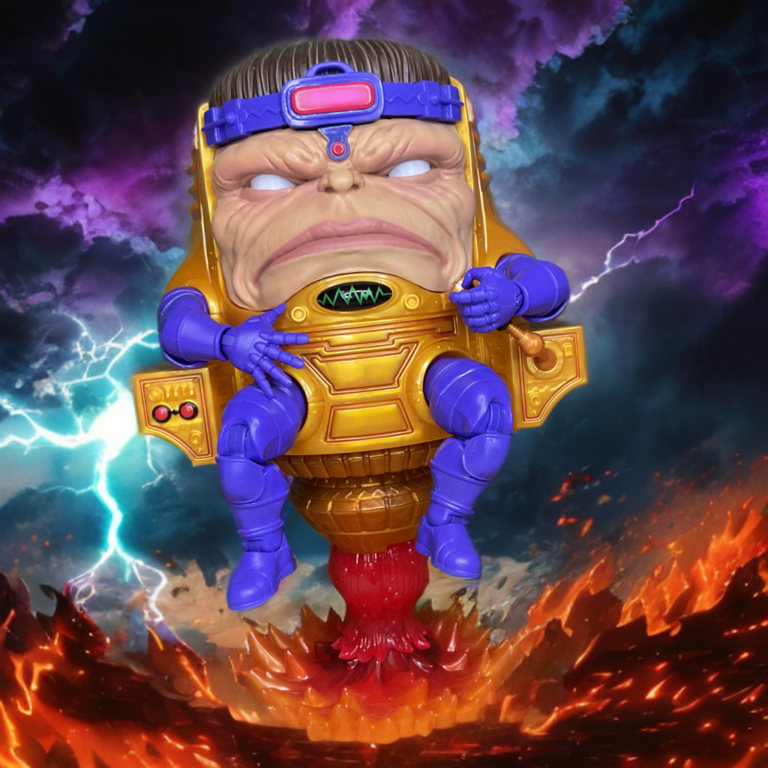
The results were both a triumph and a horror. His brain expanded exponentially, granting him a super-genius IQ and the ability to calculate probabilities like a quantum computer, while simultaneously unlocking the power to generate devastating “mind-blasts” and psionic force fields. However, this cognitive explosion came at a terrible physical cost; his cranium grew to such a massive size that his natural body atrophied into a vestigial appendage. To survive, he was permanently integrated into the Doomsday Chair, a specialized hover-unit providing life support, flight, and an arsenal of integrated weaponry.
The scientists of A.I.M. made a fatal error in their calculations: they assumed a mind of such vast intelligence would remain subservient. Instead, Tarleton’s newfound intellect bred an immediate god complex. Realizing he was far superior to the men who created him, he used his burgeoning psionic powers to slaughter Lyle Getz and the other researchers in a cold-blooded coup. In a final act of defiance against his original programming, he rechristened himself M.O.D.O.K.—replacing “Computing” with “Killing” to signal his transition from a tool of science to a conqueror of worlds.
The Evolution of a Legend: Navigating M.O.D.O.K.’s History
While the core image of George Tarleton—an A.I.M. employee forcibly mutated into a psionic living computer—has remained the bedrock of the character since Tales of Suspense #93, Marvel has spent decades layering his history with complex retcons. These changes have transitioned M.O.D.O.K. from a straightforward Silver Age monster into a figure defined by inherited trauma and existential instability.
Personal Ties and Early Adjustments
Through the 1970s and 2000s, writers began humanizing the “Mental Organism” by exploring his failed human connections. We learned of his brief, awkward romantic history with fellow scientist (and future Scientist Supreme) Monica Rappaccini. More significantly, it was revealed that Tarleton had abandoned a pregnant partner prior to his mutation, leading to the birth of his son, Sean Madigan. These additions were crucial; they transformed M.O.D.O.K. from a sterile A.I.M. asset into a man with a messy, regrettable past, deepening his resentment toward the “perfect” lives of the heroes he hunted.
The Alvin Tarleton Revelation: Paternal Abuse and Forced Evolution
The most seismic shift in M.O.D.O.K.’s history arrived in the 2020–2021 miniseries M.O.D.O.K.: Head Games. This story introduced Alvin Tarleton (A.I.M. Agent 001), George’s father and a founding member of the organization. This retcon reframed the entire M.O.D.O.C. experiment not just as a workplace accident, but as an act of paternal cruelty.
Alvin viewed his son as an inept underachiever, ultimately forcing George into the alteration chamber against his will to serve as a disposable tool for A.I.M.’s advancement. This layer of paternal abuse explains M.O.D.O.K.’s frantic need for control and his explosive megalomania—he is effectively a victim of familial hubris who murdered his “workplace fathers” only to become the very thing he hated.
| Retcon Element | Impact on Character Lore | Primary Source |
| Paternal Abuse | Reframes mutation as forced by his father, Alvin. | M.O.D.O.K.: Head Games |
| Familial Legacy | Introduces son Sean Madigan and daughter Melissa. | Ms. Marvel vol. 2 / Head Games |
| Memory Manipulation | Suggests “family visions” were programmed by the JOD1E AI. | M.O.D.O.K.: Head Games |
| Romantic History | Establishes a competitive past with Monica Rappaccini. | Ms. Marvel vol. 2 |
The Mantle Shifts: Depowerment and M.O.D.O.K. Superior
In the modern era, the identity of M.O.D.O.K. became even more complex during the World War Hulks event. Amadeus Cho used reality-warping abilities to strip the original George Tarleton of his powers, reverting him to a fragile, traumatized human state. While the original Tarleton sought therapy at Gamma Base, a clone known as M.O.D.O.K. Superior was activated to take his place.
Superior possesses a more unhinged, often comedic personality, yet he remains plagued by the same implanted memories and psychological fractures as the original. This shift allows Marvel to explore two paths: the tragic human wreckage of George Tarleton and the escalating, absurd villainy of his clone successor.
Why the Retcons Matter
These additive changes have allowed M.O.D.O.K. to survive the transition from the 1960s to the 2020s. By introducing elements like “the Anomaly” and meta-narrative hallucinations, Marvel has turned his grotesque physical form into a metaphor for a fractured psyche. He is no longer just a “villain of the month”; he is a symbol of how ambition, resentment, and inherited dysfunction can create a monster. For readers looking to dive into this depth, M.O.D.O.K.: Head Games stands as the definitive modern text, blending the horror of his 1967 origin with the heartbreaking reality of his family life.
The Reign of the Mental Organism: A Chronological History
M.O.D.O.K.’s tenure in the Marvel Universe is defined by a cycle of absolute dominance followed by crushing defeat. His journey across Earth-616 is not just a series of fights, but an evolution of a mind that grew too large for the world that created it.
The Silver Age: Grudges and Gamma (1960s–1970s)
Following his explosive debut in Tales of Suspense #93–94, M.O.D.O.K. quickly became the primary architect of A.I.M.’s terror. His early campaigns were fueled by a specific, bitter hatred for “physical perfection,” leading to a legendary obsession with Captain America. Throughout the late 60s, he deployed a terrifying array of technological horrors against the Star-Spangled Avenger, including cyborg assassins and even a macabre android duplicate of Bucky Barnes.
His ambitions soon expanded, drawing the ire of Namor and Doctor Doom in a three-way struggle for the Cosmic Cube (Sub-Mariner #47–49). However, his most infamous act of cruelty occurred during his feud with the Hulk. In a twisted attempt to destroy the Jade Giant, M.O.D.O.K. gamma-irradiated Betty Ross, transforming her into the monstrous Harpy. This era established him as a master manipulator who viewed biological life as mere raw material for his experiments.
Downfall and the Serpent’s Strike (1970s–1980s)
By the 1980s, M.O.D.O.K.’s ego began to erode his power base. While he continued to battle Iron Man and Ms. Marvel, his preoccupation with personal vendettas alienated the scientific purists within A.I.M. This internal friction turned fatal in Captain America #313 (1986). Frustrated by his leadership, A.I.M. hired the Serpent Society to assassinate him. Death, however, was merely a setback; his corpse was weaponized shortly thereafter in a ghoulish plot against Tony Stark, proving that even in death, M.O.D.O.K.’s influence was a blight on the Marvel Universe.
Resurrections and the Heist Era (1990s–2000s)
M.O.D.O.K. was pulled back into the land of the living during the “Taking A.I.M.” crossover, revived via a combination of Cosmic Cube technology and dark sacrifice. The 2000s saw a shift in his portrayal, blending his classic megalomania with a desperate, often humorous struggle to maintain relevance.
This era introduced deep personal stakes, including a violent reunion with his estranged son, Sean Madigan, which ended with M.O.D.O.K. being ejected into orbit after a “DNA bomb” betrayal. Perhaps his most iconic modern turn occurred in M.O.D.O.K.’s 11, where an impoverished and desperate Tarleton assembled a heist team of B-list villains to outsmart his rival, Monica Rappaccini, and reclaim his fortune.
The Modern Age: Clones and Superiority (2010s–Present)
The status quo was permanently altered during the World War Hulks event. Amadeus Cho used reality-warping math to “re-solve” Tarleton, stripping away his mutations and leaving him a powerless human. While the original George Tarleton entered therapy at Gamma Base to process decades of trauma, a new entity emerged: M.O.D.O.K. Superior.
This clone represents a more unhinged, digitally-integrated version of the character. While the original human Tarleton remains a depowered figure in the background, Superior continues the legacy of A.I.M., clashing with the X-Men, Gwenpool, and the Avengers. Most recently, the Head Games arc and current clashes with Iron Man have seen him grappling with his father’s legacy (Alvin Tarleton) and a deteriorating grip on reality.
| Era/Year | Key Issues | Story Summary & Key Events | Opponents/Allies | Significance/Notes |
|---|---|---|---|---|
| Debut & Early Years (1967–1970s) | Tales of Suspense #93–94 (1967) | Mysterious A.I.M. leader introduced (voice in #93); full visual debut in #94. Battles over Sharon Carter and Cosmic Cube; survives betrayal and submarine self-destruct via psionic shields and loyalists. Origin flashbacks begin. | Captain America, Sharon Carter (Agent 13) | Must-read debut. Establishes Doomsday Chair, grudge against “perfect” heroes, and A.I.M. leadership. |
| Captain America #117, 119–120, 124, 132–133 (1969–1971) | Recurring Cap foe. Deploys cyborg assassins, android Bucky duplicate, giant robots (e.g., Bulldozer). Flashbacks detail pre-mutation life and A.I.M. experiments. | Captain America, Falcon (debut team-up) | Expands tactics, technology, and personal vendettas. #132–133 key for early origin details. | |
| Sub-Mariner #47–49 (1972) | Clashes over Cosmic Cube; teams briefly with Doctor Doom. Artifact explodes, destroying base. | Namor, Doctor Doom | Early high-stakes artifact plot; shows alliances of convenience. | |
| Incredible Hulk #167–169 (1973) (extend to #170) | Gamma-irradiates Betty Ross into the Harpy to destroy Hulk; pilots giant robotic body. Sky-Island destroyed. | Hulk, Betty Ross (Harpy) | Major Hulk arc. Highlights gamma experimentation and physical limitations. | |
| Iron Man #74–75 (1975) | “War of the Super-Villains” crossover; fights Iron Man and is seemingly destroyed. | Iron Man | Early team-up villain event; tests ego vs. science priority. | |
| Ms. Marvel #5, 7, 9–10 (1977) & Iron Man Annual #4 (1977) | Brainwashing and power amplification schemes; brief team-up with Deathbird. | Ms. Marvel, Iron Man | Introduces manipulation of heroes; expands psionic threat level. | |
| 1980s: Assassination & Ghoulish Returns | Marvel Team-Up #104, Marvel Two-in-One #81–82 & #96 (1981–1983) | Dinosaur thefts, Virus X plots, villain cameos (including vs. Thing). | Thing, various heroes | Shows growing isolation; A.I.M. frustration with personal vendettas. |
| Incredible Hulk #287–290 (1983) | Creates Ms. M.O.D.O.K. (Dr. Katherine Waynesboro) as “bride”; allies then betrays Abomination and Thunderbolt Ross. | Hulk, Abomination, Thunderbolt Ross | Key character moment. Explores desire for companionship and betrayal. | |
| Captain America #313 (1986) | Assassinated by Serpent Society on A.I.M.’s orders—first major “death.” | Serpent Society, A.I.M. | Highlights internal A.I.M. rebellion against his ego-driven leadership. | |
| Iron Man #205 (1986) | Corpse weaponized in gruesome return/plot. | Iron Man | Ghoulish resurrection tease; reinforces body horror theme. | |
| 1990s–Early 2000s: Resurrections, Crossovers & Power Plays | Avengers #386–388 & Captain America #440–441 (1995) | “Taking A.I.M.” event; revived via Cosmic Cube tech and sacrifices; battles heroes. | Avengers, Defenders | Full resurrection; re-establishes as major threat post-assassination. |
| Iron Man/Captain America Annual 1998, Wolverine #142–143, Defenders vol. 2 #9–10 (1998–2001) | Psychic “utopia” schemes, Skrull plots, world-conquering with Headmen. | Wolverine, Defenders, various | Expands psychic ambitions and team-ups with obscure villains. | |
| Captain America and the Falcon #7–12 & Cable & Deadpool #11 (2004–2005) | Mind-swaps, digital imprisonment; clashes with Deadpool. | Captain America, Falcon, Deadpool | Explores identity and technological vulnerability. | |
| Humorous cameos: GLX-Mas Special #1, Marvel Holiday Special 2006, X-Men #200 (2006–2007) | Light-hearted or meta appearances amid heavier arcs. | Various (cameo-heavy) | Shows shift toward comedic potential; family ties (son Sean Madigan) emerge. | |
| 2010s: Fall of the Hulks, Depowerment & Miniseries Spotlight | Super-Villain Team-Up: M.O.D.O.K.’s 11 #1–5 (2008) | Heist team-up; outsmarts traitors to steal/sell Hypernova power source. | His own team (villain ensemble) | Must-read comedic solo spotlight. Classic villain teamwork with dark humor. |
| Ms. Marvel vol. 2 #14–17 (2007 spillover) & later Unbeatable Squirrel Girl cameos | Orbit ejection after DNA bomb betrayal; lighter beats. | Ms. Marvel, Squirrel Girl | Personal/family fallout; shows vulnerability and humor. | |
| M.O.D.O.K.: Reign Delay #1 (2009) & Fantastic Four in ¡Ataque del M.O.D.O.K.! #1 (2010) | Absurd one-shots (high school reunion, data vortex trap). | Fantastic Four, self-absurdity | Emphasizes campy, ridiculous side of the character. | |
| Fall of the Hulks / World War Hulks event (Incredible Hulk #600–610, Hulk vol. 2 #18–28, Fall of the Hulks: M.O.D.O.K. #1, etc., 2009–2010) | Allies with the Leader; Amadeus Cho depowers original Tarleton to human form. Clone (M.O.D.O.K. Superior) rises. | Hulk, Leader, Amadeus Cho | Pivotal turning point. Depowerment shifts mantle to clones; therapy at Gamma Base for original. | |
| M.O.D.O.K.: Head Games #1–4 (2020–2021) | Psyche-exploring miniseries; hallucinations of suburban family (Jodie, Lou, Melissa); confronts father Alvin Tarleton; retcons and family trauma revealed. | Monica Rappaccini, Gwenpool (issue #3), Iron Man (team-up) | Must-read modern depth. Ties into Hulu animated series; adds paternal abuse and implanted memories. | |
| 2020s–Present: Cameos, Infinity Comics & Ongoing Threats (Up to 2026) | The Marvels #3 (2021), Marvel #6 (2020), Who Is…? M.O.D.O.K. Infinity Comic #1 (2023) | Flashbacks to pre-mutation Army days; quick info-dumps and cameos. | Various | Reinforces origin elements; lighter modern context. |
| X-Men (2021–present) (specific issues e.g., #8–12 arcs noted in guides) | A.I.M. tech schemes or mutant-related crossovers. | X-Men | Cameo-heavy; ties into Krakoa-era or post-Krakoa events. | |
| Infinity Comics: Marvel Meow #33 (2022), It’s Jeff Infinity Comic (2021–present) | Fun, meme-adjacent or animal-themed cameos. | Light-hearted contexts | Leans into absurd/humorous modern portrayal. | |
| One World Under Doom (2025–present) (e.g., #3) | Involvement in Doom-led global domination plots; appears with Masters of Evil or similar. | Doctor Doom, Avengers | Event-scale threat; A.I.M. elements active under variants. | |
| Iron Man (2026–present) (e.g., #2–3) | Battles with Tony Stark; A.I.M./Madame Masque ties; date-night chaos amid fights. | Iron Man, Citizen V | Recent high-profile clashes; explores ongoing A.I.M. schemes in current continuity. |
Additional Notes on the Table & Reading Guidance
- Total Appearances: Sources vary (110–130+ indexed, including minor cameos, flashbacks, and handbooks). The count continues to grow with ongoing titles like Iron Man and One World Under Doom.
- Clones & Variants: Post-depowerment, focus often shifts to M.O.D.O.K. Superior (more unhinged personality) while original Tarleton remains human and in therapy.
- Themes Across Eras: Early stories emphasize body horror and raw power; mid-period isolation and betrayal; modern entries add dark comedy, family trauma, and meta humor.
- How to Read: Start with Tales of Suspense #93–94 and Captain America #132–133 for foundations. Follow with Hulk #167–169 and #287–290, then M.O.D.O.K.’s 11 for fun, Head Games for depth, and current runs for freshness. Collections like M.O.D.O.K.: Head Games TPB or Captain America Epics help.
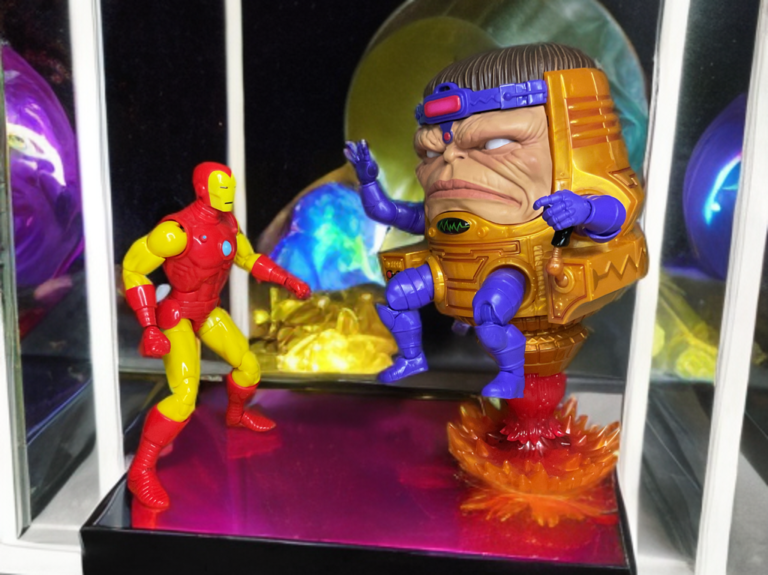
M.O.D.O.K.’s comic journey transforms him from a straight Silver Age menace into a tragicomic symbol of scientific hubris, resentment, and resilience. Whether leading A.I.M. coups or appearing in absurd cameos, his massive head and even larger ego ensure he (or his clones) remains a persistent, unforgettable presence in the Marvel Universe. For the absolute latest post-2026 developments, check ongoing series on Marvel Unlimited.
M.O.D.O.K. in Animated Series: A Complete Overview
M.O.D.O.K. (Mental Organism Designed Only for Killing) has been a recurring presence in Marvel animated television since the 1990s. His portrayals range from a serious, high-tech villain allied with the Mandarin to a comedic, often bumbling antagonist, and finally to the star of his own adult-oriented stop-motion sitcom. He typically retains his signature oversized head, atrophied body, floating Doomsday Chair, and psionic abilities, while voice actors bring varying degrees of megalomania and absurdity. Below is a breakdown of his major animated appearances, focusing on key series and episodes.
Iron Man: The Animated Series (1994–1996)
This is M.O.D.O.K.’s earliest and most prominent animated role. Voiced by Jim Cummings, he serves as a recurring antagonist and frequent ally (or reluctant partner) to the Mandarin. He operates as a high-ranking A.I.M. figure, often providing advanced technology, robots, and brainwashing schemes.
Notable episodes include:
- “Iron Man to the Second Power” (Parts 1 & 2, Season 1, Episodes 9–10): M.O.D.O.K. builds a robotic duplicate of Iron Man to frame Tony Stark, leading to a classic identity crisis storyline for Force Works.
- “Enemy Within, Enemy Without” (Season 1, Episode 6): M.O.D.O.K. tries to protect his ex-wife Alana Ulanova from the Mandarin’s plans, showing rare personal vulnerability while clashing with Iron Man.
- Other appearances span much of Season 1 and parts of Season 2, involving schemes with Ultimo, brainwashed allies like War Machine (Rhodey), and various tech heists or world-domination plots.
His design stays faithful to the comics, and he often banters with the Mandarin while plotting behind the scenes. This version emphasizes his genius-level intellect and grudge against “perfect” heroes like Iron Man.
Iron Man: Armored Adventures (2009–2012)
In this teen-oriented CGI series, M.O.D.O.K. is reimagined as M.O.D.O.C. (Mental Organism Designed Only for Conquest). Voiced by Lee Tockar, he appears as a creepy, more subservient A.I.M. creation with a similar grotesque design but adjusted for a younger audience. He features in several episodes across both seasons, often involved in corporate espionage, tech theft, and battles against teenage Tony Stark. Key episodes include Season 1 episodes around A.I.M. arcs (such as those involving brain data extraction or conquest schemes). His role is more tactical than leadership-focused compared to the 1994 version.
The Super Hero Squad Show (2009–2011)
Voiced by Tom Kenny (SpongeBob), this comedic, light-hearted series portrays M.O.D.O.K. as a humorous lackey, frequently teamed with the Abomination under Doctor Doom’s command. The “K” is jokingly said to stand for “Kicking-butt” in some contexts. He appears in numerous episodes across both seasons, including group villain antics, with heavy emphasis on slapstick and one-liners. Standout moments involve his floating chair mishaps and failed schemes alongside other Squadron villains. This version leans fully into campy humor.
The Avengers: Earth’s Mightiest Heroes (2010–2012)
M.O.D.O.K. returns in a more comic-accurate, menacing form. He appears in key Season 1 episodes, often tied to A.I.M. or villain team-ups (such as against the Avengers or in plots involving Simon Williams/Wonder Man). His design is trimmed but faithful, with brown eyes and classic psionic blasts. He serves as a strategic threat rather than pure comic relief.
Avengers Assemble (2013–2019)
He features as a recurring villain, at one point leading or joining the Cabal. His role involves high-stakes world-domination attempts, often clashing with the core Avengers team. The portrayal mixes his classic megalomania with action-oriented battles.
Other Notable Animated Appearances
- Phineas and Ferb: Mission Marvel (2013): A crossover special with a brief, fun cameo.
- Ultimate Spider-Man and various Disney XD shorts/Marvel Mash-Up segments: Occasional appearances or references, sometimes inspiring later projects.
- He has also popped up in tie-in games and specials tied to the above shows.
Marvel’s M.O.D.O.K. (Hulu, 2021)
The character’s biggest spotlight came with this adult stop-motion animated sitcom created by Jordan Blum and Patton Oswalt (who voices M.O.D.O.K.). All 10 episodes dropped on May 21, 2021.
The premise flips the script: M.O.D.O.K. is a struggling mid-life supervillain trying to conquer the world while dealing with family drama (wife Jodie, kids, etc.), corporate takeover of A.I.M. by a tech giant (GRUMBL), and endless failures. It’s irreverent, crass, and packed with Marvel Easter eggs, references to comics, and meta humor. The stop-motion style (by Stoopid Buddy Stoodios) is vibrant and grotesque.
Critics praised the animation, voice cast (including Aimee Garcia, Ben Schwartz, Melissa Fumero, and guest stars like Jon Hamm), and writing, though some noted its chaotic energy. The series was canceled after one season in 2022, ending on a cliffhanger. A tie-in comic, M.O.D.O.K.: Head Games, preceded the show. This version explores his insecurity, failed schemes, and domestic life in a way no other adaptation has.
Overall Legacy in Animation
From a straight-laced 1990s tech-terror in Iron Man to the pathetic-yet-endearing family man in the 2021 Hulu series, M.O.D.O.K.’s animated evolution mirrors his comic shift from pure menace to tragicomic figure. He rarely headlines but consistently steals scenes with his visual absurdity and over-the-top personality. No new major series appearances have been widely reported as of 2026, but his influence persists in Marvel’s animated output.
For the most faithful comic feel, start with the 1994 Iron Man episodes or Earth’s Mightiest Heroes. For pure laughs and heart, the Hulu M.O.D.O.K. is essential (TV-MA rating). Many episodes are available on Disney+, Hulu, or archive platforms depending on region. His animated history adds layers of humor and humanity to one of Marvel’s most visually unforgettable villains.
Conclusion
From a disposable A.I.M. lab tech to one of Marvel’s most iconic grotesque geniuses, M.O.D.O.K.’s history is a saga of transformation, betrayal, and relentless ambition. Though often defeated—sometimes fatally—his intellect and psionic might ensure he (or his clones) returns to plague heroes like Captain America, Iron Man, and the Hulk. His blend of horror and camp has made him a fan favorite, evolving from pure threat to a character capable of tragedy and even dark comedy. Whether leading A.I.M. in comics or scheming in animation, George Tarleton’s legacy as the Mental Organism Designed Only for Killing endures as a testament to the perils of unchecked scientific hubris in the Marvel Universe.
 English
  Deutsch
  Français
  Português do Brasil
  日本語
日本語  Español
  English (Australia)