

MOTU Origins Whiplash Action Figure Review & Retro Comparison
Picture this: It’s 1985, Saturday morning cartoons are the pinnacle of civilization, and on your TV screen, a green-skinned reptile-man with a tail like a medieval flail is thrashing about, plotting against a blond barbarian who somehow has the power of the universe at his fingertips. That’s Whiplash, the whip-smart (pun very much intended) underling to Skeletor, crashing the party in He-Man and the Masters of the Universe with all the subtlety of a serpent in a sword fight. Fast-forward four decades, and Mattel has dusted off this cold-blooded conniver for their Masters of the Universe Origins line, specifically the Cartoon Collection variant. This isn’t just a toy; it’s a time capsule wrapped in articulated plastic, designed to evoke the cel-shaded chaos of Filmation’s ’80s animation while sneaking in modern upgrades that make it play nicer than your average evil warrior.
The Masters of the Universe Origins Whiplash (Cartoon Collection) Action Figure—product code JBM95 for the obsessives among us—clocks in at a compact 5.5 inches tall, but don’t let the size fool you. This little lizard packs the punch of a full episode’s worth of villainy, complete with 16 points of articulation, a rocket launcher accessory straight out of the episode “The Betrayal of Stratos,” and even a mini-comic to remind you why Eternia needs saving every week. At $20 a pop, it’s priced like a Skeletor scheme: affordable enough to stockpile, devious enough to drain your wallet if you’re not careful. Suitable for ages 6 and up, though let’s be honest, it’s really for the grown-ups who remember when “By the power of Grayskull” was a battle cry, not a meme.
In this review, we’ll slither through Whiplash’s canonical corner of the MOTU universe—no fanfic detours, just the cold, hard facts from Filmation’s fever dream of a series. We’ll dissect the figure’s design, from its cartoon-accurate paint job to its swappable parts that let you Frankenstein your way to hybrid horrors. We’ll ponder how this reptilian rogue fits into the broader Origins ecosystem, compare it to its vintage vinyl ancestor, and ultimately decide if this Whiplash is the tail-end of brilliance or just another lash in the dark. Buckle up, Eternians; it’s time to crack the whip on nostalgia.
The Canonical Coil: Whiplash’s Slithery Saga in Filmation Lore
To appreciate the Origins Whiplash figure, you have to start at the source: the Filmation He-Man and the Masters of the Universe series, that gloriously over-the-top animated romp from 1983-1985 where good triumphed over evil with the aid of laser swords, flying unicorns, and enough moral lessons to fill a monastery. Whiplash wasn’t one of the A-listers like Beast Man or Trap Jaw—no, he slunk in as part of the toy line’s third wave in 1984, a reptilian riff on the classic evil henchman trope, designed by Mattel’s toy wizards to appeal to kids who thought dinosaurs and demons made a killer combo.
In the cartoon, voiced with a gravelly hiss by none other than John Erwin (the man behind He-Man himself, because why not multitask in voice acting?), Whiplash emerged as more than muscle; he was a schemer with scales, a cold-blooded calculator who could whip up trouble faster than Skeletor could monologue.
His debut? Episode 87, “The Return of Orko’s Uncle,” where he first lashes into Eternian affairs as Skeletor’s latest recruit, tail-swinging his way through a botched kidnapping plot with the enthusiasm of a gator at a picnic. But Whiplash wasn’t content to be cannon fodder. Oh no. By episode 94, “Trouble in Trolla” (airdate September 21, 1984), he’s graduated to main antagonist status, teleporting to Orko’s homeworld of Trolla in a bid to master its magic and bend the dimension to his will. Picture a snake in wizard school: Whiplash cons his way into learning Trollan spells, only to get out-magicked by He-Man and company in a climax that’s equal parts sorcery and slapstick. It’s here we see his sly side shine—crafty, ambitious, and just arrogant enough to think he can outfox a realm full of pointy-hatted pranksters. The episode establishes him as an independent operator, willing to ditch Skeletor for solo glory, a trait that sets him apart from the pack of yes-men populating Snake Mountain.
Then comes the crown jewel of his canon: episode 102, “The Betrayal of Stratos” (October 19, 1984), the very tale that inspires the figure’s rocket launcher accessory. In this one, Whiplash doesn’t just scheme; he builds an empire. Hailing from the shadowy Demon Island—a fog-shrouded hellhole teeming with bat-winged beasts and bubbling lava pits—he rallies an army of demonic minions to conquer Eternia. Under the thumb of Kraal, the red-skinned devil-lord of the Demon Zone (think Satan with a snake fetish), Whiplash opens a twice-yearly portal to the surface world, unleashing chaos with gadgets galore. That rocket launcher? It’s his pièce de résistance, a shoulder-mounted blaster that turns Stratos into an unwitting traitor via mind control. He-Man’s intervention snaps the spell, but not before Whiplash delivers lines like “Fools! The Demon Zone will swallow Eternia whole!” with the dramatic flair of a B-movie monster. This episode cements his status as a formidable foe: strong enough to lead a horde, smart enough to exploit alliances, and vicious enough to make you root for the heroes a little harder.
Whiplash’s arc doesn’t end there. In “To Save Skeletor” (episode 119, January 11, 1985), he flips the script entirely, limping to Castle Grayskull wounded by the demon Sh’Gora—a fiery fiend who’s turned on their mutual boss. For once, Whiplash plays the unlikely ally, begging He-Man for aid in a temporary truce that’s as awkward as a family reunion at a funeral. It’s a rare glimpse of vulnerability in a character otherwise defined by his predatory poise, showing that even scales can’t hide a soft underbelly when survival’s on the line. Throughout season two, he pops up in over a dozen episodes—lashing at the Heroic Warriors in “The Galactic Guardians” (episode 110), guarding the Ridge of Fire in “The Arena of Death” (episode 115), and even clashing with the Horde in crossovers like “Hordak: The Ruthless Leader’s Revenge!” (She-Ra episode tie-in). He’s no one-off; he’s a recurring menace, appearing in roughly 15% of the series’ 130 episodes, often stealing scenes with his tail-whipping acrobatics and guttural growls.
What makes Whiplash tick in canon? Abilities-wise, he’s a powerhouse: superhuman strength lets him hurl boulders like bocce balls, while his prehensile tail doubles as a weapon, coiling around foes or cracking like thunder. Add in agility that borders on gymnastic—leaping chasms, dodging energy blasts—and you’ve got a villain who’s as fun to watch flail as he is to fear. Personality? Sly and energetic, with a conniving streak that elevates him above the brutish Beast Man or the glitchy Trap Jaw. He’s the guy who’d rather outsmart you than smash you, though he’s proficient at both. Trivia nugget: His design evolved from early Mattel prototypes, blending crocodile ferocity with humanoid menace, and his Filmation model was penned by Harry Sabin, the unsung hero behind many a MOTU monstrosity. In a franchise where heroes pontificate about “the honor of Greyskull,” Whiplash embodies the chaotic joy of villainy—unpredictable, unapologetic, and utterly unforgettable.
This canonical depth isn’t just trivia fodder; it’s the soul of the Origins figure. Mattel didn’t slap scales on a blank slate; they channeled Filmation’s vibrant palette—emerald greens, crimson accents, and those telltale cel-shaded highlights—to make Whiplash leap off the shelf like he did the screen. It’s a love letter to the era when toys and TV blurred into one glorious, gravity-defying adventure.
Scaling the Heights: Design, Sculpt, and That Cartoon Glow
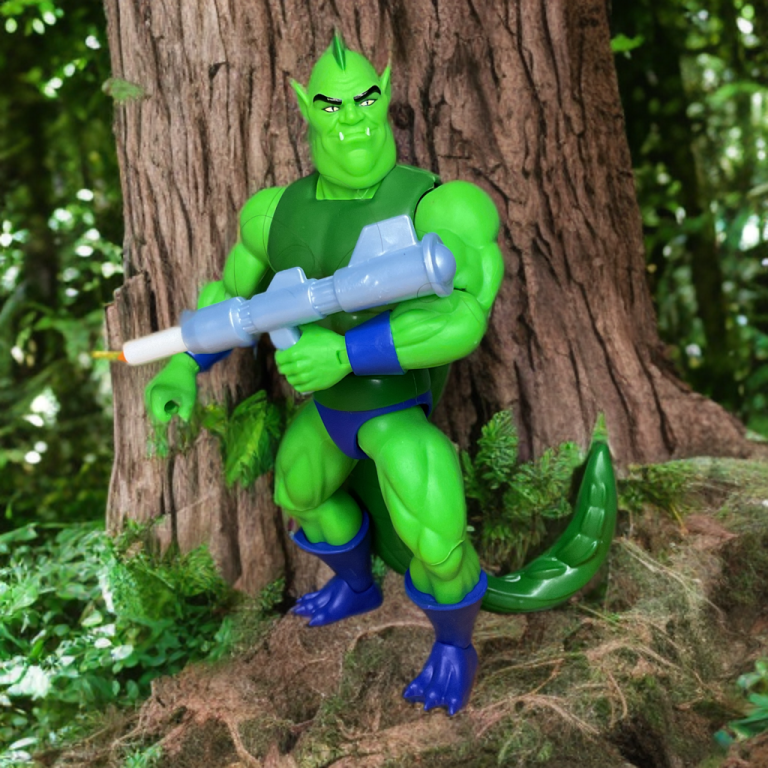
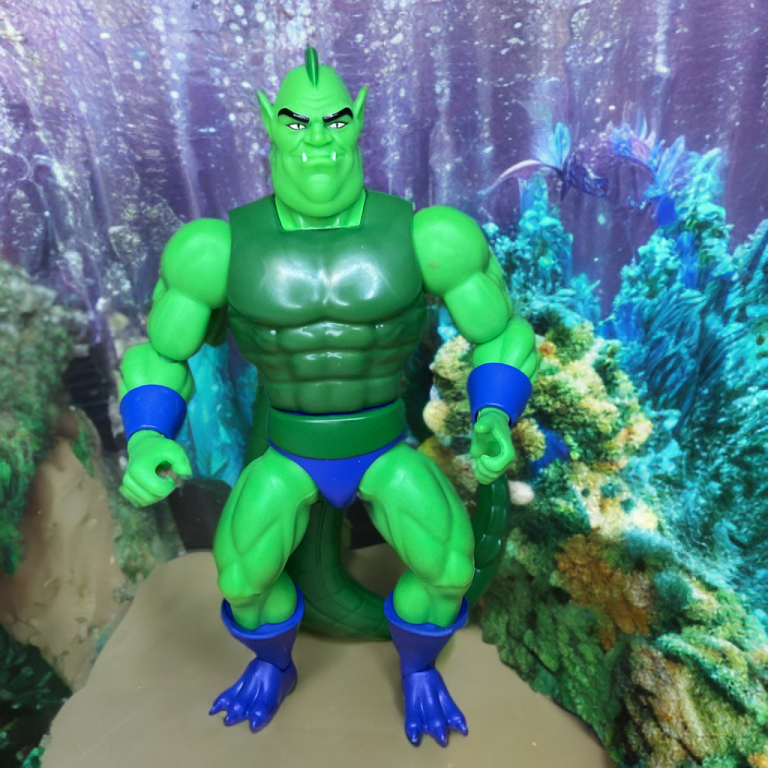
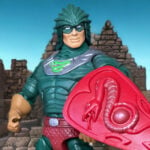
Now, let’s get hands-on with the figure itself, because if Whiplash’s canon is the script, this toy is the star performance. Clocking in at 5.5 inches—standard for the Origins line—Whiplash captures the Filmation aesthetic with a fidelity that would make even Skeletor crack a bony smile. The head sculpt? Spot-on reptilian menace: bulging yellow eyes that scream “back off or get bitten,” a snarling maw lined with tiny white fangs, and ridges along the brow that evoke a perpetual scowl. It’s not hyper-realistic—no, thank goodness—but exaggerated just right, with the soft edges and bold lines of ‘80s animation translated into plastic.
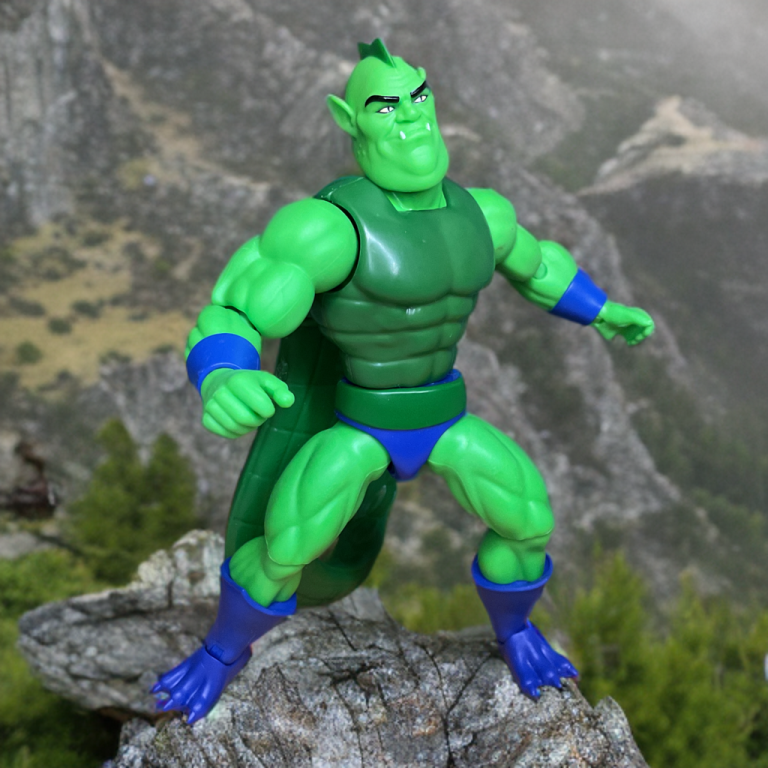
The paint app is where the Cartoon Collection shines: those saturated greens on the torso and limbs pop like they were airbrushed from a cel, while the purple pants and red boots nod to his on-screen duds without veering into garish territory. Subtle wash shading adds depth to the scales, making him look battle-worn without the chipping you’d expect from a toy that’s been yeeted across a playroom.
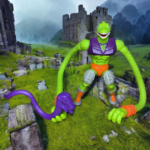
Compared to the 1984 vintage Whiplash—a rubbery green brute with a tail that was more lasso than lash—this Origins version is a revelation. The original toy, molded in stiff PVC with minimal articulation (just swivel shoulders and hips), felt like a static statue; it whipped tails in imagination only. Here, the sculpt refines that: sleeker limbs, a more dynamic stance, and a tail that’s segmented for realistic curling. At 16 points of articulation—double ball-jointed shoulders, swivel wrists, ab crunch, thigh swivels, ankle pivots, and a ball-jointed tail base—you can pose him mid-lash, coiling around Castle Grayskull’s leg, or perched like a gargoyle plotting doom. It’s poseability porn for collectors: fluid enough for epic dioramas, sturdy enough to withstand a toddler’s tantrum (though Mattel recommends 6+ for a reason).
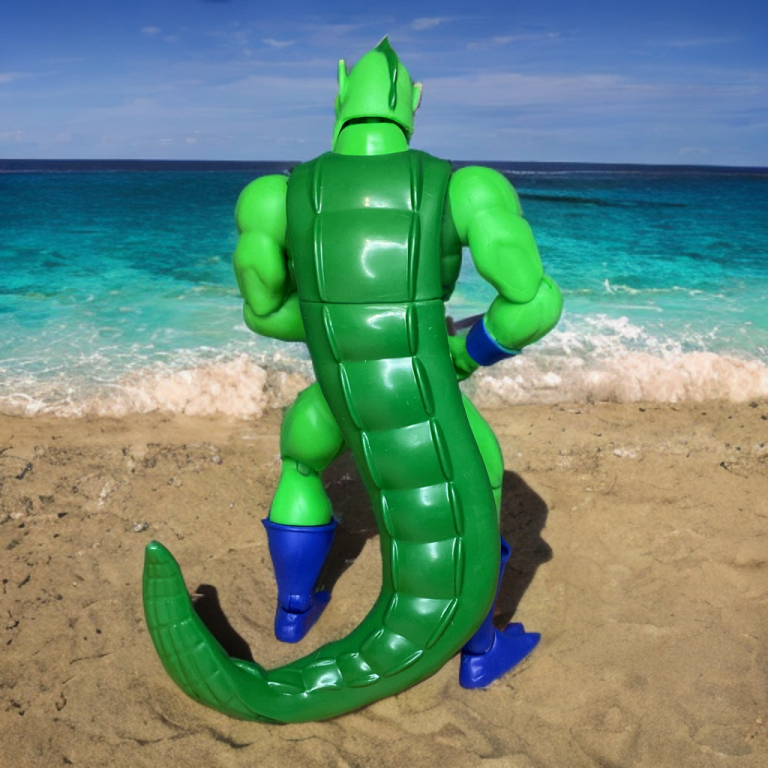
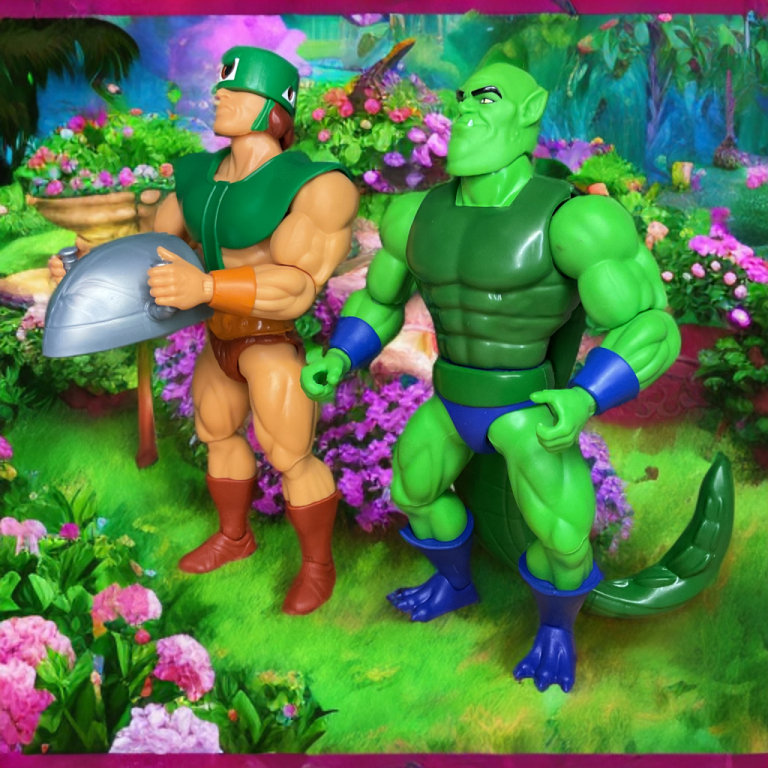
But the real whip-crack innovation? Removable body parts. Pop off the head, swap in Teela’s noggin for a “Demon Zone disguise” (okay, not canon, but fun), or mix arms with Trap Jaw for a cyborg serpent. This swappability is Origins’ secret sauce, turning your shelf into a mad scientist’s lab of MOTU mayhem. The tail, that iconic appendage, deserves its own paragraph: molded in soft PVC for flexibility, it whips with a satisfying thwack against other figures, echoing the sound design from episodes like “The Betrayal of Stratos” where it sent heroes flying. No more floppy failures; this tail holds curls like a pro wrestler mid-suplex.
Accessories seal the deal. The rocket launcher—a bulky, gray-plastic beast with a red missile that actually launches (safety-first, of course)—is a direct pull from his Demon Zone arsenal, complete with a peg for shoulder-mounting. It’s chunky, cartoonish, and begs for photoshoots recreating Stratos’ betrayal. Then there’s the mini-comic, a four-page black-and-white booklet that recaps “The Betrayal of Stratos” in digest form: Whiplash’s portal-opening plot, Kraal’s cameos, and He-Man’s heroic hog-tying. Penned by MOTU lore-keepers, it’s no graphic novel, but it adds narrative weight, turning playtime into plot recaps. Packaging? Blister card glory: vibrant artwork of Whiplash mid-roar, with series bios and a window that teases the goods. Eco-note: Mattel’s ditching polybags for this line, a small win for the planet Skeletor hasn’t conquered yet.
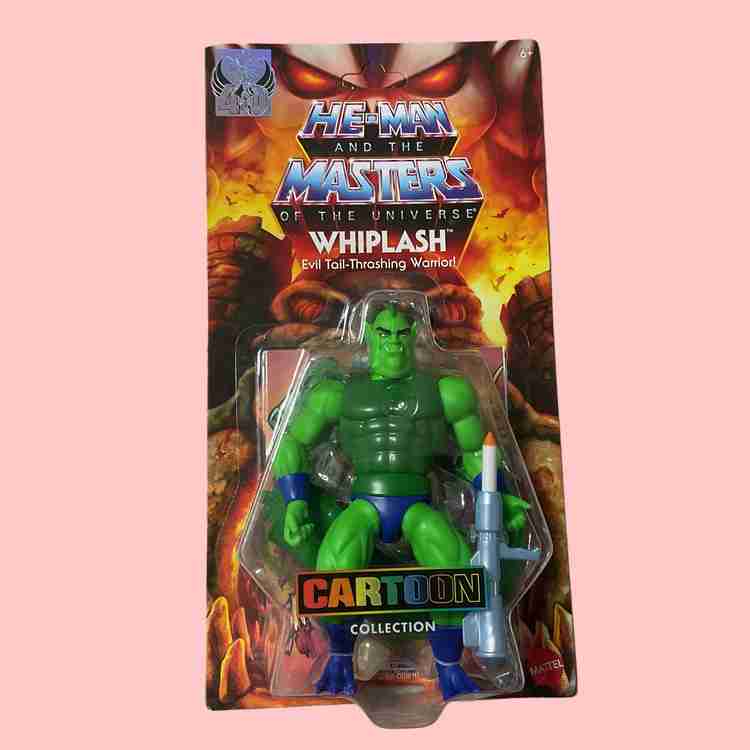
In a world of hyper-detailed Funko Pops, this figure’s charm lies in its restraint. It’s not over-engineered; it’s over-energized, like Whiplash himself—efficient evil in every joint. Paint consistency is solid (minor factory variances aside), and the matte finish resists fingerprints better than Skeletor’s bald dome. If there’s a quibble, it’s the tail’s PVC yellowing potential over time, a vintage curse Mattel hasn’t fully exorcised. But at this price? It’s a steal, pun intended.
Fitting the Fang: Whiplash in the Origins Ecosystem and Beyond
Zoom out, and Whiplash slots into the Cartoon Collection like a scale in a snake skin—seamless and sinister. Launched as Wave 26 in mid-2025, alongside Bow (heroic archer with Filmation flair) and Shadow Weaver (mystical menace in purple pastels), this sub-line breathes new life into Origins by prioritizing screen-accurate colors over the muted “realistic” tones of earlier waves. Where standard Origins Whiplash (from 2022) rocks desaturated greens for a “live-action” vibe, the Cartoon edition amps the vibrancy: think electric lime torso against inky shadows, mirroring the cel animation that made Saturday mornings sing. It’s a collector’s dream for purists—pair him with Cartoon Skeletor or Evil-Lyn, and you’ve got a Snake Mountain squad that looks ripped from episode 102.

The broader Origins line? A $20 entry point to MOTU’s multiverse, with over 100 figures since 2020, blending vintage homages with modern mechanics. Whiplash elevates it by bridging toy and TV canon; his mini-comic ties directly to Filmation, unlike the lore-light generics. Collectibility-wise, he’s hot: Preorders flew off Mattel’s site, and secondary markets already hover at $25-30 for mint-in-box. Rarity? Not yet, but as Wave 26’s reptilian rep, he’s primed for “chase figure” status among completists chasing the full 130-episode roster.
Vintage comparison time: The ‘84 Whiplash was a $5 marvel—soft rubber tail with waist swinging action. Origins upgrades the durability (ABS plastic over brittle vinyl), articulation (from 5 to 16 points), and accuracy (cartoon colors fix the toy’s muddy olive drab). It’s not perfect—the vintage had that raw, handmade charm—but for display and play, Origins wins by a tail’s length. Community buzz? Forums like Reddit’s r/MastersOfTheUniverse hail it as “the best Evil Warrior sculpt yet,” praising the tail’s flexibility for those “whip-crack” poses that vintage fans only dreamed of.
In the grand MOTU tapestry—spanning comics, crossovers, and that ill-fated 1987 live-action flick—Whiplash remains a Filmation fixture, absent from MYP’s 2002 reboot or the 2021 Netflix series (RIP, unmade Snake Men arc). This figure? It’s his resurrection, a witty wink to the era when toys taught us that even villains with identity crises (Demon Zone loyalty vs. Skeletor simping) deserve a second lash. It’s engaging, evoking playground brawls where your Whiplash body-slammed Castle Grayskull until the dog ate the tail.
Whiplash: Confirmed Filmation Appearances
| Episode Title | Prod # | Summary of Role |
| Island of Fear | 66 | Uses his powerful tail to cause massive destruction on a floating island. |
| To Save Skeletor | 67 | Debut. Part of the team that must reluctantly help the heroes when an alien threat arrives. |
| The Ice Age Cometh | 68 | Part of a scheme to freeze Eternia using a weather-controlling machine. |
| Trouble in Trolla | 69 | Travels to Orko’s homeworld to capture Trollan magic. |
| Betrayal of Stratos | 70 | Assists Skeletor in a plot to frame Stratos and conquer Avion. |
| Fraidy Cat | 84 | Joins Kobra Khan and others in an attempt to kidnap Queen Marlena. |
Conclusion
In the end, the Masters of the Universe Origins Whiplash (Cartoon Collection) Action Figure isn’t just plastic; it’s a portal to the pounding heart of ‘80s excess, where a reptilian rogue could steal the show from a skull-faced sorcerer. From his canonical capers in “Trouble in Trolla” to the rocket-fueled rampage of “The Betrayal of Stratos,” Whiplash embodies the sly, scaly soul of Filmation’s folly—a villain who schemes smarter than he slithers. Mattel’s execution? Articulate, accurate, and affordably awesome, with swappable parts and poseability that turn nostalgia into action. Sure, it won’t save Eternia single-handedly, but on your shelf or in your diorama, it’ll whip up memories fiercer than any Demon Zone portal.
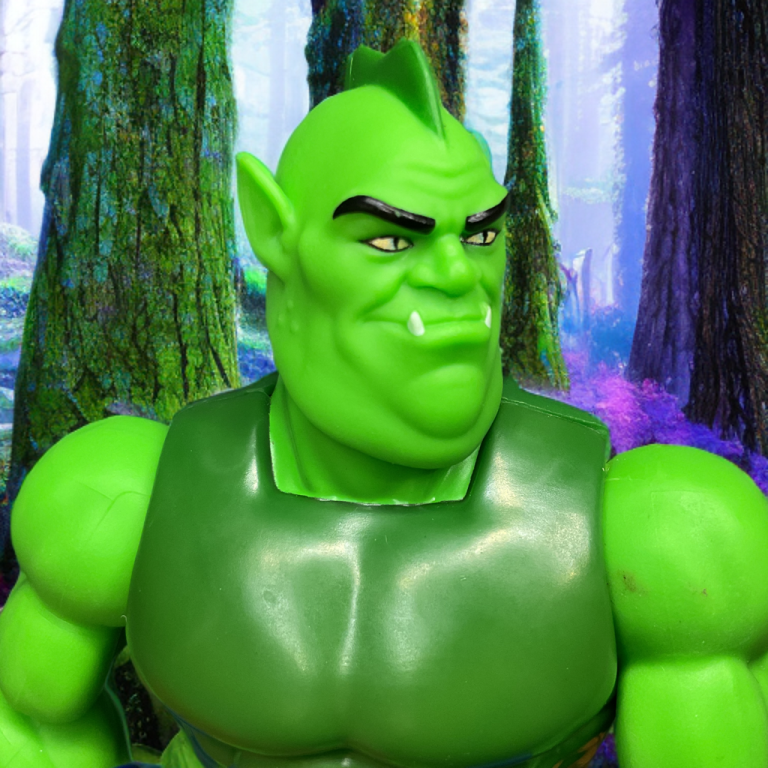
If you’re a MOTU die-hard, snag this serpent before he coils out of stock. He’s proof that some tails were meant to wag the dog—or in this case, thrash the universe. By the power of Grayskull… and a well-sculpted tail… I give it five lashes out of five. Go forth, and conquer your inner child. Now, time to check out Two-Bad!
 English
  Deutsch
  Français
  Português do Brasil
  日本語
日本語  Español
  English (Australia)