
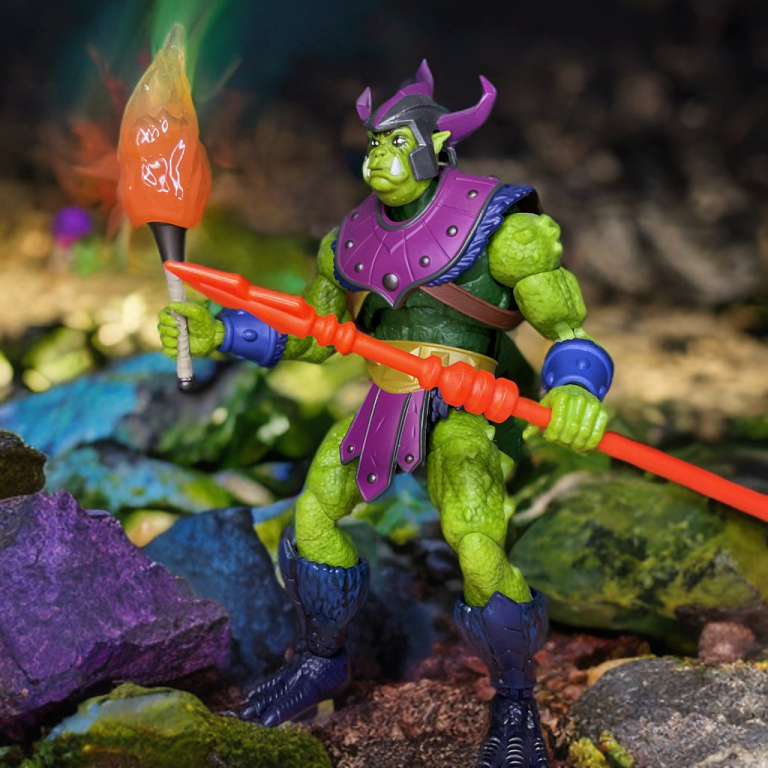
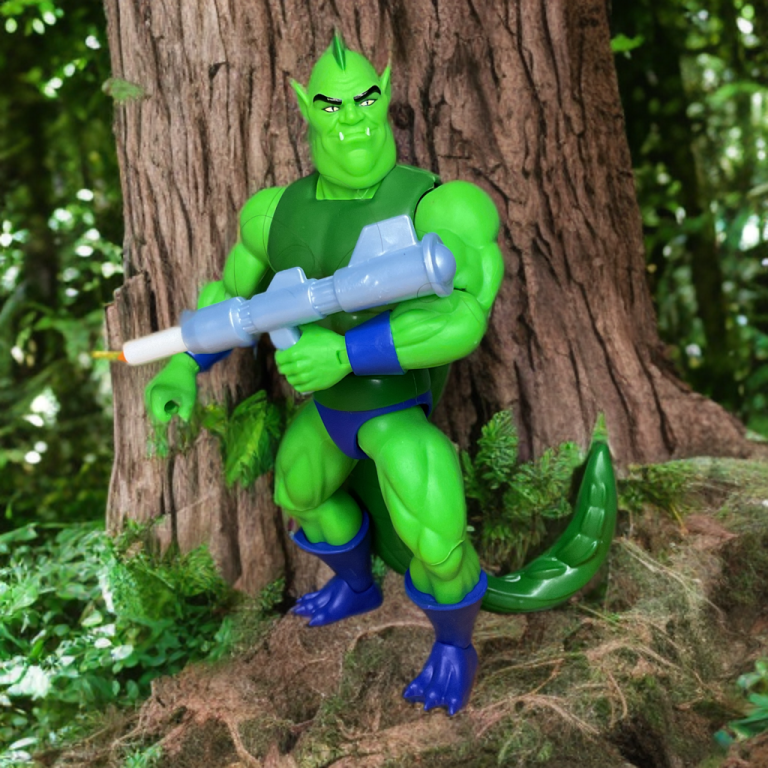
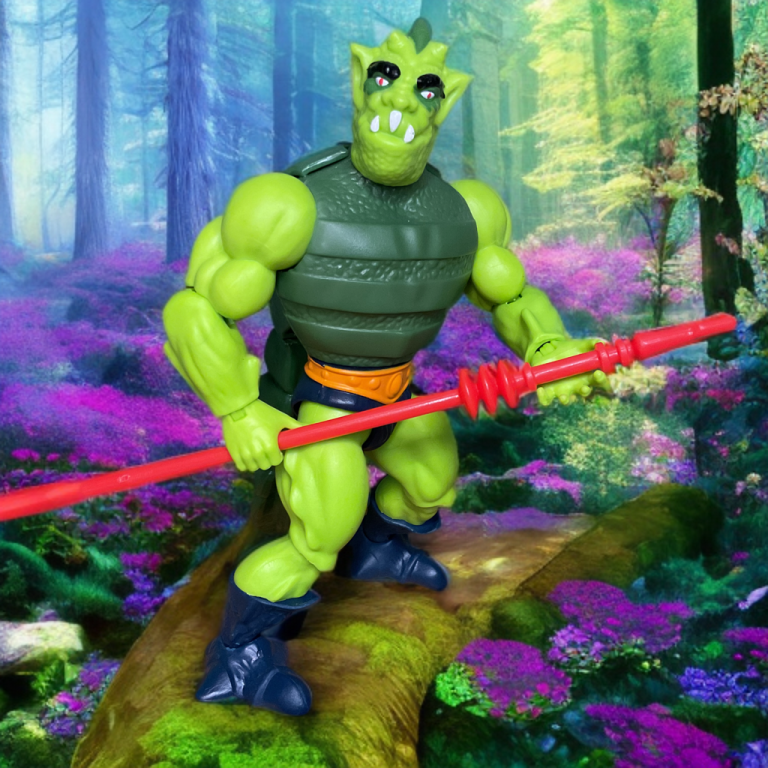
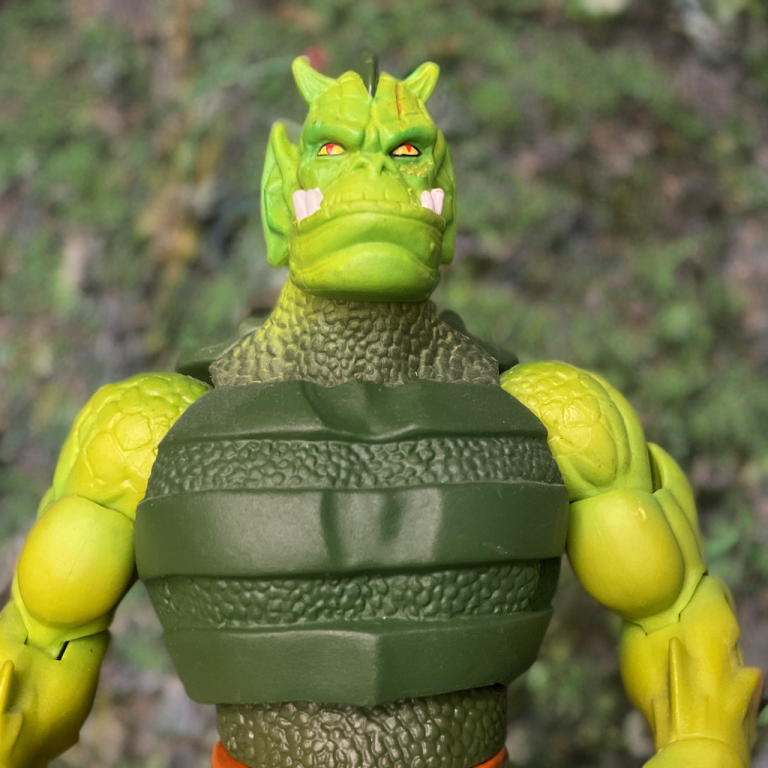
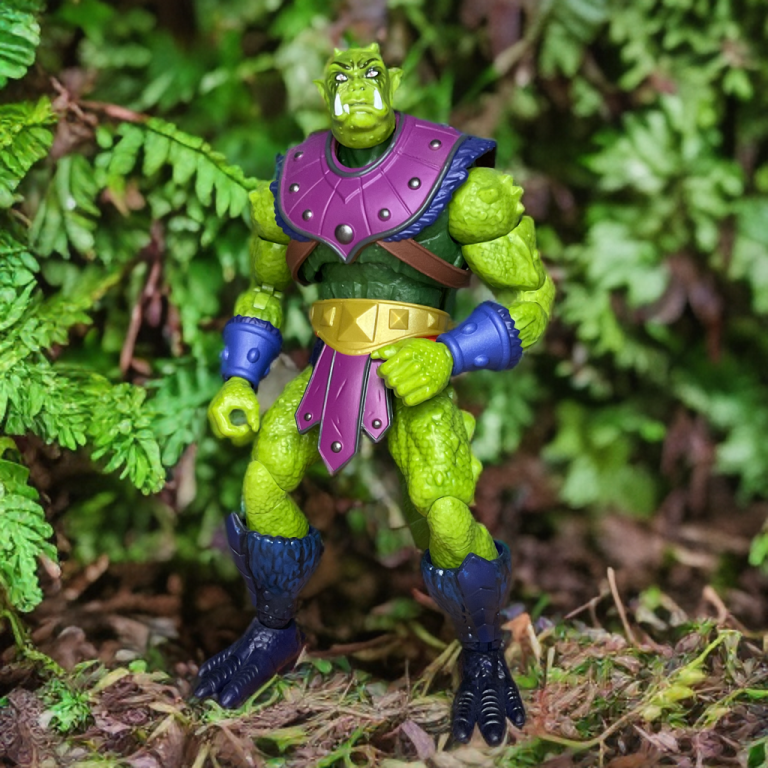
In the epic saga of Masters of the Universe (MOTU), few villains embody raw, primal ferocity quite like Whiplash. This anthropomorphic reptilian warrior, armed with a devastating tail that can shatter stone and topple heroes, has slithered his way into the hearts of fans as one of Skeletor’s most enduring henchmen. Introduced in the 1980s toy line, Whiplash has evolved from a brute enforcer in mini-comics to a cunning schemer in animated series, leaving a trail of destruction across Eternia’s diverse media landscape. This article compiles the most exhaustive history and biography of Whiplash ever assembled, drawing from official lore, fan insights, and cross-media appearances to celebrate his scaly legacy.
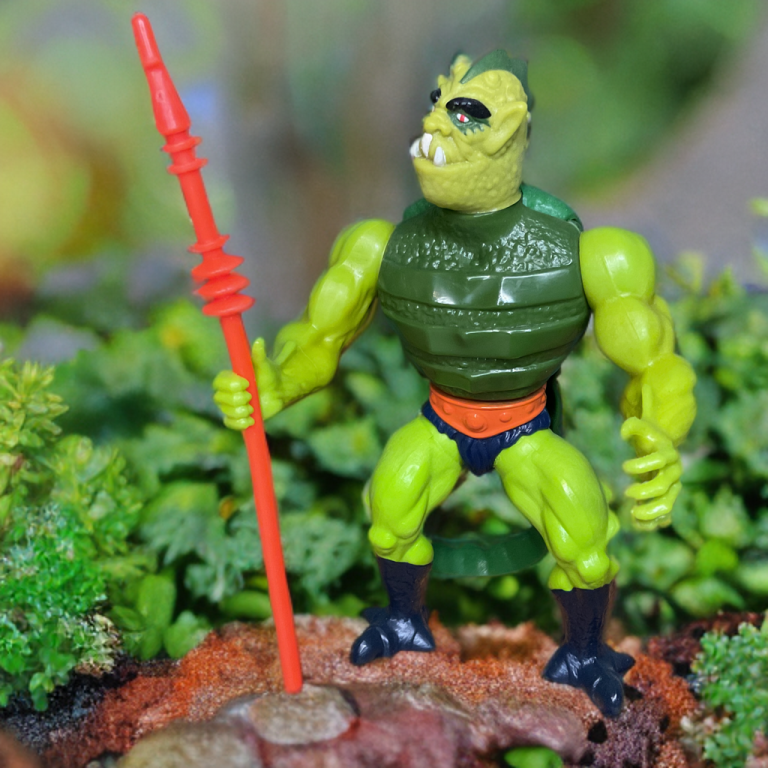
Whiplash’s conception traces back to the golden era of MOTU, when Mattel expanded its wildly successful toy line in the early 1980s. Designed as part of the third wave of figures released in 1984, Whiplash was crafted to add a monstrous, reptilian element to Skeletor’s Evil Warriors. His initial concept drew from crocodile-like aesthetics, with a green-scaled body, spiked armor, and a signature tail weapon that could “whip” in action play. Early prototypes emphasized his brute strength, positioning him as a counter to heroic figures like Fisto.
The character’s backstory was fleshed out in accompanying media. In the mini-comics, Whiplash hailed from a savage clan, exiled for his ruthless ambition. This origin echoed broader MOTU themes of betrayal and power struggles on the planet Eternia. Mattel’s design team, inspired by fantasy and sci-fi tropes, aimed to make Whiplash visually distinct—his tail not just a appendage, but a functional weapon that kids could imagine smashing through castle walls. This innovation helped propel MOTU’s sales, as the franchise blended sword-and-sorcery with barbaric creatures.
Whiplash debuted in Mattel’s 1984 wave, complete with a spear and his iconic tail, which featured a spring-loaded whipping action in some variants. The figure’s bio card described him as “Evil tail-thrashing warrior,” a Caligar from the underground realms of Eternia, who joined Skeletor after being banished from his tribe.
Over the decades, Whiplash has been reimagined in numerous toy lines:
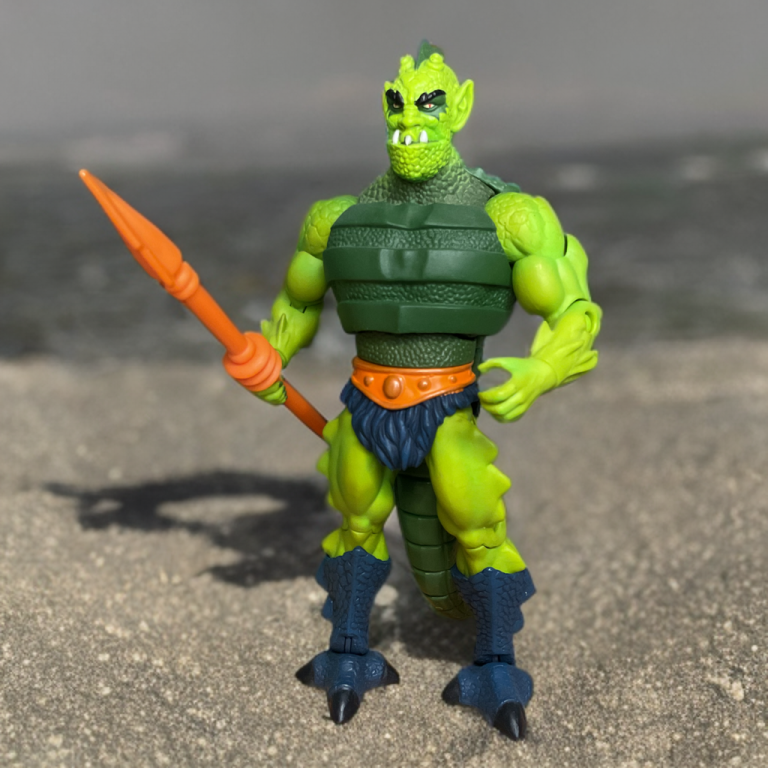
Classics (2008-2016): A more detailed figure with updated lore, revealing that Torrant Kraz (Whiplash’s real name) grew bitter under his brother Ceratus’s rule after their father’s death, leading him to ally with Skeletor. This bio added depth, portraying him as a resentful sibling rather than a mere thug.
Masterverse and Recent Releases: Appearing in lines tied to Netflix’s reboots, these figures incorporate elements from Revelation and Revolution, with enhanced sculpting for his tail and armor. As of 2025, Whiplash remains a staple in MOTU preorders, reflecting his enduring popularity.
His toy evolution mirrors MOTU’s shift from simple action figures to collector-grade pieces, with variants like the 1984 complete figure often fetching high prices on secondary markets.
Whiplash burst onto the scene in the 1984 mini-comic “The Clash of Arms,” as Skeletor’s ultimate gladiator. Depicted as a feral beast, he nearly kills Fisto in an arena battle, only stopped by He-Man’s intervention. This portrayal emphasized his unmatched physical prowess, establishing him as a “killing machine” who could challenge even the mightiest heroes.
Subsequent comics like “Hordak: The Ruthless Leader’s Revenge!” and “Mantenna and the Menace of the Evil Horde!” show him clashing with Horde members and Eternian guards, highlighting his role in larger conflicts. In these stories, Whiplash is exiled from the Caligars for cheating his clan, adding a layer of treachery to his character.
Unlike later adaptations, mini-comic Whiplash is more animalistic, with minimal dialogue and a focus on brute force.
Filmation’s He-Man and the Masters of the Universe animated series transformed Whiplash into a recurring antagonist, voiced by John Erwin. Debuting in season two, he quickly became a fan favorite for his sly personality—far from the dumb muscle of some villains. Episodes like “Betrayal of Stratos” reveal his ties to the Demon Zone, a hellish underworld ruled by the devilish Kraal, where Whiplash commands demonic creatures. This origin creates intriguing continuity quirks, as the zone’s barrier opens only twice yearly, yet Whiplash frequently aids Skeletor elsewhere.
In “Trouble in Trolla,” Whiplash schemes to conquer Orko’s homeworld by mastering Trollan magic, showcasing his ambition and intellect. “To Save Skeletor” humanizes him slightly, as he negotiates a truce with heroes to combat a greater evil, Sh’Gora, after sustaining injuries. These episodes paint Whiplash as energetic, conniving, and capable of independent villainy, making him more nuanced than peers like Beast Man.
The 2002 reboot dialed back Whiplash’s prominence, relegating him to background roles with limited lines. Voiced by Gary Chalk, he’s a thuggish enforcer, loyal but unremarkable. The episode “Underworld” delves into his heritage: As a Caligar from Subternia, he’s shunned by his peaceful reptilian kin for betraying them to Skeletor amid a feud with the bat-like Speleans. “The Monster Within” exposes his false flattery toward Skeletor, but by season two, he fades into obscurity. This version lacks the Filmation charm, focusing more on his traitorous nature.
In Netflix’s Masters of the Universe: Revelation (2021), Whiplash returns as one of Skeletor’s warriors, appearing in early episodes like a trapdoor ambush on Teela. His role is brief but nods to classic designs, emphasizing his tail in combat. The follow-up, Revolution (2024), expands slightly on his demonic ties, integrating him into larger battles against cosmic threats.
Whiplash has also appeared in DC Comics’ MOTU crossovers, where he’s a minion in interdimensional wars, and in video games like He-Man: The Most Powerful Game in the Universe (2012), as a boss enemy. Fan communities continue to celebrate him through custom figures and lore discussions.
Whiplash’s arsenal centers on his massive, prehensile tail, capable of delivering concussive strikes that crush rock or hurl foes. Enhanced strength allows him to overpower warriors like Fisto, while his reptilian physiology grants durability and agility. In cartoons, he commands demons and dabbles in magic, adding versatility. Weaknesses include overreliance on brute force and occasional gullibility in schemes.
Across iterations, Whiplash blends savagery with cunning—feral in comics, scheming in Filmation, traitorous in 2002. His exile motif resonates as a tale of ambition gone awry. As MOTU endures through reboots and merchandise, Whiplash symbolizes the franchise’s monstrous villains, inspiring fan art, cosplay, and debates on his untapped potential.
Whiplash’s journey through the Masters of the Universe franchise is a testament to the enduring appeal of a villain who combines brute force with cunning ambition. From his origins as a toy designed to captivate children with a thrashing tail to his multifaceted portrayals in comics, cartoons, and modern reboots, Whiplash has proven himself more than just Skeletor’s muscle. His story of exile, betrayal, and relentless drive resonates with fans, cementing his place as a cornerstone of MOTU’s rogues’ gallery. As the franchise continues to evolve, Whiplash’s scaly legacy endures, ready to whip up chaos for new generations of Eternian adventurers.
 English English
  Deutsch
  Français
  Português do Brasil
  日本語
日本語  Español
  English (Australia) English English Deutsch
Français
Português do Brasil
日本語
Español
English (Australia)
English (Australia) English English Deutsch
Français
Português do Brasil
日本語
Español
English (Australia)
We use cookies to improve your experience on our site. By using our site, you consent to cookies.
Manage your cookie preferences below:
Essential cookies enable basic functions and are necessary for the proper function of the website.
Statistics cookies collect information anonymously. This information helps us understand how visitors use our website.
Google Analytics is a powerful tool that tracks and analyzes website traffic for informed marketing decisions.
Service URL: policies.google.com (opens in a new window)