

Shockwave Stole Megatron’s Crown – And Why It Almost Worked
A 40-year mystery finally solved, one fusion-cannon blast at a time
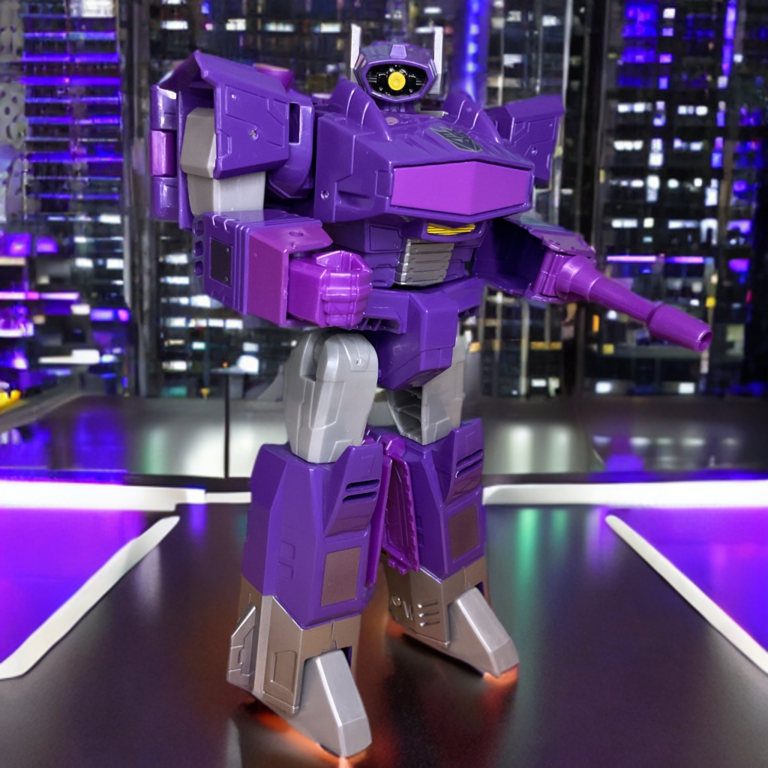
Picture this: it’s 1985. You’re ten years old, clutching your brand-new issue #5 of The Transformers at the corner drugstore. You’ve just watched Megatron rule the first four issues like the silver-plated tyrant he was born to be. Then, in a single page, a purple cyclops drops out of the sky, punches Megatron so hard his head spins, and calmly declares, “Logic dictates that I now lead.”
You blink. You re-read the panel. You whisper the words no child should ever have to say:
“They… they just jobbed Megatron?”
For decades, that moment haunted an entire generation of fans. Why did the Marvel US G1 comic spend two straight years treating its flagship villain like yesterday’s recycling? Why was Shockwave – cool, yes, but hardly poster-boy material – suddenly the Decepticon emperor? And why did Megatron keep coming back like a glutton for punishment only to get dunked on again?
The answer, it turns out, is gloriously petty and wonderfully human: the writer simply didn’t like Megatron very much… and really, really liked Shockwave.
Act I: The Four-Issue Experiment That Changed Everything
When Marvel launched The Transformers as a four-issue miniseries in 1984, nobody – not Hasbro, not Marvel, not even the writers – expected it to become a juggernaut. Editor/writer Bob Budiansky was handed a box of toys, a stack of tech specs, and roughly 48 hours to invent personalities for everyone. He did the impossible: he gave Bumblebee pathos, made Optimus Prime noble without being boring, and turned Starscream into the patron saint of back-stabbing.
Then came the ongoing series. And with it, creative freedom.

Act II: Bob Budiansky’s One-Man Shockwave Agenda
Bob has never been shy about it in later interviews. Paraphrased brutally: “Megatron felt one-dimensional – just a loud guy with a cannon. Shockwave, on the other hand, was pure logic, no emotion, terrifying efficiency. I thought he’d make a better leader.”
Translation: Bob had a favorite, and the favorite got the spotlight.
The timeline of Megatron’s suffering reads like a pro-wrestling burial:
• Issue #5 – KO’d in one punch, dumped in a swamp.
• Issues #6–9 – Literally a broken statue while Shockwave runs the show.
• Issues #10–11 – Ratbat patches him up, he challenges Shockwave… loses again.
• Issues #12–18 – Still not the boss.
• Issue #19 – Starscream finally coups Shockwave and dumps him in the exact same swamp. (The irony was delicious.)
• Then Ratbat, a fuel auditor the size of a bat, takes over because spreadsheets > charisma.
Megatron doesn’t regain permanent control until somewhere around issue #40, after being blown up, turned into a tank, and briefly possessed by a snake demon. Yes, really.
Meanwhile, the letters pages exploded. Eight-year-olds wrote in ALL CAPS: “BRING BACK MEGATRON!!!” Hasbro started getting nervous phone calls. But Bob, bless his heart, doubled down. This wasn’t corporate meddling; this was one man’s vision – a vision where the Decepticons were ruled by a glowing purple cyclops who spoke like a supercomputer with a grudge.
Act III: The Wilderness Years (Issues 20–55)
Once the Shockwave shock value wore off, the book entered its chaotic middle period – the one that made many of us (myself included) drop the series around issue #26. Characters vanished for months. The UK stories were reprinted with zero context. Headmasters and Targetmasters appeared out of thin air because the toy aisle demanded it. Spider-Man showed up for two issues. Circuit Breaker happened. It was the Wild West with occasional robot fights.
The combiners – Stunticons, Aerialbots, Protectobots – were genuinely cool when they debuted, but then promptly disappeared into the void. Compare that to Larry Hama’s G.I. Joe over at Marvel, where every new figure got a backstory, a personality, and sometimes a body bag. Hama treated continuity like gospel; Transformers treated it like a suggestion written on a napkin.
Act IV: Enter Simon Furman, Stage Left – With a Vengeance
In 1988, British writer Simon Furman – who had already been writing far superior Transformers stories for the UK weekly – took over the US book with issue #56. Furman walked in, looked at Megatron rusting in the corner, cracked his knuckles, and basically said, “Hold my Unicron.”
What followed was a masterclass in course correction:
• Megatron returned as a cunning, ruthless, apocalyptic warlord – no more comedy beatdowns.
• Deaths mattered. Betrayals had consequences. The Matrix became mystical instead of a fancy battery.
• The stakes went cosmic: Primus, Unicron, the Swarm, time rifts, planet-eating gods.
• Characters fans hadn’t seen in years came back with actual arcs.
• Shockwave? Quietly shuffled into the “loyal but creepy lieutenant” role where he always belonged.
From issue #56 to the final #80, and especially in the UK material Furman wrote in parallel, Transformers finally became the sweeping sci-fi war epic we always knew it could be. Issue #75 alone – “On the Edge of Extinction!” – remains one of the most gut-wrenching single issues in 80s comic history.
Epilogue: Regeneration and Redemption
In 2012, IDW gave Furman 21 issues to finish the story Marvel never got to tell. Regeneration One is the true ending to the G1 Marvel continuity, and it is glorious, dark, brutal, and everything the original run only flirted with being.
So… Was Bob Budiansky Wrong?
Here’s the wild part: no, not entirely.
His Shockwave experiment was bold, weird, and gave the comic an identity completely distinct from the Sunbow cartoon. For a while, it worked – sales stayed sky-high even with kids screaming in the letters column. Sometimes an auteur swinging for the fences, even if they whiff, is better than playing it safe.
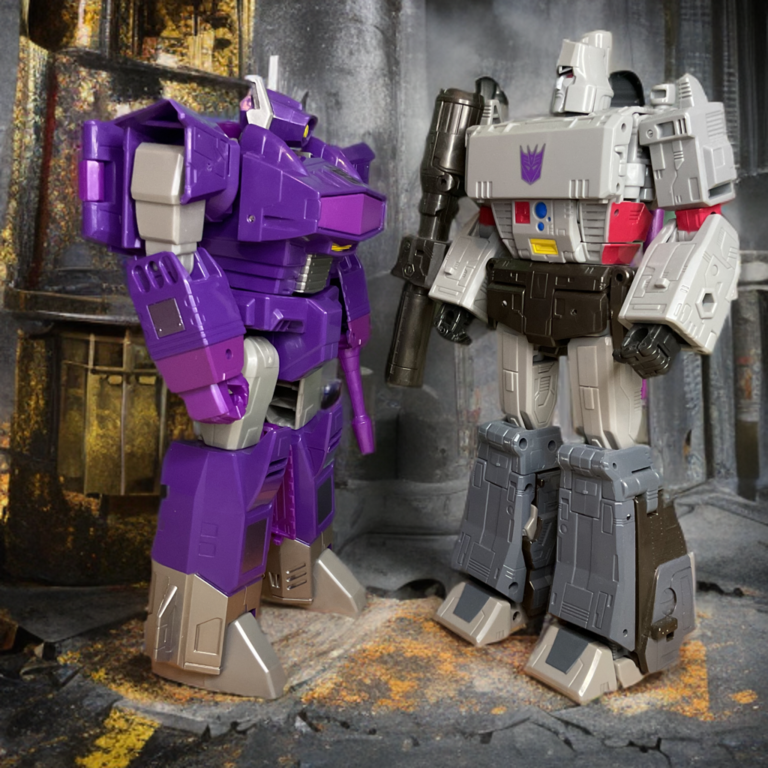
But in the end, Megatron is Megatron for a reason. He’s the face on the lunchbox, the voice that made us flinch when we were six, the tyrant we love to hate. Shockwave is a fantastic enforcer, a cybernetic Darth Vader, but he was never the leading man.
Simon Furman understood that. And when he took the wheel, he didn’t just restore Megatron – he forged him into something greater than even the cartoon ever managed.
Where to Jump Back In (Without Pain)
If you, like so many of us, dropped the book in the late 80s and swore never to return, here’s your cheat sheet:
Essential reading order for the good stuff:
1. Issues #1–12 – the raw, strange Budiansky beginnings (worth it for historical value).
2. Jump straight to #56–80 – Furman’s golden era.
3. UK stories “Legacy of Unicron” and “Space Pirates” (collected in trade).
4. Regeneration One #80.5–100 – the finale you didn’t know you needed.
Or just grab the two massive IDW Compendiums and treat the middle like a speed bump.
Final Thought
Forty years later, the Great Shockwave Usurpation remains one of the ballsiest moves in licensed comic history. One man looked at the most iconic villain of the 1980s, said “Nah, my purple guy’s better,” and somehow got away with it for two years.
It shouldn’t have worked.
It kinda did.
And when it stopped working, another writer picked up the fusion cannon and reminded us why Megatron will always wear the crown.
Welcome home, old friend. The war never ended – it just got a lot better at telling its story.
Transform and roll out. 




 English
  Deutsch
  Français
  Português do Brasil
  日本語
日本語  Español
  English (Australia)