

The Iron Rule of the Troglodytarum Clans
Troglodytarum Clan Dynamics
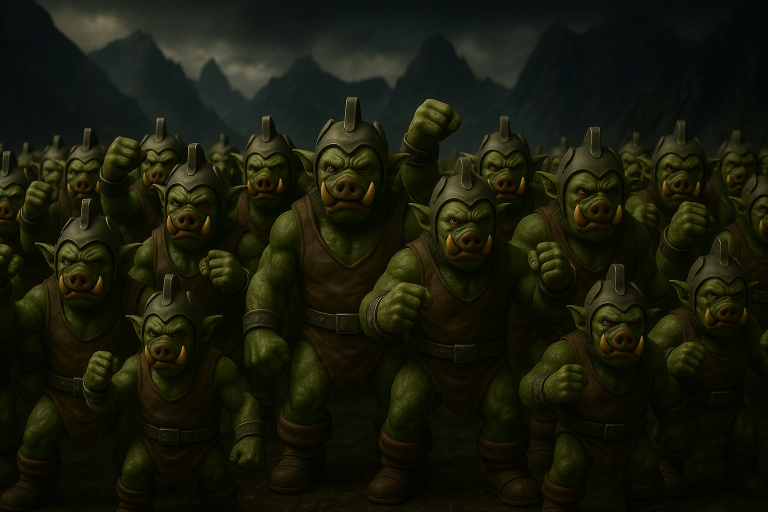
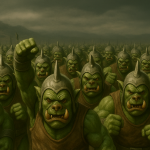
The Troglodytarum clans of the Odsted Mountains operate within a brutal, hierarchical society shaped by survival, strength, and an unyielding reverence for their harsh environment. Their dynamics are a complex web of power struggles, ritualistic traditions, and primal loyalty, offering a rich backdrop for Zaron the Hookfury’s origins and his eventual exile.
Clan Structure and Hierarchy
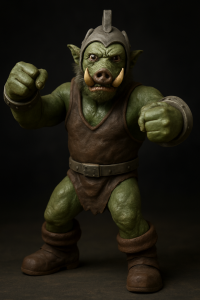
The Troglodytarum are divided into several clans, each controlling specific territories within the rugged Odsted range. The largest and most dominant is the Ironflames, Zaron’s former clan, known for their mastery of ore mining and weapon forging. Other notable clans include the Stonebreakers, who excel in stonecraft and fortification, and the Bloodfowlers, fierce raiders who patrol the mountain passes. Each clan is led by a Chieftain, chosen through a ritual combat known as the Rendfeast, where challengers fight to the death, the victor consuming a portion of the loser’s flesh to symbolize dominance. Below the Chieftain are the Warlords, seasoned warriors who command hunting parties and enforce order, followed by the Shamans, who wield rudimentary magic derived from the mountains’ dark veins and oversee spiritual rites.
Social Dynamics
Strength is the currency of power among the Troglodytarum. Clan members earn status through combat prowess, successful raids, or crafting superior weapons. However, this meritocracy is tempered by a deep-seated tradition of lineage; noble bloodlines, like Zaron’s, carry prestige but also intense scrutiny. Alliances between clans are fragile, often sealed by blood oaths or the exchange of warriors, yet they fracture over resources—particularly the rare black ore that fuels their forges—or perceived slights. The Ironflames, for instance, have a longstanding rivalry with the Bloodfowlers over a contested mining vein, leading to sporadic skirmishes that weaken both sides against external threats like the Wilkolach.
Family units are small and fiercely protective, centered around a dominant male and his mates, with offspring proving their worth through trials by age seven. Weakness is not tolerated; those who fail are cast out or sacrificed in rituals to appease the mountain spirits, believed to be the restless souls of fallen warriors. This harsh upbringing fosters resilience but also breeds resentment, as seen in Zaron’s early rages against his kin.
Rituals and Beliefs
The Troglodytarum worship a pantheon of mountain deities, chief among them Grimskog, the Stone Tyrant, said to dwell in the deepest caverns and demand blood for prosperity. Shamans conduct the Bloodveil Ceremony during blood moons, where captives or the weak are offered to Grimskog, their screams echoing as a warning to the living. This ritual also strengthens clan unity, as participants share in the feast that follows. Zaron’s birth under a blood moon marked him as both blessed and cursed, a duality that fueled his clan’s expectations—and eventual fear—of him.
Exile and Outcasts
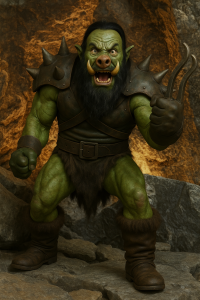
Exile, as experienced by Zaron, is the ultimate punishment, reserved for those whose actions threaten the clan’s survival or honor. The Mark of the Outcast—a scorched hook branded into the flesh—severes all ties, and the banished are forbidden from returning under pain of death. Outcasts like Zaron often band together in the Gravelands, forming loose, unstable bands that raid both their former kin and outsiders. However, their lack of clan support leaves them vulnerable, a factor Atrox exploited when recruiting Zaron.
Interaction with Witalis Atrox
Atrox’s pact with the Troglodytarum, promising riches and dominion, has shifted clan dynamics. Some clans, like the Ironflames, align with him for survival, sending warriors to Chaosforos, while others resist, viewing his influence as a corruption of their ways. This division creates internal strife, with pro-Atrox factions clashing with traditionalists, weakening the Troglodytarum’s unified front against Magnus’s forces. Zaron’s transformation into a hook-handed terror further complicates this, as his former clan sees him as a traitor’s abomination, yet his power tempts some to reconsider their stance.
Implications for Kimel Drago
The Troglodytarum’s clan dynamics offer Magnus a potential strategy. By exploiting their divisions—perhaps aiding a resistant clan against Atrox’s allies—he could turn their strength against itself. Alternatively, a reformed outcast band, if rallied, might provide insider knowledge of the Odsted Mountains, aiding the quest for the hidden crowns. For Zaron, his exile roots him in this volatile culture, his madness a product of its extremes, making him both a product and a perversion of Troglodytarum life.


 English
  Deutsch
  Français
  Português do Brasil
  日本語
日本語  Español
  English (Australia)