

The Jitsu Paradox: Why This Excellent MOTU Origins Figure Is Dirt Cheap in 2026 (And Why He Still Deserves Your Shelf Space)
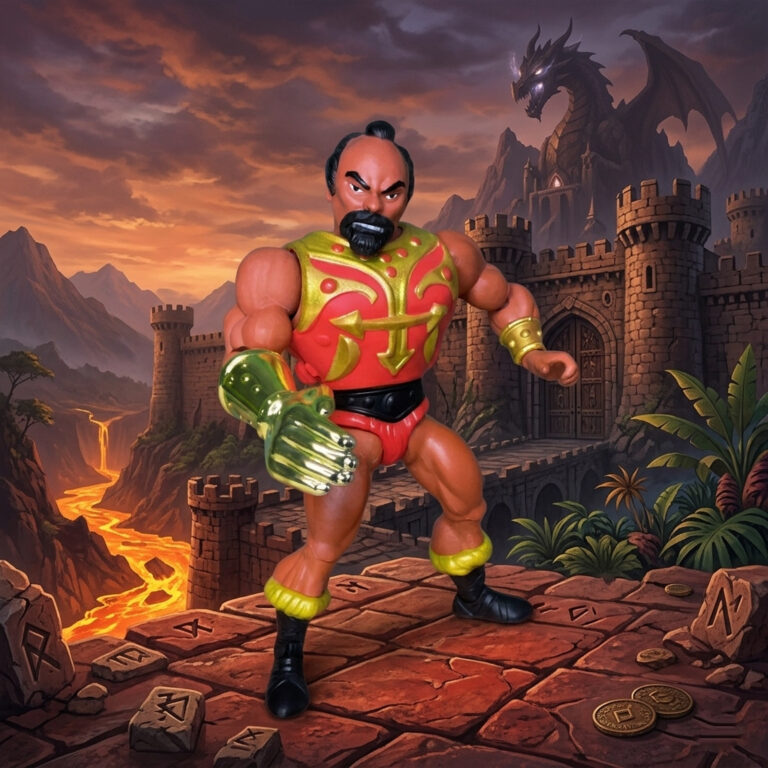
Despite the depth of the Eternian universe, Jitsu’s prowess as a martial arts specialist often goes unsung, making him one of the franchise’s most underappreciated assets. With his snarling face, imposing build, and that gleaming golden karate-chop hand capable of smashing through anything in his path, Jitsu has always carried an aura of cool menace. As a die-hard fan who’s loved the character since the vintage days, I was thrilled when Mattel finally delivered him in the Masters of the Universe Origins line. The figure? Outstanding. The secondary market price in 2026? Embarrassingly low — often hovering in the $5–$12 range for loose or even carded copies, well under the original $19 retail.
This article is my love letter to Jitsu and a forensic examination of the paradox surrounding his Origins release. What went wrong with distribution, demand, or perception that left one of the line’s best villain figures languishing in clearance bins? We’ll explore his deep roots in the vintage toyline, his brief but memorable cartoon cameo (as Chopper), the expansive lore from Classics and beyond, and how the Masterverse version offers a fresh take.
Along the way, we’ll celebrate why this figure — and the character — still punches way above his weight. Whether you’re a completionist hunting for bargains or a casual fan discovering him for the first time, buckle up. By the end, you might just agree that Jitsu is one of the smartest buys in modern MOTU collecting.
The Vintage Roots: Birth of a Martial Arts Menace
Jitsu didn’t emerge from thin air. He debuted in the original Masters of the Universe toy line in 1984 as part of Wave 3, riding the crest of the franchise’s massive popularity. Designed by Mattel’s Colin Bailey (the creative force behind icons like Trap Jaw, Fisto, and Clawful), Jitsu was originally conceptualized under the working name “Chopper.” Early descriptions painted him as a formidable warrior with an enormous right hand that could “chop through bricks, trees, anything.”
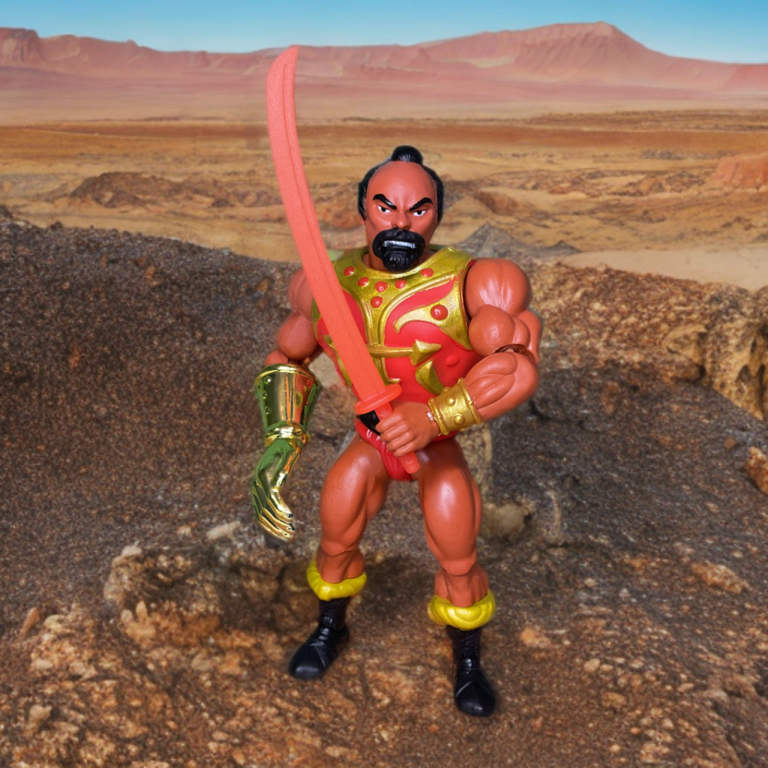
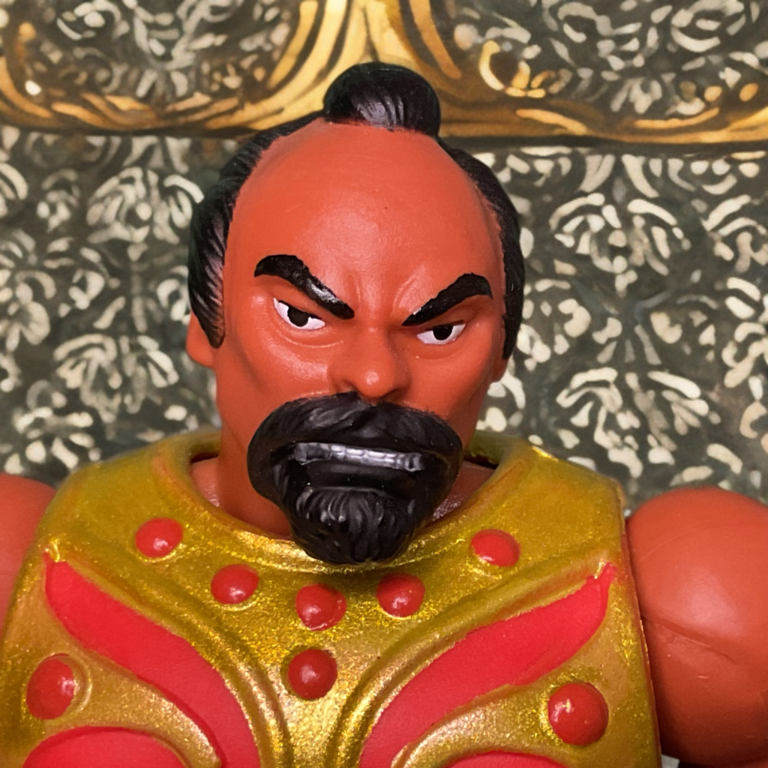
The vintage figure was a masterclass in simple-but-effective toy design. It reused a basic bulky body mold but added a striking new head sculpt with a fierce expression and a prominent black mustache, gold armor pieces, a sword, and that show-stopping vac-metallized chopping hand. The action feature — a spring-loaded arm for devastating chops — delivered pure play value. He even came with a mini-comic that teased his rivalry with Fisto, setting up a “good hand vs. evil hand” dynamic that fans still love today.
What made Jitsu special was his cultural flavor. He evoked samurai and martial arts archetypes at a time when ninja and karate themes were exploding in pop culture.
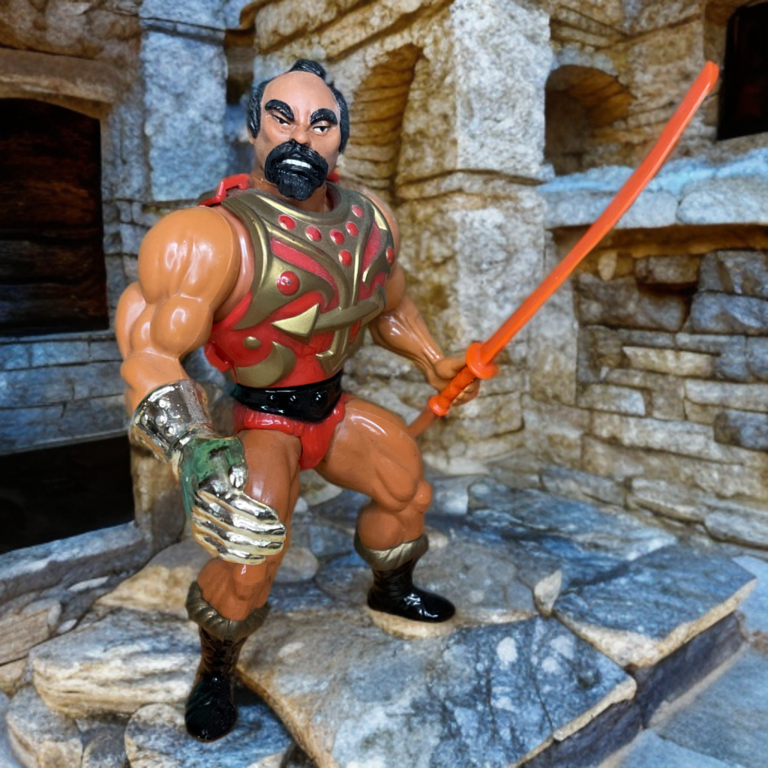
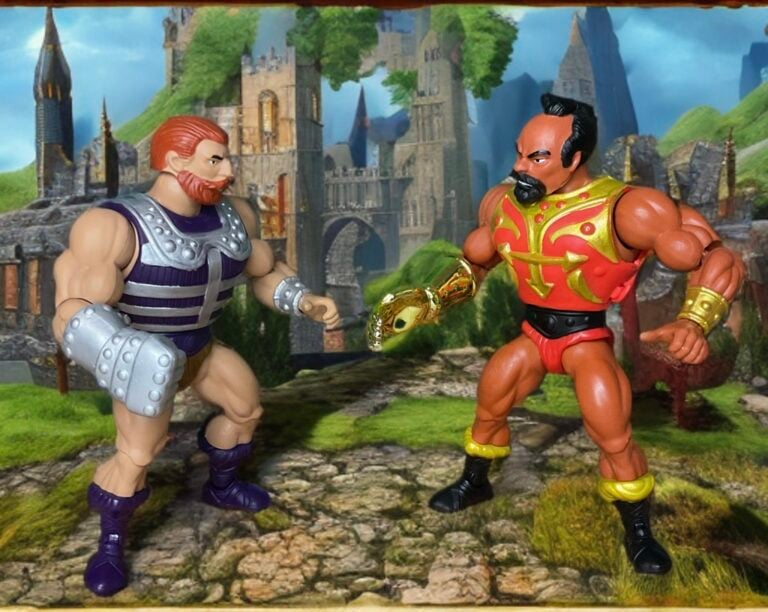
Paired visually with Fisto (his heroic counterpart), he felt like a natural rival — two warriors defined by oversized, powerful hands. Yet unlike more ubiquitous villains like Beast Man or Skeletor, Jitsu never became a household name. His release timing in the middle of the line’s run meant he competed with established favorites, and his limited media exposure (more on that soon) kept him somewhat niche. Still, for kids in the ’80s, he was a must-have heavy hitter for any Snake Mountain roster.
Fast-forward to today, and that vintage Jitsu commands serious secondary market prices — often hundreds for mint specimens. The character’s enduring design DNA carried straight into Origins, proving Mattel understood what fans wanted: a faithful update with modern improvements.
Jitsu vs. Fisto: The Hand-Off
| Feature | Fisto (Heroic) | Jitsu (Evil) |
| Hand Material | Oversized Silver Steel | Vac-Metal Gold |
| Personality | Boisterous Brawler | Stoic Martial Artist |
| 2026 Rarity | “Where did he go?” | “He’s literally everywhere.” |
| Cost to Collect | A Week’s Groceries | A Fancy Coffee |
The Filmation Cameo: One Episode Wonder as Chopper
Jitsu’s cartoon legacy is famously slim. He appeared in just one episode of the 1983 Filmation series — “The Dragon Invasion” — and was never even named on-screen. In the series bible, he was listed as Chopper, emphasizing his oversized hand as his primary weapon. Filmation reportedly shied away from further appearances, concerned his design might be interpreted as a negative racial stereotype tied to martial arts tropes.
In that lone outing, Jitsu served as muscle for Skeletor’s scheme involving stolen dragon eggs and a diversionary attack on Castle Grayskull. He battled heroes like Ram Man and showcased his chopping power, but his personality remained one-note: gruff, loyal to Skeletor, and ready for a fight. No deep quirks or monologues here — just efficient villainy.
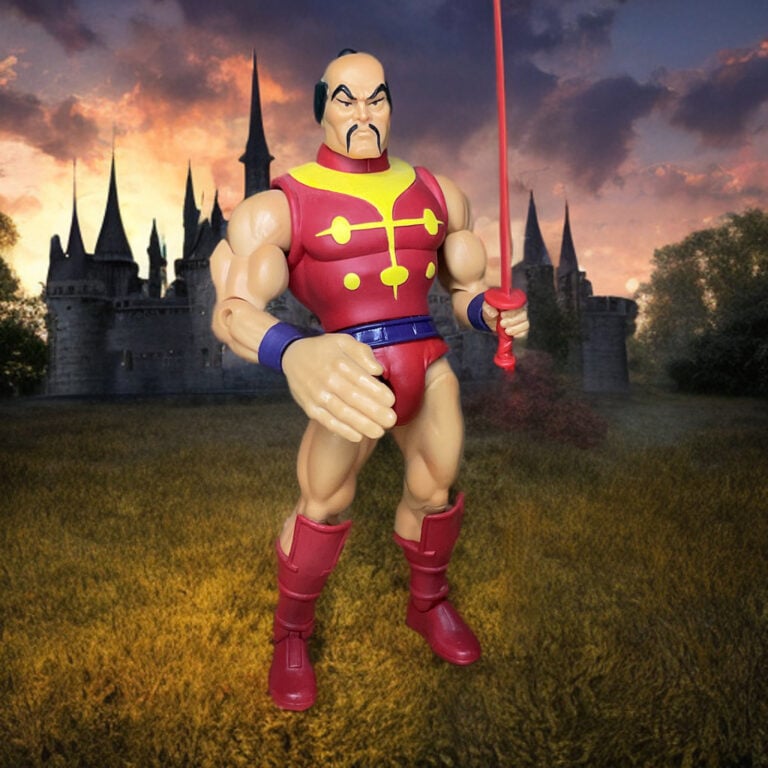
This scarcity hurts nostalgia pull. Compare him to Webstor or Whiplash, who popped up more frequently and developed distinct personalities. Jitsu’s minimal screen time means newer fans or casual collectors have little emotional attachment from the cartoon. It’s a key factor in his lower demand, even as Origins aimed to recapture vintage vibes rather than Filmation ones. Yet that single appearance adds a layer of mystique — he’s the rare deep-cut villain who feels special precisely because he’s elusive.
Personality Quirks and Character
What quirks define Jitsu across continuities? He’s often portrayed as disciplined, honorable in a villainous way, and fiercely loyal — at least initially. Unlike the bumbling or treacherous henchmen around Skeletor, Jitsu carries himself with martial pride. He’s a frontline fighter who earns his place through skill rather than schemes or brute force alone.
In mini-comics, he’s a direct combatant who clashes with Fisto in “The Clash of Arms,” highlighting their rivalry. His golden hand isn’t just a weapon; it’s a symbol of resilience — a replacement after injury in some lore. This gives him a tragic edge: the warrior who adapted and grew stronger through adversity. Fans often imagine him as stoic yet quick to anger when his honor is questioned, with a dry wit or samurai-like code that sets him apart from Skeletor’s more chaotic crew.
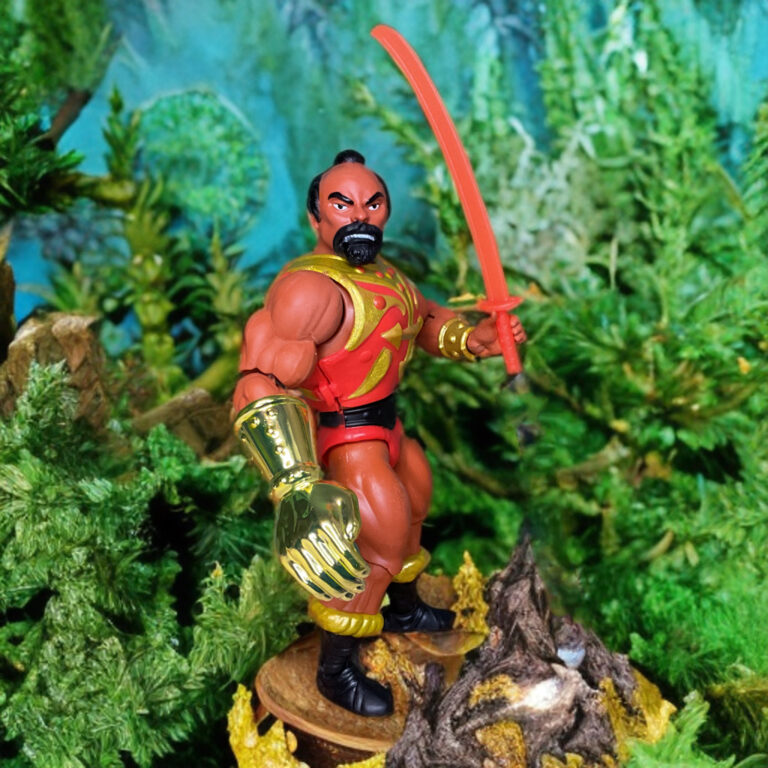
He’s not the most talkative villain, which makes his actions speak louder. That quiet intensity is part of his appeal — he’s the guy you call when you need a wall (or a hero) demolished. As a big fan, I’ve always appreciated how he feels like a grounded, tactical threat in a world of magic and monsters. He brings martial arts flair to Eternia’s sword-and-sorcery setting without feeling out of place.
Masters of the Universe Classics: The Richest Lore
The Classics line gave Jitsu his most developed backstory, turning him from a one-note henchman into a fully realized character. According to the bios, he began as a bandit imprisoned at the Prison Starr. During the Great Unrest, Keldor (pre-Skeletor) rescued him. In gratitude, Jitsu pledged eternal loyalty, sticking by his leader even after the transformation into Skeletor.
He became a key warrior in the wars against King Randor’s forces, excelling in multiple martial arts. The defining moment came at the Battle of Gretori Bridge, where his arch-rival Fisto wounded him badly. Tri-Klops crafted the iconic golden bionic hand as a replacement, cementing both Jitsu’s power and his grudge.
Later, when Skeletor abandoned Eternia for greater conquests, Jitsu seized control of Snake Mountain. He ruled it with an iron (golden) fist, evolving from lieutenant to warlord. This arc adds ambition and independence — he’s not just Skeletor’s lackey forever. Classics expanded his swordsmanship, strategic mind, and presence, making him a formidable foe with real agency. Many Origins collectors draw from this lore for their displays and stories.
The Origins Release: What Went Right with the Figure
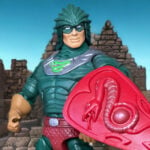
Mattel nailed the Origins Jitsu when it dropped in Wave 7 around late 2021/early 2022. Standing at 5.5 inches with 16 points of articulation, it captures the vintage essence while adding modern poseability for dynamic displays. The vac-metallized chopping hand shines literally and figuratively — a premium touch that feels luxurious compared to painted alternatives. The head sculpt delivers a perfect snarl, the armor has that bold yellowish-gold vibe, and accessories (sword, armor, mini-comic) round it out nicely.
Reviewers consistently praised the sculpt, paint apps, and how well it pairs with other Origins villains. It’s an “excellent figure,” as you noted — fun to pose, sturdy, and true to the character’s martial prowess. The included “Challenge of Jitsu” mini-comic adds storytelling value. For fans prioritizing vintage-inspired design over hyper-detailed modern lines, it’s a standout.
So if the figure is this good, why the bargain-bin fate?
What Went Wrong: Analyzing the Origins Jitsu Market Failure
Several factors converged to make Origins Jitsu one of the line’s biggest shelf-warmers. First, overproduction and Wave 7 performance. Many collectors reported Wave 7 (including Sorceress, Buzz-Off, and Stratos variants) sitting on pegs longer than earlier waves. Mattel and retailers appear to have over-ordered or misjudged demand for these deeper-cut characters after the initial hype of core releases.
Second, limited nostalgia hook. As discussed, Jitsu’s single cartoon appearance and absence from major revivals (like 2002) mean less built-in demand. Fans chasing Filmation Cartoon Collection figures prioritized characters with more screen time. Jitsu felt more like a “vintage completist” item than a must-have for broader audiences.
Third, design familiarity and rivalry fatigue. Being Fisto’s evil counterpart is cool, but some saw him as redundant next to flashier villains. Market saturation by Wave 7 also played a role — collectors were deep into the line, budgets stretched, and newer exclusives or playsets competed for attention. Distribution inconsistencies common to Origins didn’t help visibility.
The Value Gap: Retail vs. Secondary Market (2026)
Data Points (Estimated for 2026 context):
| Figure (Origins Line) | Original Retail (2022) | Secondary Market Value (2026) | % Change |
| Jitsu (Wave 7) | $19.00 | $8.50 | -55% |
| Stratos (Wave 7) | $19.00 | $15.00 | -21% |
| Sorceress (Wave 7) | $19.00 | $28.00 | +47% |
| Webstor (Wave 5) | $19.00 | $45.00 | +136% |
| Scare Glow (Wave 2) | $19.00 | $85.00 | +347% |
The Nostalgia Paradox (Screen Time vs. Market Demand)
| Character | Total Filmation Apps | 2002/Modern Apps | “Nostalgia Score” (1-10) | 2026 Market Status |
| Skeletor | 100+ | High | 10 | Legend / High Demand |
| Trap Jaw | 45 | Moderate | 9 | Core / High Demand |
| Whiplash | 15 | Moderate | 7 | Secondary / Steady |
| Webstor | 5 | Low | 6 | Cult Classic / Rising |
| Jitsu | 1 | Nearly Zero | 3 | Bargain Bin / Oversupply |
Fourth, collector psychology. Early waves flew off shelves due to pent-up demand. By Wave 7, the “chase” factor diminished for secondary characters. Positive reviews couldn’t overcome the perception of lower demand, creating a self-fulfilling prophecy of discounting. As of 2026, the math is clear: strong figure, weak secondary value.
In short, nothing was “wrong” with the figure itself. External timing, character obscurity, and line economics created the perfect storm for a bargain.
Other Versions: Masterverse and Beyond
For contrast, the Masterverse New Eternia Jitsu flips the script. Here, Prince Adam rescues him from Point Dread Prison; he becomes a mistrusted but valuable ally in the search for the Isle of Grayskull. This heroic/anti-hero take, with samurai-inspired armor and vac-metal hand, offers fresh display options and shows the character’s flexibility. It’s a bolder, more detailed 7-inch scale figure that appeals to those wanting variety.
The Classics version remains the lore gold standard, while Super7’s Filmation Chopper captures the cartoon look perfectly for purists. Each iteration proves Jitsu’s design translates well across scales and continuities, reinforcing that the Origins version’s struggles were market-specific, not character-specific.
Conclusion
Jitsu’s Origins release is a cautionary tale wrapped in an outstanding toy. Mattel delivered a faithful, fun, and ferocious figure that honors the vintage original while improving on it in every modern way. Yet a combination of overproduction, limited media exposure, and collector fatigue turned what should have been a hit into a clearance king. In 2026, that misfortune is your gain — you can build a killer villain army or complete your Origins collection without breaking the bank.
As a longtime fan, I’ll keep championing Jitsu. He’s more than a golden hand and a snarl; he’s a resilient warrior with untapped story potential, from bandit to warlord to unlikely ally. His low price doesn’t reflect quality — it reflects opportunity. If you’ve hesitated, now’s the time. Grab him, pose him mid-chop against Fisto, and let your imagination fill in the epic tales Classics and mini-comics started. Eternia needs more characters like Jitsu: tough, distinctive, and ready to fight.
In a hobby full of skyrocketing prices and scalper drama, Jitsu reminds us that sometimes the best figures are the ones everyone else overlooked. Here’s to the chop that keeps on giving. What are you waiting for? Snake Mountain awaits its former ruler.
 English
  Deutsch
  Français
  Português do Brasil
  日本語
日本語  Español
  English (Australia)