

What Is the Secret Difference Between WWE and WCW Pacing?
For many pro wrestling fans who grew up during the Monday Night Wars, there was always an instinctive feeling that World Championship Wrestling (WCW) and World Wrestling Entertainment (WWE, then WWF) simply felt different. Even before understanding wrestling psychology, television production, or in-ring mechanics, viewers could sense that the rhythm of a WCW show was unlike anything happening in WWE.
Looking back, those instincts were remarkably accurate.
The most significant difference between WWE and WCW was not necessarily the wrestlers, storylines, championships, or even production values. It was pacing. The way matches unfolded, the speed at which stories developed, and the rhythm of the action created two completely different viewing experiences. WWE approached wrestling as a carefully scripted television drama, while WCW embraced a more chaotic and improvisational style rooted in traditional Southern wrestling.
This difference was so profound that when many WCW wrestlers joined WWE after WCW closed in 2001, they struggled to adapt. Their timing was different. Their instincts were different. Even their sense of distance inside the ring was different. Understanding these pacing differences helps explain why the two companies felt so distinct and why certain wrestlers succeeded or failed when crossing from one promotion to the other.
Weekly TV Segment & Flow Pacing
How WWE and WCW structured their flagship shows
| Pacing Element | WWE (WWF Raw is War) | WCW (Monday Nitro) |
|---|---|---|
| Show Open | Long, character-driven in-ring promo to set up the night's main event storyline. | Immediate, fast-paced action (often a high-flying Cruiserweight matchup). |
| Transition Speed | Tightly scripted, highly polished, with pre-planned backstage packages and video packages. | Rapid-fire, chaotic, and "live" feel. Promos often occurred on the fly at the entrance stage. |
| Commercial Breaks | Structured to build suspense, regularly ending segments on major cliffhangers. | More traditional sports-broadcast style; matches frequently continued during split-screens. |
WWE’s Philosophy: Wrestling as Television Drama
WWE’s approach to pacing was built around television production.
From the 1980s onward, WWE increasingly viewed itself not simply as a wrestling company but as an entertainment company that used wrestling as its vehicle. Matches were only one component of a larger television presentation that included backstage interviews, story segments, character development, commercial breaks, and dramatic plot twists.
Because of this philosophy, every match had a specific purpose within the broader structure of the show. Wrestlers were expected to fit their performances into carefully managed time slots. Producers often knew down to the minute when commercial breaks would occur, when key moments needed to happen, and how long the finish should take.
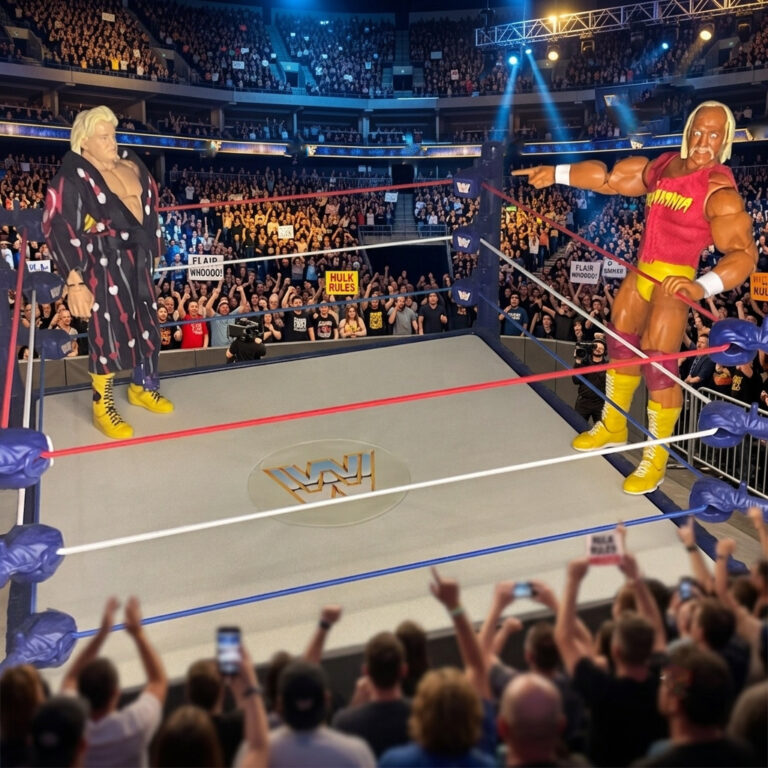
This created a style of wrestling that often began slowly. Wrestlers would establish the story, build tension, create sympathy for a babyface or heat for a heel, and gradually escalate toward a climax. Rather than delivering constant action, WWE focused on creating emotional peaks and valleys.
The pacing resembled a television drama. Every scene existed to move the larger story forward.
As a result, WWE matches frequently featured deliberate pauses. Wrestlers could slow the pace, interact with the crowd, sell the effects of a move, or recover physically before building toward the next sequence. These moments were not considered dead time. They were viewed as essential components of storytelling.
For performers, this structure created predictability. They knew where the match was going and could manage their energy accordingly.
WCW’s Philosophy: Wrestling as Controlled Chaos
WCW operated under a very different philosophy.
While WWE focused on structured storytelling, WCW often prioritized immediate excitement. During the height of the Monday Night Wars, WCW was engaged in a weekly battle for television viewers. Every segment carried the risk that fans might change the channel to watch WWE.
As a result, WCW frequently favored action over patience.
Matches often started at a much faster pace. Wrestlers would begin exchanging high-impact offense almost immediately rather than spending several minutes establishing a narrative foundation. The goal was to generate crowd reactions as quickly as possible.
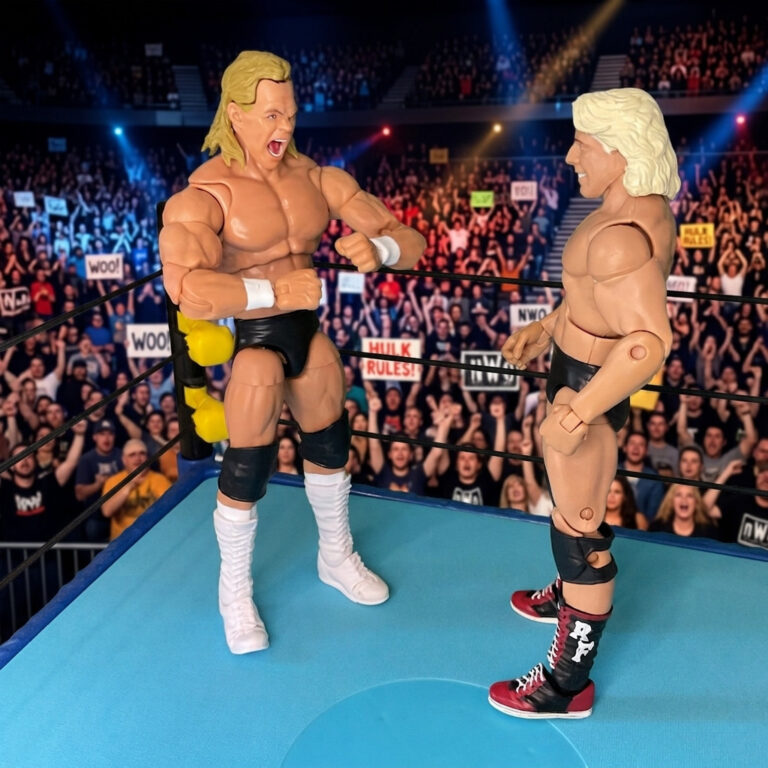
This approach created a sense of unpredictability that became one of WCW’s defining characteristics.
Viewers never felt entirely certain what might happen next. Cruiserweights flew across the ring at incredible speed. Brawls erupted unexpectedly. Wrestlers often appeared to be operating on instinct rather than following a rigid script.
The result was a product that felt alive.
At its best, WCW gave audiences the impression that anything could happen at any moment. That energy became one of the company’s greatest strengths and one of the primary reasons so many fans still remember WCW so fondly decades later.
The Art of Calling It in the Ring
Perhaps the most important difference between WWE and WCW involved how matches were actually constructed.
WWE generally preferred extensive planning before performers ever stepped through the curtain. Wrestlers and producers would discuss key sequences, major spots, turning points, and finishes ahead of time. While adjustments could occur during the match, most of the framework already existed.
WCW’s culture was far more dependent on improvisation.
Many wrestlers developed in territories connected to the National Wrestling Alliance and Jim Crockett Promotions. In those systems, performers were expected to “call the match in the ring.” Rather than memorizing a detailed script, wrestlers communicated throughout the contest and adapted based on crowd reactions.
This required extraordinary instincts.
A wrestler needed to understand psychology, timing, audience behavior, and the strengths of their opponent. If the crowd responded strongly to something unexpected, performers could alter the match and capitalize on that energy. If the audience became disengaged, they could change direction immediately.
When executed by experienced professionals, the results were magical.
Matches felt organic because they genuinely were organic.
However, the downside was obvious. Improvisation leaves little room for mistakes. If communication broke down, the match could quickly become awkward or confusing. Wrestlers who lacked elite instincts often struggled in this environment.
This became especially apparent when some WCW performers entered WWE after the acquisition. Their natural instincts had been developed in a completely different system, and adapting to WWE’s structured expectations proved difficult.
Why WWE’s Pacing Was Easier to Execute
Although WWE’s style demanded professionalism and discipline, many veterans considered it easier from a pacing standpoint.
The primary reason was predictability.
A wrestler working a WWE match generally knew the overall roadmap before stepping into the ring. They knew where the dramatic moments would occur. They knew when the crowd would be encouraged to react. They knew when the finish was approaching.
This predictability allowed performers to manage their conditioning more effectively.
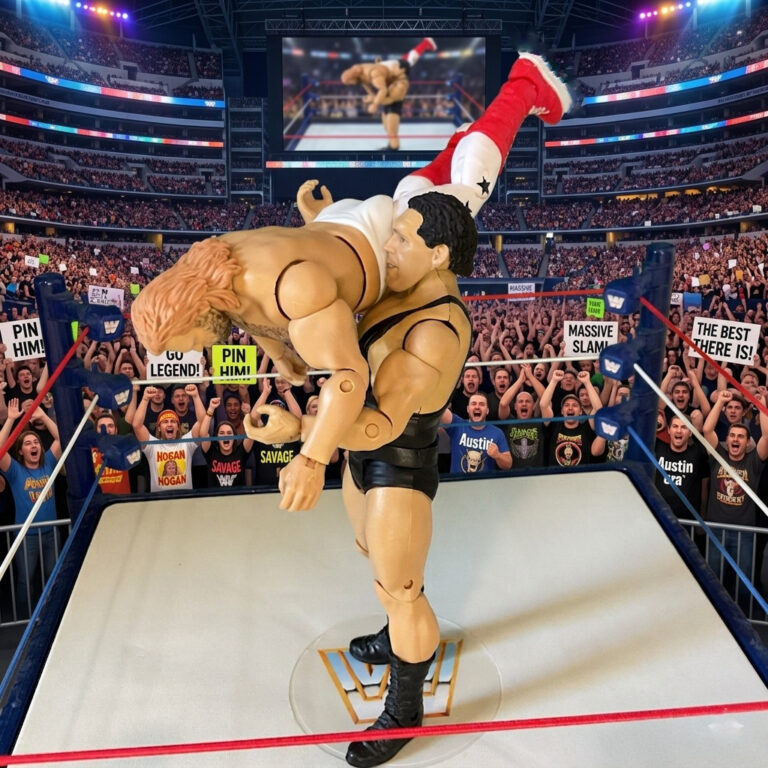
WWE’s style also incorporated numerous opportunities to slow down. A wrestler could pause after a major move, engage the audience, sell an injury, or simply allow the crowd to absorb what had happened. These moments served storytelling purposes while simultaneously providing physical recovery.
The structure itself helped performers maintain control over the pace.
Mistakes could still happen, but the framework reduced the likelihood of a match spiraling out of control.
Why WCW’s Pacing Was More Demanding
WCW’s style often placed greater demands on performers despite sometimes appearing less physical on the surface.
The biggest challenge was the constant need for adaptation.
Because so much of the match could change based on audience reactions, wrestlers needed to remain mentally engaged every second. There was rarely an opportunity to simply follow a predetermined sequence.
At the same time, WCW’s television environment rewarded urgency.
Recommended reading: Diesel vs. Diesel: The Ultimate Action Figure Showdown
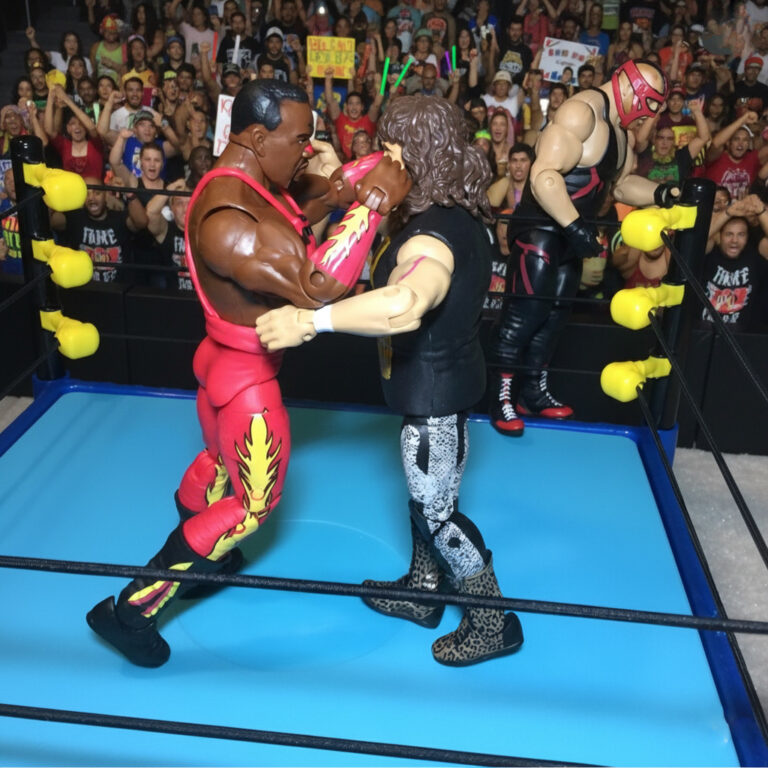
Matches frequently moved at a faster pace. Wrestlers exchanged offense more rapidly and often spent less time resting between major moments. This required excellent cardiovascular conditioning and sharp situational awareness.
The margin for error was smaller.
A wrestler having an off night could be exposed immediately because there was no detailed script to fall back on. Every weakness in timing, communication, or psychology became visible.
This is one reason many WCW veterans developed reputations as exceptional ring generals. The environment demanded it.
The Forgotten Factor: Ring Size
One of the most overlooked reasons wrestlers struggled when switching companies involved something surprisingly simple: the ring itself.
WWE traditionally used a twenty-foot-by-twenty-foot ring.
WCW generally used an eighteen-foot-by-eighteen-foot ring.
To casual viewers, the difference appears insignificant. To professional wrestlers, it was enormous.
Every wrestler develops muscle memory based on thousands of repetitions. They know instinctively how many steps it takes to hit the ropes, how far they need to travel for a particular move, and how quickly an opponent will arrive at a certain position.
Changing the ring dimensions disrupted all of that.
Those extra two feet altered spacing, timing, footwork, and depth perception. Wrestlers suddenly found themselves arriving too early or too late. Moves that once felt automatic required conscious adjustment.
It was comparable to a professional athlete being asked to compete on a field with slightly different dimensions than the one they had trained on for years.
The difference may seem small, but at elite levels, small differences matter.
Match-by-Match Pacing Comparison
How match speeds and finishes differed across card tiers
| Card Tier | WWE Pacing Strategy | WCW Pacing Strategy |
|---|---|---|
| Opening Matches | Storyline-driven brawls or character introductions; rarely exceeded 5-8 minutes. | High-octane, fast-paced Cruiserweight matches showcasing technical/lucha libre action. |
| Midcard Matches | Highly structured with clear "heel/face" dynamics and storyline-progressing finishes. | Pure athletic showcases with heavy international talent (Japan/Mexico); less emphasis on plots. |
| Main Events | Climactic, high-energy battles. Stories peaked here with decisive, explosive conclusions. | Slower, star-power reliant pacing. Frequently ended in massive interference or inconclusive finishes. |
The Southern Wrestling Influence
To fully understand WCW’s pacing, it is necessary to understand its roots.
WCW was not created in a vacuum. Its DNA came directly from Jim Crockett Promotions and the National Wrestling Alliance, organizations that dominated wrestling throughout the American South for decades.
This tradition became known as Southern-style wrestling.
Southern wrestling emphasized realism above all else. Matches were designed to feel like genuine athletic contests fueled by personal grudges and emotional rivalries. Wrestlers focused on making audiences believe in the conflict.
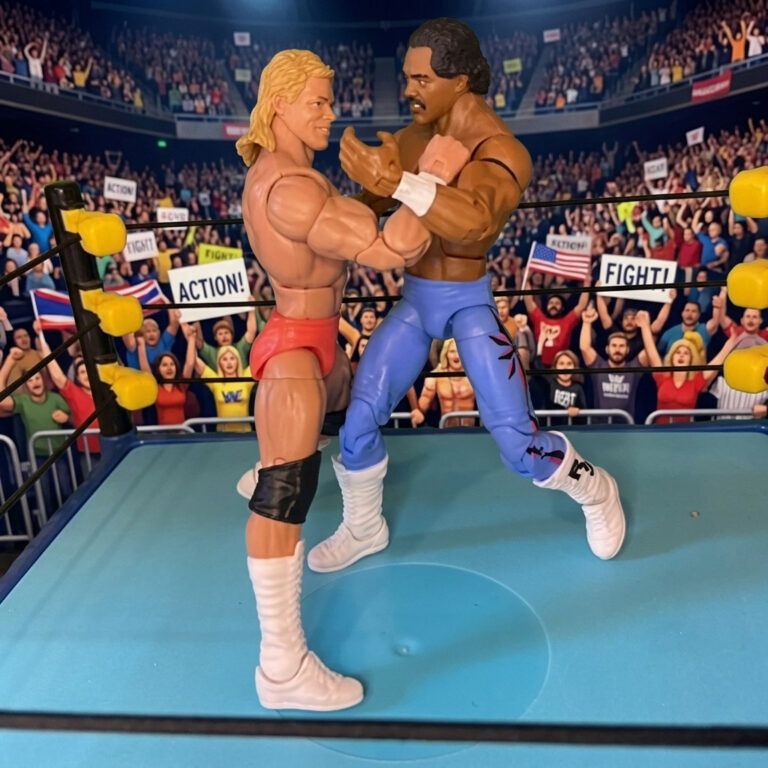
The style prioritized crowd engagement over choreography.
Veterans such as Ric Flair, Dusty Rhodes, and Arn Anderson mastered the ability to listen to an audience and adjust accordingly. They understood that pacing was not predetermined. It was a living conversation between performer and crowd.
If fans became excited, the action accelerated.
If tension needed to build, the match slowed down.
This flexibility created a feeling of authenticity that many fans still associate with classic wrestling.
Why WCW Felt More Real to Many Fans
One reason so many viewers preferred WCW during certain periods was that its pacing created an illusion of reality.
Real fights are messy.
They are unpredictable. They contain sudden bursts of action followed by moments of uncertainty. They do not always unfold according to a neat script.
WCW often captured that feeling.
Because matches were less rigidly structured, they sometimes appeared more spontaneous. Wrestlers reacted to crowds in real time. Sequences occasionally looked rough around the edges. Promos felt less polished.
Ironically, those imperfections often enhanced the product.
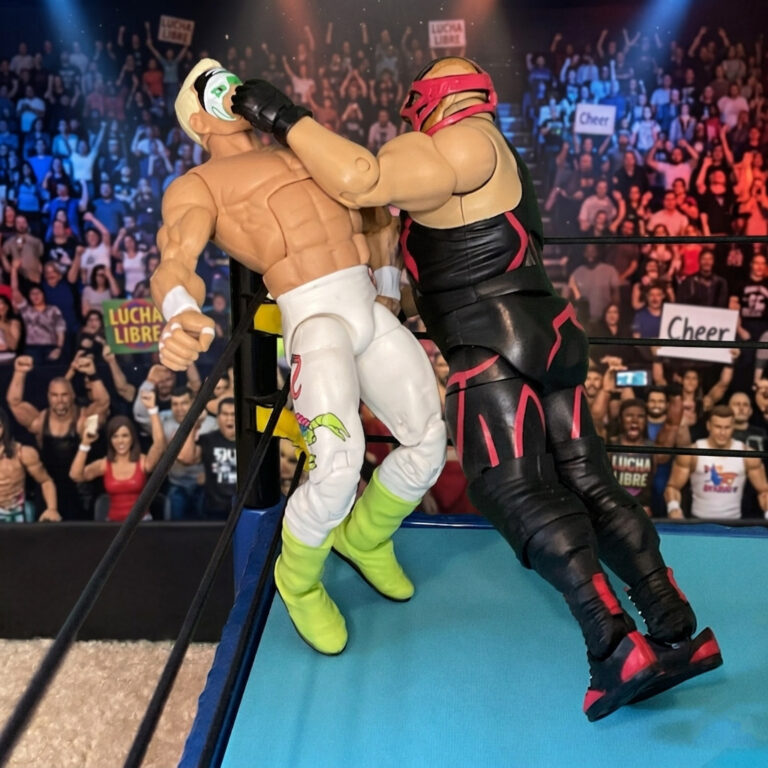
The audience sensed genuine unpredictability, and unpredictability creates excitement.
WWE’s approach was frequently smoother and more polished, but WCW’s approach could feel more dangerous and authentic.
That difference in emotional texture became one of the defining characteristics of the wrestling boom of the 1990s.
Storyline Build & Creative Pacing
The long-term creative strategies that defined the era
| Creative Metric | WWE Narrative Style | WCW Narrative Style |
|---|---|---|
| Planning Cycle | Long-term. Storylines systematically paced out over months, building anticipation for monthly PPVs. | Short-term. Frequently "booked on the fly" to win the immediate weekly television ratings battle. |
| Under/Midcard Plotting | High investment. Nearly every wrestler on the card had a distinct storyline or feud. | Minimal investment. The undercard relied almost entirely on work-rate and outstanding matches. |
| Big Match Execution | Protected assets. Major dream matches were strictly held back for pay-per-view events. | "Hot-shotting." Gave away massive dream matches (e.g., Goldberg vs. Hogan) on free television. |
Conclusion
The difference between WWE and WCW pacing was ultimately a difference in philosophy.
WWE emphasized structure, television production, and carefully controlled storytelling. Its matches were designed as dramatic narratives with clear beginnings, middles, and endings. This made the style easier to manage and more predictable for performers.
WCW embraced improvisation, spontaneity, and the traditions of Southern wrestling. Its matches often moved faster, relied more heavily on instinct, and demanded greater adaptability from the wrestlers involved. While this approach was more chaotic and physically demanding, it also created an energy that many fans found impossible to replicate.
For viewers, these differences were often felt long before they were understood. Fans who grew up watching both promotions instinctively recognized that each company moved to a different rhythm. One felt like a carefully produced television drama. The other felt like a wild sporting event that might break into chaos at any moment.
Neither approach was inherently superior. Both produced legendary matches, unforgettable stars, and devoted audiences. Yet understanding the contrast in pacing helps explain why WWE and WCW remain two of the most distinct wrestling products ever presented on national television—and why fans can still immediately recognize the difference decades later. Here’s a related deep-dive coming your way: Protecting the Business vs. Protecting the Paycheck: The Evolving Definition of a “Mark”



 English
  Deutsch
  Français
  Português do Brasil
  日本語
日本語  Español
  English (Australia)