

Protecting the Business vs. Protecting the Paycheck: The Evolving Definition of a "Mark"
What Does “Mark” Mean in Professional Wrestling?
Few words in professional wrestling generate as much debate as the term mark. Traditionally, the word referred to a fan who believed professional wrestling was a completely legitimate athletic contest. As the wrestling industry evolved and fans became more aware of the scripted nature of the business, the meaning of the term expanded. Today, different wrestlers and fans use the word in very different ways.
Perhaps no modern wrestler has redefined the term more than Kevin Nash, whose interpretation often differs dramatically from the traditional understanding. To understand the debate, it is helpful to look at the various meanings the word has acquired over time.
The Evolution of the Term “Mark”
Historically, a mark was simply a fan who believed wrestling was real. During wrestling’s territorial era, promoters and wrestlers fiercely protected the illusion that matches were legitimate competitions. Anyone who completely bought into that illusion was considered a mark.
As wrestling fans became more informed, another term emerged: the “smart mark,” or “smark.” These fans understood that wrestling was scripted but became heavily invested in backstage rumors, booking decisions, contract disputes, and match quality. While they no longer believed wrestling was real, they often became deeply attached to the inner workings of the industry.
The term itself may have roots in carnival culture. According to wrestling folklore, traveling carnies and wrestlers would identify an easy target for a scam by placing a physical mark—sometimes chalk—on the person’s back so other workers knew the individual was vulnerable.
Kevin Nash, however, developed an entirely different definition.
Kevin Nash’s Definition of a Mark
For Nash, being a mark has little to do with whether someone knows wrestling is scripted. Instead, he uses the term to describe wrestlers who become emotionally invested in the fictional aspects of the business.
Nash has repeatedly argued that professional wrestling is ultimately about generating revenue. Championships are props, storylines are fiction, and victories are predetermined. In his view, wrestlers who become obsessed with winning titles, protecting their fictional status, or earning critical praise at the expense of financial success are “marking out” for themselves.
Under Nash’s philosophy, a wrestler who is devastated by losing a scripted championship match is a mark. Likewise, a performer who prioritizes five-star matches over merchandise sales, ticket sales, and paychecks may also fit his definition.
This perspective often put Nash at odds with wrestlers who viewed professional wrestling as an art form or a tradition that needed to be protected.
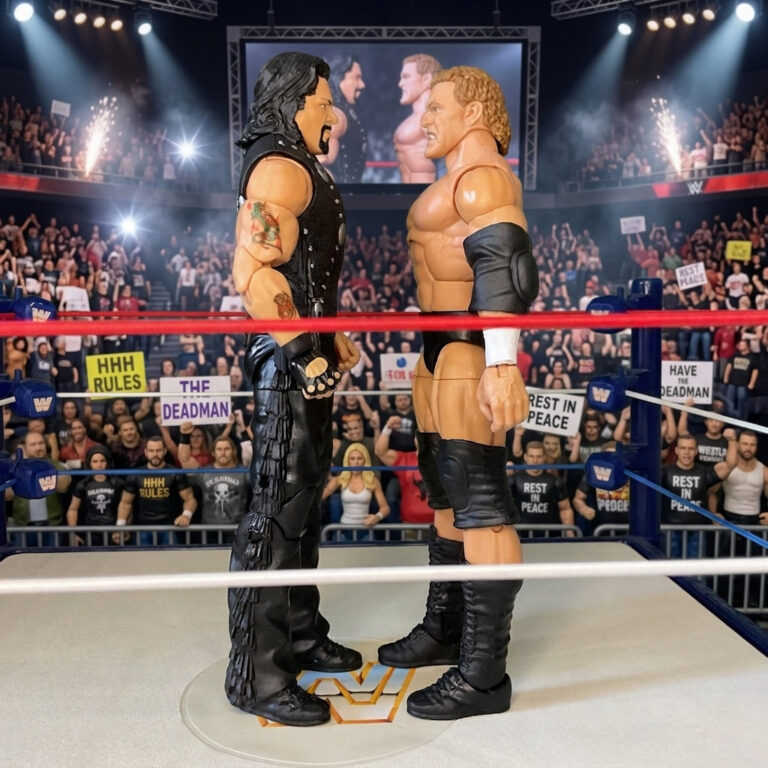
Kevin Nash and The Undertaker: Two Opposing Philosophies
Few wrestlers better illustrate this philosophical divide than Kevin Nash and The Undertaker.
Although both men became legendary performers, they viewed the business from very different perspectives.
| Feature | Kevin Nash’s View | The Undertaker’s View |
| Primary Goal | Maximizing real money and protecting his paycheck. | Protecting the prestige, mystique, and integrity of the character. |
| Titles & Booking | Fictional accomplishments; losing a match does not matter as long as you can still make money after. | Sacred traditions; protecting the “Deadman” persona to keep the illusion alive for fans. |
| Locker Room Role | Subverting the system through backstage groups like The Kliq to gain leverage. | Acting as the traditional locker room leader and policing the boys to respect the business. |
At first glance, The Undertaker seems to fit Nash’s definition of a mark. Mark Calaway famously protected the Deadman character for decades, rarely appearing publicly out of character and maintaining an extraordinary commitment to kayfabe long after much of the industry had abandoned it.
One famous example involved Nash performing a sunset flip during a match. According to Nash, Undertaker confronted him afterward and argued that the move did not fit the image of a giant heavyweight wrestler. From Nash’s perspective, enforcing unwritten rules about what moves certain wrestlers should perform could be viewed as taking the business too seriously.
Why Nash Gives The Undertaker a Pass
Despite their philosophical differences, Nash has never publicly grouped The Undertaker with the wrestlers he frequently criticizes.
The reason is simple: The Undertaker’s dedication worked.
For more than three decades, The Undertaker remained one of WWE’s biggest attractions, generating merchandise sales, ticket sales, and mainstream recognition. In Nash’s eyes, protecting the character was not merely an artistic pursuit—it was good business.
Nash has also consistently praised Calaway’s leadership and professionalism. While he may disagree with some of Undertaker’s old-school views, he acknowledges that very few performers could have made the Deadman gimmick successful for such an extended period.
In other words, The Undertaker transformed what Nash might otherwise call “mark behavior” into a highly profitable business strategy.
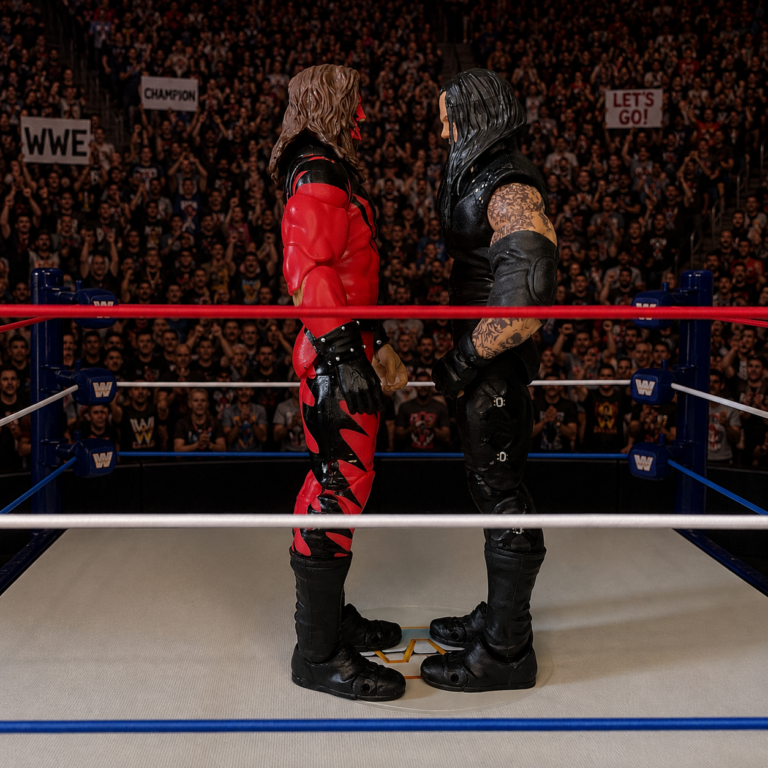
Of all the ironies in professional wrestling, none hits quite like this: the man who protected kayfabe like it was the Holy Grail, the guy who’d bury you for breaking character, the eternal Deadman himself… is literally named Mark. The biggest mark in the business wasn’t even a fan — he was the character.
Wrestlers Kevin Nash Has Criticized as Marks
Nash has been much less charitable toward other performers whom he believed prioritized artistic achievement over financial success.
One of his most common examples involves Chris Benoit and Eddie Guerrero following WrestleMania XX. Nash argued that placing the industry’s top championships on smaller, work-rate-oriented wrestlers represented a shift away from drawing power and mainstream appeal. He believed wrestling was moving toward rewarding in-ring performance rather than creating larger-than-life attractions.
CM Punk has also frequently found himself in Nash’s crosshairs. Their public disagreements reflected broader philosophical differences about wrestling. Nash viewed Punk as someone who embodied the mindset of internet wrestling culture and the modern “smart mark” audience.
Nash also popularized criticism of what he called “vanilla midgets“—smaller technical wrestlers who received praise from hardcore fans but whom he believed lacked the mainstream appeal necessary to attract casual audiences. To Nash, many of these performers were overly concerned with match quality and critical acclaim instead of growing the business.
The Undertaker and Wrestler’s Court
If Nash represented a pragmatic business-first approach, The Undertaker became the guardian of wrestling’s traditional culture.
One of the most famous examples was Wrestler’s Court, an informal backstage disciplinary system that existed within WWE for years. While management remained uninvolved, wrestlers used the court to settle disputes and enforce locker-room etiquette.
The Undertaker typically served as judge, while John Bradshaw Layfield (JBL) often acted as prosecutor.
Several legendary stories emerged from this system.
The Miz was famously punished after accidentally eating chicken over Chris Benoit’s gym bag. The incident was viewed as disrespectful, and The Miz reportedly spent months changing in hallways and public restrooms rather than the main locker room.
Matt and Jeff Hardy were once brought before the court after mistakenly taking first-class airline seats intended for veteran wrestler Kane. Their punishment reportedly involved compensating Kane and making amends.
Former WWE Diva Melina was also reportedly summoned for displaying what some veterans viewed as an arrogant attitude. As part of her sentence, she was required to buy gifts and drinks for the locker room.
Perhaps the most humorous story involved Edge and Christian. Knowing they were likely headed to Wrestler’s Court, they allegedly presented The Undertaker with expensive bottles of Jack Daniel’s before the hearing. According to wrestling lore, the case was dismissed.
Conclusion
The meaning of “mark” in professional wrestling depends entirely on who is using the term. Traditionally, it described fans who believed wrestling was real. Among modern fans, it may refer to people overly invested in wrestling’s backstage world.
For Kevin Nash, however, a mark is often a wrestler who loses sight of the fact that professional wrestling is ultimately a business. By that definition, many old-school traditionalists could qualify as marks.
The Undertaker presents a fascinating exception. His devotion to protecting wrestling’s traditions, characters, and locker-room culture was exactly the type of behavior Nash often criticized. Yet because that dedication helped create one of the most successful and profitable characters in wrestling history, Nash has consistently treated him as an exception rather than an example. What Is the Secret Difference Between WWE and WCW Pacing?
 English
  Deutsch
  Français
  Português do Brasil
  日本語
日本語  Español
  English (Australia)