

Frank Frazetta’s Hidden Influences: The Masters Who Forged the Ultimate Barbarian
Part 1 of 4 in a 4 part limited series. (1, 2, 3, 4)
Frank Frazetta didn’t emerge from a vacuum swinging a battle axe. The man who redefined sword-and-sorcery with oil-painted muscle and drama openly drew from a rich stew of sources — comic strip masters, pulp illustrators, classical painters, and even Hollywood monster movies. While he became the ultimate influence on 1980s toy box art, Frazetta himself was a product of earlier visual storytellers. His style was an alchemical blend: dynamic composition from adventure comics, heroic anatomy from Renaissance masters, and raw pulp energy from Edgar Rice Burroughs covers.
Hal Foster: The Foundational Influence
Frazetta repeatedly named Hal Foster as his primary influence, especially Foster’s Prince Valiant comic strips. Foster’s lush, illustrative adventure art — with its sweeping landscapes, detailed armor, heroic poses, and cinematic storytelling — left a massive imprint. Frazetta admired Foster’s ability to simplify complex scenes while packing them with narrative power.
Look at Foster’s Prince Valiant panels: epic battles on bridges, knights in shining (or dented) armor, dramatic lighting, and fluid action. Frazetta absorbed that storytelling clarity and elevated it into his oil paintings. Where Foster worked in line and color washes for newspaper strips, Frazetta turned similar heroic energy into visceral, moody oil epics. Many of Frazetta’s Conan pieces echo Foster’s sense of grand adventure, but with added grit, sweat, and primal force.
Frazetta once said Foster’s work “turned out to be a major artistic influence,” and you can see it in the way both artists handled group battles, capes billowing in the wind, and heroes dominating the frame.
J. Allen St. John: The Pulp King Who Paved the Way
Before Frazetta dominated paperback covers, J. Allen St. John defined the visual language of Edgar Rice Burroughs’ worlds — Tarzan, John Carter of Mars, and other jungle/planetary adventures. St. John’s dynamic, colorful pulp illustrations featured muscular heroes wrestling beasts, dramatic lighting, and exotic settings.
Frazetta grew up on these covers and later assisted Roy Krenkel on Burroughs paintings. St. John’s Tarzan pieces — lean, athletic figures in savage combat with tigers or apes — directly fed into Frazetta’s barbarian aesthetic. The difference? St. John was more illustrative and colorful; Frazetta made it darker, oilier, and more sexually charged.
You can spot the lineage: St. John’s Tarzan swinging through danger feels like a direct ancestor to Frazetta’s wild-eyed warriors.
Classical Masters: Rubens, Michelangelo, and Beyond
Frazetta wasn’t just a pulp kid — he studied the classics. Peter Paul Rubens appears frequently in discussions of his influences. Rubens’ Baroque paintings are famous for energetic compositions, muscular (and voluptuous) figures, dramatic lighting, and movement. Frazetta’s battle scenes and heroic torsos owe a debt to Rubens’ sense of swirling chaos and physical power.
Michelangelo gets credit for anatomy lessons. Frazetta’s hyper-muscular heroes — with bulging delts, ripped abs, and heroic proportions — echo the Sistine Chapel and David. He exaggerated it for fantasy effect, but the foundational understanding of the human form came from classical study.
Other nods include Diego Velázquez for painterly technique and Francisco Goya for raw power and magic, as Frazetta himself mentioned in interviews. He drew from “all the masters that ever lived,” blending high art with lowbrow pulp.
Comic Strip and Early Comic Influences
Frazetta’s career started in comics, and his youthful diet shaped him:
- Milton Caniff (Terry and the Pirates): Bold, cinematic storytelling, dramatic shadows, and adventurous flair. Caniff’s newspaper strips taught Frazetta how to make panels pop with tension and exotic locales.
- Al Capp: Frazetta ghosted on Li’l Abner, absorbing exaggerated anatomy, humor, and hillbilly energy (which somehow fed into his later barbarian exaggeration).
- Alex Raymond (Flash Gordon): Often cited as potentially even stronger than Foster for clean adventure illustration.
- Early exposure to Jack Kirby’s dynamic Captain America pages added punch and energy.
He also worked with John Giunta as a teen apprentice and inked for EC Comics alongside Roy Krenkel, who pushed him toward oils.
Pop Culture and Cinema: King Kong and More
Frazetta was obsessed with the original 1933 King Kong — its giant ape, jungle peril, and sense of wonder. Multiple viewings as a kid fueled his love for monstrous scale and heroic struggle against beasts. This primal energy shows up in countless Frazetta paintings where warriors battle oversized creatures.
Adventure serials, Burroughs novels, and even Western swashbucklers rounded out his visual vocabulary.
THE CORE DIETARY ROOTS OF SWORD & SORCERY
Tracking stylistic traits absorbed from Frazetta's early comic studio years
How These Shaped Frazetta’s Signature Style
Frazetta synthesized everything into something new: Foster’s narrative clarity + St. John’s pulp heroism + Rubens’ Baroque energy + Michelangelo’s anatomy + Caniff’s drama = raw, emotional, larger-than-life fantasy. He painted fast and loose, prioritizing mood, gesture, and power over photorealism. His Conan wasn’t Howard’s lean Cimmerian — it was Frazetta’s ultimate barbarian: scarred, monstrous, unstoppable.
This blend made his work perfect for mass reproduction on book covers, posters, and later toy packaging. It also made him infinitely influential. Artists like Boris Vallejo, Julie Bell, Simon Bisley, and modern game/film designers built on his foundation.
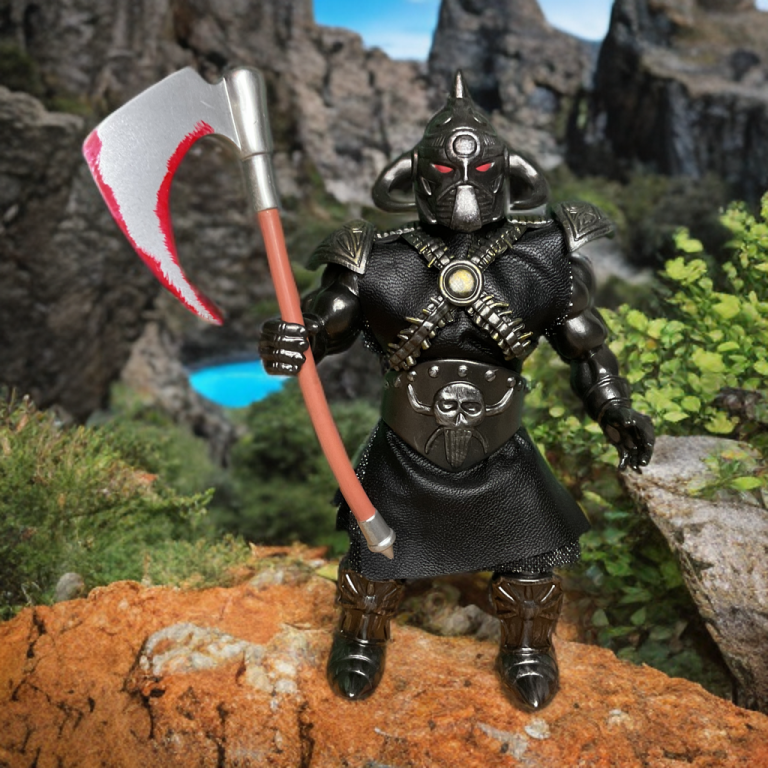
His own creations, like the iconic Death Dealer — a mysterious armored warrior in fiery hellscapes — became standalone myths that looped back to inspire new generations.
THE FRAZETTA ALCHEMY INDEX
How individual classic elements were weaponized into raw barbarian fantasy (Scale 1-10)
The Full Circle: From Influences to Influencer
Frazetta started as a sponge, soaking up Foster, St. John, Rubens, comics, and cinema. He transformed those ingredients into a personal style so potent it defined fantasy visuals for decades — and indirectly shaped the very toy box art that promised Frazetta-level epics but sometimes delivered plastic with limited knee mobility.
He once said he preferred working “free of influences,” but that was the confidence of a master who had already internalized them all. The result? Paintings that still hit like a ton of bricks — drama, urgency, sex, and fantasy in one explosive package.
Whether you’re staring at a vintage Conan cover, a Molly Hatchet album, or a modern He-Man box, you’re seeing echoes of Hal Foster’s knights, St. John’s jungle lords, Rubens’ vigor, and a Brooklyn kid’s wild imagination. Frazetta didn’t just get influenced — he weaponized his influences into legend.
THE INFLUENCER LOOP CYCLE
The macroeconomic journey from vintage sponge to modern industry benchmark
Forge Your Path with Us!
???? Choose Your Next Battle
 Expectation vs. Reality: When the Box Art Promised Frazetta but the Toy Delivered a Diaper
 Eternia’s Dark Secret: How the 1982 Castle Grayskull Box Art Pulled the Ultimate Barbarian Bait-and-Switch
 Ultimate Guide to Zoloworld Realm of the Underworld (ROTU)
 Is This the Definitive Frazetta Conan Action Figure? Ultimate Review
 English
  Deutsch
  Français
  Português do Brasil
  日本語
日本語  Español
  English (Australia)