

Bugbears in D&D: Mythology, Lore, and Best Figures
Origins in Folklore
The concept of the bugbear traces its roots deep into European folklore, particularly in the British Isles, where it served as a spectral figure designed to instill fear in the young and disobedient. Emerging from medieval England, bugbears were envisioned as lurking horrors in the shadows of woods and dark corners, often described as bear-like entities with an eerie, predatory presence. These creatures were not just random monsters but tools of parental control, akin to the boogeyman or hobgoblin, whispering threats of abduction or punishment to wayward children.
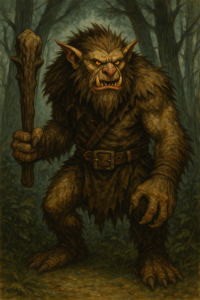
Historical texts from the era, such as the 16th-century play The Buggbears, an English adaptation of an Italian comedy, portrayed them as mischievous spirits capable of shape-shifting or causing mayhem, blending fear with a touch of whimsy. This folklore role positioned bugbears as embodiments of the unknown, preying on the vulnerabilities of the human psyche and reflecting societal anxieties about the wilderness and the supernatural.
Etymology and Cultural Significance
The word “bugbear” itself offers a window into its ancient linguistic origins. Derived from Middle English “bugge,” meaning a frightening apparition or specter, it may connect to Old Welsh “bwg,” signifying an evil spirit or goblin, or even Old Scots “bogill” for a similar hobgoblin figure. Over centuries, the term evolved beyond literal monsters to symbolize personal annoyances or “pet peeves” in modern English, diluting its original terror but preserving its essence as something irksome and persistent.
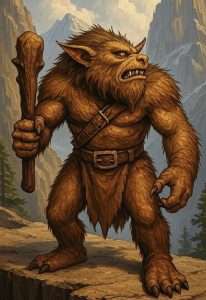
In cultural contexts, bugbears mirrored other global folklore entities, like the Slavic Baba Yaga or Native American skinwalkers, all serving as cautionary archetypes. Their bear-like depiction in English lore—hulking, furry, and stealthy—likely drew from real encounters with bears in forested regions, amplified by storytelling to create a hybrid of animal ferocity and ghostly menace. This fusion made them uniquely adaptable, transitioning from oral tales to literary references, where they embodied the tension between civilization and the wild unknown.
Transition to Modern Fantasy
As folklore waned in the face of industrialization and rationalism, bugbears found new life in 20th-century fantasy literature and games. Authors like J.R.R. Tolkien, with his goblins and orcs, indirectly influenced the reimagining of goblinoid races, paving the way for bugbears to emerge as distinct entities in speculative fiction. The term’s inherent vagueness—neither fully bug nor bear—allowed writers to reinterpret it freely, often as brutish antagonists in stories of heroism and adventure. This shift set the stage for their integration into tabletop role-playing games, where abstract folklore could be codified into playable mechanics and lore, blending myth with interactive narrative.
Introduction in Dungeons & Dragons
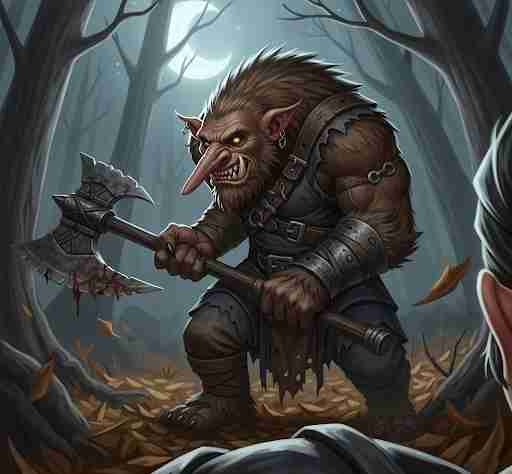
Bugbears made their debut in the world of Dungeons & Dragons (D&D) in 1975, courtesy of co-creator Gary Gygax, in the game’s first supplement, Greyhawk. Described as “great hairy goblin-giants” with a knack for silent movement, they were positioned as formidable foes for low-level adventurers, emphasizing surprise attacks and brute strength. This early portrayal borrowed the folklore name but reinvented the creature as a goblinoid subspecies—larger than goblins and hobgoblins, with a feral, predatory edge. In D&D lore, particularly in settings like the Forgotten Realms, bugbears were theorized to have been bred by hobgoblins as elite slave warriors, enhancing their role as chaotic enforcers in goblinoid hierarchies.
Evolution Through D&D Editions
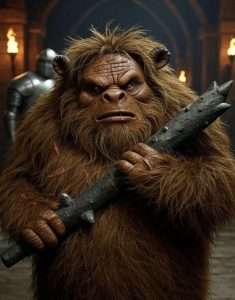
The depiction of bugbears evolved significantly across D&D’s editions, reflecting changes in game design and artistic styles. In the 1977 Advanced D&D (AD&D) Monster Manual, artist Dave Sutherland solidified their iconic look: bulky, furry humanoids with wide, toothy grins, large ears, and a bear-like snout, moving away from an initial oddity in the 1975 supplement where they sported a mistaken “pumpkin head” due to artistic miscommunication. By AD&D 2nd Edition (1989-1999), they appeared in compendiums with more humanoid proportions, sometimes cartoonish, and gained depth through deity lore like Hruggek, god of violence, in Monster Mythology.
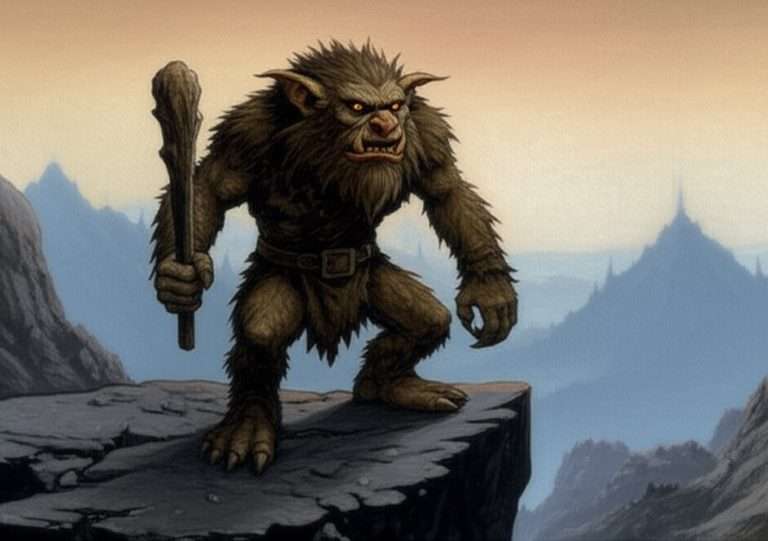
In 3rd Edition (2000-2005), bugbears became playable characters with racial adjustments, emphasizing stealth and strength, and featured prominently in modules like The Sunless Citadel. 4th Edition (2008-2011) grouped them tightly with other goblinoids, introducing variants like wardancers and thugs at mid-level challenges. Finally, in 5th Edition (2014 onward), they retained a Challenge Rating of 1, with chiefs at 3, and expanded player options in Volo’s Guide to Monsters, portraying them as lazy yet opportunistic hunters who hibernate and prefer ambush tactics. Artistically, they grew more refined, balancing monstrous ferocity with relatable traits.
Characteristics and Lore in D&D
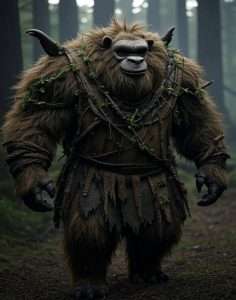
In D&D, bugbears are chaotic evil by nature, standing 7 feet tall with shaggy fur, keen senses, and a penchant for stealth despite their size. They worship deities like Hruggek for battle prowess, Grankhul for cunning surprises, and Skiggaret for fear-mongering, often decapitating foes in rituals. Societally, they form loose tribes or serve hobgoblin overlords, valuing personal glory over structure, and are prone to rages but avoid prolonged exertion. Their lore paints them as tragic figures in some interpretations—victims of divine curses or societal oppression—adding layers to their brutish exterior.
Impact and Legacy
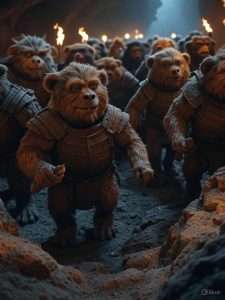
Bugbears have left an indelible mark on fantasy gaming, evolving from simple scare tactics in folklore to complex, playable antagonists in D&D. Their journey highlights how ancient myths adapt to modern media, inspiring countless campaigns where players confront or embody these hairy behemoths. As D&D continues to expand, bugbears remain a testament to the enduring power of folklore in shaping imaginative worlds.
The Ultimate Collector’s Guide to Bugbear Figures
From the dusty shelves of the 1980s to the high-definition resin prints of today, bugbears have occupied a unique niche in the world of fantasy collectibles. Unlike the more common Orcs or Goblins, Bugbear figures are often prized for their “stealthy brute” aesthetic, combining massive muscle with surprisingly lithe, predatory poses.
1. The Vintage “Action Figure” Era: LJN (1983-1984)
The only true “action figures” in the traditional sense (articulated toys meant for play) were produced by LJN during the golden age of Advanced Dungeons & Dragons.
The LJN Bugbear & Goblin Pack (1983): Part of the 2-inch “Mini-Fig” line, this was a carded set featuring a muscular, brown-furred bugbear wielding a spiked morningstar. Today, these are highly sought after by vintage collectors. A “Mint on Card” (MOC) specimen can fetch anywhere from $95 to $175 on the secondary market.
Design Note: The LJN sculpt followed the 1st Edition Monster Manual artwork, giving the bugbear a more bear-like visage and shaggy fur compared to later “goblinoid” iterations.
2. Iconic Tabletop Miniatures (1970s – 1990s)
Before prepainted plastic, bugbears were cast in lead and pewter. These defined the “look” of the creature for decades.
Grenadier Miniatures (TSR Licensed): Released in the early 1980s, these figures (often sculpted by Jeff Dee) are the “gold standard” for old-school fans. They feature the classic “pumpkin-head” or “root vegetable” face that was prevalent in early D&D art.
Citadel Miniatures (ADD Range): In 1985, Jez Goodwin sculpted a range of bugbears for Citadel. These were characteristically grittier, with more detailed armor and menacing, animalistic proportions.
Ral Partha: Known for their fine detail, Ral Partha’s bugbears from the 1990s shifted toward the 2nd Edition “tall, hairy goblin” aesthetic, moving away from the more literal “bear” interpretations.
3. The Prepainted Revolution: WizKids & Paizo (2003 – Present)
For most modern players, these are the most accessible and “best” for actual gameplay due to their durable plastic and professional paint jobs.
D&D Icons of the Realms: Bugbear Warband (2023): This is arguably the best value for collectors today. Unlike “blind boxes,” this is a fixed set of six unique bugbear sculpts. It includes various poses, including a leader and a spellcaster, allowing DMs to build a cohesive tribe instantly.
The “Skulker” & “Gardener” (Pathfinder Battles): Paizo’s line (produced by WizKids) features some of the most dynamic bugbear poses. The Pathfinder bugbear design is famously more horrific—skinny, long-limbed, and often depicted with serial-killer-style weapons like flaying knives.
Classic Collection: Monsters U-Z: For those who love the 1970s look but want modern materials, WizKids released “Classic” bugbears that use the original 1st Edition artwork as the blueprint for the sculpt.
4. Modern High-End & Custom Options
In the era of 3D printing and boutique studios, the detail level has reached unprecedented heights.
Bestiarum Games (Bugbear Enforcer): If you want a figure that looks like a centerpiece boss, Bestiarum’s “Bugbear Enforcer” is widely considered one of the most terrifying sculpts available. It leans into a “dark souls” aesthetic—heavy armor, realistic fur textures, and immense scale.
Artisan Guild (Bronzeclad Greatgoblins): This studio produces modular bugbear kits. These are “the best” for players who want to customize their figure with specific weapons (bows, hammers, or shields) before painting.
Hero Forge: For the ultimate “personal best,” many players use Hero Forge to design a custom Bugbear PC. While technically a “custom” figure, their library of bugbear-specific parts (long limbs, hairy hides) is extensive.
| Type | Best For… | Key Release |
| Action Figure | Vintage Collectors | LJN AD&D Bugbear & Goblin (1983) |
| Army Building | Practical DMs | WizKids Bugbear Warband (2023) |
| Nostalgia | Old School Fans | Grenadier / Classic Collection |
| Detail/Art | Painters & Hobbyists | Bestiarum Games / Artisan Guild STLs |
| Horror | Gritty Campaigns | Pathfinder Battles: Bugbear Skulker |
Final Recommendation: If you are looking for a singular “best” figure that captures the modern spirit of D&D 5e, the WizKids Icons of the Realms: Bugbear Warband is the definitive choice. It provides variety, accuracy to current lore, and high-quality prepainted finishes that look great on a shelf or a battlemap.
 English
  Deutsch
  Français
  Português do Brasil
  日本語
日本語  Español
  English (Australia)