

Hobgoblins in D&D: Ultimate History, Tactics, and Lore
Hobgoblins in Dungeons & Dragons (D&D) are a staple of the game’s monstrous roster, depicted as disciplined, militaristic humanoids with a penchant for order and conquest. Their portrayal in D&D draws from a mix of folklore, fantasy literature, and the game’s own creative evolution. Below is a comprehensive biography of hobgoblins in D&D, including their origins in folklore and their development within the game.
Hobgoblins in Folklore
The term “hobgoblin” originates from English folklore, where it refers to a type of mischievous fairy or spirit. The word itself is a combination of “hob,” a term for a sprite or elf (possibly derived from the name “Robin,” as in Robin Goodfellow, another name for Puck), and “goblin,” a malevolent or mischievous creature. Hobgoblins in folklore were typically small, impish beings associated with hearth and home, often playing pranks or causing minor chaos but not inherently evil.
• Characteristics in Folklore: In English traditions, hobgoblins were household spirits, similar to brownies or kobolds, who could be helpful or troublesome depending on how they were treated. For example, they might assist with chores if appeased but cause mischief—like spoiling milk or misplacing tools—if offended. Shakespeare’s A Midsummer Night’s Dream features Puck, described as a hobgoblin, who embodies this trickster archetype.

• Cultural Context: Hobgoblins appeared in medieval and early modern European tales, often as less malevolent than goblins but more unpredictable than benevolent fairies. They were sometimes conflated with other spirits like boggarts or bogeys, reflecting a broad category of supernatural beings tied to human spaces.
• Influence on D&D: While D&D’s hobgoblins borrow the name and some of the mischievous undertones, they diverge significantly from their folkloric roots, evolving into a distinct race of militaristic humanoids. The folklore hobgoblin’s small size and prankster nature are more akin to D&D’s goblins or kobolds, while D&D hobgoblins take on a more serious, organized persona inspired by fantasy tropes of warrior cultures.
Hobgoblins in Dungeons & Dragons
In D&D, hobgoblins are a race of lawful evil (or sometimes lawful neutral) humanoids, closely related to goblins and bugbears, collectively known as “goblinoids.” They are characterized by their strict discipline, martial prowess, and hierarchical societies, contrasting with the chaotic goblins and the brutish bugbears. Their depiction has evolved across D&D’s editions, but their core identity as militaristic strategists has remained consistent.
Origins in D&D Lore
In D&D’s lore, hobgoblins are often described as creations or descendants of a deity, typically Maglubiyet, the goblinoid god of war and conquest.

Their origin story varies by setting but generally follows this framework:
• Creation Myth: Maglubiyet, after conquering the goblin and bugbear gods, forged hobgoblins as his elite warriors. They were imbued with discipline and tactical acumen to serve as the backbone of his armies, contrasting with the cowardly goblins and the solitary bugbears. In some settings, hobgoblins are said to have been shaped from the blood of Maglubiyet’s enemies or crafted to embody his vision of order through strength.
• Goblinoid Hierarchy: Hobgoblins occupy the middle tier of goblinoid society, above goblins but below bugbears in physical power. They often act as leaders, organizing goblins into labor forces and bugbears into shock troops.
Physical and Cultural Traits
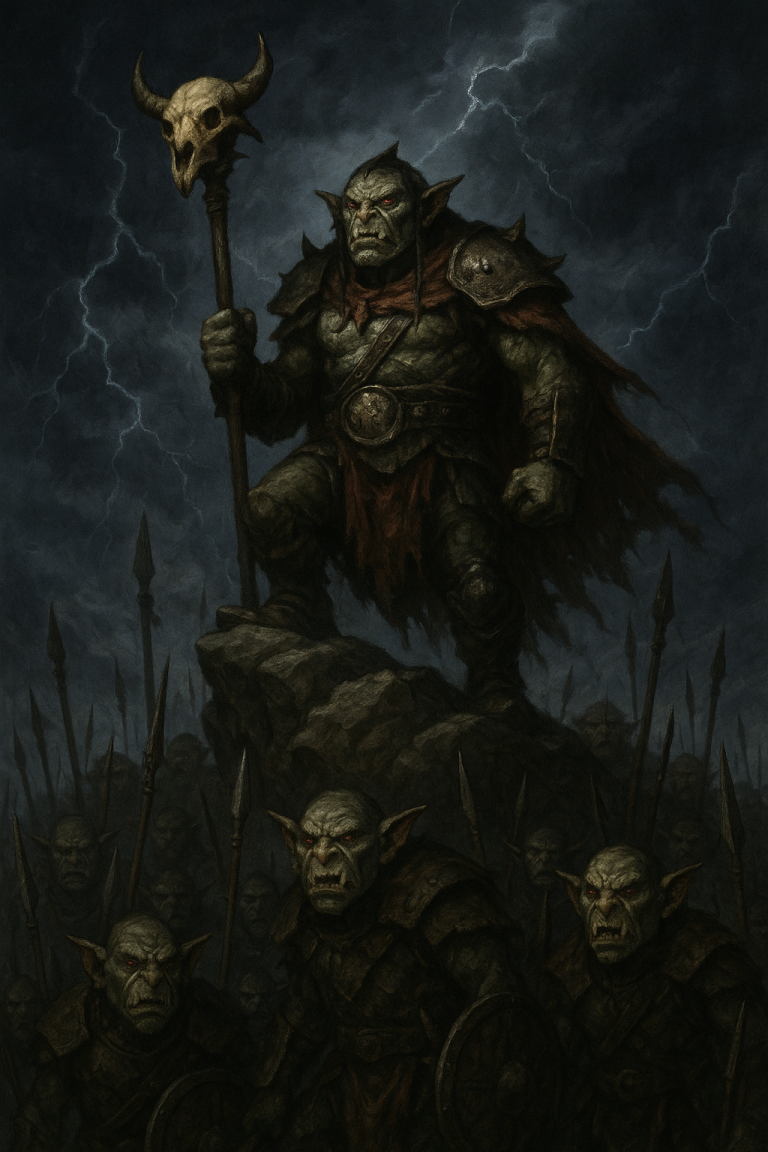
• Appearance: Hobgoblins in D&D are taller and stronger than goblins, typically standing 5 to 6 feet tall, with muscular builds, reddish-brown or grayish skin, and pointed ears. Their features are often described as stern or wolf-like, with fur or hair in shades of black, brown, or red. They favor armor and weapons, reflecting their martial culture.
• Society: Hobgoblin society is rigidly hierarchical, valuing discipline, honor, and military might. They organize into legions or warbands, led by generals or warlords, and maintain strict codes of conduct. Hobgoblins prize strategy and tactics, often studying the art of war and fortifying their lairs. They view themselves as superior to other goblinoids and often enslave goblins or use bugbears as enforcers.
• Behavior: Hobgoblins are pragmatic and ruthless, prioritizing victory over sentimentality. They are not wantonly cruel like goblins but will commit atrocities if it serves their goals. They respect strength and cunning, often forming alliances with other races (like orcs or evil humans) to achieve conquest.
• Alignment: Typically lawful evil, hobgoblins adhere to a code of conduct but use it to justify domination and exploitation. In later editions (e.g., 5e), they can vary in alignment, especially as player characters, reflecting more nuanced motivations.
Evolution Across Editions
• Original D&D (1974): Hobgoblins debuted in the Monster Manual (1977) as stronger, smarter cousins of goblins, with a tribal, militaristic bent. They were described as lawful evil, living in organized bands and often warring with other humanoids.
• AD&D (1e & 2e): Hobgoblins gained more depth, with detailed descriptions of their warlike culture and tribal structures. The Monster Manual (1e) and Monstrous Compendium (2e) emphasized their discipline and use of complex tactics, distinguishing them from chaotic goblins.
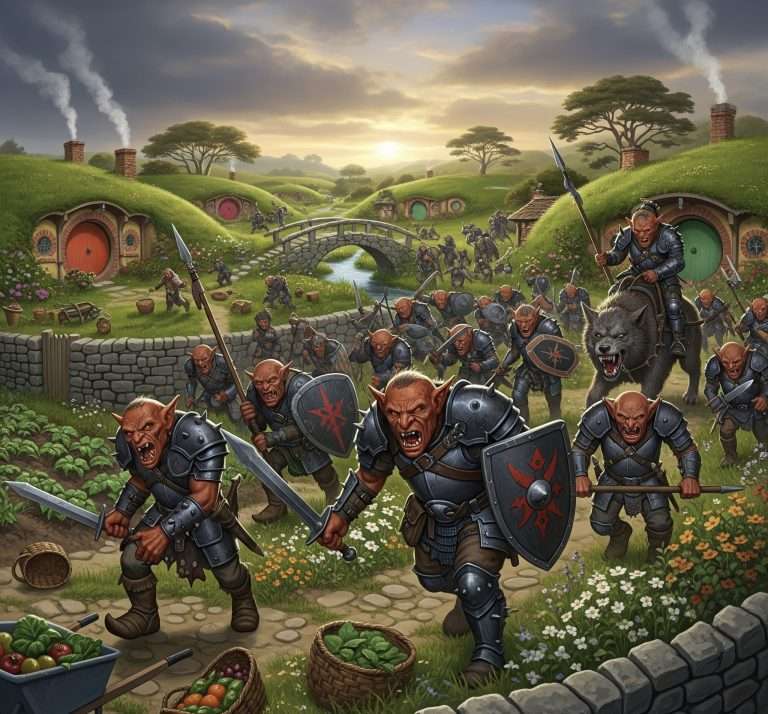
• D&D 3e/3.5e: Hobgoblins were fleshed out as a playable race in supplements like Races of the Wild. Their lore expanded to include their devotion to Maglubiyet and their role as goblinoid leaders. They gained racial traits like a bonus to Dexterity and Constitution, reflecting their agility and resilience.
• D&D 4e: Hobgoblins were presented as a major antagonistic force, with detailed lore in the Monster Manual and Monster Vault. They were given a stronger connection to Maglubiyet and a focus on large-scale warfare, with new subtypes like hobgoblin warcasters and commanders.
• D&D 5e: In Volo’s Guide to Monsters and the Monster Manual, hobgoblins are depicted as highly disciplined warriors with a knack for strategy. The Monster Manual introduces the “Martial Advantage” trait, allowing hobgoblins to deal extra damage when fighting alongside allies, emphasizing their teamwork. Volo’s Guide provides deeper cultural insights, describing their caste systems and obsession with military glory. Hobgoblins also became a playable race in Volo’s Guide, with traits like “Saving Face” (gaining bonuses when allies are nearby) and “Martial Training” (proficiency with weapons and armor).
Role in Campaigns
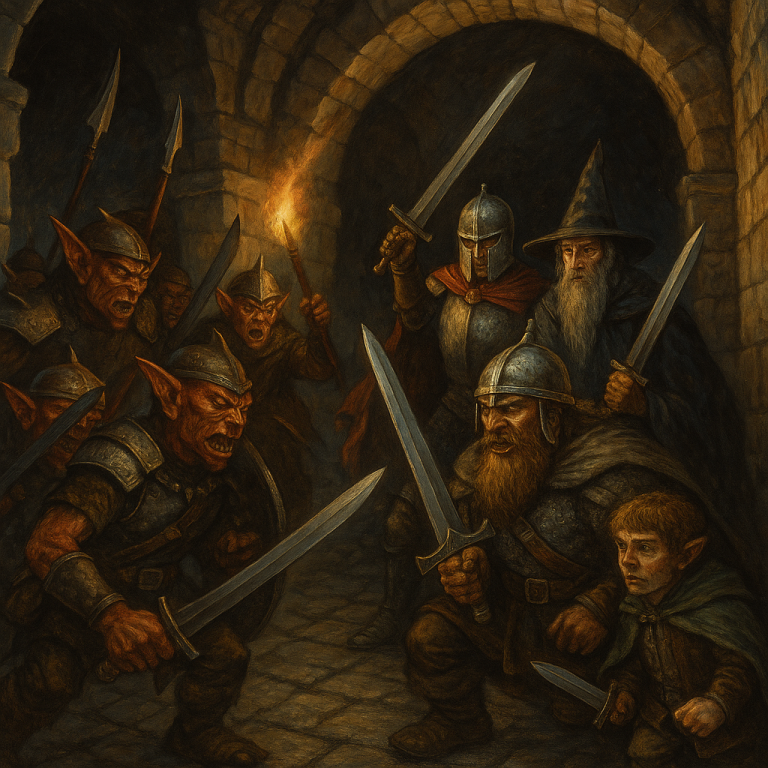
• Antagonists: Hobgoblins are common foes in D&D adventures, often leading goblinoid hordes or serving as mercenaries for greater evils (e.g., dragons or evil wizards). Their strongholds are fortified, with traps and disciplined guards, making them challenging opponents.
• Allies or PCs: In 5e, hobgoblins can be player characters, allowing for stories of redemption, rebellion against their warlike culture, or embracing their martial heritage in heroic ways. Their lawful nature makes them reliable allies if their goals align with the party’s.
• Settings: Hobgoblins appear in many D&D settings:
• Forgotten Realms: Hobgoblins are widespread, often forming warbands in regions like the Savage Frontier or serving in Zhentarim armies.
• Eberron: The Darguun nation is a hobgoblin-led empire, showcasing their potential for organized civilization.
• Greyhawk: Hobgoblins are frequent raiders, clashing with human and demi-human nations.
Notable Subtypes and Variants
• Hobgoblin Warlord: A leader with enhanced tactical abilities, often commanding entire legions.
• Hobgoblin Iron Shadow: A 5e variant from Volo’s Guide, blending martial skill with stealth and magic, serving as spies or assassins.
• Hobgoblin Devastator: A spellcasting hobgoblin focused on battlefield magic, introduced in 5e.
Comparison to Folklore
D&D’s hobgoblins retain little of their folkloric counterparts’ mischievous, household spirit nature. Instead, they draw inspiration from fantasy archetypes of disciplined warrior races, such as Tolkien’s orcs or historical depictions of militaristic cultures like the Mongols or Spartans. The name “hobgoblin” is more a nod to tradition than a direct adaptation, with D&D reshaping them into a unique entity. Their lawful evil alignment and focus on order contrast sharply with the chaotic, prankster hobgoblins of folklore, aligning them more closely with modern fantasy’s “evil empire” trope.

Cultural Impact and Legacy
Hobgoblins have become iconic in D&D as versatile antagonists and, more recently, as complex playable characters. Their emphasis on discipline and strategy makes them stand out among other monstrous races, offering DMs a foe that feels like a credible military threat. Their evolution into playable characters reflects D&D’s broader shift toward nuanced portrayals of traditionally “evil” races, allowing for stories of individuality and cultural rebellion.
Sources and Further Reading
• Folklore: For hobgoblin origins, explore works like Katharine Briggs’ An Encyclopedia of Fairies or Shakespeare’s A Midsummer Night’s Dream.
• D&D Sources: Key texts include the D&D 5e Monster Manual, Volo’s Guide to Monsters, and earlier editions’ Monster Manuals or Monstrous Compendiums.
• Settings: Check Forgotten Realms Campaign Setting (3e) or Eberron: Rising from the Last War (5e) for setting-specific hobgoblin lore.
 English
  Deutsch
  Français
  Português do Brasil
  日本語
日本語  Español
  English (Australia)