

Eternia's Roots: MOTU Origins He-Man (Sketchbook Series)
In the vast cosmos of action figures, few lines evoke the raw power of childhood imagination like Masters of the Universe. Picture this: a barbaric world where muscle-bound heroes clash with grotesque villains amid crumbling castles and mystical sorcery. Now, fast-forward to the modern era, where Mattel resurrects that magic through the Origins line, blending vintage charm with contemporary tweaks. Enter the Sketchbook Series He-Man—a figure that doesn’t just nod to the past but yanks it straight from the yellowed pages of concept art. This release isn’t your standard rehash; it’s a portal to what could have been, a muscular time capsule that flexes its way into collectors’ hearts. Whether you’re a grizzled veteran of the ’80s toy wars or a newcomer scouting Eternia’s shores, this He-Man demands attention, promising a blend of nostalgia and fresh surprises that could power a Battle Ram through a Skeletor blockade.
The Origins of Masters of the Universe and the Sketchbook Series
The Masters of the Universe franchise burst onto the scene in 1982, courtesy of Mattel, as a toy line aimed at boys who dreamed of wielding power swords and taming savage beasts. It all began with the release of the original 5.5-inch action figures, including He-Man, Skeletor, Beast Man, and others, accompanied by mini-comics that built a rudimentary lore of Eternia—a planet torn between heroic warriors and evil forces. The line was conceived amid the post-Star Wars toy boom, where epic narratives sold as well as the plastic itself. Key designers like Mark Taylor played pivotal roles; Taylor, a Mattel veteran, sketched early concepts for He-Man as a barbarian hero, drawing from influences like Conan the Barbarian and pulp fantasy art. His initial drawings portrayed He-Man with a more primal, armored look, including elements like a helmet and axe that echoed Viking warriors rather than the clean-cut prince we know.
By 1983, the line expanded with more figures, vehicles like the Battle Ram, and the iconic Castle Grayskull playset, also designed by Taylor. The franchise’s success led to the Filmation animated series “He-Man and the Masters of the Universe,” which ran from 1983 to 1985, solidifying characters’ personalities and boosting sales to over $400 million in the first three years. Mattel continued the line until 1988, introducing sublines like the Princess of Power with She-Ra in 1985. After a hiatus, revivals came in 2002 with a new toy line and cartoon, and again in 2012 with the Classics series for adult collectors.
The Origins line launched in 2020, recreating the 1980s figures with enhanced articulation—16 points per figure—while retaining the 5.5-inch scale and vintage aesthetics. It included waves of core characters, deluxe editions, vehicles, and crossovers like Turtles of Grayskull (see our Ninjor review). The Sketchbook Series, introduced in 2025, marks a specialized subline within Origins, focusing on figures inspired by unused concept art from the 1980s. This series draws directly from archival sketches by Taylor and Roger Sweet, another key designer who contributed ideas for characters like Sy-Klone. The inaugural release was the Horde Invasion 2-pack featuring Hordak and Grizzlor, based on early horror-infused designs that emphasized their villainous ferocity. Subsequent figures, including this He-Man, pay homage to preliminary artwork that never made it to production, offering fans alternate visions of beloved icons. Official announcements from Mattel emphasize authenticity, with each figure including accessories and packaging that reference the original drawings, ensuring the series stays true to confirmed historical elements without venturing into speculative territory.
Unboxing the Barbarian: First Impressions and Packaging
Cracking open the box for this Sketchbook He-Man feels like unearthing a buried treasure from Snake Mountain’s depths—except instead of a cursed artifact, you get a hunk of plastic heroism. The packaging screams retro appeal, with a cardback adorned in black-and-white sketch-style illustrations that mimic the raw, pencil-scratched concepts from Mattel’s vaults. The front blister showcases He-Man in all his glory, helmeted head tilted defiantly, axe at the ready, against a backdrop of jagged Eternian landscapes. Turn it around, and you’re treated to a mini-history lesson: cross-sell art for other Sketchbook figures, plus a blurb on the concept origins, noting how this design harks back to Taylor’s early barbarian sketches before He-Man became the blond powerhouse of legend.
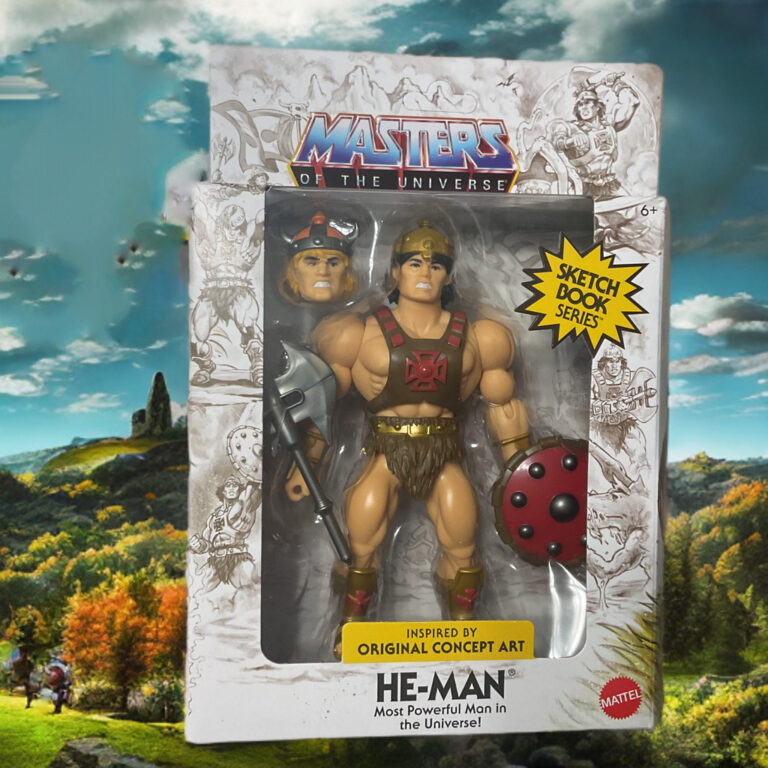
The card itself is collector-friendly, with a resealable blister that’s easy to slide off without mangling the artwork—a godsend for those who display in-package. No flimsy tabs here; it’s sturdy, evoking the thick cardstock of vintage MOTU releases. Inside, the figure is nestled with its accessories: the classic power axe (reimagined in a more primitive style), a red shield that looks like it was forged in a volcanic pit, and an alternate helmeted head for that extra layer of customization. There’s even a mini-comic snippet printed on the insert, teasing a tale of primordial battles that ties into the broader Origins narrative. It’s packaging that doesn’t just protect; it immerses, turning the unboxing into a ritual that transports you back to toy aisles lined with endless possibilities.
Sculpt and Design: A Primal Twist on the Icon
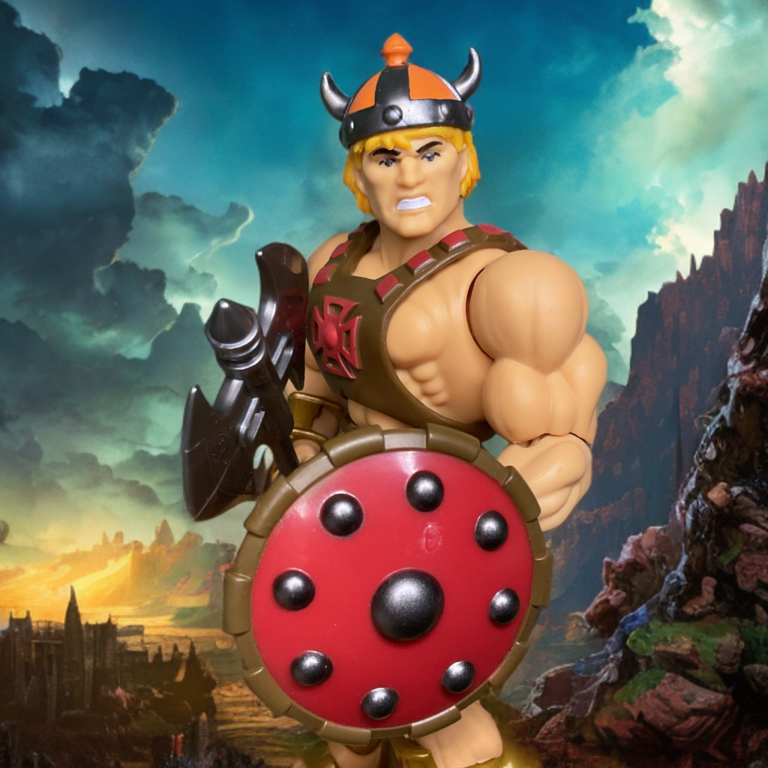
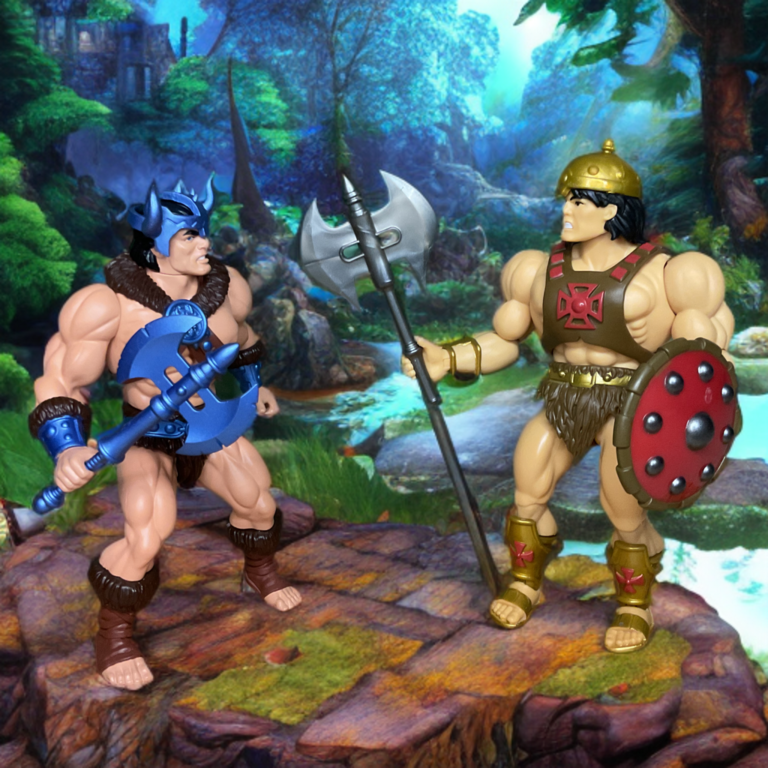
At the heart of this release is the sculpt, a loving recreation of Taylor’s concept art that gives He-Man a rougher, more untamed edge. Standing at the standard 5.5 inches, the figure boasts a muscular build that’s bulkier than the standard Origins He-Man, with exaggerated shoulders and thighs that scream “barbarian ready to wrestle a dragon.” The torso features intricate detailing on the harness and loincloth, molded to look like matted animal pelts, complete with subtle weathering that suggests battles in dusty arenas. The legs are clad in scaled sandals, evoking reptilian hides, while the arms showcase veined biceps that could crush a Wind Raider.
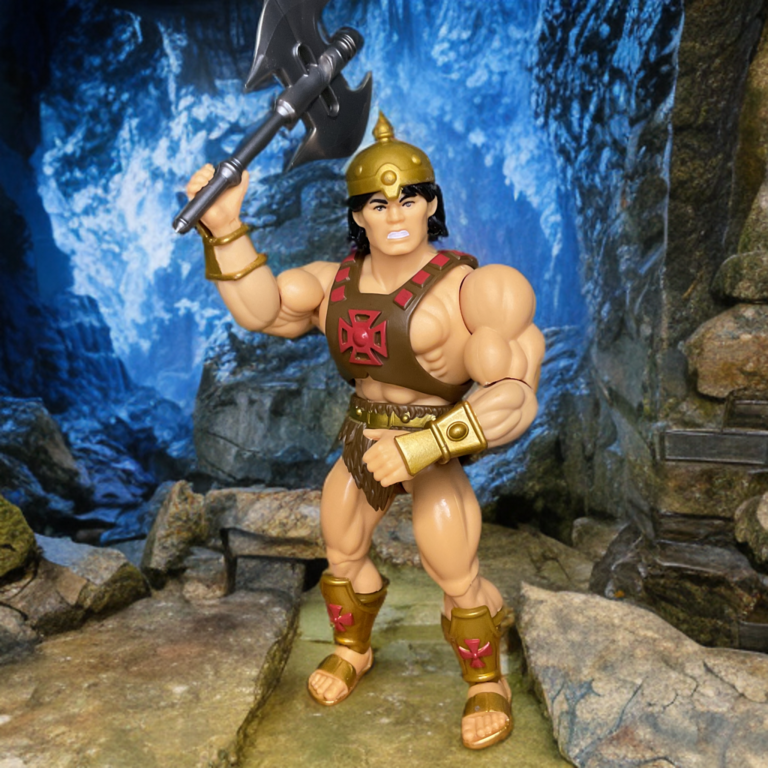
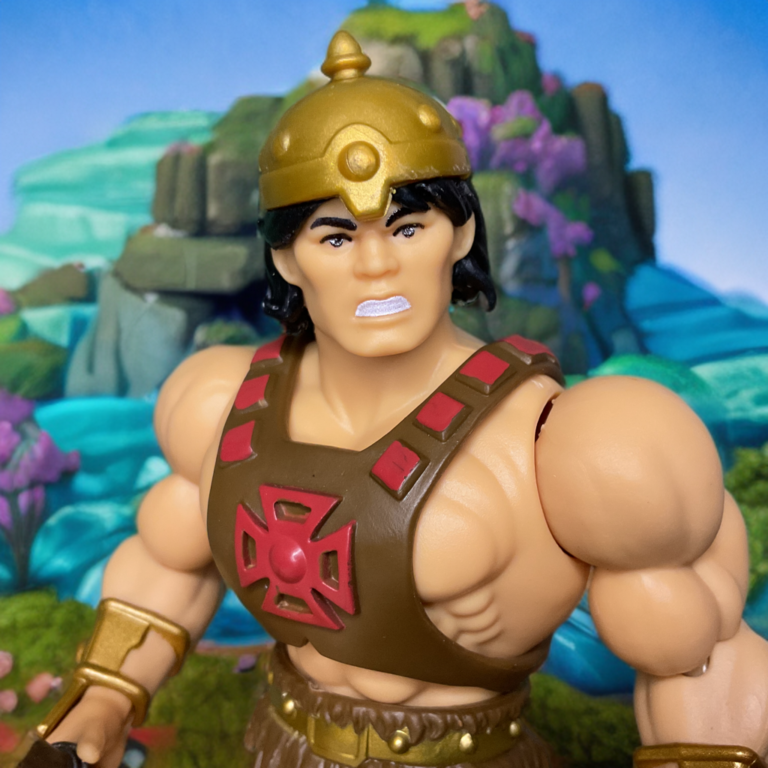
The color palette diverges from the familiar: instead of bright reds and yellows, this He-Man sports earthy tones—muted browns for the harness, metallic grays for the armor plates, and a skin tone that’s a shade tanner, as if he’s spent eons under Eternia’s twin suns. The helmet is a standout, a horned visor that transforms him from prince to pillager, with jagged edges that add menace. Swap to the unhelmeted head, and you get a fierce expression with flowing hair that’s wilder than usual, though here’s where a subtle critique creeps in: the face sculpt feels a touch off, lacking the sharp jawline or piercing gaze that defines classic He-Man. It’s not a deal-breaker—far from it—but it misses that spark of heroic intensity, coming across more generic warrior than the Most Powerful Man in the Universe. Still, the overall design nails the nostalgic vibe, blending familiarity with “what if” intrigue that makes you ponder alternate Eternias where this rugged version led the charge.
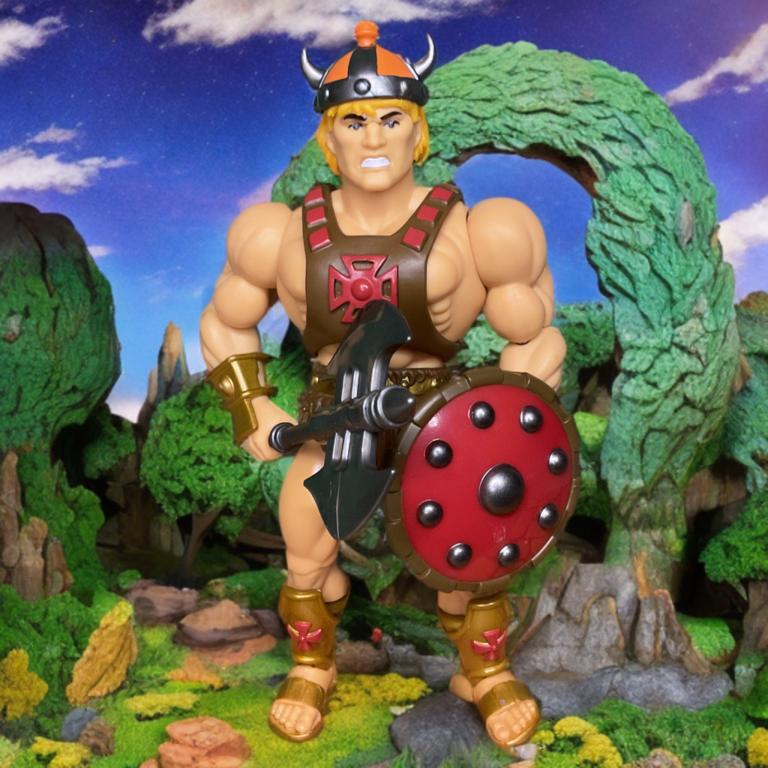
Details abound: the belt buckle is a skull motif, hinting at darker origins, and the boots have claw-like reinforcements. Paint apps are crisp, with minimal bleed—Mattel’s quality control shines here, avoiding the sloppy overspray that plagued some early Origins waves. It’s a solid piece that feels hefty in hand, the plastic durable enough for play without sacrificing display-worthiness. In a lineup with other Origins figures, this He-Man stands out as the grizzled veteran, the one who’d share war stories over a tankard of Grayskull ale.
Accessories: Tools of the Trade for Eternian Conquest
No MOTU figure is complete without gear that amplifies the fantasy, and this Sketchbook He-Man delivers a arsenal that’s both functional and evocative. The power axe is the star—a double-bladed beast with a haft wrapped in leather-like molding, painted in aged bronze tones that suggest ancient craftsmanship. It’s scaled perfectly for his grip, and the blade edges have a subtle sheen, as if sharpened on the bones of fallen foes. Pair it with the red shield, a circular buckler with raised rivets and a central boss that looks like a demonic eye—ideal for bashing aside laser blasts or claw swipes.
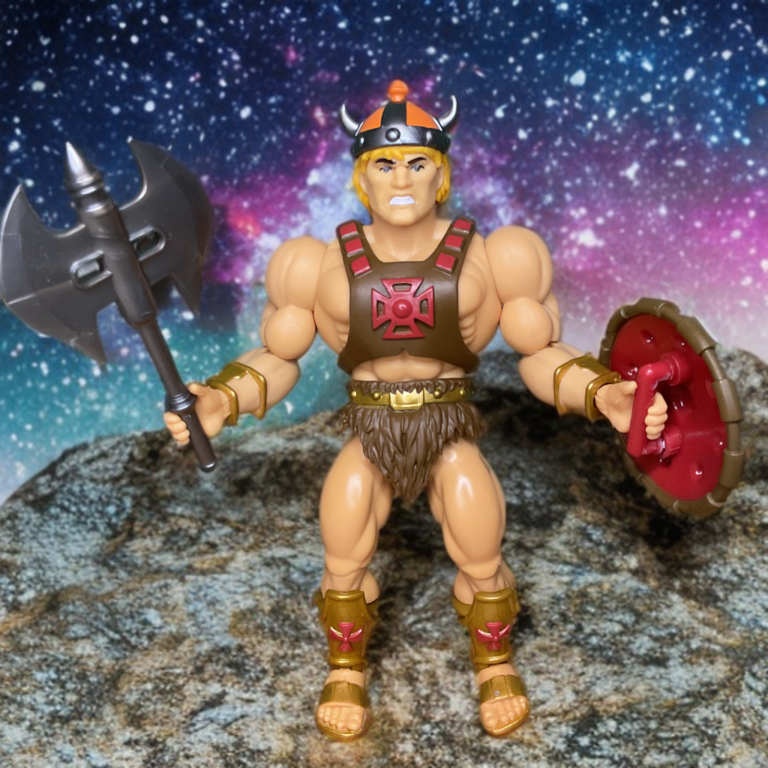
The alternate head is more than a gimmick; it allows for dual display modes—helmeted for battle-ready poses, bare-headed for dramatic reveals. Both heads feature pegs that swap seamlessly, no fumbling required. While the accessories count is modest compared to deluxe releases, what’s here integrates flawlessly, encouraging dynamic setups. Imagine him charging into a fray with axe raised, shield blocking a Hordak horde—it’s playability distilled. For collectors, these pieces add value, echoing the simplicity of ’80s toys while offering modern versatility. If there’s a nitpick, it’s the lack of a power sword variant, but given the concept roots, the axe fits the primal theme like a glove on a gauntlet.
Articulation and Playability: Flexing Those Heroic Muscles
Origins figures are renowned for their poseability, and this He-Man upholds the tradition with 16 points of articulation that turn static plastic into a whirlwind of action. Ball-jointed shoulders allow for broad swings—perfect for overhead axe chops—while swivel biceps and wrists enable intricate grips. The hips are ball-and-socket, granting wide stances for stability during epic clashes, and the knees bend deeply for crouching ambushes. The neck offers tilt and rotation, letting you capture that heroic glare or helmeted vigilance.
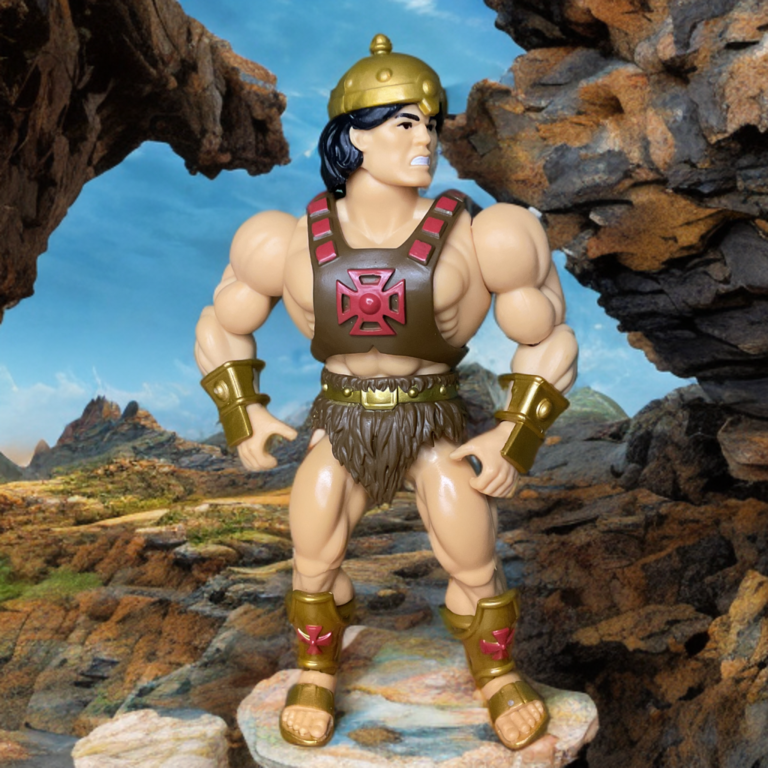
Playability is where it shines: this isn’t a shelf queen; it’s built for battles. Pair it with a Battle Cat (sold separately, naturally), and you’ve got a cavalry charge that rivals any childhood memory. The joints are tight but smooth, avoiding the looseness that afflicts some mass-produced toys. For display, it holds poses indefinitely—no toppling mid-diorama. Kids (or kids at heart) can reenact concept-inspired scenarios, like defending a primitive Eternia from sketchbook villains. It’s a solid performer, though the bulkier sculpt slightly limits extreme poses compared to slimmer figures. Overall, it’s a testament to Mattel’s evolution: vintage soul with modern mobility, ensuring hours of fun without the frustration of brittle parts.
Comparison to the Broader Origins Line
Stack this Sketchbook He-Man against the standard Origins version, and the differences pop like a Sorceress spell. The core He-Man from Wave 1 is cleaner, more cartoon-accurate, with vibrant colors and a face that’s pure heroic archetype. This one? It’s the road less traveled—grittier, concept-driven, like comparing a polished knight to a battle-hardened mercenary. The accessories overlap somewhat (axe and shield are staples), but the Sketchbook’s are stylized differently, with rougher edges that suit the theme.
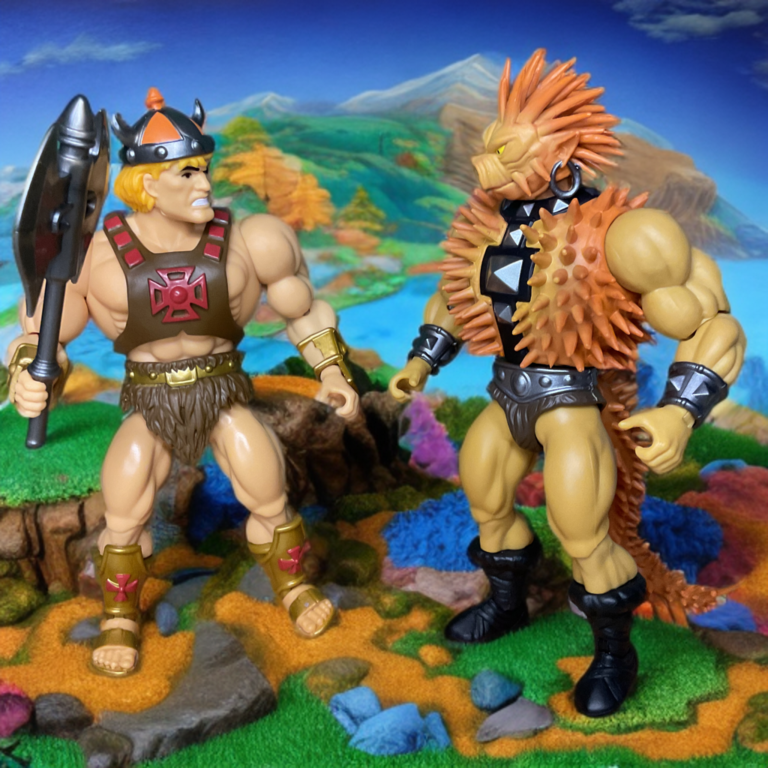
Versus other Sketchbook releases, like the Hordak and Grizzlor 2-pack, it holds its own as the heroic counterpoint. Those villains bring furry terror and armored dread, while He-Man provides balance. In crossovers like Turtles of Grayskull, he’d look out of place—too primal for mutant mashups—but within pure MOTU, it’s seamless. Collectors might pair it with Classics for a multiverse vibe, highlighting how far designs have come. It’s not revolutionary, but it enriches the line, offering variety that keeps Eternia fresh.
The Sketchbook Series Lineup: A Collector’s Chart
To contextualize this He-Man within the series, here’s a rundown of all Sketchbook Series figures released as of early 2026. Retail prices are based on initial MSRP, while secondary market values reflect average eBay sold listings and collector site data, fluctuating with condition and demand.
| Figure Name | Release Year | Retail Price | Secondary Market Value (Loose/Mint) |
|---|---|---|---|
| Hordak & Grizzlor (2-Pack) | 2025 | $39.99 | $50-$70 / $80-$100 |
| He-Man (Mark Taylor Concept) | 2025 | $19.99 | $25-$40 / $45-$60 |
| Sy-Klone | 2025 | $19.99 | $30-$45 / $50-$65 |
| Spikor | 2025 | $19.99 | $25-$35 / $40-$55 |
| Man-E-Faces | 2025 | $19.99 | $28-$42 / $48-$62 |
These values are approximates; mint-in-box commands premiums, especially for limited runs. The series emphasizes exclusivity, with figures often debuting at events like San Diego Comic-Con before wider release. Warning: Prices are highly volatile and change at any given moment.
Value and Collectibility: Worth the Power?
Priced at $19.99 retail, this He-Man is accessible, but secondary prices climb quickly for completists. As part of a niche subline, its rarity potential is high—early Origins waves saw markups, and Sketchbook’s concept focus amplifies that. For investment? It’s speculative; MOTU’s enduring popularity suggests upside, but collect for love, not lucre. Display it proudly; it’s a conversation starter, bridging generations with its nod to untold stories.
Final Thoughts: A Solid Nod to Eternia’s Sketchy Past
Wrapping up this Eternian odyssey, the Sketchbook Series He-Man stands as a testament to Mattel’s knack for mining history without exhausting it. It’s a figure that captures the essence of what made MOTU legendary: bold designs, endless play, and a dash of mystery. Sure, the face sculpt could pack more punch, but the overall package delivers—a rugged hero ready for new adventures. Whether perched on a shelf or clashing in mock battles, it reignites that spark of wonder. In a world of reboots, this one’s a refreshing sketch, reminding us that the greatest powers often lie in the origins we almost forgot. Grab one, channel your inner barbarian, and let the battles begin anew. After all, they seem to be on a roll with one awesome figure after another.
 English
  Deutsch
  Français
  Português do Brasil
  日本語
日本語  Español
  English (Australia)