

Reviving the 2002 Era in the Origins Cartoon Collection
The Masters of the Universe franchise has long captivated collectors with its blend of heroic fantasy and over-the-top action. The 2002 animated series, known for its updated storytelling and character designs, breathed new life into the Eternia saga. Now, in the Origins line’s Cartoon Collection subset, Mattel pays homage to that era with figures that capture the essence of the show’s aesthetics. The first wave spotlights core characters reimagined in a 5.5-inch scale, complete with enhanced articulation and accessories that echo their on-screen appearances. These toys blend nostalgia with modern playability, featuring detailed sculpts that reflect the bolder, more angular style of the 2002 cartoon. He-Man, Stratos, and Tri-Klops lead this debut assortment, each bringing unique features that make them standouts for display or battle reenactments. This collection emphasizes the series’ themes of power, loyalty, and villainy, all wrapped in packaging that nods to the original cardbacks while showcasing fresh artwork.
He-Man: The Power Returns in Slimmer Form
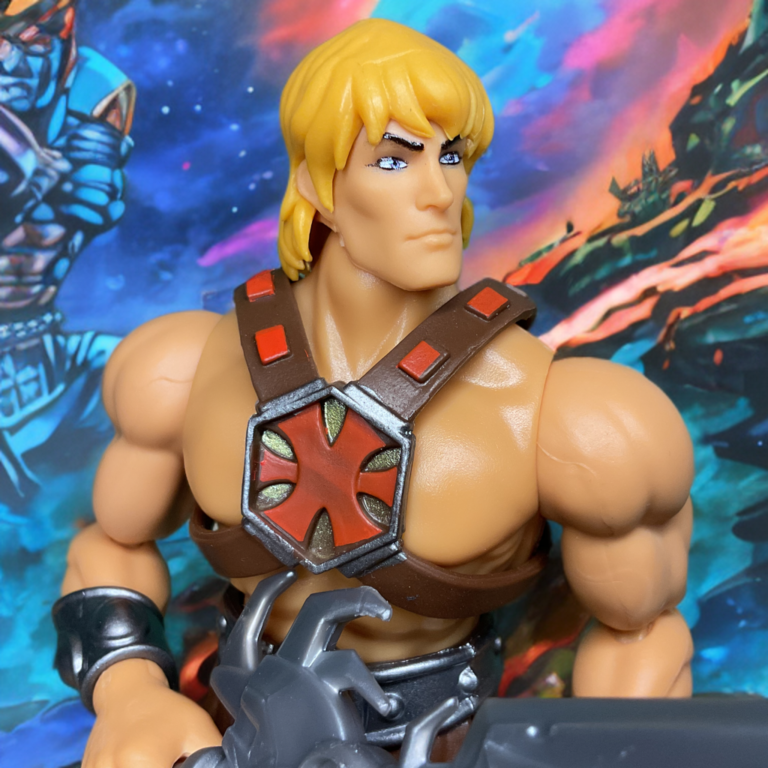
He-Man, the most powerful man in the universe, anchors the first wave with a figure that faithfully recreates his 2002 cartoon look. This version sports a slimmer build compared to traditional Origins figures, aligning closely with the animated series’ depiction of a more agile hero. The sculpt includes newly tooled feet, hands, and a head that captures He-Man’s determined expression, complete with his signature blond hair and stern brow. His torso features a red harness with silver accents, paired with fur-trimmed shorts and boots in a classic red-and-gray palette. The armor elements, like the chest cross and bracers, have a metallic sheen that pops under light, emphasizing the heroic vibe from the show where He-Man battles Skeletor and his minions across Eternia.
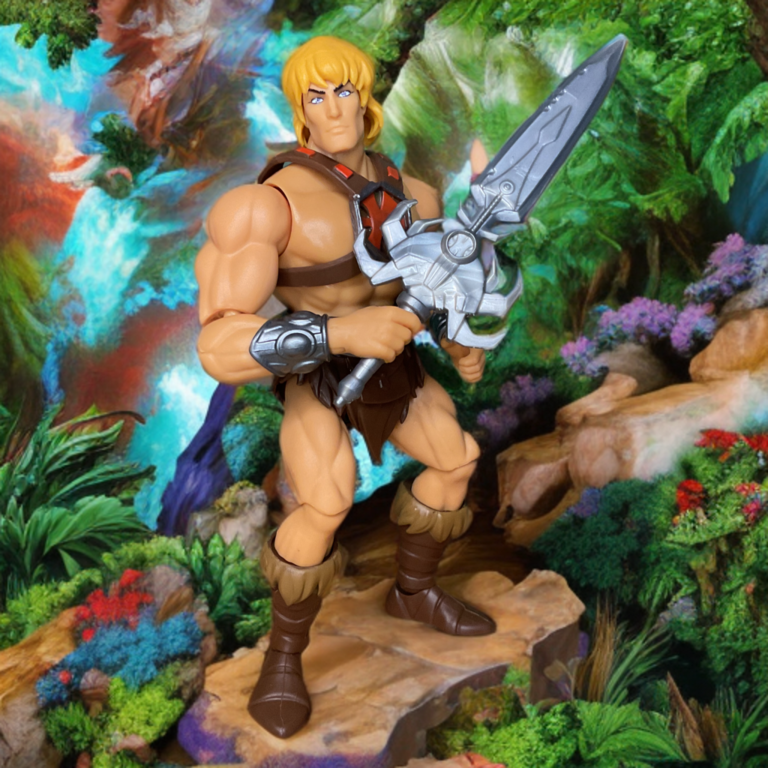
Articulation is a key highlight, offering 16 points for dynamic posing. This includes swivel/hinge ankles for stable stances, boot swivels for added flexibility, double-hinged knees that allow deep crouches, thigh swivels for wide leg spreads, ball-jointed hips for fluid movement, a waist swivel for torso twists, hinged abs for crunching actions, ball/hinged shoulders for arm raises, bicep swivels for rotation, double-hinged elbows for tight bends, swivel/hinged wrists for accessory grips, a hinged neck for tilts, and a ball-jointed head for expressive looks. Such range lets collectors recreate scenes like He-Man lifting his sword aloft or charging into combat, mirroring episodes where he defends Castle Grayskull.
Accessories stay true to the character’s arsenal from the 2002 series. The Power Sword comes in silver with a gray handle, ready for slashing through evil forces. This iconic weapon, inspired by episodes like “The Beginning,” can be sheathed on the removable harness on his back for storage or quick draws. Removable body parts provide mix-and-match possibilities with other MOTU Origins figures, adding customization options without additional weapons like an axe or shield, which were not part of his standard 2002 cartoon kit. These pieces fit snugly thanks to the sculpted grips, allowing for secure holds during poses.
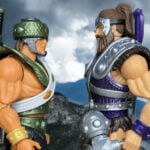
The blister card packaging features Castle Grayskull imagery and artwork showing He-Man in action, plus a bio on the back detailing his role as Prince Adam’s alter ego. This release stands out for its balance of screen accuracy and toy durability, making it a must-have for fans who remember the 2002 show’s epic openings. Collectors will appreciate how this He-Man differs from prior Origins versions—the slimmer proportions give him a leaner, more animated feel, as if he’s stepped right out of the series’ cel-shaded world. Paint applications are clean, with minimal bleed on the metallic details, ensuring he looks sharp on a shelf. While some might miss bulkier classic builds, this design excels in evoking the 2002 era’s focus on speed and strategy over sheer brute force. Pairing him with other wave mates creates instant dioramas, like a standoff against Tri-Klops or a team-up with Stratos.
Stratos: Wings of Avion Spread Wide
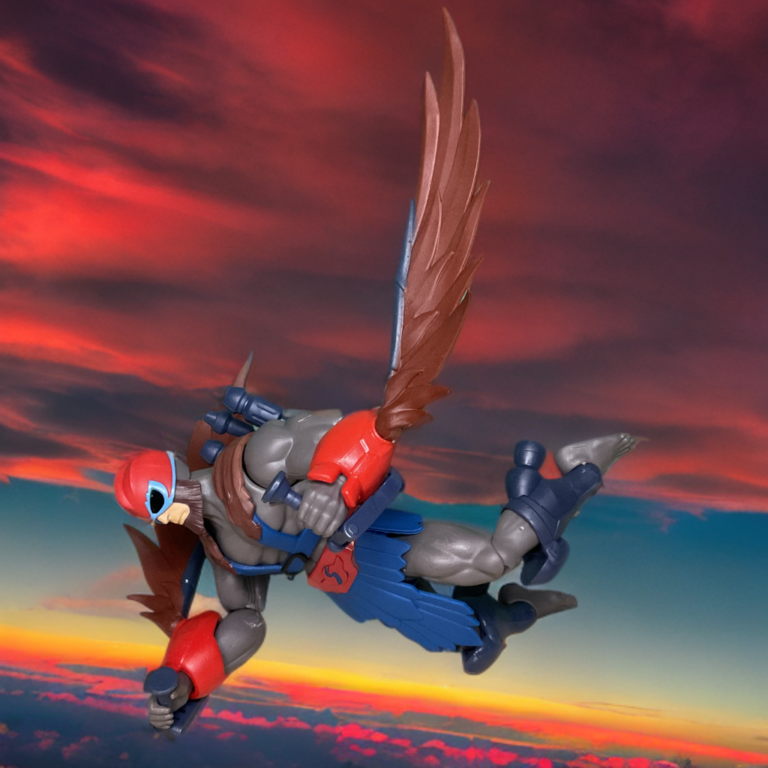
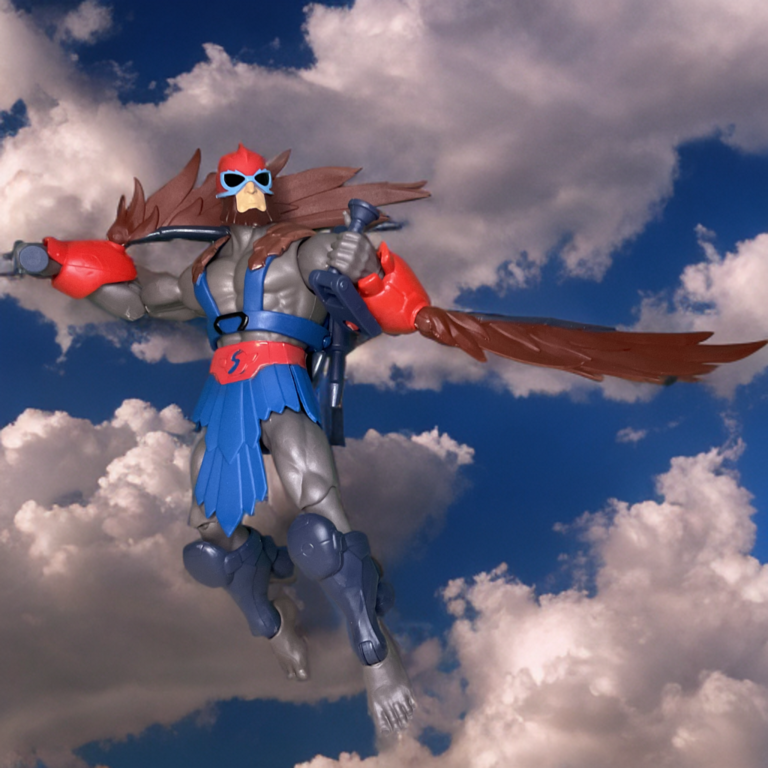
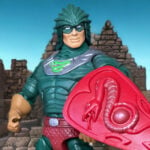
Stratos, the avian lord of Avion, glides into the first wave with a figure that embodies his aerial prowess from the 2002 cartoon. Sharing the same base sculpt as He-Man, this version includes newly tooled feet for better stability in flight poses. His color scheme draws directly from the series: red and blue armor with a matching harness, red gauntlets accented in silver, blue shorts, and gray wings that evoke his bird-like heritage. The silver helmet adds a regal touch, framing his bearded face with a visor that hints at his vigilant nature. The overall design captures Stratos as the wise ally who soars above battles, providing reconnaissance and support to the Masters.
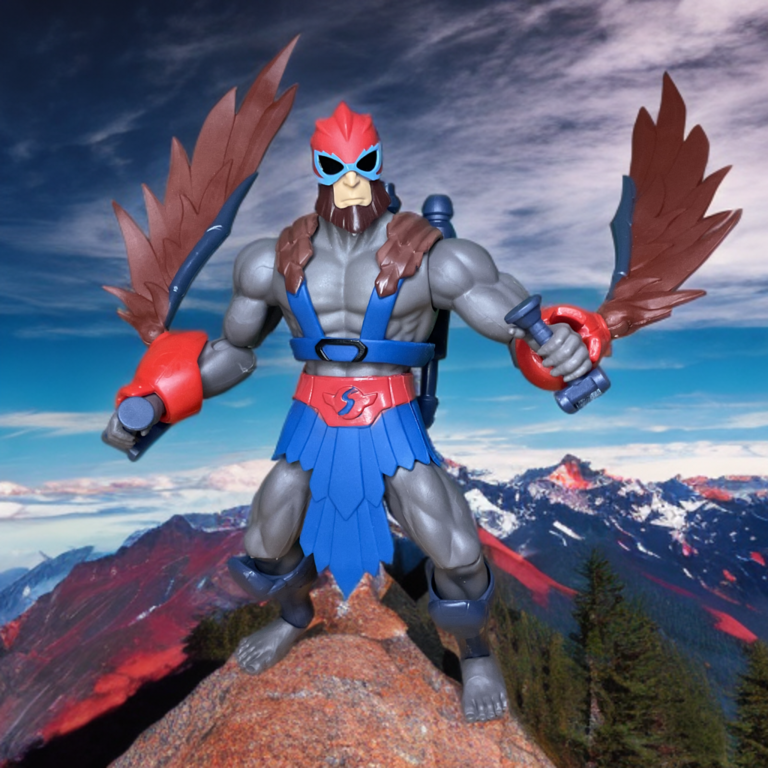
With 16 points of articulation identical to He-Man’s, Stratos offers impressive poseability. The swivel/hinge ankles and boot swivels ground him firmly, while double-hinged knees and thigh swivels enable soaring kicks. Ball-jointed hips and waist swivel allow for mid-air twists, hinged abs support forward leans, and ball/hinged shoulders with bicep swivels facilitate wing spreads. Double-hinged elbows, swivel/hinged wrists, hinged neck, and ball-jointed head round out the options, perfect for depicting him scanning the skies or diving into fray. This setup shines in recreating cartoon moments, like Stratos evading enemy fire or aiding He-Man in aerial assaults.
Accessories enhance his winged warrior theme without excess. Two removable arm wings attach at the upper arms via swivel hinges, allowing for adjustable positioning—spread wide for flight or folded for combat. A helmet provides head protection, while a chest harness secures his armor. The accessories reflecting his role in the series where he often wielded blunt force against foes like Skeletor’s henchmen. These items are molded in durable plastic, with the wings featuring a gray finish that matches his palette.
The blister card packaging mirrors the wave’s style, with artwork depicting Stratos in flight and a bio highlighting his leadership in Avion. This figure’s attention to detail, from the textured feathers on the wings to the metallic trim on the gauntlets, makes it a standout. Compared to earlier Stratos toys, this one leans into the 2002 cartoon’s more streamlined look, where he was portrayed as a strategic flyer rather than a bulky brute. Collectors can mix him with He-Man for team displays or pose him overseeing a battle scene. The removable wings add versatility, letting users customize for different scenarios, much like how Stratos adapted in episodes involving the skies of Eternia.
Tri-Klops: Vision of Villainy in Three Dimensions
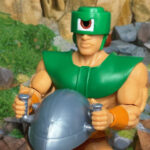
Tri-Klops, Skeletor’s multi-eyed spy, rounds out the first wave with a figure that highlights his technological edge from the 2002 cartoon. This release features green skin, black armor with red accents, a rotating visor helmet displaying three distinct eyes, black shorts, and matching boots. The sculpt emphasizes his menacing build, with a slimmer profile that fits the wave’s aesthetic, including shared elements like the feet and hands for consistency across the line. His visor mechanism rotates smoothly, switching between eyes for normal, night, or distance vision, a nod to his scouting abilities in the series.
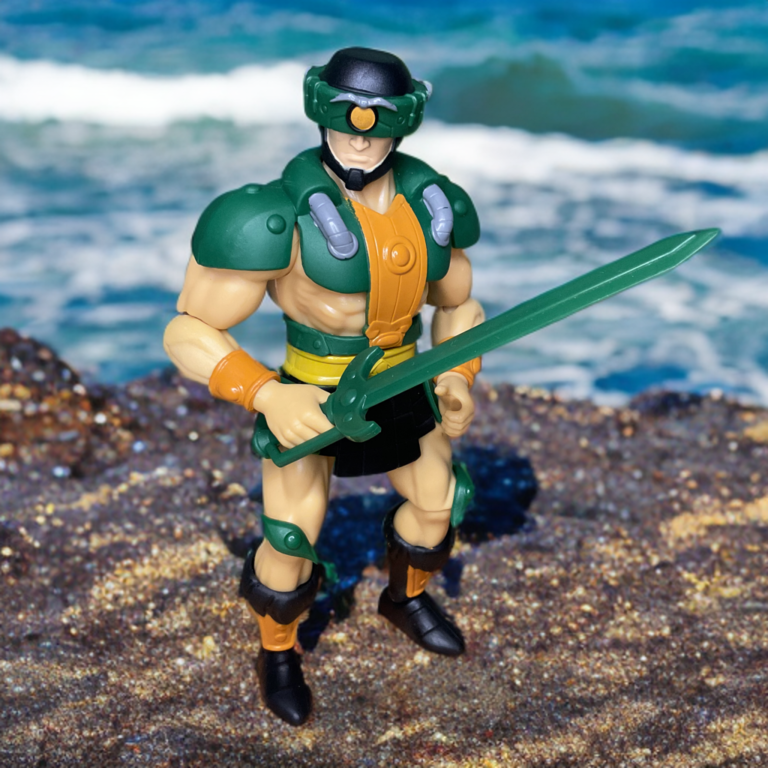
Articulation matches the wave at 16 points, enabling villainous stances. Swivel/hinge ankles and boot swivels provide balance, double-hinged knees and thigh swivels allow stealthy crouches, ball-jointed hips and waist swivel support evasive maneuvers, hinged abs enable forward bends, and ball/hinged shoulders with bicep swivels facilitate sword swings. Double-hinged elbows, swivel/hinged wrists, hinged neck, and ball-jointed head add to the expressiveness, ideal for posing him lurking in shadows or engaging in duels. This range captures Tri-Klops’ agile, observant nature from the cartoon, where he often spied on the heroes or battled with precision.
Accessories bolster his espionage theme. A sword, molded in a curved design with a green blade, serves as his primary weapon for slashing attacks. Three Doomseekers—small, drone-like devices—attach to his armor or can be posed independently, representing the floating eyes he deploys for surveillance in the show. These pieces are detailed with metallic finishes, enhancing their techy feel without overwhelming the figure.
Packaging follows the blister card format, with artwork showing Tri-Klops in scheming mode and a bio detailing his loyalty to Skeletor. This figure excels in capturing the 2002 series’ portrayal of Tri-Klops as a cunning inventor, rather than just muscle. The rotating visor is a fun gimmick, clicking into place for each eye, and the Doomseekers add play value by simulating reconnaissance.
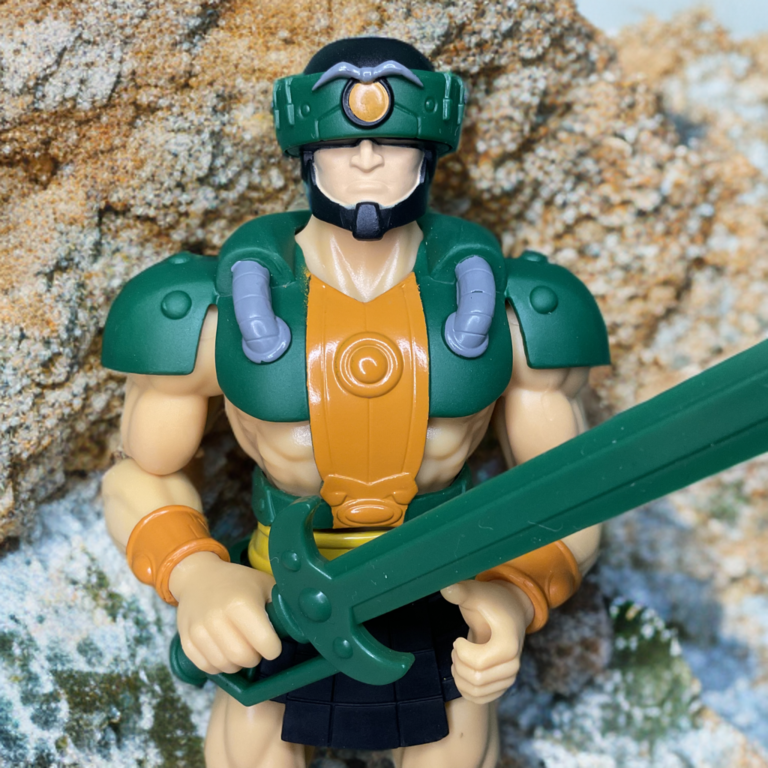
Collectors will enjoy contrasting him with He-Man or Stratos, creating rival dioramas. Paint apps are precise, with the red accents popping against the green skin, ensuring he looks as sinister as in episodes where he ambushed the Masters.
Collecting the Wave: Compatibility and Display Options
This first wave’s figures share a cohesive design language, making them highly compatible for mixed displays. The slimmer builds and shared articulation points allow for seamless interactions, like He-Man clashing swords with Tri-Klops while Stratos provides aerial cover. Each comes in window-box packaging that protects the toy while showcasing the artwork, ideal for in-box collectors. The bios on the backs provide canon details from the 2002 series, adding educational value for newcomers.
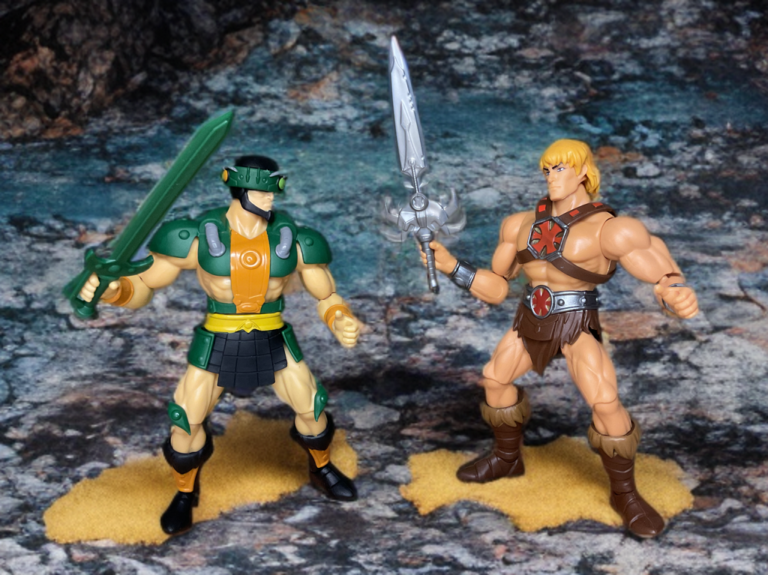
In terms of variants, these are standard releases without immediate repaints, focusing on core accuracy. The 5.5-inch scale fits with other Origins lines, though the unique sculpts set them apart. Durability is strong, with tight joints that hold poses well, and the accessories store easily on the figures or in custom setups. For fans of the 2002 cartoon, these toys revive key moments, such as He-Man’s transformations or Tri-Klops’ inventions, encouraging creative play.
The Legacy of the 2002 Cartoon in Plastic Form
The first wave of the Origins Cartoon Collection masterfully revives the 2002 series’ spirit through these three figures. He-Man’s heroic arsenal, Stratos’ soaring accessories, and Tri-Klops’ spy gadgets all draw directly from the show’s designs, offering a tangible link to Eternia’s animated adventures. As collectors build their assortments, these toys serve as gateways to reliving battles against evil, with each piece crafted for both nostalgia and new stories. This debut sets a high bar, promising more characters to expand the universe.
The 2002 Cartoon Reboot
The Masters of the Universe (MOTU) franchise has two iconic animated series often compared: the original 1983 Filmation series (He-Man and the Masters of the Universe, commonly called the 80s cartoon) and the 2002 reboot (He-Man and the Masters of the Universe, also known as 200X or 2002 series, which ran until 2004 and shifted to Masters of the Universe vs. the Snake Men in season 2).
The 1983 series, produced by Filmation, ran for two seasons with 130 episodes (65 per season) in syndication. It helped popularize toy-based animated shows in the 1980s. The 2002 series, produced by Mike Young Productions for Cartoon Network’s Toonami block, lasted one and a half seasons with 39 episodes. It aimed to update the franchise with modern animation, deeper storytelling, and ties to Mattel’s relaunched toy line featuring designs by the Four Horsemen Studios.
Here are the main differences across key aspects, based on character portrayals, production style, narrative approach, and overall tone.
Animation and Visual Style
The 1983 Filmation series used limited animation techniques typical of the era, with heavy recycling of stock footage (e.g., repeated transformation sequences, flying shots, and backgrounds) to keep costs low. Colors were bright and vibrant, giving Eternia a colorful, almost psychedelic look. Character designs were simple and rounded, with consistent body types—most male heroes shared similar muscular builds, and Prince Adam looked nearly identical to He-Man except for clothing and hair.
The 2002 series featured fluid, dynamic animation with more varied action sequences, detailed backgrounds, and expressive character movements. It adopted a bolder, more angular aesthetic influenced by the updated toy designs—sharper lines, metallic sheen, and dramatic shading. Colors were more muted and somber in places, with a grittier palette compared to the 80s’ vibrancy. Transformations were more dramatic: Prince Adam (a slimmer, teenage build) visibly grew into the taller, bulkier adult He-Man, making the secret identity more believable.
Character Designs and Portrayals
Many core characters received updates or expanded backstories in 2002.
• Prince Adam/He-Man: In 1983, Adam was portrayed as carefree and somewhat lazy to disguise his heroic side, with minimal physical difference from He-Man. The 2002 version made Adam a reckless teenager who transforms into a more imposing, battle-hardened He-Man, emphasizing growth and responsibility. He-Man’s combat style leaned toward strategy and agility.
• Skeletor and Evil Warriors: The 1983 Skeletor was campy and often comedic, with henchmen like Beast Man, Trap Jaw, and Tri-Klops as recurring but interchangeable threats. In 2002, Skeletor was more menacing and strategic, with deeper motivations. Characters like Beast Man became fiercer (using whips to control animals), and villains like Tri-Klops gained tech-focused roles. The series introduced or expanded origins for figures like Stinkor (formerly Odiphus) and gave more screen time to lesser-seen 80s characters.
• Supporting Heroes: Man-At-Arms was grizzled and military-like in 2002, with a transforming arm weapon. Stratos appeared older and more experienced. Teela showed stronger swordsmanship and leadership. Orko remained comic relief but with more consistent magic mishaps.
• New Additions: The 2002 series gave animated debuts and arcs to toy characters absent or minor in 1983, like Sy-Klone (a mystic guardian), Roboto, Moss Man, and the Snake Men (who became major antagonists in season 2, replacing Skeletor as the primary threat).
Storytelling and Continuity
The 1983 series was mostly episodic, with standalone adventures and moral lessons at the end (often delivered by characters breaking the fourth wall). Continuity was loose—characters appeared inconsistently, and origins were vague or retconned.
The 2002 series emphasized serialized storytelling with overarching arcs. It began with a multi-part origin story explaining how Prince Adam became He-Man after Skeletor’s invasion. Episodes built on each other, with character development, alliances, and escalating threats (culminating in the Snake Men invasion). It explored ancient history (e.g., King Grayskull, Zodak) and provided first-time animated origins for many elements.
Tone and Themes
The 1983 show was lighthearted, aimed at young kids, with humor, friendship lessons, and anti-violence messages (despite battles). It avoided heavy stakes, focusing on good triumphing easily.
The 2002 version was darker and edgier, with higher stakes, betrayals, and intense battles. It featured more mature themes like destiny, loyalty, and redemption, while retaining heroic fantasy. No fourth-wall morals appeared, and violence was more stylized but impactful.
Overall Reception and Legacy
The 1983 series defined MOTU for a generation through nostalgia, sheer volume of episodes, and cultural impact. The 2002 reboot is often praised by fans for tighter writing, better animation, and respect for lore while modernizing it—many consider it underrated or superior in storytelling depth. It ended due to toy sales issues and promotion challenges, but it influenced later entries like Masters of the Universe: Revelation.
Both capture the essence of Eternia—heroes defending against evil—but the 2002 series feels like a deliberate evolution, while the 1983 original embodies pure 80s Saturday morning fun. Which one resonates more often depends on whether you prefer nostalgic simplicity or serialized epic scope.
Recommended reading: The Tragic Fall of Mer-Man: How Masters of the Universe: Revelation Turned Skeletor’s Fishiest Henchman into Eternia’s Most Pitiful Soul
MOTU Origins: 200x - Cartoon Collection Sub-Line Price Guide
The figures below represent market values at the time of this review. View the full and updated [MOTU Origins: 200x – Cartoon Collection] guide.
| FIG # | NAME | CLASS | DATE | ORIG. RETAIL | CURRENT MARKET | RARITY | PRO TIPS |
| W1 | He-Man (200x) | Standard | 2025 | $19.99 | $25–$35 | Common | Includes the “Beginning” episode Power Sword. |
| W1 | Tri-Klops (200x) | Standard | 2025 | $19.99 | $22–$30 | Common | Features the 200x tech-visor and green-hued blades. |
| W1 | Stratos (200x) | Standard | 2025 | $19.99 | $20–$28 | Common | Note the metallic wing paint—distinct from the Filmation version. |
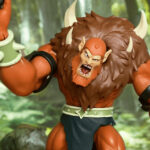
| DLX | Beast Man (200x) | Deluxe | 2025 | $24.99 | $30–$45 | Uncommon | Larger scale with unique 200x shoulder pads and whip. |
| W2 | Man-At-Arms (200x) | Standard | 2026 | $21.99 | $22–$32 | Common | Just Released. Includes the oversized hand-cannon. |
| W2 | Evil-Lyn (200x) | Standard | 2026 | $21.99 | $24–$38 | Uncommon | Features the pale skin-tone and short-hair 200x design. |
| W2 | Moss Man (200x) | Standard | 2026 | $21.99 | $25–$40 | Common | Fully flocked. Avoid high-humidity storage to preserve fur. |
| DLX | Ram Man (200x) | Deluxe | 2026 | $24.99 | $35–$55 | Rare | Collector’s Choice. Based on the “Siren’s Song” episode. |
| W3 | Skeletor (200x) | Standard | 2026 | $21.99 | $25–$40 | Uncommon | Coming Soon. Features the double-bladed Havoc sword. |
Price Fluctuation Warning: Secondary market prices can change rapidly due to collector demand, rarity, condition (mint vs. opened), reissues, anniversaries, and overall market trends. New releases often start near retail but may rise with scarcity; older figures can drop if restocked or fall if demand cools. Always check current listings on trusted platforms for the most accurate values.
 English
  Deutsch
  Français
  Português do Brasil
  日本語
日本語  Español
  English (Australia)