

Unveiled: Arak Son of Thunder’s Epic DC Saga
The Epic Saga of Arak, Son of Thunder
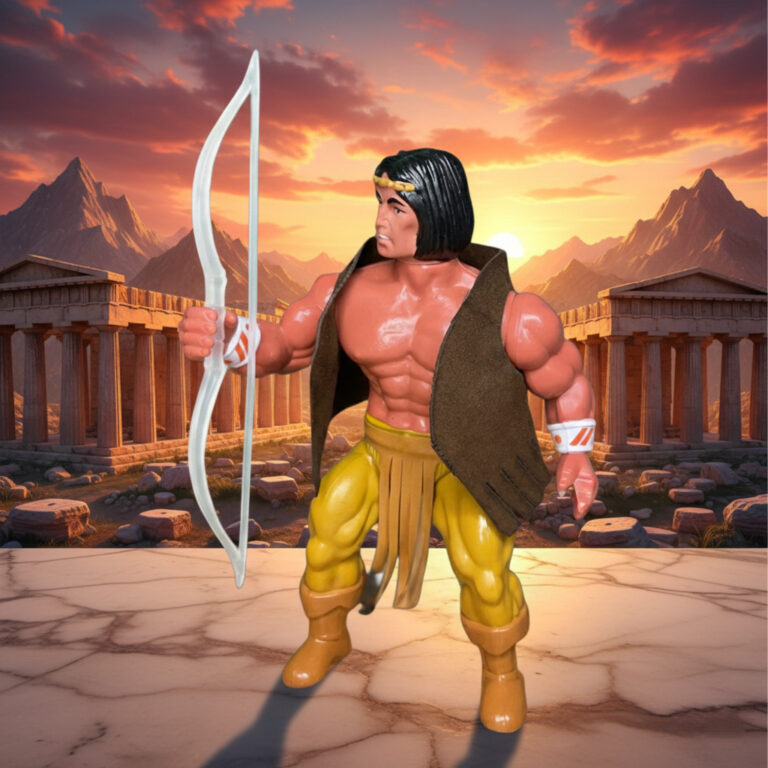
In the rich landscape of comic book lore, Arak, Son of Thunder emerges as a compelling figure whose life weaves together elements of ancient myth, cultural fusion, and relentless adventure. Debuting in DC Comics during the early 1980s, Arak’s narrative spans a 50-issue series plus an annual, chronicling a journey from humble origins to divine revelations. Created by Roy Thomas and Ernie Colón, this sword-and-sorcery tale draws on historical figures like Charlemagne while infusing fantastical encounters with gods, monsters, and sorcerers. Arak’s story resonates with themes of heritage, resilience, and the search for purpose, as he navigates worlds divided by oceans and eras. His unique blend of Native American roots and Viking upbringing sets him apart, offering readers a hero who defies easy categorization. This comprehensive biography explores Arak’s full history, delving into his major adventures, key relationships, mystical abilities, crossovers into broader universes, and even his representation in merchandise such as the Remco action figure from the Lost World of the Warlord toy line. Through detailed examinations of his arcs, we uncover the depth of a character whose thunderous legacy continues to echo.
Quontauka Roots and Divine Conception
Arak’s existence begins long before his first recorded exploits, rooted in the spiritual traditions of the Quontauka tribe along the northeastern coast of North America in the 8th century. Born as Bright-Sky-After-Storm, his conception was no ordinary event. His mother, Star-of-Dawn, found herself ensnared by the Great Serpent, a malevolent entity embodying chaos and destruction. In a moment of peril, He-No, the god of thunder revered by the Quontauka, intervened dramatically. Descending from the skies amid crashing thunder, He-No vanquished the Serpent’s hold and rescued Star-of-Dawn. Grateful and enamored, she united with the deity, leading to Bright-Sky-After-Storm’s birth.
The tribe’s shaman, sensing the child’s divine essence, named him accordingly, but suspicions lingered. Some elders whispered that the boy carried traces of the Serpent’s malice, marking him as an outsider even among his kin. This undercurrent of doubt shaped his early years, fostering a resilience that would define his path. As a young child, Bright-Sky-After-Storm displayed uncanny affinities for nature—tracking animals with ease and sensing storms before they broke. These subtle signs hinted at his godly lineage, though he remained unaware of his true parentage. Visions and dreams plagued him, often foreshadowing doom, such as the Serpent encircling his tribe or him being carried away on a beast’s back.
Rescue by Vikings and Formative Years at Sea
Fate intervened when a Viking longship, captained by Sigvald and far from their northern European homelands, spotted the drifting canoe. The warriors debated the boy’s omen-like appearance—some saw him as a curse, others a gift from Thor. Hermold, a seasoned raider with a compassionate streak, stepped forward, adopting the child and naming him Eric. The boy, struggling with the pronunciation, called himself “Arak,” a moniker that stuck, evoking the thunder of his hidden heritage.
Under Hermold’s tutelage, Arak adapted swiftly to Viking life. He learned to wield broadswords, shields, and bows, blending these with his innate Quontauka skills like tomahawk throwing and silent tracking. His red-tinted skin and dark hair set him apart, but his prowess in sparring earned respect. Over eight years, Arak grew into a formidable youth, his body honed by the rigors of sea voyages and skirmishes.
The Vikings’ raids targeted coastal monasteries in what they termed the “Southlands”—regions of Britain and France rich in gold and artifacts. Arak participated in these plunderings, grappling with the moral ambiguities of his adoptive culture’s brutality. In one raid, Sigvald claimed a jeweled cross, inverting it on the mast as a “hammer of thunder” for luck, unknowingly echoing Arak’s divine symbols. These expeditions exposed Arak to Christianity’s icons, sparking questions about gods and fate.
Tragedy struck when rival tribes, possibly influenced by lingering serpentine forces, launched a devastating assault on the Quontauka. The village burned, and amid the chaos, He-No appeared once more, wounded from battles in ethereal realms. To save his son, the thunder god placed the boy in a birch-bark canoe and set him adrift on the Atlantic’s vast waters. Whispering invocations to He-No, the child clung to life as waves battered his fragile vessel. This perilous drift, lasting days or perhaps weeks, symbolized a rite of passage, severing him from his native lands and propelling him toward an unforeseen destiny.
The Serpent’s Wrath and Loss of the Crew (Issues 1-2)
Arak’s Viking era culminated in cataclysmic events detailed in the series’ opening issues. During a monastery assault in Northumbria, the crew encountered Angelica of Albracca, a sorceress with ties to distant Cathay. Her presence heralded doom: savage monks, empowered by her magic, slaughtered many Vikings. As survivors fled to their ship, Angelica summoned a colossal sea serpent, its coils crushing the vessel and devouring Sigvald.
In desperation, Arak seized the inverted cross, crying out to any deity for aid. Hurling it like a spear, he pierced the beast’s maw, slaying it and saving a lone monk. The survivor hailed it as God’s miracle, but Arak pondered if it was He-No’s thunder or Thor’s hammer at work. Parting from Angelica, who eyed him with intrigue, Arak’s ship wrecked on Frankish shores, marking his entry into continental Europe.
Washed ashore, Arak was “rescued” by Corinna, a beguiling woman flanked by knights. Revealing his quest for Charlemagne’s court, he faced suspicion and combat. Captured and imprisoned in Lord Hessa’s castle, Arak discovered animated armor suits—sorcerous guardians. In the dungeon, he met Malagigi, Charlemagne’s wizard, who warned of enchanted food sapping willpower.
Corinna freed Arak, spinning tales of demonic family curses: her grandmother’s union with a fiend birthed Hessa’s monstrous hand. Fleeing together, Arak battled the armors, dismantling them mid-air per Malagigi’s cryptic advice. Revelations unfolded—Corinna was the true demon consort, Hessa her son. An earthquake, conjured by Malagigi, split the earth. Hessa perished in the abyss, and Corinna, aging rapidly, leaped to her infernal lover Belial, sealing her doom in the netherworld.
Malagigi survived the castle’s collapse, joining Arak as guide. This arc underscored Arak’s adaptability, pitting his warrior instincts against dark magic and deception, while introducing key ally Malagigi.
Battles in Frankland and Meeting Valda (Issues 3-5)
Transitioning to Frankish lands, Arak’s path intertwined with chivalric intrigue. In issue 3, “Sword of the Iron Maiden,” he clashed with Valda, daughter of legendary knight Bradamante and the sole female paladin in Charlemagne’s service. Initially antagonistic, their duel showcased Valda’s disciplined swordplay against Arak’s raw ferocity. Brigands like Baledor ambushed them, forcing an alliance. Valda, raised by Charlemagne after her mother’s death at Roncesvalles, summoned spirits like Amadis of Gaul for guidance, adding mystical layers to her prowess. The heroes defeated Baledor using iron and fire, solidifying their bond.
In issue 4, “A Tree from Some Dark Hell,” arriving in Aix-la-Chapelle, Arak faced prejudice due to his appearance and Thunor amulet. A duel with a swordsman proved his worth, but chaos ensued when the demon tree Irminsul revived, attacking the castle. Malagigi’s magic ended the rampage, and Arak warned of Angelica.
Issue 5, “Tournament of Titans,” saw Angelica’s arrival, ensnaring knights in a joust where her brother Argalia triumphed. Malagigi and Arak confronted her, but demons kidnapped Malagigi. These issues expanded their bond. Arak aided Valda against werewolf packs in forested ambushes, blending his tracking skills with her tactical acumen. Encounters with naked vampires in issue 6 highlighted Arak’s resourcefulness, using fire and stakes improvised from surroundings. These skirmishes solidified Valda as a love interest and equal, her iron maiden armor symbolizing unyielding strength.
Malagigi’s magic proved crucial, pacifying threats like unicorns that favored virgins—though Valda’s growing affection for Arak complicated such lore. These early European tales established Arak’s role as an outsider hero, earning Charlemagne’s favor through valor.
The Saga of Arak: Arc-by-Arc Breakdown
| Era / Issues | Primary Setting | Key Events & Monsters | Character Growth |
| Paladin Duties (#6–15) | France, Rome, Alpine Mountains | Serves Charlemagne; battles the Black Pope in Roman catacombs; faces Cerberus in Hades. | Evolves from a wandering raider to a noble Paladin and defender of the faith/court. |
| Byzantine Expeditions (#16–25) | Byzantium (Constantinople) | Court betrayals; subdues the Bull of Heaven; fights Angelica’s skeleton army in the “Sandy Sea.” | Develops emerging powers like wind bursts; begins romance with Valda. |
| Oriental Journeys (#26–32) | Baghdad, Lebanon, Middle East | Chariot races; cursed by Artemis to fight Amazons; travels via flying carpets and encounters Genies. | Explores cultural fusion; the arc ends in Arak’s physical death. |
| Death & Resurrection (#33–38) | The Americas & The Afterlife | Reunited with tribal roots; confronts He-No; returns to life with a sacred feather. | Major Shift: Transforms from a warrior into a Mystic Guardian with shamanic powers. |
| Post-Resurrection (#39–50) | Baghdad, Damascus, The High Seas | A life-sized chess game; gem quests guarded by Djinn; final battle with the Serpent Lord. | Reaches the peak of his power; bridges the gap between human and god before his peaceful passing. |
Highlights of Arak’s Shamanic Evolution
Once Arak is resurrected by He-No, his “stat sheet” changes significantly. You might want to keep these specific abilities handy as they define the later half of the series:
Spirit Vision: Ability to see supernatural entities invisible to the human eye.
Magic Resistance: A gift from the sacred feather allowing him to withstand sorcery.
Elemental Control: Ability to summon wind bursts for mobility (leaps) and combat.
Longevity: Greatly slowed aging process, allowing him to lead his people for generations.
The Annual: Visions of the Past and Future
The 1984 annual delved into flashbacks and visions. Arak and Satyricus crossed a desert seeking the Serpent Lord’s lair, facing raiders and whirlwinds transporting them to realms. Satyricus entered Hades, confronting Charon; Arak reunited with illusory Quontauka. Dispelling illusions, Arak battled the Serpent Lord, surrendering Gabriel’s sword but reclaiming it victoriously. The Serpent Lord, wounded, hinted at enduring threats.
Powers and Abilities Evolved
Initially, Arak excelled in hand-to-hand combat, swordsmanship, archery, and tracking. Post-resurrection, demigod traits surfaced: weather manipulation summoned storms; earth control caused tremors; illusions deceived foes; longevity extended life; wind bursts deflected attacks. His otomahuk became enchanted, returning like a boomerang.
Key Characters in Arak’s World
Arak’s saga featured diverse figures. Below is an expanded chart:
Arak, Son of Thunder: Character Directory
| Character Name | Role | Description and Key Appearances |
| Arak (Bright-Sky-After-Storm) | Protagonist | Demigod son of He-No; Viking-raised Native American warrior; appears in all issues. |
| Valda the Iron Maiden | Ally / Love Interest | Female paladin, daughter of Bradamante; first appears in #3, frequent partner. |
| Satyricus | Ally | Last satyr, disguised as a monk; provides comic relief and mind-control flute abilities. |
| He-No | Deity / Father | Thunder god; appears in visions throughout, direct confrontation in #33. |
| Angelica of Albracca | Antagonist | Sorceress who summons beasts and monsters; recurring villain starting from #1. |
| Malagigi | Ally | Charlemagne’s wizard; provides magical aid; first appears in #2. |
| Charlemagne (Carolus Magnus) | Ally / Patron | Frankish emperor; Arak serves in his court during major European arcs. |
| Hermold | Adoptive Father | Viking mentor who raises Arak; dies early in #1. |
| Sigvald | Viking Leader | Ship captain who rescues Arak; perishes in #1. |
| Bradamante | Ally (Indirect) | Valda’s mother, legendary knight; referenced in Valda’s backstory. |
| Rinaldo | Ally | Paladin of Charlemagne; fights alongside Arak in court and battle arcs. |
| Corinna | Antagonist | Demon consort who manipulates Arak; central to #2. |
| Lord Hessa | Antagonist | Corinna’s monstrous son; dies in #2. |
| Belial | Antagonist | Demon who claims Corinna in the netherworld; #2 climax. |
| Baledor | Antagonist | Brigand leader; defeated in #3. |
| Pope Hadrian | Ally | Rescued from the Black Pope in #8. |
| Black Pope | Antagonist | Evil doppelganger; main foe in #8. |
| Constantine VI | Ally | Byzantine emperor; appears in eastern diplomatic arcs. |
| Irene | Ally | Byzantine empress; involved in court missions. |
| Haakon | Ally | Viking survivor; aids in later sea voyages. |
| Star-of-Dawn | Family | Arak’s mother; appears in flashbacks and origin stories. |
| Jocephus | Ally | Immortal wanderer; assists in Rome arcs. |
| Khiron | Ally | Centaur; tragically dies in #12. |
| Alsind | Ally | Alchemist’s nephew; joins the group in later arcs. |
| Sharizad | Ally | Companion in Baghdad; appears from #38 onward. |
| Serpent Lord | Antagonist | Recurring chaos entity; major foe in the 1984 Annual. |
This chart encompasses core and recurring figures, drawn from historical and mythical inspirations.
Bestiary of the Ancient World: Arak’s Greatest Foes
Arak’s travels took him across a world where history and mythology were inseparable. From the frozen peaks of the Alps to the shimmering deserts of the Middle East, he encountered creatures pulled directly from G1-era fantasy and ancient folklore.
The following bestiary highlights the most formidable foes Arak faced and the diverse mythologies that inspired them.
| Monster / Entity | Mythology | Issues | Combat Notes & Context |
| Angelica of Albracca | Carolingian Lore | #1, #16, #20 | A recurring sorceress; she summons skeleton armies and illusions to plague Arak’s travels. |
| Black Pope | Dark Fantasy | #7–8 | A demonic doppelganger of the Pope; fought in the catacombs beneath Rome. |
| Cerberus & Charon | Greek / Roman | #12 | Encountered during Arak’s descent into Hades to rescue a fallen friend. |
| Keres Demons | Greek | #13 | Death-spirits that claim the souls of the dying; revealed secrets of Arak’s birth. |
| Invisible Hydra | Greek | #15 | A multi-headed beast terrorizing Thessalonica; required Arak to fight by instinct rather than sight. |
| Bull of Heaven | Mesopotamian | #16–18 | A rampaging celestial beast; Arak used his wind-burst powers to subdue its raw strength. |
| Artemis (The Huntress) | Greek | #30 | Though a goddess, her spell forced Arak into a bloody conflict with warrior Amazons. |
| Great Serpent | Native American | #33, #50 | A primordial chaos entity representing darkness; the primary rival to Arak’s father, He-No. |
| Flying Djinn | Arabian | #45 | A powerful air-spirit involved in a high-stakes quest for magical gems in the East. |
A Shaman’s Survival Kit
To survive these encounters, Arak relied on a unique blend of equipment that bridged his two worlds:
The Tomahawk: His signature weapon, used with a speed that baffled European knights.
The Longbow: Used for long-range precision, often tipped with specialized arrows for supernatural foes.
The Sacred Feather: Obtained after his resurrection, this item acted as a “magic detector” and protection against the Serpent Lord’s influence.
The Cloak of He-No: A final gift from his father, symbolizing his transition from a mortal warrior to a legendary protector.
Crossovers and Enduring Presence
While Arak’s solo series remained a self-contained sword-and-sorcery epic, his character and supporting cast occasionally crossed into the wider DC Universe, allowing glimpses of his thunderous legacy amid larger events. These appearances, though sparse, integrated Arak’s medieval mysticism with modern heroes, time-displaced threats, and multiversal chaos—ensuring his influence persisted long after his 1985 series finale.
His most notable early crossover came during the Crisis on Infinite Earths buildup in All-Star Squadron #55 (February 1986, cover-dated but released late 1985). Written by Roy Thomas (Arak’s co-creator), this issue featured a time-travel adventure where heroes from various historical eras—including Arak and Valda the Iron Maiden—were summoned to the present (1940s) to battle the Ultra-Humanite. Transported via mystical forces amid the multiversal upheavals of the Crisis, Arak joined forces with the All-Star Squadron, including Green Lantern (Alan Scott), Wonder Woman (Earth-Two version), Firebrand, and others. His shamanic abilities and warrior prowess proved vital in combating the Ultra-Humanite’s schemes, which involved postscripts to prior encounters with Cyclotron and Axis forces. The story blended Arak’s 8th-century world of Charlemagne-era quests with World War II heroism, creating a seamless fusion of eras. Arak’s role highlighted his adaptability—using tomahawk throws, tracking skills, and emerging divine powers to aid the team against a villain who threatened reality itself.
Valda, Arak’s steadfast companion and love interest, received her own modern-era spotlight in the mid-2000s. During the Infinite Crisis buildup, she appeared in Day of Vengeance: Infinite Crisis Special #1 (March 2006, written by Bill Willingham). As part of an extended magical assembly—including Shadowpact members like Detective Chimp, Blue Devil, and Ragman—Valda joined heroes such as Madame Xanadu, Zauriel, and the Phantom Stranger in the “Ninth Age of Magic” storyline. She fought alongside them against the Spectre’s rampage and the unleashed forces of chaos following the destruction of the Rock of Eternity. Valda’s disciplined swordsmanship and spirit-summoning abilities complemented the group’s efforts, marking her as a timeless knight in a contemporary magical crisis. She made brief cameos in related tie-ins, including Infinite Crisis #6 and early Shadowpact issues (#1 and #5), solidifying her as a recurring figure in DC’s magical corner without overshadowing Arak’s original narrative.
A modern descendant carried the family name forward in Justice League: Cry for Justice #4 (December 2009, written by James Robinson). Arak Wind-Walker (New Earth/Post-Crisis continuity) appeared as a member of the villainous Helix group, enemies of Infinity Inc. In this issue, the Justice League’s darker hunt for Prometheus’ killers led to interrogations and clashes involving minor villains like Penny Dreadful and Arak Wind-Walker. Though a brief role, it established the Arak bloodline’s enduring presence—his shamanic heritage echoing through generations into the superhero era.
The most dramatic reinvention came in the 2015 Convergence event. Here, Arak was reimagined as Telos, the Avatar of the Blood Moon and a near-cybernetic enforcer serving a version of Brainiac (Vril Dox from Futures End). Brainiac had transformed him, erasing his memories and turning him into a powerful planetary entity ruling the Blood Moon—a domed world holding captive cities from across the multiverse. Telos acted as Brainiac’s right hand, enforcing the Convergence by pitting displaced cities against each other in battles for survival. As the event unfolded across the main miniseries and tie-ins, Telos clashed with heroes from various Earths, including Earth-2 survivors. In a pivotal twist, he regained his true identity as Arak, Son of Thunder—revealing his original life on the Blood Moon, his family (including wife Valda and children displaced in the multiverse), and his demigod origins. This redemption arc saw him turn against Brainiac, aid the heroes in averting catastrophe, and later embark on a personal quest in the Telos solo miniseries (2015-2016) to reunite with his lost family. The storyline bridged his classic fantasy roots with cosmic-scale threats, positioning Arak/Telos as a redeemed anti-hero central to one of DC’s major multiversal events.
These scattered but impactful appearances expanded Arak’s reach far beyond his 1980s origins. From aiding Golden Age heroes against Nazi occultism to embodying a planetary avatar in multiversal war, they wove his themes of heritage, destiny, and thunderous power into DC’s broader tapestry—without ever diluting the standalone appeal of his original adventures. Though no major new stories have emerged since the late 2010s, these integrations keep Arak’s legend alive in the ever-shifting DC multiverse.
The Action Figure Legacy of Arak
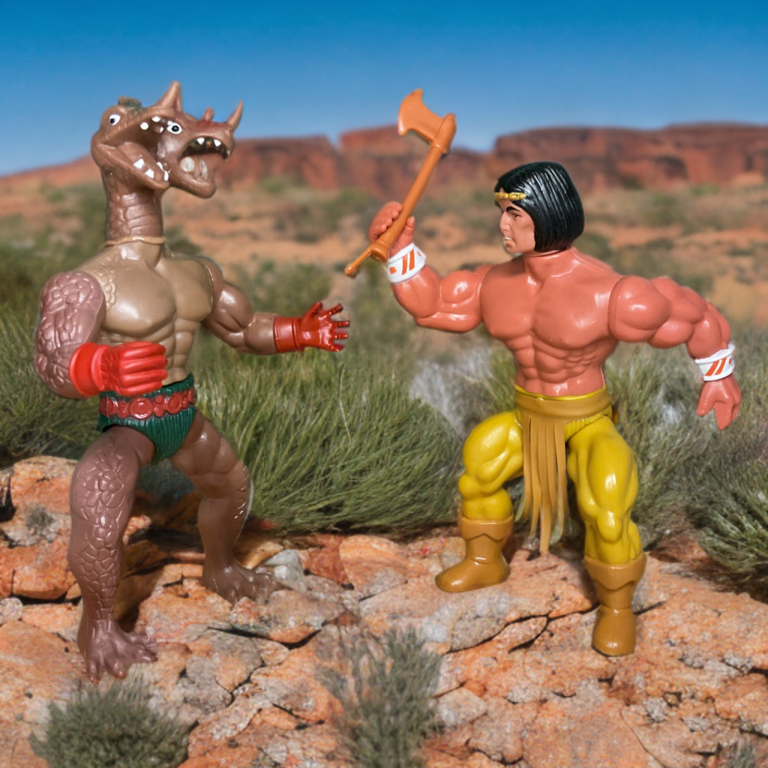
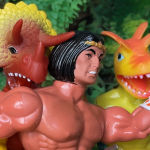
Arak’s popularity extended beyond the pages of his comic series into the vibrant world of 1980s action figures, a testament to the era’s booming interest in sword-and-sorcery heroes. In 1982, Remco Toys launched the “Lost World of the Warlord” line, capitalizing on the success of Mattel’s Masters of the Universe (MOTU) franchise by producing compatible 5½-inch figures with similar muscular builds, articulation, and play features. While the line was officially tied to Mike Grell’s The Warlord comic from DC Comics—set in the lost realm of Skartaris—it expanded to include characters from other DC sword-and-sorcery titles, most notably Arak, Son of Thunder, alongside Hercules Unbound (from DC’s Hercules Unbound series). This eclectic selection reflected Remco’s strategy to tap into the fantasy adventure market without being limited to a single property.
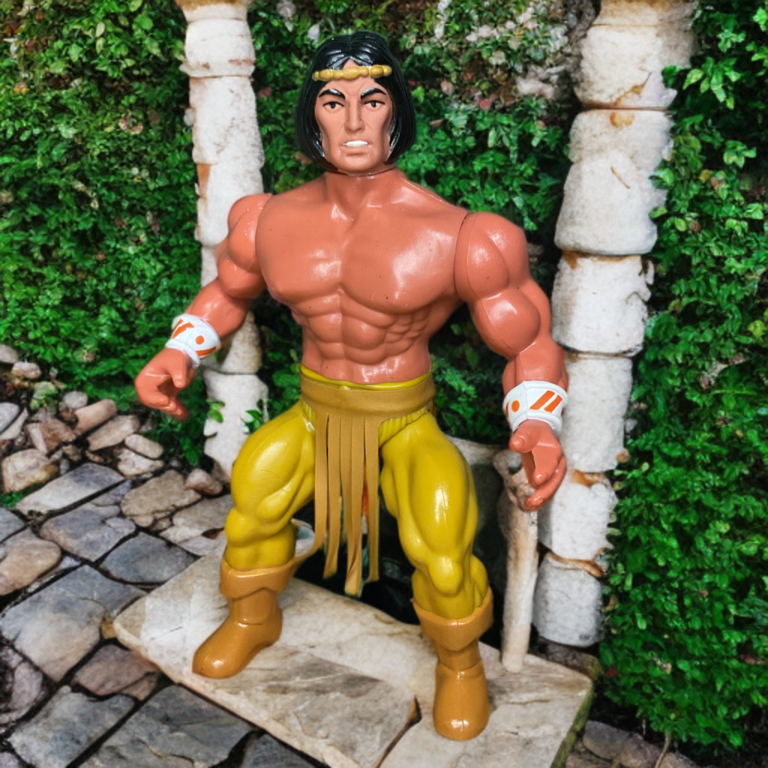
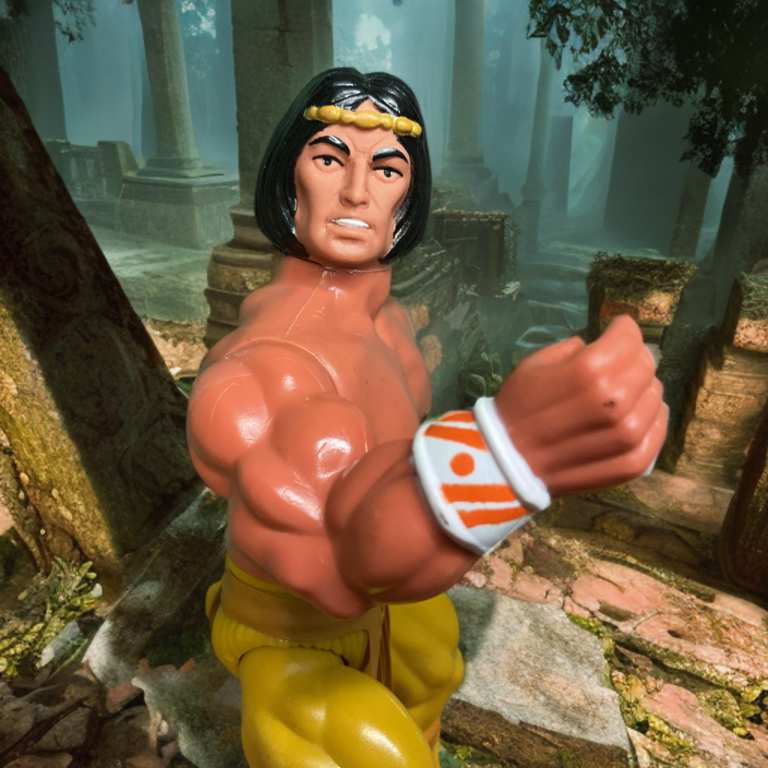
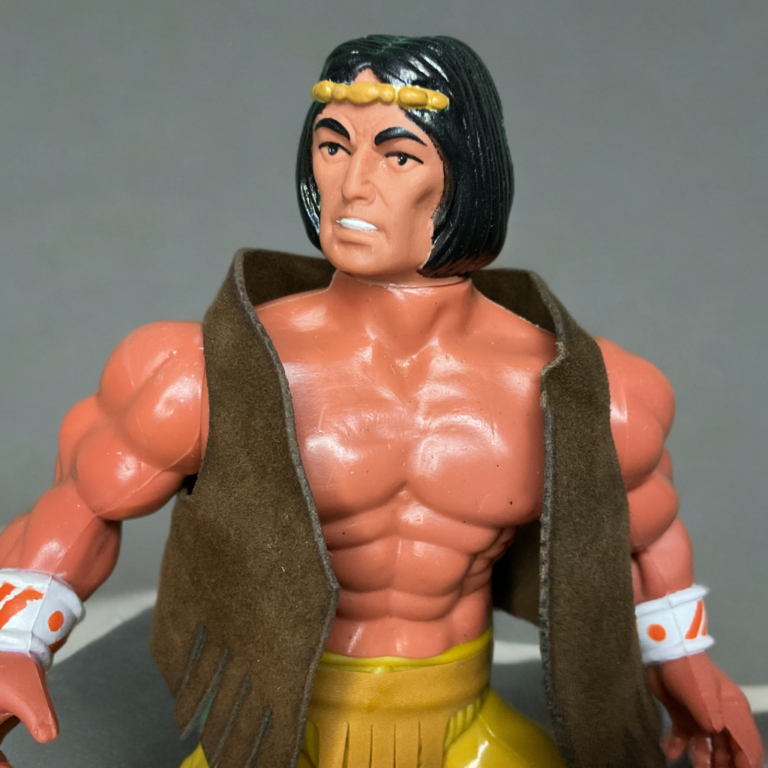
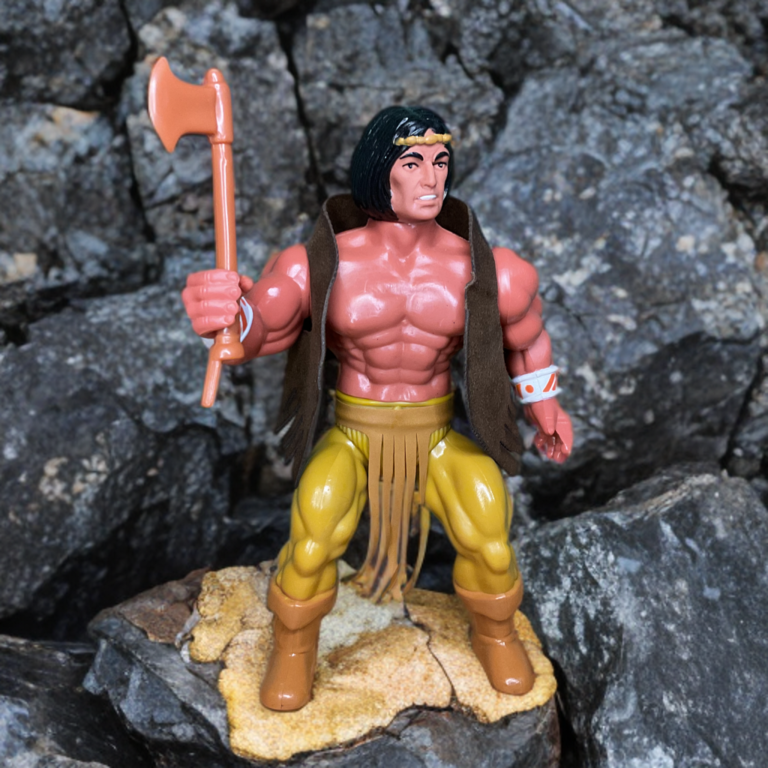
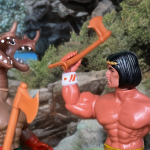
The Arak figure stood out as one of the line’s highlights, embodying the character’s unique cultural fusion. Sculpted with a tan skin tone, prominent red hair (often styled in a flowing, windswept manner), and a muscular physique typical of the Remco/MOTU body mold, the figure captured Arak’s powerful yet agile warrior aesthetic. His outfit featured fringed Native American-inspired elements—such as a loincloth or vest with leather-like fringes—combined with subtle Viking touches like armored bracers or shoulder guards. Collectors note two primary clothing variants: one with a brown loincloth accented by white and brown painted bracelets, and another featuring a brown vest paired with yellow bracelets. These differences add to the figure’s collectibility today.
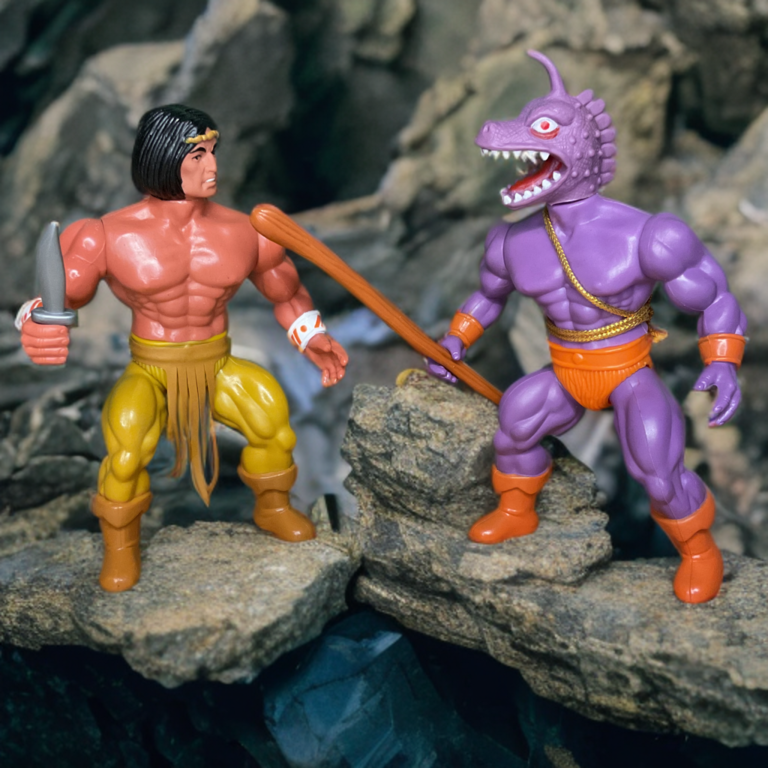
Accessories emphasized Arak’s dual heritage as a weapon master. The standard release included a gray double-bladed axe (a stylized tomahawk-axe hybrid that evoked his signature otomahuk), along with a sword or knife for close combat versatility. These pieces were cast in durable plastic, often with metallic paint apps to give them a battle-worn sheen. The figure’s 10 points of articulation allowed for dynamic posing—perfect for recreating scenes of Arak hurling his axe, drawing a bow (though no bow accessory was included), or clashing swords with foes like Angelica’s minions.
Packaging played a key role in marketing the figure’s comic roots. Arak came carded on a colorful blister card with vibrant, comic-style artwork depicting him in heroic action poses—often mid-battle against mythical beasts or amid stormy skies, nodding to his thunder-god lineage. The card back featured character bios, cross-sell images of the full line (including Warlord, Deimos, Machiste, Mikola Rostov, and Hercules), and play suggestions for imaginative adventures in prehistoric jungles, medieval castles, or lost worlds. Some cards even referenced the broader DC universe, encouraging kids to mix Arak with other fantasy toys. The line was designed for seamless compatibility with MOTU figures, allowing children to create epic crossover battles—Arak standing alongside He-Man against Skeletor-inspired villains, or teaming up with Warlord against Deimos.
Beyond the standard figure, Remco produced fun promotional variants to boost appeal. Water-squirting pistols branded with Arak’s likeness appeared in some toy aisles, featuring his image on the handle or body and incorporating squirting mechanisms for backyard “thunder blast” play. These squirters were part of Remco’s broader strategy to offer affordable, gimmick-driven items alongside the core action figures, similar to how other companies extended lines with water toys or vehicles.
The “Lost World of the Warlord” line launched amid fierce competition in the 1982 toy market, riding the wave of MOTU’s explosive popularity. Remco aimed to capture shelf space with budget-friendly alternatives, often pegged right next to Mattel’s figures. Despite the line’s short run—primarily 1982, with possible carryover into 1983—the figures gained a dedicated following. Arak’s inclusion, despite his separate comic origin (he first appeared in a Warlord insert before his own series), highlighted DC’s willingness to cross-promote its fantasy heroes. The toys even influenced some fans’ perceptions of the characters, blending comic lore with playtime creativity.
Today, the Remco Arak figure is a prized collectible among vintage toy enthusiasts and DC Comics aficionados. Loose examples in good condition— with tight joints, minimal paint wear, and original accessories—fetch prices in the $20–$50 range on platforms like eBay and Etsy, while mint-on-card (MOC) versions command $70–$150 or more, depending on card condition and variant. Sealed examples with clear bubbles and intact fringes are especially sought after, as the cloth-like fringe belts on some releases are prone to damage over time. The figure’s rarity stems from the line’s brief production run; Remco shifted focus to other licenses (like wrestling figures) in subsequent years, leaving “Lost World” as a snapshot of 1980s toy innovation.
This merchandise legacy underscores Arak’s broader cultural footprint. Though his comic run ended in 1985, the Remco figure kept his image alive for a new generation, allowing kids to physically enact his thunderous adventures. It bridged the gap between comic panels and tangible play, ensuring that Arak, Son of Thunder, remained a memorable part of the sword-and-sorcery toy boom—even if the line itself proved short-lived. For collectors, owning the figure is like holding a piece of 1980s nostalgia, a physical echo of the hero who blended Native American spirit, Viking might, and divine power into one unforgettable warrior.
Conclusion
Arak, Son of Thunder’s odyssey from ocean-drift orphan to resurrected demigod encapsulates a profound exploration of identity amid clashing worlds. His arcs—from Viking raids to oriental epics and beyond—blend history, myth, and heroism, supported by allies like Valda and Satyricus against foes like Angelica. Enhanced powers post-resurrection amplified his legend, while crossovers and merchandise like the Remco figure broadened his reach. Though his series concluded in 1985, Arak’s thunderous spirit endures, a beacon for stories of cultural convergence and unyielding questing. In DC’s vast chronicles, he stands as a timeless warrior, forever echoing the storm.
 English
  Deutsch
  Français
  Português do Brasil
  日本語
日本語  Español
  English (Australia)