

Transformers Demon Knight Defensor Review: The Ultimate KO?
The Giant with a Badge: An Introduction to Demon Knight Defensor
In the world of transforming robots, there is a fine line between a “knock-off” and a “glow-up.” For years, fans of the Protectobots felt that the official Combiner Wars release was just a bit… compact. Enter the Demon Knight Defensor. Despite the slightly aggressive “Demon” branding for a team of first responders, this set is an ambitious, upscaled, and significantly sturdier reimagining of the classic emergency team.
If you’ve ever wanted a Defensor that doesn’t look like he’s standing in the shadow of a Devastator, this is the version that finally brings the scale. It takes the engineering of the 2015 line and injects it with some much-needed mass, paint detail, and—most importantly—a dedicated arsenal for every member of the squad.
Defensor Data-Log
- 1. Legacy of the Shield: A G1 History
- 2. The Roster: Five Heroes, One Mission
-
3. Hot Spot (Leader)
4. Blades
5. First Aid
6. Streetwise
7. Groove - 8. The Combined Form: Defensor Reborn
- 9. The "Demon Knight" Difference: Quality & Upgrades
- 10. Gold Standard of User Experience
- 11. Engineering Evolution: Articulation & Stability
- 12. Buyer’s Guide: Finding the Demon Knight
- 13. Final Verdict
The Legacy of the Shield: A G1 History
To understand why this figure matters, we have to look back at the 1986 debut of the Protectobots. Unlike the Aerialbots, who were built for air superiority, or the Technobots, who were built for high-level computation, the Protectobots were built for us.
Origins and Philosophy
In the original animated series, the Protectobots debuted in the episode “The Revenge of Bruticus.” Their primary directive is the preservation of human life. While other Autobots are off fighting a multi-million-year civil war across the cosmos, the Protectobots are the ones staying behind to make sure a skyscraper doesn’t fall on a crowded sidewalk during the crossfire.
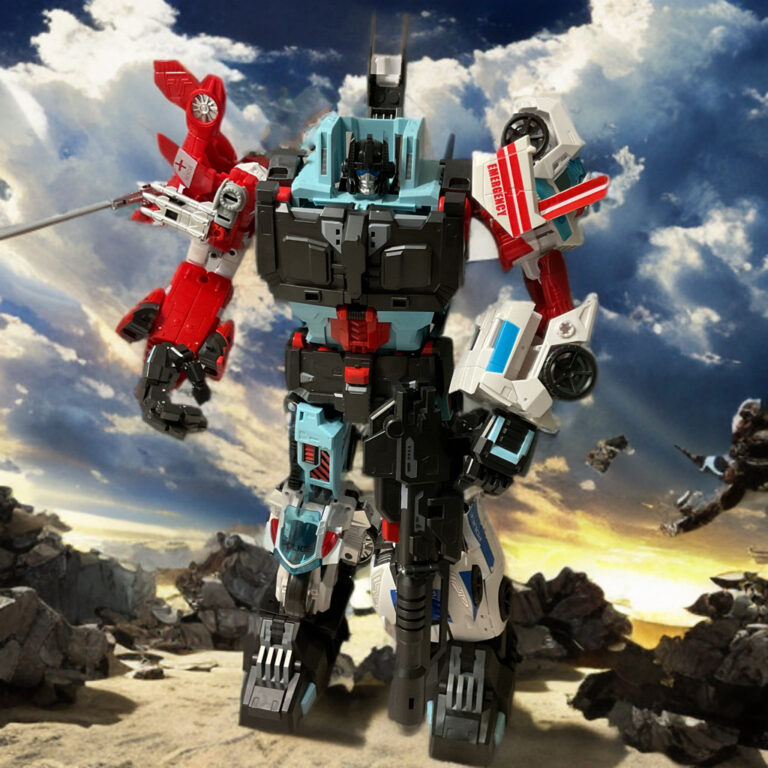
The Protectobot Personnel Files
The hallmark of the Protectobot team is their cohesion. Unlike many other subgroups where internal bickering is the norm, this unit is unified by a singular philosophy: The protection of all life. Below is the definitive breakdown of the five heroes that form the Demon Knight Defensor.
| Name | Vehicle Mode | Body Part | Personality Profile | Key Specialty |
| Hot Spot | Fire Engine | Torso / Head | Energetic and charismatic. He leads by example and is happiest when he’s in the thick of a crisis. | Instigating rapid-response strategies and managing battlefield heat. |
| Blades | Rescue Helicopter | Right Arm | A “street fighter” who prefers close-quarters combat. He is often at odds with the more peace-loving members due to his rough tactics. | Air support and using rotor blades for devastating melee attacks. |
| First Aid | Ambulance | Left Arm | Deeply compassionate and a pacifist at heart. He feels the “pain” of even inanimate objects and is often overly cautious. | Repair, surgery, and field medicine for both organics and machines. |
| Streetwise | Police Interceptor | Left Leg | A sharp, determined tracker with an amazing capacity to adapt to his environment. He never lets prey escape his notice. | Tactical investigation, pursuit, and city-wide monitoring. |
| Groove | Touring Motorcycle | Right Leg | An easy-going pacifist who enjoys the open road. He often struggles with the necessity of war but is loyal to the team’s mission. | Scouting, reconnaissance, and navigating tight urban spaces. |
Integration and Synergy
When these five minds merge into Defensor, their individual quirks—Blades’ aggression, First Aid’s hesitation, and Hot Spot’s drive—are filtered through a central “Protectobot core.” The result is a Super Warrior that treats humans like his own children.
The Demon Knight version of this team is particularly notable because it honors this G1 hierarchy perfectly. By ensuring Groove remains a full-sized limb (rather than being relegated to a chest-plate as seen in some other modern lines), it maintains the classic 1986 silhouette that fans remember.
The Character of Defensor
When the five members combine, they form Defensor. Unlike many other combiners—like the chaotic Abominus or the fractured Menasor—Defensor is remarkably stable. This is because all five Protectobots share a singular, unwavering goal: protection.
In the show, Defensor is often depicted as having a “force field” capability, representing his role as the ultimate mobile fortification. He doesn’t just punch Decepticons; he stands between the enemy and the innocent. This selfless nature makes him one of the most beloved “Special Teams” in the entire franchise.
The Roster: Five Heroes, One Mission
The Demon Knight set represents more than just a mechanical upgrade; it is a restoration of the Protectobots’ original team dynamic. In the official Transformers lore, the Protectobots are unique among the “Special Teams” because their unification isn’t born of a desire for conquest or destruction, but from a shared, deeply held directive to safeguard organic life. While other combiners like Bruticus are weapons of war designed for demolition, Defensor and his components are built as an emergency response infrastructure. This “One Mission” philosophy is what makes their combined mentality so stable, as all five members are consistently aligned toward the same heroic goal.
In the standard Combiner Wars retail line, this roster was often fragmented. Due to scale concerns, collectors frequently had to choose between a version that replaced the motorcycle Groove with the armored transport Rook, or a version where Groove was relegated to a tiny accessory that attached to the chest. The Demon Knight set rejects these compromises, upscaling the entire team so that Groove can return to his rightful place as a full-sized leg. This restoration allows the “Roster” to function exactly as it did in the 1986 debut, providing a level of team symmetry that feels both nostalgic and authoritative on a modern display shelf.
Beyond the roster changes, the Demon Knight set significantly upgrades the combat readiness of each individual hero. Historically, the smaller Protectobots were often under-equipped, frequently lacking personal weaponry in their individual robot modes. This set acknowledges that even first responders need to defend themselves and the civilians under their care, providing a dedicated firearm for every member. This allows for a more cohesive “Strike Team” aesthetic, moving away from the idea that the limbs are merely parts of a larger machine and establishing them as capable, independent warriors who just happen to be part of a greater whole.
The “upscaling” process also addresses one of the most persistent issues with the original molds: the mismatched vehicle scales. By bringing all five units into a larger format, the fire engine Hot Spot feels like a true command center, while the limbs maintain a formidable presence. This balanced scale ensures that when the units are displayed in their vehicle modes, they look like a genuine emergency convoy ready to deploy at a moment’s notice. This holistic approach to the team—focusing on character accuracy, individual armament, and consistent scaling—is what elevates the Demon Knight set from a simple copy to a definitive team upgrade.
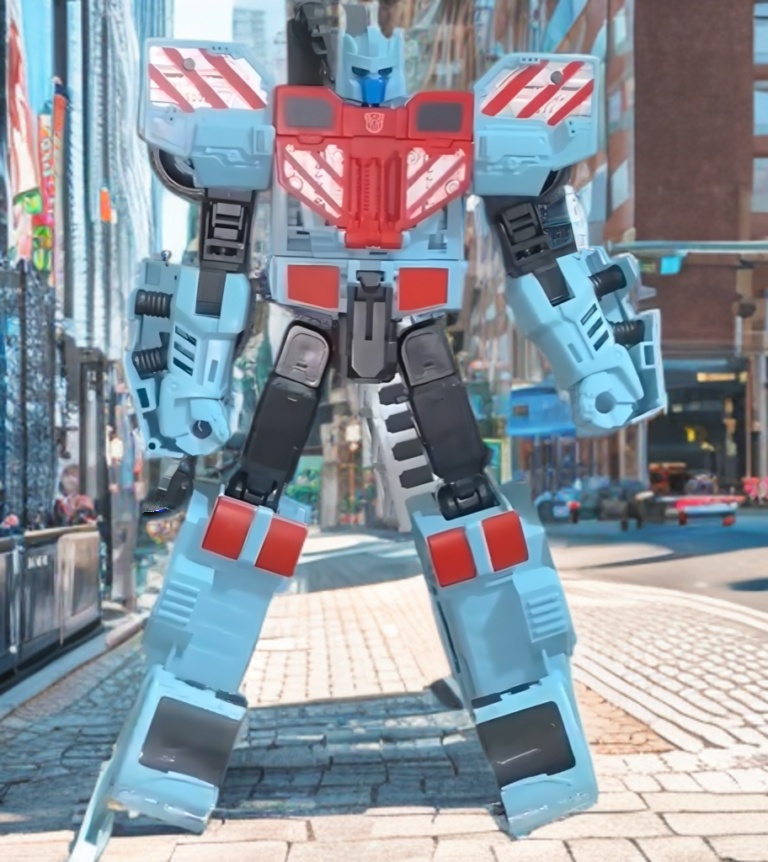
The Command Center: Hot Spot and the Structural Core (The Core)
Hot Spot serves as the fearless leader of the Protectobots, transforming into a brilliant blue fire engine that is always the first to charge toward danger. His personality is defined by a high-intensity drive; he doesn’t just put out fires, he inspires his team to act with the same relentless energy. In the context of the Demon Knight version, this “Core” bot is the literal and figurative foundation of the entire set. Because he must support the weight of four other upscaled robots, the structural integrity of his fire engine mode and robot form is paramount to the stability of the combined Defensor.
The most immediate benefit of the Demon Knight upscaling is the significant increase in plastic density. While the original retail Combiner Wars version was functional, it often felt hollow or overly light, which could lead to stability issues when fully combined. This version utilizes a much thicker, more durable material that gives Hot Spot a premium heft. This added mass is particularly noticeable in the legs and hips, which now feature reinforced joints designed to maintain their position even under the stress of a massive 18-inch display.
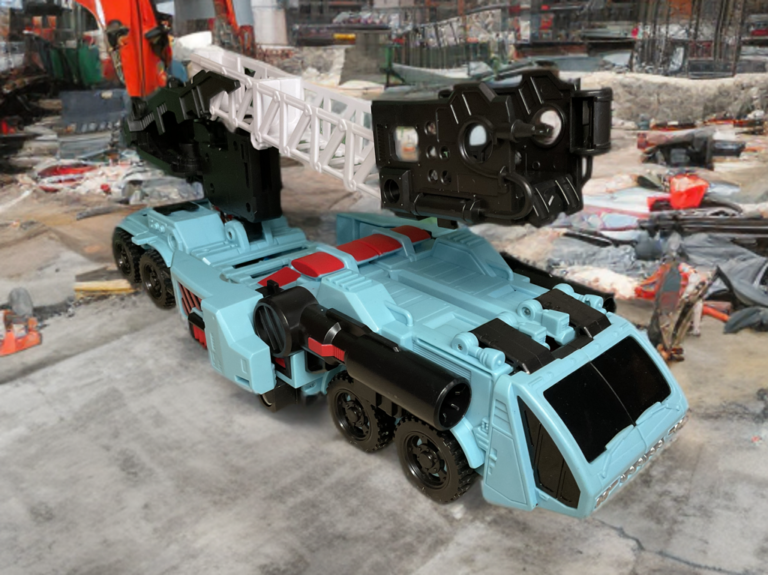
A critical engineering upgrade in this set is the ladder assembly. On smaller versions of this mold, the ladder could feel thin or prone to sagging when positioned as the “backbone” of the combined form. The Demon Knight version treats the ladder as a primary structural element, ensuring it is robust enough to lock securely into place. This rigidity is essential for maintaining the upright posture of Defensor, preventing the “leaning” effect often seen in larger combiners. The ladder also accommodates the heavy-duty ratchets that allow for a wide range of motion without sacrificing the figure’s balance.
In addition to the physical upgrades, this Hot Spot maintains strict adherence to the G1 aesthetic, featuring the iconic dual-cannons that mount on the ladder and a dedicated handheld firearm for his individual robot mode. The transformation remains smooth and intuitive, staying true to the user-friendly experience found in sets like the Age of the Primes Predaking. By focusing on reinforced connection points and high-tolerance plastic, the Demon Knight Hot Spot successfully transitions from a high-speed emergency vehicle to a rock-solid center for one of the most stable combiners on the market.
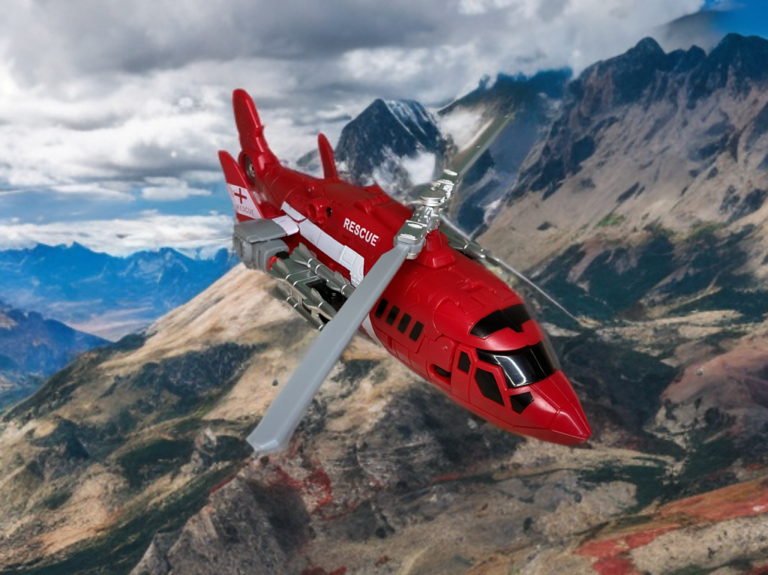
The Airborne Defender: Blades (The Right Arm)
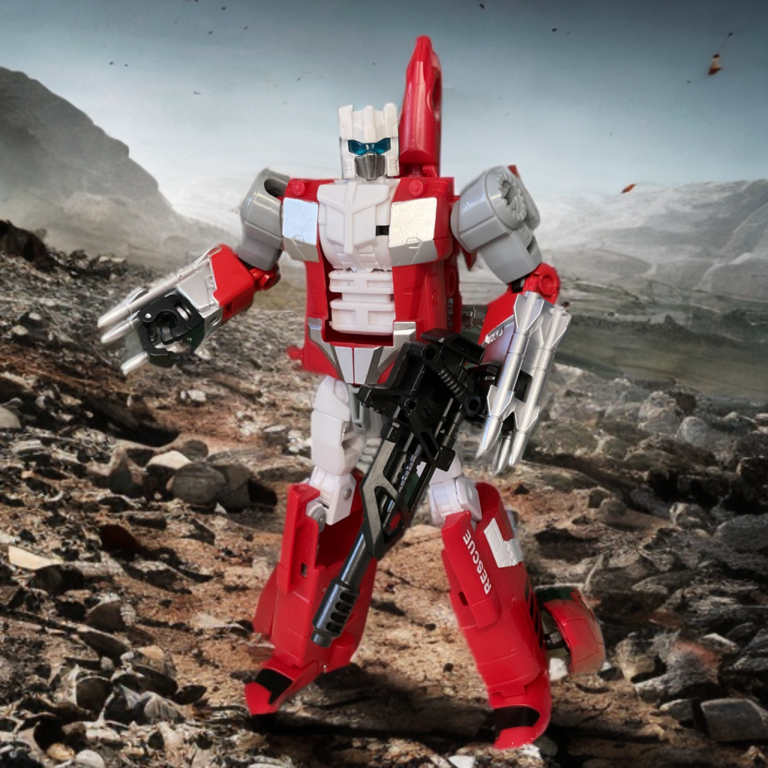
Blades serves as the team’s transport and rescue helicopter, though his personality is often at odds with the typical “pacifist” nature of the Protectobots. In official canon, he is a rough-and-tumble street fighter who prefers the grit of ground combat to the detached nature of aerial reconnaissance. As the right arm of Defensor, his role is to provide the combined giant with a massive reach and a devastating punch. The Demon Knight version scales this helicopter mode up significantly, giving the rotor assembly and the fuselage a sense of realistic scale that allows him to look formidable when flying alongside larger Autobot jets.
The engineering of the Demon Knight Blades benefits from the same material upgrades found in the rest of the set. In helicopter mode, the landing gear and tail rotor are much more durable than the original retail release, which was often criticized for having thin, breakable plastic on the rotor blades themselves. Here, the rotors are built from a more resilient polymer that can withstand the rotation and folding required for transformation without feeling brittle. This is crucial because, in arm mode, the rotors must fold neatly against the shoulder or forearm, and any weakness in the plastic would compromise the entire silhouette.
Transitioning Blades from a helicopter to his individual robot mode is a smooth, mechanical process that mirrors the intuitive design of the Age of the Primes Predaking. The transformation doesn’t rely on complex “inside-out” folding; instead, the legs extend from the rear of the craft and the arms deploy from the side pods with a satisfying click. Because this version includes a dedicated handgun for Blades, he finally looks like the aggressive fighter described in his technical specifications. No longer is he just a support bot; he is a fully armed combatant ready to take on Decepticon Seekers on his own terms.
When acting as the right arm of Defensor, the structural integrity of Blades is put to the test. The upscaling includes a reinforced elbow joint and a much stronger connection point at the shoulder. This allows Defensor to hold his massive combined-form weapons horizontally without the arm dropping due to gravity—a common flaw in smaller or lower-quality KOs. The paint applications are particularly sharp on this unit, with the red and white rescue deco providing a high-contrast look that defines the right side of the combiner’s torso.
The Field Medic: First Aid (The Left Arm)
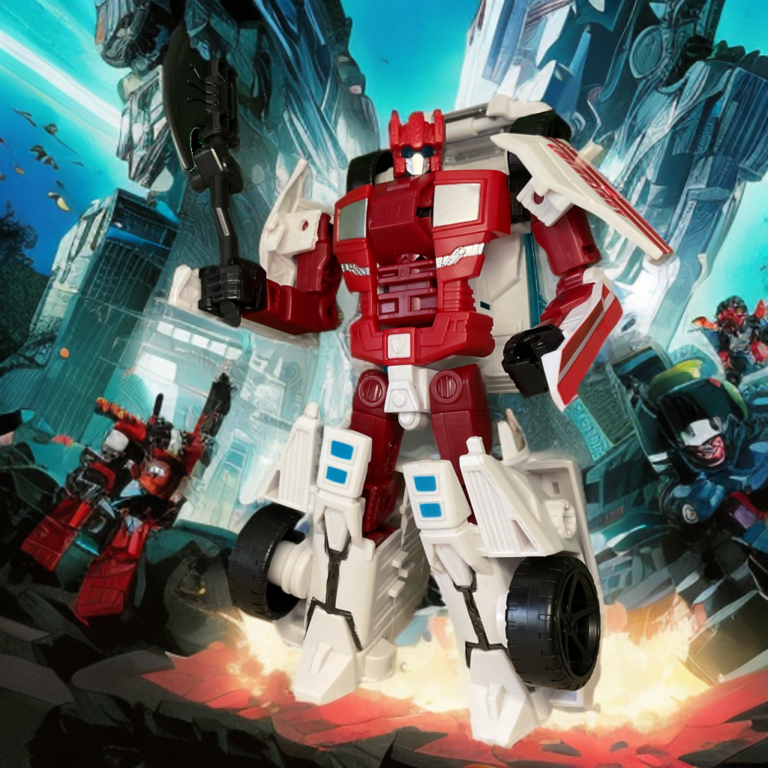
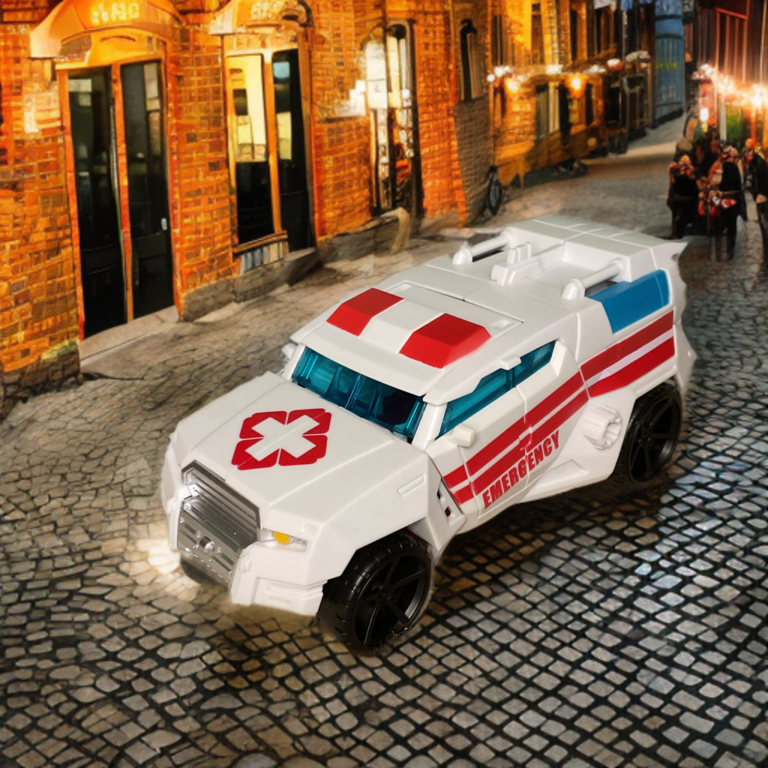
First Aid is the compassionate heart of the team, transforming into a highly equipped ambulance. His character is defined by an almost obsessive need to repair things, extending his empathy even to non-living machinery. As the left arm of Defensor, he provides the technical precision required for the giant’s more delicate operations. The Demon Knight version captures the clean, sterile aesthetic of an emergency vehicle with a crisp white finish and vibrant red emergency markings that feel much more professional and “premium” than the standard retail versions.
In terms of transformation, First Aid is an excellent example of the “smooth and easy” philosophy that makes this set a great recommendation for beginners. The process of shifting the ambulance shell to reveal the robot limbs is logical and avoids the clearance issues found in “monster” challenges like Zeta’s Superion. The panels move on sturdy hinges that don’t feel like they are under stress, allowing for a quick and satisfying conversion. This ease of movement is a hallmark of the set’s design, ensuring that even a younger fan or a new collector can enjoy the figure without needing a step-by-step video guide.
The addition of an individual firearm for First Aid is a significant upgrade for his robot mode. Traditionally, First Aid has been depicted as a pacifist who rarely uses a weapon, but the Demon Knight set provides him with a sleek handgun that matches the team’s unified aesthetic. This gives him a more “complete” feel on the shelf, allowing him to stand alongside Hot Spot and Blades as an equal member of the strike team. The robot mode itself is well-proportioned, with the upscaling allowing for more detail in the face sculpt and the emergency light-bars on his shoulders.
As the left arm of Defensor, First Aid provides a balanced counterpoint to Blades. The internal locking mechanisms are tightened to ensure that the ambulance’s rear section (which forms the forearm) stays securely closed during posing. This version also features the fully articulated hands, allowing First Aid to point or grip accessories with human-like dexterity. The combination of the smooth transformation and the rock-solid arm mode makes First Aid a standout component of the team, proving that a medic can be just as tough as a frontline soldier.
The Tactical Tracker: Streetwise (The Left Leg)
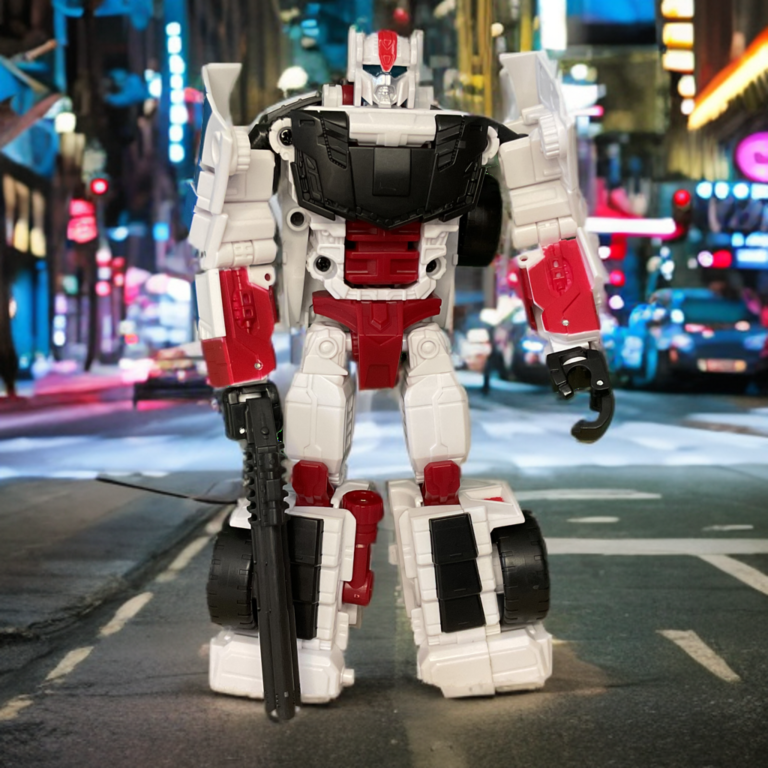
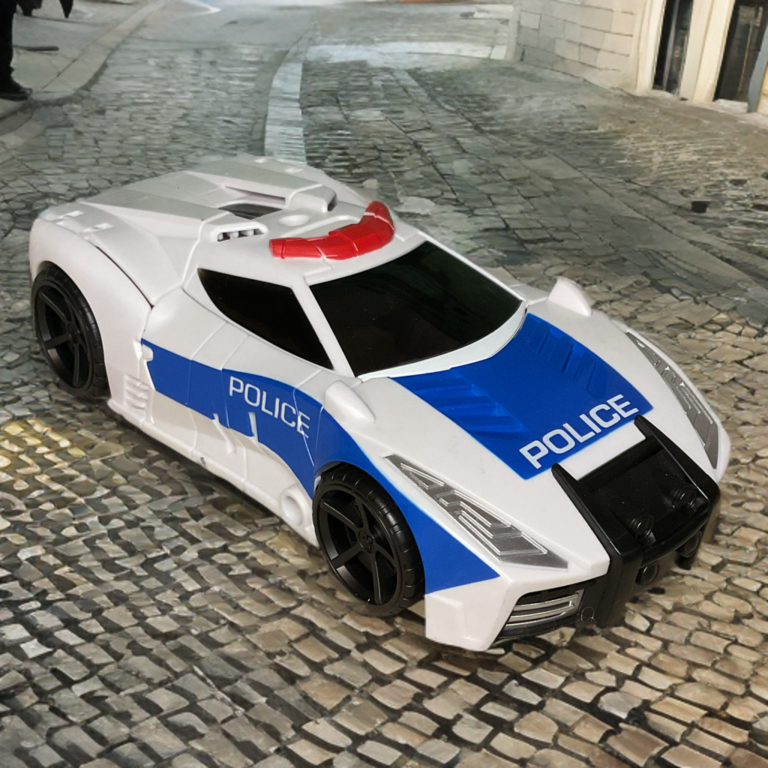
Streetwise is the team’s investigator and pursuit specialist, transforming into a high-performance police interceptor. His role is to hunt down Decepticons across urban landscapes, utilizing a mind that can process thousands of variables to predict where a criminal will flee. As the left leg of Defensor, he provides the literal and tactical foundation for the team. The Demon Knight version of Streetwise is a masterclass in how to upscale a car-bot, maintaining a sleek, low profile in vehicle mode while transforming into a robot with a surprisingly powerful silhouette.
The vehicle mode is particularly impressive due to the high-quality paint and decal-free finish. The “Police” markings and sirens are applied with precision, giving the interceptor a cohesive, factory-finished look that is far superior to sets requiring stickers. The rolling stock is also improved; the wheels are pinned securely, allowing the car to roll smoothly across flat surfaces. This attention to detail in the alt-mode ensures that the Protectobots look just as good in a rescue convoy display as they do when combined into their giant form.
Transforming Streetwise is a highlight of the set’s user experience. The legs form from the rear half of the car, and the front hood folds down to become the chest in a classic, intuitive “Car-Bot” sequence. It is a process that feels familiar and rewarding, lacking the frustration of panels that won’t line up or tabs that are too tight. For collectors who find the Zeta-style “monster” transformations to be a chore, Streetwise is a breath of fresh air, offering a transformation that can be completed in under a minute while still feeling like a sophisticated piece of engineering.
In leg mode, Streetwise serves as the sturdy left pillar of Defensor. The internal cavity that houses the combiner port is reinforced with thicker plastic walls to prevent the “warping” that can occur on smaller figures over time. This version’s integrated ankle rockers are housed within the structure of Streetwise, allowing the foot to tilt and maintain contact with the ground. This stability is what allows the Demon Knight Defensor to stand tall in a wider variety of poses, ensuring that the tactical tracker always holds his ground.
The Highway Scout: Groove (The Right Leg)
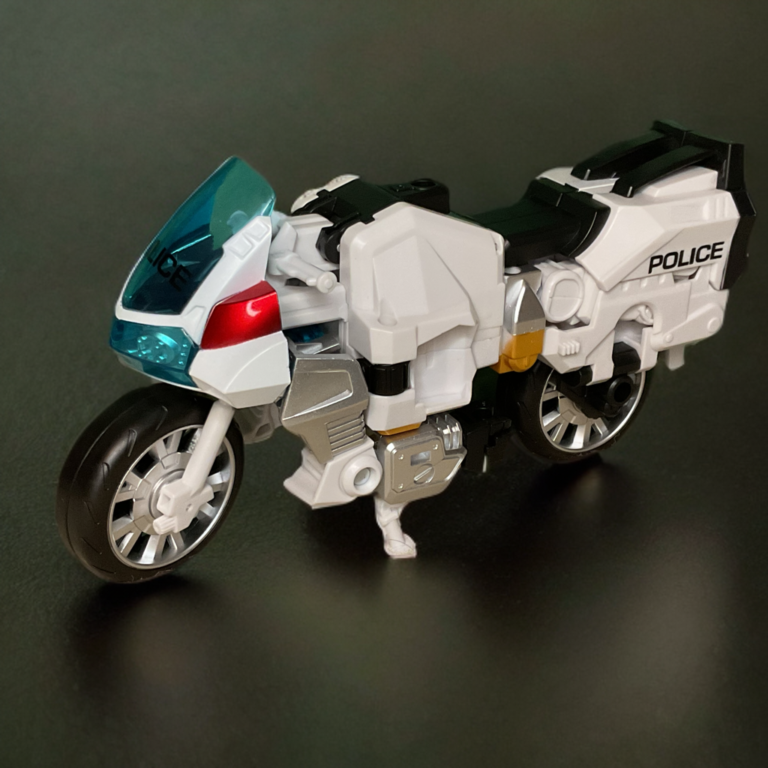
Groove is the team’s scout, a touring motorcycle who values the freedom of the road and the peace of the open highway. In many modern versions of Defensor, Groove was shrunk down to a tiny scale or replaced entirely to solve the “motorcycle-as-a-leg” scaling issue. However, the Demon Knight set restores the G1-accurate lineup by upscaling Groove to match the size of the other limb bots. This decision is a major win for fans who want the classic 1986 silhouette, and the engineering manages to make a large-scale motorcycle look surprisingly natural as a heavy-duty limb.
The motorcycle mode is remarkably detailed, featuring clear plastic for the windshield and a well-sculpted engine block. Because the figure is upscaled, the handlebars and kickstand are much more durable than they would be on a smaller-scale figure. This durability is essential for a “smooth” experience, as motorcycles are notoriously the most fragile alt-modes in the Transformers world. Here, the pieces feel chunky and secure, allowing for a transformation that is as easy and straightforward as the rest of the team.
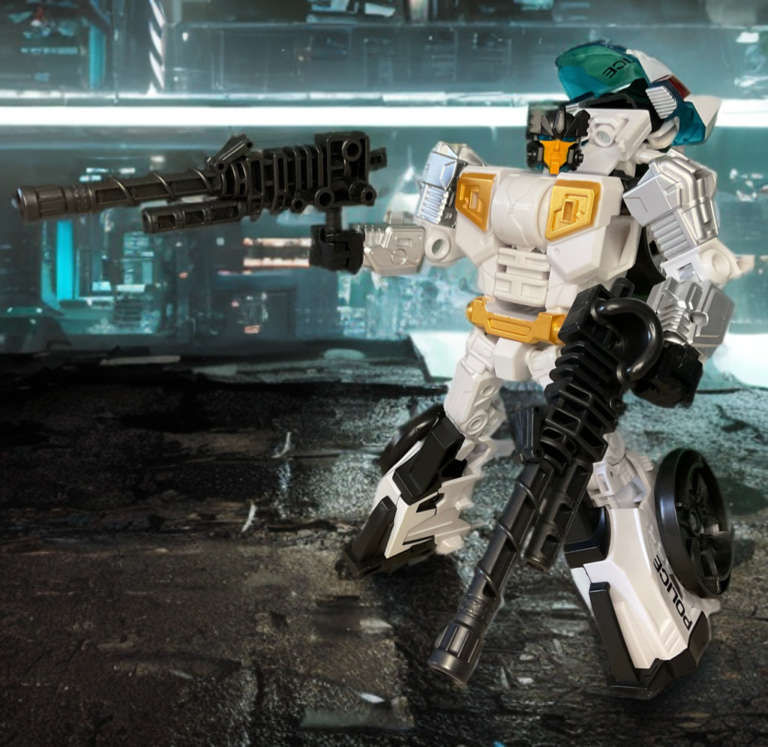
Converting Groove from a bike to a robot is a clever bit of engineering. The front and back of the motorcycle split and reposition to form the limbs, while the seat and engine block form the torso. The result is a robot mode that looks agile and lithe, perfectly capturing Groove’s scout-like persona. For the first time, this version gives Groove his own dedicated weapon, allowing him to defend himself on the road without relying on his larger teammates. It completes the “five heroes” feel that the original Combiner Wars retail release lacked.
As the right leg of Defensor, Groove provides the symmetry needed to complete the giant. Despite being a motorcycle, the designers have engineered the transformation so that he forms a solid, rectangular block that provides just as much stability as the car-mode Streetwise. The connection to the foot is secure, and the ankle rocker allows for the same level of posing as the other leg. By restoring Groove to his rightful place as a limb, the Demon Knight set delivers the definitive G1 Defensor experience, combining ease of use with an uncompromising commitment to the classic character roster.
The Combined Form: Defensor Reborn
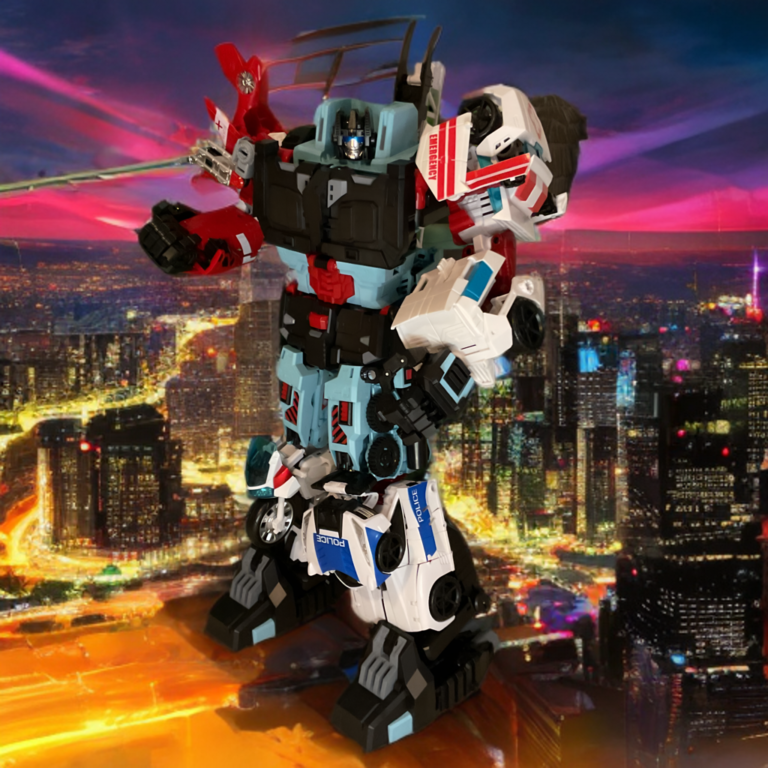
When the five Protectobots finally merge, the Demon Knight Defensor manifests as a massive, cohesive wall of blue and white, perfectly capturing the aesthetic of the Autobots’ premier defensive unit. The silhouette is instantly recognizable, effectively mimicking the G1 animation model through its increased scale and improved proportions. Unlike smaller versions that can appear spindly or disjointed, this upscaled iteration possesses a physical density that makes the combined form look like a singular, solid entity rather than five separate vehicles loosely tethered together. The “click” of the limbs into the torso is deep and secure, providing the structural confidence needed for such a large-scale figure.
The improved proportions are largely a result of the Demon Knight set including proper, dedicated hands and feet. In the original retail Combiner Wars line, the hands and feet were somewhat compromised “hand-foot-gun” accessories that lacked realistic anatomical sculpting and scale. The Demon Knight version replaces these with parts specifically designed for the combined form, resulting in a much more humanoid and powerful appearance. The larger, wider feet provide a stable base that balances the broad shoulders formed by First Aid and Blades, ensuring the figure doesn’t suffer from the “top-heavy” look that often plagues other combiners.
The head sculpt for Defensor is a standout feature, meticulously capturing the stoic, visor-clad “protector” persona. The silver paint on the faceplate is applied with a high-degree of precision, contrasting sharply against the deep blue of the helmet. The visor itself has a distinct, crystalline look that reflects light in a way that gives the giant a sense of life and focus. This head design avoids the “soft” edges found on some lower-quality reissues, maintaining the sharp, mechanical lines that define the character’s 1986 debut. It is a sculpt that commands respect, projecting the calm authority required of a character whose primary mission is the preservation of life.
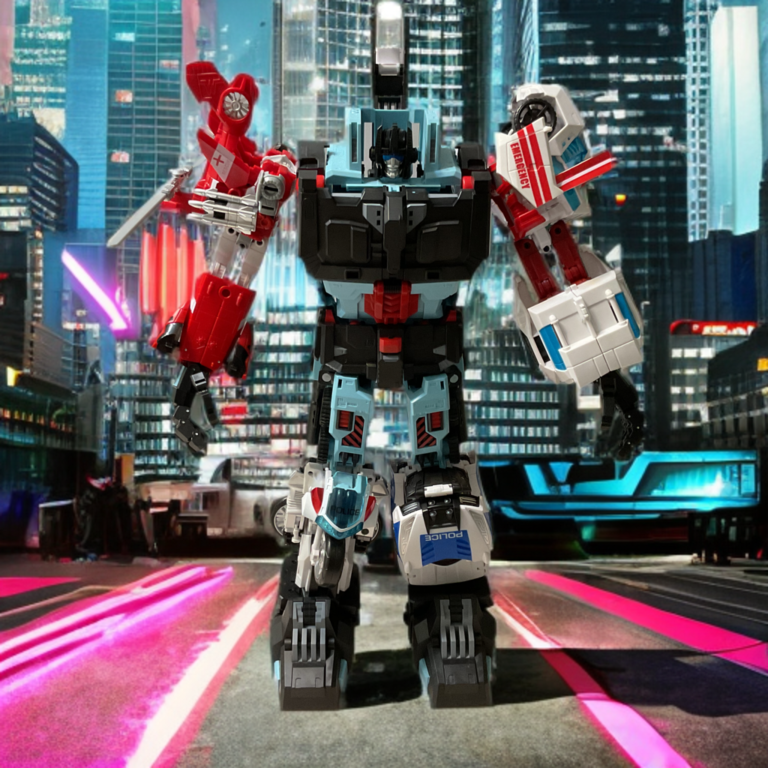
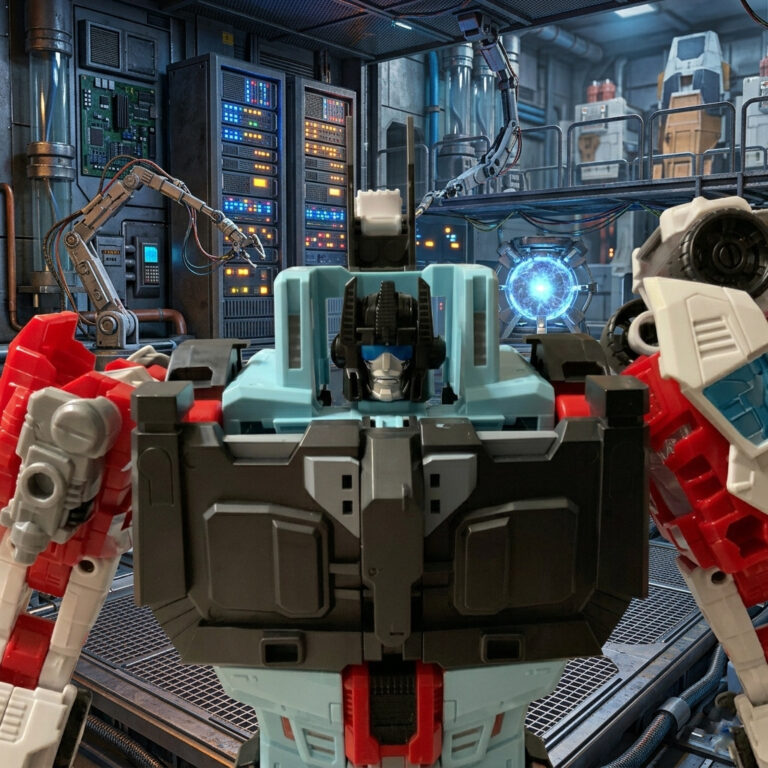
There is a palpable sense of weight and presence to this figure that allows it to effectively “anchor” any display room. It does not feel like a lightweight toy; rather, it has the gravity of a high-end centerpiece. Because the joints are reinforced with heavy-duty ratchets and the plastic is significantly denser than the source material, the figure can maintain its posture over long periods without the joints sagging or the stance widening. This rock-solid stability, combined with the 18-inch height, ensures that the Demon Knight Defensor stands as a definitive tribute to the G1 character, offering both the visual impact and the structural reliability that collectors expect from a modern “Super Warrior.”
The “Demon Knight” Difference: Quality and Upgrades
What sets this specific release apart from a standard reissue?
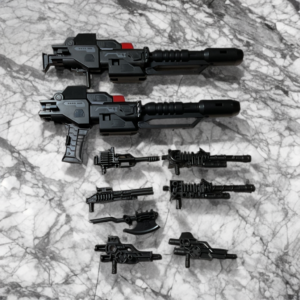
Individual Armament: One of the biggest complaints about the original retail release was the lack of weaponry for the individual robots. Demon Knight fixes this. Each member comes with their own firearm, allowing for dynamic “A-Team” style posing before they merge.
Scale and Presence: This set is significantly larger than the standard Voyager/Deluxe scale. It commands a shelf. When fully combined, Defensor stands tall enough to look modern Masterpiece-scale figures in the eye.
Plastic Tolerance: Usually, “upscaled” means “flimsier,” but the friction joints on this set are surprisingly tight. The ratchets in Hot Spot’s hips are loud and proud, which is essential when you’re supporting four other robots.
| Feature | Standard Release (Original) | Demon Knight (Jinbao OSKO) |
| Combined Height | Approx. 12 inches | Approx. 17.5 inches (Towering Scale) |
| Joint System | Standard Friction Joints | Heavy-Duty Ratchet Joints (Reinforced) |
| Hands & Feet | Basic / Shared Mold | Individually Articulated Fingers & Stable Feet |
| Material | Lightweight Plastic | High-Density ABS (Heavier “In-Hand” Feel) |
| Paint Finish | Minimal / Molded Colors | Premium Matte & Metallic Accents |
| Stability | Known “Swaying” in Combined Mode | Rock Solid due to oversized locking tabs |
Pro-Tips for “The Quality and Upgrades” Section:
The Scale Win: Point out that at 17.5 inches, this Defensor actually scales much better with other “Masterpiece” or “Titan Class” figures on a shelf. The original feels like a toy; this feels like a statue.
The Combined Form: In your text, mention that the Demon Knight version includes the proper hands and feet (often better sculpted than the original “hand-foot-gun” accessories), making the proportions look much more humanoid and powerful.
The Weight Warning: Because it’s significantly heavier, advise readers that while the ratchets are strong, they should always support the torso when moving the arms to avoid putting too much stress on the Hot Spot connector tabs.
Visualizing the Upgrade:
“The silhouette is iconic. Because the Demon Knight version includes the proper hands and feet, the result is a massive, cohesive wall of blue and white that anchors the room.”
Transformation Rating: EASY
I usually break down the transformation rating for each bot separately, but for this set, one combined rating covers the whole project. The Experience: This figure offers a smooth, satisfying conversion process. The parts move freely and require minimal force, making it a truly "fidget-friendly" toy. You can transform it back and forth with ease—most people only need to check the manual once (if at all).
The Gold Standard of User Experience: Smooth and Intuitive
While many modern third-party or high-end collectors’ sets pride themselves on “puzzle-like” complexity—often requiring a master’s degree in engineering and a pair of tweezers to navigate—the Demon Knight Defensor takes a refreshingly different path. This set is widely regarded as one of the most accessible and “user-friendly” large-scale combiners currently available.
If you are looking for a comparison in terms of sheer tactile satisfaction and ease of use, look no further than the Age of the Primes Predaking. Both sets represent a philosophy where the joy of the figure comes from the “flow” of the transformation rather than the frustration of a challenge.
A Gateway for New Collectors
For those just entering the hobby, the sheer size of a five-member combiner can be intimidating. However, this Defensor and the aforementioned Predaking are arguably the best starting points for a burgeoning collection.
| Character | UX Complexity | Highlights |
| Hot Spot | Simple/Moderate | Ingenious ladder-to-torso compression; very sturdy. |
| Blades | Simple | Satisfying rotor-fold mechanism; no loose panels. |
| First Aid | Simple | Clean “blocky” transformation that feels G1-accurate. |
| Streetwise | Simple | Great use of car-shell folding to hide the robot bits. |
| Groove | Simple | Massive scale makes the motorcycle parts easy to handle. |
The engineering follows a logical, “common sense” progression. Unlike some “monster challenges” like the Zeta Bruticus or Zeta Superion—which often involve terrifyingly thin plastic tabs, clearance issues that feel like they might snap the figure, and hours of “fiddling” just to get the limbs aligned—the Demon Knight set is built for smooth transitions.
- Vehicle to Robot: The panels glide into place without the need for excessive force. There is a satisfying “snap” when parts lock in, letting you know you’ve done it correctly.
Robot to Vehicle: Alignment issues, which often plague high-end police car or ambulance alt-modes, are virtually non-existent here. The components “clean up” remarkably well.
The Combination Process: The ports used to connect the arms and legs to Hot Spot are robust and intuitive. You won’t find yourself wrestling with the figure or worrying that the weight of an arm will shear off a connection point.
Why “Smooth” Beats “Complex”
The “Zeta-style” challenges definitely have their audience, but for the collector who wants to actually play with or re-pose their figures frequently, the Demon Knight’s approachable engineering is a massive selling point. You can go from five individual emergency vehicles to a fully armed, 18-inch protector of humanity in a fraction of the time it takes to assemble more “fiddly” sets.
This ease of use doesn’t come at the cost of the aesthetic; it simply means the designers prioritized a “frictionless” experience. It’s a set that invites you to transform it back and forth, rather than a “one-and-done” display piece that stays in a single pose out of fear of the re-transformation process.
Final Thoughts on the Build
The Demon Knight Defensor manages to bridge the gap between “toy” and “high-end collectible” perfectly. It retains the fun of the original 1980s “Scramble City” concept while delivering the scale, weaponry, and stability demanded by modern standards. Whether it’s your first combiner or your fiftieth, the sheer smoothness of the engineering makes it a standout addition to any Autobot shelf.
The Engineering Evolution: Articulation and Stability
The Demon Knight Defensor isn’t just a bigger version of the Combiner Wars mold; it is a structural overhaul. While the original retail release was a triumph of “Scramble City” engineering, it often felt like a lightweight athlete—capable of movement but prone to wobbling under its own weight. The Demon Knight version trades that agility for the stability of a fortress.
Individual Robot Movement
In their individual forms, the most striking difference is the weight of the plastic. The original Deluxes used ball joints for the shoulders and hips, which could become loose over time. The Demon Knight versions move these to friction-heavy swivel joints and, in the case of Hot Spot, beefy ratchets.
The Limb Bots: Streetwise, First Aid, Blades, and Groove all feature the standard head swivels, 90-degree elbow/knee bends, and waist rotation found in the original molds. However, the upscaling means the “hollow” feeling of the original limbs is gone. They feel dense, and the joints have a “matte” resistance that holds poses much better when they are wielding their new individual firearms.
The Torso (Hot Spot): The original Hot Spot was notorious for having slightly “fiddly” hips in robot mode. Demon Knight replaces these with heavy-duty ratchet joints. This means when you stand Hot Spot up, he stays up. There is no slow “splitting” of the legs that sometimes plagued the 2015 Voyager figure.
The Combiner Mode: A Comparison of Stability
The true test of any combiner is whether it can hold a pose without a trip to the floor. Here is how the Demon Knight stacks up against the Combiner Wars predecessor:
| Feature | Combiner Wars Defensor | Demon Knight Defensor |
| Height | Approx. 11 inches | Approx. 18 inches |
| Hip Joints | Friction/Soft Ratchet | Reinforced Heavy Ratchets |
| Ankle Tilts | None (Static Feet) | Rocker Joints (Integrated) |
| Hands | Static “Mitten” Fists | Fully Articulated Fingers |
| Waist | Limited Swivel | Enhanced Rotation & Skirt Flaps |
The “A-Stance” Factor
In the original Combiner Wars line, Defensor’s “feet” were actually the same accessories used for his hands. They were small, lacked any pivot, and forced the giant robot to stand with his legs perfectly vertical. If you tried to give him a dynamic “A-Stance” (feet spread wide), he would slide and fall.
The Demon Knight version integrates dedicated feet with ankle rockers. This allows the feet to stay flat on the surface even when the legs are spread wide. Combined with the massive increase in friction in the leg-to-torso connection points, this Defensor can actually achieve “power poses” that would have been impossible for the original retail version.
The Hand Upgrade
One of the most satisfying upgrades is the transition from the “hand-foot-gun” blocks of the original to fully articulated combiner hands. In the Demon Knight set, the hands feature independent finger movement and a thumb on a ball joint. This allows Defensor to actually grip his weapons rather than just having them pegged into a hole. It adds a level of expressiveness that makes the figure feel less like a toy and more like a high-end display piece.
Buyer’s Guide: Finding the Demon Knight Defensor
Because the Demon Knight Defensor is an “oversized knock-off” (OSKO) of the Combiner Wars mold, you won’t find it at big-box retailers. It occupies a specific niche in the market, often appearing under various “4th Party” designations. If you are looking to add this 18-inch titan to your shelf, here is how to navigate the current landscape.
1. Identify the Correct Set
The Demon Knight release is typically sold in two parts or as a complete bundle:
Set A (DK01-DK04): Contains the four limbs (Blades, First Aid, Streetwise, and Groove).
Set B (DK05): Contains the voyager-scale Hot Spot, which serves as the torso.
Full Bundle: Often listed as “DK01-05” or “Demon Knight Defensor Full Set.”
Pro Tip: Always verify in the listing description that the set includes the individual firearms for each robot. This is the defining feature of this specific version that sets it apart from earlier, less-equipped KOs.
2. Trusted Sourcing
Since these are manufactured in smaller runs, availability can fluctuate.
Direct Import Sites: Websites like Show.Z Store, TFDirect, and SirToys are the primary hubs for these figures. They often offer the most competitive pricing, though shipping from overseas can take several weeks.
Secondary Markets (eBay/Mercari): You will frequently find these listed by US-based sellers who have already imported them. Look for keywords like “OSKO Defensor” or “Improved Combiner Wars Defensor.”
Price Point: Expect to pay between $110 and $150 for the full set of five. If you see it for significantly less, double-check that it isn’t just one component or a smaller, non-upscaled version.
3. Condition Check
When buying “loose” or “no box” (a common way these are shipped to save on international freight), ensure the seller confirms the presence of the combiner hands and feet. Unlike the original retail figures where the hands were part of the guns, the Demon Knight version uses dedicated, articulated hands and stable feet. Missing these pieces would compromise the “smooth and easy” experience of the combined form.
4. The “Smoothness” Comparison
If you are weighing this against other options, remember the Age of the Primes Predaking benchmark. This Defensor is widely praised for its lack of “fiddliness.” While sets like the Zeta versions offer more complexity, the Demon Knight is the choice for the collector who values a solid, playable, and stress-free transformation process.
| Feature | Performance |
| Material Quality | High-density ABS plastic; feels premium and heavy. |
| Transformation Flow | Intuitive and smooth; no “monster challenge” frustration. |
| G1 Accuracy | Full 5-member team including a proper-scale Groove. |
| Display Presence | 18 inches tall; scales perfectly with other “Titan-class” figures. |
| Value Add | Includes individual weapons for every member of the squad. |
The Demon Knight Defensor is more than just a copy; it is a thoughtful upgrade to a beloved team. By fixing the scale issues of the original and providing a robust, weapon-heavy experience, it earns its place as the definitive “protector of humanity” for any modern collection.
Final Verdict: The Shield of the Autobots
To wrap up this deep dive into the Demon Knight Defensor, here is a quick-reference guide for collectors at Fantasy Action Figures. If you are on the fence about adding this 18-inch titan to your shelf, these key takeaways highlight exactly why this set stands out in a crowded market of combiners.
| Pros | Cons |
| G1 Accuracy: Restores the proper 5-member team with a full-sized Groove. | Shelf Space: At nearly 18 inches, he requires a significant amount of vertical clearance. |
| Elite Stability: Heavy-duty ratchets and integrated ankle rockers prevent “combiner lean.” | Weight: He is heavy; moving the combined form requires two hands to support the torso. |
| Individual Weapons: Every Protectobot finally has their own dedicated firearm. | Branding: The “Demon Knight” name is a bit of a departure from the heroic “Protectobot” theme. |
| Smooth Experience: Transformation is intuitive and frustration-free, similar to Age of the Primes Predaking. | Availability: As a specialized set, it must be sourced through import sites or secondary markets. |
Key Takeaways for the Collector
The Gold Standard for Playability: If you enjoy actually transforming your figures rather than leaving them in a static pose forever, this is the set for you. It avoids the “fiddly” frustration of more complex “monster” challenges.
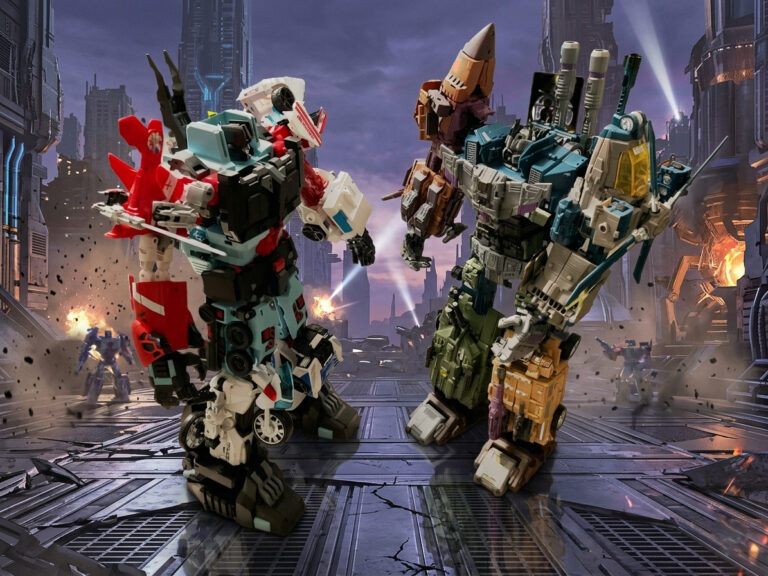
A Masterpiece Scale Win: Seeing this Defensor square off against a Jinbao Bruticus proves that he finally has the mass and presence to lead an Autobot display.
The Complete Roster: By including a properly scaled motorcycle for Groove and dedicated hands/feet, the silhouette is a perfect 1:1 tribute to the 1986 animated series.
Solid Engineering: The use of high-density ABS plastic and reinforced ladder assemblies ensures that this figure will remain stable on your shelf for years to come.
The Final Word
The Demon Knight Defensor is a rare “evolutionary” release. It takes a solid core design and injects it with the scale, material quality, and weaponry that fans have wanted for a decade. Whether you are a veteran collector or just starting your journey into the world of combiners, this set offers a “smooth” and satisfying experience that is hard to beat.
 English
  Deutsch
  Français
  Português do Brasil
  日本語
日本語  Español
  English (Australia)