
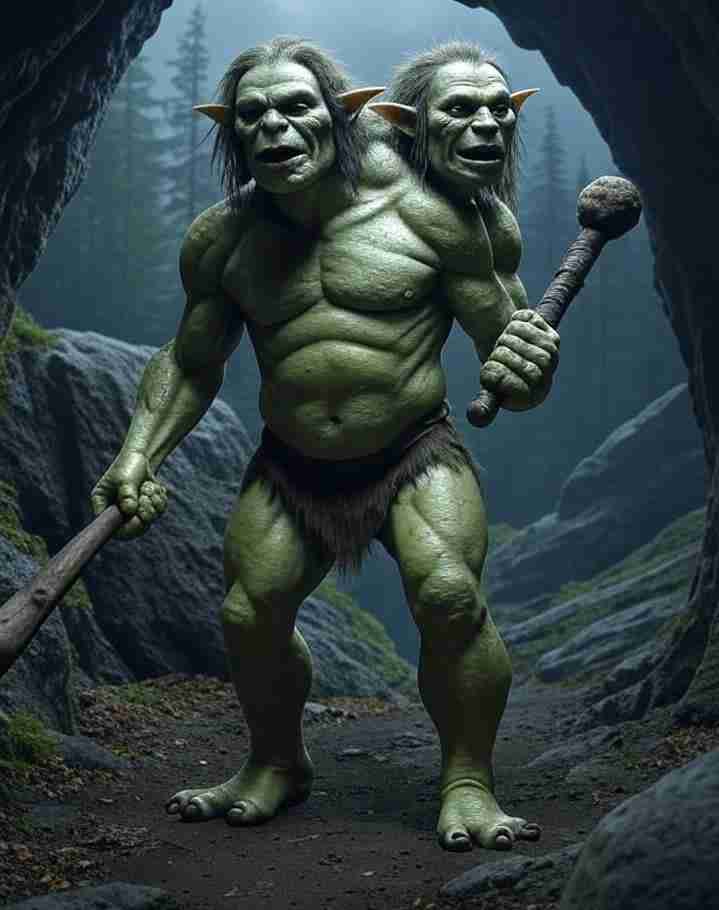
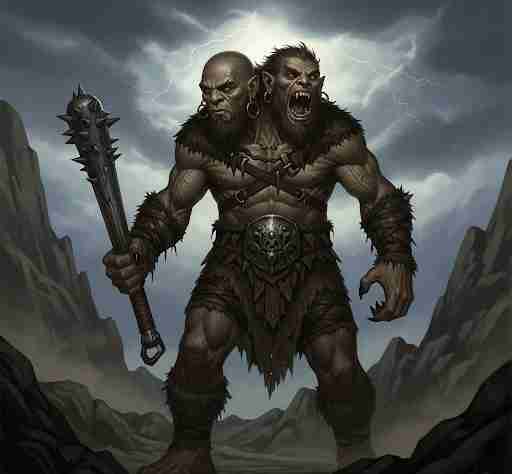
In Dungeons & Dragons (D&D), the ettin is a two-headed giant-kin monster known for its brute strength, low intelligence, and chaotic nature. Below is a comprehensive biography of the ettin, covering its origins, characteristics, behavior, and role in the D&D multiverse, drawing from various editions of the game and related lore.
The ettin, first introduced in the Dungeons & Dragons game in the Monster Manual for Advanced Dungeons & Dragons 1st Edition (1977), draws inspiration from mythological creatures like the two-headed giants of folklore, such as the Greek Orthrus (a two-headed dog) or certain multi-headed beings in Norse and other mythologies. The name “ettin” itself is derived from Old English and Norse terms for giants or monstrous beings, such as eoten or jotunn, which are often associated with chaos and destruction in Germanic myth.
In D&D lore, ettins are often described as degenerate cousins of true giants, possibly created through magical experimentation, divine curses, or the influence of malevolent deities. Their dual heads are a defining trait, symbolizing their internal discord and chaotic nature. Some sources suggest that ettins are the result of ancient magical tampering by deities like Grolantor, the god of hill giants, or other chaotic forces seeking to create powerful but flawed warriors.
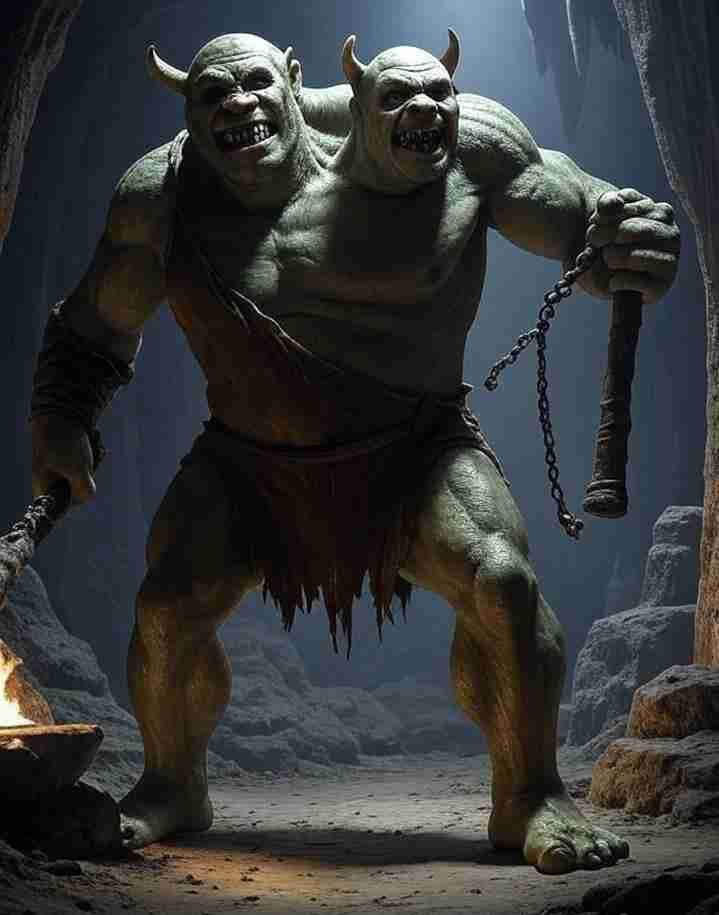
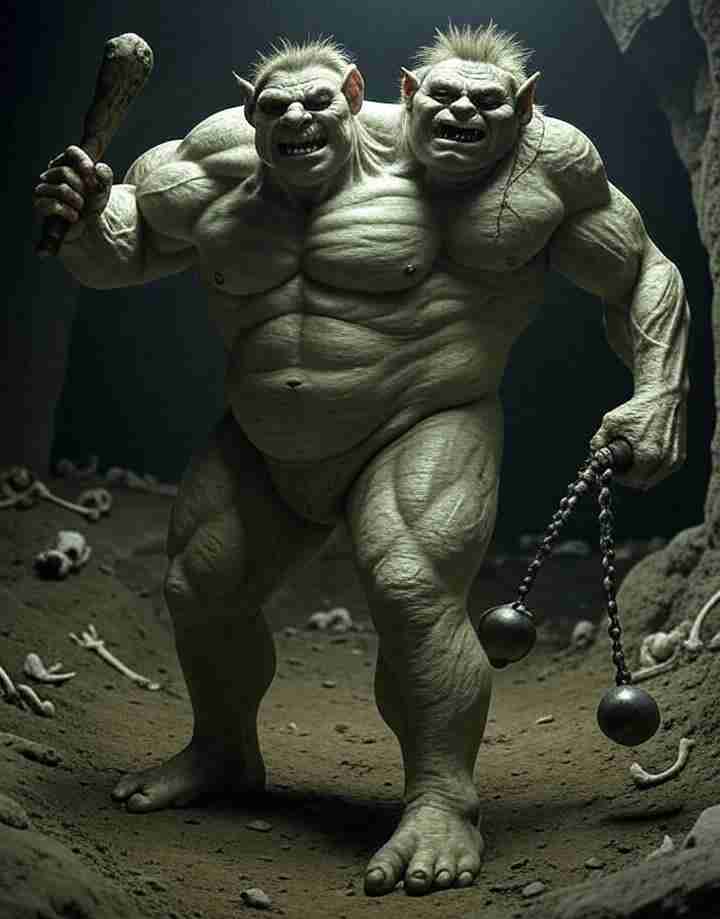
Ettins are hulking, two-headed humanoids standing between 10 and 13 feet tall and weighing around 5,000 pounds. Their appearance is grotesque, with matted, filthy hair, leathery skin, and mismatched features across their two heads. Each head has its own distinct personality, often leading to bickering or conflicting desires, though they share a single body and work together in combat. They are similar to ogres.
Key physical traits include:
• Two Heads: Each head controls one arm, allowing ettins to wield two weapons simultaneously (often clubs, axes, or crude weapons). Their dual heads give them exceptional perception, making them difficult to surprise, as one head is often awake while the other sleeps.
• Muscular Build: Ettins are broad and muscular, with strength rivaling that of hill giants. Their bodies are often covered in scars, filth, and crude tattoos or war paint.
• Poor Hygiene: Ettins are notoriously filthy, wearing ragged hides or furs and rarely bathing, which contributes to their foul odor.
• Asymmetrical Features: The two heads often differ in appearance—one might have a larger nose, different eye color, or more pronounced teeth, adding to their monstrous aesthetic.
In game terms (e.g., D&D 5th Edition), ettins are classified as Large giants with a challenge rating of 4, possessing high Strength (around 21) but low Intelligence (around 6) and Charisma. Their Two-Headed trait grants them advantage on Wisdom (Perception) checks and saving throws against being blinded, charmed, deafened, frightened, stunned, or knocked unconscious.
Ettins are brutish, chaotic, and aggressive, driven by greed, hunger, and territorial instincts. Their dual heads create a unique dynamic:
• Internal Conflict: The two heads often argue with each other, each having its own name, personality, and preferences. For example, one head might crave meat while the other demands treasure. This bickering rarely leads to paralysis, as ettins are unified in their desire for violence and survival.
• Low Intelligence: Ettins are not particularly cunning, relying on brute force rather than strategy. However, their dual heads make them slightly more perceptive than other giants, as they can process information from two perspectives.
• Solitary or Small Groups: Ettins are typically solitary or live in small family groups, often in caves or ruins. They rarely cooperate with other creatures unless coerced by a stronger force, such as an ogre chieftain, orc warlord, or evil mage.
• Predatory Nature: Ettins are opportunistic carnivores, preying on livestock, humanoids, or anything they can overpower. They are known to raid villages or caravans, taking food, treasure, and captives.
Ettins speak a pidgin dialect of Giantish, Orcish, or Common, often mixing words from multiple languages. Their speech is crude and halting, reflecting their limited intellect.
Ettins serve as mid-level threats in D&D campaigns, often encountered in wilderness areas, mountainous regions, or near giant-kin territories. They are typically used as:
• Brutish Foes: Ettins are straightforward combatants, relying on their strength and dual-weapon attacks to overwhelm enemies. Their high hit points and resilience make them durable opponents.
• Minions of Greater Evils: Ettins are often subjugated by more intelligent creatures, such as dragons, hags, or evil wizards, who exploit their strength for guarding lairs or carrying out raids.
• Comic Relief or Tragic Figures: The constant bickering between an ettin’s heads can add a humorous element to encounters, though their monstrous nature and tragic origins (e.g., a curse or failed experiment) can also evoke sympathy.
In some settings, such as the Forgotten Realms, ettins are tied to the giant pantheon and may serve Grolantor or other chaotic deities. In Eberron, they might be creations of the daelkyr, aberrant overlords who warp flesh and minds. In Critical Role’s Exandria, ettins are rare but might be found in the wilds of Tal’Dorei or Xhorhas, serving as obstacles for adventurers.
Ettins prefer rugged, isolated environments such as:
• Caves and Mountains: They often lair in caves, abandoned mines, or cliffside hollows, where they can ambush travelers or hoard stolen goods.
• Forests and Hills: Some ettins roam dense forests or hilly regions, preying on local wildlife or settlements.
• Ruins: Ettins may occupy abandoned forts or temples, drawn by the promise of treasure or defensible territory.
Their lairs are filthy, cluttered with bones, stolen goods, and crude furnishings. Ettins rarely craft their own weapons or armor, instead using scavenged or stolen items.
The ettin has appeared in every major edition of D&D, with slight variations:
• AD&D 1st Edition: Introduced as a two-headed giant with a love for treasure and a tendency to serve as mercenaries for other evil creatures.
• AD&D 2nd Edition: Expanded lore suggested ettins were cursed or degenerate giants, with some serving as guards for more powerful beings. The Monstrous Manual (1993) emphasized their dual personalities.
• D&D 3.5 Edition: Ettins gained the Superior Two-Weapon Fighting ability, reflecting their ability to attack with both arms without penalty. Their lore tied them closer to hill giants and ogres.
• D&D 4th Edition: Ettins were given subtypes like the Ettin Marauder or Ettin Spirit-Talker, with some possessing shamanistic abilities or ties to primal spirits.
• D&D 5th Edition: The Monster Manual (2014) streamlined ettins as straightforward brutes with the Two-Headed trait, emphasizing their resilience and perception. They remain a staple encounter for mid-level parties.
Some D&D sources introduce variant ettins or related creatures:
• Ettin Shaman: In 4th Edition, some ettins wield primal magic, serving as crude priests of chaotic or giant deities.
• Three-Headed Ettins: Rare variants with three heads exist in certain campaign settings, increasing their perception and combat prowess.
• Cursed Ettins: Some lore suggests ettins are humanoids or giants cursed with a second head, perhaps by a hag, demon, or god, adding a tragic element to their existence.
Ettins are a classic D&D monster, appearing in numerous adventures, video games, and media inspired by the game:
• Video Games: Ettins appear in games like Baldur’s Gate and Neverwinter Nights, often as mid-tier enemies in wilderness or dungeon encounters.
• Adventures: Ettins are featured in modules like Storm King’s Thunder (5th Edition), where they may serve as minions of giant lords, or Against the Giants (1st Edition), where they are part of the giant-kin hierarchy.
• Pop Culture: While not as iconic as dragons or beholders, ettins are a recognizable trope of the “two-headed monster,” influencing similar creatures in other fantasy settings.
When facing an ettin in D&D, adventurers should consider:
• Exploit Low Intelligence: Ettins are easily tricked or manipulated with illusions, charms, or deception.
• Avoid Direct Combat: Their high strength and dual attacks make them dangerous in melee. Ranged attacks or crowd-control spells (e.g., Hold Person, Entangle) can neutralize them.
• Target Perception: While their two heads make them hard to surprise, effects that obscure vision or create silence can limit their awareness.
• Divide and Conquer: Some DMs allow players to exploit the ettin’s bickering heads, sowing discord to distract or confuse them.
The ettin is a quintessential D&D monster, blending brute strength with a unique dual-headed personality that makes it both a physical and narrative threat. Its origins as a cursed or degenerate giant, combined with its chaotic behavior and monstrous appearance, make it a versatile foe for dungeon masters to use in a variety of settings. Whether guarding a treasure-filled lair, serving a more powerful villain, or simply terrorizing the countryside, the ettin remains a memorable and enduring part of the D&D multiverse.
 English English
  Deutsch
  Français
  Português do Brasil
  日本語
日本語  Español
  English (Australia) English English Deutsch
Français
Português do Brasil
日本語
Español
English (Australia)
English (Australia) English English Deutsch
Français
Português do Brasil
日本語
Español
English (Australia)
We use cookies to improve your experience on our site. By using our site, you consent to cookies.
Manage your cookie preferences below:
Essential cookies enable basic functions and are necessary for the proper function of the website.
Statistics cookies collect information anonymously. This information helps us understand how visitors use our website.
Google Analytics is a powerful tool that tracks and analyzes website traffic for informed marketing decisions.
Service URL: policies.google.com (opens in a new window)