

From Golden Statue to God Bird: The Complete History of Brave Raideen
Brave Raideen stands as a foundational entry in the history of Japanese super robot anime, blending ancient mysticism with modern heroism in a tale that captivated audiences upon its debut in the mid-1970s. At its core lies the story of a colossal guardian robot awakening from a 12,000-year slumber to defend Earth against an invading Demon Empire, piloted by a young descendant of a lost civilization. This series not only introduced innovative concepts for its era but also left a lasting mark through its themes of legacy, duty, and the fusion of past and present.
The GX-41S Raideen DX Fade-in Set serves as a precise embodiment of that legacy, capturing the essence of the original animated series in physical form. This article explores the complete history of Brave Raideen, from its roots in ancient legend to its production and broadcast, followed by a detailed examination of the animated series and an in-depth review of the figure set itself. Through official details drawn from the series’ creation and release, the narrative unfolds as a testament to the enduring power of the Mu Empire’s protector.
Raideen Data-Log: The Mu Chronicles
- 1. Ancient Legend: The Mu Empire & 12,000-Year Slumber
- 2. Birth of a Legend: Development of the 1975 Series
- 3. Key Figures: Heroes of the Demon Empire Battle
-
4. Raideen, Powers & God Bird Transformation
5. God Bird Weapons: The Aerial Arsenal
6. Specific Powers: Mu Empire Guardian Arsenal - 7. Series Review: Deep Dive into the 50-Episode Epic
- 8. Mu Empire Mythology: Lore from Brave Raideen
- 9. Mu Technology: Foundations of Guardianship
- 10. Legacy and Cultural Impact of Brave Raideen
- 11. Modern Tribute: GX-41S Raideen DX Fade-in Set
- 12. Conclusion
The Ancient Legend: The Mu Empire and the 12,000-Year Slumber
The foundation of Brave Raideen rests on the lore of the lost continent of Mu, a peaceful civilization that thrived in isolation at the center of Earth’s oceans approximately 12,000 years ago. According to the established backstory, the people of Mu possessed advanced knowledge and technology far beyond that of the outside world. Their king, Ra Mu, oversaw a prosperous empire where harmony reigned until the emergence of the Demon Empire.
Led by Emperor Barao, this malevolent force launched an invasion that threatened to engulf Mu. In response, the Mu people constructed Raideen, a giant humanoid robot designed as the ultimate defender. Crafted from the impenetrable material known as Mutronium and powered by the mystical Pyramid Power emitted from the Star of Ra Mu, Raideen was engineered to combat the Demon Empire’s threats. When the Mu forces ultimately prevailed by imprisoning Barao within a statue, they sealed Raideen away inside a golden pyramid, where it remained dormant for twelve millennia, awaiting the return of the Demon Empire.
This ancient conflict set the stage for the events of the series. The Mu Empire’s downfall mirrored the sinking of legendary civilizations, with survivors scattering and their bloodlines persisting in secrecy. The robot itself was portrayed not merely as a machine but as a sentient guardian, tied intrinsically to the lineage of Mu’s descendants. This mystical origin distinguished Raideen from contemporary mechanical creations, emphasizing themes of rebirth and inherited responsibility that would define the narrative.
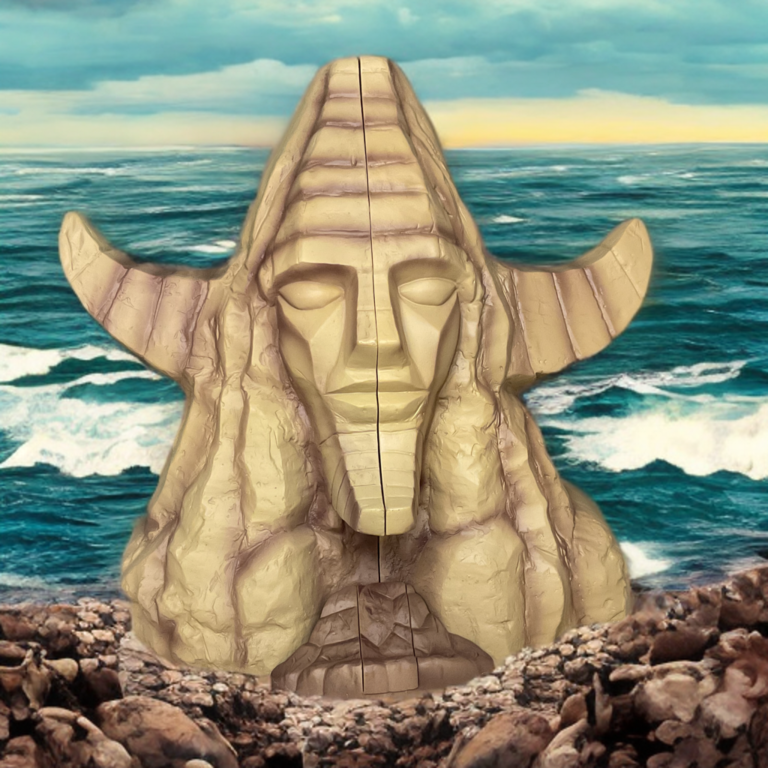
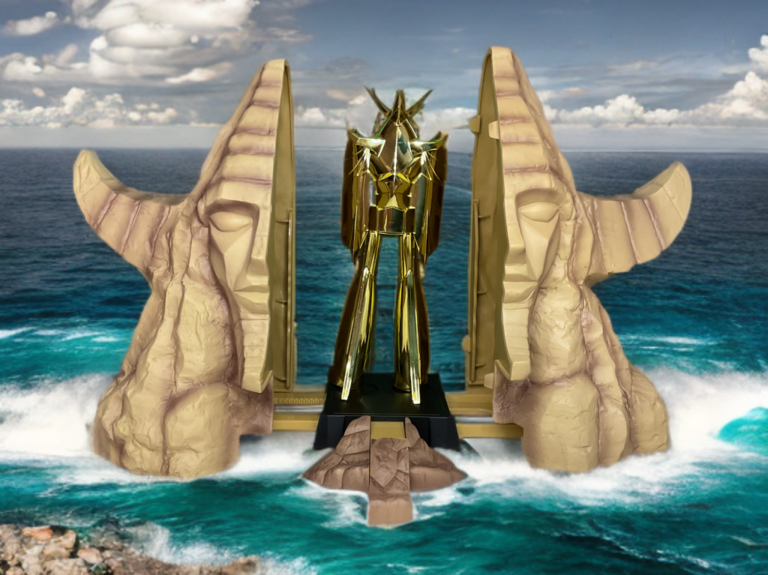
The 12,000-year awakening serves as the pivotal trigger: as the Demon Empire stirs once more in the present day, natural disasters signal its resurgence. Raideen senses the evil and reactivates within its golden pyramid, summoning a worthy pilot through a mysterious voice. This connection bridges the ancient past directly to the modern era, establishing the series’ central conflict as one rooted in historical prophecy rather than pure invention.
The Birth of a Legend: Development and Production of the 1975 Anime Series
Brave Raideen, originally titled Yūsha Raideen in Japanese, emerged during a boom in super robot anime following the success of earlier titles like Mazinger Z. Created by Tohokushinsha and produced by Soeisha (later renamed Sunrise), the series was planned to build upon the popularity of giant robot stories while introducing fresh elements. The original story concept came from Fuyunori Gobu under the pseudonym Yoshitake Suzuki, with planning handled by Tohokushinsha and Asatsu.
Production began in earnest for a 50-episode run, which aired on Nihon Educational Television (NET, now TV Asahi) from April 4, 1975, to March 26, 1976. Yoshiyuki Tomino, in his first major mecha directing role, helmed episodes 1 through 25, bringing a distinctive storytelling approach that emphasized character-driven elements alongside action. Tadao Nagahama took over for episodes 26 through 50, infusing the latter half with heightened dramatic tension that foreshadowed his later work on the Robot Romance Trilogy.
Key creative personnel included character designer Yoshikazu Yasuhiko, who also contributed to mecha finishing touches, and mecha designer Katsushi Murakami, with additional uncredited input from Studio Nue. The music, composed by Akihiro Komori, featured the opening theme “Yūsha Raideen” performed by Masato Shimon and the Columbia Yurikago-kai. Sound direction fell to Toshio Saito, ensuring the battles and transformations resonated with viewers.
The series marked several milestones in anime history. It was among the earliest to feature a giant robot with mystical rather than purely scientific origins, positioning Raideen as a sentient entity awakened by destiny. Additionally, it popularized the transforming mecha concept through Raideen’s shift into God Bird mode, influencing toy designs and subsequent productions. The diecast toy released by Popy in 1975 became the first true transforming robot toy, directly tied to the anime’s marketing.

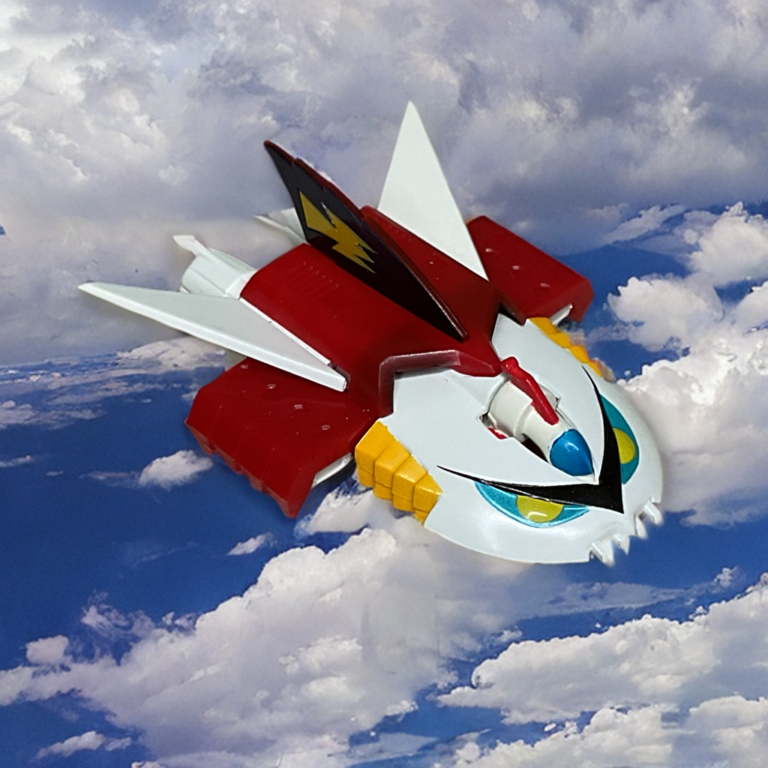
Broadcast details highlight its reach: the 50 episodes delivered consistent weekly installments, each building on the awakening of ancient forces in a contemporary Japanese setting. Voice casting brought authenticity, with Akira Kamiya voicing the protagonist Akira Hibiki, and other talents like Makoto Kousaka and Kiyoko Shibata for Mari Sakurano, alongside Junpei Takiguchi as Emperor Barao.
Key Figures: Characters Who Shaped the Battle Against the Demon Empire
At the heart of Brave Raideen is Akira Hibiki, a 15-year-old third-year student at Rinkai Academy and captain of the soccer team. Raised by his father Ichiro Hibiki, Akira hears the mysterious voice calling him to the golden pyramid during a wave of global disasters. Revealed as a descendant of the Mu people—specifically the son of Princess Lemuria (who had assumed the identity of Reiko Hibiki)—Akira merges with Raideen by accelerating his motorcycle and being drawn into the cockpit by a beam. His piloting draws on both youthful determination and inherited legacy, making him the essential link between eras.
Mari Sakurano, also 15 and a fellow Rinkai Academy student, serves as Akira’s close ally and the manager of the soccer team. As the daughter of a prominent scientist involved in countering the Demon Empire, she provides strategic support and joins the Copelander Corps, a group formed to aid Raideen’s efforts. Her role extends beyond companionship, contributing to intelligence and coordination during crises.
Akira’s soccer club friends form a loyal support network: Tarou Sarumaru, Dan Araiso, Chikara Jinguuji (also known as Riki), and others like Koppe, Tobishun, Nosuke, Ponta, and Atchan. These characters add grounded perspectives, often assisting in reconnaissance or morale during the battles against invading forces.
On the side of authority, figures like Dr. Sarumaru and Rei Asuka bolster the defense efforts. The Demon Empire’s hierarchy drives the antagonism: Emperor Barao, imprisoned in a statue for millennia, emerges midway through the series to lead the final push for Earth’s conquest. His subordinates include Prince Sharkin, General Agyar, Commodore Daldan, Berostan, Gohrai, and Gekido, each commanding specialized beasts and strategies.
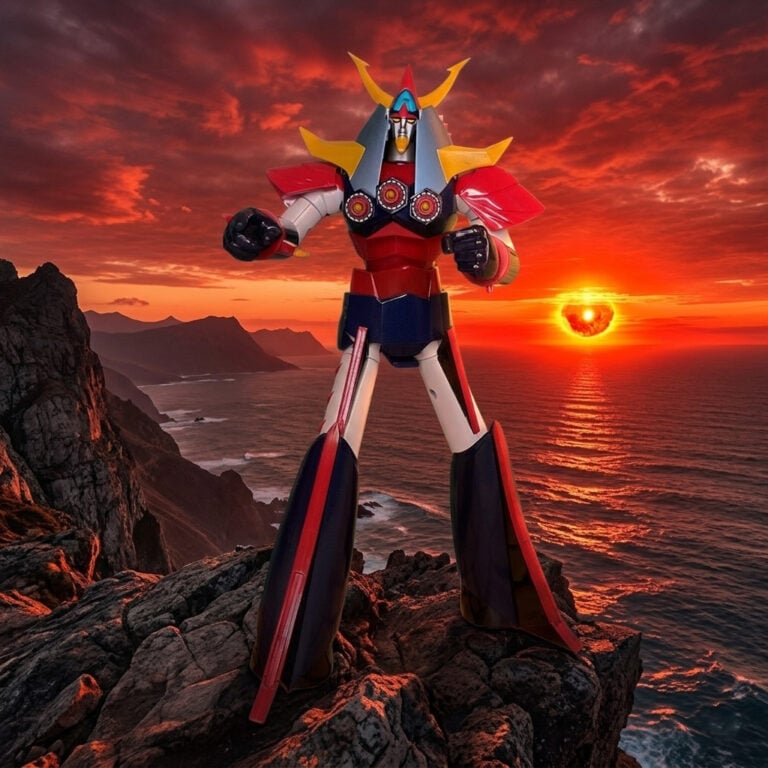
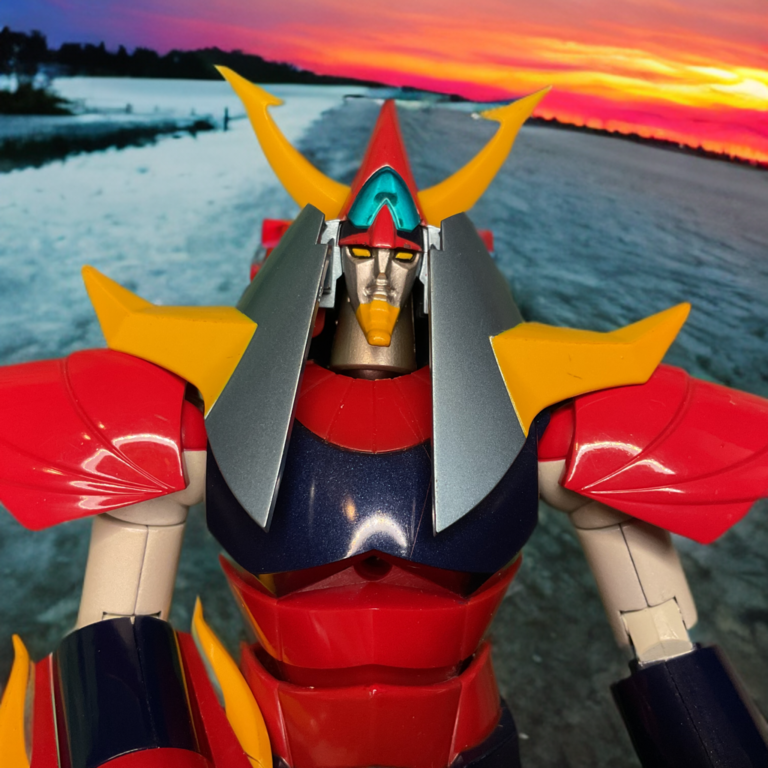
Princess Lemuria/Reiko Hibiki embodies the direct tie to Mu’s royal line, her hidden identity underscoring the personal stakes for Akira. Together, these characters populate a narrative where human bonds and ancient bloodlines converge to repel the invasion.
The Mecha Marvel: Raideen, Its Powers, and the God Bird Transformation
The God Bird transformation stands as one of the defining features of Raideen in the 1975 anime series Brave Raideen. This ability allows the 50-meter-tall humanoid robot to reconfigure into an eagle-like jet form, granting enhanced flight capabilities and serving as the primary method for delivering finishing attacks against the Demon Empire’s colossal beasts. Established through direct depictions across the 50 episodes, the transformation integrates Mu Empire technology with Pyramid Power from the Star of Ra Mu. It first appears early in the series and becomes a recurring tactical element, particularly in the latter half under director Tadao Nagahama. All details derive strictly from the original broadcast’s on-screen sequences, dialogue, and narrative context.
Activation and Transformation Mechanism
Raideen initiates the God Bird transformation through a verbal command issued by pilot Akira Hibiki, typically announced as “God Bird, Change!” The process involves a fluid mechanical reconfiguration powered by the robot’s Pyramid Power core. The humanoid limbs fold and reposition: arms and legs streamline to expose ramjet-like engines, while the torso and head reshape to form an avian silhouette. A bird-like head unfolds or integrates from the back structure, completing the eagle-jet configuration.
The entire sequence emphasizes speed and efficiency, with parts shifting in coordinated motion without external assistance. This reconfiguration maintains structural integrity through Mutronium construction, allowing seamless shifts between modes during active combat. The transformation occurs in mid-air or on the ground as needed, enabling rapid adaptation to aerial threats posed by Demon Empire forces.
In its dormant state within the God Face Mountain, Raideen exhibits a partial golden bird-like appearance, hinting at the God Bird form even before full awakening. Upon activation by Akira, the full transformation becomes available once the robot engages in battle.
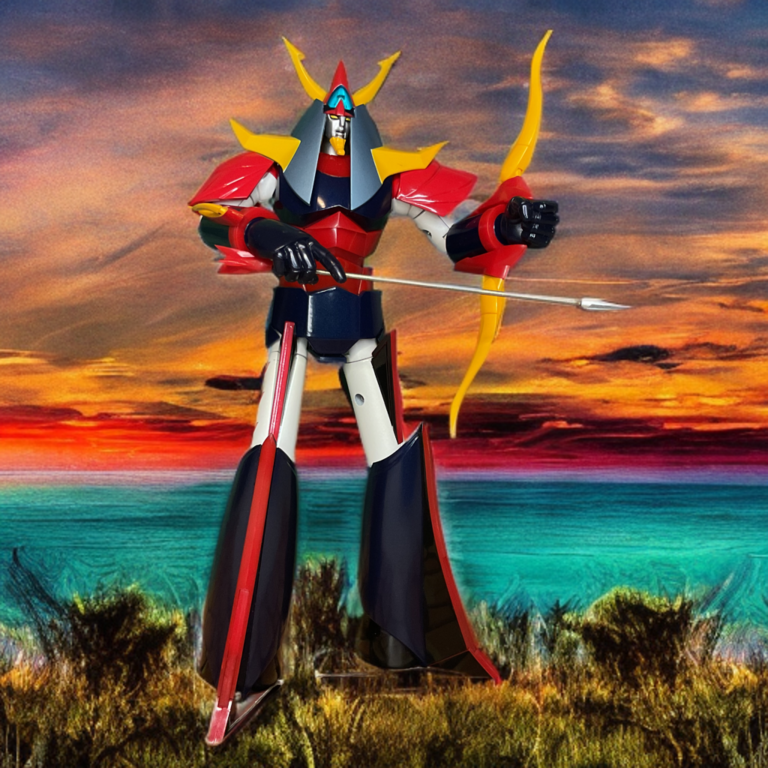
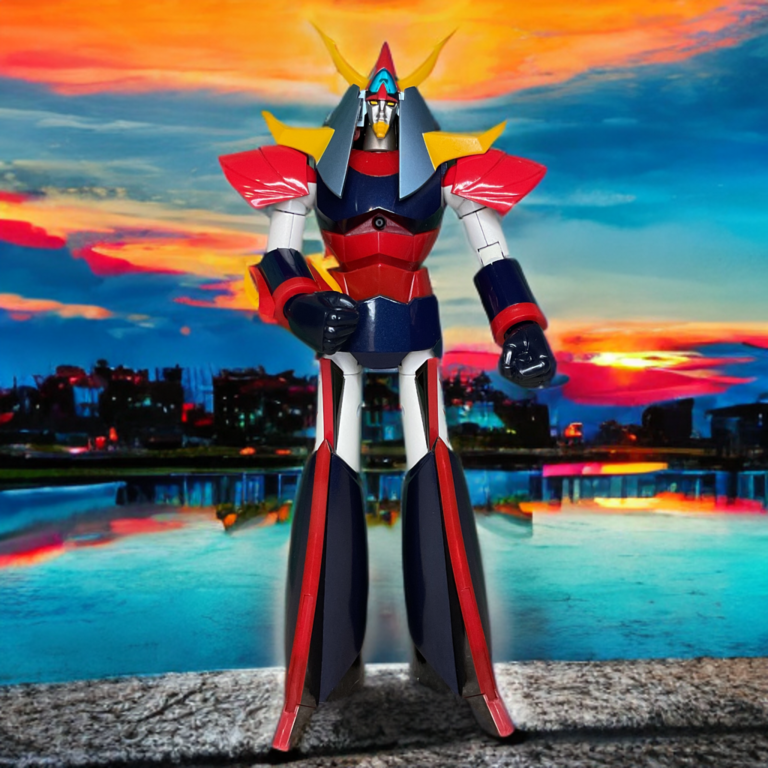
Physical Characteristics of God Bird Mode
In God Bird configuration, Raideen assumes the shape of a giant robotic eagle or falcon. The form measures approximately 90 meters in length with a wingspan reaching 172 meters, optimized for high-speed aerial maneuvers. The exterior retains the golden and white coloration seen in the humanoid mode, with pearl-like accents in certain depictions aligning with Mu aesthetic.
Exposed ramjet engines provide propulsion, enabling supersonic velocities essential for ramming tactics. The structure includes reinforced talons, a streamlined beak-like front, and integrated weapon ports. This avian design not only facilitates flight but also incorporates sensory enhancements tied to Raideen’s sentience, allowing precise targeting of enemy vulnerabilities.
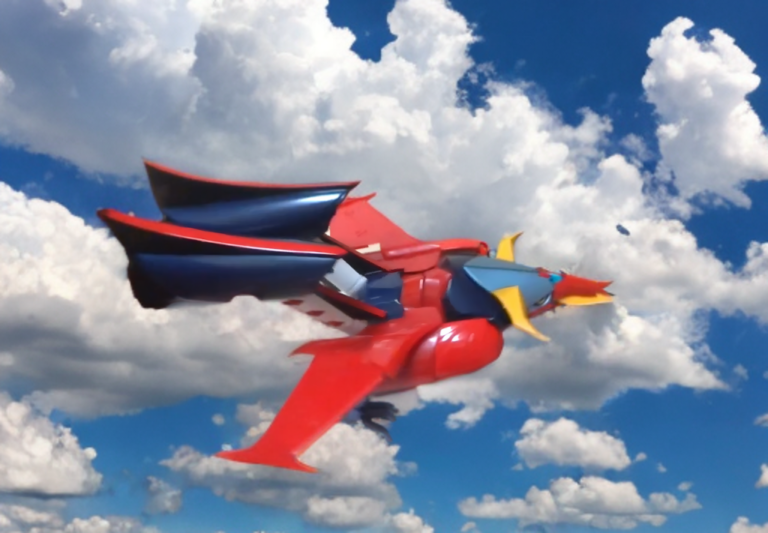
The God Bird form supports sustained flight over long distances and altitudes, making it ideal for intercepting airborne or elevated Demon Empire beasts that terrestrial weapons cannot easily reach.
Core Capabilities: Flight and Mobility
The primary advantage of God Bird mode lies in superior speed and maneuverability. Raideen achieves supersonic flight, far exceeding the limitations of its humanoid stance. This mobility allows pursuit of fast-moving foes or evasion of large-scale assaults.
Engines generate thrust sufficient for rapid ascents and dives, with the avian shape reducing drag for efficient energy use from the Pyramid Power source. In multiple episodes, God Bird mode enables Raideen to traverse global distances or engage in multi-phase battles that transition from ground to air.
The form also demonstrates limited underwater functionality in certain contexts, though maneuverability decreases compared to dedicated aquatic modes. Overall, flight serves as the foundation for all subsequent God Bird-exclusive attacks.
Offensive Powers in God Bird Mode
God Bird mode channels Raideen’s arsenal toward high-impact aerial strikes. The most common application involves locating an enemy’s core—often identified through visual scanning—and ramming directly through it at supersonic speeds. This penetration triggers internal explosions, destroying the colossal beast from within. The attack frequently concludes encounters with fossil beasts and later Demon Empire units, serving as the standard finishing move for much of the series.
A spinning variant, known as the Titan Drill, adds rotational force during the ram, enhancing penetration against heavily armored targets. This technique sees use in episodes featuring particularly resilient opponents.
Additional powers activate exclusively or optimally in this form:
- God Bird Claw: Utilizes the form’s sharp talons for grappling, slashing, or close-range strikes during flight passes.
- Esper Burn: Fires heat beams from the eyes, functioning both as an offensive weapon and x-ray-like vision to pinpoint weak points. This allows Raideen to lock onto vulnerabilities before committing to a ramming strike, increasing success rates against evasive or shielded beasts.
- God Thunder: Summons and directs lightning from the sky toward a target, combining atmospheric forces with Raideen’s energy systems for a powerful electrical assault. This attack proves effective against grounded or clustered enemies while Raideen maintains aerial position.
- Head Cutter: Detaches the head unit as a battering ram or projectile. The neck aperture then reveals a large blade or spear tip, enabling piercing strikes independent of the main body. The detached head can be guided or used in tandem with the body for coordinated attacks.
These abilities integrate with the ramming strategy, where Esper Burn often precedes the final charge to ensure maximum damage.
Tactical Role in Battles Against the Demon Empire
Throughout the 50 episodes, God Bird transformation appears in response to threats requiring aerial superiority. Early uses focus on initial Demon Empire incursions involving flying or leaping beasts, allowing Raideen to match their mobility. As the conflict escalates with the release of Emperor Barao and deployment of admiral-level commanders, the mode becomes essential for intercepting large-scale offensives.
The transformation supports reconnaissance and rapid repositioning, aiding coordination with the Copelander Corps and allies like Mari Sakurano. In climactic sequences, God Bird mode delivers decisive blows after conventional weapons exhaust options, fulfilling the Mu prophecy by repelling invaders through superior speed and precision.
Sound design enhances these moments, with the God Bird form emitting a distinctive shriek during dives and strikes. The mode’s visual impact—streamlined silhouette against the sky—underscores Raideen’s mystical guardian nature.
Integration with Other Systems and Limitations
God Bird capabilities complement Raideen’s broader arsenal. Projectiles like upgraded God Missiles or God Boomerang can deploy during flight, while defensive systems remain accessible. The Pyramid Power core sustains the mode, though prolonged high-intensity use draws heavily on energy reserves.
No inherent vulnerabilities unique to God Bird appear in canon beyond general combat risks, such as exposure during transformation or strain from extreme maneuvers. The form reverts to humanoid configuration as needed, with the process mirroring the initial shift in reverse.
In the series finale, enhancements from the Star of Ra Mu amplify overall performance, indirectly boosting God Bird speed and power during the confrontation with Barao.
Historical Significance Within the Series
The God Bird transformation pioneered the transforming mecha concept in anime, influencing subsequent productions through its marketing tie-in with the 1975 Popy diecast toy—the first true transforming robot figure. Within Brave Raideen, it distinguishes Raideen from purely mechanical contemporaries by blending technology with avian mysticism rooted in Mu Empire lore.
The mode recurs consistently from early episodes onward, evolving in prominence as battles intensify. It embodies the series’ themes of awakening and adaptation, transforming the ancient sentinel into a dynamic aerial protector.
The Summation
The God Bird transformation encapsulates Raideen’s versatility as the Mu Empire’s guardian, shifting from imposing humanoid warrior to swift eagle-like jet for decisive aerial dominance. Through supersonic ramming, claw strikes, Esper Burn scanning, God Thunder, and Head Cutter detachment, it delivers the finishing blows that resolve numerous conflicts across the 50 episodes. Powered by Pyramid Power and executed via seamless reconfiguration, this ability directly counters the Demon Empire’s varied assaults while fulfilling the 12,000-year prophecy. As a core element of the original 1975 canon, God Bird remains integral to Raideen’s legacy as a pioneering super robot capable of adapting form and function to safeguard Earth.
Raideen vs. The Titans of the 70s – Technical Specs
| Spec Category | Brave Raideen | Mazinger Z | Getter-1 (Getter Robo) |
| Height | 50 Meters | 18 Meters | 38 Meters |
| Weight | 350 Tons | 20 Tons | 220 Tons |
| Power Source | Mutron Energy | Photonic Energy | Getter Rays |
| Primary Material | Mutronium Metal | Super Alloy Z | Space Steel |
| Signature Move | God Bird / God Voice | Rocket Punch | Getter Beam |
| Origin Type | Ancient Mystical | Modern Scientific | Scientific Discovery |
Pro-Tips for “The Mecha Marvel” Section:
The Scale Difference: Point out that Raideen is significantly larger than Mazinger Z. While Mazinger is often seen as the “godfather” of the genre, Raideen’s 50-meter height makes it more of a “colossus” on the battlefield.
Mutronium vs. Super Alloy Z: Highlight that Mutronium isn’t just a metal; it’s a semi-sentient material that responds to Akira’s psychic “Fade-In.” This is a key distinction from the purely mechanical nature of Mazinger Z.
The “God Bird” Advantage: Raideen was a pioneer of the “transformation” gimmick. While Getter Robo combined, Raideen was the first major hero to transform into a high-speed flight mode (God Bird), a feature that would later influence everything from Zeta Gundam to Transformers.
God Bird Weapons: The Aerial Arsenal of Raideen in Brave Raideen
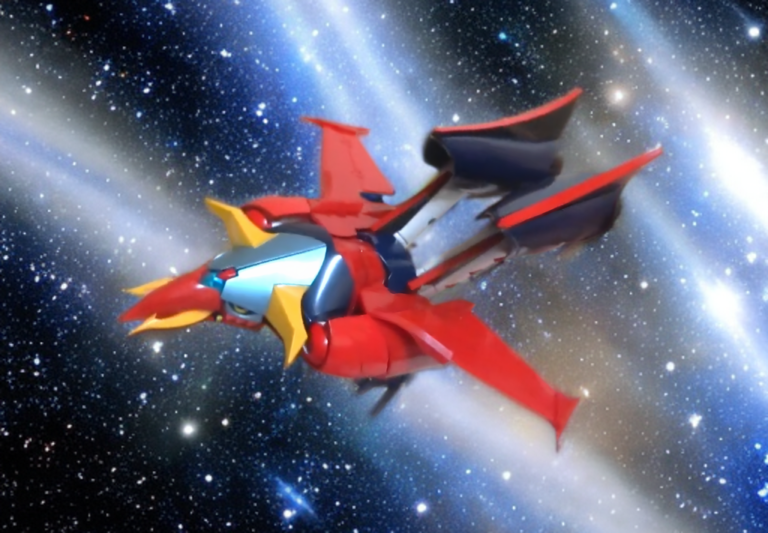
God Bird weapons form the specialized offensive systems available exclusively or optimally when Raideen assumes its eagle-like jet form in the 1975 anime series Brave Raideen. These armaments leverage the transformation’s supersonic flight capabilities and Pyramid Power from the Star of Ra Mu to deliver decisive strikes against the Demon Empire’s colossal beasts. Depicted across numerous episodes, particularly in the latter half of the 50-episode run, they emphasize high-speed penetration, precision targeting, and coordinated multi-vector assaults. All details stem directly from on-screen mechanics, pilot commands, and battle sequences in the original broadcast, without external embellishments.
Activation Context for Weapon Deployment
God Bird weapons activate only after Raideen completes its transformation into the avian configuration. Akira Hibiki issues commands such as “God Bird, Change!” to initiate the shift, after which specific weapon calls follow during aerial engagements. The mode’s ramjet engines and streamlined structure provide the velocity and positioning required for these attacks, making them ideal for finishing moves once enemy vulnerabilities are exposed. Weapons integrate seamlessly with the form’s mobility, often combining scanning, energy projection, and physical impact in rapid succession.
Core Ramming Attacks
The foundational God Bird weapon is the supersonic ramming charge. Raideen accelerates to extreme speeds in God Bird mode and collides directly with the target, piercing through its body to trigger internal destruction. This attack frequently resolves encounters by exploiting cores or weak points identified earlier in the battle.
A enhanced variant, the Titan Drill, incorporates spinning rotation during the ram. The rotational force amplifies penetration against armored or reinforced Demon Empire beasts, drilling through exterior plating to reach vital internals. Both ramming techniques appear repeatedly as the primary finishing method, relying on the God Bird form’s momentum and Mutronium durability to withstand the impact forces.
God Bird Claw
God Bird Claw utilizes the form’s reinforced talons for close-range aerial strikes. These steel-like claws enable grappling, slashing, or tearing actions while Raideen maintains flight. The talons prove effective for seizing airborne foes, disrupting enemy formations, or delivering slashing damage prior to a ramming follow-up. Deployed in episodes featuring flying or leaping colossal monsters, the claws add a physical melee dimension to the otherwise speed-focused God Bird arsenal.
Esper Burn Mechanics: The Dual-Purpose Heat Beam of Raideen in God Bird Mode
Esper Burn constitutes a key weapon in the God Bird transformation of Raideen within the 1975 anime series Brave Raideen. This ability activates exclusively in the eagle-like jet form and combines direct offensive energy projection with a supportive scanning function. Powered by the Pyramid Power from the Star of Ra Mu, it appears in multiple battle sequences across the 50 episodes, particularly when Raideen engages airborne or heavily armored Demon Empire beasts. All mechanics derive strictly from the original broadcast’s depictions, dialogue, and visual effects, where the attack supports the robot’s primary finishing strategies.
Activation and Firing Sequence
Esper Burn deploys after Raideen completes its transformation into God Bird mode. Pilot Akira Hibiki issues the command during aerial combat, triggering the emission from the eyes (or beak area in some visual interpretations) of the God Bird head unit. The process requires no additional preparation beyond the mode shift, allowing rapid deployment mid-flight.
The firing sequence involves a brief energy buildup visible as glowing points in the eyes, followed by the release of focused beams. These project forward in straight or slightly converging lines, maintaining accuracy at high speeds due to the stabilized God Bird platform. The attack integrates seamlessly with flight maneuvers, enabling Raideen to fire while diving, circling, or closing in on targets.
Primary Offensive Function: Heat Beams
The core effect of Esper Burn is the projection of heat beams—concentrated thermal energy rays that inflict direct damage on contact. These beams deliver intense localized heating capable of scorching exterior armor, melting surface layers, or weakening structural integrity of Demon Empire colossal beasts. In episodes featuring resilient foes, the beams serve to soften defenses prior to follow-up strikes, creating exploitable openings without exhausting other resources.
The heat output manifests as bright, searing streams with visible thermal distortion in the surrounding air. Intensity remains consistent across uses, calibrated through Pyramid Power to balance effectiveness against energy consumption. The beams function at range, allowing Raideen to engage from a safe distance while maintaining supersonic mobility in God Bird configuration.
Secondary Function: X-Ray-Like Scanning and Weak Point Lock-On
Beyond raw damage, Esper Burn operates as a form of x-ray or penetrating vision, often described in context as an esper radar or psychic透視 light. The same beams or an accompanying energy emission pierce through enemy exteriors to reveal internal structures, specifically highlighting weak points or cores. This scanning reveals vulnerabilities such as central energy sources, joints, or critical organs within fossil beasts and demon constructs.
Once locked on, the visual feedback guides Raideen’s subsequent actions—most commonly the supersonic ramming attack or Titan Drill. The lock-on enhances precision, ensuring the high-speed charge strikes the exact location for maximum internal disruption and explosive destruction. This dual mechanic makes Esper Burn a preparatory tool that elevates the efficiency of God Bird’s finishing moves, reducing the risk of glancing impacts against armored targets.
In practice, the scanning phase may precede or overlap with the damaging beams, with the eyes emitting a sustained glow during analysis before shifting to full offensive output.
Integration with God Bird Arsenal and Tactics
Esper Burn frequently combines with other God Bird weapons in coordinated sequences. A typical tactical flow begins with Esper Burn scanning to identify the weak point, followed by God Thunder or God Bird Claw to further disrupt, then culminating in a ramming charge through the locked-on core. The beams can also assist in guiding the God Bird attack itself, providing directional cues or supplemental damage during the final approach.
The weapon draws directly from Raideen’s Pyramid Power core, with no separate ammunition or reload shown. It remains available throughout God Bird mode engagements, supporting both reconnaissance against unknown threats and direct assaults on established Demon Empire forces. In larger battles, the scanning capability aids coordination with allies by relaying weak point data indirectly through Akira’s observations.
Visual and Auditory Presentation in the Series
On-screen, Esper Burn appears as vivid red or orange energy streams accompanied by a high-pitched charging hum and impact sizzle. The scanning effect includes a brief overlay or internal cross-section view for dramatic emphasis, illustrating the x-ray penetration. These elements heighten the mystical-technological fusion of Mu Empire design, with the beams contrasting against the golden and white God Bird silhouette during flight.
The attack recurs in episodes involving aerial or fast-moving colossal monsters, underscoring its reliability as Raideen adapts to escalating invasions.
Esper Burn Limitations: Constraints on Raideen’s God Bird Heat Beam in Brave Raideen
Esper Burn, the dual-purpose heat beam fired from the eyes of Raideen’s God Bird form, serves as both an offensive thermal weapon and a penetrating scanner for weak-point identification in the 1975 anime series Brave Raideen. Introduced as a variation technique acquired through Akira Hibiki’s training, it appears in specific episodes (notably around episodes 9, 16, 18, and 23) during aerial engagements against Demon Empire colossal beasts. While effective for softening targets and enabling precise God Bird ramming attacks, Esper Burn operates under inherent constraints rooted in its integration with Raideen’s Pyramid Power system, the pilot’s psychokinetic link, and the demands of God Bird mode. All limitations derive directly from the series’ canon depictions, battle outcomes, and established mechanics across the 50 episodes.
Energy Consumption Tied to Pyramid Power
Esper Burn draws its energy directly from the same Pyramid Power core supplied by the Star of Ra Mu that sustains Raideen’s overall operations and God Bird transformation. As a heat-based projection requiring focused thermal output combined with penetrating scanning, the attack consumes a measurable portion of available energy reserves. In prolonged battles or when deployed repeatedly in quick succession, this draw can contribute to overall system strain, though no single instance shows Esper Burn alone depleting reserves to critical levels.
The limitation manifests indirectly through the broader context of God Bird mode: maintaining supersonic flight while firing beams demands sustained power allocation. Sequences where multiple God Bird weapons activate in combination (such as Esper Burn followed by ramming or God Thunder) illustrate cumulative energy use, potentially reducing endurance in extended confrontations with resilient Demon Empire forces.
Pilot Psychokinetic Link and Physical Strain
Raideen’s control system links directly to Akira Hibiki via psychokinetic (esper) resonance, allowing his will to amplify the robot’s actions. This connection transmits feedback from weapon use to the pilot, with stronger or more complex abilities imposing greater bodily and mental burden. Although Esper Burn lacks the explicit life-force draining warnings associated with later-introduced techniques like God Voice, its nature as an esper-derived beam ties it to this psychokinetic interface.
The scanning component—functioning as x-ray or透視 light—requires concentrated mental focus from Akira to interpret internal enemy structures in real time. This adds cognitive load during high-speed flight, where any distraction could compromise accuracy or evasion. In episodes featuring intense aerial dogfights, the dual demand of piloting God Bird while directing Esper Burn highlights the pilot’s finite stamina, particularly as the Demon Empire’s assaults escalate in scale and frequency toward the series’ latter half.
Contextual and Tactical Restrictions
Esper Burn functions optimally only within God Bird mode, restricting its availability to situations where Raideen has already transformed. The transformation itself requires a brief reconfiguration period, during which other systems may take precedence, limiting instantaneous deployment. The beams’ straight-line projection and range make them less effective against highly evasive, rapidly maneuvering, or extremely distant targets compared to omnidirectional or guided weapons like God Missiles.
Canon depictions show Esper Burn primarily as a supportive tool rather than a standalone finisher. It softens armor or reveals weak points to facilitate the God Bird ram, but does not deliver decisive destruction independently in most encounters. Against beasts with exceptional heat resistance, reinforced cores, or adaptive defenses, the thermal effect diminishes, necessitating reliance on physical impact or other armaments. Its appearance frequency remains lower than core God Bird ramming, indicating tactical selectivity rather than routine spamming.
Integration with Broader Mecha Vulnerabilities
Raideen’s Mutronium armor provides regeneration when not in active combat, but sustained engagements in God Bird mode expose the form to cumulative stress from high velocities and energy discharges. While no direct damage to Esper Burn components occurs in the series, the eyes/head unit housing the emitters could face indirect risk from counterattacks during beam charging or firing windows. The psychokinetic feedback loop means any overload or disruption to Raideen transmits to Akira, amplifying strain from weapon use.
In the series finale, amplification via the Star of Ra Mu boosts overall capabilities, indirectly mitigating some energy and performance constraints for all systems, including Esper Burn. However, this enhancement remains temporary and tied to the climax, not a standard operational state.
Absence of Overuse Penalties Specific to Esper Burn
Unlike God Voice, which canon explicitly warns drains the pilot’s life force and risks armor integrity with prolonged application, Esper Burn carries no such dire, individualized repercussions in dialogue or events. Its limitations appear more operational—energy budgeting, pilot focus, and mode dependency—rather than existential threats. This positions it as a reliable mid-tier God Bird asset, balanced for repeated but measured use without the “double-edged sword” characterization reserved for ultimate attacks.
Role of Limitations in Narrative Battles
These constraints influence battle pacing and strategy throughout the 50 episodes. Early uses of Esper Burn coincide with Akira’s training arc, emphasizing mastery over raw power. As Demon Empire beasts grow more formidable post-Barao’s awakening, the need to combine Esper Burn with God Bird Claw, God Thunder, or ramming underscores teamwork between pilot skill and mecha systems. Allies like Mari Sakurano and the Copelander Corps provide support that indirectly alleviates pressure, allowing Raideen to conserve resources for critical strikes.
The limitations reinforce themes of inherited Mu legacy: Raideen’s power demands disciplined application, mirroring the 12,000-year guardianship cycle where unchecked force could endanger both guardian and pilot.
Limitations Summary
Esper Burn limitations center on its dependence on Pyramid Power reserves, the psychokinetic burden on pilot Akira Hibiki, mode-specific activation within God Bird, and tactical role as a preparatory rather than terminal weapon. These factors ensure balanced deployment across aerial confrontations with the Demon Empire, preventing over-reliance while highlighting the sophisticated engineering of the Mu Empire’s sentinel. Through energy management, mental focus, and complementary use with ramming tactics, Esper Burn upholds Raideen’s effectiveness as the prophesied guardian without compromising the series’ emphasis on strategic resolve over unlimited might. This canon framework preserves the attack as a precise, constrained asset integral to fulfilling the ancient awakening.
Role in Fulfilling the Mu Prophecy
Esper Burn embodies the advanced sensory and offensive capabilities engineered by the Mu Empire for Raideen. By enabling precise identification and exploitation of enemy weaknesses, it ensures the guardian can efficiently counter the Demon Empire’s diverse beasts across the 12,000-year cycle. This mechanic reinforces Raideen’s sentience and adaptability, allowing the ancient protector to safeguard Earth through informed, high-mobility strikes rather than brute force alone.
Esper Burn mechanics fuse destructive heat beams with penetrating x-ray-like scanning to create a dual-purpose weapon ideal for God Bird mode. Fired from the eyes of the avian head unit, the beams damage exteriors while locking onto internal weak points to facilitate precise ramming finishes against Demon Empire threats. Rooted in Pyramid Power and depicted consistently throughout the 1975 series, this ability enhances Raideen’s tactical versatility, transforming aerial supremacy into targeted, efficient victories. As an integral component of the Mu Empire guardian’s arsenal, Esper Burn upholds the prophecy by bridging reconnaissance and annihilation in the ongoing defense of humanity.
God Thunder: Atmospheric Lightning Strike
God Thunder summons lightning from the sky and directs it toward a designated enemy. This energy-based attack draws on environmental forces amplified by Raideen’s Pyramid Power, delivering electrical devastation from an elevated position. It proves particularly useful against grounded or clustered Demon Empire units while Raideen remains airborne, disrupting formations or stunning resilient foes. The command triggers visible atmospheric buildup followed by a directed bolt, integrating weather manipulation with the God Bird’s aerial superiority.
Head Cutter: Detachable Battering Ram and Blade
Head Cutter detaches the God Bird’s head unit as an independent battering ram. The separated head charges forward while the neck aperture of the main body reveals a large blade or spear tip, enabling simultaneous piercing strikes from two directions. This detachment combat allows coordinated pincer attacks: the head rams one vector while the bladed body pierces from another. The head remains controllable during separation, permitting guided trajectories before reattachment or continued independent action. Head Cutter appears in sequences requiring multi-angle assaults against large or evasive beasts, showcasing Raideen’s modular design rooted in Mu engineering.
Integration and Tactical Combinations
God Bird weapons operate in concert rather than isolation. A typical sequence begins with Esper Burn scanning to identify a weak point, followed by God Thunder or God Bird Claw to create openings, culminating in a Titan Drill ram or Head Cutter pincer for the finish. Some projectiles from the humanoid mode, such as upgraded God Missiles or God Boomerang, remain deployable in flight, though the core God Bird arsenal focuses on the mode’s unique systems.
These weapons draw sustained power from the Star of Ra Mu, with no separate ammunition limitations shown in canon. Prolonged engagements may strain energy reserves, but the attacks maintain consistency across the series’ battles.
Role in the War Against the Demon Empire
God Bird weapons escalate in prominence as the Demon Empire’s invasion intensifies, especially after Emperor Barao’s release. They counter aerial, leaping, and fast-moving colossal beasts that terrestrial weapons struggle to engage. In mid-to-late episodes, the arsenal supports large-scale defensive operations alongside the Copelander Corps, enabling Raideen to intercept threats globally. The weapons fulfill the Mu prophecy by turning ancient guardian technology into overwhelming aerial dominance, often resolving episodes with dramatic high-speed resolutions.
Sound and visual effects underscore their impact: the shriek of engines during rams, the crackle of lightning in God Thunder, and the dual trajectories of Head Cutter create memorable battle choreography.
Enhancements in the Series Finale
During the climactic confrontation, activation of the Star of Ra Mu by Princess Lemuria amplifies Raideen’s overall capabilities. This boost indirectly enhances God Bird weapons, increasing speed, beam intensity, and impact force to confront Barao’s colossal scale. The amplified arsenal contributes to the resolution of the 12,000-year conflict without introducing new weapon types.
Synopsis
God Bird weapons—the supersonic ramming (including Titan Drill), God Bird Claw talons, Esper Burn heat beams with scanning, God Thunder lightning strikes, and Head Cutter detachment—equip Raideen with a versatile aerial arsenal tailored for decisive victory. These systems, powered by Pyramid Power and executed through the eagle-jet transformation, directly counter the varied assaults of the Demon Empire across the 50 episodes of Brave Raideen. Rooted in the Mu Empire’s legacy, they transform the guardian from a grounded sentinel into a swift, multi-weapon platform capable of piercing evil at its core. This canon framework highlights the ingenuity of Raideen’s design, where form and armament converge to uphold the ancient mandate of protection.
Evolution of God Bird Mode: From Discovery to Climactic Mastery in Brave Raideen
God Bird mode represents the aerial transformation of Raideen in the 1975 anime series Brave Raideen. This eagle-like jet configuration enables supersonic flight and serves as the platform for many of the Mu Empire guardian’s finishing attacks against the Demon Empire’s colossal beasts. Across the 50 episodes, God Bird mode evolves from an accidental discovery into a refined, versatile combat asset. Its progression reflects Akira Hibiki’s growing mastery as pilot, the escalating threats from the invaders, and the gradual unlocking of Mu technology’s full potential. All developments stem directly from on-screen events, dialogue, and battle sequences in the original broadcast.
Initial Discovery and Basic Activation
God Bird mode first emerges early in the series through an accidental activation during one of Raideen’s initial battles. Akira Hibiki, still adjusting to his role as pilot and descendant of the Mu bloodline, inadvertently triggers the transformation while commanding Raideen. The reconfiguration shifts the humanoid frame into an avian silhouette: arms and legs streamline to expose ramjet-like engines, the torso reshapes for aerodynamics, and a bird-like head unfolds or integrates from the back structure.
At this stage, the mode’s primary function is high-speed flight for pursuit or evasion. The basic ramming attack—charging through enemies at supersonic velocities—becomes the immediate finishing technique. Akira and Mari Sakurano name the form “God Bird” on the spot, recognizing its eagle-inspired design and divine Mu origins. Early uses focus on mobility rather than specialized weaponry, allowing Raideen to intercept fast-moving or airborne Demon Empire beasts that ground-based combat cannot easily reach. The transformation sequence itself appears raw and somewhat inconsistent in activation method, reflecting the pilot’s unfamiliarity with the ancient systems.
Refinement of Core Ramming Tactics
As episodes progress into the mid-series, God Bird mode sees tactical refinement through repeated application. The standard ramming attack evolves with the introduction of the Titan Drill variant, where Raideen spins during the charge to amplify penetration against armored foes. This spinning ram addresses increasingly resilient fossil beasts deployed by the Demon Empire, turning raw speed into a drilling force capable of breaching thicker defenses.
God Bird Claw emerges as an added melee option, utilizing the form’s talons for slashing or grappling during flight passes. These enhancements arise naturally from combat necessity rather than external upgrades, as Akira’s psychokinetic link with Raideen deepens. The mode shifts from a simple mobility tool to a dedicated finishing platform, with ramming sequences becoming more precise as the pilot learns to combine speed with targeting.
Integration of Esper Burn and Scanning Capabilities
A significant evolutionary step occurs with the acquisition of Esper Burn. This variation technique, developed through Akira’s training, adds dual-purpose heat beams fired from the God Bird head unit’s eyes. The beams deliver thermal damage while simultaneously providing x-ray-like scanning to reveal enemy weak points or cores. This scanning function—sometimes referred to in context as esper radar—allows Raideen to lock onto vulnerabilities before committing to a ramming strike, dramatically increasing the success rate of finishing attacks.
Esper Burn’s introduction marks God Bird mode’s transition toward greater tactical depth. Battles now incorporate a preparatory phase: scan with Esper Burn, soften or expose the target, then execute the supersonic ram. This combination sees consistent use in episodes featuring aerial or evasive colossal monsters, demonstrating how the mode adapts to the Demon Empire’s diverse assault strategies.
Addition of God Thunder and Energy-Based Strikes
Further evolution brings God Thunder into God Bird operations. This ability summons lightning from the sky and directs it toward enemies while Raideen maintains aerial position. The attack integrates atmospheric forces with Pyramid Power, creating an electrical assault that complements the mode’s mobility. God Thunder often serves to disrupt formations or stun resilient beasts prior to ramming, expanding God Bird’s role beyond pure physical impact.
These energy-based enhancements highlight the mystical side of Mu engineering, as Raideen’s sentience and connection to the Star of Ra Mu allow for environmental synergy. The mode now supports multi-phase engagements: flight for positioning, energy strikes for control, and ramming for termination.
Unlocking of Head Cutter and Detachment Combat
In the latter half of the series, as threats intensify following Emperor Barao’s release, God Bird gains the Head Cutter technique. This sealed capability detaches the head unit as an independent battering ram while exposing a large blade or spear tip from the neck aperture of the main body. The result is a coordinated pincer attack: the detached head charges one vector while the bladed body pierces from another.
Head Cutter represents a modular evolution in God Bird design, showcasing Mu technology’s advanced detachment systems. It appears in high-stakes battles requiring multi-angle assaults against particularly large or defended adversaries. Deployment of this weapon coincides with Akira’s increased confidence and the robot’s full awakening to its ancient mandate.
Operational Consistency and Late-Series Mastery
By the final arcs, God Bird mode operates with greater reliability and fluidity. Transformation commands stabilize, often utilizing consistent cockpit controls. The mode handles both terrestrial-to-aerial transitions and sustained global pursuits with ease. Ramming, combined with the full suite of Esper Burn, God Thunder, God Bird Claw, and Head Cutter, becomes the standard resolution for most major confrontations.
God Bird’s evolution parallels the overall narrative arc: from reactive defense in early episodes to proactive dominance as the Demon Empire launches its final offensives. The form’s supersonic speeds and precision strikes prove essential against admiral-level commanders and Barao’s direct assaults.
Climactic Enhancement via the Star of Ra Mu
In the series finale, activation of the Star of Ra Mu by Princess Lemuria provides temporary amplification to Raideen. This boost indirectly elevates God Bird mode, increasing thrust, beam intensity, scanning clarity, and overall destructive force. The enhanced God Bird contributes to the confrontation with Emperor Barao, allowing Raideen to match the demon’s colossal scale and deliver the decisive blows that resolve the 12,000-year conflict.
This climax represents the pinnacle of God Bird’s evolution—unlocking the full potential of Mu’s ancient guardian through the prophecy’s fulfillment.
Overall
The evolution of God Bird mode traces a clear progression across Brave Raideen’s 50 episodes: from accidental discovery and basic supersonic ramming, through tactical refinements like Titan Drill and Esper Burn scanning, to advanced integrations of God Thunder and Head Cutter detachment. Each stage builds on Akira Hibiki’s growth as pilot and Raideen’s awakening as sentient protector, adapting to the Demon Empire’s escalating invasion. Powered by Pyramid Power and rooted in the Mu Empire’s legacy, God Bird transforms from an emerging mobility asset into the ultimate aerial weapon that upholds the ancient chronicle’s mandate. This development cements Raideen’s status as a pioneering transforming mecha, where form and function evolve in tandem to safeguard Earth against primordial evil.
Raideen’s Specific Powers: The Arsenal of the Mu Empire Guardian
Raideen serves as the central guardian in the 1975 anime series Brave Raideen, a 50-meter-tall, 520-ton colossal robot constructed by the ancient Mu Empire. Its powers derive directly from the series’ established lore, blending advanced Mu technology with mystical Pyramid Power. Every ability, weapon, and transformation appears through on-screen depictions, dialogue, and narrative events across the 50 episodes. Raideen operates as a sentient entity powered by the Star of Ra Mu, capable of independent threat detection and self-sustained action once piloted by Akira Hibiki. This exploration details its core specifications, defensive systems, arsenal, transformation, and specialized attacks, all confined to official canon facts from the original broadcast.
Raideen: The Mu Empire Guardian (Technical File)
| Attribute | Specification | Notes |
| Model Number | Raideen (The Guardian) | Constructed 12,000 years ago. |
| Height | 50 Meters | Exactly 1/10th the height of a small skyscraper. |
| Weight | 520 Tons | Remarkably light for its size (Mutronium magic). |
| Armor Material | Mutronium | Self-regenerating; highly magic-resistant. |
| Power Source | Pyramid Power | Channeled from the Star of Ra Mu. |
| Transformation | God Bird Mode | Supersonic eagle-jet configuration. |
| Max Speed | Mach 10+ | (In God Bird ramming mode). |
| Core Pilot | Akira Hibiki | Requires 50% Mu / 50% Human DNA. |
| Primary Base | God Face Mountain | Located in the Golden Pyramid. |
Key Weaponry & Ability Summary
The “Standard” Kit: God Missiles (Abdomen), God Gorgon (Wrist Bow), and God Boomerang.
The Melee Suite: God Breaker (Sword) and God Block (Shield/Buzzsaw).
The “Special” Energy: Esper Burn (Heat beams + X-ray vision for finding monster-of-the-week kidneys).
The “Nuclear” Option: God Voice (Sonic molecular disintegration).
Side Note: High chance of pilot fainting; use only when the Demon Empire is really getting on your nerves.
GX-41S “Fade-In” Set: Collector’s Cheat Sheet
If you are displaying this figure in your collection, here is how the specs translate to the shelf:
Scale: 1:263 (approximate).
The “Gimmick”: The 23cm God Face Mountain is the center-piece. It actually holds the golden statue for the “Fade-In” display.
The Finish: Look for the Pearl White paint on the limbs—this is the “high-end” marker for the GX-41S DX set.
The “Extras”: Includes the Brooger (Copelander craft) and a microscopic Sparcar (Akira’s bike).
Core Specifications and Power Source
Raideen stands at exactly 50 meters in height and weighs 520 tons. Its primary power source is Pyramid Power emitted from the Star of Ra Mu, an ancient Mu artifact that supplies the energy required for all operations, including movement, weapon deployment, and transformations. This power source ties directly to Raideen’s mystical origins, enabling sustained combat against the Demon Empire’s forces without conventional fuel. In the series’ climax, the Star of Ra Mu further amplifies Raideen’s strength and size when activated by Princess Lemuria, allowing it to confront Emperor Barao on equal terms. The Pyramid Power also facilitates Raideen’s sentience, as it senses the resurgence of evil independently before full awakening.
Armor and Regeneration
Raideen’s exterior consists of Mutronium, a supernatural metal unique to Mu engineering. This armor provides high resistance to electricity and magic-based assaults, as demonstrated in multiple encounters with Demon Empire beasts. When not engaged in active battle, the Mutronium regenerates automatically, repairing damage sustained during combat. This self-healing property proves vital in prolonged engagements, allowing Raideen to recover between assaults while the pilot coordinates with allies. The armor’s durability underscores Raideen’s role as an enduring sentinel, preserved through 12,000 years of dormancy within the golden pyramid.
Sentience and Sensory Abilities
Beyond its mechanical frame, Raideen functions as a sentient guardian. It detects evil presences on its own, awakening from slumber in response to the Demon Empire’s return and global disasters. This innate awareness operates independently of the pilot, alerting Akira Hibiki through a mysterious voice that summons him to the God Face Mountain. The robot’s connection to its Mu heritage enables precise alignment with the pilot’s will, particularly through the fade-in activation sequence involving the Sparcar motorcycle. Sensory capabilities extend to environmental awareness, supporting strategic responses to threats ranging from terrestrial fossil beasts to aerial and aquatic colossal monsters.
The God Bird Transformation
Raideen possesses the ability to transform into God Bird, an eagle-like jet form designed for high-speed flight and decisive strikes. The transformation streamlines the humanoid body into a avian configuration, exposing ramjet-like engines while repositioning limbs and torso for aerodynamic efficiency. God Bird mode enables supersonic velocities essential for finishing attacks, where Raideen often locates an enemy’s core and rams through it to trigger destruction. This form sees frequent use in the latter half of the series as battles intensify, providing mobility that complements ground-based engagements. The transformation mechanism itself marks an early innovation in anime mecha design, executed through articulated shifts visible in episode sequences.
Primary Armament: Projectile Weapons
Raideen’s offensive capabilities include several projectile systems, each deployed from integrated storage compartments.
God Missiles launch from the abdomen as bird-like bladed projectiles with high accuracy. Later in the series, these receive upgrades granting homing capabilities, improving targeting against evasive Demon Empire units.
God Gorgon arrows, stored in the back and fired via a bow mounted on the left wrist, consist of harpoon-like shafts charged with energy from the fingertip. Upon impact, they explode, and barrages can be unleashed for area saturation. The bow itself undergoes an upgrade where both halves sharpen into the Gorgon Sword, shifting its utility toward close-range slashing.
God Boomerang deploys as a red bladed, bird-like projectile from the right arm. A subsequent upgrade adds rocket jets, increasing impact speed and force for greater penetration against armored foes.
These projectiles allow Raideen to engage at range, adapting to the varied morphologies of invading beasts throughout the 50 episodes.
Melee and Defensive Tools
For close-quarters combat, Raideen employs integrated melee and defensive systems.
God Block extends as a retractable shield from the right arm, providing protection against direct assaults. It later upgrades into God Block Spin, functioning as a buzzsaw for offensive rotation and cutting through obstacles or enemies.
God Breaker, a sword concealed within the God Block, serves as the primary melee blade. An enhancement known as Energy Cutter surrounds the blade with lightning, amplifying its destructive potential during critical strikes.
Aura Shock discharges electric shocks directly from the fingers, delivering close-range stunning or damaging bursts. God Pressure projects green lightning bolts from the forehead, offering a focused energy strike against distant or elevated targets.
These tools enable Raideen to transition seamlessly between defense and offense, countering the physical threats posed by colossal monsters in episodes featuring direct confrontations.
Energy-Based Attacks
Raideen utilizes several energy manipulation techniques drawn from its Pyramid Power core.
The Telekinetic Beam, designated Nendo Kousen God Alpha, generates a powerful energy field surrounding the body. This field deteriorates any object or entity it contacts, serving as a broad-area disintegration tool.
Esper Burn emits heat beams from the eyes in God Bird mode, functioning both as an offensive weapon and x-ray vision to identify enemy weak points for precise follow-up strikes.
God Thunder summons lightning from the sky and directs it toward a target, leveraging atmospheric forces in tandem with Raideen’s energy systems for amplified electrical attacks.
These abilities highlight the mystical-scientific fusion of Mu technology, appearing in sequences where conventional weapons require supplementation against resilient foes.
The Devastating God Voice
Introduced in episode 42, God Voice represents one of Raideen’s most potent and specialized attacks. Satellite dishes emerge from the chest to amplify Akira Hibiki’s voice as he shouts “God Ra Mu.” The result manifests as extremely powerful purple sonic rings that entrap enemies and tear them apart at the molecular level. This sonic assault proves decisive against certain colossal beasts but carries significant repercussions: prolonged use drains the pilot’s life force and risks damaging Raideen’s own armor. Its deployment reflects the series’ emphasis on personal cost in the fulfillment of the Mu prophecy, reserved for moments when other armaments fall short.
Esper Burn vs. God Voice: A Direct Comparison of Raideen’s Key Abilities in Brave Raideen
Esper Burn and God Voice represent two distinct offensive capabilities of Raideen in the 1975 anime series Brave Raideen. Both draw from the Mu Empire’s Pyramid Power and integrate with the robot’s psychokinetic link to pilot Akira Hibiki. Esper Burn functions as a variation technique within God Bird mode, while God Voice serves as a late-introduced, high-risk ultimate attack. The comparison below examines their activation, mechanics, effects, usage frequency, tactical roles, and limitations strictly according to events and depictions across the 50 episodes.
Activation and Mode Dependency
Esper Burn activates exclusively after Raideen transforms into God Bird mode. Akira acquires the ability through dedicated training and deploys it via a command during aerial maneuvers, with emissions originating from the eyes or beak area of the God Bird head unit. No additional hardware deployment is required beyond the transformation itself.
God Voice, introduced in episode 42, operates in humanoid mode. It requires the emergence of satellite dishes from Raideen’s chest to amplify sound. Akira must shout the specific phrase “God Ra Mu” for full effect; other vocalizations produce negligible power. This attack becomes available as a sealed weapon that awakens during the intensifying conflict with the Demon Empire.
Power Source and Energy Mechanics
Both abilities rely on Pyramid Power from the Star of Ra Mu, transmitted through Raideen’s Mutronium frame and psychokinetic interface with Akira. Esper Burn channels focused thermal and penetrating energy, with consumption tied to sustained flight and scanning in God Bird configuration. God Voice converts Akira’s voice into amplified sonic waves, consuming extreme levels of bio-energy from the pilot in addition to the robot’s reserves.
Offensive Effects and Destructive Scale
Esper Burn projects heat beams that deliver thermal damage to scorch or weaken enemy exteriors. Its secondary function penetrates surfaces for x-ray-like scanning, revealing internal weak points or cores to guide follow-up strikes. The beams support precision rather than outright annihilation, often softening targets for God Bird ramming.
God Voice generates powerful purple sonic rings that entrap and disintegrate targets at the molecular level. The satellite dishes amplify the shout into devastating ultrasonic waves capable of tearing apart colossal beasts entirely. This produces far greater raw destructive force than Esper Burn, frequently serving as a decisive finisher against resistant opponents where standard attacks fall short.
Tactical Role and Battle Application
Esper Burn functions as a supportive, mid-battle tool. It appears in episodes 9, 16, 18, and 23, typically in combination with God Bird ramming, God Bird Claw, or God Thunder. The scanning aspect enables targeted strikes, making it reliable for routine engagements with Demon Empire fossil beasts and giant monsters. Its integration into God Bird mode aligns with Raideen’s primary finishing strategy of high-speed penetration.
God Voice acts as an ultimate, high-stakes weapon reserved for critical moments. Used in episodes 42, 43, 45, and 48 (totaling four confirmed applications in the series), it addresses threats that overwhelm conventional armaments. The attack emphasizes overwhelming power over versatility, often deployed when God Bird tactics prove insufficient against late-series adversaries.
Usage Frequency and Narrative Placement
Esper Burn sees limited but consistent appearances after its introduction, reflecting its role as an accessible variation within God Bird operations. It supports the series’ ongoing monster-of-the-week structure without dominating battles.
God Voice emerges late in the narrative (episode 42 onward) and receives sparse use due to its severity. Even as battles escalate with Emperor Barao’s forces, Raideen continues relying primarily on God Bird for most resolutions, reserving God Voice for select high-threat scenarios.
Limitations and Risks
Esper Burn carries operational constraints: it depends on God Bird mode, demands pilot focus for accurate scanning during high-speed flight, and contributes to cumulative energy drain when combined with other God Bird systems. No explicit life-force penalty attaches to it, allowing measured repetition within a single engagement.
God Voice imposes severe repercussions. Prolonged or repeated activation drains Akira’s life force, with warnings from Princess Lemuria highlighting the risk to the pilot’s vitality. The attack also strains Raideen’s Mutronium armor through resonant forces. These factors restrict it to rare deployment, underscoring its status as a double-edged technique despite superior destructive potential.
Integration with Mu Empire Legacy
Both abilities embody the fusion of Mu technology and mystical power. Esper Burn extends the sensory and adaptive qualities engineered into Raideen for versatile guardianship, aligning with the ancient chronicle’s emphasis on strategic defense. God Voice represents an awakened, sealed enhancement that fulfills the prophecy’s demand for overwhelming force against the Demon Empire’s return, at personal cost that mirrors the sacrifices of the 12,000-year cycle.
In the series finale, Star of Ra Mu amplification temporarily boosts overall performance, indirectly benefiting both techniques during the confrontation with Barao, though God Voice’s inherent risks remain prominent.
Fundamental Differences
Esper Burn and God Voice differ fundamentally in scope and cost. Esper Burn offers reliable, supportive thermal beams with scanning utility within God Bird mode, enabling precise tactical strikes with moderate energy demands. God Voice delivers molecular-level sonic devastation as a high-power finisher in humanoid form, but at the expense of significant pilot life force and limited frequency. Together, they illustrate Raideen’s progression from adaptable guardian to ultimate sentinel, balancing versatility and raw might in the defense against the Demon Empire across the 50 episodes of Brave Raideen.
God Bird Mode Exclusive Powers
Within God Bird configuration, additional capabilities enhance aerial superiority.
Ramming attacks achieve supersonic speeds, with a spinning variant called the Titan Drill for drilling through armored cores. God Bird Claw utilizes the form’s talons for grappling or slashing during flight.
Head Cutter, also referred to as God Cutter, detaches the head as a battering ram while exposing a large blade or spear tip from the neck aperture, allowing piercing strikes independent of the main body.
These God Bird-specific powers integrate with the transformation’s mobility, enabling the ramming finishes that resolve numerous monster-of-the-week encounters across the series.
Climactic Enhancements via Star of Ra Mu
In the final confrontation, activation of the Star of Ra Mu by Akira’s mother grants Raideen temporary amplification. This boosts overall strength and scale to match Emperor Barao’s stature, channeling maximum Pyramid Power for the ultimate resolution of the 12,000-year conflict. The enhancement integrates with existing systems, elevating all prior abilities without introducing new unrelated functions, and concludes the prophecy established in the Mu Empire’s ancient chronicle.
Power Summary
Raideen’s specific powers embody the complete defensive legacy of the Mu Empire, from its regenerating Mutronium armor and Pyramid Power core to the versatile arsenal of God Missiles, God Gorgon, God Breaker, and beyond. The God Bird transformation and God Voice attack provide tactical versatility and overwhelming force, while sentience and regeneration ensure endurance across millennia. Every element arises strictly from the events, mechanics, and revelations of the 1975 series’ 50 episodes, positioning Raideen as the prophesied sentinel whose abilities directly counter the Demon Empire’s invasion. This canon framework preserves the robot’s role as both technological marvel and mystical guardian, awakening to fulfill its ancient mandate.
Review of the Animated Series: A Deep Dive into the 50-Episode Epic
The animated series unfolds across 50 episodes, delivering a serialized account of awakening, resistance, and climactic confrontation. The first half, under Tomino’s direction, establishes the premise through episodes like “Gante, The Giant Dragon,” “Bastodon, The Giant Fossil Beast,” and “Garda, The Iron Beast,” where initial Demon Empire incursions test Raideen’s reactivation. Akira’s integration as pilot, aided by Mari and the soccer team, builds team dynamics amid escalating disasters.
Mid-series developments intensify with Barao’s release from his statue prison, shifting the conflict toward a direct assault on Earth. Episodes such as “The Insurrection of Gildeen, The Assassin,” “The Strike of Algandos, The Fireball Beast,” and “The Love of Shuraga, The Beautiful Changeling” showcase varied beast designs and tactical evolutions by the invaders. The narrative progresses through defensive operations, hostage rescues, and counterstrikes, as seen in titles like “Recapture! The Hostages of the Giant Tortasu” and “Crush Skarl, the Replicating Beast!”
The latter half, directed by Nagahama, heightens emotional and action stakes. Battles against figures like “The Colossal Gonga” and “Brutal! Devil Admiral Darudan” culminate in large-scale engagements, incorporating themes of vengeance and alliance. The series maintains a balance of monster-of-the-week confrontations with overarching arcs tied to Mu’s prophecy, ensuring the Demon Empire’s campaign feels relentless yet surmountable through Raideen’s growing mastery.
Pacing allows for character growth: Akira matures from reluctant summon to resolute defender, while Mari’s scientific insights prove vital. The animation captures the scale of Raideen through dynamic transformations and weapon deployments, with God Bird mode providing visually striking aerial sequences. Sound design enhances the mystical aura, particularly during fade-in activations and God Voice emissions.
Overall, the 50 episodes create a cohesive epic that rewards consistent viewing, progressing from localized threats to a global defense of humanity’s future against primordial evil. Its structure influenced later super robot formats, emphasizing legacy and transformation as narrative drivers.
The Demon Empire’s Assault: Major Battles and Arcs
The Demon Empire’s campaign spans terrestrial, aerial, and aquatic assaults, with beasts tailored to exploit weaknesses. Early arcs focus on awakening and initial repels, including dragon-like Gante and fossil-inspired Bastodon, which ravage landscapes and cities. Ultrasonic and replicating threats in episodes centered on Biira and Skarl demand innovative countermeasures.
Mid-arcs introduce personal vendettas, such as the jeweled fossil beast Dian’s revenge or the sea dragon Dorozuden’s hell-strike, forcing Raideen into multi-front battles. Barao’s full emergence escalates to admiral-level commanders like Darudan, deploying winged and taloned monstrosities that challenge God Bird capabilities.
Climactic sequences involve coordinated empire offensives, countered by the Copelander Corps’ support and Raideen’s full arsenal. Each arc advances the prophecy, culminating in the resolution of the 12,000-year cycle through the Star of Ra Mu’s power. These battles highlight the series’ action choreography, with precise depictions of transformations, weapon firings, and close-quarters mecha combat.
Series Profile: Brave Raideen (1975–1976)
| Category | Specification | Admin/Collector Notes |
| Original Title | Yūsha Raideen (勇者ライディーン) | Often translated as “Brave Raideen.” |
| Broadcast Period | April 4, 1975 – March 26, 1976 | Replaced Getter Robo on NET (now TV Asahi). |
| Episode Count | 50 Episodes | The “Golden Number” for 70s Super Robot epics. |
| Lead Directors | Yoshiyuki Tomino (1–26) Tadao Nagahama (27–50) | The “Creative Pivot” that defined the show’s dual tone. |
| Character Design | Yoshikazu Yasuhiko (YAZ) | Later famous for Mobile Suit Gundam. |
| Mechanical Design | Katsushi Murakami | The genius behind the “God Bird” transformation. |
| Production Studio | Tohoku Shinsha / Sunrise | Sunrise’s first major independent production. |
| Primary Antagonists | The Demon Empire (Yoma) | Led by the 800m-tall Emperor Barao. |
| Genre | Super Robot / Mystical Sci-Fi | Pioneered the “Sentient/Mystical Robot” trope. |
Brave Raideen: The “Must-Watch” Weapon & Lore Tracker
| Episode # | Episode Title (Key Theme) | Milestone / Weapon Debut | Why It’s “Canon-Critical” |
| 01 | Gante, The Giant Dragon | The Awakening | First “Fade-In” and God Bird discovery. |
| 09 | Garda, The Iron Beast | Esper Burn | Introduces the X-Ray scanning/heat beam logic. |
| 27 | The Brutal Devil Admiral Darudan | Nagahama Era Begins | Shift to higher-stakes, weapon-heavy action. |
| 36 | The Strike of Algandos | Titan Drill | First use of the spinning God Bird ram. |
| 40 | The Black Shadow of Mystery | Head Cutter | Raideen’s modular detachment capability revealed. |
| 42 | Gora, The Sand-Hell Beast | The God Voice | Debut of the “Forbidden” molecular sonic attack. |
| 50 | Shinning Forth for Eternity | The Finale | Star of Ra Mu peak power and the fall of Barao. |
The Mu Empire Mythology: Lore from Brave Raideen
The mythology of the Mu Empire forms the foundational backstory of the 1975 anime series Brave Raideen. Presented entirely through official series dialogue, revelations, and narrative events across its 50 episodes, this lore depicts a lost civilization that existed 12,000 years ago. It centers on a peaceful, technologically advanced society that faced existential threat from an invading demonic force, leading to the creation of a guardian robot and a prophecy that echoes into the present day. All details remain confined to what is directly established in the anime’s canon, with no additions from external interpretations or later adaptations.
The Ancient Mu Empire: Origins and Society
The Mu Empire, also referred to as the Mu Kingdom or Mu continent, thrived approximately 12,000 years ago, around 10,000 BC. Located at the center of Earth’s oceans, it existed as an isolated landmass, cut off from the rest of the world and hidden from external contact. The empire represented a peaceful and prosperous civilization, with its people possessing advanced knowledge and technology that surpassed anything known in the outside world at the time.
Ruled by King Ra Mu (also identified in canon as La Mu), the society emphasized harmony and scientific achievement. Its technological prowess included the development of extraordinary materials and energy sources. The empire’s capital and key structures incorporated pyramid-like architecture, tying into the mystical energy that would later power its greatest creation. The Mu people maintained a royal lineage, with Princess Lemuria serving as the daughter of King Ra Mu. This bloodline would prove essential in the empire’s enduring legacy.
The Mu Empire’s isolation fostered a self-contained culture focused on innovation rather than conquest. No records within the canon describe internal conflicts or external alliances prior to the invasion; instead, the empire is portrayed as a beacon of advancement that drew the attention of malevolent forces seeking to exploit its capabilities.
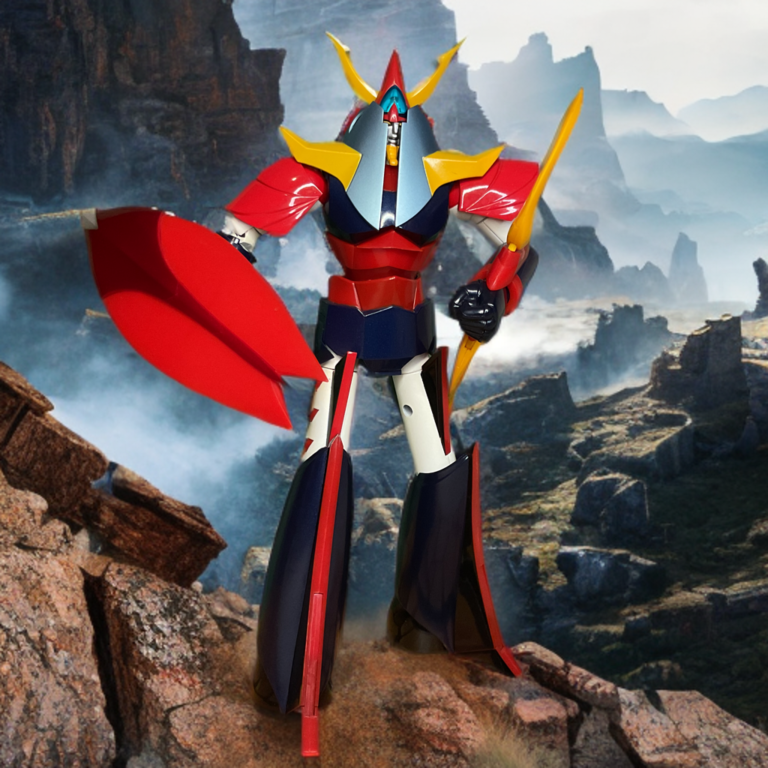
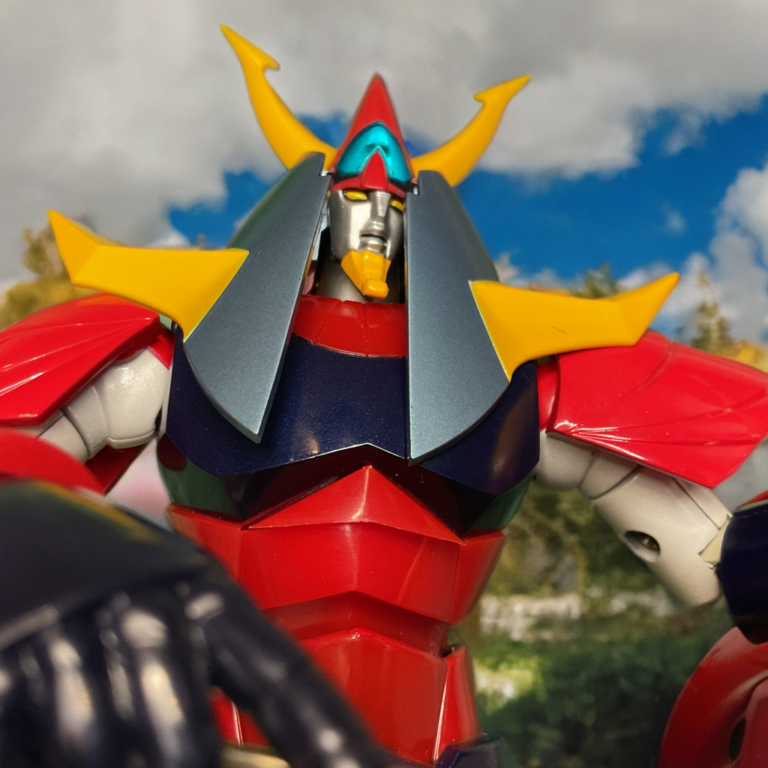
The Demon Empire Invasion and the 2,000-Year Conflict
The mythology’s central conflict begins with the emergence of the Demon Empire, also known in some canon references as the Yoma Empire. Led by Emperor Barao—an 800-meter-tall demon originating from the Underworld—this force launched a prolonged assault on the Mu Empire. Barao sought to conquer Mu specifically to seize its advanced technology and resources, including devices capable of powering mechanical beings.
Canon establishes that the war between the Mu Empire and Barao’s Demon Empire lasted for at least 2,000 years. The invaders deployed minions, including dromes, demon robots, and fossil beasts, in repeated attempts to overwhelm Mu’s defenses. A volcano eruption during the final stages of the conflict sank Barao underwater, but by this point, the Mu Empire itself had already begun to sink and ultimately collapsed.
Despite the empire’s peaceful nature, its people mounted a determined resistance. The invasion forced the Mu leadership to channel their scientific and mystical knowledge into countermeasures. This period marks the turning point where the empire’s technological achievements were weaponized for survival, setting the stage for the creation of its ultimate guardian.
The Creation of Raideen: Engineering the Protector
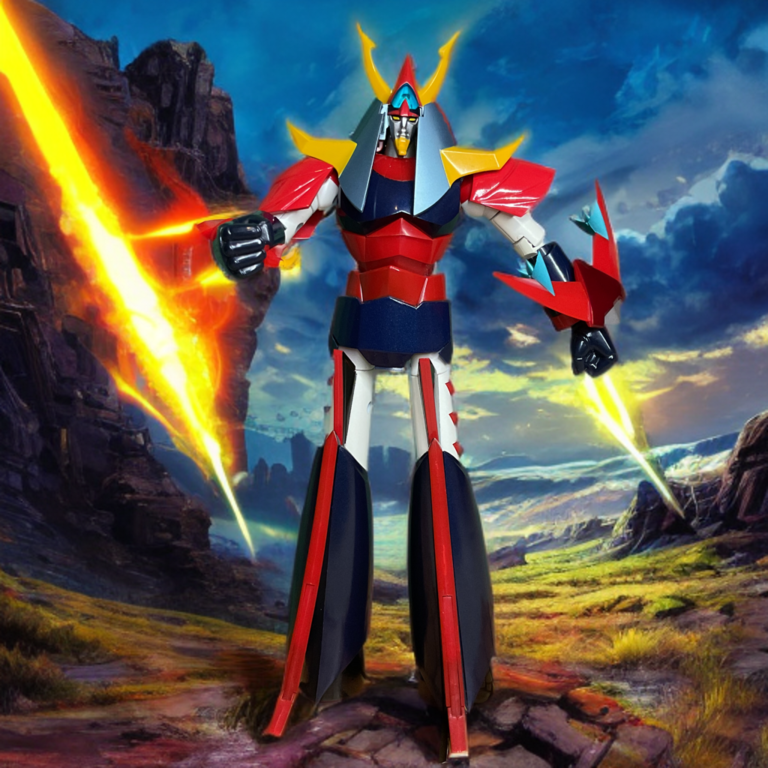
In direct response to the Demon Empire’s threat, King Ra Mu ordered the construction of Raideen, a 50-meter-tall, 520-ton humanoid robot designed as the empire’s supreme defender. The project combined Mu’s advanced technology with a supernatural metal known as Mutronium. This material granted Raideen exceptional durability and the ability to self-heal when not engaged in battle.
Raideen drew its power from Pyramid Power, emitted directly from the Star of Ra Mu (also called the Star of La Mu in certain revelations). This energy source served as both a mystical and technological core, enabling the robot to operate at full capacity. Raideen was engineered not merely as a machine but as a sentient guardian capable of sensing evil independently.
The robot’s creation required the combined efforts of Mu’s scientists under royal decree. It was built to combat Barao and his forces specifically, with capabilities tailored for large-scale confrontations. Upon completion, Raideen stood as the embodiment of the empire’s ingenuity and resolve, a fusion of engineering and otherworldly power.
The Defeat of Barao and the Sealing of the Empire
The Mu Empire ultimately prevailed through the activation of the Star of Ra Mu. This device allowed the forces to imprison Emperor Barao within a statue, neutralizing him and forcing the remnants of the Demon Empire to flee into the sea. With Barao contained, the immediate threat ended, but the victory came at a cost: the empire’s landmass sank, scattering its survivors.
Raideen itself was sealed away inside a golden pyramid, entering a state of dormancy. This enclosure, known as the God Face Mountain in its awakened form, protected the robot for the ensuing 12,000 years. The sealing ensured that Raideen would remain preserved until the Demon Empire’s prophesied return.
Princess Lemuria, daughter of King Ra Mu, survived the catastrophe. She and other Mu descendants dispersed, preserving their bloodline in secrecy across generations. The canon emphasizes that only a pilot of mixed heritage—half Mu and half human—could fully interface with Raideen and harness its power without being overwhelmed.
The Prophecy and Ancient Chronicle
A key element of Mu Empire mythology is the ancient chronicle preserved within its lore. This record foretold that when the Age of Demons began anew, Raideen would awaken to battle the returning threats. The prophecy explicitly linked the robot’s revival to the resurgence of the Demon Empire, establishing a cycle of guardianship that spanned millennia.
The chronicle served as both historical account and predictive text, guiding the actions of Mu survivors. It underscored the empire’s belief in destiny and the enduring role of Raideen as protector. Natural disasters in the modern era would later signal the fulfillment of this prophecy, reactivating the dormant forces.
The Legacy of the Mu Bloodline and the Star of Ra Mu
The surviving Mu lineage played a pivotal role in the mythology’s continuation. Princess Lemuria assumed the identity of Reiko Hibiki in the present day. After giving birth to her son Akira Hibiki, she embarked on a journey to locate the Star of Ra Mu, anticipating the Demon Empire’s return. Her efforts reunited her with Akira and culminated in the activation of the Star during the final confrontation with Barao, providing Raideen with the necessary power to secure victory—though at the cost of her own life.
Akira, revealed as the grandson of King Ra Mu and a direct descendant, became the sole individual capable of piloting Raideen. His half-Mu, half-human heritage allowed him to merge with the robot via his motorcycle, the Sparcar, entering the cockpit through a beam transport. This connection fulfilled the prophecy, bridging the ancient empire directly to the modern defense of Earth.
The Star of Ra Mu remained the empire’s most potent artifact, serving as both power source and final weapon. Its activation in the series’ climax resolved the 12,000-year conflict, implying a restoration of Mu’s hidden remnants.
The 12,000-Year Awakening and Cyclical Return
The mythology culminates in the Demon Empire’s resurgence after twelve millennia of hibernation. Natural disasters worldwide herald the awakening, prompting Raideen to sense the evil presence and reactivate within its golden pyramid. The robot’s revival draws Akira to the site, where the voice of destiny reveals his heritage and the empire’s mandate.
This awakening completes the cycle established in Mu’s ancient chronicle. The Demon Empire’s return mirrors the original invasion, with Barao emerging from his statue prison to lead a renewed assault on Earth. Raideen’s role as sentinel ensures the continuation of the Mu Empire’s protective legacy, transforming the ancient mythology into an active battle for humanity’s future.
Concluding the Mu Empire Mythology
The Mu Empire mythology in Brave Raideen presents a self-contained legend of advancement, invasion, sacrifice, and prophesied guardianship. Rooted in the empire’s 12,000-year history, it details the creation and sealing of Raideen, the defeat of Emperor Barao, and the enduring bloodline that enables the robot’s modern reactivation. Every aspect—from the Star of Ra Mu’s power to the ancient chronicle’s warnings—arises directly from the series’ canon events and character revelations. This lore establishes Brave Raideen not only as a super robot tale but as the fulfillment of a lost civilization’s final stand against primordial evil.
Mu Empire Technology Overview: The Foundations of Raideen’s Guardianship in Brave Raideen
The technology of the Mu Empire forms the backbone of the defensive systems and artifacts featured in the 1975 anime series Brave Raideen. Developed approximately 12,000 years ago on the isolated continent of Mu, this civilization combined advanced engineering with mystical energy sources to create unparalleled defensive capabilities. All elements arise directly from the series’ canon depictions, dialogue, and events across its 50 episodes, centered on the creation and operation of Raideen as the ultimate guardian against the Demon Empire. The technology emphasizes harmony between scientific precision and supernatural forces, enabling survival through prolonged conflict and a prophesied awakening.
Societal and Structural Foundations
The Mu Empire existed as a self-contained, peaceful civilization centered in the middle of Earth’s oceans. Its people possessed knowledge far surpassing contemporary societies, focused on innovation in materials science, energy manipulation, and large-scale construction. Pyramid-like architecture dominated key structures, serving both practical and energetic purposes. The empire’s royal line, under King Ra Mu, directed major projects, including the development of artifacts tied to the Star of Ra Mu.
Isolation fostered independent technological growth without external influences until the Demon Empire’s invasion. This period of conflict, lasting at least 2,000 years, forced the Mu people to weaponize their advancements for defense, culminating in the construction of Raideen under royal decree.
Key Materials: Mutronium and Regenerative Armor
Central to Mu engineering is Mutronium (also referred to in context as the basis for Mutron or Mutron Energy systems), a supernatural metal with self-regenerating properties. Raideen’s armor consists entirely of this material, granting exceptional durability and the ability to automatically repair damage when not engaged in active combat. The armor also provides high resistance to electricity and magic-based attacks, proving effective against the Demon Empire’s varied assaults, including those from fossil beasts and demon constructs.
Mutronium’s properties extend beyond physical resilience. It supports the integration of psychokinetic elements, amplifying the pilot’s abilities when interfacing with Raideen. This material represents a pinnacle of Mu metallurgy, blending natural or mystical origins with engineered refinement to create an enduring protective shell capable of withstanding millennia of dormancy.
Energy Systems: Pyramid Power and the Star of Ra Mu
Mu technology harnesses Pyramid Power, an energy emitted directly from the Star of Ra Mu (also known as the Star of La Mu). This crystalline orb, featuring unusual electronic components visible within, serves as the primary power source for Raideen and related systems. It supplies the vast reserves needed for sustained operations, transformations, and weapon deployment.
The Star functions as both a mystical amplifier and a technological core. In the ancient conflict, the Mu forces activated it to imprison Emperor Barao within a statue, demonstrating its capacity for containment and overwhelming force. In the modern era, its full activation by Princess Lemuria (Reiko Hibiki) temporarily increases Raideen’s strength and size to match Barao’s colossal scale, though at significant personal cost.
Pyramid Power integrates with structural elements, such as the golden pyramid housing Raideen, enabling the robot’s long-term preservation and independent threat detection. This energy source ties directly to Mu’s pyramid architecture, suggesting a civilization-wide network where geometric forms channel and amplify power.
Raideen: The Pinnacle of Mu Engineering
Raideen itself embodies Mu technological achievement: a 50-meter-tall, 520-ton humanoid robot constructed by order of King Ra Mu specifically to combat the Demon Empire. Built using advanced Mu techniques combined with Mutronium, the robot operates as a sentient guardian rather than a purely mechanical device. It senses evil independently and awakens in response to the Demon Empire’s resurgence.
Key design features include:
- Sentience and Psychokinetic Interface: Raideen connects directly to a pilot of mixed Mu and human heritage (such as Akira Hibiki) through a mysterious voice and beam transport via the Sparcar motorcycle. This link amplifies the pilot’s psychic abilities, enabling advanced attacks.
- Transformation Capability: The robot reconfigures into God Bird mode, an eagle-like jet form with ramjet engines for supersonic flight. This pioneering mechanism allows aerial superiority and specialized strikes.
- Modular and Sealed Systems: Features like interchangeable face and chest components for God Voice, detachable elements in God Bird mode (such as Head Cutter), and retractable weapons demonstrate sophisticated internal engineering.
Raideen requires a half-Mu, half-human pilot to fully handle its power without overload, ensuring compatibility with the empire’s bloodline preservation strategy.
Defensive and Containment Structures
The God Face Mountain (Kamimen’iwa) serves as the protective enclosure for Raideen, appearing as a golden pyramid or statue in its dormant state. This structure houses the robot for 12,000 years, preserving it until activation. It functions as both a seal and an awakening mechanism, with the fade-in sequence revealing the guardian during moments of crisis.
The empire also developed containment methods using the Star of Ra Mu, as seen in Barao’s statue imprisonment. Broader Mu technology likely included devices capable of powering mechanical beings, which the Demon Empire sought to exploit during the invasion.
Integration of Mystical and Scientific Elements
Mu technology uniquely fuses scientific advancement with mystical qualities. Raideen is portrayed as a sentient entity with divine-like attributes, emerging from stone and acting as a conduit for psychic powers. Attacks draw on environmental forces (such as God Thunder) or psychokinetic amplification, distinguishing it from purely mechanical contemporaries. This hybrid approach allowed the empire to create a guardian that could endure beyond physical limits, fulfilling the ancient chronicle’s prophecy.
The requirement for a specific bloodline pilot underscores genetic and energetic compatibility engineered into the systems, bridging the 12,000-year gap between eras.
Role in the Conflict and Legacy
During the ancient war, Mu technology enabled resistance against the Demon Empire’s dromes, demon robots, and fossil beasts. The creation of Raideen marked the empire’s final major achievement before its landmass sank. Survivors preserved bloodlines and knowledge, ensuring the technology’s reactivation in the present day.
In the series, this technology counters escalating invasions, with Raideen adapting through combat experience and Star of Ra Mu enhancements. The systems resolve the cyclical threat, though at the cost of key figures like Princess Lemuria.
To sum up
Mu Empire technology, as depicted in Brave Raideen, centers on regenerative Mutronium armor, Pyramid Power from the Star of Ra Mu, and the sentient guardian robot Raideen housed within the God Face Mountain. It represents a harmonious blend of advanced materials science, energy manipulation, transformation mechanics, and psychokinetic integration, all engineered to defend against primordial evil. Rooted in the empire’s 12,000-year legacy, these innovations fulfill the prophecy of awakening and guardianship, providing Earth with an enduring protector drawn directly from the ancient continent’s canon lore. This technological framework not only enabled survival through millennia but continues to drive the narrative of resistance across the 50 episodes.
Raideen Sentience Mechanics: The Mystical Awareness of the Mu Empire Guardian in Brave Raideen
Raideen exhibits sentience as a core attribute in the 1975 anime series Brave Raideen, distinguishing it as one of the earliest giant robots in anime portrayed with independent awareness rather than purely mechanical operation. This sentience, rooted in the mystical technology of the ancient Mu Empire, allows the 50-meter, 520-ton guardian to detect threats, awaken from dormancy, communicate telepathically, and align with its pilot without functioning as a fully autonomous combatant. All mechanics derive directly from the series’ canon events, dialogue, and narrative across the 50 episodes, emphasizing Raideen’s role as a sentient protector tied to Pyramid Power from the Star of Ra Mu.
Core Nature of Sentience: Mystical Guardian Entity
Raideen is constructed as a robot-like being but portrayed with qualities of a living guardian deity rather than a conventional machine. Its origins blend Mu engineering with supernatural elements, emerging from stone within the golden pyramid and responding to ancient prophecies. This sentience manifests as an inherent awareness of good and evil, enabling independent detection of the Demon Empire’s resurgence after 12,000 years of slumber. Unlike purely technological robots of the era, Raideen senses primordial evil on a spiritual or psychic level, triggering its reactivation when global disasters signal the invaders’ return.
The robot does not possess full independent mobility or combat capability without a pilot. It requires a compatible descendant of the Mu bloodline—specifically someone of mixed Mu and human heritage like Akira Hibiki—to engage in battles. This dependency underscores that its sentience serves guardianship rather than self-directed warfare.
Independent Threat Detection and Awakening
Raideen’s primary sentient function is its ability to sense the evil presence of the Demon Empire autonomously. Upon detecting the invaders’ awakening, it reactivates within the God Face Mountain (its golden pyramid enclosure), initiating the fade-in sequence that reveals its form. This detection operates independently of any external input or pilot presence, occurring as the first major event in the series.
The awakening process involves Raideen emitting a mysterious voice that calls to Akira Hibiki, drawing him toward the pyramid in a trance-like state. This telepathic summons bridges the ancient Mu legacy with the modern era, fulfilling the prophecy outlined in the empire’s ancient chronicle. Natural disasters worldwide serve as secondary indicators, but Raideen’s internal sensing precedes and confirms the threat.
Telepathic Communication and Pilot Interface
Once awakened, Raideen’s sentience enables direct telepathic communication with its chosen pilot. Akira hears the mysterious voice guiding him to the pyramid and, upon entering the cockpit via the Sparcar motorcycle’s beam transport, experiences calming reassurance from Raideen. The robot instructs that Akira need only think his desired actions, as Raideen will respond to mental commands.
This psychokinetic link forms the core interface: Raideen’s sentience acts as a conduit, amplifying Akira’s psychic abilities to execute advanced attacks that blend technology with mystical power. The harmony between pilot will and robot response allows rapid, intuitive control, far beyond standard manual piloting. Feedback from the link transmits sensations or strain back to Akira, particularly during high-energy maneuvers or specific weapons.
Raideen’s sentience also aligns with the pilot’s emotions and resolve, enhancing performance in critical moments. It does not override Akira’s decisions but supports and harmonizes with them, reflecting a guardian-pilot partnership rooted in Mu bloodline compatibility.
Limitations on Autonomous Action
Despite its awareness, Raideen cannot engage in full combat independently. It may take minor protective or supportive actions when sensing immediate need—such as subtle responses during threat detection—but requires the pilot’s presence and commands for offensive operations, transformations like God Bird mode, or weapon deployment. This limitation prevents it from acting as a rogue entity, maintaining its role as a tool of the Mu prophecy rather than an uncontrolled force.
The sentience appears semi-autonomous at best: capable of sensing, awakening, communicating, and providing passive support, but dependent on the human element for active defense of Earth. Vulnerabilities, such as susceptibility to certain materials like diamond in specific encounters, affect the physical frame without diminishing the underlying awareness.
Energy and Strain Considerations
Raideen’s sentience ties closely to its Pyramid Power source from the Star of Ra Mu. Sustained operations or advanced techniques draw on this energy, with the psychokinetic link transmitting corresponding strain to the pilot. While not as explicitly draining as certain ultimate attacks, prolonged engagements test the limits of both the robot’s mystical reserves and Akira’s spiritual endurance.
In the series finale, activation of the Star of Ra Mu by Princess Lemuria amplifies Raideen’s overall capabilities, indirectly enhancing its sentient functions through boosted power and alignment during the confrontation with Emperor Barao.
Role in the Narrative and Mu Legacy
Raideen’s sentience mechanics reinforce the themes of inherited duty and cyclical guardianship. As a product of Mu Empire technology, it embodies the civilization’s fusion of science and mysticism, preserved through millennia to counter the Demon Empire’s return. The robot’s independent sensing and telepathic summons ensure the prophecy activates precisely when needed, selecting and guiding the proper pilot while fostering a bond that grows across the 50 episodes.
This portrayal positions Raideen as more than a weapon: a living sentinel whose awareness bridges past and present, demanding mutual trust and resolve from its human counterpart to fulfill the ancient mandate.
In Retrospect
Raideen sentience mechanics center on independent evil detection, autonomous awakening within the golden pyramid, telepathic communication via a mysterious voice, and a psychokinetic conduit for pilot commands—all powered by Pyramid Power and limited to supportive rather than fully independent combat. These elements, established consistently throughout Brave Raideen’s canon, distinguish the guardian as a mystical entity rather than mere machinery, enabling it to sense threats, summon its pilot, and harmonize with Mu bloodline descendants in defense against the Demon Empire. This framework upholds Raideen’s legacy as the prophesied protector, where sentience ensures readiness across 12,000 years while requiring human partnership to enact its protective will.
Demon Empire Tech Comparison: Yoma Forces Versus Mu Empire Technology in Brave Raideen
The Demon Empire (also known as the Yoma Empire) and the Mu Empire represent opposing technological and mystical paradigms in the 1975 anime series Brave Raideen. Across its 50 episodes, the Demon Empire relies on evil magic, resurrection of ancient spirits, and later mechanical construction to deploy colossal beasts against Earth. In contrast, the Mu Empire developed advanced, harmonious technology centered on regenerative materials, pyramid energy, and a single sentient guardian robot. This comparison examines their core approaches, power sources, primary assets, tactical applications, and relative strengths strictly from canon events and depictions in the original broadcast.
Power Sources and Philosophical Foundations
Mu Empire technology draws from Pyramid Power emitted by the Star of Ra Mu, a crystalline orb with visible electronic components that functions as both mystical amplifier and energy core. This power source enables sustained operations, self-regeneration, and psychokinetic integration, reflecting the peaceful, advanced civilization’s focus on harmony between science and supernatural forces. It powered the construction of Raideen and supported its long-term preservation for 12,000 years.
Demon Empire technology stems from Emperor Barao’s evil magic and demonic energy. Early forces utilize necromantic rituals to resurrect and empower spirits of strong beings (living or dead) into Fossil Beasts. Later phases shift toward mechanical construction by subordinate engineers, such as the Berserker Brothers, who build Berserker Beasts through competitive destruction tests. This magic-driven approach emphasizes violence, resurrection, and conquest rather than preservation or harmony, aligning with the empire’s goal of subjugating Mu’s technology and resources.
Primary Assets: Raideen Versus Colossal Beasts
Mu Empire’s pinnacle creation is Raideen, a single 50-meter, 520-ton humanoid robot built from Mutronium. This supernatural metal provides regenerating armor with high resistance to electricity and magic. Raideen operates as a sentient guardian with independent threat detection, telepathic communication, and the ability to transform into God Bird mode. Its arsenal includes God Missiles (later homing), God Block (upgradable to spin), God Breaker sword, God Boomerang (rocket-enhanced), and advanced techniques like Esper Burn and God Voice.
The Demon Empire deploys waves of colossal beasts rather than a singular equivalent to Raideen. Early Fossil Beasts, raised by subordinates like Velostan through cold formal prayers and rituals, include examples such as:
- Bastodon (sword arm, levitation, mouth flames, regeneration)
- Garda (burrowing, launchable claws, spiked forms)
- Biira (ultrasonic attacks)
- Skarl (replication)
- Others with abilities like freezing operations, zombifying lightning, or double-headed strikes.
These beasts often combine organic fossil elements with magical empowerment, allowing regeneration, elemental attacks, and specialized powers tailored to exploit weaknesses.
In the latter half, Berserker Beasts emerge as more mechanical constructs built by rival brothers who test prototypes against each other. These feature enhanced durability and brutal close-combat designs but remain single-deployment units per episode.
Emperor Barao himself serves as the ultimate asset: an 800-meter-tall demon who, upon full release from his statue prison, engages Raideen directly with raw demonic power and size.
Materials and Durability
Mu technology centers on Mutronium, which self-heals outside active combat and resists magic/electricity while supporting psychokinetic amplification. This allows Raideen to endure prolonged engagements and recover between battles, preserved intact within the God Face Mountain for millennia.
Demon Empire beasts vary in construction. Fossil Beasts rely on resurrected spirits infused with Barao’s magic, granting regenerative properties in some cases (e.g., Bastodon) but vulnerability to targeted destruction of cores or weak points. Mechanical Berserker Beasts emphasize brute strength and armor but lack the self-sustaining regeneration of Mutronium. Overall, Demon forces prioritize overwhelming numbers and specialized abilities over enduring individual durability, as defeated beasts are frequently replaced by new deployments.
Tactical Applications and Deployment
Mu strategy revolves around a single versatile guardian. Raideen uses sentience for early warning, God Bird mode for aerial superiority and ramming finishes, and combined weapons for adaptive responses. Support comes from human allies like the Copelander Corps and scientific insights from Mari Sakurano’s team, emphasizing coordinated defense and pilot-robot harmony.
The Demon Empire employs swarm tactics and escalating threats. Early episodes feature Gante (a giant dragon-like transport) carrying Fossil Beasts for terrestrial assaults. Beasts target cities, hostages, or specific weaknesses (ultrasonic disruption, replication, freezing). Mid-to-late shifts introduce admiral-level commanders and Berserker Beasts for more direct confrontations, culminating in Barao’s personal assault. Tactics exploit volume and variety, aiming to overwhelm Raideen through attrition or specialized counters rather than a unified front.
Strengths and Weaknesses
Mu Empire Strengths:
- Regenerative, resilient single unit with versatile transformation and energy-based attacks.
- Sentience and psychokinetic link provide adaptive intelligence and pilot amplification.
- Long-term preservation and prophecy fulfillment ensure readiness after 12,000 years.
- Weaknesses: Dependent on a specific bloodline pilot; vulnerable to rare materials like diamond in isolated encounters; ultimate techniques like God Voice carry life-force costs.
Demon Empire Strengths:
- High-volume production of specialized beasts with diverse abilities (sonic, replication, elemental).
- Magic-based resurrection allows rapid redeployment.
- Mechanical evolution in later phases adds brute force options.
- Ultimate asset in Barao’s colossal demonic form.
- Weaknesses: Individual beasts often lack overarching durability or regeneration comparable to Mutronium; reliance on magic makes them susceptible to Pyramid Power counters; internal rivalries (e.g., Berserker Brothers) can hinder coordination.
Narrative Resolution and Technological Clash
The conflict across 50 episodes highlights the clash: Mu’s focused, enduring guardian technology repeatedly overcomes the Demon Empire’s disposable, magic-fueled hordes. Early Fossil Beasts test Raideen’s basic capabilities, while later Berserker Beasts and Barao’s emergence force escalation to God Voice and Star of Ra Mu activation. The final confrontation sees amplified Raideen matching Barao’s scale, resolving the cycle through Mu’s superior integration of power and sentience.
Wrap-Up
Demon Empire technology, rooted in evil magic and iterative beast creation, contrasts sharply with the Mu Empire’s harmonious, regenerative, and sentient systems exemplified by Raideen. Where the Yoma emphasize quantity, specialization, and conquest through resurrected or constructed monstrosities, Mu technology prioritizes quality, endurance, and mystical-scientific fusion in a single prophesied guardian. This opposition drives the series’ battles, with Raideen’s adaptive powers ultimately prevailing against the Demon Empire’s relentless but replaceable forces, fulfilling the 12,000-year awakening and ancient chronicle.
Legacy and Cultural Impact of Brave Raideen
Brave Raideen endures as a benchmark for mystical super robots, its influence evident in remakes from 1996 and 2007 that revisited the core premise with updated visuals. The original’s emphasis on sentient mecha and ancient awakenings paved the way for subsequent titles exploring hybrid origins. Toy lines, including the pioneering 1975 Popy diecast, extended its reach into play, while the transforming aspect set precedents for mechanical innovation in merchandise.
Broadcast longevity and remembrance in Japan nearly five decades later underscore its resonance, with the opening theme and key visuals remaining iconic. The series’ production team connections to later works, including Tomino’s Gundam contributions and Nagahama’s romance trilogy, position it as a creative bridge in anime history.
Mu Empire Cultural Legacy: The Enduring Influence of the Lost Continent in Brave Raideen
The cultural legacy of the Mu Empire in the 1975 anime series Brave Raideen encompasses the societal values, knowledge preservation, prophetic traditions, and bloodline continuity of a once-thriving civilization that existed approximately 12,000 years ago. Presented through dialogue, revelations, and narrative events across the 50 episodes, this legacy centers on harmony, technological advancement for peaceful purposes, and a solemn duty of guardianship against evil. It manifests in the modern era through surviving descendants, ancient chronicles, and the reactivation of Raideen, bridging the sunk continent’s heritage with humanity’s defense against the Demon Empire.
Peaceful Society and Isolationist Harmony
The Mu Empire is depicted as a peaceful and prosperous civilization located at the center of Earth’s oceans, isolated and hidden from the rest of the world. Its people emphasized harmony and collective advancement rather than conquest or external engagement. Society thrived under the rule of King Ra Mu (also referred to as Emperor La Mu or La Mu), with structures and daily life centered on scientific and mystical innovation.
Pyramid architecture played a prominent role, serving not only as monumental constructions but as channels for Pyramid Power. The empire’s isolation fostered self-sufficiency, allowing its inhabitants to develop knowledge far beyond contemporary civilizations without interference. This peaceful ethos is contrasted sharply with the invading Demon Empire, highlighting Mu’s cultural commitment to balance and protection rather than domination.
Princess Lemuria, daughter of King Ra Mu, embodies the royal lineage’s dedication to preservation and duty. Her survival and assumption of the identity Reiko Hibiki in the modern era underscore the empire’s strategy of scattering its people to safeguard its heritage.
Technological and Mystical Achievements as Cultural Cornerstones
Mu culture integrated advanced technology with mystical elements, viewing innovation as a means to sustain harmony rather than wield power aggressively. Key achievements include the creation of Mutronium, the supernatural metal used in Raideen’s armor, and the harnessing of Pyramid Power from the Star of Ra Mu. These developments reflect a worldview where science and the supernatural coexist seamlessly.
The construction of Raideen itself stands as the empire’s greatest cultural artifact—a colossal guardian engineered not for war but for defense against existential threats. Ordered by King Ra Mu and built by gathered scientists, the robot symbolizes the Mu people’s resolve to protect their way of life and extend that protection into the future.
Cultural emphasis on energy manipulation appears in pyramid structures and the Star of Ra Mu, an orb with both mystical and electronic qualities. This fusion represents Mu’s legacy of balanced progress, where power sources serve guardianship and prophecy rather than exploitation.
The Ancient Chronicle and Prophetic Tradition
A defining element of Mu cultural legacy is the ancient chronicle, a preserved record that functions as both historical account and prophetic text. It foretold that when the Age of Demons began anew, Raideen would awaken to battle the returning evil. This prophecy guided the empire’s final actions, including the imprisonment of Emperor Barao and the sealing of Raideen within the golden pyramid.
The chronicle embodies Mu’s cultural value of foresight and cyclical understanding of history. It ensured that knowledge of the Demon Empire conflict would endure, directing survivors toward preparation for the 12,000-year cycle. In the series, fulfillment of the prophecy through natural disasters and Raideen’s sensing of evil reinforces this tradition, positioning the empire’s legacy as one of inevitable guardianship.
Bloodline Preservation and Descendant Continuity
Mu culture prioritized the survival and concealment of its royal and general bloodlines following the empire’s sinking. Survivors dispersed globally, maintaining their heritage in secrecy across generations. This strategy allowed direct descendants like Akira Hibiki—revealed as the grandson of King Ra Mu through his mother Princess Lemuria—to interface with Raideen.
The requirement for a pilot of mixed Mu and human heritage reflects cultural engineering of compatibility, ensuring the guardian’s power could be harnessed without overwhelming the user. Akira’s soccer team friends and allies, while not direct descendants, indirectly support this legacy through their loyalty and assistance in the modern defense efforts.
Princess Lemuria’s journey to locate the Star of Ra Mu and her ultimate sacrifice during its activation highlight the personal costs embedded in Mu cultural duty. Her implied return to the hidden remnants of Mu at the series’ end suggests the persistence of a remnant society or restorative cultural mechanisms.
Artifacts and Symbols of Cultural Endurance
Physical remnants embody Mu’s legacy:
- The God Face Mountain (golden pyramid) serves as both tomb and awakening site for Raideen, its fade-in sequence symbolizing revival.
- The Star of Ra Mu functions as the ultimate cultural relic, capable of amplification and containment.
- Raideen itself acts as a living monument, its sentient nature and God Bird transformation preserving Mu engineering principles.
These artifacts transmit cultural memory through activation and use, with the mysterious voice linking ancient intent to modern action.
Influence on Modern Events and Resolution of the Cycle
In the present-day narrative, Mu cultural legacy drives the central conflict and resolution. Akira’s heritage revelation and training reflect the empire’s emphasis on inherited responsibility. Allies like Ichiro Hibiki (Kyuzo Hibiki in some references), knowledgeable in Mu myths through family research, provide interpretive bridges to the past.
The 50 episodes culminate in the activation of the Star of Ra Mu, resolving the ancient invasion and closing the prophetic cycle. This outcome affirms Mu culture’s enduring validity: peaceful innovation and prophetic guardianship ultimately prevail over demonic aggression.
Precis
The cultural legacy of the Mu Empire in Brave Raideen endures as a testament to peaceful advancement, harmonious integration of technology and mysticism, prophetic foresight, and sacrificial duty. From its isolated society’s pyramid-centered innovations to the bloodline preservation that enables Raideen’s awakening, every element upholds a commitment to protection across 12,000 years. Through the ancient chronicle, royal descendants, and the sentient guardian, Mu’s heritage fulfills its mandate, transforming a sunk continent’s memory into humanity’s shield against the Demon Empire. This canon framework positions the empire not merely as a lost civilization but as the foundational source of resolve and renewal in the face of recurring evil.
Modern Tribute: The GX-41S Raideen DX Fade-in Set
Released in 2008 as part of Bandai’s Soul of Chogokin line for its 10th anniversary, the GX-41S Raideen DX Fade-in Set directly honors the 1970s series by replicating signature elements in premium diecast form. This deluxe edition captures the fade-in awakening sequence, the golden statue reveal, and God Bird transformation, making it a faithful physical archive of the Mu Empire legend.
In-Depth Review of the GX-41S Raideen DX Fade-in Set
The GX-41S Raideen DX Fade-in Set measures approximately 19 centimeters in height for the main Raideen figure (to the top of its horns) and features extensive die-cast metal construction for substantial weight and durability. Upper arms and upper thighs receive a distinctive pearl white paint finish, differentiating it from standard versions and aligning with specific anime aesthetic details. Articulation supports dynamic poses across robot and God Bird modes, allowing faithful recreation of combat stances and flight configurations.
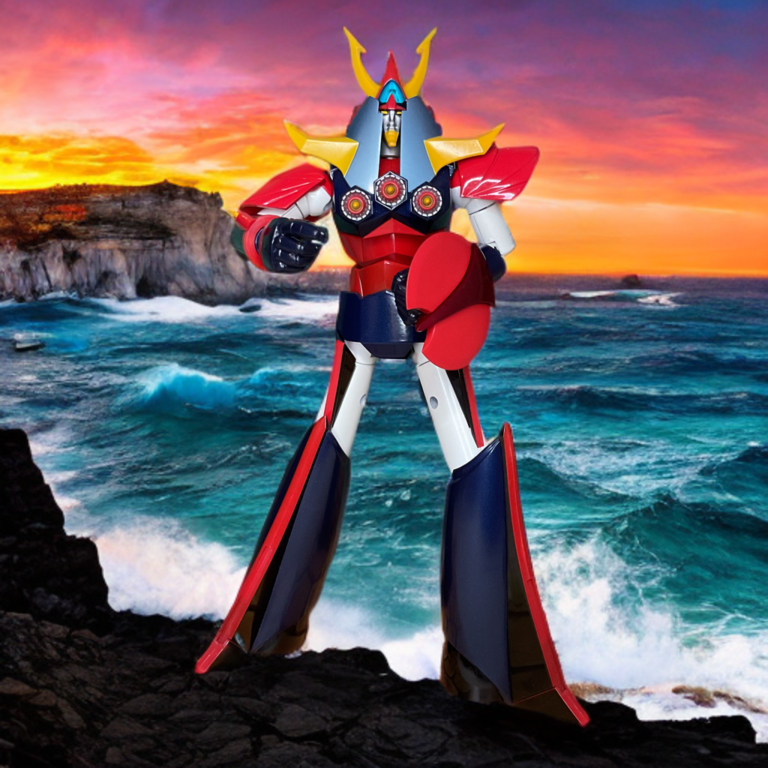
Central to the set is the 23-centimeter God Face Mountain, a retractable structure with stowed dimensions of 215 millimeters wide and deployed at 330 millimeters. Pulling a base tab opens the mountain to unveil a fixed-pose golden Raideen statue, precisely reproducing the fade-in sequence where the ancient guardian emerges to confront the Demon Empire. A same-scale Sparcar motorcycle inserts into the statue’s lower body, enabling display of the activation moment and Akira’s entry mechanism.
Transformation into God Bird mode functions smoothly, with engineered joints facilitating the shift seen in the series. Interchangeable face and chest parts allow exhibition of the God Voice attack, while optional hands enhance posing versatility. A custom display base accompanies the set for stable presentation of the figure alongside its components.
Weaponry encompasses an extensive arsenal drawn from the anime: the God Gogun with two arrow types, Godblock, God Breaker, God Boomerang, and God Missile as core armaments. Enhanced inclusions comprise the Gogun Sword, Energy Cutter, Jet Boomerang, God Block Big Spin, Head Cutter, and Body Cutter specifically for God Bird mode. The Brooger aircraft with detachable Spit Fighter adds aerial support elements, completing the tactical array without extraneous additions.
Packaging and build quality emphasize premium execution, with the set’s scale and materials conveying the 520-ton presence in miniature. Display options range from standalone robot configuration to integrated God Face Mountain tableau, offering multiple ways to showcase the tribute. The pearl white accents and golden statue provide visual contrast that echoes the series’ mystical revival, while the transformation mechanics deliver tactile satisfaction rooted in the original’s pioneering design.
This set stands as the definitive collector’s item for enthusiasts, encapsulating the 1970s production’s key visuals and mechanical innovations in a single, cohesive package.
Soul of Chogokin Comparison Chart: Raideen vs. The Giants
| Feature | GX-41S Raideen (Fade-In Set) | GX-31V Voltes V (Respect for Volt-in-Box) | GX-40R God Mars (Renewal) | GX-88 Vehicle Force Voltron |
| Height | 19 cm (Robot) / 23 cm (Mountain) | 18 cm | 28 cm | 29 cm |
| Complexity | Single unit (Transforms) | 5-Unit Combiner | 6-Unit Combiner | 15-Unit Combiner |
| Die-Cast Content | High (Limbs and Torso) | Very High (Traditional feel) | Moderate (Internal joints) | Heavy (Structural frames) |
| Transformation | God Bird Mode (Integrated) | “Volt-In” (Separates to 5) | “Six-God” (Separates to 6) | “15-Vehicle” (Separates to 15) |
| Key Gimmick | Fade-In Sequence (Mountain) | Chrome Finish & Nostalgia | Massive Scale & Core Bot | The “15-in-1” Engineering |
| Shelf Footprint | Large (due to Mountain base) | Moderate | Large | Large |
| Release Era | 2008 (10th Anniversary) | 2008 / 2024 (Anniv.) | 2008 / 2019 / 2025 | 2019 (Modern Engineering) |
Soul of Chogokin: The Scale & Engineering Deep-Dive
When placing the GX-41S Raideen on a shelf alongside other Soul of Chogokin (SoC) heavyweights, the visual hierarchy can be surprising. While Raideen is often categorized as a “standard” sized robot, its presence is anything but average. Here is how the Mu Empire guardian stacks up against the legends of the SoC line:
The Height Disparity: Raideen vs. Voltes V
It is important to note that Raideen (19cm) is actually slightly taller than the standard GX-31V Voltes V (18cm).
Despite Voltes V being a complex 5-unit combiner, Raideen’s iconic long horns and lithe, athletic “Mu Warrior” frame give it a surprisingly tall and elegant profile.
On a shelf, Raideen often appears more imposing due to its verticality, whereas Voltes V carries more “bulk” in its boxy, 1970s-style silhouette.
The “Big Boys” Tier: Scaling with God Mars & Vehicle Voltron
In the world of SoC, GX-40R God Mars (28cm) and GX-88 Vehicle Force Voltron (29cm) represent the “Heavyweight” tier.
While Raideen’s core robot isn’t as tall as the 15-vehicle Voltron, the God Face Mountain accessory changes the math entirely.
Because the mountain stands at 23cm, displaying Raideen in its “Fade-In” tableau makes the set look just as massive and significant as the larger combiners. It’s a masterclass in using environment to create scale.
Comparative Engineering Styles
Every Soul of Chogokin figure is a love letter to a specific type of mechanical design. When comparing these four, you can see the evolution of Bandai’s engineering philosophy:
Raideen is about Fluidity: The focus is on the “perfect” organic shift from humanoid to the God Bird jet mode without sacrificing the robot’s sleek proportions.
Voltes V is about Nostalgia: The engineering prioritizes the “clunky-but-satisfying” feel of the original 1970s Popy toys, recreating the specific “Volt-In” sequence we remember from childhood.
God Mars & Vehicle Voltron are about Mathematics: These are feats of structural physics. The engineers had to solve the puzzle of how 6 (or 15) individual vehicles can merge into a single, stable, and articulated 11-inch giant without falling under their own die-cast weight.
Admin Note: If you put Raideen next to the GX-88 Vehicle Voltron, it looks like a David vs. Goliath scenario. But remember: Raideen is a sentient god-robot with a molecular sonic attack (God Voice). In the world of anime logic, the guy with the most vehicles isn’t always the guy who wins the fight; he’s just the guy who takes the longest to get dressed in the morning.
In Closing
From its golden statue origins within the Mu Empire to the soaring God Bird ascendance, Brave Raideen encapsulates a timeless saga of awakening and guardianship. The 1975 animated series, with its 50 episodes of strategic battles and character resolve, established a blueprint for mystical mecha tales that continues to inspire. The GX-41S Raideen DX Fade-in Set elevates that history into tangible form, allowing precise reenactments of the fade-in and transformations that defined the legend.
As the 12,000-year cycle concludes in the narrative, the figure set ensures the protector endures in modern collections. Together, the anime and its tribute preserve the complete history of Raideen, inviting renewed appreciation for the ancient empire’s enduring sentinel against the Demon Empire’s shadows.
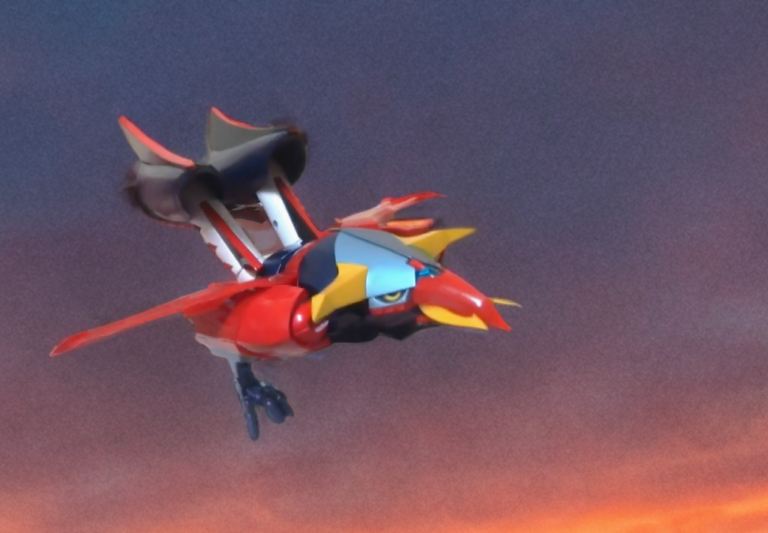
 English
  Deutsch
  Français
  Português do Brasil
  日本語
日本語  Español
  English (Australia)