

Wheeljack’s Devastating Studio Series Glow-Up
Wheeljack—the Autobot who’s equal parts genius and walking fireworks display. In the vast universe of Transformers, where robots disguise themselves as everyday vehicles only to unleash chaos, Wheeljack stands out as the one who’d rather tinker his way out of trouble than punch through it. But when he does punch, it’s usually with something he’s jury-rigged on the spot, like a grenade launcher made from spare parts that might just as easily detonate in his own faceplate. This inventive spirit has made him a fan favorite since his debut in the original Generation 1 era, and now, he’s rolling back into the spotlight with the Transformers Studio Series Devastation Wheeljack figure. Released as part of Hasbro’s MTMTE Collection—a nod to “More Than Meets the Eye”—this Deluxe Class toy draws directly from the 2015 video game Transformers: Devastation, a high-octane hack-and-slash adventure that captured the essence of classic Transformers action with a cel-shaded flair.
If you’re a collector who’s chased down every iteration of this mad scientist bot, or just someone dipping their tires into the Transformers pool, this figure offers a fresh take on a timeless character. It’s not just a repaint; it’s a homage to a game that blended PlatinumGames’ signature over-the-top combat with the nostalgia of G1 designs. We’ll dissect Wheeljack’s official canon history, his pivotal role in Devastation, the Studio Series line’s commitment to accuracy, and a hands-on breakdown of the toy itself—from its sleek vehicle mode to its poseable robot form. Along the way, expect some sharp observations on what makes this figure a blast (pun very much intended) and where it might leave you wanting more. Buckle up; we’re transforming and rolling out.
Wheeljack’s Canon Legacy: From Mad Inventor to Battlefield Innovator
To appreciate this Studio Series figure, we need to rev back to Wheeljack’s origins in the official Transformers lore. First introduced in 1984 as part of the Generation 1 (G1) toy line, Wheeljack was Hasbro’s take on a Diaclone figure, transforming into a Lancia Stratos Turbo race car—complete with those iconic Alitalia racing stripes in white, green, and red. His bio painted him as the Autobot mechanical engineer, a resourceful tinkerer who could whip up gadgets from scrap metal, but with a caveat: his inventions had a habit of malfunctioning spectacularly. “Never do what your enemy expects you to do,” his tech spec quipped, which often translated to unexpected explosions for everyone involved.
In the original animated series, which ran from 1984 to 1987, Wheeljack was voiced by Chris Latta (also known for Starscream and Cobra Commander in G.I. Joe), bringing a gravelly enthusiasm to the role. He appeared in episodes like “More Than Meets the Eye” (the pilot), where he helped establish the Autobots’ Earth base, and “The Ultimate Doom,” showcasing his shoulder-mounted shell launchers—cannons that fired magnetic, incendiary, or explosive projectiles. These weapons weren’t just for show; they embodied his inventive prowess, often turning the tide against Decepticons like Megatron or Soundwave. But canon also highlighted his flaws: in “A Prime Problem,” one of his devices backfired, nearly costing the team dearly. This blend of brilliance and unpredictability made him a staple in the Marvel Comics run too, where he featured in issues from 1984 onward, contributing to battles on Cybertron and Earth while occasionally causing comedic mishaps.
Wheeljack’s canon evolved across media. In the 1986 film The Transformers: The Movie, he met a grim end during the Battle of Autobot City, his body shown deactivated amid the wreckage—a poignant moment that underscored the war’s toll. Yet, his spirit lived on in subsequent series. In Transformers: Headmasters (1987-1988, Japan), he was revived and upgraded, continuing his inventor role. Fast-forward to modern iterations: in Transformers: Prime (2010-2013), Wheeljack was reimagined as a lone-wolf Wrecker, a sword-wielding warrior with grenades and a ship called the Jackhammer. Voiced by James Horan, he emphasized combat over invention, but retained that rebellious streak, clashing with Ultra Magnus over protocol.
The live-action films gave him brief but memorable spots. In 2011’s Dark of the Moon, he appeared as “Que,” an elderly inventor bot (voiced by George Coe) who crafted gadgets like the Boom Sticks for the Wreckers. Tragically, he was executed by Barricade, but not before quipping about his inventions. More recently, in 2018’s Bumblebee, Wheeljack popped up in his Cybertronian form during the opening battle, transforming into a hovercar-like vehicle—a nod to his G1 roots without the Earth disguise.
Throughout official canon, Wheeljack’s core traits remain: ingenuity, loyalty to Optimus Prime, and a penchant for high-risk experiments. He’s never been a frontline brute like Grimlock or a strategist like Prowl; instead, he’s the guy who equips the team with the unexpected edge. This history sets the stage for his portrayal in Transformers: Devastation, where his inventive side shines in gameplay mechanics.
Wheeljack in Transformers: Devastation: A Playable Powerhouse
Transformers: Devastation, developed by PlatinumGames and published by Activision, hit shelves on October 6, 2015, for various platforms including PlayStation 4, Xbox One, and PC. This action-adventure title embraced a cel-shaded art style reminiscent of the G1 cartoon, delivering fast-paced hack-and-slash combat akin to Bayonetta or Metal Gear Rising. Players could switch between five Autobots—Optimus Prime, Bumblebee, Sideswipe, Wheeljack, and Grimlock—each with unique abilities, weapons, and playstyles. The game spanned seven chapters, blending linear missions with side objectives, collectibles, and boss battles against combiners like Devastator and Menasor.
The plot kicks off in a besieged New York City, where Megatron unleashes Insecticons and massive metal claws to terraform Earth into a new Cybertron using the ancient Autobot ship Proudstar. Optimus rallies the team to investigate, revealing the ship’s Ferrotaxis supercomputer holds Cybertronian secrets but has been corrupted. Wheeljack, as a playable character, is integral from the start. He’s not just support; players can control him in combat sequences, leveraging his high ranged attack stat—the highest among the Autobots. Equipped with assault rifles, elemental weapons, and tech chips for boosts like +30% ranged damage, Wheeljack excels at mid-range skirmishes. His abilities include dodging into Focus mode for slow-motion counters, vehicle-mode ramming for mobility, and Overdrive attacks for massive damage.
In key plot moments, Wheeljack joins the group in battling Soundwave aboard the Proudstar, tracking the ejected plasma core, and clashing with Blitzwing and the Stunticons. While the narrative focuses on Optimus as leader, Wheeljack’s inventor background ties into puzzles and ship access sequences, where his tech-savvy implies he’s hacking systems or jury-rigging doors—though gameplay keeps it action-oriented. Post-credits, with Earth saved and Nova Prime awakening, Wheeljack’s role hints at future innovations like the Optimus Maximus project.
Devastation’s canon fidelity lies in its G1-inspired designs: Wheeljack’s robot mode features the classic “ears” (actually mask vents), shoulder cannons, and Lancia alt mode, all cel-shaded for that animated pop. His bio echoes G1: a mad scientist whose experiments surprise foes. This game version bridges classic and modern, making the Studio Series figure a perfect tribute.
The Studio Series Line: Where Screen Accuracy Meets Collectible Craft
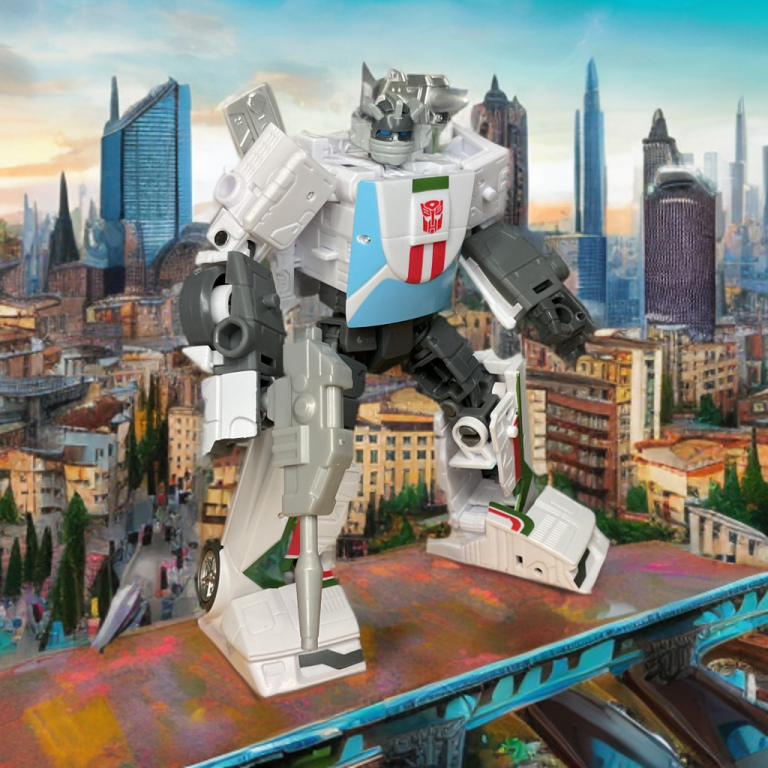
Hasbro’s Transformers Studio Series, launched in 2018, focuses on movie and media-accurate figures, spanning live-action films, animated features, and now video games via the Gamer Edition subline. The Devastation Wheeljack is a Target-exclusive Deluxe Class entry in the MTMTE Collection, priced at around $27.99. It’s a redeco of the 2020 Earthrise Wheeljack mold, but with paint apps mimicking the game’s cel-shaded aesthetic—pale blue chest, white body, green and red accents, and metallic gray details for that retro vibe.
Studio Series emphasizes poseability, transformation complexity, and accessories that evoke source material. This figure stands 4.5 inches tall in robot mode, scaling well with other Deluxes like Sideswipe from the same wave. It’s aimed at ages 8+, with a choking hazard warning for small parts—standard for these articulated toys. Collectors praise the line for bridging nostalgia and modern engineering, though some note mold reuse can feel repetitive.
Toy Review: Design, Transformation, and Play Value
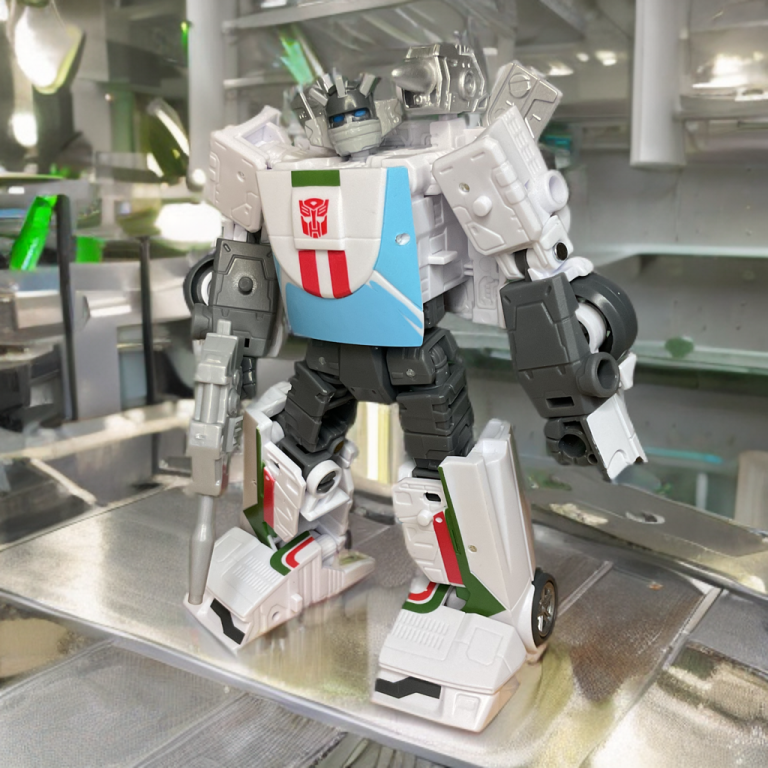
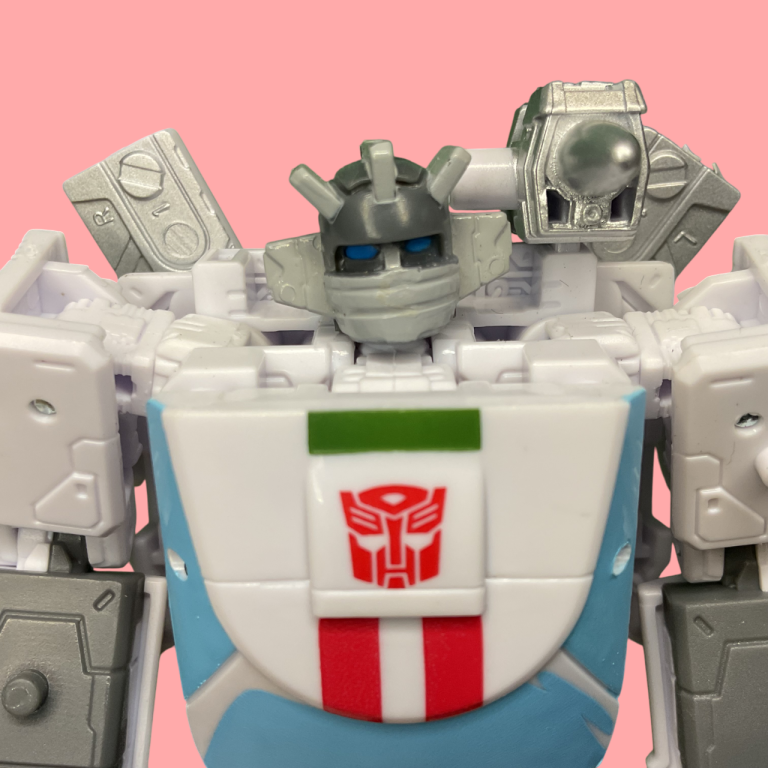
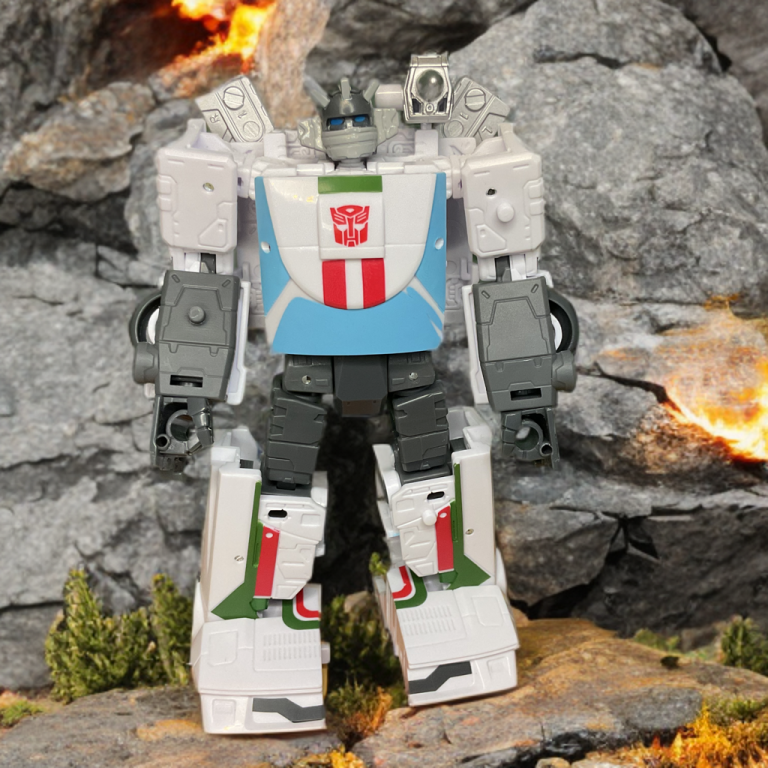
Let’s crack open this figure—figuratively, since the packaging is a sleek black box with game art, showing Wheeljack in both modes and touting 18 transformation steps. Out of the box, the robot mode impresses with its faithful recreation of Devastation’s design. The head sculpt captures the G1 helmet with vent “ears,” a silver faceplate, and blue visor eyes that pop against the white helm. Paint apps are crisp: the Autobot insignia on his chest is a vibrant red, flanked by turquoise panels evoking racing stripes. His legs feature green and red detailing, mimicking the Lancia’s livery, while gray joints provide contrast without looking cheap.
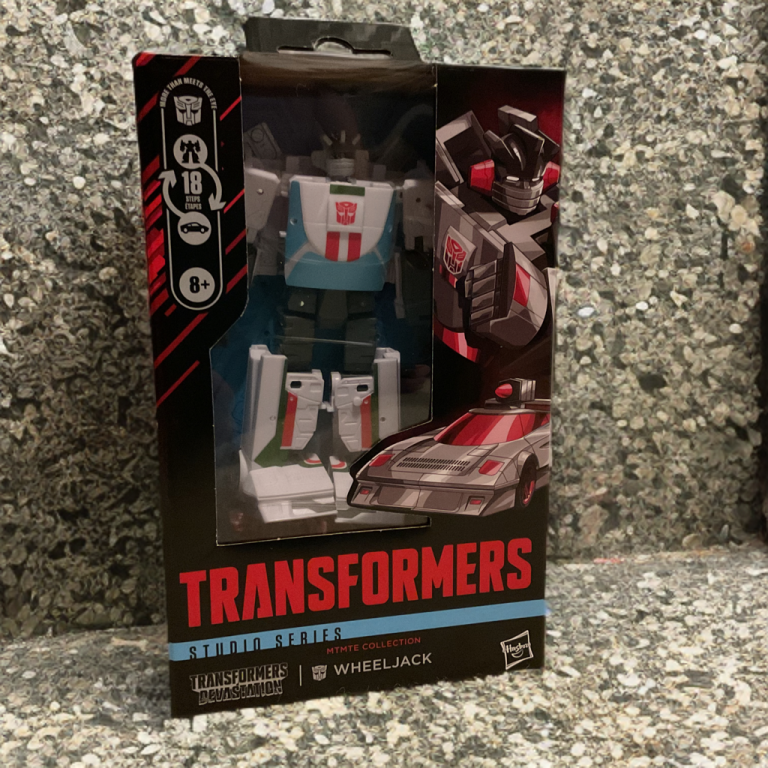
Poseability is a highlight—intricate, as Hasbro promises. Ball-jointed shoulders allow for wide arm swings, perfect for aiming his shoulder cannons (though they’re molded, not launchable in this version). Elbow and knee bends hit 90 degrees, wrists swivel, and the waist rotates for dynamic stances. Ankle tilts add stability, letting him strike action poses like dodging Insecticon swarms or unleashing a ranged barrage. The backpack kibble—formed from the car’s roof and wings—folds neatly, avoiding bulkiness seen in older molds.
Accessories include a single attachable blaster, a black rifle that pegs into his hands or stores on his back. It’s game-accurate, representing his ranged prowess, though fans might miss the dual shell launchers from G1. No grenades here, keeping it simple but effective for play.
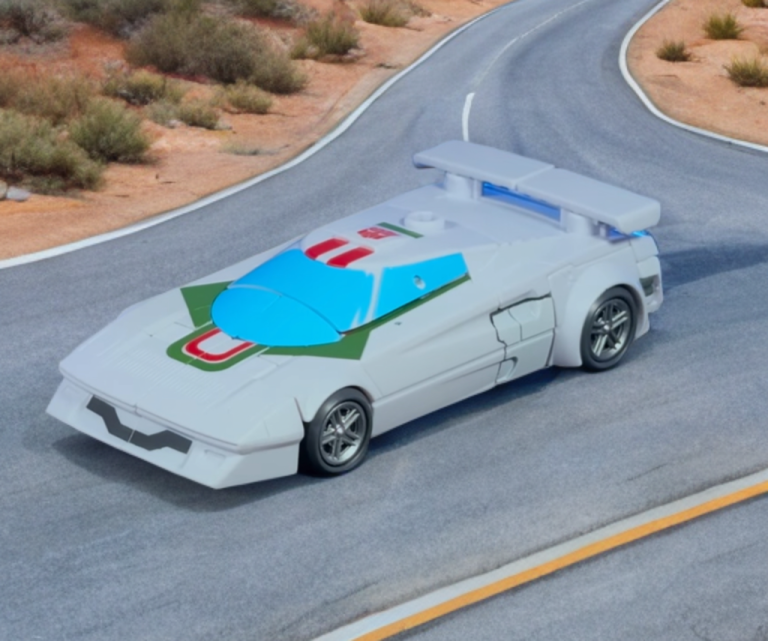
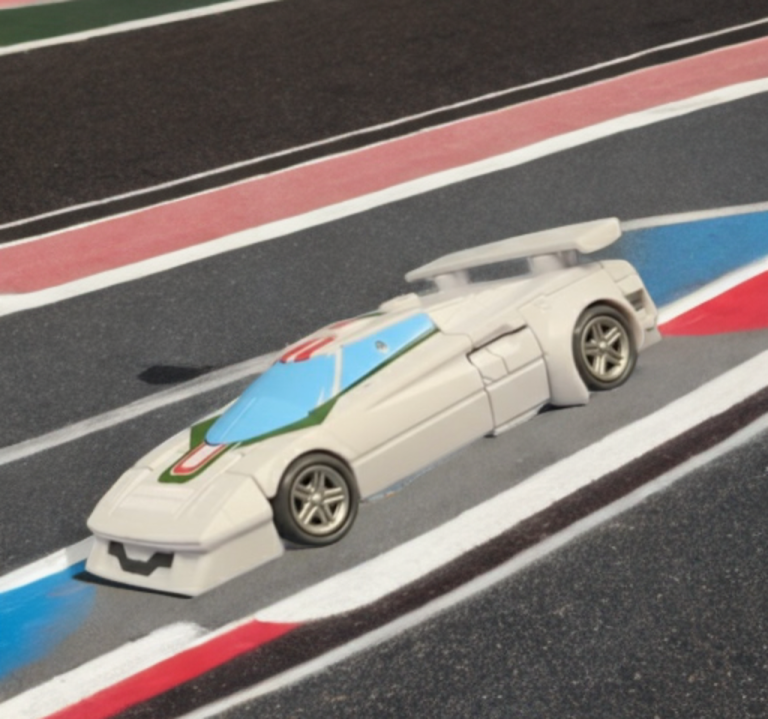
Transformation to vehicle mode is intuitive yet satisfying, clocking in at 18 steps. Start by folding the legs into the chassis, tucking the arms under the hood, and flipping the backpack to form the roof. The result: a compact Lancia Stratos Turbo with rolling wheels, detailed headlights, and that iconic white body with green/red stripes. It’s screen-accurate to Devastation’s alt mode, where Wheeljack zips through city streets, ramming foes. No die-cast parts, but the plastic feels durable, with tight joints that hold poses without sagging.
Pros: Excellent articulation for display; vibrant, game-specific deco that stands out on shelves; smooth transformation that won’t frustrate kids or adults. It’s a solid entry for Devastation fans, especially paired with the matching Sideswipe.
Cons: As a redeco, it inherits the Earthrise mold’s quirks—like visible robot feet in car mode or limited head swivel. Some collectors gripe that it doesn’t fully capture the game’s bulkier proportions, opting for the slimmer G1 silhouette. Paint could be thicker in spots to avoid chipping during heavy play.
Build quality is Hasbro-standard: no loose parts in fresh copies, though transformations might wear joints over time. Compared to other Studio Series Deluxes, like the Bumblebee movie Wheeljack (with its Cybertronian hover mode), this one feels more grounded—literally—in its Earth vehicle disguise. It’s a step up from older figures like the 2009 Revenge of the Fallen toy, which lacked poseability.
In play, it shines: imagine recreating Devastation boss fights, posing Wheeljack alongside Optimus against a Devastator figure (sold separately). For display, it pairs beautifully with Gamer Edition waves, building a video game shelf.
Transformation Rating: EASY
The Experience: This figure offers a smooth, satisfying conversion process. The parts move freely and require minimal force, making it a truly "fidget-friendly" toy. You can transform it back and forth with ease—most people only need to check the manual once (if at all).
Comparisons and Collectibility
Stacking it against prior Wheeljacks: The 1984 G1 original is chunkier, with firing missiles, but primitive by today’s standards. The 2011 Dark of the Moon Que figure adds wheels-as-wings flair but suffers from movie-accurate asymmetry. Prime’s 2012 Arms Micron version emphasizes swords over guns, diverging from inventor roots. This Devastation edition strikes a balance—G1 homage with game polish—making it highly collectible, especially as a Target exclusive that might sell out quick.
Conclusion
The Transformers Studio Series Devastation Wheeljack isn’t just another robot in disguise; it’s a clever capsule of franchise history, bundling the mad inventor’s canon exploits with the adrenaline of a beloved game. From his explosive G1 beginnings to his ranged dominance in Devastation, Wheeljack embodies the Transformers ethos: innovation amid eternal war. This figure nails the essentials—sharp design, fun transformation, and poseable play—while inviting collectors to revisit PlatinumGames’ gem. Sure, it’s a redeco, but in a line flooded with options, it stands out for its niche appeal. If you’re building an Autobot arsenal or chasing game-accurate bots, snag this one before it vanishes like one of Wheeljack’s failed experiments. After all, in the world of Transformers, the best surprises are the ones that transform expectations. Roll out and add some invention to your collection.
Check out: Nemesis Bridge: Decepticon Supremacy and Dominance



 English
  Deutsch
  Français
  Português do Brasil
  日本語
日本語  Español
  English (Australia)